Last updated 2026-07-26
TL;DR
An annual rental inspection checklist should cover smoke and CO detectors, exits, electrical, plumbing, HVAC, pest signs, and structural issues, room by room. Most states require 24 to 48 hours written notice before entry. Landlords can inspect for safety and lease compliance, but can't search personal belongings or use inspections to harass tenants.
What should be on an annual rental inspection checklist?
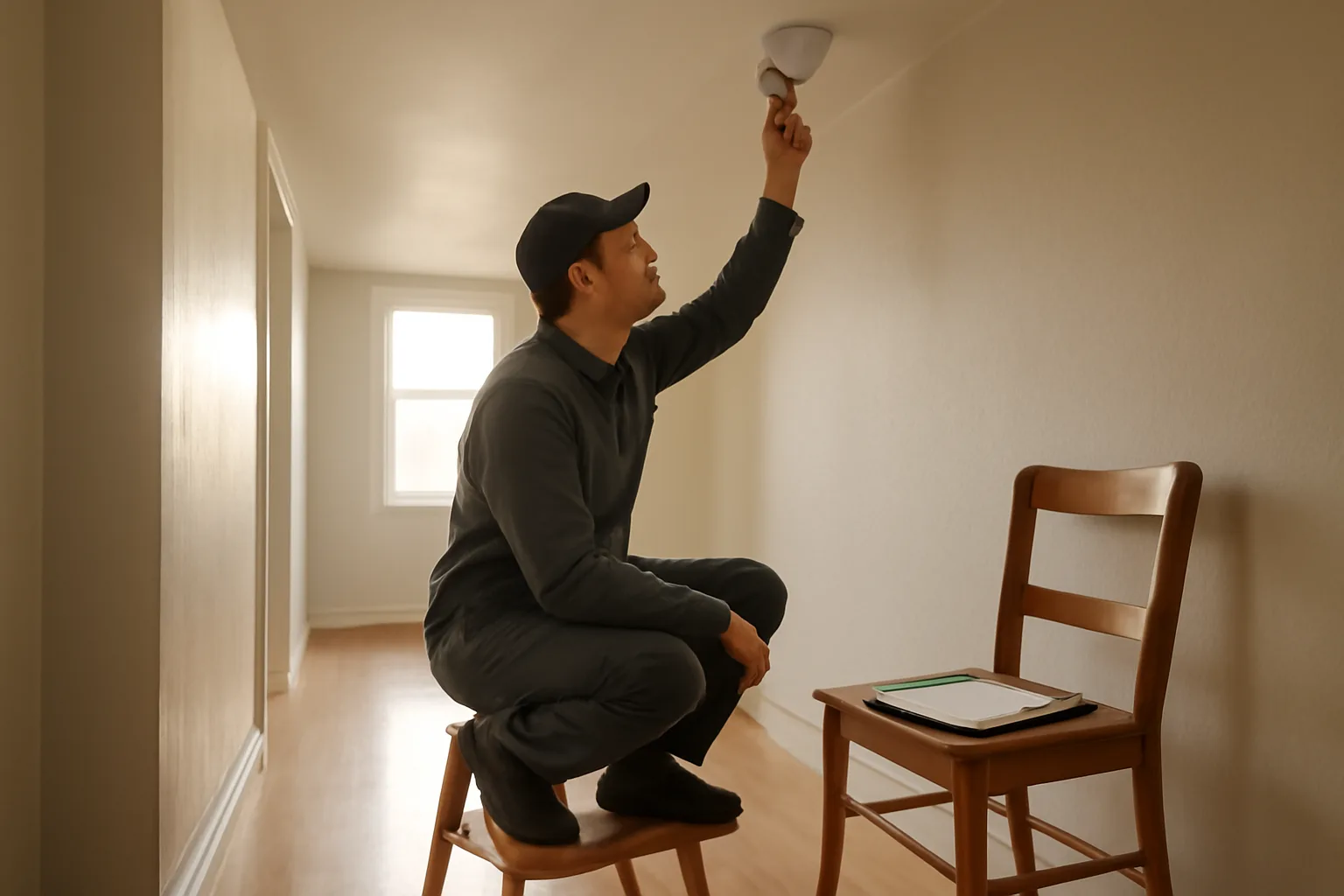
| Smoke alarms | Present in each bedroom, outside sleeping areas, one per floor; test function; check date on unit (most alarms expire 10 years from manufacture) [1] | |
|---|---|---|
| CO alarms | Required in many states if unit has gas appliances, a fireplace, or an attached garage; test function | |
| Exits | Windows open and lock, no security bars without release mechanism, doors not blocked, exterior stairs/railings stable | |
| Electrical | No exposed wiring, GFCI outlets near water (kitchen, bath), no obvious overloaded circuits, panel accessible | |
| Plumbing | No active leaks, water heater has a working pressure relief valve and discharge pipe, drains clear, no visible mold around fixtures | |
| HVAC | Furnace/AC serviced within the last 12 months, filters changed, no gas smell, vents unblocked | |
| Structure | Foundation cracks, roof leaks (check ceilings for stains), window seals, exterior paint (especially pre-1978 units, see lead paint note below) | |
| Pests | Droppings, nests, gnaw marks, evidence of bed bugs along mattress seams and baseboards | |
| Common areas (multi-unit) | Lighting in hallways/stairwells, handrails, fire extinguishers charged and tagged, exit signage | |
| Safety devices | Fire extinguisher present and charged (if required or provided), window guards for units above ground floor with young children present in some cities | Most cities that run mandatory rental inspection programs (Chicago, Minneapolis, and dozens of mid-size cities) publish their own checklist as part of the licensing packet, and inspectors work from that document, not a generic one. Always pull your specific city's inspection form before the appointment. Confirm the exact checklist and any local add-ons with your city rental licensing office. |
A solid annual checklist walks the same path every time: smoke and carbon monoxide detectors first, then exits, then systems (electrical, plumbing, HVAC), then structure, then pests, then anything unit-specific like a deck or a pool. Doing it in the same order every year means you don't forget the boring stuff, which is usually the stuff that gets you fined. Here's a working checklist you can adapt. It's not exhaustive for every city code, but it covers what shows up in most municipal rental inspection ordinances and what insurers ask about. | Area | What to check |
What can a landlord look at during an inspection?
A landlord (or a city inspector) can generally check anything related to habitability, safety, and lease compliance: smoke detectors, plumbing, electrical, signs of unauthorized pets or occupants, damage beyond normal wear, and code compliance items like egress windows or handrails. What they typically cannot do is search through personal belongings, open drawers or closets just to look inside, or use the inspection as a pretext to snoop. The line most states draw is between what's visible or accessible for a habitability/safety purpose versus what requires digging through someone's things. A landlord can note that there's water damage under a sink. A landlord doing a routine inspection should not be going through a tenant's dresser or reading mail left on a counter. City-run inspections (as opposed to landlord walkthroughs) are narrower still. A municipal inspector is checking code compliance items on their form, not evaluating whether the tenant is a good housekeeper. If an inspector starts asking questions unrelated to code compliance, that's worth noting and, if it becomes a pattern, raising with the city licensing office.
Who is responsible for a rental property walk-through inspection in California?
In California, move-in and move-out condition documentation is a shared responsibility, but the landlord initiates it. California Civil Code Section 1950.5 requires landlords to offer tenants an initial inspection before the tenant moves out, giving the tenant a chance to fix deficiencies before the final move-out inspection determines security deposit deductions [2]. The landlord must give at least 48 hours written notice of the initial inspection and provide an itemized statement of needed repairs or cleaning if the tenant doesn't fix them personally [2]. For routine annual inspections during a tenancy (not move-out related), California doesn't have a single statewide law mandating landlord walkthroughs, but it does regulate entry generally. Civil Code Section 1954 requires landlords to give reasonable notice, presumed to be 24 hours, before entering for repairs, showings, or inspections, except in emergencies [3]. Many California cities layered on their own rental inspection or registration programs (Los Angeles's Systematic Code Enforcement Program is a well-known example), and in those cases the city, not the landlord personally, sends an inspector, with the property owner responsible for scheduling access and paying the inspection fee. Confirm your city's specific inspection program and fee with your local rental licensing or code enforcement office.
How much notice does a landlord have to give before an inspection?
Most states set notice requirements between 24 and 48 hours, though a few require more and a few have no statewide statute at all. California presumes 24 hours is reasonable notice under Civil Code Section 1954 [3]. Florida requires landlords to give at least 12 hours notice before entering to make repairs, under Florida Statutes Section 83.53 [4]. Texas has no statewide statute dictating a specific notice period for routine entry, so lease language and local ordinances control there. A few things are consistent across most states with a notice statute: notice has to be written or otherwise documented in a way you can prove, it has to state a reasonable time window (not "sometime this week"), and emergencies (fire, flooding, gas leak) don't require advance notice at all. If your city runs a mandatory rental inspection program, the city's notice to the tenant is separate from the landlord's own notice obligation, so you may need to satisfy both: the city's notice to schedule the inspector's visit, and your own lease/state-law notice to the tenant for entering the unit. Always confirm your specific state's notice period before scheduling, since a violation of entry notice rules can turn into a habitability complaint or, in some states, statutory damages.
What is landlording, and what is a landlord exactly?
A landlord is the person or entity that owns residential or commercial property and rents it to a tenant in exchange for periodic payment, typically under a lease or rental agreement. Landlording is the informal term for the ongoing work of managing that relationship: collecting rent, maintaining the property, handling repairs, following state and local landlord-tenant law, and managing turnover between tenants. Landlording isn't just collecting a check. It includes habitability obligations (most states have an implied warranty of habitability requiring landlords to keep rentals safe and livable), fair housing compliance under the federal Fair Housing Act [5], security deposit handling rules that vary by state, and in a growing number of cities, mandatory registration, licensing, and inspection requirements before you can legally rent the unit at all. If your city has a rental licensing ordinance, landlording also means keeping that license current and passing scheduled inspections, which is the whole reason an annual inspection checklist matters in the first place.
How to become a landlord (and how to actually run it well)
Becoming a landlord starts with owning or controlling a property you intend to rent, but the paperwork side is where most first-timers get tripped up. Here's the realistic sequence. First, check whether your city or county requires a rental license, registration, or business license before you can legally rent at all. This is separate from your mortgage and your homeowner's insurance, and cities that require it will fine you for renting without one, sometimes retroactively for every month you were unregistered. Second, understand your state's landlord-tenant statute basics: notice periods for entry, security deposit limits and return deadlines (many states cap deposits at one or two months' rent and require return within 14 to 30 days of move-out), and habitability standards. Third, get proper insurance (landlord/dumping owner policy, not a standard homeowner's policy, since most homeowner policies exclude rental use or reduce coverage once the unit is tenant-occupied). Fourth, screen tenants consistently and legally, following the Fair Housing Act's protected classes (race, color, national origin, religion, sex, familial status, and disability) [5] plus any state or local protected classes (source of income, and in some places justly), sexual orientation is common now). Fifth, set up a system for maintenance requests, rent collection, and recordkeeping before you have your first tenant, not after. If your city requires periodic inspections, build that into your calendar now rather than scrambling when the notice arrives. Building a habit around inspection prep, using the same checklist every year, is one of the few landlord tasks that gets easier, not harder, the longer you do it.
How to be a landlord day to day (the ongoing responsibilities)
Being a landlord day to day means responding to repair requests promptly (many states have specific timelines for essential repairs like no heat or no water, often 24 to 72 hours), keeping the property in compliance with local housing codes, handling rent increases and lease renewals according to your state's notice rules, and documenting everything. The biggest practical shift for new landlords is realizing that a rental unit isn't a static asset. It needs a maintenance rhythm: HVAC service before each heating and cooling season, gutter cleaning, smoke/CO alarm battery checks (even on hardwired units, since batteries are usually the backup), and a walkthrough at least once a year even if your city doesn't mandate one. Documentation matters more than most new landlords expect. Photos at move-in and move-out, written notices for entry, records of repair requests and how fast you responded, and a copy of every year's inspection results (whether it's your own or the city's) all protect you if a dispute ever goes to small claims court or a housing authority.
Why do landlords require renters insurance?
Landlords require renters insurance mainly to shift liability and property-loss risk away from themselves and their own insurance policy. A landlord's policy covers the building structure and the landlord's own liability, but it generally does not cover the tenant's personal belongings or the tenant's liability if, say, the tenant's dog bites a neighbor or the tenant accidentally starts a kitchen fire. Renters insurance is relatively cheap, commonly in the range of $15 to $30 a month depending on coverage and location, and it typically includes personal property coverage and personal liability coverage. When a landlord requires it in the lease, it reduces the odds that a tenant-caused incident (water damage from an overflowing tub, a grease fire) turns into an uninsured loss the landlord has to fight over. It also gives the landlord's insurer another party to pursue for reimbursement (subrogation) instead of the landlord eating the loss or having their own premium rise after a claim. Some cities and some landlord-tenant statutes now explicitly allow landlords to require renters insurance as a lease condition, and a few even let landlords force-place a policy and bill the tenant if the tenant doesn't maintain it, so check your state's specific rules before writing that clause in.
What rights do tenants have without a lease?
Tenants without a written lease, often called month-to-month or tenants-at-will, still have real rights. In every state, an oral or implied rental agreement creates a tenancy, and that tenant is still protected by the state's landlord-tenant statute, including the implied warranty of habitability, protection from illegal lockouts or utility shutoffs, and required notice before eviction. Without a written lease, the terms default to whatever your state presumes for a periodic tenancy, usually month-to-month if rent is paid monthly. That means either party can typically end the tenancy with proper notice, commonly 30 days, though some states require more depending on how long the tenant has lived there. A tenant without a lease still has fair housing protections, still has the right to a habitable unit, and still has the right to proper notice before the landlord enters, raises rent, or ends the tenancy. What a tenant without a lease doesn't have is the specific negotiated terms a written lease would lock in, like a fixed rent amount for a fixed term, or specific clauses about pets, subletting, or renewal. That absence cuts both ways: the landlord also can't enforce lease-specific restrictions that were never agreed to in writing. If you're renting month-to-month without paper, both sides are operating on the state's default statute, which is worth actually reading rather than assuming.
What can't a landlord do in Ohio?
Ohio landlord-tenant law is set out in Ohio Revised Code Chapter 5321. A landlord in Ohio cannot enter the rental unit without reasonable notice, generally interpreted as 24 hours, except in an emergency, and entry must be at a reasonable time under Section 5321.04 [6]. Ohio law also prohibits landlords from retaliating against tenants who complain to a government agency about code violations or who join a tenant organization, under Section 5321.02 [7]. Ohio landlords also cannot use self-help eviction: they cannot change the locks, remove the tenant's belongings, shut off utilities, or otherwise force a tenant out without going through the court eviction process (forcible entry and detainer action). Ohio Revised Code Section 5321.04 requires landlords to keep the premises in a fit and habitable condition, comply with building and housing codes, and maintain electrical, plumbing, and heating systems in good working order [6]. On security deposits, Ohio Revised Code Section 5321.16 requires landlords to return the deposit (minus any lawful deductions with an itemized list) within 30 days of the tenant vacating, and allows tenants to recover damages if the landlord withholds the deposit in bad faith [8]. These same statutes apply whether the property is in a city with its own rental licensing ordinance (Cleveland and Columbus both have local rental registration rules) or a smaller municipality with none, since the state law is the floor everywhere in Ohio.
How to prep for the inspection itself, room by room
Walk the unit exactly the way an inspector will, front door to back. Start at the entrance: does the door lock properly, is the address visible (some cities require visible house numbers), is there a working exterior light? Move into the living areas and check every window opens and locks, especially any that serve as a required emergency exit from a bedroom. Test every smoke alarm, more than the ones you remember installing. In the kitchen, check under the sink for leaks, confirm the GFCI outlets trip when tested, and make sure the stove's anti-tip bracket is installed if the unit has a freestanding range (this is an increasingly common code item). In the bathroom, check for mold around the tub, confirm the exhaust fan works, and check water pressure and temperature at the tap (many codes cap water heater temperature at 120°F to prevent scalding). In the basement or utility area, check the water heater's pressure relief valve and discharge pipe, confirm the furnace has been serviced, and look at the electrical panel for any obvious red flags like double-tapped breakers or missing panel cover. Outside, check railings, steps, and any deck for stability, and confirm exterior paint isn't peeling if the building predates 1978 (federal lead paint disclosure rules apply to pre-1978 housing under 42 U.S.C. 4852d, and many cities extend this to inspection checklists) [9]. If you manage more than one unit or more than one city, keeping a standardized checklist and a folder of prior inspection results, license numbers, and renewal dates saves real time every year. This is exactly the gap the $79 City Rental License & Inspection Prep Packet is built to close: a one-time reference packet organized by what your specific city's inspection form actually asks for, so you're not rebuilding your prep process from scratch every renewal cycle.
What happens if the inspection turns up violations?
Cities that run mandatory inspection programs almost always give you a cure period rather than an instant fine on a first pass. A typical structure is 30 days to fix minor violations, with a re-inspection scheduled after you submit proof of repair, though the exact window depends entirely on your city's ordinance. Serious safety violations, like a missing smoke detector or an unsafe electrical condition, sometimes carry a shorter cure window or an immediate order. Fines for uncorrected violations vary widely by city, commonly landing somewhere between $50 and a few hundred dollars per violation per re-inspection cycle, with repeat or willful violations escalating fast in some ordinances. Some cities will also refuse to renew or issue a rental license until every open violation is cleared, which means you can't legally rent the unit to a new tenant until it passes. The cheapest way through a violation is fixing it before the inspector shows up, not negotiating after. If you already know a smoke detector is missing or a handrail is loose, fix it before the appointment. Confirm your city's specific cure period, re-inspection fee, and fine schedule with your city rental licensing office, since these numbers are set locally and change year to year.
Frequently asked questions
How often do rental properties need to be inspected?
It depends entirely on your city. Many mandatory rental licensing programs require inspection every 1 to 3 years, some annually, and some only when a license is first issued or renewed. A handful of cities inspect on complaint only. Confirm your specific city's inspection frequency with its rental licensing or code enforcement office, since there's no single national standard.
Can a landlord inspect a rental unit whenever they want?
No. Landlords generally must give advance written notice, commonly 24 to 48 hours depending on the state, and can only enter for legitimate purposes like repairs, showings, or agreed inspections, except in a genuine emergency. California presumes 24 hours is reasonable notice under Civil Code Section 1954.
What is a landlord required to fix before an inspection?
Anything that affects habitability or safety: non-working smoke or CO detectors, active leaks, broken locks on doors or windows, electrical hazards, pest infestations, and any item flagged on the city's own inspection checklist from a prior visit. Cosmetic issues like paint color rarely fail an inspection unless surfaces are peeling in a pre-1978 unit with lead paint concerns.
Who pays for a rental inspection, the landlord or the tenant?
The property owner almost always pays the inspection fee in mandatory city rental licensing programs, since the license itself is tied to the owner, not the tenant. Fees vary widely by city and unit count. Confirm the exact fee with your city rental licensing office.
What can a landlord look at during an inspection?
Smoke and CO detectors, plumbing, electrical, structural condition, signs of unauthorized occupants or pets, and general code compliance items. A landlord generally cannot search personal belongings, open closets or drawers without cause, or use an inspection to snoop through mail or private items.
Who is responsible for a rental property walk-through inspection in California?
The landlord initiates move-out walkthroughs under California Civil Code Section 1950.5, which requires offering an initial inspection with at least 48 hours notice before the final move-out inspection. For city-run inspection programs, the municipality schedules the inspector, and the property owner is responsible for access and fees.
What rights do tenants have without a lease?
Tenants without a written lease still have full statutory rights: habitability protections, protection from illegal lockouts, required notice before eviction (commonly 30 days for month-to-month tenancies), and fair housing protections. The tenancy defaults to whatever periodic term matches the rent payment schedule, usually month-to-month.
Why do landlords require renters insurance?
To cover the tenant's personal property and personal liability, which the landlord's own policy doesn't cover. It shifts risk away from the landlord's insurance (protecting against premium increases after a claim) and gives an insurer to pursue if the tenant causes damage, commonly costing tenants $15 to $30 a month.
What can't a landlord do in Ohio?
Under Ohio Revised Code Chapter 5321, a landlord cannot enter without reasonable notice, cannot retaliate against tenants who report code violations, cannot use self-help eviction (lockouts, utility shutoffs, removing belongings), and must keep the unit in fit and habitable condition with working electrical, plumbing, and heating systems.
How much notice does a landlord have to give before an inspection?
Typically 24 to 48 hours depending on the state. California presumes 24 hours reasonable under Civil Code Section 1954. Florida requires at least 12 hours for repair entry under Florida Statutes Section 83.53. Some states have no specific statute, leaving it to lease terms and local ordinance.
What is landlording?
Landlording is the ongoing work of owning and managing rental property: collecting rent, handling repairs, following habitability and fair housing law, managing deposits, and in many cities, maintaining a rental license and passing periodic inspections. It's the day-to-day operational side of being a landlord, more than property ownership.
How do I become a landlord for the first time?
Check whether your city requires rental registration or licensing before you can legally rent. Then learn your state's notice, deposit, and habitability rules, get landlord insurance instead of a standard homeowner's policy, set up consistent legal tenant screening under Fair Housing Act protected classes, and build a maintenance and inspection routine before your first tenant moves in.
What items commonly fail a rental inspection?
Missing or expired smoke detectors, no carbon monoxide detector where required, blocked or non-functioning emergency exits, exposed wiring, water heater without a proper pressure relief valve and discharge pipe, active leaks, and pest evidence are the most common fails across city rental inspection programs.
Sources
- U.S. Consumer Product Safety Commission, Smoke Alarms fact sheet: Smoke alarms should be replaced roughly every 10 years from date of manufacture
- California Civil Code Section 1950.5: California landlords must offer an initial move-out inspection with at least 48 hours notice
- California Civil Code Section 1954: California presumes 24 hours is reasonable notice before landlord entry
- Florida Statutes Section 83.53: Florida requires at least 12 hours notice before landlord entry to make repairs
- U.S. Department of Housing and Urban Development, Fair Housing Act overview: The Fair Housing Act protects race, color, national origin, religion, sex, familial status, and disability as protected classes
- Ohio Revised Code Section 5321.04: Ohio landlords must give reasonable notice and enter at reasonable times, and must keep the unit fit and habitable
- Ohio Revised Code Section 5321.02: Ohio prohibits landlord retaliation against tenants who report code violations or join tenant organizations
- Ohio Revised Code Section 5321.16: Ohio landlords must return security deposits within 30 days of the tenant vacating, minus lawful deductions
- 42 U.S.C. 4852d, Residential Lead-Based Paint Hazard Reduction Act disclosure requirement: Federal law requires lead paint disclosure for housing built before 1978