Last updated 2026-07-25
TL;DR
Becoming a landlord means more than buying a property and finding a tenant. Most cities require rental registration or licensing, periodic inspections, and lead/smoke detector compliance before you can legally rent. Add in notice rules, insurance expectations, and tenant rights basics, and the paperwork side of landlording is often bigger than the maintenance side.
What is landlording, exactly?
Landlording is the ongoing job of owning residential property and renting it to someone else in exchange for money. It's not a one-time transaction. You're taking on a legal relationship governed by state landlord-tenant law, plus whatever your city or county layers on top through rental registration, licensing, or inspection ordinances. The word "landlord" itself just means the person or entity that owns rental property and leases it out. That can be an individual with one duplex or a company with 500 units. A hobbyist renting out a spare bedroom and a full-time operator with a dozen buildings both answer to the same core duties: habitability, notice, security deposit handling. What trips up new landlords is that landlording sits at the intersection of three different rule systems: state landlord-tenant statutes, local housing and building code, and whatever's written into your own lease. Miss any one of the three and you can end up with a fine, a failed inspection, or a tenant who has more standing than you expected in a dispute.
How do you become a landlord? The realistic step order
There's no license required to buy a rental property in most states, but there's almost always a registration or licensing step required before you can legally rent it out in cities with mandatory rental programs. Here's the order that actually avoids rework. 1. Confirm zoning allows rental use for that property type (single-family, duplex, accessory unit) with your city planning or zoning office. 2. Check whether your city requires rental registration or a rental license. Hundreds of U.S. cities do, including large ones like Los Angeles under its Rent Stabilization Ordinance registration requirement [1] and smaller cities with dedicated rental inspection programs. Requirements, fees, and deadlines vary by city; confirm with your city rental licensing office before you assume anything. 3. Schedule and pass any required initial inspection (smoke detectors, egress windows, working plumbing, no obvious code violations). 4. Get landlord liability insurance (a landlord policy, not a standard homeowner's policy, since most homeowner policies exclude rental use). 5. Screen tenants under Fair Housing Act rules, which prohibit discrimination based on race, color, national origin, religion, sex, familial status, and disability [2]. 6. Sign a lease that matches your state's required disclosures (lead paint for pre-1978 housing is federally required under 24 CFR Part 35 [3]). 7. Collect the security deposit within your state's legal cap and hold it per your state's rules on separate accounts or interest. 8. Re-register or renew your license annually or biennially, depending on your city's cycle. Skipping step 2 is the most common expensive mistake. Cities that require registration often charge escalating fines for operating unregistered, and some won't let you file an eviction in court until the property is properly registered.
What is a landlord under the law?
Legally, a landlord (sometimes called a "lessor") is the party who owns or controls residential property and grants a tenant the right to occupy it under a lease or rental agreement, in exchange for rent. That's the core definition used across state landlord-tenant statutes and by HUD in federal housing law [2]. The designation carries obligations regardless of how small your operation is. You generally have to maintain the unit in habitable condition, follow your state's notice-of-entry rules, handle the security deposit according to state law, and comply with any local licensing or inspection ordinance. A landlord with one rental unit has essentially the same legal duties as one with fifty, though inspection frequency and fee tiers sometimes scale with unit count in city ordinances.
Who is responsible for a rental property walkthrough inspection in California?
In California, the landlord is responsible for initiating the pre-move-out inspection, but the tenant has the right to be present. California Civil Code Section 1950.5 requires that if a landlord plans to make deductions from a security deposit for anything other than normal wear and tear, they must give the tenant reasonable notice, at least 48 hours, of the option to a joint walkthrough inspection before the tenant moves out [4]. The purpose is to let the tenant fix problems themselves before the landlord charges for them out of the deposit. After the walkthrough, if the landlord identifies deficiencies, the statute requires giving the tenant an itemized statement of what needs fixing and the option to remedy those issues before the tenancy ends [4]. Separately, many California cities with rental inspection programs (proactive rental inspection or "PRI" ordinances) also require periodic inspections by a city building inspector, unrelated to move-out. That inspection is scheduled and conducted by the city, with the landlord responsible for arranging tenant access. These are two different inspections serving two different purposes, and it's easy to mix them up. Confirm with your city rental licensing office whether a proactive inspection program applies to your unit.
What can a landlord look at during an inspection?
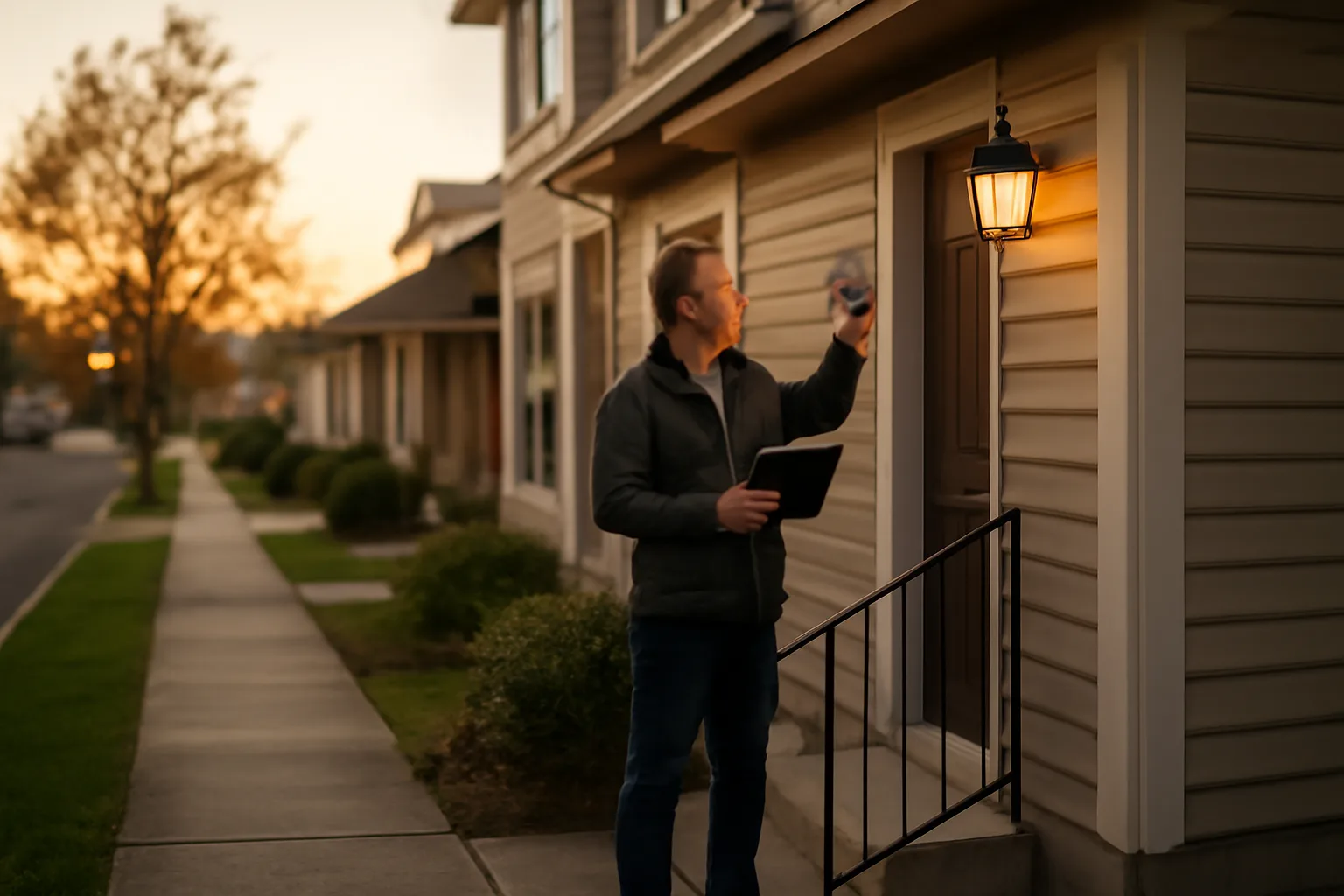
During a routine or move-out inspection, a landlord (or city inspector) is generally limited to checking the condition of the unit itself: walls, floors, appliances, plumbing fixtures, smoke and carbon monoxide detectors, windows, doors, and signs of pest or mold problems. It is not a general search of the tenant's belongings. Most states require the landlord to give advance written notice before entering for a non-emergency inspection. Many states set that notice at 24 hours, though the exact figure and whether it's codified varies; some states like California specify "reasonable notice," which is presumed to be 24 hours under Civil Code Section 1954 [5]. Entry generally has to happen at a reasonable time and for a legitimate purpose (repairs, showing the unit, inspection, or court-ordered work). City rental license inspections typically check: working smoke and CO detectors, adequate egress in bedrooms, no exposed wiring, functioning heat source, no active leaks, and pest-free conditions. Some cities add checks for handrail stability, window locks, and water heater temperature-pressure relief valves. Landlords should keep records (photos, repair invoices, dated notices) as their own documentation of pre-inspection condition, since a failed inspection can trigger a re-inspection fee and a compliance deadline. If you're prepping for a first city license inspection and don't know what your specific city checks for, that's worth confirming directly with your city's rental licensing office before the inspector shows up. Checklists differ block by block sometimes, let alone city by city.
How much notice does a landlord have to give before entering or ending a tenancy?
Notice requirements split into two very different categories: notice to enter the unit, and notice to end a tenancy. Don't confuse them. For entry, most states require somewhere between 24 and 48 hours of advance notice for non-emergency entry (repairs, inspections, showings). Emergency entry (fire, flooding, gas leak) generally doesn't require advance notice at all. For ending a month-to-month tenancy, notice periods vary by state and sometimes by how long the tenant has lived there. California, for example, requires 30 days' notice to terminate a month-to-month tenancy under one year, and 60 days if the tenant has lived there a year or more, per Civil Code Section 1946.1 [6]. Many other states default to 30 days for month-to-month terminations, but some vary based on the rent payment period (a week-to-week tenancy might only require 7 days). Always check your specific state's statute rather than assuming a national default, because the range genuinely runs from 7 days to 90 days depending on the state and circumstance. For cities with just-cause eviction ordinances (many rent-controlled cities), the notice period can extend further and may require a stated legal reason for termination, more than "end of lease."
Why do landlords require renters insurance?
Landlords require renters insurance mainly to shift liability risk and property-damage risk away from themselves. If a tenant's guest is injured in the unit, or the tenant accidentally causes a fire or a water leak that damages their own belongings and the building, renters insurance is the policy that responds first, before the landlord's own liability policy has to. A standard landlord or property insurance policy covers the building structure and the landlord's liability, but it typically does not cover the tenant's personal belongings and doesn't always cover claims where the tenant themselves caused the damage. Requiring renters insurance (commonly with a minimum liability coverage amount, like $100,000) closes that gap. It's legal in every state for a landlord to require renters insurance as a lease condition, as long as it's disclosed in the lease and applied consistently to all tenants (singling out tenants in protected classes for extra insurance requirements would violate the Fair Housing Act [2]). Many landlords require proof of an active policy annually and ask to be listed as an "interested party" on the policy so they're notified if it lapses.
What rights do tenants have without a signed lease?
A tenant without a signed lease still has legal protections. If they're paying rent and the landlord is accepting it, most states treat that as a month-to-month tenancy at will, governed by the same state landlord-tenant statute that would apply to a written lease, just without the specific terms a lease would spell out. Tenants without a lease generally retain the right to habitable housing, the right to advance notice before the landlord enters, the right to proper notice before termination (per that state's month-to-month rules), and protection from illegal lockouts or utility shutoffs (called "self-help eviction," which is illegal in all states; the landlord must go through the court eviction process regardless of whether there's a written lease). What a tenant without a lease loses is certainty. Rent can typically be raised with proper notice more easily on a month-to-month arrangement than under a fixed-term lease, and there's no fixed end date protecting them from a termination notice. But basic habitability and due-process protections don't disappear just because nothing was signed.
What can't a landlord do in Ohio?
Ohio's landlord-tenant law is codified in Ohio Revised Code Chapter 5321. Under that chapter, an Ohio landlord cannot: enter the rental unit without giving reasonable notice (Ohio courts and the statute generally treat 24 hours as reasonable) except in an emergency; shut off utilities, change the locks, or remove the tenant's belongings to force them out instead of filing a formal eviction (illegal self-help eviction); retaliate against a tenant for reporting a code violation or joining a tenant organization, which Ohio Revised Code Section 5321.02 explicitly prohibits [7]; or discriminate based on any protected class under the Fair Housing Act [2]. Ohio Revised Code Section 5321.04 also requires landlords to keep the premises in a habitable condition, maintain common areas, keep plumbing and heating in working order, and comply with local building and housing codes [8]. A landlord who fails to do this can be sued for damages or have rent escrowed by the tenant through the county court. Ohio law also caps what a landlord can do with a security deposit. Section 5321.16 requires returning the deposit (minus lawful deductions) within 30 days of the tenant vacating, along with an itemized list of deductions if any are taken . Failing to do so can expose the landlord to double damages plus attorney fees under that same section.
What does mandatory rental licensing actually require, city to city?
| Registration/license fee | $20 to $300+ per unit, per year | |
|---|---|---|
| Renewal cycle | Annual or every 2-3 years | |
| Initial inspection required | Common, especially for first-time registration | |
| Re-inspection after violation | Usually required, often with a separate fee | |
| Fine for operating unregistered | Ranges widely; some cities issue daily accruing fines | These figures are broad ranges pulled from how mandatory rental licensing programs are commonly structured. There is no single national number, since each city (and sometimes each county) sets its own fee schedule and inspection cadence. Confirm the actual figures with your specific city's rental licensing office before budgeting. If you're staring down a first inspection notice and don't know where to start, a lot of landlords find it faster to work from a packet built for their specific city's checklist rather than guessing. That's the whole idea behind the $79 City Rental License & Inspection Prep Packet: it's a one-time reference to get organized before the inspector shows up, not a substitute for checking your city's actual current rules. |
Cities that require rental licensing or registration generally ask for some combination of: an application and fee, proof of ownership, a habitability self-certification or inspection, working smoke/CO detectors, and a local contact person if the owner lives out of town. What differs wildly is the fee amount, renewal cycle, and inspection frequency. | City program element | Typical range across U.S. cities |
How is landlording different from property management?
Landlording is being the owner who bears the legal responsibility for the rental relationship. Property management is a service, sometimes hired by the landlord, that handles day-to-day operations (rent collection, maintenance calls, tenant communication) on the landlord's behalf. Hiring a property manager doesn't transfer legal responsibility for licensing or code compliance away from the owner in most jurisdictions. The rental license or registration is usually tied to the property owner's name, not the management company's, even if the manager handles the paperwork. If a city inspection fails, the fine notice typically goes to the owner of record. For a landlord with 1 to 10 units, self-managing is common. The fees for professional management (commonly 8% to 12% of monthly rent, though this varies by market and isn't a figure with a single authoritative national source) can eat significantly into a small landlord's margin. But self-managing means you're the one who has to track registration renewal dates, inspection deadlines, and notice requirements yourself.
What happens if you get a violation notice or fine from your city?
Most cities issue a notice of violation first, with a deadline (commonly somewhere between 10 and 30 days) to fix the problem or request a re-inspection. Ignoring that notice, rather than the underlying violation itself, is usually what escalates to a monetary fine. Common next steps after a violation notice: read the notice for the exact code section cited (more than "smoke detector issue" but the specific municipal code number), fix the item, and request a re-inspection before the stated deadline rather than after. Many cities charge a re-inspection fee if the first re-inspection fails again, and some escalate fines for repeat or unresolved violations. If a landlord disagrees with a citation, most cities have an administrative appeal process, generally with a short window (often 10 to 15 days) to file it. The cities that hit landlords hardest are the ones where a rental license is required to file an eviction case. If your registration lapsed and you didn't know it, that can stall an eviction for weeks while you get current. That's the kind of detail worth checking the moment you get any registration renewal notice, not after a tenant issue is already in court.
Frequently asked questions
How do you become a landlord for the first time?
Confirm your property's zoning allows rental use, check if your city requires rental registration or licensing, pass any required initial inspection, get landlord insurance, screen tenants under Fair Housing Act rules, and sign a lease with required disclosures (like lead paint notice for pre-1978 units under 24 CFR Part 35). Then renew your registration on schedule.
What is the legal definition of a landlord?
A landlord is the owner or controlling party of residential property who grants a tenant occupancy rights under a lease or rental agreement in exchange for rent. The definition applies whether the owner has one unit or hundreds, and the same state landlord-tenant statutes generally apply to both.
Who does the walkthrough inspection before a tenant moves out in California?
The landlord initiates it, but under California Civil Code Section 1950.5, the tenant has the right to be present at a pre-move-out inspection if the landlord gives at least 48 hours' notice and plans to deduct anything beyond normal wear and tear from the deposit.
What is landlording as a term?
Landlording describes the ongoing activity and responsibilities of owning rental property and renting it to tenants, including maintenance, legal compliance, notice requirements, and lease administration. It's used casually to describe the whole job, more than the act of owning the building.
What rights does a tenant have with no signed lease?
A tenant paying rent without a signed lease is generally treated as a month-to-month tenant under state law, with rights to habitable housing, advance notice before entry, proper notice before termination, and protection against illegal lockouts. They lack the fixed terms and end date a written lease would provide.
Why do landlords make tenants get renters insurance?
Renters insurance covers the tenant's belongings and liability for accidents they cause, filling a gap that the landlord's own property insurance usually doesn't cover. It's legal to require as a lease condition in every state, as long as it's applied consistently and disclosed upfront.
How much notice does a landlord need to give before entering a unit?
Most states require 24 to 48 hours of advance notice for non-emergency entry, though the exact figure varies by state statute. Emergency situations, like a gas leak or active flooding, generally don't require advance notice at all.
How much notice does a landlord need to give to end a tenancy?
It depends on the state and tenancy type. California requires 30 days' notice for month-to-month tenancies under a year and 60 days for a year or more, under Civil Code Section 1946.1. Other states range from 7 to 90 days depending on the rent period and local ordinance.
What can a landlord check during a rental inspection?
A landlord or city inspector can generally check the unit's physical condition: smoke and CO detectors, plumbing, egress windows, heating, electrical safety, and pest issues. It's not a general search of personal belongings, and most jurisdictions require advance notice before a non-emergency inspection.
What is a landlord not allowed to do in Ohio?
Under Ohio Revised Code Chapter 5321, a landlord can't enter without reasonable notice except in emergencies, can't use self-help eviction tactics like changing locks or shutting off utilities, can't retaliate against tenants for reporting code violations, and must return security deposits within 30 days with an itemized deduction list.
Does hiring a property manager remove my responsibility for rental licensing?
Usually not. Rental licenses and registrations are typically tied to the property owner's name in city records, even if a property manager handles daily operations. If an inspection fails or a violation notice is issued, it generally still goes to the owner of record.
What happens if I don't register my rental with the city?
Consequences vary by city but commonly include escalating fines, and in many jurisdictions you can't file an eviction case in court until the property is properly registered. Confirm your specific city's rental licensing office for its exact fee and enforcement approach before assuming a penalty amount.
Sources
- HUD, Fair Housing Act overview: Federal Fair Housing Act prohibits discrimination based on race, color, national origin, religion, sex, familial status, and disability
- HUD, 24 CFR Part 35 lead-based paint disclosure rule: Federal law requires lead-based paint disclosure for housing built before 1978
- California Legislative Information, Civil Code Section 1950.5: California landlords must offer tenants a pre-move-out joint inspection with at least 48 hours' notice before deducting for repairs beyond normal wear and tear
- California Legislative Information, Civil Code Section 1954: California presumes 24 hours is reasonable notice for landlord entry into a rental unit
- California Legislative Information, Civil Code Section 1946.1: California requires 30 days' notice to end a month-to-month tenancy under one year and 60 days for tenancies of a year or more
- Ohio Laws, Revised Code Section 5321.02: Ohio law prohibits landlord retaliation against tenants who report code violations or join tenant organizations
- Ohio Laws, Revised Code Section 5321.04: Ohio landlords must maintain rental premises in a habitable condition and comply with local housing and building codes
- Ohio Laws, Revised Code Section 5321.16: Ohio landlords must return security deposits within 30 days of a tenant vacating, with an itemized list of deductions