Last updated 2026-07-26
TL;DR
Landlord license requirements depend entirely on your city or county; there's no federal or, in most states, statewide landlord license. If your city requires one, you'll typically register the property, pay a fee (often $50 to $300 per unit), and pass a habitability inspection before renting legally. Skipping it can mean daily fines or an unenforceable lease.
What is a landlord license and do you actually need one?
A landlord license (also called a rental license, rental registration, or certificate of occupancy for rental use) is a permit issued by a city or county government that lets you legally rent out residential property within its limits. It's separate from your state landlord-tenant law and separate from your mortgage or insurance paperwork. Some cities require it for every rental unit, some only for buildings with a certain number of units, and plenty of places have no such requirement at all. There is no federal landlord license and almost no state-level one. A few states set baseline rules that cities layer local licensing on top of, but the license itself, if one exists, comes from your city or county. That means the honest answer to "do I need a landlord license" is: it depends entirely on your municipality, and you have to check with your specific city rental licensing office or code enforcement department rather than assume. Cities that do require licensing usually call it one of a few things: rental license, certificate of rental compliance, residential rental registration, or landlord registration. Chicago, for example, requires owners of certain rental buildings to register through its Rental Property Registration program tied to code enforcement [1]. Milwaukee requires an owner-occupied exemption cutoff and registration for most non-owner-occupied rentals [2]. Every city sets its own thresholds, fees, and renewal cycles, so a license requirement you've heard about in one city may not apply thirty miles away. If you own 1 to 10 units, the practical move is to search "[your city name] rental registration" or "[your city name] landlord license" and look for the .gov result from your city's code enforcement, building department, or housing department. Don't rely on what a property manager in a different city told you, because the rules genuinely do not travel. For a jump start on the paperwork once you know your city requires something, see our city guides for how other landlords have organized their compliance packets.
What is landlording, and what is a landlord, exactly?
Landlording is the ongoing work of owning and managing rental property: setting rent, screening tenants, handling maintenance requests, collecting rent, following local safety codes, and dealing with turnover. It's more than signing a lease and cashing checks. A landlord, legally, is the person or entity (individual, LLC, trust, or corporation) that holds title to rental property and grants a tenant the right to occupy it in exchange for rent, under a lease or rental agreement. Most states define "landlord" (sometimes called "lessor") within their landlord-tenant code. For example, many state statutes define a landlord as the owner, lessor, or sublessor of a dwelling unit, and separately define a tenant as the person entitled to occupy it under a rental agreement. The exact wording differs by state, so if you're drafting anything with legal weight, check your own state's residential landlord-tenant act rather than relying on a general definition. Being a landlord comes with duties that exist independent of any city license: you generally have to keep the unit habitable (working plumbing, heat, no serious pest infestations, structurally sound), follow fair housing law in tenant screening, and return security deposits according to your state's timeline and itemization rules. A city rental license adds a layer on top of these baseline duties: it says the city gets to inspect and register you as a condition of operating, on top of whatever your state already requires.
How to become a landlord (the practical steps)
Becoming a landlord isn't a licensing process by itself in most of the country; it's really a sequence of ownership, legal, and administrative steps. Here's the realistic order most first-time landlords go through: 1. Buy or already own residential property you intend to rent out. Some lenders have owner-occupancy requirements in the first year if you used an owner-occupant mortgage, so check your loan terms before listing the unit. 2. Check your city and county for rental registration or licensing requirements before you list the unit. This is the step most new landlords skip and the one that generates fines later. 3. Get landlord insurance (a dwelling fire policy or landlord policy), which differs from a standard homeowners policy because it covers a rented, non-owner-occupied structure and lost rental income. 4. Learn your state's landlord-tenant act: security deposit limits and return timelines, notice periods for entry and termination, habitability standards, and eviction procedure. The U.S. Department of Housing and Urban Development maintains a state-by-state directory of local renter's rights resources you can start from [3]. 5. Screen tenants consistently and in compliance with the federal Fair Housing Act, which prohibits discrimination based on race, color, national origin, religion, sex, familial status, or disability [4]. 6. Write a lease that matches your state's required disclosures (lead paint disclosure for pre-1978 housing is a federal requirement under 42 U.S.C. § 4852d, for instance) [5]. 7. Register or license the property with your city if required, and schedule any mandatory inspection before or shortly after your first tenant moves in. None of this requires a real estate license if you're renting out your own property. A real estate license is only required if you're managing rental property for other owners as a business, and that trigger point varies by state real estate commission.
How do you find your city's specific rental license requirements?
Start with your city's official website and look for "code enforcement," "building department," "housing department," or "rental registration" in the site search. Cities that require licensing almost always put the fee schedule, application form, and inspection checklist on a .gov page, not a third-party blog. A few things to check specifically once you find the right department page: whether the requirement applies to single-family rentals or only multi-unit buildings, whether there's an owner-occupancy exemption (common for duplexes where the owner lives in one unit), what the license fee is and how often you renew (annual, biennial, or per-tenant-turnover in some cities), and whether a pre-rental inspection is mandatory before you can get the license issued. Because every city sets its own numbers, don't trust a fee you saw quoted for a different city. Confirm the current fee and renewal cycle with your city rental licensing office directly; fees change with budget cycles and can jump significantly year over year in some jurisdictions. If your city ordinance notice or violation letter references a specific municipal code section, look that section up directly on your city's municipal code website (most cities use Municode or American Legal Publishing to host their code online) rather than guessing at what it requires.
Who is responsible for the rental property walk-through inspection in California?
In California, the landlord is responsible for arranging and conducting move-in and move-out walk-through inspections when required, but there is no single statewide landlord licensing law that mandates inspections for every rental. California Civil Code Section 1950.5 requires that if a landlord intends to withhold any portion of a security deposit at move-out, the landlord must, upon the tenant's request, conduct an initial inspection before the tenant vacates and give the tenant a reasonable opportunity to fix identified issues [6]. The statute states landlords must give tenants "reasonable notice of no less than 48 hours" before the initial inspection unless the tenant waives that notice, and must provide the tenant a written itemized statement of deficiencies found during that inspection [6]. This is a deposit-related inspection right, not a general licensing inspection. Separately, many California cities (San Francisco, Los Angeles, Oakland, and others) run their own rental housing inspection programs tied to local rent ordinances or systematic code enforcement, and those are run by the city's housing or code enforcement department, not the state. In those cities, a city inspector, not the landlord, conducts the compliance inspection, though the landlord is responsible for scheduling access and fixing violations found. If you're renting in a California city with such a program, confirm with your city rental licensing office whether a periodic inspection applies to your unit type and what triggers it.
What rights do tenants have without a lease?
A tenant without a written lease still has legal rights. Most states treat an unwritten rental arrangement as a month-to-month tenancy-at-will, governed by the same state landlord-tenant statute that applies to written leases, just without lease-specific terms like a fixed end date or specific late fee clauses. Without a written lease, a tenant generally still has the right to: a habitable unit under the implied warranty of habitability recognized in most states, proper notice before eviction (the same statutory notice period that applies to any month-to-month tenancy in that state), protection from illegal lockouts or utility shutoffs (self-help eviction is illegal in most states even without a written lease), and return of any security deposit paid, following the state's standard deposit rules. What a tenant without a lease usually does not have is a guarantee against a rent increase or termination on short notice, since month-to-month tenancies can typically be ended by either party with the statutory minimum notice (commonly 30 days, sometimes tied to how long the tenant has lived there). Because rules vary by state, a tenant or landlord in this situation should check their own state's residential landlord-tenant act for month-to-month tenancy provisions specifically, not assume a lease is required for rights to exist. See our related read on tenant rights for more on how these baseline protections work.
Why do landlords require renters insurance?
Landlords require renters insurance mainly to shift liability for a tenant's personal property and personal liability away from the landlord's own policy. A standard landlord or dwelling policy covers the building structure and the landlord's own liability; it typically does not cover a tenant's furniture, electronics, or clothing if there's a fire, burst pipe, or theft. Requiring renters insurance also protects the landlord if the tenant causes damage that goes beyond the building itself, like a kitchen fire that damages a neighboring unit, or a dog bite claim from a guest. Renters insurance policies commonly include personal liability coverage (often $100,000 or more) that can cover those claims instead of the tenant, or the landlord, paying out of pocket. There's no federal or (in most states) statewide law requiring renters insurance; it's a lease clause a landlord chooses to include, and it's enforceable in most states as long as it's disclosed in the lease. Typical policies cost renters somewhere in the range of $15 to $30 a month depending on coverage amount and location, based on industry pricing surveys, though actual premiums vary by insurer and market. If you require it, keep proof of ongoing coverage on file and specify in the lease what happens if the tenant lets the policy lapse.
How much notice does a landlord have to give tenants?
Notice requirements depend on what the landlord is giving notice for and which state the property is in; there's no single national number. Broadly, three notice situations come up most often: entering the unit, ending a month-to-month tenancy, and raising the rent. For entry to a unit for repairs or inspection, many states set a specific minimum notice period. California, for instance, presumes 24 hours' written notice is reasonable for entry under Civil Code Section 1954, unless there's an emergency [7]. Other states use 24 hours as a default, and some don't specify a number at all, instead requiring only "reasonable notice," which courts interpret case by case. For ending a month-to-month tenancy without cause, many states require 30 days' notice, though some scale it up for longer tenancies (California requires 60 days' notice if the tenant has lived in the unit a year or more, per Civil Code Section 1946.1) [8]. For rent increases, some states and cities require the same 30- or 60-day notice as termination; others, especially rent-stabilized cities, have their own separate notice rules tied to the local rent board. Because this varies this much, the right move if you're planning any notice, whether to enter, terminate, or raise rent, is to look up your specific state's landlord-tenant statute section on notice, not a general number from another state.
What can a landlord look at during an inspection?
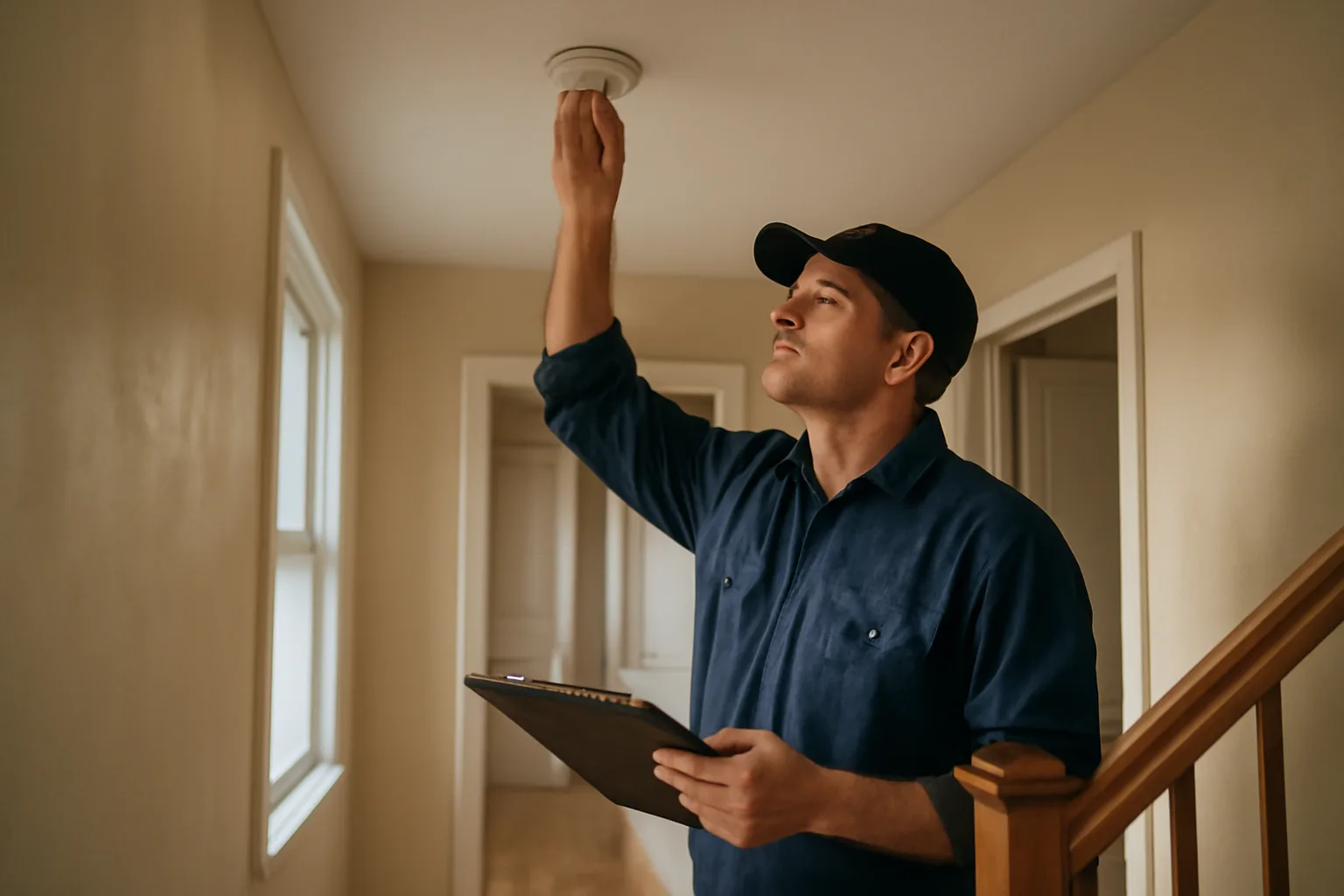
During a routine or move-in/move-out inspection, a landlord (or city inspector, if it's a licensing inspection) can generally check things directly tied to habitability, safety, and lease compliance: working smoke and carbon monoxide detectors, functioning plumbing and heating, electrical outlets and panel condition, signs of pest infestation, mold or water damage, structural issues (cracked walls, damaged flooring), and whether the unit matches what was agreed to in the lease (unauthorized pets, unauthorized occupants, unauthorized alterations). A landlord conducting a routine inspection (not an emergency) still has to follow the notice rules discussed above; showing up unannounced to "look around" is not compliant in most states even if the landlord owns the property. Inspections are generally limited to a reasonable time and reasonable scope; a landlord checking for a maintenance issue doesn't have open-ended authority to search personal belongings, closets, or private areas unrelated to the stated purpose. For city licensing inspections specifically, the inspector is typically checking against a code enforcement checklist covering the health and safety basics required under that city's housing code: functioning egress windows in bedrooms, working locks, adequate heat source, no exposed wiring, and working detectors. These checklists are usually published on the city's building or code enforcement department page, and it's worth reading yours before the inspector arrives so you can fix obvious issues in advance.
What a landlord cannot do in Ohio
Ohio's landlord-tenant law is set out in Ohio Revised Code Chapter 5321, and it limits landlords from a specific set of actions regardless of what the lease says. A landlord in Ohio cannot shut off a tenant's utilities, change the locks, or remove the tenant's belongings to force them out without going through the court eviction process; Ohio courts treat these as illegal "self-help" evictions. Ohio Revised Code Section 5321.04 requires landlords to keep the premises in a fit and habitable condition, comply with building and housing codes materially affecting health and safety, keep common areas safe, maintain utility fixtures, and make repairs to keep the unit habitable [9]. A landlord who fails these duties can be sued by the tenant for damages or, in some cases, face a rent escrow action where the tenant pays rent to the court instead of the landlord until repairs are made. Ohio landlords also cannot retaliate against a tenant for exercising legal rights, such as reporting a code violation or joining a tenant organization; Ohio Revised Code Section 5321.02 specifically prohibits a landlord from raising rent, decreasing services, or threatening eviction in retaliation for such actions within a defined period after the tenant's protected activity . And a landlord cannot enter the rental unit without reasonable notice; Ohio Revised Code Section 5321.04 also requires "reasonable notice" (Ohio courts have generally treated 24 hours as reasonable, though the statute itself doesn't fix an exact number) except in emergencies [9]. If you're a landlord in Ohio getting into local licensing questions on top of the state law, check with your specific city; Ohio doesn't have a statewide rental license, but several Ohio cities (Cleveland, Columbus, Toledo, Cincinnati) run their own local rental registration or point-of-sale inspection programs independent of Chapter 5321.
What happens if you skip your city's rental license or miss an inspection deadline?
Consequences vary by city, but they generally fall into three buckets: fines, an inability to collect rent or evict through the courts, and, in more aggressive cities, a vacate order. Many cities issue a fine per day or per violation for operating an unlicensed rental unit, and these fines commonly range from around $50 to several hundred dollars a day depending on the city's code, compounding fast if you ignore the first notice. Some cities also make an unlicensed rental unit a bar to eviction: if you try to file an eviction (unlawful detainer) against a nonpaying tenant while your rental license has lapsed, some local courts will dismiss the case until you're compliant, which can cost you months of lost rent while the tenant stays for free. A missed inspection deadline usually triggers a re-inspection fee on top of the original license fee, and repeat no-shows can escalate to a formal notice of violation, then a hearing, then in the worst cases a court order. None of these consequences are uniform nationally, so the fine amount, the escalation timeline, and whether an eviction gets blocked all depend on your specific city ordinance. Confirm the actual penalty schedule with your city rental licensing office rather than assuming a number you saw for a different city applies to yours. If you got an ordinance notice, inspection deadline letter, or a fine and you're not sure what's actually required to fix it, our $79 one-time City Rental License & Inspection Prep Packet walks through the common inspection checklist items, notice letter templates for your files, and a renewal tracking sheet, built for landlords with 1 to 10 units reacting to exactly this kind of notice. It won't replace calling your city's code office to confirm the specific fee and deadline, but it saves the hours of hunting through your city's website to figure out what to bring to the inspection.
How do landlord license requirements differ from state landlord-tenant law?
| State landlord-tenant law | State legislature | Security deposit limits, notice periods, habitability, eviction procedure | State courts, tenant lawsuits | |
|---|---|---|---|---|
| City rental license/registration | City or county code enforcement | Registration, license fee, periodic inspection, code compliance checklist | Code enforcement fines, license revocation | |
| Federal fair housing law | Congress (Fair Housing Act) | Anti-discrimination in advertising, screening, and terms | HUD, federal courts | A landlord who is fully compliant with state law (proper deposit handling, proper notice, habitable unit) can still be fined for operating without the required city rental license, because these are two separate legal obligations. The reverse is also true: having a valid rental license doesn't excuse a landlord from following state deposit and notice law. Treat them as two separate checklists, not one. |
A rental license is a local permit requirement; landlord-tenant law is the state-level (and sometimes federal) set of rules governing the lease relationship itself. They operate independently and you generally have to comply with both. Landlord-tenant law covers security deposits, notice periods, habitability duties, and eviction procedure, and it applies whether or not your city requires a rental license. Rental licensing covers registration, fees, and inspections tied specifically to operating a rental business within that city's limits. Here's a simple comparison of what each layer typically covers: | Layer | Who sets it | Typical contents | Enforcement |
Frequently asked questions
How to become a landlord if you've never rented out property before?
Own or buy the property, confirm your loan allows renting it out, check your city for rental registration or licensing requirements, get landlord insurance, learn your state's landlord-tenant act (deposit limits, notice periods, habitability duties), screen tenants under Fair Housing Act rules, and sign a lease with required disclosures like the federal lead paint disclosure for pre-1978 homes.
Who is responsible for the rental property walk-through inspection in California?
The landlord is responsible for scheduling and conducting the move-out walk-through inspection under California Civil Code Section 1950.5 when the tenant requests one, giving at least 48 hours' notice and a written list of deficiencies. Separately, some California cities run their own code enforcement inspections handled by a city inspector, not the landlord directly.
What is landlording?
Landlording is the ongoing work of owning and managing rental property: setting rent, screening and managing tenants, handling repairs, following state habitability and deposit law, and complying with any city licensing or inspection requirements. It's an active management role, not a one-time transaction.
What is a landlord, legally speaking?
A landlord is the owner (or authorized lessor) of a dwelling unit who grants a tenant the right to occupy it under a lease or rental agreement in exchange for rent. Most state landlord-tenant statutes define the term specifically; check your own state's code for the exact legal definition and duties attached to it.
What rights do tenants have without a lease?
A tenant without a written lease is usually treated as a month-to-month tenant under state law, with rights to a habitable unit, proper statutory notice before eviction, protection from illegal lockouts, and return of any security deposit. They typically lack fixed-term protections like a guaranteed rent for a set period.
Why do landlords require renters insurance?
Landlords require renters insurance to shift liability for the tenant's personal property and personal injury/damage claims away from the landlord's own policy. A landlord's dwelling policy usually doesn't cover a tenant's belongings, so requiring renters insurance (often $15 to $30 a month) protects both parties from an uncovered loss.
How much notice does a landlord have to give before entering a unit?
It depends on the state. California presumes 24 hours' written notice is reasonable under Civil Code Section 1954, and many other states use a similar 24-hour standard, though some only require "reasonable notice" without a fixed number. Check your specific state's landlord-tenant statute for the exact figure.
What can a landlord look at during an inspection?
A landlord or city inspector can generally check habitability and safety items: smoke and carbon monoxide detectors, plumbing, heating, electrical condition, pest or mold issues, structural damage, and lease compliance like unauthorized occupants or pets. Inspections must follow required notice and stay limited to the stated purpose, not a general search of belongings.
What can't a landlord do in Ohio?
Under Ohio Revised Code Chapter 5321, a landlord cannot shut off utilities, change locks, or remove belongings to force a tenant out without a court eviction. Landlords must keep units habitable (Section 5321.04), cannot retaliate against tenants for exercising legal rights (Section 5321.02), and must give reasonable notice before entering.
Do all cities require a rental license?
No. Rental licensing is set city by city (sometimes county by county), and there's no federal or nearly-universal state requirement. Many mid-size and large cities require registration or licensing for rental units, but plenty of smaller towns and some entire states have no such program. Always check your specific city's building or code enforcement department page.
How much does a rental license typically cost?
Fees vary widely by city, commonly somewhere between $50 and $300 per unit per year in cities that charge one, though some charge per building instead of per unit and some renewal cycles run every two years instead of annually. Because this differs so much, confirm the current fee directly with your city's rental licensing office rather than assuming a number from another city.
What happens if I operate a rental without the required city license?
Consequences vary by city but often include daily or per-violation fines (commonly in the range of tens to a few hundred dollars per day), a possible block on filing eviction cases until you're compliant, and in repeat cases a formal violation notice or hearing. Confirm your specific city's penalty schedule since amounts and escalation timelines are set locally.
Is a landlord license the same as a business license?
No, though some cities require both. A business license is a general permit to operate any business in that city; a rental or landlord license is specific to operating residential rental property and usually comes with its own inspection and code compliance requirements that a general business license doesn't include.
Do I need a real estate license to rent out my own property?
No. A real estate license is only required if you're managing or leasing rental property for other owners as a business; renting out property you own yourself doesn't require one in any state. The specific threshold for when property management crosses into requiring a license varies by state real estate commission rules.
Sources
- City of Milwaukee, Rental Property Registration: Milwaukee requires registration for most non-owner-occupied rental properties with an owner-occupied exemption
- HUD, Tenant Rights, Laws and Protections state directory: HUD maintains a state-by-state directory of local renter's rights resources
- HUD, Fair Housing Act overview: The Fair Housing Act prohibits discrimination based on race, color, national origin, religion, sex, familial status, or disability
- EPA/HUD, Disclosure of Known Lead-Based Paint Hazards (42 U.S.C. § 4852d): Federal law requires lead paint disclosure for housing built before 1978
- California Legislative Information, Civil Code Section 1950.5: California landlords must give at least 48 hours' notice for an initial move-out inspection and provide a written itemized statement of deficiencies
- California Legislative Information, Civil Code Section 1954: California presumes 24 hours' written notice is reasonable before a landlord enters a unit, absent emergency
- California Legislative Information, Civil Code Section 1946.1: California requires 60 days' notice to terminate a tenancy of one year or more
- Ohio Laws, Revised Code Section 5321.04: Ohio landlords must keep rental premises in a fit and habitable condition and give reasonable notice before entry
- Ohio Laws, Revised Code Section 5321.02: Ohio prohibits landlords from retaliating against tenants for exercising legal rights