Last updated 2026-07-23
TL;DR
Becoming a landlord means renting out property in exchange for money and following the state and local rules that come with it: fair housing law, entry notice requirements, habitability duties, and in many cities, rental registration or licensing. There's no national landlord license. Requirements vary by state and by city, so confirm specifics with your local rental licensing office before you list a unit.
What is landlording, and what is a landlord under the law?
"Landlording" is just the working word people use for the actual job: collecting rent, keeping the unit livable, fixing what breaks, screening applicants, and following whatever state and local law applies to rental housing. It's not a formal title. Nobody hands you a landlording certificate. Legally, a landlord is anyone who rents real property to someone else in exchange for money, whether that's a spare bedroom, one half of a duplex, or a ten-unit building you inherited from an aunt. The IRS doesn't distinguish between a full-time investor and someone who accidentally became a landlord after a move. The moment rent changes hands, that income goes on Schedule E, and you're expected to follow the same landlord-tenant statutes as a professional property manager. That last part surprises a lot of new landlords. Renting out one room in your own house still puts you under most of the same state disclosure, deposit, and notice rules as someone running a 200-unit portfolio, though some states carve out small exceptions for owner-occupied duplexes or triplexes. For a wider look at what the role covers day to day, see our guide on being a landlord.
How do you become a landlord, step by step?
There's no exam and no national license. Becoming a landlord is really a checklist of legal and practical steps, and skipping any of them tends to cost you later, either in fines or in a lawsuit you didn't see coming. Here's the realistic order: confirm the property is actually zoned and permitted for rental use (some single-family zones restrict rentals or cap how many unrelated people can share a unit); check whether your city requires rental registration, a rental license, or a certificate of occupancy before you can legally advertise the unit, since a growing number of cities fine landlords retroactively for renting before registering; get a landlord (dwelling) insurance policy rather than relying on a standard homeowner's policy, which usually excludes rental use; screen every applicant using the same criteria, since inconsistent screening is one of the fastest ways to trigger a fair housing complaint under the federal Fair Housing Act; write a lease that matches your state's required notice periods and disclosures; and set up bookkeeping early, since rental income and expenses get reported on Schedule E every year regardless of how small your operation is. Most people learn how to be a landlord by doing it once and getting burned on something small, a late notice, a security deposit deadline, an entry without proper notice. Reading your state's landlord-tenant statute before your first tenant moves in saves you that lesson. For the mechanics of the role itself, see landlord landlords.
Do you need a rental license before you can legally rent out a unit?
Maybe. It depends entirely on your city, not your state, and this is the part most new landlords miss. A growing list of cities require some form of rental registration, a paid rental license, or a pre-occupancy inspection before a unit can be legally rented, separate from anything your state requires. These programs generally fall into three buckets. Registration just means telling the city you rent out property, often free or low-cost. Licensing usually means paying an annual or per-unit fee and sometimes passing a habitability inspection first. Certificate-of-occupancy programs require a fresh inspection every time a unit turns over to a new tenant. Fees typically run somewhere between $25 and a few hundred dollars per unit per year, but that range swings a lot by city, so confirm the actual fee, cycle, and office with your city rental licensing office rather than assuming. If your city sent you a notice, an inspection deadline, or a violation letter, that's usually your first real signal that a licensing program exists and applies to your property. Getting the paperwork and inspection checklist organized before that inspection date matters more than most landlords expect; it's the difference between a five-minute pass and a re-inspection fee. That's the exact gap our $79 one-time City Rental License & Inspection Prep Packet is built to close, though it's a paperwork and prep tool, not a substitute for confirming your city's actual rules.
Who is responsible for the rental property walk-through inspection in California?
In California, the landlord (or their property manager) is responsible for scheduling and conducting the move-out walk-through inspection, not the tenant. Under California Civil Code Section 1950.5(f), a landlord must notify the tenant in writing of the right to request an initial inspection before move-out, and that inspection has to happen at a reasonable time, generally within two weeks of the lease ending. The point of that inspection is to let the tenant fix minor issues themselves before move-out so they aren't blindsided by deposit deductions later. The tenant has the right to be present, but the landlord (or an authorized agent) is the one who actually conducts it and documents the findings. That's separate from a city-run rental inspection program. Some California cities with mandatory rental inspection ordinances send a city inspector, not the landlord, to check the unit against local housing code. In that case the landlord is still responsible for scheduling access, correcting anything flagged, and paying any related fee, even though the city employee does the actual inspection. Confirm which kind of inspection you're dealing with (private move-out inspection vs. city code inspection) with your city rental licensing office, since the process and paperwork differ.
What can a landlord look at during an inspection, and what's off-limits?
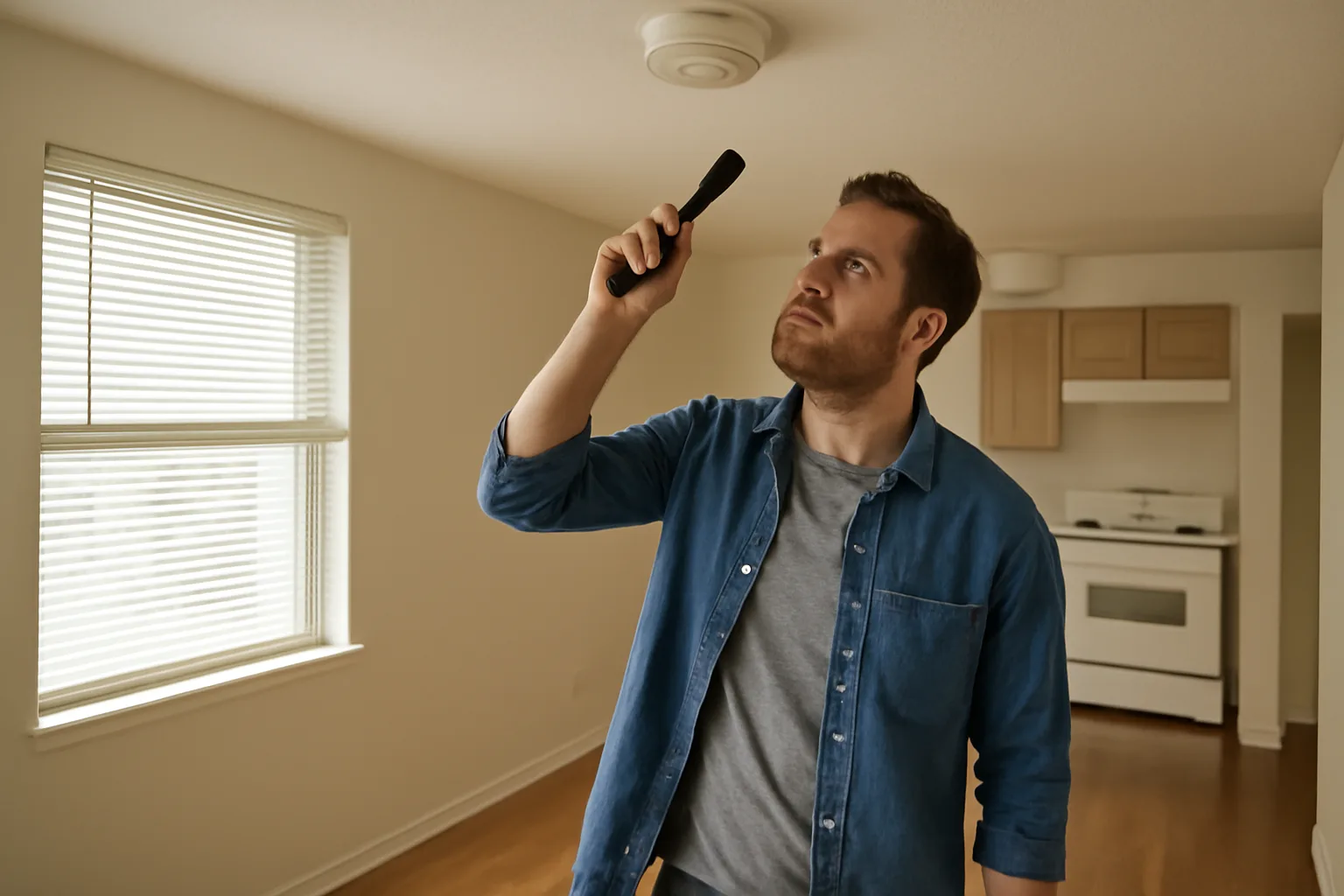
A landlord conducting a rental inspection, whether it's a routine check, a move-out walk-through, or a city-mandated habitability inspection, can generally look at anything related to the physical condition and safety of the unit. HUD's Housing Quality Standards, used as the baseline for most Section 8 and many local rental inspections, cover categories like sanitary facilities, food preparation areas, space and security, a working thermal environment (heat that actually works), illumination and electrical systems, structural condition inside and out, and functioning smoke detectors and a usable exit path [1]. What's off-limits is anything unrelated to condition and safety. A landlord can note that a closet door is broken; a landlord shouldn't be going through what's inside the closet, opening drawers, or photographing personal belongings that have nothing to do with the inspection. Fair housing rules also mean inspections need to be applied the same way to every unit and every tenant, not targeted based on a protected class like family status, national origin, or disability. Good practice, and honestly the safest legal ground, is to give proper written notice, stick to a written checklist, keep the visit short, and document only what the inspection is actually for.
How much notice does a landlord have to give before entering or ending a tenancy?
| California | 24 hours (presumed reasonable) | Cal. Civ. Code §1954 | |
|---|---|---|---|
| Chicago | 48 hours | Chicago RLTO §5-12-050 | |
| Florida | 12 hours, 7:30am-8pm only | Fla. Stat. §83.53 | |
| Ohio | "Reasonable notice," no fixed hours in statute | Ohio Rev. Code §5321.04 | For ending a month-to-month tenancy in California, the default is 30 days' notice if the tenant has lived there less than a year, and 60 days if they've lived there a year or more, under Civil Code Section 1946.1. Other states set their own numbers, commonly somewhere between 15 and 60 days depending on the state and the reason for termination. Always confirm the exact number for your state before sending a termination notice; getting it wrong can restart the clock entirely. |
This splits into two very different questions: notice before entering the unit, and notice before ending the tenancy itself. Both are set by state (sometimes city) law, and they vary more than most landlords expect. For routine entry, California presumes 24 hours' written notice is reasonable under Civil Code Section 1954. Florida requires at least 12 hours' notice for entry to make repairs, and entry has to fall between 7:30 a.m. and 8:00 p.m. under Florida Statute 83.53 [2]. Chicago's Residential Landlord and Tenant Ordinance requires two full days (48 hours) notice before entry except in an emergency. Ohio's statute requires "reasonable notice" without naming a fixed number of hours, though 24 hours is the figure most attorneys and courts treat as reasonable in practice [3]. | Jurisdiction | Notice required before routine entry | Source |
What rights do tenants have without a written lease?
A tenant without a signed lease is not a tenant without rights. If rent has changed hands and the landlord has accepted it, courts in most states treat that as a month-to-month tenancy at will, governed by the same landlord-tenant statute that would apply if there were a lease. That includes the implied warranty of habitability (the unit has to be fit to live in), the same notice requirements before termination, and the same security deposit handling rules if money was collected as a deposit. What a tenant without a lease usually doesn't have is a fixed term. Either side can typically end a month-to-month tenancy with proper notice, whereas a signed one-year lease locks both sides in for that period barring a lease violation. In California, for example, ending that kind of tenancy still requires the 30 or 60 day notice under Civil Code Section 1946.1, lease or no lease. This is exactly where new landlords get tripped up: assuming that "no lease" means "no rules." It doesn't. State law fills in the gaps a lease would normally cover. See our broader breakdown of tenants rights for how that plays out state by state.
Why do landlords require renters insurance?
Landlords require renters insurance mainly to close a coverage gap that catches a lot of first-time owners off guard: a standard landlord (dwelling) insurance policy covers the building itself, not the tenant's personal belongings and usually not the tenant's personal liability either. If a pipe bursts and ruins a tenant's furniture, or a tenant's dog bites a visitor, the landlord's policy typically isn't the one paying that claim, and the landlord can still get pulled into the dispute. Renters insurance covers the tenant's belongings and adds a layer of liability coverage that protects everyone, including the landlord, if something goes wrong inside the unit. Industry data from the Insurance Information Institute shows renters insurance ownership still lags well behind homeowners insurance, with adoption among renters running roughly half of what it is among homeowners nationally. That gap is the whole reason landlords started building it into leases as a condition of tenancy in states where that's allowed. Requiring it isn't about distrust of any one tenant. It's about not being the only party left holding financial exposure after a fire, a burst pipe, or a dog bite. See renters rights for how insurance requirements interact with what a tenant is otherwise entitled to.
What can't a landlord do in Ohio?
Ohio law draws a hard line against what's called self-help eviction. Under Ohio Revised Code Section 5321.15, a landlord cannot lock a tenant out, remove doors or windows, shut off utilities like water or electricity, or seize a tenant's belongings to force them out, even if the tenant is behind on rent. The only legal path to remove a tenant is through the courts, meaning a formal eviction filing, not changing the locks over a weekend. Ohio Revised Code Section 5321.04 also spells out ongoing landlord duties: keeping the premises fit and habitable, complying with applicable building and housing codes, keeping common areas safe, and giving reasonable notice before entering the unit [3]. A landlord who violates these sections can be sued by the tenant for actual damages, and in some cases the statute allows the tenant to recover reasonable attorney's fees as well. The practical takeaway for Ohio landlords is simple: even a tenant who's badly behind on rent still has to be removed through the eviction process, not through a lockout or a shutoff. Skipping that step doesn't just risk losing the case, it can turn a nonpaying tenant into a landlord with a real legal claim against them. For a broader look at these baseline protections, see tenant rights.
What happens if you skip rental registration, licensing, or a required inspection?
Consequences vary by city, but the pattern is pretty consistent across mandatory-licensing municipalities: fines that often accrue per unit, sometimes per month, until the property comes into compliance. Some cities also restrict a landlord's ability to collect rent, file an eviction for nonpayment, or even legally advertise the unit until it's registered or licensed. A handful require the fee to be paid retroactively for every month the unit was rented unregistered, which can add up fast on a unit that's been operating quietly for a year or two. Missing a scheduled inspection carries its own risk. Many cities charge a re-inspection fee, and repeated no-shows or repeated failed inspections can escalate to a hearing, a suspended license, or in rare cases a court order. Exact fee amounts, grace periods, and escalation steps differ by office, so confirm the specifics with your city rental licensing office rather than assuming your city works like the one down the road. If you already know an inspection date is coming and you're not sure your paperwork or unit is ready, getting organized ahead of time is worth more than most landlords think. That's the whole reason we built the $79 one-time City Rental License & Inspection Prep Packet, a straightforward way to walk into that inspection with the documentation and unit condition already sorted, rather than scrambling the night before.
Frequently asked questions
How do I become a landlord if I've never rented out property before?
Confirm the property is zoned for rental use, check whether your city requires rental registration or a license before you advertise, get landlord (dwelling) insurance instead of a standard homeowner's policy, screen applicants consistently under fair housing law, and write a lease that matches your state's notice rules. There's no license test; the requirements are a mix of state statute and city ordinance you have to look up yourself.
What does landlording actually involve day to day?
Landlording covers collecting rent, keeping the unit habitable, handling repair requests, screening new tenants, following entry-notice and termination-notice rules, and reporting rental income and expenses on Schedule E each year [10]. In cities with rental licensing programs, it also means keeping registration current and passing periodic inspections.
What is a landlord, legally speaking?
A landlord is anyone who rents real property to another person for money, whether that's one room or a full apartment building. The label doesn't depend on scale or intent; the moment rent is collected, the person renting is treated as a landlord under state landlord-tenant law and reports the income on Schedule E [10].
Who is responsible for the walk-through inspection on a rental in California?
The landlord or their property manager is responsible for offering and conducting the initial move-out inspection under California Civil Code Section 1950.5(f) [6]. The tenant has the right to be present and to fix issues found before move-out, but the landlord schedules and runs it. A separate city-run habitability inspection, if one applies, is conducted by a city inspector instead.
What rights do tenants have if they never signed a lease?
Once rent has been paid and accepted, most states treat that as a month-to-month tenancy at will, governed by the same habitability, deposit, and notice rules that apply to a written lease. The main difference is there's no fixed term, so either side can typically end it with the state's required notice period rather than being locked into a set end date.
Why do so many landlords require renters insurance?
A landlord's own dwelling policy usually doesn't cover a tenant's personal belongings or a tenant's personal liability, so requiring renters insurance shifts that risk to a policy actually built for it. Insurance Information Institute data shows renters insurance ownership still runs well below homeowners insurance ownership nationally, which is part of why more landlords build it into lease requirements [11].
How much notice does a landlord have to give before entering a rental unit?
It depends on the jurisdiction. California presumes 24 hours is reasonable notice [1], Florida requires at least 12 hours and limits entry to 7:30 a.m. to 8:00 p.m. [2], and Chicago's landlord-tenant ordinance requires 48 hours except in an emergency [3]. Ohio's statute only requires "reasonable notice" without naming a specific number of hours [4].
What can a landlord look at during an inspection?
A landlord can look at anything related to the physical condition and safety of the unit: smoke detectors, plumbing, electrical, heating, structural issues, and general upkeep, similar to the categories in HUD's Housing Quality Standards [8]. A landlord shouldn't be searching personal belongings, drawers, or closets beyond what's needed to check the condition of the space itself.
What can't a landlord do in Ohio?
Ohio landlords cannot lock out a tenant, remove doors or windows, shut off utilities, or seize belongings to force a tenant out, even for nonpayment, under Ohio Revised Code Section 5321.15 [5]. The only legal way to remove a tenant is through a court-ordered eviction. Landlords also have to keep the unit habitable and give reasonable notice before entering, per Ohio Revised Code Section 5321.04 [4].
Do I need a rental license before I can advertise my property?
In many mandatory-licensing cities, yes, some form of registration or license needs to be in place before you can legally rent the unit out, separate from anything your state requires. Fees and processing times vary a lot by city, so confirm the exact requirement, fee, and timeline with your city rental licensing office before you list the property.
What happens if I rent out a unit without the required license?
Consequences vary by city but commonly include per-unit fines that can accrue monthly, retroactive license fees for the period you were unregistered, and in some cities a temporary restriction on collecting rent or filing an eviction until you're compliant. Ask your city rental licensing office directly what the current penalty structure looks like for your property.
How is being a landlord different from being a property manager?
A landlord owns the property and holds the legal responsibilities that come with renting it out, while a property manager is typically hired by the landlord to handle day-to-day tasks like rent collection, maintenance calls, and screening. The landlord is still legally responsible for licensing, habitability, and compliance even when a property manager handles the daily work.
Sources
- Ohio Laws, Ohio Revised Code Section 5321.04 (landlord obligations): Ohio landlords must keep premises habitable and give reasonable notice before entry.
- Ohio Laws, Ohio Revised Code Section 5321.15 (prohibited landlord actions): Ohio landlords cannot lock out tenants, shut off utilities, or seize belongings without a court order.
- Internal Revenue Service, Topic no. 414 Rental Income and Expenses: Rental income and expenses are reported on Schedule E regardless of the size of the rental operation.
- California Legislative Information: California landlords must give at least 24 hours' written notice before entering a rental unit for inspections.
- California Legislative Information: California law governs security deposits and move-out inspection procedures for rental properties.
- Ohio Revised Code: Ohio tenants have specific statutory obligations, which correspond to landlord rights and restrictions under Ohio law.
- Ohio Revised Code: Ohio law defines who qualifies as a 'landlord' and 'tenant' under the Ohio Landlords and Tenants Act.
- U.S. Department of Housing and Urban Development: Tenants retain certain legal rights and protections even without a written lease agreement.
- Consumer Financial Protection Bureau: Renters insurance can protect tenants' personal property and provide liability coverage, which is why landlords often require it.
- California State Controller's Office: Certain California cities require rental unit registration or licensing before a unit can be legally rented.