Last updated 2026-07-26
TL;DR
No. Maryland has no statewide law forcing landlords to provide air conditioning. State code only requires functioning heating systems and general fitness for habitation. A handful of counties, including Montgomery and Prince George's, have their own rules about maximum indoor temperatures or AC in units that already have it installed. Check your specific county and city code.
Does Maryland state law require landlords to provide air conditioning?
No. Maryland's statewide landlord-tenant statute does not require a landlord to install or provide air conditioning in a rental unit. The state's habitability standard, found in the Real Property Article, focuses on things like structural safety, working plumbing, heat, hot water, and freedom from serious pest infestation, not cooling [1]. Maryland's implied warranty of habitability comes from Md. Code, Real Property § 8-211, which lets a tenant sue or withhold rent (through an escrow process) if a landlord fails to fix conditions that are a "serious and dangerous threat to the life, health, or safety" of occupants [1]. Courts and county code officials have generally treated heat as a life-safety issue in cold-weather states like Maryland. Cooling has not been treated the same way at the state level, though that's shifting in some counties as summers get hotter. So if your lease doesn't mention air conditioning and your unit never had a working AC system, Maryland state law alone won't force you to add one. That said, state law is the floor, not the ceiling. Counties and Baltimore City can and do layer on stricter rules, which is where most of the real requirements actually live.
Which Maryland counties actually regulate air conditioning or indoor temperature?
A few Maryland jurisdictions have gone further than the state and set specific rules, usually about maintaining existing AC equipment rather than requiring landlords to install cooling where none exists. Montgomery County's housing code requires landlords to maintain any "cooling system" that is provided as an amenity of the rental, and county code enforcement treats a broken AC unit that came with the unit as a maintenance violation, more than a comfort complaint. If a landlord advertised a unit with central air or supplied a window unit, they generally have to keep it working. Montgomery County Code Chapter 29 (Landlord-Tenant Relations) is the place to check the current text and any recently amended thresholds [2]. Prince George's County has a similar approach through its Landlord-Tenant Code and property maintenance provisions, and the county's rental licensing program ties habitability conditions, including working systems provided with the unit, to license renewal inspections [3]. Baltimore City's housing code sets minimum heat requirements in cold months (a familiar rule in most cold-climate cities) but does not set a parallel maximum-temperature or mandatory-AC rule for general rentals. Some jurisdictions elsewhere in the country (not Maryland specifically) have adopted maximum indoor temperature rules for extreme heat events, but that's not the norm in Maryland yet. Bottom line: if your rental sits in Montgomery County, Prince George's County, or Baltimore City, don't rely on general assumptions. Pull the actual chapter number from your county code site or call the local rental licensing or code enforcement office directly. Ordinances get amended, and enforcement priorities shift year to year. For a broader look at how these things vary, see tenants rights and renters rights for cross-jurisdiction context.
If AC was included when the tenant moved in, does the landlord have to fix it?
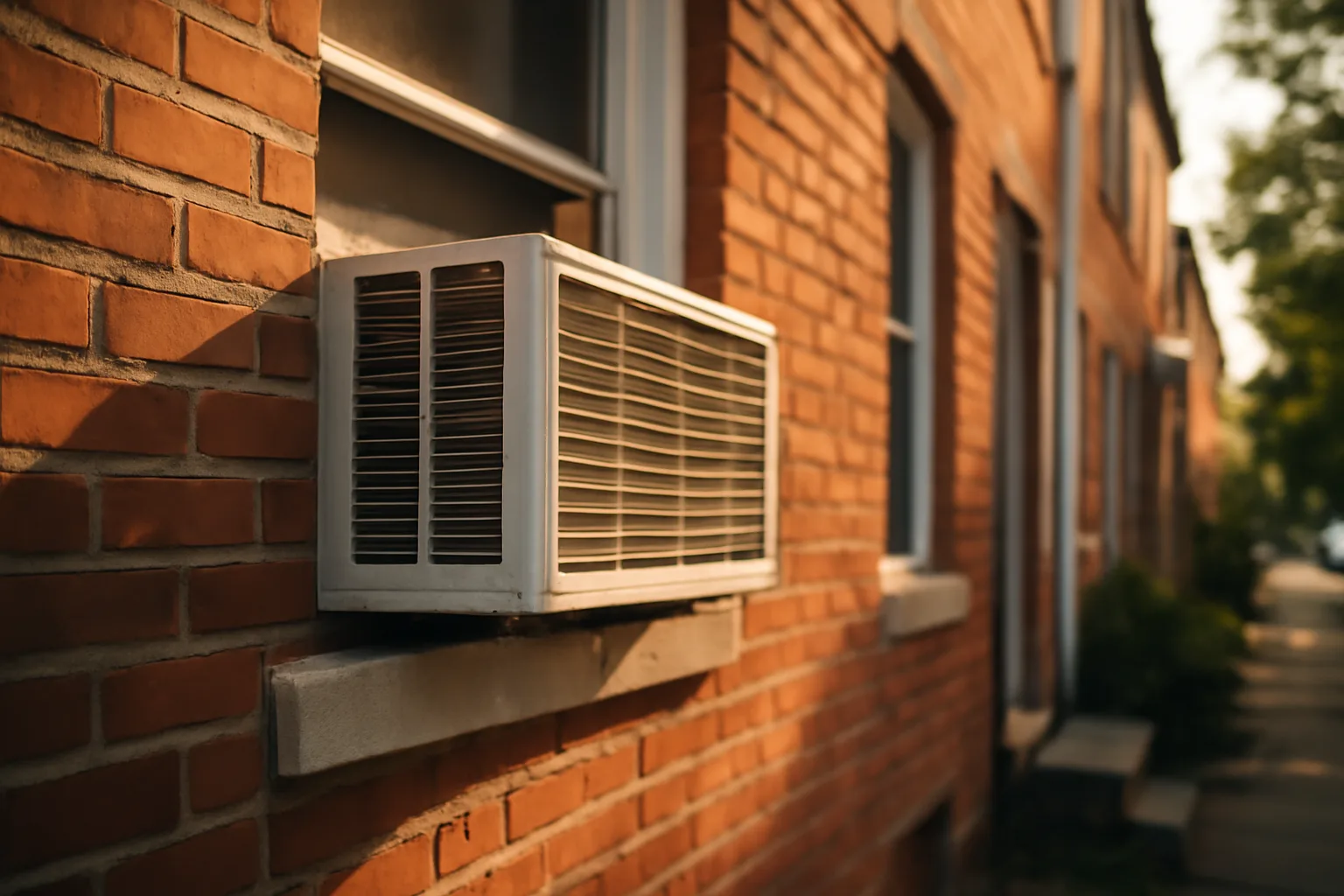
Generally yes, in the counties that regulate this. Once a landlord provides air conditioning as part of the rental (built-in central air, a window unit left in the unit, a mini-split), most local codes treat that equipment the same way they treat any other system the landlord supplied: it has to be kept in working order for the life of the tenancy. This matters for lease drafting and for existing leases alike. If your lease lists central air as an included amenity, and the compressor dies in July, a tenant in Montgomery County or Prince George's County has a real code-based argument that you're required to repair it, more than "nice to have it fixed." The habitability escrow process under Md. Code § 8-211 can also apply if the failure rises to a serious health and safety threat, though courts vary on how they treat AC failure compared to a total loss of heat in winter [1]. If you don't want an ongoing legal obligation to maintain AC, the fix is upstream: don't represent AC as included, and don't leave window units behind for tenant use if you're not prepared to service them. That's a decision to make before move-in, documented clearly in the lease, not something to sort out mid-dispute.
What happens if a tenant files a complaint about no AC or a broken AC unit?
It depends entirely on whether your jurisdiction has a rule on the books. In a county with no AC-specific ordinance, a tenant complaint about lack of cooling typically goes nowhere as a code violation, though it can still become a habitability dispute if temperatures inside are extreme enough to threaten health, particularly for elderly tenants or those with medical conditions. In Montgomery County or Prince George's County, a complaint about a broken AC unit that was part of the original rental usually triggers a code enforcement inspection. Inspectors check whether the system was provided by the landlord, whether it's actually broken, and how long the landlord has known about it. Response timelines and re-inspection fees vary by county, so confirm the current numbers with your county's code enforcement or rental licensing office rather than assuming a fixed number. Maryland's rent escrow law also gives tenants a path to withhold rent into a court-supervised account if a landlord doesn't fix a serious defect after written notice, though this is more commonly used for heat, water, and structural issues than AC [1]. A tenant would need to convince a District Court judge that a lack of cooling meets the "serious and dangerous" threshold, which is a higher bar than most people expect.
How much notice does a landlord have to give before entering to inspect or repair a rental unit?
Maryland does not set one uniform statewide notice period for landlord entry the way some states do. Most Maryland leases specify a notice period (commonly 24 to 48 hours) for non-emergency entry, and that lease term generally governs unless a specific county ordinance overrides it. Baltimore City and some counties address entry notice through their landlord-tenant codes or licensing rules, so the safest move is to check your specific city or county code alongside your lease language before scheduling a repair visit or a rental license inspection. For emergency repairs (a burst pipe, no heat in winter, a gas leak), most codes and leases allow entry without the usual advance notice. If you're inspecting a unit for a rental license renewal, treat that appointment with the same courtesy as any other entry: written notice, a specific time window, and a way for the tenant to reach you if the timing doesn't work. That habit avoids a lot of avoidable tenant friction and complaints to the county.
What can a landlord look at during a rental inspection?
A licensing or code inspection generally covers the building systems that affect health and safety, not a tenant's personal belongings. Typical items include smoke and carbon monoxide detectors, electrical panels and outlets, plumbing and water heater function, heating system condition, window and door locks, egress windows in bedrooms, handrails and stair conditions, and signs of pest infestation or mold. Inspectors in most jurisdictions are not there to inventory a tenant's furniture or look through closets and drawers. The inspection scope is usually defined by the county or city's rental licensing ordinance, and it's worth reading that specific list before your first inspection so you know what's actually being checked. Many counties publish an inspection checklist alongside their rental license application. If your county has one, print it and walk your own unit against it before the county inspector shows up. Some counties also inspect for weather protection, working locks on all exterior doors, and functioning cooling equipment if it was provided as part of the rental, tying this back to the AC maintenance obligation discussed above.
Who is responsible for a rental property walk-through inspection?
The answer depends on what kind of inspection you mean. For a move-in or move-out walk-through, responsibility typically falls on the landlord or property manager to document the unit's condition, often alongside the tenant, before the tenant takes possession and again after they leave. This protects both sides on security deposit disputes. For a rental license inspection tied to a mandatory registration program, a government inspector (city or county code enforcement, sometimes a licensed private inspector under a county's approved list) conducts the walk-through, and the landlord or their designated agent needs to be present or provide access. This question comes up a lot in searches referencing California specifically. California's Civil Code § 1950.5 requires landlords to offer tenants a pre-move-out inspection opportunity, generally two weeks before the tenant vacates, so the tenant can address any deficiencies before the final deposit accounting [4]. Maryland does not have an identical statewide pre-move-out inspection requirement, though individual leases can include a similar walk-through provision, and it's a good practice regardless of what state you're in.
What rights do tenants have without a signed lease in Maryland?
A tenant without a written lease in Maryland is generally treated as a periodic tenant, most often month-to-month, and still has real legal protections under state law. The absence of a signed lease does not strip a tenant of habitability rights, protection from unauthorized entry, or protection from illegal lockout and self-help eviction. Maryland law prohibits landlords from using "self-help" measures like changing locks, removing doors, or shutting off utilities to force a tenant out, even without a written lease. Eviction has to go through the District Court process. A tenant without a lease is still owed the same implied warranty of habitability under Md. Code, Real Property § 8-211 as one with a signed lease [1]. Without a written lease, the terms default to whatever the parties can prove was agreed (rent amount, due date) plus statutory defaults for notice to terminate a periodic tenancy. This is exactly the situation where a landlord wants everything in writing going forward, because oral agreements become memory disputes the moment something goes wrong. For a broader rundown, see tenants rights and tenant rights.
Why do landlords require renters insurance?
Renters insurance protects the tenant's personal belongings and gives the landlord a layer of liability protection that the landlord's own property insurance usually doesn't cover. A landlord's policy covers the building structure; it typically does not cover a tenant's furniture, electronics, or clothing damaged in a fire, pipe burst, or theft, and it doesn't cover a tenant's personal liability if a guest gets hurt in the unit. Many landlords require renters insurance as a lease condition specifically because it reduces the odds that a tenant tries to make a claim against the landlord's policy for their own losses, and because a tenant's liability coverage (commonly $100,000 or more) can absorb costs from things like an accidental unit fire that starts from the tenant's cooking or a candle, before the landlord's own policy or personal assets get pulled into it. Requiring it is legal in Maryland and most states as a standard lease condition, as long as it's applied consistently and disclosed before signing. It's one of the cheapest risk-reduction moves a small landlord can make, and premiums for tenants are typically modest, often well under $20 a month depending on coverage and location, though exact pricing depends on the insurer and the tenant's own factors.
What is landlording, and what does it actually involve day to day?
Landlording is the ongoing work of owning and operating a rental property: screening and placing tenants, collecting rent, handling maintenance and repairs, staying compliant with local licensing and inspection rules, managing the lease relationship, and handling the eventual turnover when a tenant moves out. It is not passive. Even a single-unit landlord in a mandatory rental licensing city typically deals with an annual or biennial license renewal, periodic inspections, tenant repair requests, and record-keeping for both tax purposes and code compliance. A landlord with even one unit in Montgomery County, for example, needs to track the county's rental licensing renewal cycle, respond to any code violations, and keep systems like AC (if provided) and heat in working order year-round [2]. The day-to-day mix is roughly: paperwork and compliance, tenant communication, and physical maintenance, in whatever proportion your specific property and city demand. Landlords in cities with heavier licensing regimes (registration fees, mandatory inspections, lead paint certification in Maryland's case) spend noticeably more time on compliance than landlords in jurisdictions with lighter regulation.
What is a landlord, legally speaking?
A landlord is the party who owns or controls a rental property and leases it to a tenant in exchange for rent, taking on the legal duties that come with that role under state and local law. In Maryland, that includes duties like maintaining the property in a livable condition under Md. Code, Real Property § 8-211, providing required disclosures (like the Maryland lead paint registration for pre-1978 housing), and following the state's security deposit and eviction procedures [1]. The legal definition matters because it triggers specific obligations regardless of whether the owner is a large management company or a single person renting out a basement unit. A landlord with one unit has essentially the same habitability, disclosure, and eviction-process obligations as a landlord with fifty units, even though the compliance workload obviously scales differently.
How do you become a landlord in Maryland, step by step?
Becoming a landlord in Maryland involves a mix of state and local steps, and the local piece is where most first-time landlords get tripped up. 1. Confirm zoning allows rental use for your specific property and unit count. 2. Check whether your city or county requires rental registration or a rental license before you can legally rent the unit; many Maryland counties and cities do, including Baltimore City's rental registration requirement and various county-level licensing programs [3]. 3. Register for Maryland's Lead Paint Poisoning Prevention Program if your property was built before 1978, which is a state requirement, not optional, and involves registering the unit with the Maryland Department of the Environment [5]. 4. Get a written lease in place covering rent, term, security deposit terms (capped under Maryland law), and maintenance responsibilities. 5. Screen tenants consistently and legally under fair housing law. 6. Schedule and pass any required initial rental inspection before your city or county issues the license. 7. Set up rent collection, maintenance response, and record-keeping systems before your first tenant moves in. That licensing and inspection step is genuinely the part most new landlords underestimate. Every city and county sets its own fee schedule, inspection checklist, and renewal timeline, so confirm those specifics with your city rental licensing office directly rather than assuming your neighbor's experience in a different jurisdiction applies to you. This is also where a packaged prep resource, like the $79 City Rental License & Inspection Prep Packet, can save a first-time landlord real time by organizing what a typical inspection checks for before the county inspector shows up.
What can't a landlord do, and does Ohio's rule differ from Maryland's?
The core prohibitions are similar across most states, including both Ohio and Maryland, because they trace back to similar legal principles: no illegal lockouts, no shutting off utilities to force a move-out, no entering without proper notice except in emergencies, no retaliation against a tenant for reporting a code violation, and no discrimination based on protected classes under fair housing law. Ohio's landlord-tenant law is codified in Ohio Revised Code Chapter 5321, which spells out a landlord's obligations (maintaining common areas, keeping the unit fit and habitable, complying with building codes) and a tenant's remedies if the landlord doesn't comply [6]. Maryland's equivalent framework runs through the Real Property Article, particularly § 8-211 for habitability and separate statutes for security deposits and eviction procedure [1]. The practical differences tend to show up in specifics: notice periods, security deposit caps and return deadlines, and how self-help remedies are penalized. If you're operating in Ohio and Maryland or comparing the two, treat each state's landlord-tenant chapter as its own document; don't assume a rule that applies in one applies identically in the other. For county and city-level detail, landlord landlords and landlord cover jurisdiction comparisons in more depth.
Frequently asked questions
Is air conditioning considered a habitability requirement in Maryland?
Not under state law. Maryland's habitability statute (Md. Code, Real Property § 8-211) focuses on serious threats to life, health, or safety, and courts have generally applied that to heat, plumbing, and structural issues rather than lack of cooling. Some counties, like Montgomery County, treat provided AC systems as equipment landlords must maintain, which is a different legal hook than a general habitability claim.
Can a Maryland landlord be fined for not having AC?
Only if a local ordinance requires it, and most Maryland jurisdictions don't require landlords to install AC where none exists. A landlord can be cited if a county code, like Montgomery County's, requires maintenance of AC that was already provided with the unit and the landlord failed to repair it after notice.
Does Baltimore City require landlords to provide air conditioning?
No specific citywide requirement mandates that landlords install air conditioning in Baltimore City rentals. The city's housing code does set minimum heat standards for cold weather months. Confirm current requirements with Baltimore City's housing and community development office, since code amendments happen periodically.
What temperature is considered too hot for a rental unit in Maryland?
Maryland has no statewide maximum indoor temperature rule for rentals, unlike its minimum heat standards for winter. No widely adopted county ordinance in Maryland currently sets a specific maximum indoor temperature threshold the way some cities in hotter climates have started to. Check your specific county code for any recent updates.
If my lease says AC is included, can I remove it later?
Generally no, not during an active tenancy, if the unit was rented with AC as a stated feature. Removing a provided amenity mid-lease can be treated as a material change to the rental agreement and may violate your county's landlord-tenant code. Address any change like this at lease renewal, in writing, not mid-term.
How to become a landlord in Maryland if I only have one rental unit?
The process is the same regardless of unit count: confirm zoning, register or license the rental with your city or county if required, complete Maryland's lead paint registration if applicable, get a compliant written lease, and pass any required initial inspection. One-unit landlords in licensing cities still have to follow the same registration steps as larger operators.
Who is responsible for a rental property walk-through inspection in California?
Under California Civil Code § 1950.5, the landlord is responsible for offering the tenant a pre-move-out inspection, typically about two weeks before the tenant vacates, so the tenant has a chance to fix deficiencies before the final security deposit deduction. Maryland doesn't have an identical statewide requirement, though similar walk-through practices are common in leases.
What rights do tenants have without a lease in Maryland?
A tenant without a written lease in Maryland is usually treated as a month-to-month tenant and keeps full habitability protections, protection against illegal lockout, and the right to proper eviction procedure through the District Court. Lack of a written lease does not waive these statutory protections.
Why do landlords require renters insurance if the building already has insurance?
A landlord's insurance policy covers the building structure, not the tenant's personal belongings or the tenant's personal liability. Requiring renters insurance shifts the risk of tenant-caused losses (a kitchen fire, a burst pipe damaging the tenant's items) away from the landlord's policy and reduces disputes over what's covered.
How much notice does a landlord have to give before entering a Maryland rental?
Maryland doesn't set one uniform statewide notice period; it's typically governed by the lease (commonly 24 to 48 hours for non-emergency entry) plus any specific city or county ordinance. Emergency repairs generally allow entry without standard advance notice. Check your lease and local code together.
What can a landlord look at during a rental license inspection?
Inspectors typically check smoke and carbon monoxide detectors, electrical and plumbing systems, heating (and sometimes provided cooling) equipment, window and door locks, egress windows, stairs and handrails, and signs of pest infestation or mold. They're generally not inspecting a tenant's personal belongings, just the building systems and safety features.
What can't a landlord do in Ohio versus Maryland?
Both states prohibit illegal lockouts, retaliatory eviction, unauthorized entry without notice, and utility shutoffs used to force a tenant out. Ohio's rules run through Ohio Revised Code Chapter 5321; Maryland's run through the Real Property Article. Specific notice periods and deposit rules differ, so check each state's own statute rather than assuming parity.
Sources
- Maryland General Assembly, Real Property Article § 8-211: Maryland's habitability and rent escrow standard covers serious threats to life, health, or safety
- Montgomery County Code, Chapter 29 (Landlord-Tenant Relations): Montgomery County requires landlords to maintain systems, including provided cooling equipment
- Prince George's County Department of Permitting, Inspections and Enforcement, Rental Licensing: Prince George's County ties habitability conditions to rental license inspections
- California Civil Code § 1950.5: California requires landlords to offer a pre-move-out inspection before final deposit deductions
- Maryland Department of the Environment, Lead Poisoning Prevention Program: Maryland requires registration of pre-1978 rental units in its lead paint program
- Ohio Revised Code Chapter 5321 (Landlords and Tenants): Ohio's landlord-tenant obligations and prohibited actions are codified in ORC Chapter 5321