Last updated 2026-07-25
TL;DR
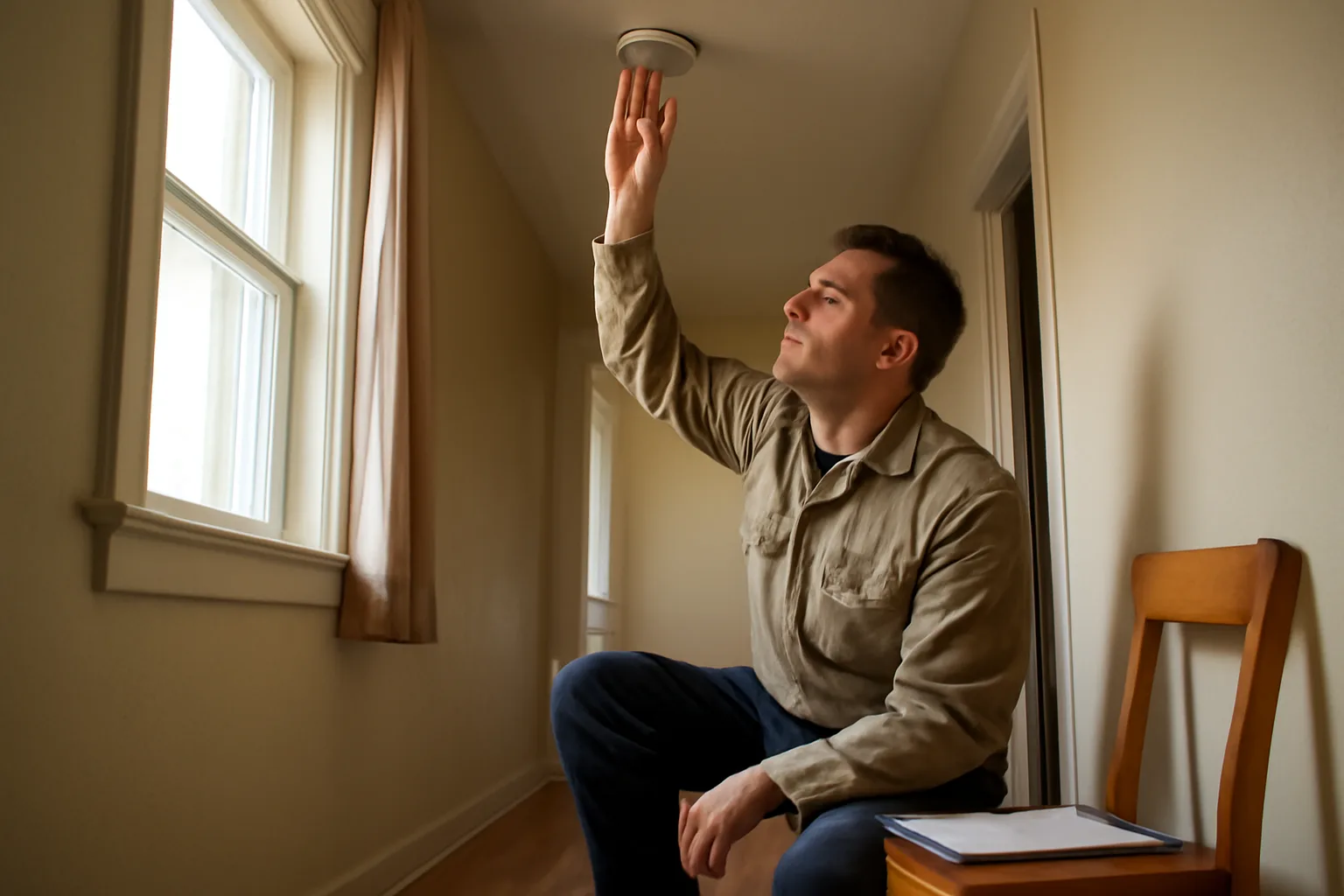
A rental checklist inspection is a walkthrough (by a city inspector, or a landlord doing a self-check) that confirms a rental unit meets health, safety, and building code minimums. Cities typically require 24 to 48 hours notice, inspect smoke detectors, egress, plumbing, and electrical systems, and can issue fines or re-inspection orders for violations. Landlords should self-inspect using their city's checklist before the official visit.
What is a rental checklist inspection?
A rental checklist inspection is a structured walkthrough of a rental unit against a written list of code requirements, usually done by a city or county inspector as part of a mandatory rental licensing or registration program. Some cities call it a Certificate of Occupancy inspection, a rental registration inspection, or a periodic compliance inspection. The name changes by city; the purpose doesn't. The inspector isn't grading your decorating. They're checking that specific, enumerable things work: smoke alarms, egress windows, handrails, working plumbing, electrical outlets that aren't overloaded or exposed, and that the unit doesn't have active code violations like peeling lead paint in a pre-1978 building or a blocked fire exit. Many jurisdictions base their minimum standards on the International Property Maintenance Code (IPMC), which HUD and many municipalities reference or adapt for rental housing standards [1]. If you're a landlord with 1 to 10 units and you got a notice in the mail about an upcoming inspection, or a fine for missing one, the checklist itself is your best friend. Every city publishes one (sometimes buried on a licensing department PDF), and reading it before the inspector arrives is the single highest-value thing you can do. Confirm your city's specific checklist and inspection cycle with your city rental licensing office, since forms and cycles differ by jurisdiction and change over time.
What can a landlord look at during an inspection?
| Smoke/CO detectors | Personal belongings |
|---|---|
| Electrical panel and outlets | Cleanliness/clutter (unless it blocks egress or creates a fire hazard) |
| Plumbing fixtures and water heater | Furniture arrangement |
| Window/door locks and egress | Tenant's guests or lifestyle |
During a routine rental inspection, whether it's the city's inspector or you doing a pre-inspection walkthrough, the standard areas checked are: smoke and carbon monoxide detectors (presence, working batteries, correct placement), electrical (no exposed wiring, no overloaded outlets, GFCI outlets near water sources), plumbing (no active leaks, working hot water, proper drainage), egress (windows that open, unobstructed exits, working locks), structural issues (stairs, railings, foundation cracks visible from inside), and general sanitation (no pest infestation, no mold, adequate ventilation). Most city checklists also include exterior items: trash storage, parking surface condition, exterior paint condition (especially for pre-1978 buildings due to lead paint rules), and working exterior lighting. Some cities add specific line items like window screens, a second means of egress for basement units, or minimum ceiling height for habitable rooms. What a landlord (or their inspector) generally cannot do is inspect for reasons unrelated to habitability or use the inspection as a pretext to look through personal belongings, closets, or drawers unless there's a specific safety concern (like checking a smoke detector mounted inside a closet). The inspection is about the condition of the structure and systems, not the tenant's housekeeping or possessions. Here's a comparison of what's typically covered versus what's typically off-limits: | Typically inspected | Typically NOT inspected |
Who is responsible for rental property walk-through inspections in California?
In California, responsibility splits depending on the type of inspection. For move-in and move-out condition documentation, California Civil Code Section 1950.5 requires landlords to give tenants the option of an initial move-out inspection before the final one, so the tenant can fix issues and avoid deductions from the security deposit. The statute states landlords must give "reasonable notice of no less than 48 hours" for this initial inspection unless the tenant waives it in writing [2]. For code compliance and rental licensing inspections (the kind tied to a city's rental registration or Systematic Code Enforcement Program, like the one in Los Angeles), the responsibility sits with the city or county building/housing department, not the landlord. Los Angeles's Systematic Code Enforcement Program (SCEP), for example, requires periodic inspections of every rental unit citywide, funded through an annual per-unit fee, with inspectors from the Los Angeles Housing Department conducting the actual walkthrough [3]. So to directly answer it: the landlord is responsible for scheduling and facilitating access to the unit, the city (or its contracted housing inspector) is responsible for actually conducting the code compliance walkthrough, and for security deposit related walkthroughs, California law puts the responsibility on the landlord to offer the initial inspection but the tenant decides whether to use it. Confirm your specific city's program name and inspector assignment with your city rental licensing office, since implementation varies across California cities.
How much notice does a landlord have to give before an inspection?
Notice requirements vary by state and by the type of inspection, so there's no single national number. California's Civil Code Section 1954 requires landlords give "reasonable notice in writing" and specifies that 24 hours is presumed reasonable notice for entry to make repairs or show the unit, absent a good reason to think otherwise [4]. For the initial move-out inspection under Civil Code 1950.5, it's 48 hours [2]. Other states differ. Many states, following patterns similar to the Uniform Residential Landlord and Tenant Act, use a 24-hour notice standard for routine entry, though several states don't set a specific number in statute at all and just require "reasonable" notice, leaving it to case law or local custom. For city-mandated rental license or registration inspections, the notice period is set by the municipal code or the housing department's own policy, not by state landlord-tenant law. Some cities give a scheduled appointment window (like an 8am-12pm slot) with two weeks' notice by mail; others give as little as 48 hours for a re-inspection after a violation. If you got a notice with a specific date and time, treat that number as fixed. If it's unclear, contact your city rental licensing office directly and ask for the notice policy in writing. A rule of thumb: 24 hours is the most common floor across state landlord-tenant statutes for routine entry, but government-mandated code inspections can have separate rules layered on top, so always check both your state's landlord-tenant law and your city's specific rental inspection ordinance.
What is landlording, and what is a landlord?
A landlord is a person or entity who owns residential or commercial property and rents it to another party (the tenant) in exchange for payment. Landlording is the general term for the practice of managing that relationship: collecting rent, maintaining the property, handling repairs, screening tenants, and complying with local, state, and federal housing law. At its core, being a landlord means you're running a small business, even if you only own one unit. You have legal obligations (implied warranty of habitability in most states, fair housing compliance, security deposit handling rules) and practical ones (fixing the water heater at 11pm, dealing with a tenant complaint about a neighbor). The federal Fair Housing Act, enforced by HUD, prohibits discrimination based on race, color, national origin, religion, sex, familial status, or disability in any housing transaction, and applies to nearly all landlords with limited exceptions for owner-occupied buildings with four or fewer units [5]. Landlording isn't passive. Cities with mandatory rental licensing (think Los Angeles, Baltimore, Minneapolis, or smaller cities with their own registration ordinances) turn landlording into something closer to running a lightly regulated utility: you register the unit, pay a fee, submit to periodic inspection, and keep records. If that sounds like more paperwork than you expected, it usually is, especially for someone who inherited a duplex or bought a starter rental with no idea a license was required.
How to become a landlord (and how to actually do it well)
Becoming a landlord legally requires more than buying a property and finding a tenant. The basic sequence: confirm you can legally rent the unit (some cities require a rental license or Certificate of Occupancy before you can even advertise it), get landlord liability insurance (a standard homeowner's policy usually excludes rental use), screen tenants consistently and legally (credit check, background check, income verification, applied the same way to every applicant to avoid fair housing complaints), draft a lease that complies with your state's landlord-tenant statute, and set up a system for collecting rent, tracking maintenance requests, and holding security deposits per your state's rules. Many states require security deposits be held in a separate account, sometimes interest-bearing. New York, for example, requires deposits for buildings with six or more units to be held in an interest-bearing account, per New York General Obligations Law Section 7-103 [6]. If your city requires rental registration or licensing (increasingly common; hundreds of U.S. cities now have some form of mandatory rental inspection or licensing ordinance), you'll also need to register the property, pay the annual or biennial fee (these commonly run somewhere in the $50 to $300 per unit range depending on the city, though this varies widely and you should confirm the actual number with your city rental licensing office), and pass an initial inspection before or shortly after you start renting. A lot of first-time landlords skip the registration step entirely because they don't know it exists until a neighbor complaint or a routine city sweep flags their address. That's when the notice letter and fine show up. If you're at that stage right now, our rental packet builder walks through what most city inspection checklists actually check, so you're not guessing what to fix before the inspector's first visit.
Why do landlords require renters insurance?
Landlords require renters insurance mainly to shift liability and property-damage risk away from themselves and onto the tenant's own policy. A landlord's dwelling insurance covers the building structure, but it generally doesn't cover a tenant's personal belongings (furniture, electronics, clothing) if there's a fire, burst pipe, or theft. Without renters insurance, a tenant who loses everything in a fire may look to sue the landlord to recover those losses, even where the landlord wasn't negligent. Renters insurance also typically includes liability coverage, meaning if the tenant's dog bites a visitor, or the tenant accidentally starts a kitchen fire that damages a neighboring unit, the tenant's policy (not the landlord's) is the first line of financial defense. The average cost of renters insurance in the U.S. is relatively low, commonly cited around $15 to $20 per month nationally, according to insurance industry rate surveys, though exact pricing depends on location and coverage limits. Requiring it is legal in most states as a lease condition, as long as it's applied consistently to all tenants and disclosed in the lease. Some states and cities have started passing their own renters insurance mandates or landlord-provided damage waiver alternatives, so if you manage units across multiple cities, check whether local law caps what you can require or offers an alternative program.
What rights do tenants have without a lease?
A tenant without a written lease isn't unprotected. In most states, a tenant paying rent with no written agreement is considered a month-to-month tenant at will, and gets the same basic protections as a tenant with a lease: the implied warranty of habitability, protection from illegal lockouts and utility shutoffs, the right to proper notice before eviction, and fair housing protections under federal law [5]. What changes without a written lease is mostly about terms, not rights. Without a lease specifying rent amount, due date, or house rules, courts generally look at the pattern of past payments and any verbal agreement to establish those terms. The landlord still has to follow the state's standard notice period to end a month-to-month tenancy (commonly 30 days, though some states require more for longer tenancies) and still has to go through formal eviction/unlawful detainer court to remove a tenant, lease or no lease. One effect of no written lease worth flagging: without documented terms, disputes over what was agreed to (pet policy, who pays for what utility, is subletting allowed) become harder to resolve and often turn into a credibility contest. That's a landlord problem as much as a tenant one. If you're renting without a lease right now, that's a bigger fix than passing an inspection; a lease is the single cheapest risk-reduction tool you have, whether or not your city requires licensing.
What can't a landlord do in Ohio?
Ohio's landlord-tenant law, codified in Ohio Revised Code Chapter 5321, sets out specific things a landlord cannot do. A landlord cannot shut off utilities, change the locks, or remove a tenant's belongings to force them out without going through the formal eviction process in court; this is commonly called "self-help eviction" and it's illegal under ORC 5321.15, which states a landlord cannot cause, directly or indirectly, the interruption of any utility service or the exclusion of a tenant from the premises except through legal process [7]. A landlord in Ohio also cannot retaliate against a tenant for complaining to a housing authority or joining a tenant union; ORC 5321.02 specifically prohibits retaliatory conduct like raising rent, reducing services, or threatening eviction within a defined period after the tenant exercises a legal right [8]. Ohio law also requires landlords to maintain the premises in a habitable condition (ORC 5321.04), including keeping common areas safe, complying with building and housing codes, maintaining electrical, plumbing, and heating systems in good working order, and providing running water and reasonable amounts of hot water [9]. On security deposits, Ohio law (ORC 5321.16) requires landlords to return the deposit within 30 days of the tenant vacating, with an itemized list of any deductions, or face potential damages for bad faith withholding [10]. So in short: no illegal lockouts, no retaliation, no ignoring code violations, and no dragging your feet on the deposit return.
How to be a landlord day to day (the operational checklist)
Beyond the legal minimums, being a landlord day to day comes down to a handful of habits that keep you out of trouble and keep tenants from calling the city on you. Respond to maintenance requests within a reasonable window (most habitability statutes reference "reasonable time" rather than a fixed number of days, though some cities specify 24 hours for emergencies like no heat or no water). Document everything: photos at move-in, photos at move-out, written notice for entry, written notice for rent increases. Keep a maintenance log per unit. When an inspector shows up (city-mandated or self-scheduled), having a dated record of smoke detector battery changes, HVAC servicing, and repair completions makes the visit faster and makes disputes easier to resolve if a tenant claims something was never fixed. Budget for the licensing and inspection cycle itself, more than the fee. Many cities charge a re-inspection fee if you fail the first visit (sometimes $50 to $150 depending on the city; confirm with your city rental licensing office) plus whatever repairs the violation requires. Landlords who treat the inspection as a surprise event tend to pay these fees repeatedly; landlords who self-inspect against the city's own checklist a week or two before the scheduled date tend to pass on the first try. Our $79 one-time rental packet builder is built around exactly that gap: matching your city's actual rental checklist against your unit before the inspector does it for you.
How to prepare your unit before the inspection date
Start with the checklist itself. Most cities post the specific rental inspection checklist on their housing or code enforcement department's website; if you can't find it, call and ask for it in writing so you know exactly what's being scored. Work through it room by room, roughly two weeks before the scheduled date, not the night before. Test every smoke and CO detector and replace batteries even if they seem to work. Check every window opens and locks. Look under every sink for slow leaks. Check the water heater's temperature-pressure relief valve and make sure it has a discharge pipe extending to within a few inches of the floor, a common miss on older units. Check exterior paint condition on pre-1978 buildings, since chipping or peeling paint is both a common violation and a potential lead-based paint hazard under EPA's Lead-Based Paint Disclosure rules . Fix what you find. If something needs a permit or a licensed contractor (electrical panel work, structural repair), start that process early since permitted work has its own timeline separate from your inspection date. If you're unsure whether a repair meets code, most city code enforcement offices will answer specific questions by phone before the inspection, and it's worth the call rather than guessing.
What happens if you fail the inspection or get a violation notice
Failing a rental inspection almost never means immediate loss of your rental license. Most cities issue a written notice of violation with a correction period, commonly somewhere between 10 and 60 days depending on severity and the specific city's ordinance, and schedule a re-inspection. Emergency hazards (no working smoke detectors, active gas leak, no heat in winter) usually get a much shorter correction window, sometimes 24 to 72 hours. If you don't fix the violation by the deadline, cities generally escalate through a fine schedule, then potentially to license suspension or, in serious repeat cases, condemnation of the unit as uninhabitable. Fine amounts vary enormously by city, from small civil penalties to larger daily accruing fines for repeat violations, so treat any dollar figure you hear secondhand as unreliable until you check your specific city's code enforcement fee schedule. If you get a notice and disagree with the finding, most cities have an appeals process through the building department or a local housing court; check the notice itself for the appeal deadline, since these are often short (sometimes as little as 10 to 15 days from the notice date). The practical move: don't ignore the notice hoping it goes away. Cities that run mandatory rental licensing programs track properties by address, and an ignored violation compounds into fines, and eventually can affect your ability to renew the rental license itself, which then affects your ability to legally rent the unit at all.
Frequently asked questions
How do I become a landlord for the first time?
Confirm local rules first (some cities require a rental license before you can legally rent), get landlord liability insurance, screen tenants consistently, use a lease that follows your state's landlord-tenant statute, and set up a compliant system for security deposits and maintenance requests. Check your city rental licensing office before advertising the unit.
Who is responsible for rental property walk-through inspections in California?
The landlord is responsible for scheduling access and offering the required move-out inspection under California Civil Code 1950.5. City or county code compliance inspections are conducted by the local housing or building department, such as the Los Angeles Housing Department under its Systematic Code Enforcement Program [3].
What is landlording?
Landlording is the practice of owning and managing rental property, including collecting rent, handling repairs, screening tenants, and complying with landlord-tenant law. It applies whether you own one unit or ten, and it comes with legal obligations under both state law and, in many cities, mandatory rental licensing ordinances.
What is a landlord?
A landlord is the owner of a property who rents it to a tenant in exchange for payment, typically under a lease or rental agreement. Landlords have legal duties including maintaining habitability, respecting tenant privacy, and following state and local eviction and security deposit rules.
What rights do tenants have without a lease?
Tenants without a written lease are usually considered month-to-month tenants and keep the same core protections as leased tenants: habitability, protection from illegal lockouts, fair housing rights, and the right to proper notice before eviction. What's missing is documentation of specific terms like rent amount or house rules.
How to be a landlord without breaking the law?
Follow your state's notice requirements for entry and rent increases, keep the unit habitable per your state's implied warranty of habitability, never attempt a self-help eviction (changing locks or shutting off utilities), and comply with fair housing law in every tenant interaction, from advertising to screening to lease terms.
Why do landlords require renters insurance?
Renters insurance shifts liability for a tenant's personal property loss and certain injury claims onto the tenant's policy instead of the landlord's. It typically costs around $15 to $20 a month and is legal to require as a lease condition in most states if applied consistently to all tenants.
How much notice does a landlord have to give before entering?
It depends on the state and purpose. California requires 24 hours for routine entry (Civil Code 1954) and 48 hours for the initial move-out inspection (Civil Code 1950.5). Many other states use a similar 24-hour standard, but some just require 'reasonable' notice without a fixed number.
What can a landlord look at during an inspection?
Inspectors typically check smoke and CO detectors, electrical systems, plumbing, egress windows and doors, structural safety features like railings, and signs of pest infestation or mold. They generally don't inspect personal belongings or judge cleanliness unless it creates a safety hazard.
What a landlord cannot do in Ohio?
Under Ohio Revised Code Chapter 5321, a landlord cannot shut off utilities or change locks to force a tenant out (self-help eviction is illegal under ORC 5321.15), cannot retaliate against a tenant for reporting code violations (ORC 5321.02), and must return security deposits within 30 days with an itemized statement (ORC 5321.16).
What happens if I miss my city's rental inspection appointment?
Most cities will reschedule but may charge a missed-appointment or re-inspection fee, and repeated no-shows can trigger a violation notice or license suspension. Confirm your specific city's missed-appointment policy and fee with your city rental licensing office, since this varies widely.
Do I need a rental license if I only rent out one unit?
Many mandatory rental licensing cities apply the requirement to any rental unit regardless of how many you own, including single-family homes and accessory dwelling units. Some cities exempt owner-occupied duplexes or units rented to family members. Check your specific city's ordinance rather than assuming an exemption applies.
How often do rental units get inspected under city licensing programs?
Inspection frequency varies by city and program design; some inspect every unit on a fixed cycle (commonly every 1 to 3 years), others use complaint-driven inspections, and some combine both. Los Angeles's Systematic Code Enforcement Program inspects units periodically on a set cycle citywide [3].
Sources
- HUD, International Property Maintenance Code adoption reference: Many rental housing standards are based on or adapted from the International Property Maintenance Code
- California Legislative Information, Civil Code Section 1950.5: Landlords must offer an initial move-out inspection with at least 48 hours reasonable notice
- California Legislative Information, Civil Code Section 1954: 24 hours is presumed reasonable notice for landlord entry to make repairs or show the unit in California
- HUD, Fair Housing Act overview: The Fair Housing Act prohibits discrimination based on race, color, national origin, religion, sex, familial status, or disability in housing
- New York State Senate, General Obligations Law Section 7-103: Security deposits for buildings with six or more units must be held in an interest-bearing account in New York
- Ohio Laws and Rules, Revised Code 5321.15: Ohio landlords cannot cause interruption of utility service or exclude a tenant except through legal process
- Ohio Laws and Rules, Revised Code 5321.02: Ohio law prohibits landlords from retaliating against tenants who exercise legal rights
- Ohio Laws and Rules, Revised Code 5321.04: Ohio landlords must keep the premises in a habitable condition including working electrical, plumbing, and heating systems
- Ohio Laws and Rules, Revised Code 5321.16: Ohio landlords must return security deposits within 30 days with an itemized list of deductions
- EPA, Real Estate Disclosures About Potential Lead Hazards: Pre-1978 rental units are subject to federal lead-based paint disclosure requirements