Last updated 2026-07-25
TL;DR
Most states require landlords to give 24 to 48 hours written notice before entering a unit for inspection, though the exact rule varies by state and lease. City rental license inspections (a different process) are usually scheduled by appointment with the inspector, and tenants generally must be given similar notice before that visit happens.
How much notice does a landlord have to give before an inspection?
Most states land somewhere between 24 and 48 hours of advance notice before a landlord or property manager can enter a rental unit for a non-emergency reason, including a routine inspection. California requires "reasonable notice," and state law says 24 hours is presumed reasonable for entry to make repairs or show the unit, per California Civil Code Section 1954 [1]. Florida's statute sets a specific figure: landlords must give at least 12 hours notice before entering to inspect the premises, under Florida Statutes Section 83.53 [2]. Texas, by contrast, has no statewide statute dictating a specific notice period for routine entry, so the lease terms typically govern, according to the Texas State Law Library's landlord-tenant guide. That 24 to 48 hour range is a practical average, not a universal rule. Some states set no statutory minimum at all and leave it to the lease. Others specify that notice must be in writing, while some allow verbal notice or a posted note on the door. If you manage property in more than one state, don't assume the rule from one city carries over to the next; check your specific state's landlord-tenant statute or your state's Attorney General consumer guidance page before you schedule anything. A separate wrinkle: a city rental license inspection is not the same event as a landlord's own periodic walkthrough. When your city's rental licensing office schedules a compliance inspection, that inspector is a government employee (or a licensed third-party inspector under contract with the city), and the notice requirement usually flows from your local rental licensing ordinance, not the state entry statute. Many cities require the landlord to notify the tenant of the inspection date, and some require a specific number of days lead time, commonly somewhere in the 24-hour to 7-day range depending on the ordinance. Confirm with your city rental licensing office exactly what notice language they require you to use, because getting this wrong can itself be a violation.
What can a landlord look at during an inspection?
| Smoke/CO detectors | Usually checked | Almost always required, code-cited |
|---|---|---|
| Structural/electrical hazards | Sometimes checked | Standard checklist item |
| Cleanliness of tenant belongings | Rarely a focus | Not a focus (habitability, not tidiness) |
| Lease compliance (unauthorized pets, occupants) | Common focus | Not typically checked |
| Egress windows, locks | Sometimes checked | Standard checklist item |
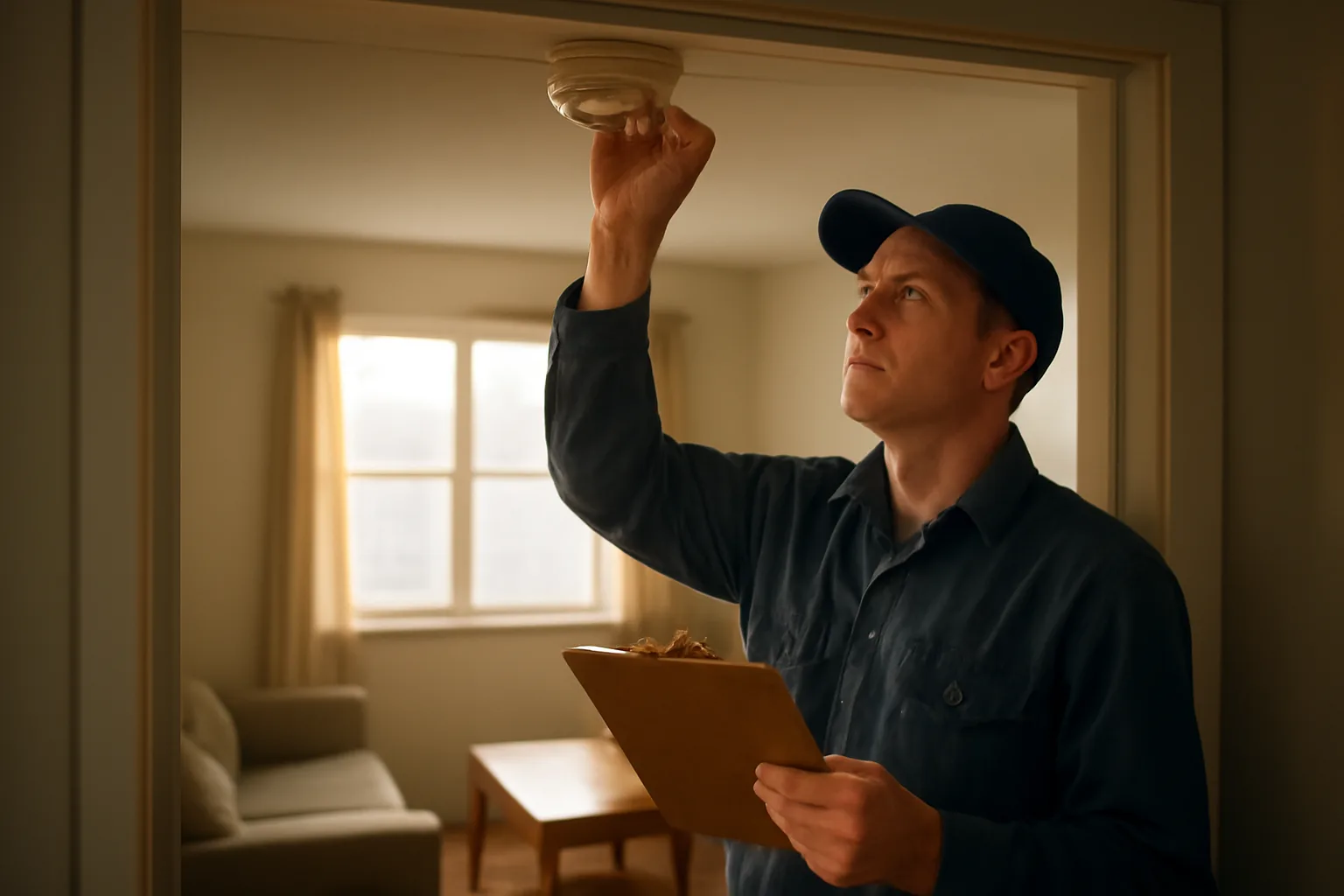
A landlord or city inspector can generally check the same things whether it's a routine visit or a formal city rental license inspection: general habitability, safety systems, and any items tied to a prior violation. That means checking working smoke and carbon monoxide detectors, functioning heat, hot water, electrical outlets, exit routes, window locks, plumbing leaks, mold or pest issues, and the condition of stairs, railings, and flooring [3]. City rental inspections typically follow a checklist tied to the local housing code, often modeled on or referencing the International Property Maintenance Code (IPMC), which many U.S. cities adopt wholesale or with amendments [3]. A typical checklist covers things like: smoke alarms in every bedroom and on every level, GFCI outlets near water sources, secure handrails on stairs with four or more risers, no exposed wiring, functioning locks on exterior doors, and no obvious structural hazards. What inspectors generally are not there to do is rummage through personal belongings, open drawers, or inspect closets full of the tenant's property beyond checking for accessible egress and basic conditions. A landlord's own routine inspection (separate from a city compliance visit) is typically limited by the entry statute's stated purpose. In California, for example, entry is allowed for specific reasons only: to make repairs, show the unit to prospective tenants or buyers, in an emergency, or when the tenant has abandoned the property, per Civil Code Section 1954 [1]. A landlord fishing through belongings under the guise of an inspection is exceeding what most states' entry statutes actually permit. Here's a quick comparison of what shows up on a typical checklist for the two types of inspections: | Item | Landlord routine walkthrough | City rental license inspection |
Who is responsible for a rental property walkthrough inspection in California?
In California, the landlord (or their authorized property manager) is responsible for scheduling and conducting the walkthrough, and state law requires they give the tenant reasonable notice, presumed to be 24 hours, before entering for that purpose [1]. The tenant isn't required to be present, but they have the right to be there if they want, and the landlord can't use the walkthrough as a pretext to enter more often than the statute allows. California Civil Code Section 1954 specifically states landlords may enter to make necessary repairs, to inspect after a tenant gives notice of intent to vacate (this is where the classic "move-out walkthrough" comes from), or to show the unit to prospective tenants, buyers, or contractors [1]. Some California cities layer their own rental inspection ordinances on top of this. Los Angeles, for instance, runs its Systematic Code Enforcement Program (SCEP), which requires periodic inspections of most rental properties, and in that case the city's inspector, more than the landlord, becomes part of the walkthrough process. The city typically mails a notice and the landlord is responsible for coordinating tenant access. Confirm with your specific city's housing or code enforcement department how their local program layers onto the state entry rules, since the responsible party and the notice period can differ from the state default.
What is a landlord? What is landlording?
A landlord is the person or entity that owns a rental property and leases it to a tenant in exchange for rent, taking on legal responsibilities for habitability, repairs, and following state and local landlord-tenant law. "Landlording" is the informal term for the day-to-day work of running that role: collecting rent, screening tenants, handling maintenance requests, keeping the property up to code, and managing the lease relationship. Legally, most states define a landlord (sometimes called "lessor") through their landlord-tenant statutes, and the definition usually turns on ownership or control of the property combined with the act of renting it out. The specific duties attached to that label vary. Nearly every state imposes an implied warranty of habitability, meaning the landlord has to keep the unit livable (working plumbing, heat, structural safety) regardless of what the lease says [4]. On top of that baseline, cities with mandatory rental licensing add their own layer: registering the property, paying a licensing fee, and passing a periodic inspection. Landlording isn't just collecting a check. It includes responding to repair requests within a reasonable time (often defined by state law, sometimes as short as 24 hours for a no-heat emergency), maintaining insurance, following fair housing law when screening tenants, and keeping paperwork like leases, inspection notices, and security deposit records organized. If you're new to it, expect the administrative side (registration deadlines, inspection scheduling, fee payments) to eat more time than most first-time landlords expect.
How do you become a landlord? How do you actually be a landlord?
Becoming a landlord starts with acquiring rental property (buying it, inheriting it, or converting a home you already own) and then legally registering it as a rental if your city or state requires that. From there, being a landlord day to day means screening tenants, signing a lease, collecting rent and a security deposit within your state's limits, maintaining the property, and following your local rental registration or licensing rules. The practical steps most first-time landlords go through: 1. Confirm zoning allows rental use and check whether your city requires a rental license or registration before you can legally rent the unit out. Many cities with mandatory licensing programs require this before the first tenant moves in, not after. 2. Get landlord insurance (different from a standard homeowner's policy; it covers liability and lost rental income). 3. Screen tenants consistently and legally, following the Fair Housing Act's protections against discrimination based on race, color, national origin, religion, sex, familial status, or disability [5]. 4. Draft a lease that matches your state's required disclosures (lead paint disclosure for pre-1978 buildings is federally required under 42 U.S.C. 4852d, for example). 5. Set up rent collection and a system for tracking maintenance requests and inspection notices. 6. Budget for your city's registration fee and any recurring inspection cycle. Fees and cycles vary widely by city, so confirm with your city rental licensing office rather than assuming a number. A lot of new landlords skip step 1 and find out about a registration requirement only after a neighbor complaint or a code enforcement letter shows up. That's an expensive way to learn. If your city sent you an inspection notice or a violation letter and you're scrambling to catch up, our $79 City Rental License & Inspection Prep Packet walks through the common checklist items and paperwork most cities ask for, though you should always confirm the specific requirements with your own city's office since programs differ.
What rights do tenants have without a lease?
A tenant without a written lease is generally still protected as a "tenant at will" or month-to-month tenant under state law, meaning they still have the right to habitability, privacy protections against unlawful entry, and proper notice before eviction, even with no signed document. What they usually lose is the specific terms a lease would have locked in, like a fixed rent amount for a set term or specific rules about pets or subletting. Most states treat an oral or implied rental agreement (someone paying rent and the landlord accepting it) as creating a periodic tenancy, typically month-to-month if rent is paid monthly [6]. That tenant still gets the state's default protections: the implied warranty of habitability, the state's standard notice period before entry, and the state's required notice period before termination (commonly 30 days for month-to-month tenancies, though some states require more depending on how long the tenant has lived there). What a tenant without a lease does not get is protection from terms that were never established. If there's no lease specifying a no-pets policy, the landlord can't retroactively enforce one without proper notice and, in many states, without amending the terms going forward rather than punishing past conduct. Security deposit limits, though, still apply even without a written lease, since those limits come from state statute, not the lease itself.
Why do landlords require renters insurance?
Landlords require renters insurance mainly to shift liability risk: if a tenant's negligence causes a fire, water damage, or an injury to a guest, the tenant's policy (not the landlord's) is the first line of coverage for the tenant's belongings and personal liability. A standard landlord or property insurance policy generally does not cover a tenant's personal property or a tenant-caused liability claim, so requiring renters insurance closes that gap. A renters insurance policy typically includes personal property coverage, liability coverage (commonly $100,000 or more), and additional living expenses coverage if the unit becomes uninhabitable [7]. Without it, a tenant whose negligence causes a kitchen fire could have no way to cover their own losses, and could also be personally on the hook for damage to the landlord's building, which they may not have the money to pay, leaving the landlord's own insurer to pursue the claim through subrogation. Requiring renters insurance is legal in most states as a lease condition, as long as it's applied consistently across all tenants and disclosed in the lease. Some cities and some subsidized housing programs restrict how landlords can require it or cap what proof they can demand. If you require it, keep a simple system for tracking proof of coverage and renewal dates, since a lapsed policy that nobody notices defeats the purpose of requiring it in the first place.
What can a landlord not do in Ohio?
In Ohio, a landlord cannot enter the rental unit without giving reasonable notice, generally interpreted as 24 hours except in an emergency, per Ohio Revised Code Section 5321.05, which requires tenants to permit landlord access "at reasonable times" after "reasonable notice" for repairs, inspections, or showings [8]. A landlord also cannot shut off utilities, change the locks, or remove a tenant's belongings to force them out; Ohio law prohibits these "self-help" eviction tactics, and a landlord who does this can be liable for damages under the same chapter. Ohio Revised Code Chapter 5321 lays out landlord obligations clearly: keep the premises in a fit and habitable condition, comply with building and housing codes materially affecting health and safety, keep common areas safe and sanitary, and maintain electrical, plumbing, and heating systems in good working order [8]. A landlord who fails on these fronts can face a tenant's claim for rent abatement or, in some cases, the tenant's right to repair-and-deduct after giving proper written notice. Ohio also restricts retaliatory conduct. A landlord cannot raise rent, decrease services, or threaten eviction specifically because a tenant complained to a health or safety agency about a code violation or joined a tenants' organization, per the retaliation protections built into Chapter 5321 [8]. And in cities with their own rental registration or inspection ordinances (Cleveland, Columbus, Toledo, and others each run their own programs), a landlord who is under an active violation notice generally cannot ignore the city's inspection request; failing to comply with a lawful city inspection can compound into separate municipal fines on top of any state law issue. Confirm the specific fine schedule and inspection notice period with your city's building or health department, since Ohio's home-rule cities each set their own numbers.
What happens if you ignore or ignore a rental inspection notice?
Ignoring a city rental inspection notice typically escalates into a missed-inspection fee, a formal violation notice, and in many cities, an automatic re-inspection charge or a hold on your rental license renewal. Some cities go further and refer repeat no-shows to code enforcement for citation, which can carry its own fine separate from the original inspection fee. The exact consequence depends entirely on your city's ordinance, and there's no honest way to state a national number here since every city sets its own fee schedule and escalation path. What's common across most mandatory licensing cities: a first missed inspection usually triggers a rescheduling letter and a modest fee, a second missed inspection often triggers a larger fee and sometimes a formal notice of violation, and continued non-compliance can lead to license suspension, meaning you may not be legally able to rent the unit until you pass inspection and pay outstanding fees. Confirm with your city rental licensing office what their specific escalation schedule and fee amounts are before you decide ignoring a notice is a viable option; it almost never is, and the fees tend to compound faster than the cost of just scheduling the inspection.
How should landlords prepare for an inspection notice?
The fastest way to prepare for a city rental inspection is to walk the unit yourself first using your city's published checklist (if they publish one), fix the obvious safety items, and notify your tenant of the scheduled date with the notice period your ordinance requires. Most inspection failures aren't exotic; they're missing smoke detectors, expired fire extinguisher tags, a loose handrail, or a blocked egress window. A short pre-inspection walkthrough should cover: working smoke and CO detectors in every required location, GFCI outlets in kitchens and bathrooms, no visible mold or active leaks, functioning locks on all exterior doors, clear pathways to exits, and any prior violation from a past notice fully resolved with documentation (photos, receipts, or a contractor invoice) in case the inspector asks for proof. Keeping a paper trail matters more than most landlords expect. If a prior notice cited a specific item, bring documentation showing it was fixed, more than your word that it was. Inspectors in busy cities see dozens of units a week and don't remember your unit's history; a photo with a timestamp or an invoice saves an argument. If you're managing this for the first time, or you're catching up after a violation notice, our $79 City Rental License & Inspection Prep Packet is built around the kind of checklist items cities commonly cite, plus templates for tracking notice deadlines and fixes. It's not a substitute for your city's actual ordinance text, and it won't guarantee you pass. Always confirm your city's specific checklist and notice requirements directly with your rental licensing office, since programs and fees change and vary block by block in some metro areas.
Frequently asked questions
How much notice does a landlord have to give before entering for an inspection?
Most states require 24 to 48 hours of advance notice for non-emergency entry, including routine inspections. California presumes 24 hours reasonable under Civil Code Section 1954 [1]; Florida requires at least 12 hours under Florida Statutes Section 83.53 [2]. Always check your specific state's statute, since the range varies and some states set no fixed number at all.
Who is responsible for a rental property walkthrough inspection in California?
The landlord or their authorized property manager is responsible for scheduling it and must give the tenant reasonable notice, presumed 24 hours, under California Civil Code Section 1954 [1]. In cities with their own inspection programs, like Los Angeles's SCEP, the city inspector and the landlord share responsibility for coordinating tenant access.
What is a landlord?
A landlord is the owner (or authorized agent of the owner) of a rental property who leases it to a tenant for rent, taking on legal duties like maintaining habitability, following state entry notice rules, and complying with any local rental licensing or inspection requirements tied to the property.
What is landlording?
Landlording is the day-to-day work of operating a rental property: screening tenants, collecting rent, handling repairs, keeping the unit up to code, and managing paperwork like leases, inspection notices, and security deposit records. It's the practical, ongoing side of being a landlord, more than the legal ownership status.
How do you become a landlord?
You become a landlord by acquiring rental property and legally putting it on the rental market, which often means registering it with your city if a rental licensing ordinance applies, getting landlord insurance, screening a tenant under Fair Housing Act rules [6], and signing a compliant lease. Check zoning and licensing rules before your first tenant moves in.
What rights do tenants have without a lease?
A tenant without a written lease is usually still a month-to-month tenant under state law, entitled to the implied warranty of habitability, the state's standard entry notice period, and the state's required notice before termination (often 30 days) [7]. They lose only the specific extra terms a written lease would have set, not their basic statutory protections.
Why do landlords require renters insurance?
Landlords require renters insurance to cover the tenant's own belongings and personal liability, since a landlord's property policy generally doesn't cover tenant possessions or tenant-caused liability claims. A typical renters policy includes personal property coverage and liability coverage, often $100,000 or more [8].
What can a landlord look at during an inspection?
Inspectors generally check habitability and safety items: smoke and CO detectors, electrical and plumbing conditions, heat, structural hazards, egress routes, and locks. City inspections follow local housing code checklists, often based on the International Property Maintenance Code [4]. They're not meant to search personal belongings beyond checking accessible conditions.
What can a landlord not do in Ohio?
An Ohio landlord cannot enter without reasonable notice (generally 24 hours), cannot shut off utilities or change locks to force a tenant out, and cannot retaliate against a tenant for reporting code violations, under Ohio Revised Code Chapter 5321 [9]. They also must keep the unit in fit and habitable condition and maintain working electrical, plumbing, and heating systems.
What happens if a landlord misses a scheduled city rental inspection?
Consequences vary by city, but commonly include a rescheduling fee, a formal notice of violation on repeated misses, and possible delay or suspension of the rental license. There's no universal national fee; confirm your specific city's escalation schedule and fees with its rental licensing office directly.
Can a landlord inspect a rental unit without any notice at all?
Only in a genuine emergency (fire, flooding, gas leak, or similar immediate danger to life or property) can most states allow entry without prior notice. Outside emergencies, nearly every state requires some form of advance notice, commonly 24 to 48 hours, before entry for inspection, repairs, or showings [1][2].
Does a tenant have to be present for a rental inspection?
No, most states and city ordinances don't require the tenant to be present, but the tenant generally has the right to be there if they choose. The landlord or inspector still needs to provide the legally required advance notice before entering, whether or not the tenant plans to attend.
Sources
- California Legislative Information, Civil Code Section 1954: California presumes 24 hours notice reasonable for landlord entry to inspect, repair, or show a unit
- Online Sunshine (Florida Legislature), Florida Statutes Section 83.53: Florida requires at least 12 hours notice before landlord entry to inspect the premises
- International Code Council, International Property Maintenance Code: Many U.S. cities base rental inspection checklists on the International Property Maintenance Code
- HUD, Tenant Rights and Landlord Responsibilities overview: Most states impose an implied warranty of habitability on landlords regardless of lease terms
- HUD, Fair Housing Act overview and protected classes: Federal Fair Housing Act prohibits screening discrimination based on race, color, national origin, religion, sex, familial status, or disability
- Cornell Legal Information Institute, Periodic tenancy overview: An oral or implied rental agreement typically creates a periodic (often month-to-month) tenancy under state law
- Insurance Information Institute, Renters insurance overview: A typical renters insurance policy includes personal property coverage and liability coverage
- Ohio Laws and Administrative Rules, Revised Code Chapter 5321: Ohio law sets landlord obligations for habitability, reasonable entry notice, and prohibits retaliation and self-help eviction tactics