Last updated 2026-07-26
TL;DR
In most of the US, no state law forces a landlord to provide air conditioning. A handful of cities (like Dallas, Phoenix area counties, and parts of Arizona) set minimum cooling or maximum indoor temperature rules. Check your city's rental housing code, more than state law, before assuming AC is optional.
Is a landlord legally required to provide air conditioning?
No federal law requires it, and most states don't either. Landlord-tenant law in the US mostly runs on the "implied warranty of habitability," a legal doctrine that says rental housing has to be fit to live in, but that doctrine was built around things like heat, plumbing, and structural safety, not cooling. Courts adopted the implied warranty state by state starting in the late 1960s, and it varies a lot in what it actually covers [1]. Heat is the flip side of this. Nearly every state and a long list of cities require landlords to provide working heat in winter, often with a specific minimum temperature (68degF during the day is common, with lower minimums overnight). Air conditioning almost never gets the same treatment in state law. A few cities have stepped in where states haven't, usually after a heat wave killed people. Dallas is probably the clearest example. The city amended its minimum housing standards after tenant deaths during summer heat, and Dallas now requires rental properties to have air conditioning capable of cooling to a set temperature during the cooling season, with equipment maintained by the owner [2]. Phoenix and Maricopa County, Arizona, take a related but different approach: local rules there focus on evaporative cooling or refrigeration equipment maintenance rather than mandating AC be installed everywhere, tied into building and health codes given how dangerous Arizona summers are. If you're a landlord in a city with mandatory rental licensing or inspection, don't assume your state's silence on AC means your city is silent too. Rental registration ordinances often layer extra habitability rules on top of state law, and AC or maximum indoor temperature can be one of them.
Which cities or states actually require air conditioning in rentals?
| Most US states | No AC mandate; heat mandate common | State landlord-tenant statutes vary by state | |
|---|---|---|---|
| Dallas, TX | AC required, cooling to a set max indoor temp in season | Dallas Code of Ordinances, minimum housing standards [2] | |
| Maricopa County / Phoenix area, AZ | Cooling equipment (refrigeration or evaporative) required, must be maintained | Maricopa County Environmental Health, Arizona building/health rules | |
| New Orleans, LA | AC required in certain rental housing under local code | New Orleans Code enforcement / rental registry rules | |
| Most northern/midwest cities | Heat mandated, AC not mentioned | Local housing codes | The pattern: hot-climate cities that have had heat-related tenant deaths are far more likely to have added AC rules than cold or temperate cities. If your city requires rental registration or a rental license at all (which is the whole reason you're probably reading this site), pull the actual municipal code section on "minimum housing standards" or "habitability" and search for "cooling" or "air conditioning," more than "heat." |
There's no single federal answer here, so this has to be checked locally. Below is a general picture, but confirm with your city rental licensing office before you rely on it for a specific property. | Jurisdiction type | Typical rule | Source |
What if my lease says nothing about air conditioning?
If the lease is silent and your state or city has no AC mandate, you're generally not required to provide it, but you're also not required to remove it or disable it if it's already installed and working. Silence in the lease defaults to whatever your jurisdiction's baseline habitability law says, which in most places is nothing specific to cooling. What becomes a real legal problem is if you had AC as an advertised or included feature, then it breaks and you don't fix it. Courts in states with a strong implied warranty of habitability can treat "features described in the listing or lease" differently from "amenities never promised." If your listing said "central air" and the unit has a broken compressor for six weeks in July, a tenant in a habitability-friendly state has a decent argument even if state law never mentions AC by name, because you promised a specific condition and failed to deliver it. Practical fix: if you don't want AC obligations, don't advertise or imply it. If a window unit came with the property from a prior tenant, decide up front whether it's yours to maintain or the tenant's personal property, and put that in writing.
What can landlords do instead of installing central air?
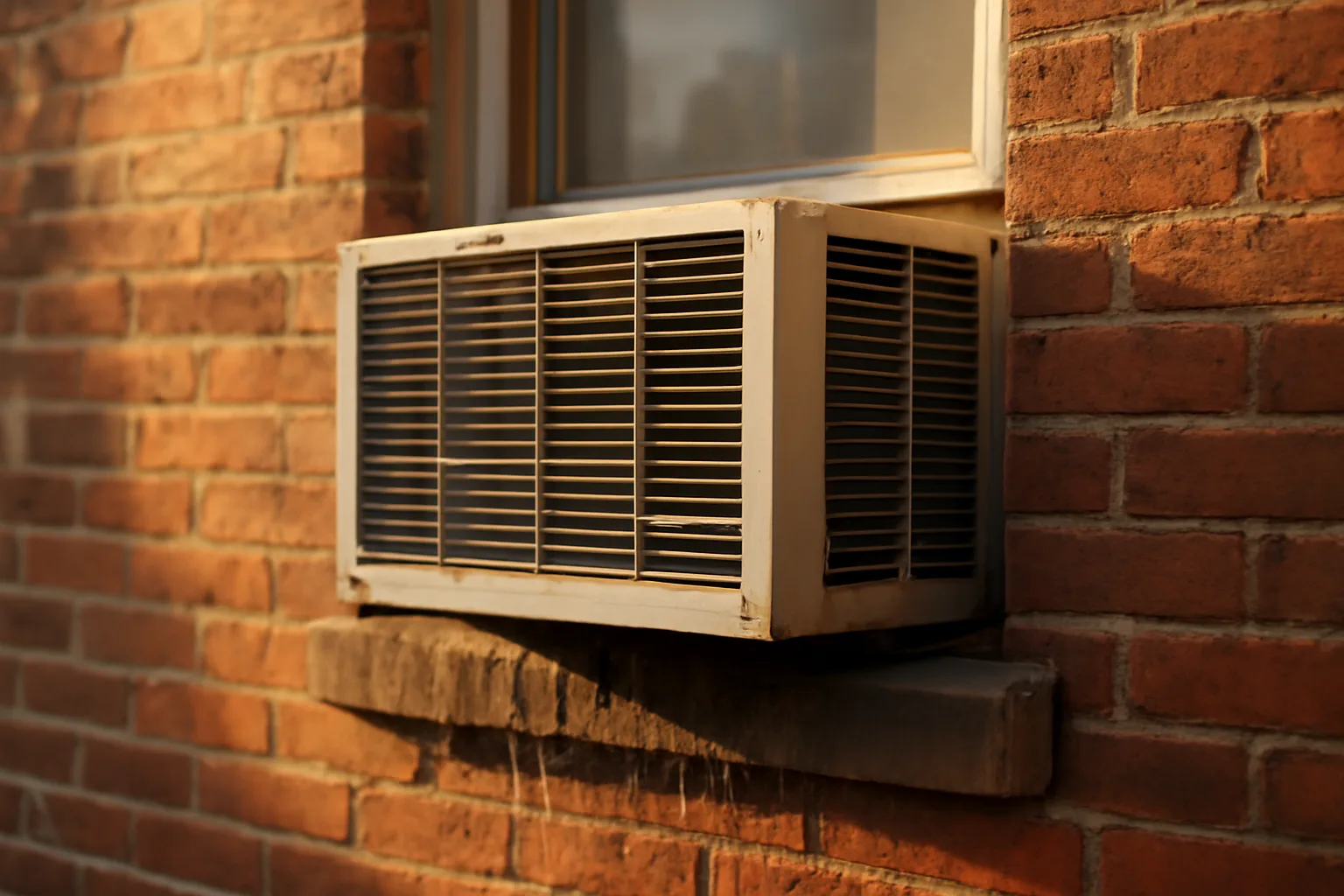
Plenty of landlords in non-mandate cities go with window units, portable units, or nothing at all, and that's legally fine outside places like Dallas. A few practical options if you want to reduce liability without a full HVAC install: window AC units are cheap (roughly $150 to $400 for a unit that cools 300 to 700 square feet, per typical retail pricing), ceiling fans, and sealing/insulating work that keeps a unit cooler passively. If you do provide any cooling equipment, once you provide it, most habitability frameworks treat it like any other included appliance: you generally have to keep it in working repair for the term of the tenancy. That's the tradeoff. Providing nothing avoids the obligation to fix something. Providing something and then ignoring repair requests is where landlords get into trouble, especially in a heat wave when a tenant calls code enforcement. This matters even more in cities with mandatory rental inspection programs. If a code inspector shows up for a routine or complaint-based rental license inspection and finds a broken AC unit that's part of the rental agreement, in a hot-climate city with an AC mandate you can get written up the same as you would for a broken furnace in Minnesota.
What can a landlord look at during an inspection?
Inspection scope depends entirely on your local rental licensing ordinance, but most programs check: working smoke and carbon monoxide detectors, functioning heat source, safe electrical (no exposed wiring, working outlets), plumbing that doesn't leak and has hot water, structural issues (stairs, railings, floors), window and door security, pest evidence, and, in cities with AC mandates, whether cooling equipment works and can hit the required temperature. Inspectors generally aren't supposed to go through personal belongings, closets, or dresser drawers. They're checking the condition of the structure and its systems, not doing a search. If your city requires a walkthrough before a new tenant moves in or before a license renews, get the checklist from your city's rental licensing office ahead of time. Cities that publish inspection checklists (search "[your city] rental license inspection checklist") usually list every item verbatim, so there's no guessing. For a broader look at what inspectors check across cities, see our guide on tenant rights covering habitability basics tenants can invoke if something like AC or heat fails mid-lease.
Who is responsible for a rental property walkthrough inspection in California?
In California, pre-move-in and move-out walkthroughs are a landlord responsibility under state law, separate from any city rental licensing inspection. California Civil Code section 1950.5 requires landlords, if the tenant requests it, to do an initial inspection before the tenant moves out, giving the tenant a chance to fix deficiencies before final deductions from the security deposit are calculated [3]. The landlord (or their agent) conducts it, gives the tenant a written itemized statement of what needs fixing, and then does the final inspection after move-out. Separately, cities in California with their own rental licensing or inspection ordinances (San Francisco's residential rent stabilization inspections, or state-mandated habitability inspections tied to Health and Safety Code violations) may send a city inspector, and that's a different process from the deposit walkthrough. California's implied warranty of habitability comes from Civil Code sections 1941 and 1941.1, which lists things like effective waterproofing, working plumbing, and heating facilities "in good working order," but doesn't list air conditioning [4]. So in California: no statewide AC mandate, but yes, the landlord (not the tenant, not a third party) is on the hook for running the move-in/move-out walkthrough process correctly.
What is landlording, and what is a landlord, exactly?
A landlord is the owner (or the owner's authorized agent) who rents real property to a tenant in exchange for payment, taking on legal responsibilities for habitability, safety, and following state and local landlord-tenant law. "Landlording" is the practical, ongoing work of that role: screening tenants, collecting rent, handling repairs, managing lease terms, and staying current on the rental laws in your specific city and state. It's more than owning a rental unit. Someone who inherits a house and rents it to a cousin informally is legally a landlord the moment money changes hands for occupancy, whether or not there's a written lease. That status brings obligations (habitability, proper notice before entry, security deposit handling) regardless of how casual the arrangement feels. Landlording as an ongoing job includes things state law doesn't always spell out clearly: budgeting for maintenance (a widely cited rule of thumb is 1% of the property's value per year for repairs, though actual costs vary a lot by property age and climate), keeping records of repair requests and responses, and tracking which cities require rental registration or a license before you can legally lease the unit at all.
How do you become a landlord and how do you actually run the job well?
Becoming a landlord legally usually means: owning or controlling a property you're allowed to rent (check zoning and any owner-occupancy rules first), registering with your city or county if required (many cities under mandatory rental licensing require registration before the first tenant moves in, sometimes with a fee that varies by unit count), getting the property inspected if your city requires it, screening and selecting a tenant under fair housing law, and executing a lease that meets your state's requirements. Fair housing matters from your very first ad. The federal Fair Housing Act (42 U.S.C. section 3601 et seq.) bans discrimination in rental housing based on race, color, religion, sex, national origin, familial status, and disability [5]. Many states and cities add protected classes on top of that (source of income, sexual orientation, age), so check your state's fair housing agency too. Running it well day to day comes down to a short list: respond to repair requests fast (habitability law in most states gives landlords a "reasonable time" standard, and letting things sit invites a habitability claim or a withheld-rent situation), keep a paper trail of every notice and repair, budget realistically for maintenance and vacancy, and don't skip your city's rental licensing renewal, since a lapsed license can block you from collecting rent or evicting in some cities until you cure it. One practical step a lot of first-time or newly-licensed landlords skip: actually reading your city's inspection checklist and habitability code section before the inspector shows up, not after a violation notice arrives.
What rights do tenants have without a written lease?
A tenant without a written lease still has real rights. Occupying a unit and paying rent (or an agreed exchange for occupancy) generally creates a month-to-month tenancy under state law, even with nothing signed. That tenant still gets the state's implied warranty of habitability, protection from illegal lockouts or utility shutoffs, and the state's standard notice period before the landlord can end the tenancy. What a verbal or no-lease tenant typically loses is certainty: no fixed rent amount in writing (harder to prove if disputed), no fixed term, and often faster ability for either side to end it with proper notice, since month-to-month tenancies usually require far shorter notice than a fixed one-year lease. Security deposit rules, habitability protections, and anti-retaliation and anti-discrimination laws apply whether or not there's a signed lease. A landlord can't skip fair housing law, safety code, or security deposit statutes just because nothing was signed. For a state-by-state breakdown of what tenants can invoke, see tenants rights and renters rights.
How much notice does a landlord have to give before entering or ending a tenancy?
This varies significantly by state, and there's no single national number, so treat any nationwide figure as a rough default, not a rule. For routine entry to make repairs or show the unit, many states require 24 hours' written or verbal notice, though some states specify 24 hours and others use a "reasonable notice" standard without a fixed number. California, for example, sets 24 hours as presumptively reasonable notice for entry under Civil Code section 1954 [6]. For ending a month-to-month tenancy, 30 days' notice is the most common default nationally, though it climbs to 60 or even 90 days in some states or for longer-term tenants (California requires 60 days' notice to end certain tenancies of one year or more, for instance) [6]. Emergency entry (fire, flood, a burst pipe) generally doesn't require advance notice at all under most state statutes, since the whole point is that waiting would cause more damage or danger. Because this genuinely differs by state and sometimes by city ordinance on top of that, don't rely on a number you read on a general site (including this one) for a specific eviction or entry situation. Pull your actual state statute or ask your city's rental licensing office.
Why do landlords require renters insurance?
Landlords require renters insurance mainly to shift liability and personal-property risk away from themselves. A landlord's own property insurance covers the building and the landlord's fixtures, but it doesn't cover a tenant's belongings if there's a fire, theft, or water damage, and it often doesn't cover a tenant's guest getting hurt inside the unit. Requiring renters insurance (commonly $15 to $30 a month for a standard policy, though pricing varies by state, coverage amount, and provider) pushes that liability onto a policy the tenant pays for, and it can reduce disputes over who pays when a tenant's laptop gets ruined by a leak that wasn't the landlord's fault. It's not a substitute for maintaining the property. If the leak was caused by deferred maintenance, the landlord can still be liable regardless of the tenant's insurance. Whether a landlord can require it depends on state law and the lease; most states allow landlords to require renters insurance as a lease condition, but check your state's landlord-tenant statute since a few have restrictions.
What can a landlord not do in Ohio?
Ohio's landlord-tenant law is spelled out in Ohio Revised Code Chapter 5321. Under that chapter, a landlord cannot shut off utilities, change the locks, or remove a tenant's belongings to force them out; that's illegal "self-help" eviction, and Ohio requires landlords to go through the courts to remove a tenant [7]. A landlord also can't retaliate against a tenant for reporting a housing code violation or for joining a tenant organization; Ohio Revised Code section 5321.02 specifically bars retaliatory conduct like raising rent, decreasing services, or threatening eviction because a tenant exercised a legal right [8]. Ohio also puts habitability duties squarely on the landlord under section 5321.04, requiring compliance with building and housing codes, keeping common areas safe, and maintaining electrical, plumbing, heating, and other facilities supplied by the landlord in good working order, though again, air conditioning isn't specifically named [9]. A landlord in Ohio also can't enter without reasonable notice except in an emergency; the statute expects landlords to give notice and enter at reasonable times for repairs, inspection, or showing the unit.
How does this connect to rental licensing and inspection prep generally?
If your city requires rental registration, a rental license, or a periodic inspection, AC is just one line item in a much longer list of things an inspector or a code office can flag. The bigger risk for most 1-10 unit landlords isn't AC specifically. It's missing a registration deadline, letting a license lapse, or getting a violation notice for something in the code you didn't know existed because your city's ordinance isn't written in plain English. That's the gap our $79 one-time City Rental License & Inspection Prep Packet is built for: pulling together what a specific city's rental licensing office actually checks, so you're not guessing at inspection time or scrambling after a violation notice. It's not legal advice and it doesn't guarantee a passed inspection, since city inspectors have discretion and codes change, but it's a lot cheaper than a missed deadline fine or an emergency AC replacement ordered by a code inspector's letter. Check out the rental packet builder if you want a head start before your next city notice or renewal deadline lands in your mailbox.
Frequently asked questions
Is a landlord required to provide air conditioning in most states?
No. Most US states have no statewide law requiring landlords to install or provide air conditioning. Heat is regulated far more often than cooling. A small number of cities, mostly in hot climates like Dallas and parts of Arizona, have added local AC or maximum indoor temperature rules on top of state law.
Can a tenant withhold rent if the AC breaks?
Usually only if AC was promised in the lease or listing, or if the city or state has an AC mandate that applies. Without either, a broken AC unit in a state with no cooling requirement generally isn't grounds for withholding rent, though it may still support a habitability complaint if conditions become genuinely dangerous, like extreme indoor heat.
What is landlording?
Landlording is the ongoing job of owning and operating a rental property: screening tenants, collecting rent, handling repairs and habitability duties, following fair housing and landlord-tenant law, and keeping up with any city rental registration or licensing requirements. It starts the moment you take rent from someone in exchange for occupancy, lease or no lease.
What rights do tenants have without a lease?
A tenant paying rent without a written lease usually has a month-to-month tenancy under state law, with the same implied warranty of habitability, notice requirements before eviction, security deposit protections, and anti-discrimination rights as a tenant with a signed lease. What's missing is a fixed rent or term in writing, which can make disputes harder to prove.
How much notice does a landlord have to give before entering the unit?
It depends on your state; 24 hours is common (California specifies this under Civil Code section 1954), but some states use a general "reasonable notice" standard without a fixed number. Emergency situations (fire, flooding, gas leak) typically don't require advance notice at all. Check your specific state statute.
Why do landlords require renters insurance?
Landlords require it mainly to protect against liability and to make sure a tenant's belongings and guest injuries aren't the landlord's financial problem. A landlord's own insurance covers the building, not the tenant's stuff or a lawsuit stemming from an incident that wasn't caused by the landlord's negligence.
What can a landlord look at during a rental inspection?
Typically smoke and CO detectors, working heat (and AC where mandated), safe electrical and plumbing, structural safety items like railings and stairs, window and door security, and pest evidence. Inspectors generally check the condition of the structure and its systems, not personal belongings or private areas like closets and drawers.
Who does the walkthrough inspection for a rental in California?
The landlord or their agent conducts the pre-move-out walkthrough under California Civil Code section 1950.5, if the tenant requests it, giving written notice of deficiencies before final deposit deductions. Separate city-level rental inspections, where they exist, are done by a municipal code inspector, not the landlord.
What can a landlord not do in Ohio?
Under Ohio Revised Code Chapter 5321, a landlord can't shut off utilities, change locks, or remove belongings to force a tenant out (illegal self-help eviction), can't retaliate against a tenant for reporting code violations, and must keep landlord-supplied systems like plumbing and heating in good working order.
Do landlords have to provide AC in Texas?
Texas has no statewide law requiring residential landlords to provide air conditioning, but the city of Dallas amended its housing code to require working AC capable of cooling to a set temperature during the cooling season, following tenant deaths linked to extreme heat. Other Texas cities may or may not have similar local rules; check the specific city.
Is it legal to rent an apartment with no air conditioning?
In most US jurisdictions, yes. Since state law rarely mandates AC, landlords can legally rent units without it, as long as they aren't in a city like Dallas with a local AC requirement and haven't advertised or promised cooling as an included feature.
How do you become a landlord?
Own or control a rentable property, check zoning and any local registration or licensing requirements, register with your city if mandated, get any required inspection done, screen tenants under fair housing law, and use a lease that meets your state's requirements. Many cities require registration before the first tenant moves in.
What is the difference between a landlord and a property manager?
A landlord owns the rental property (or holds a leasehold interest allowing them to sublease) and bears legal responsibility for habitability and compliance. A property manager is typically a hired agent who handles day-to-day tasks like rent collection and maintenance on the landlord's behalf, but the landlord remains the legally responsible party.
Sources
- Cornell Law School Legal Information Institute, Implied Warranty of Habitability: The implied warranty of habitability is a state-by-state legal doctrine requiring rental housing to be fit to live in, developed by courts starting in the late 1960s.
- City of Dallas Code of Ordinances, Minimum Housing Standards (Chapter 27): Dallas requires rental properties to have working air conditioning maintained by the owner as part of minimum housing standards.
- California Civil Code Section 1950.5: California landlords must offer an initial move-out inspection at the tenant's request, with written notice of deficiencies before final deposit deductions.
- California Civil Code Sections 1941 and 1941.1: California's habitability statute requires effective waterproofing, working plumbing, and heating facilities in good working order, without mentioning air conditioning.
- U.S. Department of Justice, Fair Housing Act (42 U.S.C. § 3601 et seq.): The federal Fair Housing Act bans rental housing discrimination based on race, color, religion, sex, national origin, familial status, and disability.
- California Civil Code Section 1954: California sets 24 hours as presumptively reasonable notice for landlord entry into a rental unit.
- Ohio Revised Code Section 5321.15: Ohio prohibits landlords from using self-help measures like utility shutoffs, lockouts, or removing belongings to force a tenant out, requiring court process for eviction.
- Ohio Revised Code Section 5321.02: Ohio law bars landlords from retaliatory conduct, such as raising rent or decreasing services, against a tenant who exercises a legal right like reporting a code violation.
- Ohio Revised Code Section 5321.04: Ohio requires landlords to comply with building and housing codes and keep landlord-supplied plumbing, electrical, and heating facilities in good working order.