Last updated 2026-07-26
TL;DR
Landlording means renting out property you own and handling tenant screening, repairs, rent collection, and legal compliance. Notice periods for entry typically run 24-48 hours depending on state law, tenants without a written lease still have rights under state landlord-tenant statutes, and most cities requiring rental licenses also require some form of walk-through inspection before or during tenancy.
what is a landlord and what does landlording actually involve
A landlord is a person or entity that owns residential or commercial property and rents it to someone else (a tenant) in exchange for money. That's the legal definition, but the day-to-day job is broader than just collecting a check. "Landlording" is the informal term for the ongoing work of managing rental property: screening applicants, drafting and enforcing lease terms, handling maintenance requests, collecting rent, dealing with turnover, and staying current on local and state landlord-tenant law. If you own even one rental unit and someone else lives in it under a lease or rental agreement, you're a landlord under the law, whether you think of yourself that way or not. Most states define the landlord-tenant relationship through a version of the Uniform Residential Landlord and Tenant Act (URLTA) or a state-specific statute. These laws set the floor for things like security deposit limits, notice periods, and habitability standards. You can't contract below that floor even if your tenant signs something agreeing to it. For landlords in cities with mandatory rental registration or licensing, landlording also means keeping your license current, passing periodic inspections, and paying renewal fees on schedule. Skipping that part of the job is how landlords end up with fines or a red-tagged unit.
how to become a landlord
Becoming a landlord takes four basic steps: acquire property, prepare it to legally rent, screen and select a tenant, and register with any city or state programs that require it. First, you need a property, whether bought outright, financed, or converted from a former primary residence. Before you list it, check your local zoning to confirm rental use is allowed, and check whether your city requires a rental license or registration. Many cities with licensing programs (think Minneapolis, MN, Los Angeles, CA, or smaller municipalities with proactive rental inspection ordinances) require you to register the unit and sometimes pass an inspection before you can legally lease it. Second, get your paperwork and finances in order: a lease template that complies with your state's landlord-tenant statute, a system for collecting rent and security deposits, and a plan for handling maintenance requests. Many states cap security deposits (commonly at one or two months' rent) and require you to return deposits within a set window, often 14 to 30 days depending on the state. Third, screen tenants consistently. The Fair Housing Act prohibits discrimination based on race, color, national origin, religion, sex, familial status, or disability [1]. Apply the same screening criteria (credit check, income verification, rental history) to every applicant to avoid fair housing complaints. Fourth, if your city requires it, register your rental and schedule any required inspection before your first tenant moves in. This is the step new landlords skip most often, usually because they don't know the requirement exists until a neighbor complains or a city inspector shows up. If you're setting up in a city with a licensing program, our rental packet builder walks through the documents most cities ask for during initial registration, though you should always confirm current fees and forms with your city rental licensing office.
what rights do tenants have without a lease
Tenants without a written lease still have real legal protections. In every state, an oral or implied rental agreement (sometimes called a tenancy-at-will or month-to-month tenancy) creates a landlord-tenant relationship governed by state law, even with nothing signed. At minimum, a tenant without a written lease is entitled to: proper notice before eviction (the amount varies by state and is often tied to how often rent is paid), a habitable unit that meets local health and safety codes, protection from retaliatory eviction for reporting code violations, and, in most states, the same security deposit protections as a tenant with a written lease. Without a written lease, terms default to whatever your state statute says for a periodic tenancy, usually month-to-month if rent is paid monthly. That means either party can generally end the tenancy with proper notice, but the landlord still can't just change the locks or shut off utilities to force someone out. Self-help eviction (lockouts, utility shutoffs, removing belongings) is illegal in nearly every state and can expose a landlord to statutory damages. If you're renting to family or a friend without paperwork, don't assume informal means unprotected. Courts generally treat consistent rent payment and occupancy as evidence of a tenancy, lease or not.
how much notice does a landlord have to give before entering or ending a tenancy
| Entry for repairs/inspection | 24-48 hours | Cal. Civ. Code § 1954 [2] | |
|---|---|---|---|
| Entry to show unit for sale/rent | 12-24 hours | Fla. Stat. § 83.53 [3] | |
| End month-to-month (under 1 yr) | 30 days | Cal. Civ. Code § 1946.1 [4] | |
| End month-to-month (1 yr+) | 60 days | Cal. Civ. Code § 1946.1 [4] | Rent increases often carry their own notice rules, separate from termination notice, and some cities layer additional requirements on top of state law if they have rent stabilization or just-cause eviction ordinances. |
Notice requirements split into two categories: notice to enter the unit, and notice to end or change a tenancy. Both vary significantly by state. For entry, most states require 24 to 48 hours' advance notice for non-emergency entry (repairs, inspections, showings). California requires "reasonable notice," which state law presumes to be 24 hours unless circumstances indicate otherwise [2]. Some states, like Florida, specify 12 hours for entry to show a rental unit for sale or lease [3]. Emergencies (fire, flooding, gas leak) are the standard exception; you can enter without advance notice when there's an immediate threat to health or safety. For ending or changing a tenancy, notice depends on your state and the tenancy type. A common baseline for month-to-month tenancies is 30 days' notice, though some states require more for longer tenancies. California, for example, requires 60 days' notice to terminate a month-to-month tenancy where the tenant has lived in the unit for a year or more, and 30 days if under a year [4]. Always check your specific state statute; a nationwide default doesn't exist. | Notice type | Typical range | Example source |
who is responsible for a rental property walk-through inspection in california
In California, the landlord is responsible for offering an initial move-out walk-through inspection, but the tenant decides whether to accept it. California Civil Code Section 1950.5 requires landlords to notify tenants of their right to an inspection before the tenant moves out, typically conducted within two weeks of the end of the tenancy [5]. During that pre-move-out walk-through, the landlord identifies any deficiencies that could lead to deductions from the security deposit, and gives the tenant a chance to fix minor items themselves before moving out. The landlord must provide an itemized statement of proposed deductions at that time. This is separate from move-in inspections, which aren't legally mandated statewide in California but are standard good practice, since a documented move-in condition report protects both sides in a deposit dispute. For licensed rental units in California cities with proactive rental inspection programs (Los Angeles's Systematic Code Enforcement Program is one well-known example), a separate government inspector, not the landlord, is responsible for the code-compliance inspection tied to the rental license. That's a different process from the landlord's own move-in/move-out walk-through and covers things like smoke detectors, habitability, and code violations rather than tenant damage. Landlords should keep the two straight: the security-deposit walk-through is a landlord-tenant matter under Civil Code 1950.5, while the licensing inspection is a city compliance matter, often scheduled through the city's housing or code enforcement department.
what can a landlord look at during an inspection
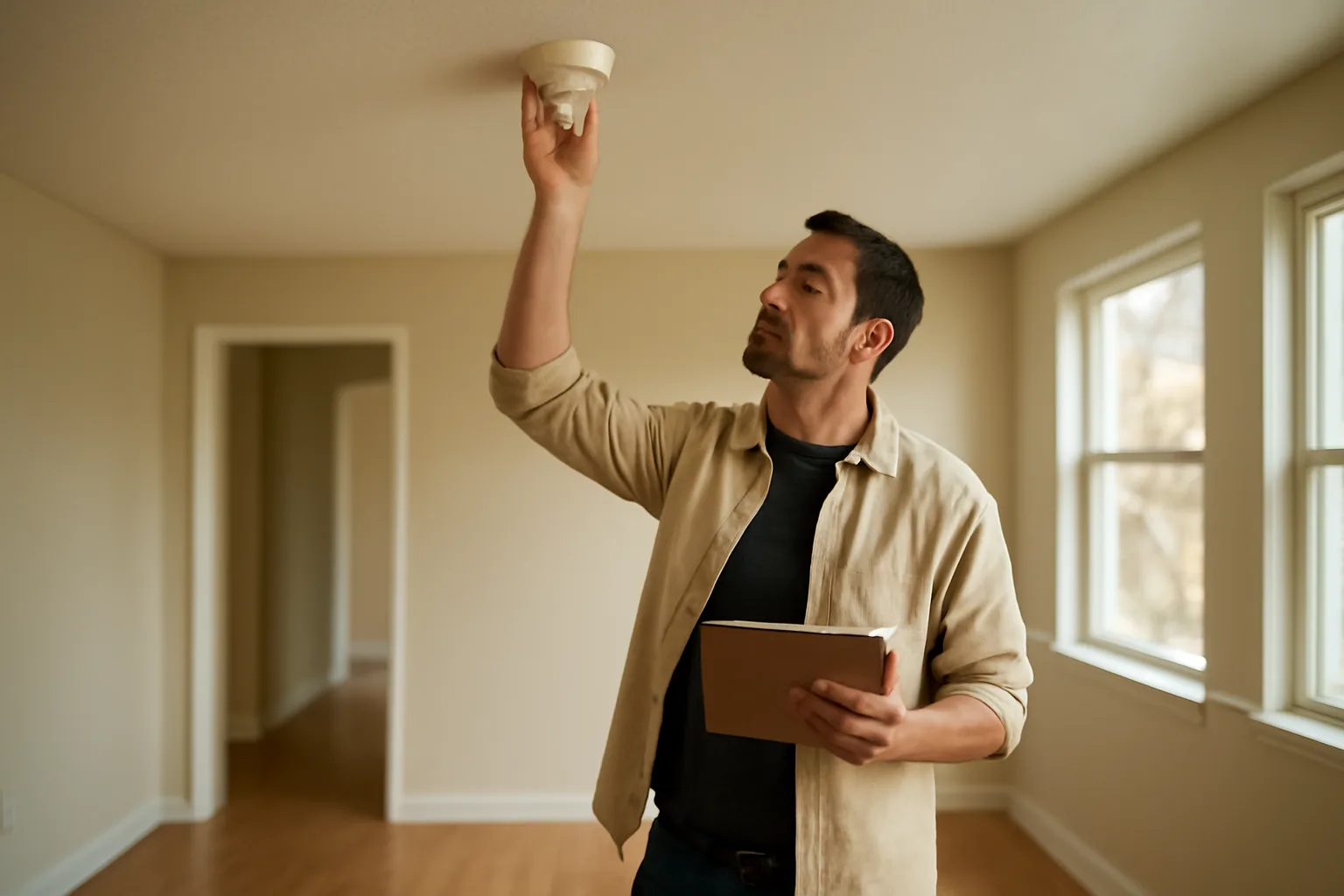
During a routine or move-in/move-out inspection, a landlord can generally check anything related to the physical condition of the unit and the tenant's compliance with the lease: walls, floors, appliances, plumbing fixtures, windows, doors, smoke and carbon monoxide detectors, evidence of unauthorized pets or occupants, and signs of damage beyond normal wear and tear. What a landlord generally cannot do is search personal belongings, go through closets and drawers unrelated to condition assessment, or use the inspection as a pretext to harass a tenant or retaliate for a complaint. Inspections have to serve the stated purpose (repairs, code compliance, deposit assessment) and follow the notice requirements described above. For city rental license inspections, the inspector is typically checking for code compliance items: working smoke detectors and carbon monoxide alarms, adequate egress from bedrooms, no exposed wiring, functioning heat, no significant mold or pest infestation, and proper number of occupants for the unit's size. These inspections are about the building meeting minimum housing code, not about tenant housekeeping. Some cities publish a checklist of exactly what their inspectors look for. If your city has one, get it before your inspection date rather than guessing. A pre-inspection walk-through using the same checklist catches most issues (missing detector batteries, a loose handrail, an unpermitted space heater) before the official visit, which is the whole point of doing a prep pass yourself.
why do landlords require renters insurance
Landlords require renters insurance mainly to shift liability and personal property risk away from themselves and onto the tenant. A landlord's own property insurance covers the building structure, not the tenant's belongings, and typically doesn't cover a tenant's liability if they cause a fire, water damage, or an injury to a guest. Renters insurance policies commonly include personal liability coverage, often starting around $100,000, along with coverage for the tenant's personal property if damaged by a covered event. Requiring it means that if a tenant's negligence (an overflowing bathtub, an unattended candle) causes damage, their policy pays first, rather than the landlord's insurer footing the bill and the landlord's premiums rising afterward. It's legal in most states for a landlord to require renters insurance as a lease condition, as long as the requirement is disclosed before signing and applied consistently to all tenants. Some cities and some subsidized housing programs have specific rules about whether and how landlords can require it, so check local rules if you manage HUD-assisted units. From a practical standpoint, a renters insurance requirement is cheap insurance for the landlord too: it typically costs a tenant somewhere between $15 and $30 a month, based on typical market listings, a small ask relative to the protection it gives both parties.
what a landlord cannot do in ohio
Ohio landlord-tenant law, primarily under Ohio Revised Code Chapter 5321, spells out several things a landlord cannot do. A landlord cannot shut off utilities, change the locks, or remove a tenant's belongings to force them out without going through the court eviction process; this is illegal self-help eviction [6]. A landlord in Ohio cannot enter the rental unit without giving reasonable notice, generally interpreted as 24 hours, except in genuine emergencies [6]. A landlord also cannot retaliate against a tenant for reporting a code violation, joining a tenant union, or exercising a legal right; Ohio law explicitly prohibits retaliatory conduct like raising rent, decreasing services, or filing eviction within a certain window after a tenant complaint [5]. Ohio landlords also cannot fail to maintain the unit in a habitable condition. ORC 5321.04 requires landlords to keep the premises in compliance with building and housing codes, keep common areas safe, and maintain electrical, plumbing, and heating systems in good working order [7]. A landlord who ignores repair requests can end up facing a rent escrow action, where the tenant deposits rent with the court instead of paying the landlord directly until repairs are made. Finally, Ohio landlords cannot discriminate in violation of the federal Fair Housing Act or Ohio's own civil rights statute, and cannot withhold a security deposit without an itemized, written explanation delivered within 30 days of the tenant vacating .
how to be a landlord day to day: the practical checklist
Once you've got a tenant in place, being a landlord is mostly about consistency: collecting rent on time, responding to repair requests quickly, and documenting everything. A few habits separate landlords who avoid problems from landlords who end up in housing court. Respond to maintenance requests within a few days, not weeks; slow repairs are the single most common trigger for tenant complaints to code enforcement. Keep a paper trail on every notice, repair, and communication; text messages and emails count as documentation if a dispute ever goes to court. Renew your rental license or registration before it expires rather than after a late notice arrives; many cities charge a penalty fee for late renewal on top of the standard fee. If you're managing a unit in a city with mandatory rental licensing, build a simple annual calendar: license renewal date, inspection window, smoke detector battery check, and any city-required lead paint or bedbug disclosure deadlines if applicable. This is the exact gap our $79 rental packet builder was built to close: a one-time prep packet that organizes the documents most cities ask landlords to have ready for registration and inspection, so you're not scrambling the week before an inspector shows up. It won't guarantee you pass (that's between you and your city's inspector), but it takes the guesswork out of what to prepare. For a broader look at what tenants can expect from you as landlord, see our guides on tenant rights and renters rights.
how rental licensing and inspection programs typically work across cities
Most cities with mandatory rental licensing follow a similar structure, even though the specific fees and forms differ. You register the rental unit with a city department (often called housing, code enforcement, or community development), pay an annual or biennial fee, and submit to a periodic inspection, sometimes on a fixed cycle and sometimes triggered by tenant turnover or complaint. Fees vary widely by city and unit count; some charge a flat per-unit fee, others scale by number of units in a building. Because these numbers change year to year and city to city, don't rely on a number you saw online; confirm current fees, renewal cycles, and inspection checklists directly with your city rental licensing office before budgeting or scheduling. What's consistent across most programs: you'll need proof of ownership or authorization to manage the unit, a completed application, payment of the fee, and typically a walk-through by a city inspector or fire marshal checking basic life-safety items. Some cities allow self-certification for smaller buildings, others require an in-person inspection for every unit regardless of size. If you own units in more than one city, keep a separate compliance folder per city. Requirements that apply in one municipality (say, a specific egress window size or a particular smoke detector placement rule) often don't carry over to the next, and assuming they do is a common way landlords fail an inspection they thought they were ready for.
Frequently asked questions
What is landlording as a general term?
Landlording is the informal industry term for the full set of tasks involved in owning and managing rental property: tenant screening, rent collection, maintenance, lease enforcement, and compliance with local and state landlord-tenant law. It's used casually in property management circles and doesn't have a distinct legal definition separate from being a landlord.
What is a landlord, legally speaking?
Legally, a landlord is the owner (or authorized agent of the owner) of real property who leases or rents it to another party, the tenant, in exchange for rent. The relationship is governed by state landlord-tenant statutes and, if a written lease exists, by the terms of that lease as long as they don't violate state minimums.
Do I need a business license to become a landlord?
It depends on your city and state. Some cities require a rental business license separate from a rental unit registration; others fold licensing into the same registration process. Check with your city's business licensing office and your state's department of revenue, since rental income is often taxable and may trigger separate registration requirements.
Can a tenant refuse to let a landlord in for an inspection?
Generally no, as long as the landlord gave proper notice (commonly 24 hours) and the entry is for a legitimate purpose like repairs or a required inspection. Persistent refusal can be treated as a lease violation in many states, though the landlord still can't force entry without following legal notice procedures.
How much notice does a landlord have to give for a rent increase?
It varies by state and sometimes by city. A common baseline is 30 days' notice for month-to-month tenancies, though some states require 60 or 90 days for larger increases or longer-term tenants. Check your specific state's landlord-tenant statute, since there's no single national rule.
What happens if I skip my city's rental license inspection?
Consequences vary by city but often include fines, a hold on renewing your rental license, and in some cases a prohibition on collecting rent or evicting a tenant until the unit is licensed. Some cities also refer repeat non-compliance to code enforcement for citation.
Can a landlord require renters insurance as a lease condition in every state?
In most states, yes, as long as it's disclosed clearly in the lease before signing and applied to all tenants consistently. A few subsidized housing programs and some local ordinances place limits on this, so check program-specific rules if you rent HUD-assisted or rent-controlled units.
What rights does a tenant have if they never signed a lease?
A tenant without a written lease still has a legally recognized tenancy under state law, typically month-to-month. They're entitled to proper eviction notice, a habitable unit, protection from illegal lockouts or utility shutoffs, and standard security deposit protections, even with nothing in writing.
Is a landlord allowed to look through a tenant's belongings during inspection?
No. Inspections are limited to assessing the unit's physical condition and code compliance, not searching personal property. Going through closets, drawers, or personal items unrelated to condition assessment goes beyond the legitimate purpose of the inspection and can expose the landlord to a privacy claim.
What can't a landlord do in Ohio regarding evictions?
Ohio landlords cannot use self-help eviction methods like changing locks, shutting off utilities, or removing belongings to force a tenant out. Eviction must go through the court process under Ohio Revised Code Chapter 5321, and landlords who bypass it can face damages and legal costs.
Who pays for the move-in and move-out inspection in California?
Neither party pays a separate fee for the inspection itself; it's part of standard landlord practice and, for the move-out walk-through, a landlord obligation under California Civil Code Section 1950.5. Separate city rental licensing inspections may carry a government fee, which varies by city.
How do I know if my city requires a rental license?
Search your city's name plus "rental license" or "rental registration" and check the housing or code enforcement department's page, or call the office directly. Many mid-size and large cities with older housing stock (common in the Midwest and Northeast) have mandatory programs; confirm requirements and fees directly with your city's rental licensing office.
Sources
- HUD, Fair Housing Act overview: Fair Housing Act prohibits discrimination based on race, color, national origin, religion, sex, familial status, or disability
- California Civil Code Section 1954: California presumes 24 hours is reasonable notice for landlord entry
- California Civil Code Section 1946.1: California requires 30 or 60 days notice to terminate a month-to-month tenancy depending on tenancy length
- California Civil Code Section 1950.5: California landlords must offer tenants a pre-move-out inspection and itemized deduction statement
- Ohio Revised Code Section 5321.04: Ohio landlords must give reasonable notice before entry and cannot use self-help eviction methods
- Ohio Revised Code Section 5321.02: Ohio law prohibits landlord retaliation against tenants who report code violations or exercise legal rights
- Ohio Revised Code Section 5321.16: Ohio landlords must provide an itemized, written explanation of security deposit deductions within 30 days