Last updated 2026-07-26
TL;DR
There's no such thing as a personal "car rental license" for renting a car yourself; you just need a valid driver's license and a credit or debit card, usually at age 21+. If you searched this hoping to rent out a property, you actually need a rental property license or registration from your city, which is a different process entirely covered below.
Do you need a "car rental license" to rent a car?
No. If you're trying to rent a car from Hertz, Enterprise, Avis, or a similar company as a customer, there is no separate license to get. You need a valid driver's license, and most major companies require renters to be at least 21 years old, with drivers under 25 often paying a young renter surcharge. Enterprise, for example, states that renters must be at least 21 in most locations, with an underage fee applied for renters 21 to 24 [1]. You'll also need a credit card or, at some companies, a debit card that meets extra verification requirements (proof of return travel, sometimes a background check). Some states let 18 to 20 year olds rent for business purposes with a company account, but that's the exception, not the rule. If that's genuinely what brought you here, you're done. No test, no application, no government agency involved. The rest of this article is for a very different (and much more common) reason people end up searching this phrase: they're a new landlord trying to figure out what "rental license" actually means for a property they own or are about to rent out.
Why do so many people searching "car rental license" actually mean rental property licensing?
Search engines see this phrase a lot, and a good chunk of the people typing it are landlords, not renters at Enterprise. They just got a notice from their city (something like "Rental Registration Required" or "Notice of Rental Housing Violation") and typed a rough version of what they think they need: a license to legally rent something out. That's a completely different animal from renting a car. Dozens of U.S. cities, including Los Angeles, Philadelphia, and Minneapolis, require landlords to register or license every rental unit before they can legally lease it out, and many pair that requirement with a mandatory habitability inspection [2][3][4]. If you're a first-time landlord who just got a letter, ordinance postcard, or fine notice, the rest of this article walks through what "landlording" actually involves: how to become a landlord, what a rental inspection covers, what tenants are owed even without a signed lease, and where people commonly get tripped up. None of this is legal advice; city rules vary block by block, so always confirm specifics with your city rental licensing office.
What is landlording, exactly?
Landlording is the ongoing work of owning and managing a rental property: collecting rent, maintaining the unit, handling repairs, following your state's landlord-tenant law, and (in a growing number of cities) staying compliant with local rental registration or licensing rules. It's part business, part legal compliance, part maintenance job. A landlord (sometimes called a lessor) is the person or entity that owns residential or commercial property and rents it to a tenant in exchange for rent, under a lease or rental agreement. The relationship is governed by state landlord-tenant statutes, which set baseline rules for things like security deposits, notice periods, and habitability, on top of whatever the lease itself says. Landlording is not passive. Even with one unit, you're responsible for things like keeping the property in a condition fit for habitation, following state-specific notice rules before entry or termination, and, in mandatory-licensing cities, renewing your rental license or registration on a schedule (often annually) and passing a habitability inspection tied to that license [3][4]. Skip a renewal deadline and many cities start assessing late fees or citations automatically, sometimes before you even realize the license lapsed.
How to become a landlord: the actual steps
Becoming a landlord for the first time involves more paperwork than most people expect, especially once city-level rental licensing enters the picture. Here's the realistic sequence: 1. Confirm you can legally rent the unit. Check your city and county zoning rules and any HOA restrictions. Some cities cap the number of rental units allowed per block or require owner-occupancy for certain unit types. 2. Register or license the property with your city, if required. Search your city name plus "rental registration" or "rental license" on your city's official .gov site. Fees typically range from around $25 to $300+ per unit per year depending on the city and unit count, though you should confirm the exact figure with your city rental licensing office since it changes often. 3. Schedule and pass any required inspection. Many licensing cities require a habitability inspection before the first license issues and again at renewal, sometimes every one to three years. 4. Get landlord insurance (a dwelling/rental property policy, not a standard homeowners policy). Homeowners insurance generally excludes rental use; you need a landlord policy that covers liability and property damage while the unit is tenant-occupied. 5. Set your lease terms in line with state law. This includes security deposit limits (many states cap deposits at one or two months' rent), notice periods for entry, and required disclosures (lead paint disclosure is federally mandated for pre-1978 housing under 42 U.S.C. §4852d [5]). 6. Screen tenants consistently and follow the Fair Housing Act, which prohibits discrimination based on race, color, national origin, religion, sex, familial status, or disability in any housing-related decision [6]. 7. Open a separate bank account for rental income and security deposits; many states legally require deposits to be held in a separate, sometimes interest-bearing, account. If your city requires a rental license, treat that as step one, not an afterthought. Trying to lease a unit before registering it can mean fines, a stop-rent order, or even an unenforceable lease in some jurisdictions.
What is a landlord, legally speaking?
Legally, a landlord is the party that grants a tenant the right to occupy real property in exchange for rent, and who retains ownership and most maintenance obligations under the lease and state law. The landlord-tenant relationship is defined by a written or oral lease, plus your state's landlord-tenant code, which usually covers habitability duties, security deposit handling, entry notice, and eviction procedure. Being "the landlord" doesn't require an entity or an LLC, plenty of individual owners rent property directly in their own name. But it does come with legal duties regardless of how casual the arrangement feels. Courts generally treat a landlord as the party responsible for keeping the unit habitable (working plumbing, heat, and structural safety) even if the lease is silent on the topic, because state implied warranty of habitability laws fill that gap automatically in most states.
What rights do tenants have without a lease?
Tenants without a signed lease, sometimes called tenants at will or month-to-month tenants by default, still have real legal rights. Most states treat an unwritten rental arrangement as a periodic tenancy (usually month-to-month) governed by the same state landlord-tenant statute that applies to written leases. That means a tenant without a lease is still entitled to the implied warranty of habitability, still protected under the Fair Housing Act, and still owed proper notice before the landlord can terminate the tenancy or raise rent. The notice period is usually 30 days for month-to-month tenancies in many states, though some states require 60 days if the tenant has lived there over a year (California is one example, under Cal. Civ. Code §1946.1 [7]). A landlord cannot simply lock out a tenant, shut off utilities, or remove belongings to force someone out, even without a lease. Every state requires a formal eviction process through the courts, called "self-help eviction" is illegal nearly everywhere, no matter how informal the original rental agreement was. If you're dealing with an unwritten tenancy and need clarity on tenant protections in your state, tenant rights and tenants rights are good starting points before you take any action.
How much notice does a landlord have to give?
Notice requirements depend entirely on what the landlord is trying to do and what state you're in, so there's no single national number. Common patterns: 24 to 48 hours' notice before entering an occupied unit for non-emergency repairs or inspections (California requires "reasonable notice," presumed to be 24 hours, under Cal. Civ. Code §1954 [8]); 30 days' notice to end a month-to-month tenancy in most states; and longer notice, sometimes 60 or 90 days, in states or cities with additional tenant protections or for longer-term tenants. Rent increases usually require the same notice as termination in a month-to-month tenancy, commonly 30 days, though some cities with rent stabilization ordinances require more. Notice for lease violations (unpaid rent, unauthorized pets) is typically much shorter, often 3 to 5 days depending on the state, before a landlord can file for eviction. Emergency entry (a burst pipe, fire, gas leak) is the one exception where landlords generally don't need advance notice at all. Always check your specific state code section rather than assume a number, because these vary block by block and change with new legislation almost every session.
Who is responsible for rental property walk-through inspections in California?
In California, two different "walk-through" concepts get confused constantly, and it matters which one you mean. Under Cal. Civ. Code §1950.5(f), the landlord is responsible for offering an initial inspection before the tenant moves out, so the tenant can fix issues before final move-out and avoid deposit deductions. The landlord must give at least 48 hours' written notice of that inspection and provide an itemized list of anything that needs repair afterward [9]. Separately, many California cities (Los Angeles is the best-known example with its Systematic Code Enforcement Program) require the city, not the landlord, to conduct a habitability inspection of registered rental units, typically every four years, as a condition of keeping the rental registered [10]. The landlord's job there is to schedule access, be present or arrange access, and fix anything flagged. So: pre-move-out walk-throughs are the landlord's responsibility to offer; citywide habitability inspections are conducted by city inspectors, with the landlord responsible for compliance and access.
What can a landlord look at during an inspection?
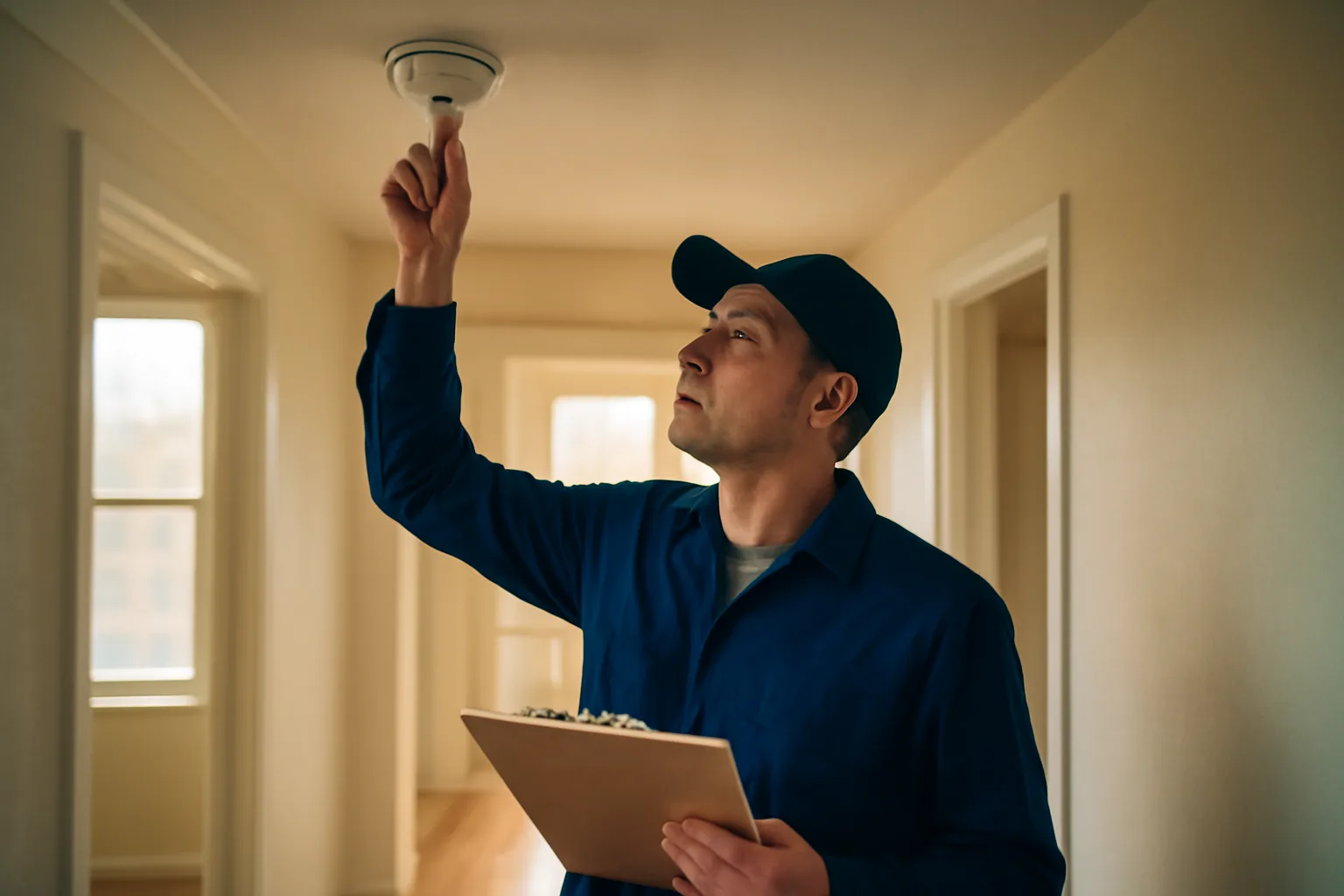
During a routine or lease-required inspection, a landlord can generally check for safety hazards, damage beyond normal wear and tear, unauthorized occupants or pets, smoke and carbon monoxide detector function, signs of unreported leaks or pest issues, and general lease compliance. A landlord is not there to inventory personal belongings, search for tenant records, or look through drawers and closets beyond what's needed to check for maintenance issues. City-mandated habitability inspections, by contrast, focus on code compliance items: working plumbing and heat, adequate weatherproofing, functioning smoke and CO detectors, safe electrical systems, no serious pest infestations, and structural safety (stairs, railings, windows that open and lock). Inspectors are checking the building against local housing code, not evaluating how tidy the tenant keeps the place. Either way, the landlord (or their inspector) must give proper advance notice under state law before entering, generally 24 to 48 hours depending on the state [8], except in a true emergency. If you're prepping for a first city inspection and want a structured way to walk through common code items before the inspector shows up, that's exactly the kind of prep our $79 City Rental License & Inspection Prep Packet is built for, it's a one-time reference packet, not a guarantee of passing, since every city's checklist differs slightly.
Why do landlords require renters insurance?
Landlords require renters insurance mainly to shift liability and personal property risk away from the landlord's own policy. A landlord's dwelling policy covers the building structure and the landlord's liability, but it generally does not cover a tenant's personal belongings (furniture, electronics, clothing) if there's a fire, burst pipe, or theft. Renters insurance also typically includes personal liability coverage, meaning if a tenant accidentally causes damage (an overflowing bathtub that damages the unit below, for instance) or someone is injured in their unit, the tenant's policy responds first instead of the claim falling entirely on the landlord's insurer. That keeps landlord insurance premiums and claims history cleaner over time. Many landlords require proof of a renters insurance policy, often with a minimum liability limit like $100,000, as a lease condition, and some states and cities explicitly allow this requirement by statute or local ordinance. It's a low-cost requirement for tenants, renters insurance commonly runs $15 to $30 a month depending on coverage and location, and it meaningfully reduces the landlord's financial exposure when something goes wrong.
What can't a landlord do in Ohio?
Ohio landlord-tenant law, primarily Ohio Revised Code Chapter 5321, spells out several things a landlord cannot do, and violations can expose the landlord to tenant lawsuits or damages. Under ORC 5321.15, a landlord cannot shut off utilities, change the locks, or remove a tenant's belongings to force them out, self-help eviction is illegal in Ohio, and a landlord must go through the municipal or county court eviction process instead . A landlord in Ohio also cannot enter the rental unit without giving reasonable notice, generally interpreted as at least 24 hours except in an emergency, under ORC 5321.04 . Ohio law also prohibits retaliatory conduct: a landlord cannot raise rent, decrease services, or attempt to evict a tenant specifically because the tenant complained to a health or safety agency, joined a tenant union, or asserted a legal right, under ORC 5321.02 . Ohio landlords also cannot ignore their maintenance duties under ORC 5321.04, which requires landlords to keep the premises in a fit and habitable condition, comply with building and housing codes, and keep common areas safe. Failing that duty can give tenants grounds to withhold rent through Ohio's rent escrow procedure or terminate the lease, depending on the circumstances.
How does city rental licensing actually work, city by city?
| Annual license/registration fee per unit | ~$25 to $300+ | |
|---|---|---|
| Inspection frequency | Every 1 to 4 years, or on tenant turnover | |
| Late renewal penalty | Flat fee or daily fine, varies widely | |
| First-time license processing time | 2 to 8 weeks in many cities | Those numbers are directional only, not a promise for your specific city; always confirm exact fees, inspection cycles, and deadlines with your city rental licensing office, since city councils change these fee schedules more often than most landlords expect. If you own in a city with mandatory licensing and haven't checked lately, it's worth a five-minute search on your city's official site before you get a violation notice you didn't see coming. |
There's no federal rental licensing law; it's entirely a city or county-level requirement, which is why the rules look completely different depending on where the property sits. Some cities (many small and mid-size towns) have no rental licensing requirement at all. Others require simple annual registration with a modest fee and no inspection. And a growing number, including large cities like Los Angeles and Philadelphia, require both a paid license and a periodic in-person inspection tied to that license [2][3]. Here's a rough sense of how different that can look: | City program element | Typical range (confirm locally) |
What happens if you skip the city rental license or miss an inspection deadline?
Consequences vary by city, but the common pattern is escalating fines followed by more serious enforcement. A typical progression looks like: a warning notice, then a fine (often $100 to $1,000+ depending on the city and how many units are unregistered), then potential referral to housing court, and in some cities, an order barring you from collecting rent until the unit is properly licensed. Philadelphia, for example, requires a rental license before a landlord can even file an eviction case in Municipal Court, unlicensed landlords have historically been barred from using the court system to evict a tenant for nonpayment [3]. That's a much bigger consequence than the license fee itself: it can mean months of unpaid rent with no legal path to recover possession of your own unit. If you've already gotten a notice, the fastest path is usually: read exactly what the notice cites (unregistered property vs. failed inspection vs. expired license), call your city's rental licensing office directly, and ask what the reinstatement or first-time compliance process looks like, cities are often more flexible with first-time violators who respond quickly than their published fine schedule suggests.
Where landlords get this wrong: common mistakes with licensing and inspections
A few mistakes come up over and over with first-time landlords in licensing cities. First, assuming a single-family rental is exempt because it "doesn't feel like a landlord business." Many city ordinances apply to any non-owner-occupied residential unit, including single-family homes and even accessory dwelling units, more than apartment buildings. Second, letting the license lapse on renewal because the notice went to the property address instead of the owner's mailing address, or got buried in email. Cities generally aren't required to chase you down; missing a renewal notice doesn't excuse the late fee. Third, treating the pre-inspection walk-through casually. Common failure points on city habitability inspections include missing or expired smoke/CO detectors, broken window locks, exposed wiring, and peeling paint in pre-1978 housing (which triggers separate federal lead paint disclosure and, in some cities, lead-safe certification requirements under 42 U.S.C. §4852d [5]). A 20-minute walk-through with a checklist before the city inspector arrives catches most of this. If you want a structured way to work through what a typical city inspection covers, unit by unit, before your actual inspection date, our $79 one-time City Rental License & Inspection Prep Packet walks through the common categories cities check, though it's a prep reference, not a substitute for your specific city's official checklist, and it can't guarantee you'll pass since every jurisdiction's code differs.
Frequently asked questions
Is there really a license required just to rent a car personally?
No. Renting a car as a customer requires only a valid driver's license, usually a minimum age of 21 (25 at some companies without a surcharge), and a credit or debit card meeting the company's verification rules. There's no government-issued "car rental license" for individuals; that phrase usually gets confused with rental property licensing for landlords.
How do I become a landlord for the first time?
Confirm zoning allows rental use, register or license the property with your city if required, get landlord (not homeowners) insurance, set lease terms compliant with your state's landlord-tenant law, screen tenants under Fair Housing Act rules, and open a separate account for rent and deposits. If your city mandates a rental license and inspection, handle that before advertising the unit.
Who does the rental property walk-through inspection in California?
It depends which inspection you mean. The pre-move-out walk-through is offered by the landlord under Cal. Civ. Code §1950.5(f), with 48 hours' written notice. Citywide habitability inspections (like LA's Systematic Code Enforcement Program) are conducted by city building inspectors, typically every four years, as a licensing requirement.
What is landlording?
Landlording is the ongoing work of owning and managing rental property: collecting rent, handling maintenance and repairs, following state landlord-tenant law, and, in licensing cities, keeping the rental license or registration current and passing periodic habitability inspections. It's an active legal and operational role, not a passive investment.
What is a landlord?
A landlord is the owner of a rental property who grants a tenant the right to occupy it in exchange for rent, under a lease or rental agreement governed by state landlord-tenant law. The landlord retains ownership and most maintenance and habitability obligations for the duration of the tenancy.
What rights do tenants have without a signed lease?
Tenants without a lease usually become month-to-month tenants under state law, with the same core rights as leased tenants: the implied warranty of habitability, Fair Housing Act protections, and required notice (commonly 30 days) before termination or rent increase. Landlords still cannot self-help evict; a formal court process is required everywhere.
How much notice does a landlord have to give before entering a unit?
Most states require 24 to 48 hours' notice for non-emergency entry; California presumes 24 hours reasonable under Cal. Civ. Code §1954. Notice for ending a month-to-month tenancy is commonly 30 days, sometimes 60 for tenants over a year in certain states like California. Emergencies don't require advance notice.
What can a landlord look at during a rental inspection?
A landlord or inspector can check safety items: smoke/CO detectors, plumbing, heating, electrical, structural issues (stairs, windows, railings), signs of pest problems, and lease compliance like unauthorized occupants. City code inspections focus on habitability code items, not personal belongings or a tenant's housekeeping.
Why do landlords require renters insurance?
Renters insurance covers a tenant's personal belongings and adds a layer of liability coverage that responds before a claim reaches the landlord's own policy. It typically costs $15 to $30 a month and reduces the landlord's financial exposure if a tenant causes accidental damage or someone is injured in the unit.
What can't a landlord do in Ohio?
Under Ohio Revised Code Chapter 5321, a landlord cannot shut off utilities or change locks to force a tenant out (self-help eviction is illegal), cannot enter without reasonable notice (generally 24 hours), cannot retaliate against a tenant for reporting code violations, and must keep the unit in a fit, habitable condition.
Do all cities require a rental license or registration?
No. Rental licensing is set city by city, not federally or usually even at the state level. Some cities have no requirement at all, others require simple annual registration, and cities like Los Angeles and Philadelphia require both a license and a periodic habitability inspection. Always confirm with your specific city rental licensing office.
What happens if I don't register my rental property with the city?
Consequences typically escalate: a warning, then fines (often ranging from around $100 to $1,000+ depending on the city), then possible referral to housing court. Some cities, including Philadelphia, bar unlicensed landlords from filing eviction cases in Municipal Court until the property is properly licensed.
How long does it take to get a rental license approved?
It varies by city, but many first-time rental license applications take roughly 2 to 8 weeks from application to approval, longer if an inspection is required and needs rescheduling after repairs. Confirm processing times with your specific city rental licensing office since it changes with staffing and application volume.
Sources
- Enterprise Rent-A-Car, Age Requirements: Minimum age to rent a car is generally 21, with a young renter surcharge for ages 21-24
- City of Los Angeles Housing Department, Rent Registry: Los Angeles requires rental property registration for covered rental units
- 42 U.S.C. §4852d: Federal law requires lead paint disclosure for pre-1978 housing
- U.S. Dept. of Housing and Urban Development, Fair Housing Act overview: The Fair Housing Act prohibits housing discrimination based on race, color, national origin, religion, sex, familial status, and disability
- California Civil Code §1946.1: California requires 60 days' notice to terminate certain month-to-month tenancies over one year
- California Civil Code §1954: California presumes 24 hours is reasonable notice for landlord entry into a rental unit
- California Civil Code §1950.5: California landlords must offer an initial move-out inspection with 48 hours written notice under subsection (f)
- Ohio Revised Code §5321.15: Ohio prohibits landlords from using self-help eviction methods like shutting off utilities or changing locks
- Ohio Revised Code §5321.04: Ohio landlords must give reasonable notice before entry and maintain the premises in a fit and habitable condition
- Ohio Revised Code §5321.02: Ohio law prohibits landlords from retaliating against tenants who report code violations or assert legal rights