Last updated 2026-07-26
TL;DR
Queensland law doesn't set a fixed number of rental inspections. Standard tenancy agreements allow a property manager or owner to conduct routine inspections up to 4 times in a 12-month period, with at least 7 days' written notice and no less than 3 months between inspections. Entry rules come from the Residential Tenancies and Rooming Accommodation Act 2008 (Qld).
How often can a landlord inspect a rental property in QLD?
Queensland law does not name an exact number of inspections a landlord gets per year. What it does is control the timing and notice for entry. The standard residential tenancy agreement used across the state builds in a practical limit: routine inspections capped at four per year, spaced at least three months apart. That four-per-year figure comes from the standard terms of the Residential Tenancy Agreement (Form 18a) issued by the Residential Tenancies Authority (RTA), the state body that administers the Residential Tenancies and Rooming Accommodation Act 2008 (Qld) [1]. Most private lease agreements in Queensland use this form or mirror its entry terms. So in practice, four routine inspections a year is the norm you'll run into as either a landlord or tenant. The Act itself, at section 208, sets out the grounds on which a lessor or agent may enter a rented property, and routine inspection is one of the listed reasons [2]. But the Act doesn't say "four times a year" in the text of section 208. The four-times cap is a standard condition written into the RTA's approved tenancy agreement, not a hard statutory number. If a lease uses different wording, or is a rooming accommodation agreement, the frequency terms can differ, so always check the actual signed agreement first. Worth saying plainly: this is different from a city or county rental licensing inspection you might hear about in the US. Queensland has no state-mandated annual government inspection of every rental home. What we're talking about here is the landlord's or property manager's own routine walk-through, done for the purpose of checking on the general condition of the property, not a compliance audit by a government office.
How much notice does a landlord have to give before an inspection?
| Routine inspection | At least 7 days | |
|---|---|---|
| Repairs/maintenance (non-urgent) | At least 24 hours | |
| Show property to prospective tenants or buyers | At least 24 hours | |
| Urgent repairs or emergency | No notice required | |
| Entry with tenant's agreement | As agreed, no minimum | Source: Residential Tenancies and Rooming Accommodation Act 2008 (Qld), s 208 [2]. |
A landlord or property manager in Queensland must give at least 7 days' written notice before entering for a routine inspection. This comes directly from section 208 of the Residential Tenancies and Rooming Accommodation Act 2008 (Qld), which requires an "entry notice" for routine inspections, repairs, and most other non-emergency entries [2]. The notice has to state the date and a time window for entry (a specific time, or a range no more than two hours long is standard practice), and it has to be given using the approved Entry Notice form (Form 9) or written notice that meets the same content requirements [1]. There are exceptions worth knowing. Emergency entry (fire, gas leak, serious damage) doesn't require the 7-day notice. Entry to show the property to prospective buyers or new tenants typically requires 24 hours' notice, not 7 days, and there are separate notice periods for entry to carry out urgent repairs. If you're a landlord drafting your own notice, don't guess. Using the wrong notice period is one of the most common mistakes that leads to a tenant dispute at the Queensland Civil and Administrative Tribunal (QCAT) [3]. A quick reference on notice periods in Queensland: | Reason for entry | Notice required |
What can a landlord look at during an inspection?
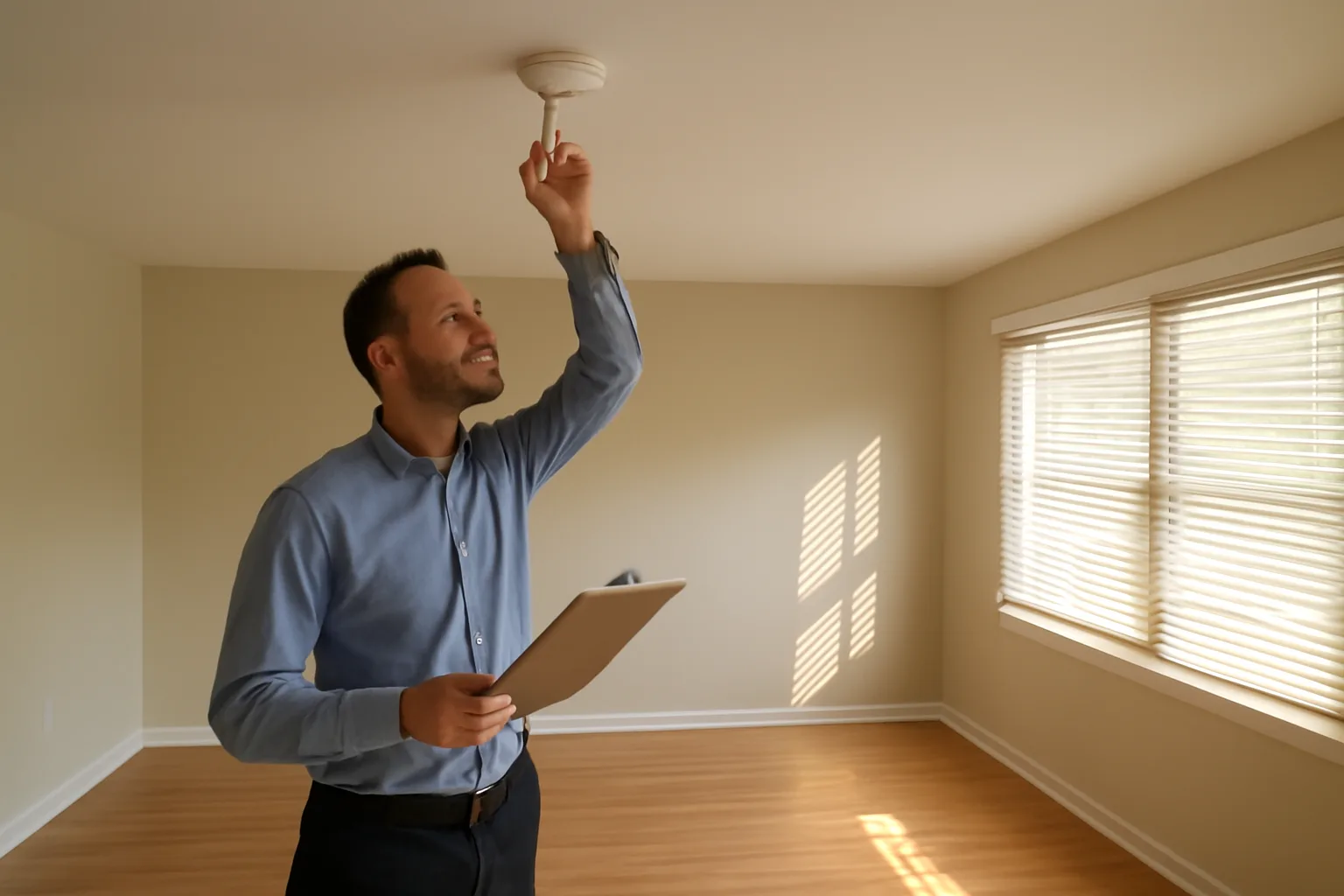
A landlord or agent doing a routine inspection can look at the general condition of the property: walls, floors, fixtures, appliances included in the lease, smoke alarms, and signs of damage or excessive wear. What they generally can't do is open closed drawers, go through personal belongings, or use the inspection as cover to search for anything unrelated to the property's condition. The legal basis is narrow on purpose. Section 208 authorizes entry for specific reasons, and a routine inspection is meant to confirm the tenant is meeting their obligations to keep the property reasonably clean and free of damage, not to check on lifestyle choices or personal effects [2]. If a landlord starts photographing personal items, opening cupboards unrelated to fixtures, or inspecting more often than the lease allows, that starts to cross into a breach of the tenant's right to quiet enjoyment, which is itself protected under the Act. Smoke alarms deserve a specific mention. Queensland has some of the strictest smoke alarm laws in Australia, requiring interconnected photoelectric alarms in every bedroom, hallway, and on every level of a rental home, phased in fully for all rentals since 1 January 2022 [4]. A routine inspection is a normal time for a landlord to confirm these are installed and working. Noncompliance carries real risk: a lessor can face fines for failing to install or maintain compliant alarms under the Fire and Emergency Services Act 1990 as amended. If you're a landlord in a mandatory-inspection jurisdiction elsewhere in the US, this is a good moment to compare notes. City rental licensing inspections (common in dozens of US cities) tend to check life-safety items like smoke detectors, egress windows, and electrical hazards, which is a different animal from a QLD routine condition check. If you manage property in one of those cities, see our city rental licensing guides for what a government inspector actually checks, versus what your own routine walk-through covers.
What happens if a tenant refuses entry for inspection?
A tenant can't simply refuse a routine inspection if the landlord has given proper notice under the Act. If the notice period and stated reason are valid, entry is lawful, and repeated unreasonable refusal can become a breach of the tenancy agreement on the tenant's side. That said, a tenant isn't required to be home. The landlord or agent has the right to enter at the notified time whether or not the tenant is present, as long as notice was correctly given. If a tenant has a genuine reason the time doesn't work (illness, a family emergency), the practical path in Queensland is to negotiate a different time directly or through the property manager, since the Act doesn't require the landlord to accommodate a reschedule but disputes over unreasonable entry can be taken to QCAT by either side [3]. On the flip side, a landlord who enters without notice, enters too frequently, or misuses entry rights can be the one facing a QCAT application. QCAT hears exactly these residential tenancy disputes as part of its standard caseload [3]. If you're a tenant researching your options, our related pages on tenants rights and renters rights cover the broader landscape of protections that apply alongside entry rules.
How is a QLD rental inspection different from a US city inspection?
This is the mix-up we see most often from readers landing on a QLD search who are actually dealing with a US rental licensing program. Queensland's "rental inspection" almost always means a landlord's own routine condition check under the Residential Tenancies and Rooming Accommodation Act 2008 (Qld). A US city's "rental inspection" usually means a government building or health inspector checking a licensed rental unit against a local housing code. The two systems don't overlap. QLD has no statewide mandatory government inspection of every rental home before or during a tenancy (aside from smoke alarm compliance, which is enforced through the Fire and Emergency Services Act framework rather than a routine walk-through) [4]. Cities in the US that require rental licensing, think of places with programs run through a housing or code enforcement department, typically set their own inspection frequency: some require inspection before every new tenant, others every 1 to 3 years on a rotating schedule, and some only inspect in response to a complaint. If you're a US landlord who searched "how often rental inspection qld" by accident while actually trying to figure out your own city's requirement, the answer is genuinely local. There's no federal standard for rental inspection frequency in the US the way there's no true statewide mandate in Queensland either. You need to check with your specific city's rental licensing or code enforcement office, since fee schedules, inspection intervals, and violation penalties are set at the municipal level and vary by city (confirm exact figures with your city rental licensing office).
How to become a landlord
Becoming a landlord, whether in Queensland or a US rental-licensing city, starts with three things: legal ownership or authority to lease the property, compliance with your local registration or licensing rules, and a written tenancy agreement that meets your jurisdiction's minimum requirements. In Queensland, that means using (or closely following) the RTA's approved Form 18a General Tenancy Agreement, lodging the tenant's bond with the RTA within 10 business days of receiving it, and meeting minimum housing standards, including the smoke alarm requirements mentioned above [1] [4]. There's no landlord "license" at the state level in Queensland, but property managers acting on your behalf must hold a real estate license under the Property Occupations Act 2014 (Qld). In a US rental-licensing city, becoming a landlord typically adds a registration or license step your Queensland counterpart doesn't face: many cities require you to register the rental unit, pay an annual or biennial fee, and pass an initial inspection before you can legally lease it. Fees, forms, and inspection intervals differ by city, so confirm the specifics with your city rental licensing office before listing a unit. If you're setting up a rental in one of these cities for the first time, a packet that organizes your city's required forms, inspection checklist, and fee schedule in one place saves a lot of back-and-forth with the licensing office; that's the gap our $79 City Rental License & Inspection Prep Packet is built to close.
What is landlording, and what is a landlord?
A landlord is the person or entity that owns a property and leases it to someone else (a tenant) in exchange for rent. "Landlording" is the everyday work of managing that arrangement: collecting rent, handling repairs, complying with entry and notice rules, keeping the property safe and habitable, and dealing with tenant turnover. It's not a licensed profession by itself in most places. You don't need a special credential to own and rent out a house you hold title to. What does require licensing, in Queensland and in many US states, is acting as a property manager or agent for someone else's rental, which typically requires a real estate or property management license [1]. Day to day, landlording covers: setting and collecting rent, arranging repairs and maintenance, giving proper notice for entry or inspections, managing the security deposit or bond, and responding to tenant complaints or requests. In a mandatory rental-licensing city, it also means keeping your registration current, paying renewal fees on schedule, and passing any required periodic inspection, since letting a license lapse is one of the most common (and most avoidable) sources of fines landlords report.
What rights do tenants have without a lease?
A tenant without a written lease is not without rights. In most US states and in Queensland, an oral or implied tenancy (sometimes called a periodic or month-to-month tenancy) still carries legal protections, including the right to proper notice before entry, the right to a habitable property, and the right to proper notice before eviction or termination. In Queensland, even without a signed Form 18a, a tenancy that exists because rent is being paid and accepted is still governed by the Residential Tenancies and Rooming Accommodation Act 2008 (Qld), which applies to tenancy agreements whether they are written, oral, or implied [2]. The entry notice rules, bond handling rules, and repair obligations still apply. In the US, state landlord-tenant law generally treats an oral month-to-month arrangement the same way: notice periods for entry and termination still apply, and a landlord can't skip habitability obligations just because there's no signed lease. The specific notice period for ending a no-lease tenancy varies by state, commonly 30 days, so check your state's landlord-tenant statute rather than assume. What a tenant loses without a written lease is proof of specific terms (rent amount, who pays which utilities, pet rules), which makes disputes harder to resolve, not their basic legal protections.
Who is responsible for a rental property walk-through inspection?
The landlord or their authorized property manager is responsible for conducting a routine walk-through inspection, and for giving the tenant legally sufficient notice beforehand. The tenant's responsibility is to allow reasonable access once proper notice has been given, not to conduct or schedule the inspection themselves. In California specifically (a state with well-documented walk-through inspection rules), landlords must offer an initial move-out inspection if the tenant requests one, under California Civil Code section 1950.5(f), which gives the tenant the right to be present and to fix any deficiencies noted before the final move-out deduction from the security deposit is made [5]. This pre-move-out inspection is distinct from routine inspections during the tenancy, which California law does not set a fixed frequency for, similar to Queensland; notice and reasonableness standards apply instead of a numeric cap. Most US states require "reasonable notice" for landlord entry, commonly 24 hours, though the exact figure and the situations it applies to (repairs, showing the unit, inspection) vary by state statute. If you manage rentals across state lines, don't assume California's rules, or Queensland's, transfer directly to your city. Check your specific state's civil code or landlord-tenant act section on entry and inspection.
Why do landlords require renters insurance?
Landlords require renters insurance mainly to shift liability for a tenant's personal belongings and personal liability claims away from the landlord's own policy. A standard landlord or property insurance policy covers the building itself, not the tenant's furniture, electronics, or clothing, and it typically doesn't cover a tenant's liability if they accidentally cause damage or injury to a guest. Requiring renters insurance (commonly a policy with liability coverage of $100,000 or more, though limits vary by insurer and lease) reduces the landlord's exposure if a tenant's negligence causes a fire, water damage, or an injury to a third party inside the unit. It also protects the tenant financially. Without it, a tenant whose belongings are destroyed in a fire or burst pipe has no coverage at all, since the landlord's building policy won't reimburse personal property loss. Whether a landlord can legally require renters insurance as a lease condition depends on state law; most US states permit it as a standard lease term, but a few have specific rules about how it must be disclosed or enforced. This isn't something Queensland law addresses the same way (Australian rental agreements don't typically require contents insurance as a lease condition), which is another reminder that entry and inspection rules, insurance requirements, and lease terms are genuinely jurisdiction-specific and worth confirming locally rather than assumed from a general search.
What can't a landlord do in Ohio?
Ohio landlord-tenant law, set out in Ohio Revised Code Chapter 5321, prohibits several specific landlord actions: a landlord cannot shut off utilities to force a tenant out, cannot change the locks without a court order (self-help eviction is illegal), and cannot enter the rental unit without reasonable notice except in an emergency [6]. Specifically, Ohio Revised Code section 5321.04 requires a landlord to give "reasonable notice" of intent to enter, and Ohio courts and tenant guidance generally treat 24 hours as the benchmark for what counts as reasonable, though the statute itself uses the general "reasonable" standard rather than a fixed number of hours [6]. A landlord who enters repeatedly without notice, or who retaliates against a tenant for reporting a code violation (retaliatory eviction is separately restricted under ORC 5321.02), can face a tenant lawsuit for actual damages. This pattern (a general "reasonable notice" standard instead of a fixed number of days) is common across US states. It's actually closer to how many jurisdictions handle entry than Queensland's specific 7-day rule for routine inspections. If you operate in multiple states, keep a state-by-state note of the exact notice period and prohibited actions rather than relying on memory, since the gap between "reasonable" and "7 days" or "24 hours" is exactly where landlord-tenant disputes tend to start.
How to be a good landlord (practical basics)
Being a landlord that avoids disputes and fines comes down to a short list of habits: give notice in writing every time, keep a copy of every notice and inspection report, follow your state or country's exact notice period rather than a rounded estimate, and fix documented repair requests within the timeframe your local law requires. For US landlords in a rental-licensing city specifically, add two more: track your license renewal date the same way you'd track a lease renewal, and keep your inspection checklist matched to what your city's code actually requires, not a generic list pulled from another city's program. Missing a renewal deadline or showing up to an inspection unprepared for a city-specific requirement (interconnected smoke alarms, egress window sizes, GFCI outlet placement) is where landlords tend to get hit with avoidable fines. If you're staring down an inspection deadline or a notice of violation right now and don't want to reconstruct your city's specific checklist from scratch, that's exactly the situation our $79 City Rental License & Inspection Prep Packet is built for: it organizes the forms, fee schedule, and inspection prep items by city so you're not guessing at what the inspector actually checks. This isn't legal advice, and it doesn't guarantee a passing inspection, but it does save the hours of digging through a city code section by section.
Frequently asked questions
Does Queensland law set a maximum number of rental inspections per year?
Not directly by statute. The Residential Tenancies and Rooming Accommodation Act 2008 (Qld) controls notice and grounds for entry, but the common four-times-a-year cap comes from the standard tenancy agreement terms issued by the Residential Tenancies Authority, not a fixed number written into the Act itself.
How much notice must a QLD landlord give for a routine inspection?
At least 7 days' written notice, under section 208 of the Residential Tenancies and Rooming Accommodation Act 2008 (Qld). The notice must state the date and a time for entry, and it typically uses the RTA's Entry Notice (Form 9).
Can a tenant refuse a rental inspection in Queensland?
Not if proper notice was given for a valid reason under the Act. A tenant can request a different time, but unreasonably refusing lawful entry can be treated as a breach of the tenancy agreement, and disputes can be taken to QCAT by either party.
What's the difference between a QLD rental inspection and a US city rental license inspection?
A QLD inspection is the landlord's own routine condition check under state tenancy law. A US city rental license inspection is a government inspector checking a licensed rental unit against local housing code, with frequency and fees set by the individual city.
How to become a landlord in the first place?
You need legal ownership or leasing authority over the property, a compliant written tenancy agreement, and (in many US cities) a rental registration or license. Queensland adds bond lodgment with the RTA and smoke alarm compliance; check your specific city or state's requirements before listing a unit.
Who is responsible for a rental walk-through inspection in California?
The landlord is responsible for conducting it and for offering an initial move-out inspection if the tenant requests one, under California Civil Code section 1950.5(f). The tenant has the right to be present and to fix noted issues before final deposit deductions.
What is landlording?
Landlording is the ongoing work of owning and managing a rental property: collecting rent, arranging repairs, giving proper entry notice, handling the security deposit or bond, and staying compliant with local registration, licensing, and inspection rules.
What is a landlord, legally speaking?
A landlord is the party who owns real property and leases it to a tenant in exchange for rent, under a written or oral tenancy agreement. It's not a licensed title by itself, though acting as a paid property manager for someone else's rental usually does require a license.
What rights does a tenant have without a signed lease?
An oral or implied tenancy still carries legal protections in most US states and in Queensland: proper notice before entry, habitability standards, and notice before termination. What's harder to prove without a written lease is the specific agreed terms, like rent amount or who pays utilities.
Why do landlords require renters insurance?
Mainly to cover the tenant's personal property and personal liability, since a landlord's building insurance doesn't cover a tenant's belongings or their liability for accidents. It also protects the tenant, who has no coverage for fire or water damage to their own items without it.
How much notice does a landlord have to give before entering, generally?
It depends on jurisdiction: Queensland requires 7 days for routine inspections and 24 hours for showings or non-urgent repairs. Most US states use a general 24-hour or 'reasonable notice' standard, so check your specific state statute rather than assume one number applies everywhere.
What can a landlord look at during an inspection?
General property condition: structural elements, fixtures, appliances included in the lease, and required safety equipment like smoke alarms. A landlord generally cannot search personal belongings, open closed drawers, or use the inspection for reasons unrelated to the property's condition.
What can't a landlord do in Ohio?
Under Ohio Revised Code Chapter 5321, a landlord cannot shut off utilities to force a tenant out, cannot change locks without a court order, and cannot enter without reasonable notice except in an emergency. Retaliatory eviction after a tenant reports a code violation is also restricted.
Does Queensland require smoke alarms to be checked during inspections?
Queensland law requires interconnected photoelectric smoke alarms in every bedroom, hallway, and level of a rental home, fully phased in since 1 January 2022. A routine inspection is a practical time for a landlord to confirm alarms are present and working, since noncompliance can bring fines.
Sources
- Residential Tenancies Authority (Qld), General Tenancy Agreement (Form 18a): Standard tenancy agreement terms including routine inspection limits and bond lodgment
- Queensland Legislation, Residential Tenancies and Rooming Accommodation Act 2008, s 208: Grounds and entry notice requirements for landlord entry, including routine inspections
- Queensland Fire and Emergency Services, Smoke alarms in the home: Interconnected photoelectric smoke alarm requirements phased in for all QLD rentals by 1 January 2022
- Queensland Civil and Administrative Tribunal (QCAT), Residential tenancy disputes: QCAT hears disputes over unlawful or unreasonable landlord entry
- California Legislative Information, Civil Code Section 1950.5: Tenant's right to an initial move-out inspection in California before final security deposit deductions
- Ohio Legislature, Ohio Revised Code Section 5321.04: Ohio landlord obligations including reasonable notice before entry and prohibition on shutting off utilities