Last updated 2026-07-26
TL;DR
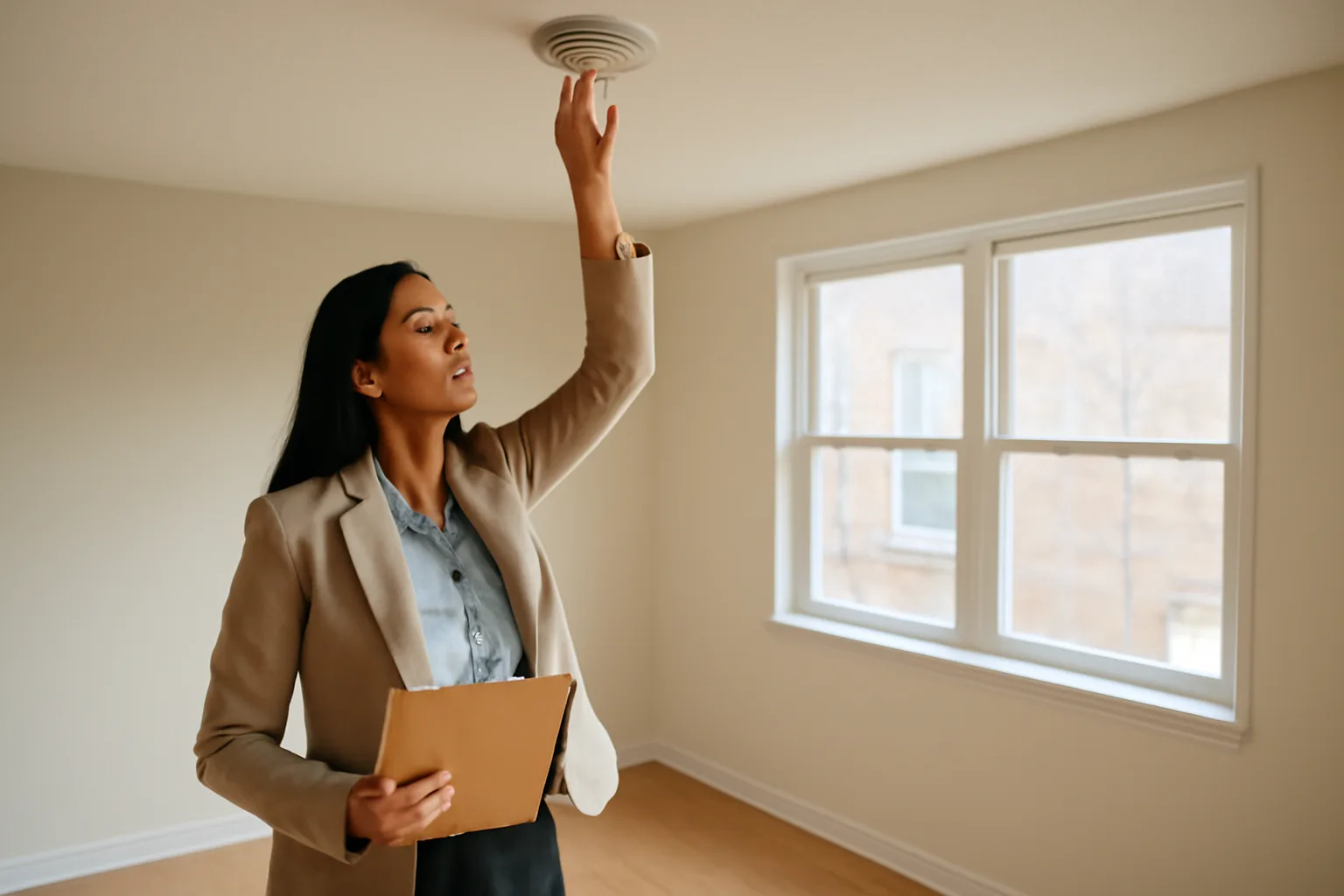
There's no universal cap on inspection frequency. Most states require landlords or agents to give 24 to 48 hours notice before entering, and to enter at reasonable times for a legitimate reason. Some cities also require annual or biennial rental inspections tied to licensing, separate from routine landlord walk-throughs.
How often can a landlord or agent inspect a rental property?
There's no federal law setting a number of inspections per year. Frequency comes from three different sources that often get confused: your lease agreement, your state's landlord-tenant statute on entry notice, and your city's rental licensing or inspection ordinance if one applies. Most state statutes don't cap the number of visits at all. They regulate the *notice* and *purpose* of each entry instead. California's Civil Code, for example, says a landlord may enter to make repairs, show the unit to prospective tenants or buyers, or in an emergency, and must give "reasonable notice in writing," which the statute defines as 24 hours absent contrary circumstances [1]. That means an agent can legally inspect a unit every week if there's a valid reason each time and proper notice is given. In practice, tenants (and courts) get uneasy if inspections start feeling like harassment, so most property managers stick to one routine inspection every 3 to 6 months plus move-in/move-out walk-throughs and repair visits as needed. City rental inspection programs are a separate layer. A city might require one inspection every 1 to 3 years to renew a rental license, regardless of how often the landlord's own agent walks through informally. Always confirm the specific cycle with your city rental licensing office, since these intervals vary block by block in some metro areas.
Who is responsible for the rental property walk-through inspection in California?
In California, the landlord (or their authorized agent, which can be a property manager or leasing agent) is responsible for conducting entry and inspections, and must follow the notice rules in California Civil Code Section 1954 [1]. The statute allows entry for repairs, showing the unit, or in cases of abandonment or emergency, and it requires that entry happen during normal business hours unless the tenant agrees otherwise. California also has a specific move-out inspection right. Under Civil Code Section 1950.5(f), a tenant can request an initial inspection before move-out, and the landlord must give the tenant at least 48 hours written notice of that inspection date and time, then provide an itemized statement of any deficiencies so the tenant has a chance to fix them before the final walkthrough [2]. That inspection is conducted by the landlord or their agent, not a third party, and it's optional for the tenant to request. Nothing in California law requires third-party or city inspectors to walk every unit annually unless the property sits in a city with its own rental inspection ordinance (several California cities, including Los Angeles under its Systematic Code Enforcement Program, do require periodic inspections tied to licensing) [3].
How much notice does a landlord have to give before an inspection?
| California | 24 hours (reasonable notice presumed) | Cal. Civ. Code Sec. 1954 [1] | |
|---|---|---|---|
| Texas | No statewide statute; lease terms control | N/A | |
| Florida | 12 hours notice for HVAC/AC or pest control entries | Fla. Stat. Sec. 83.53 [3] | |
| Oregon | 24 hours notice | Or. Rev. Stat. Sec. 90.322 [4] | |
| Washington | 1 to 2 days depending on entry type | Wash. Rev. Code Sec. 59.18.150 [5] | Florida's statute is worth reading closely because it splits notice by purpose: routine entry and repairs generally require "reasonable notice," which the statute treats as 12 hours for HVAC filter changes specifically, while other repair or inspection entries fall under a broader reasonableness standard [3]. Oregon's law requires at least 24 hours written notice for entry to inspect the premises, make repairs, or show the unit, and caps routine entry frequency implicitly by requiring a legitimate business purpose each time [4]. If your state isn't listed here, check your state's landlord-tenant statute directly, or read our tenant rights overview for links to state-specific notice rules. Notice periods can also be lengthened by the lease itself; a lease can require 48 or 72 hours even where state law only demands 24. |
Most states set the standard at 24 hours notice, though a few require more and a few say less. There is no 50-state number because each legislature wrote its own rule. | State | Notice required | Source |
What can a landlord look at during an inspection?
A landlord or agent can generally inspect anything related to the condition of the property and compliance with the lease. That means checking smoke detectors, HVAC filters, plumbing under sinks, signs of unauthorized pets or occupants, mold or water damage, and general wear versus damage. What an agent typically cannot do is search through a tenant's personal belongings, closets, drawers, or private papers as part of a routine inspection. The purpose has to match what's stated in the entry notice; if the notice says "inspecting for maintenance issues," that doesn't give the agent license to go through a dresser. Many city rental licensing inspections focus narrowly on life-safety items: smoke and carbon monoxide detectors, egress windows, electrical panel condition, water heater strapping and venting, and visible pest or moisture problems. These inspections are usually scheduled in advance with the property owner and don't involve tenant belongings at all, since the inspector's job is verifying the unit meets code, not evaluating housekeeping. If you're prepping for a city license renewal inspection specifically (as opposed to a routine landlord walk-through), it helps to know what the inspector will check before they arrive. That's the exact gap our $79 City Rental License & Inspection Prep Packet is built to close: a checklist matched to common city inspection categories so you're not guessing what triggers a violation notice.
What a landlord cannot do in Ohio (and similar states)
Ohio Revised Code Section 5321.04 requires a landlord to give reasonable notice before entering and to enter only at reasonable times, for purposes like inspection, repairs, or showing the unit to prospective tenants or buyers [6]. "Reasonable notice" in Ohio case law and standard practice is generally treated as 24 hours, though the statute doesn't spell out an exact hour count the way California's does. What Ohio landlords cannot do: enter without notice except in a genuine emergency, enter repeatedly without cause in a way courts would view as harassment, shut off utilities to force a tenant out, or remove a tenant's belongings without a court order. Ohio Revised Code Section 5321.15 specifically bars landlords from using self-help eviction tactics like lockouts or utility shutoffs [7]. If a landlord violates the entry notice rule, a tenant in Ohio can seek actual damages or an injunction under the landlord-tenant statute. These same principles (notice required, reasonable purpose, no retaliation, no self-help eviction) show up in some form in nearly every state's landlord-tenant code, even where the exact hour count for notice differs.
What is landlording, and what is a landlord?
A landlord is the owner (or an entity acting on the owner's behalf) who rents real property to a tenant in exchange for payment, usually under a written or oral lease. Landlording is the practical work of managing that relationship: collecting rent, handling repairs, screening tenants, following state and local notice laws, and keeping the unit compliant with housing codes. It's part legal compliance and part maintenance work, and the mix shifts depending on how many units you have and whether your city runs a rental licensing program. A landlord with one duplex in a city with no rental registry has a much lighter compliance load than someone with the same duplex in a city that requires annual inspections, a rental license fee, and a local point of contact on file. If you're new to this, our landlord landlords guide breaks down the basic roles and where city rules typically layer on top of state law.
How to become a landlord (and how to be a landlord day to day)
Becoming a landlord starts with the property itself: buying or converting a unit for rental use, then checking whether your city or county requires a rental license or registration before you can legally lease it out. A growing number of cities require this; missing it is one of the most common ways new landlords end up with a fine before they've even collected first month's rent. The basic steps most new landlords go through are similar across states: confirm zoning allows rental use, get a rental license or register the unit if your city requires it, get a signed lease, screen tenants under fair housing rules, obtain landlord insurance (and often require renters insurance from the tenant), set up rent collection and a security deposit process compliant with state limits, and schedule a move-in inspection with photos. Being a landlord day to day means responding to repair requests within your state's required timeframe, keeping records of every entry notice you send, budgeting for periodic city inspections if your municipality requires them, and renewing your rental license or registration on schedule. HUD's Fair Housing resources are a good starting reference for the tenant screening and advertising side of this, since fair housing violations carry real financial exposure regardless of city size [8].
Why do landlords require renters insurance?
Renters insurance covers a tenant's personal belongings and liability, which protects the landlord indirectly by reducing disputes after fires, water damage, or theft. A landlord's own property insurance covers the building structure, not the tenant's furniture, electronics, or clothing, and it typically doesn't cover a tenant's liability if they cause a fire or a guest gets injured in the unit. Requiring renters insurance (commonly $10,000 to $30,000 in personal property and liability coverage, though limits vary by policy) shifts that risk off the landlord and off their own insurer. It also reduces the odds a tenant sues the landlord after a loss, since the tenant has their own claim path. Many landlords make it a lease requirement and ask for proof of an active policy at move-in and renewal, which is a reasonable and common practice, though state law rarely mandates it outright; it's usually a landlord choice written into the lease rather than a statutory requirement.
What rights do tenants have without a lease?
A tenant without a written lease, sometimes called a month-to-month or at-will tenant, still has real legal protections. In nearly every state, a tenant paying rent regularly (even with no signed paperwork) is treated as a periodic tenant, usually month-to-month, and is entitled to the same basic protections as a tenant with a lease: proper notice before entry, proper notice before termination (commonly 30 days for month-to-month tenancies), habitability standards, and protection from retaliatory or discriminatory eviction. What changes without a lease is mainly the term length and how easily either side can end the tenancy. A landlord generally needs to give the statutory notice period (often 30 days, though it varies by state and by how long the tenant has lived there) to end a month-to-month tenancy, rather than waiting out a fixed lease term. Entry notice rules, security deposit limits, and habitability requirements under state law still apply the same way whether or not there's a signed lease. For a fuller state-by-state rundown, see tenant rights and tenants rights.
How do city rental inspection programs differ from routine landlord inspections?
A routine landlord inspection (the kind covered by state entry-notice statutes) is something the landlord or their agent schedules on their own timeline, for maintenance or lease-compliance purposes. A city rental inspection is a separate, government-run process tied to a rental license or registration, usually happening on a fixed cycle set by local ordinance, commonly annually, every two years, or every three years depending on the city. These city programs typically check for code violations: working smoke and CO detectors, safe electrical and plumbing systems, proper egress from bedrooms, no illegal occupancy conversions, and general structural safety. Failing one usually triggers a re-inspection window (often 30 to 60 days to fix cited items, though the exact window is set by each city's code) rather than an instant fine, though repeat failures or ignored notices commonly escalate to civil penalties. Because the interval, fee, and inspection checklist differ by city (and even by neighborhood in some large cities with tiered enforcement zones), always confirm the current cycle and fee with your city rental licensing office before assuming a statewide rule applies.
What happens if you ignore an inspection notice or violation?
Ignoring a scheduled city inspection notice typically doesn't make it go away; most ordinances allow the city to issue a re-inspection order, a formal violation notice, or in some cases pursue the inspection through an administrative warrant process if access is repeatedly denied. Fines for missed inspections or unresolved violations vary widely by city, ranging from small administrative fees to escalating daily penalties for unaddressed life-safety violations, so check your specific city's fee schedule rather than assuming a flat number. Ignoring a tenant's or agent's own routine entry request is different legally: a tenant who unreasonably refuses entry after proper notice can be in breach of the lease in most states, and a landlord who enters without proper notice can face damages claims under state law like Ohio Revised Code Section 5321.04 [6] or California Civil Code Section 1954 [1]. The practical fix in both cases is the same: keep a written log of every notice sent, every inspection scheduled, and every response received, so you have a paper trail if a dispute ever escalates to a hearing or small claims court.
Frequently asked questions
How often can an agent legally inspect a rental property?
Most states don't cap the number of inspections, only the notice and purpose required for each one. An agent can inspect as often as there's a legitimate reason (repairs, showing the unit, safety checks) as long as proper notice, usually 24 to 48 hours depending on the state, is given each time.
Can a landlord inspect a rental property without notice?
Only in a genuine emergency, like a fire, flood, or gas leak, does most state law allow entry without notice. Routine inspections require advance notice, commonly 24 hours, under statutes like California Civil Code Section 1954 [1] and Ohio Revised Code Section 5321.04 [7].
Who is responsible for the rental property walk-through inspection in California?
The landlord or their authorized agent is responsible. California Civil Code Section 1950.5(f) lets a tenant request a pre-move-out inspection, and the landlord (or their agent) must give at least 48 hours written notice and an itemized list of any deficiencies before the final walkthrough [2].
How much notice does a landlord have to give before entering?
It depends on the state. California requires 24 hours reasonable notice [1], Oregon requires 24 hours written notice [5], and Washington requires 1 to 2 days depending on the type of entry [6]. Check your specific state's landlord-tenant statute, since there's no single national number.
What can a landlord look at during an inspection?
A landlord or agent can check the overall condition of the unit: smoke detectors, plumbing, HVAC, signs of damage or unauthorized occupants or pets, and general lease compliance. They generally cannot search personal belongings, drawers, or private papers unless the purpose of the visit specifically and legally requires it.
What can't a landlord do in Ohio?
Ohio landlords cannot enter without reasonable notice except in an emergency, cannot use self-help eviction tactics like lockouts or shutting off utilities under Ohio Revised Code Section 5321.15 [8], and cannot enter repeatedly without a legitimate purpose under Ohio Revised Code Section 5321.04 [7].
What rights do tenants have without a signed lease?
A tenant paying rent without a written lease is usually treated as a month-to-month tenant and keeps the same core protections as a tenant with a lease: entry notice rules, habitability standards, and protection from retaliatory eviction. Ending the tenancy usually requires the state's standard notice period, often 30 days.
Why do landlords require renters insurance?
Renters insurance covers the tenant's belongings and personal liability, which the landlord's building insurance doesn't cover. Requiring it reduces disputes after fires or water damage and shifts liability risk away from the landlord's own policy, though it's typically a lease requirement rather than a state law mandate.
How do I become a landlord?
Start by confirming local zoning allows rental use, then check whether your city requires a rental license or registration before leasing. Add a compliant lease, tenant screening under fair housing rules, landlord insurance, a security deposit process that follows state limits, and a documented move-in inspection with photos.
What is landlording?
Landlording is the ongoing work of managing a rental property: collecting rent, handling repairs, screening tenants, sending proper entry notices, and keeping the unit compliant with state landlord-tenant law and any city rental licensing or inspection requirements that apply.
Does a lease override state notice requirements for inspections?
A lease can require more notice than state law demands (like 48 hours instead of a state's 24-hour minimum), but it generally cannot require less than the state's legal minimum. Courts typically treat state landlord-tenant statutes as a floor, not a ceiling, for tenant protections.
How often do cities require rental license inspections?
It varies by city; common cycles are every 1, 2, or 3 years tied to rental license renewal. Some cities inspect only on tenant turnover or complaint, others on a fixed calendar. Confirm the current cycle and fee with your city rental licensing office, since programs change.
Sources
- California Legislative Information, Civil Code Section 1954: California landlords must give reasonable notice, presumed to be 24 hours, before entering a rental unit for repairs, inspection, or showings
- California Legislative Information, Civil Code Section 1950.5: Tenants can request a pre-move-out inspection and the landlord must give at least 48 hours written notice and an itemized deficiency list
- Online Sunshine (Florida Legislature), Florida Statutes Section 83.53: Florida landlords must give reasonable notice before entry, with a specific 12-hour notice standard tied to certain repair entries
- Oregon State Legislature, ORS Section 90.322: Oregon requires at least 24 hours written notice before landlord entry for inspection, repairs, or showing the unit
- Washington State Legislature, RCW Section 59.18.150: Washington sets notice periods of one to two days depending on the type of landlord entry
- Ohio Legislature, Ohio Revised Code Section 5321.04: Ohio landlords must give reasonable notice and enter at reasonable times for repairs, inspection, or showings
- Ohio Legislature, Ohio Revised Code Section 5321.15: Ohio law prohibits landlords from using self-help measures like utility shutoffs or lockouts instead of formal eviction
- U.S. Department of Housing and Urban Development, Fair Housing Act overview: Federal fair housing law governs tenant screening and advertising practices landlords must follow regardless of city size