Last updated 2026-07-26
TL;DR
In New South Wales, Australia, a landlord or agent can do routine rental inspections up to four times per year, and never more than once every three months, under the Residential Tenancies Act 2010 [1]. This article also covers the separate set of US landlord-basics questions people often ask alongside it, including notice periods, tenant rights without a lease, and renters insurance.
How often are rental inspections allowed in NSW?
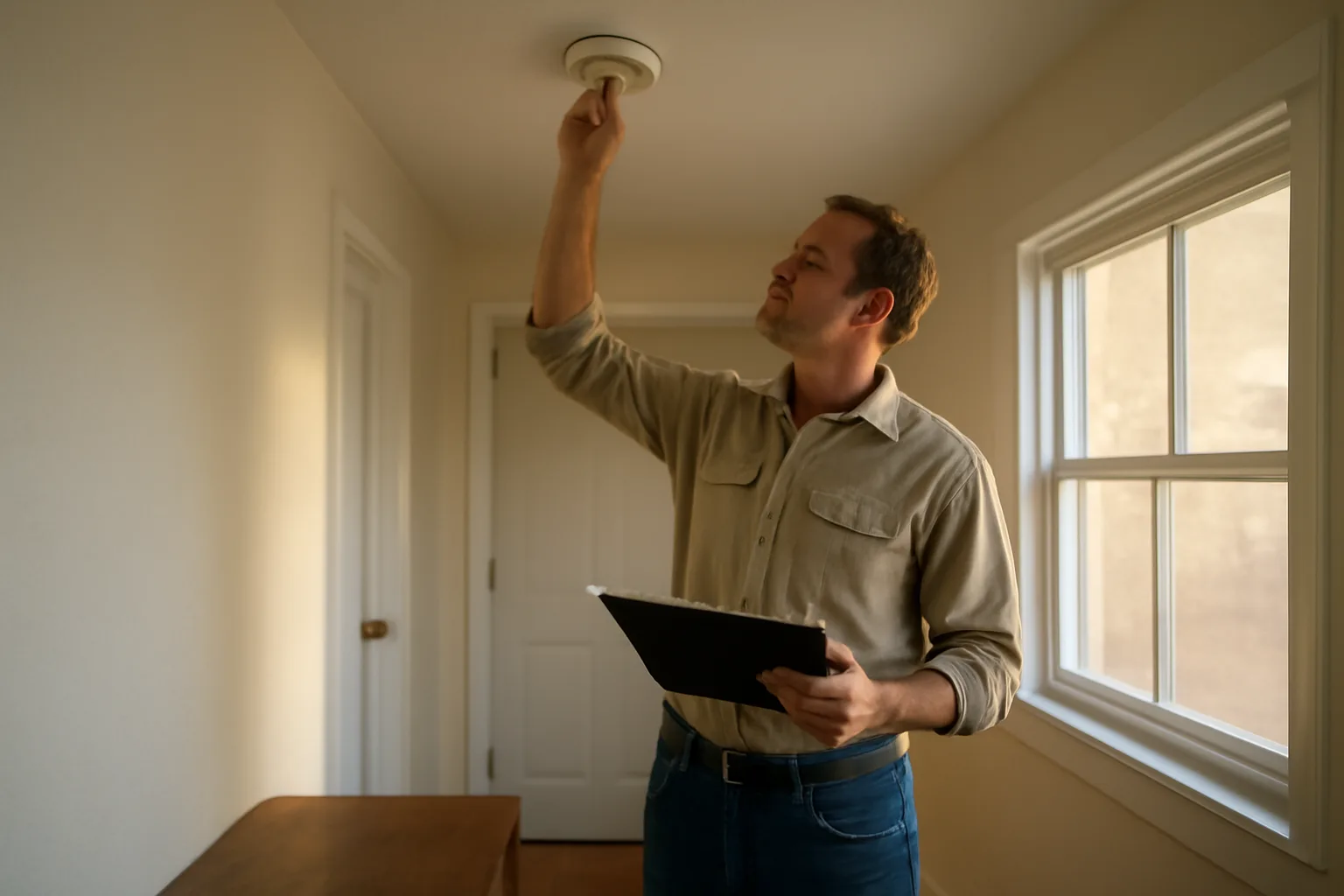
In New South Wales, a landlord or their agent can inspect a rented property up to four times in any 12-month period for routine inspections, and they can't do routine inspections more often than once every three months. This comes straight from section 85 of the Residential Tenancies Act 2010 (NSW) [1]. The NSW Fair Trading guidance on renting a home confirms this practical cap and adds that the landlord must give at least 7 days written notice before a routine inspection, and the inspection has to happen between 8am and 8pm [2]. That notice period is not optional. If the notice is short or missing, the tenant can refuse entry. Routine inspections are different from other types of entry. A landlord or agent can also enter without the 7-day routine-inspection notice for things like emergency repairs, or with the tenant's actual agreement to a different time. But the 'let's just walk through and check on things' inspection, the one most landlords mean when they ask this question, is capped at four times a year and no more than every three months [1]. Worth saying plainly: this NSW rule has nothing to do with US rental licensing or code inspections. If you searched this question because you're a landlord in an American city dealing with a licensing inspection notice, the rules below are for you instead, and they vary a lot by city and state.
What counts as a routine inspection under NSW law, and what doesn't?
A routine inspection in NSW is the periodic walk-through where the landlord or agent checks the general condition of the property, not a response to a specific problem. The Residential Tenancies Act 2010 treats this separately from entry for repairs, entry to show the property to prospective tenants or buyers, or emergency entry [1]. For those other categories, different notice rules apply. NSW Fair Trading's tenancy guidance lists specific notice periods: at least 2 days' notice to carry out repairs, at least 1 day's notice to show the property to prospective tenants near the end of a tenancy, and no notice required at all for a genuine emergency [2]. So 'how often can my landlord inspect' really has two answers depending on why they're coming: routine checks are capped at four a year, but repair visits and other specific-purpose entries aren't counted against that cap and follow their own notice rules. A landlord in NSW also cannot use inspections as a form of harassment or excessive monitoring. Fair Trading's guidance is clear that entry has to be for a permitted reason and within the legal notice and time-of-day rules, and tenants can raise unreasonable interference with the NSW Civil and Administrative Tribunal (NCAT) [2].
What can a landlord look at during an inspection?
In general terms across jurisdictions, a landlord doing a routine inspection can check the physical condition of the unit: walls, floors, fixtures, smoke alarms, plumbing, signs of damage, mold, unauthorized pets, or maintenance issues that need attention. What a landlord typically cannot do is search through a tenant's personal belongings, closets, or drawers, or use the inspection as a pretext to monitor the tenant's daily life. In NSW specifically, the inspection has to happen at a reasonable time between 8am and 8pm, with the required notice given in writing beforehand, and the tenant is entitled to be present if they choose [2]. The purpose is to verify the property's condition, not to inspect the tenant's possessions or conduct. For US landlords facing a city rental licensing inspection (a different animal entirely, more below), the inspector is usually looking at code compliance items: smoke and carbon monoxide detectors, egress windows in bedrooms, electrical panel condition, handrails, water heater venting, and pest or moisture issues. That's a fixed checklist tied to a local housing code, not a general walk-through of the tenant's stuff.
What is landlording, and what is a landlord exactly?
A landlord is the owner of a property, or a party legally authorized to act as owner, who rents that property to someone else (the tenant) in exchange for payment, usually under a lease or rental agreement. 'Landlording' is the informal term for the ongoing work of managing that arrangement: collecting rent, handling repairs, managing turnover, staying compliant with local housing codes, and dealing with tenant communication. It's not a licensed profession in most US states the way real estate brokering is, but a growing number of cities require landlords to register or license their rental units specifically, separate from any personal license requirement. That's the whole reason city rental licensing offices exist: the city wants a point of contact and a baseline inspection, not necessarily a credentialed 'landlord license' for the person. Some states do require a real estate broker's license if you're managing property for someone else for a fee (property management as a business), but that's different from owning and renting out your own 1-10 units, which is what most readers dealing with a city licensing notice are doing.
How do you become a landlord, practically speaking?
Becoming a landlord starts with owning or controlling a property you intend to rent out, then handling four things before you hand over keys: confirm local legal requirements, get the unit inspection-ready, screen tenants lawfully, and put a written lease in place. First, check whether your city or county requires rental registration or licensing. Plenty of mid-size and large US cities do, often triggered automatically the first time you rent out a unit that isn't your primary residence. Missing this step is the single most common way new landlords end up with a violation notice in year one. Second, get the physical unit ready: working smoke and carbon monoxide detectors, functioning locks, no obvious code violations like blocked egress or exposed wiring. Many cities require a pre-rental or initial inspection before they'll issue a rental license or certificate of occupancy for tenancy. Third, screen applicants consistently and lawfully. Fair housing law under the federal Fair Housing Act prohibits discrimination based on race, color, religion, sex, national origin, familial status, or disability [3], and many states and cities add categories like source of income or sexual orientation. Fourth, use a written lease. It's not always legally required for a valid tenancy (see the section below on tenants without a lease), but it protects both sides and is usually required as a condition of any city rental license application. If you're dealing with your first city licensing notice right now, a rental packet built around your specific city's checklist can save a lot of back-and-forth with the inspector, since most failed first inspections are for the same handful of missed items.
Who is responsible for the rental property walk-through inspection in California?
In California, the move-in and move-out condition documentation is generally a shared responsibility, but the landlord initiates it. Under California Civil Code section 1950.5, a landlord who wants to charge a tenant for damage beyond normal wear and tear at move-out must have given the tenant the opportunity for an initial inspection before the tenant vacates, if the tenant requests it or the landlord offers it [4]. Specifically, the law requires the landlord to notify the tenant in writing of their right to request an initial inspection, conducted no earlier than two weeks before the end of the tenancy, and to give the tenant an itemized statement of needed repairs or cleaning after that inspection so the tenant has a chance to fix things before final move-out [4]. The landlord (or their agent) has to be the one who schedules and documents this initial inspection, but the tenant has the right to be present. Separate from that move-out process, California doesn't have a single statewide 'routine inspection frequency' rule like NSW does. Entry rules under California Civil Code section 1954 govern when a landlord can enter at all (with 24 hours' notice for non-emergency entry, in most cases), but there's no fixed cap like NSW's four-times-a-year limit [5]. City-level rental licensing programs in some California cities, like Los Angeles's Systematic Code Enforcement Program, add their own periodic inspection cycles for code compliance on top of that.
How much notice does a landlord have to give before entering or inspecting?
| New South Wales, Australia | 7 days | Residential Tenancies Act 2010 s.85 [1] | |
|---|---|---|---|
| California | 24 hours | Civil Code 1954 [5] | |
| City rental licensing inspections (varies) | often 24 to 48 hours, confirm with your city rental licensing office | city ordinance, varies | Emergency entry (fire, flood, gas leak, imminent safety risk) is the universal exception. No jurisdiction requires advance notice when there's genuine danger to life or property. |
Notice requirements depend entirely on jurisdiction, and the range is wide. In NSW, it's a minimum of 7 days written notice for a routine inspection, 2 days for repairs, and 1 day to show the property to prospective tenants [2]. In California, non-emergency entry generally requires 24 hours' written notice under Civil Code 1954 [5]. Many US states land somewhere between 24 and 48 hours for routine entry, though a meaningful number of states (including some fairly large ones) have no statutory notice requirement at all written into state law, leaving it to the lease terms and general 'reasonable notice' case law. That's a real gap; if your state isn't clearly covered, check with your state's tenant-landlord statute directly or your city's rental licensing office rather than assuming a number. Here's a rough comparison of notice rules across a few jurisdictions people commonly ask about: | Jurisdiction | Routine entry notice | Source |
What rights do tenants have without a written lease?
A tenant without a written lease still has legal rights in essentially every US state and in NSW. The absence of a signed lease usually creates what's called a periodic tenancy, most often month-to-month, governed by state or territory landlord-tenant statute rather than a private contract. Under a month-to-month arrangement, the tenant is generally still entitled to habitability (a livable, safe unit), protection from illegal lockouts or self-help eviction, proper notice before the tenancy is ended, and proper notice before entry, the same protections written into most residential tenancy statutes regardless of lease form. What changes without a written lease is mainly the rent amount and term certainty: either side can typically end a month-to-month tenancy with notice (commonly 30 days in many US states, though this varies), and terms that were only ever verbal can be harder to prove in a dispute. In NSW, a tenancy without a written agreement is still covered by the Residential Tenancies Act 2010 in full, including the standard terms that the Act implies into every residential tenancy agreement whether written or not [1]. A landlord can't skip statutory protections just because nothing got signed.
Why do landlords require renters insurance?
Landlords require renters insurance mainly to shift liability and personal-property risk away from themselves. A tenant's renters insurance policy typically covers the tenant's personal belongings against fire, theft, and water damage, plus liability coverage if the tenant is found responsible for damage or an injury inside the unit. Without it, a landlord's own property insurance may cover the building structure but generally won't cover the tenant's belongings, and disputes over who caused damage (a kitchen fire, an overflowing tub) can turn into a costly, uninsured argument. Requiring renters insurance as a lease condition is legal in most states, and some states explicitly permit landlords to require it as a condition of tenancy. It's also cheap relative to the protection it buys. The typical cost nationally runs in the range of $15 to $30 a month for a standard policy, though the exact figure depends on coverage limits, location, and the insurer, so a landlord requiring it isn't asking for a big financial lift from the tenant.
What can a landlord not do (using Ohio as an example)?
Ohio's landlord-tenant law, chapter 5321 of the Ohio Revised Code, spells out several things a landlord cannot do. A landlord cannot enter the rental unit without reasonable notice and at a reasonable time, except for emergencies [6]. A landlord cannot shut off utilities, remove doors or windows, or otherwise force a tenant out without going through the court eviction process, sometimes called a 'self-help eviction,' which Ohio law does not permit [6]. Ohio Revised Code 5321.02 also protects tenants from retaliatory conduct: a landlord cannot raise rent, decrease services, or bring an eviction action mainly because the tenant complained to a government agency about a housing code violation or joined a tenants' union [7]. And under 5321.15, a landlord cannot recover possession of the unit by removing the tenant's personal property or by changing the locks; it has to go through the municipal or county court [6]. The specifics differ by state, but the pattern is consistent nationally: no lockouts, no utility shutoffs, no retaliation for legitimate complaints, and entry has to follow notice rules rather than happening on the landlord's whim. If you're not sure which of these apply where your property sits, your state's landlord-tenant statute (often titled something like 'Residential Landlord and Tenant Act') is the primary source to check, not a general blog post, including this one.
How does this connect to US city rental licensing inspections?
If you got to this article because of a US city rental licensing notice, not a NSW tenancy question, the inspection you're facing is a different category entirely: a code-compliance inspection tied to a rental registration or license requirement, not a routine landlord walk-through of the leased unit. These city programs typically require the landlord to register the unit, pay a fee, and pass an inspection before renting (or on a renewal cycle, commonly every 1 to 3 years depending on the city), checking things like smoke detector placement, egress, electrical safety, and general maintenance. The frequency, fee amount, and inspection checklist are set entirely by the individual city ordinance, so there's no single national number the way NSW has its four-times-a-year cap for routine inspections. Because these programs vary so much, the right move if you've got a notice in hand is to confirm the specific cycle, fee, and checklist with your city rental licensing office directly, rather than assuming it matches a neighboring city or a number you saw online. A rental license and inspection prep packet built for your city's specific requirements is a faster way to walk in ready than trying to reconstruct the checklist from scratch, and it's a one-time $79 cost against a failed-inspection reschedule that can eat a lot more of your time. For background on tenant-facing rights that often come up alongside licensing questions, see our guides on tenants rights and renters rights.
Frequently asked questions
How often are rental inspections in NSW?
Routine rental inspections in NSW are capped at four times in any 12-month period, and never more than once every three months, under section 85 of the Residential Tenancies Act 2010. The landlord or agent must also give at least 7 days written notice before each routine inspection, and it must occur between 8am and 8pm.
How much notice does a landlord have to give before an inspection in NSW?
At least 7 days written notice for a routine inspection under the Residential Tenancies Act 2010. Shorter notice periods apply for other entry types: 2 days for repairs and 1 day to show the property to prospective tenants, per NSW Fair Trading's tenancy guidance.
How do you become a landlord?
Own or control a rental property, check whether your city or state requires rental registration or licensing, get the unit inspection-ready (smoke detectors, safe electrical, no code violations), screen tenants under fair housing law, and use a written lease. Many cities also require passing an initial inspection before you can legally rent the unit.
Who is responsible for the rental property walk-through inspection in California?
The landlord initiates and documents it, but the tenant has the right to be present. California Civil Code 1950.5 requires the landlord to offer a pre-move-out initial inspection, conducted no earlier than two weeks before the tenancy ends, so the tenant can fix issues before final charges are assessed.
What is landlording?
Landlording is the ongoing work of owning and renting out property: collecting rent, handling repairs, screening tenants, staying compliant with local housing and licensing codes, and managing the lease relationship. It's generally not a licensed profession itself, though many cities require the rental unit to be registered or licensed.
What is a landlord?
A landlord is the owner of a property, or someone legally authorized to act for the owner, who rents that property to a tenant under a lease or rental agreement in exchange for payment. Landlords are subject to state landlord-tenant law and, in many cities, local rental licensing ordinances.
What rights do tenants have without a lease?
A tenant without a written lease usually has a month-to-month periodic tenancy governed by state statute, and still keeps core protections: habitability, notice before entry, notice before the tenancy ends, and protection against illegal lockouts. In NSW, unwritten tenancies remain fully covered by the Residential Tenancies Act 2010's implied standard terms.
How do you be a landlord day to day?
Respond to repair requests promptly, follow your state's or NSW's notice rules before entering, keep rent and inspection records, renew your city rental license or registration on schedule if one applies, and treat all applicants consistently under fair housing law to avoid discrimination claims.
Why do landlords require renters insurance?
Renters insurance covers the tenant's personal belongings and adds liability coverage if the tenant causes damage or an injury, which keeps disputes from becoming an uninsured argument between landlord and tenant. It's legal to require in most states and typically costs a tenant $15 to $30 a month.
How much notice does a landlord have to give to enter in the US?
It varies by state. California requires 24 hours' notice for non-emergency entry under Civil Code 1954. Many states use 24 to 48 hours, and some states have no statutory number at all, so check your specific state's landlord-tenant statute rather than assuming a figure.
What can a landlord look at during an inspection?
A landlord doing a routine inspection can check the property's physical condition: smoke alarms, plumbing, structural issues, signs of damage or pests, unauthorized occupants or pets. A landlord generally cannot search personal belongings, drawers, or use the visit to monitor the tenant's daily life beyond the property's condition.
What can a landlord not do in Ohio?
Under Ohio Revised Code chapter 5321, a landlord cannot enter without reasonable notice except in an emergency, cannot shut off utilities or change locks to force a tenant out (self-help eviction is illegal), and cannot retaliate against a tenant for reporting a code violation or joining a tenants' union.
Does NSW's inspection rule apply to US rental licensing inspections?
No. NSW's four-times-a-year cap under the Residential Tenancies Act 2010 governs routine landlord walk-throughs of a leased unit in New South Wales, Australia. US city rental licensing inspections are a separate, code-compliance process set entirely by each city's own ordinance, with no equivalent national standard.
Sources
- NSW Legislation, Residential Tenancies Act 2010, Section 85: Routine rental inspections in NSW are capped at four per year and no more than once every three months
- NSW Fair Trading, Landlord access and inspections: 7 days notice for routine inspections, 2 days for repairs, 1 day to show to prospective tenants, entry between 8am and 8pm
- U.S. Department of Housing and Urban Development, Fair Housing Act overview: Federal Fair Housing Act prohibits discrimination based on race, color, religion, sex, national origin, familial status, and disability
- California Legislative Information, Civil Code Section 1950.5: California landlords must offer tenants an initial move-out inspection within two weeks of tenancy end and provide an itemized statement of needed repairs
- California Legislative Information, Civil Code Section 1954: California requires 24 hours notice for non-emergency landlord entry
- Ohio Laws, Revised Code Section 5321.04 and 5321.15: Ohio landlords must give reasonable notice before entry and cannot use self-help eviction methods like lockouts or utility shutoffs
- Ohio Laws, Revised Code Section 5321.02: Ohio law prohibits landlord retaliation against tenants who report housing code violations