Last updated 2026-07-26
TL;DR
Most states require landlords to give 24 to 48 hours notice before entering a rental unit for inspection, with California and several others setting 24 hours as the standard. City rental licensing inspections often follow the same window, but some ordinances specify their own notice period, so check your local code, more than state law.
How much notice does a landlord have to give before an inspection?
| California | 24 hours (presumed reasonable) | Civil Code 1954 [1] | |
|---|---|---|---|
| Florida | "Reasonable notice," 12 hours presumed reasonable for pest control | Fla. Stat. 83.53 [2] | |
| Texas | No statutory notice requirement for entry (lease controls) | Texas Property Code Ch. 92 [3] | |
| Washington | Two days notice | RCW 59.18.150 [4] | |
| Hawaii | Two days notice | HRS 521-53 [5] | If your lease specifies a longer notice period than state law requires, the lease generally wins for landlord-tenant entry purposes, since it's more protective of the tenant. If your city's rental inspection ordinance requires something different, that's a separate legal track entirely and doesn't get overridden by a private lease. |
Most states land somewhere between 24 and 48 hours notice for routine entry, including inspections. California's Civil Code section 1954 says landlords must give "reasonable notice in writing" and that 24 hours is presumed reasonable absent evidence otherwise [1]. Other states write the number directly into statute. Florida's landlord-tenant law doesn't set a fixed hour count but requires "reasonable notice" and treats 12 hours as reasonable for the specific case of pest control entry [2]. Here's the catch: state notice rules govern the landlord-tenant relationship (entry for repairs, showings, routine inspection). City rental licensing inspections are a separate animal. When a city inspector needs to get into a unit to verify it meets the rental license or registration code, the notice period is set by that city's ordinance, and it may or may not match the state's landlord-tenant notice rule. Some cities require the same 24 to 48 hours. Others specify a longer window, like 7 days, for the first inspection tied to a new or renewing license. Always confirm with your city rental licensing office before assuming your state's general notice rule covers a city compliance inspection. A rough comparison of common state notice periods for landlord entry (not city licensing inspections specifically): | State | Standard notice for entry | Source |
What can a landlord look at during an inspection?
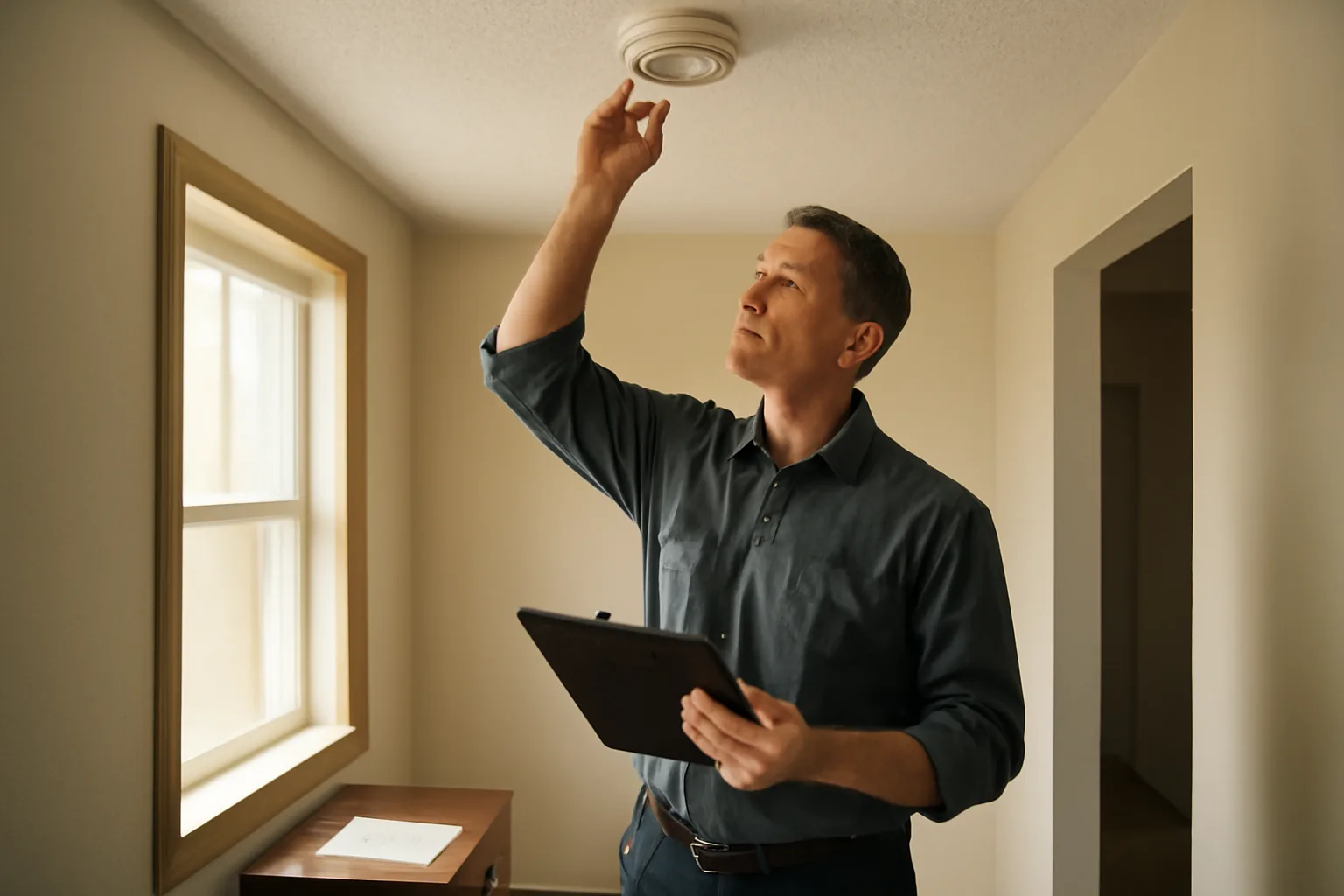
A landlord (or city inspector) doing a rental inspection can generally look at anything tied to habitability, safety, and code compliance: smoke and carbon monoxide detectors, electrical outlets and panels, plumbing fixtures and water heaters, HVAC function, window and door locks, handrails and stair conditions, signs of mold or pest infestation, and general structural safety. What they're not supposed to do is rummage through personal belongings, open closed drawers, or search for anything unrelated to habitability and code. A city rental license inspection is checking the property against a checklist tied to the local housing code, not doing a background check on the tenant's stuff. If you're a landlord preparing for a city inspection, walk through the same checklist the inspector will use ahead of time. Many cities publish theirs; if yours doesn't, ask the rental licensing office directly what's on it. Common inspection failure points across mandatory-licensing cities include missing or expired smoke detectors, GFCI outlets missing near water sources, broken window locks, peeling paint in pre-1978 units (a lead paint concern under federal rule, see HUD's Lead Disclosure Rule at 24 CFR Part 35 [6]), and inadequate egress from bedrooms. None of these are expensive fixes if caught early. They get expensive when they turn into a re-inspection fee plus a compliance deadline you're racing against.
Who is responsible for the rental property walk-through inspection in California?
In California, the responsibility splits depending on what kind of inspection you mean. For move-in and move-out condition documentation, California Civil Code 1950.5(f) gives the tenant the right to request an initial inspection before move-out, and the landlord must give at least 48 hours notice of that inspection and provide an itemized statement of deficiencies afterward [7]. This is separate from a city's rental licensing inspection. For cities with proactive rental inspection programs (Los Angeles's Systematic Code Enforcement Program, for example), the city's building or housing department sends its own inspector, and the landlord is responsible for scheduling access and making sure the unit is ready. The tenant doesn't have to be present, but they do have to allow reasonable access once proper notice under state law and the local program's rules has been given. So to be specific: the landlord is responsible for coordinating and allowing the walk-through. The city inspector conducts it. The tenant has a right to notice and, for move-out inspections, a right to request the walk-through in the first place under 1950.5(f). If you're managing property in a California city with mandatory rental inspection, don't assume state law entry rules and your city's program rules are identical. They frequently aren't.
How to become a landlord (the basic legal steps)
Becoming a landlord isn't a licensed profession in most states, but if you're renting out property in a city with mandatory rental licensing, there's a real checklist before you can legally collect rent. First, confirm zoning allows rental use for your property type (single-family, duplex, etc.), especially if it's an accessory dwelling unit or a converted space. Second, register or license the rental with your city if required. Cities like Baltimore, Minneapolis, and dozens of others require a rental license or registration before you can legally lease the unit, often with an inspection tied to issuance [8]. Third, screen tenants under fair housing law; the federal Fair Housing Act (42 U.S.C. 3601 et seq.) prohibits discrimination based on race, color, national origin, religion, sex, familial status, or disability [9]. Fourth, draft a lease that matches your state's landlord-tenant statute on security deposits, notice periods, and habitability. Fifth, set up a system for handling maintenance requests and documenting inspections, since paper trails matter enormously if a dispute ends up in court or in front of a code enforcement hearing. A lot of new landlords skip step two because they don't realize their city requires it until they get a notice of violation in the mail. If that's you right now, you're not alone. Cities are getting more aggressive about enforcement through complaint-driven sweeps and, increasingly, matching utility or tax records against rental listing sites.
How to be a landlord day to day (what the job actually involves)
Being a landlord day to day means four recurring jobs: collecting rent, handling maintenance, keeping the unit legally compliant, and managing the tenant relationship without crossing into harassment or discrimination. Maintenance response time matters more than most new landlords expect. Slow response to a habitability issue (no heat, a leak, no working smoke detector) can turn into a rent withholding claim or a habitability defense in an eviction case in states that recognize the implied warranty of habitability. Compliance means renewing your rental license or registration on schedule; missing a renewal deadline is one of the most common ways landlords accidentally rack up fines, since many cities charge a late fee or escalate to a citation automatically once the license lapses. The tenant relationship side is where the legal risk concentrates. Entry notice rules, security deposit handling, and non-discrimination in screening and renewal decisions are the three areas where landlords most often get sued or fined, not because they're bad people, but because they didn't know the specific rule in their state or city.
What is landlording, exactly?
Landlording is the practical, ongoing work of owning and managing rental property: setting rent, screening tenants, maintaining the unit, handling repairs, staying current on local and state compliance requirements, and managing the legal relationship created by a lease. It's a mix of property management and legal compliance work, and in cities with mandatory rental licensing, it also means playing an active role in a bureaucratic process, tracking registration renewal dates, keeping inspection appointments, and correcting violations within whatever cure period the city grants. A landlord who owns one duplex and self-manages is doing the same core landlording tasks as a company managing 200 units; the tasks just come faster and hit differently at scale.
What is a landlord? The basic legal definition
A landlord is the party who owns and leases real property to another party (the tenant) in exchange for rent, retaining ownership while granting the tenant a legal right to possess and use the property under the terms of a lease or rental agreement. Most state landlord-tenant statutes define this relationship implicitly through the obligations they create: the landlord's duty to maintain habitable conditions, honor the lease term, return security deposits under statutory rules, and give proper notice before entry or termination. If you're renting out even one room or one accessory unit for money, you're a landlord under the law, regardless of whether you think of it as a business. That status is what triggers city rental licensing requirements in the first place; owner-occupied exemptions exist in some cities but not all, so don't assume renting out a basement unit in your own house is automatically exempt from registration.
What rights do tenants have without a lease?
Tenants without a written lease still have real legal rights, usually as a month-to-month tenant under state law, including the right to habitable conditions, the right to proper notice before entry, and the right to a specific notice period before the tenancy can be terminated. Most states treat an oral or informal rental agreement, once rent has been accepted, as creating a month-to-month tenancy governed by the state's landlord-tenant statute. That means the same entry-notice rules discussed above still apply. It also means termination generally requires 30 days notice (sometimes more depending on how long the tenancy has run; some states scale it up to 60 or 90 days for longer tenancies). A landlord can't just tell a no-lease tenant to leave tomorrow; the same statutory eviction process applies as it would with a written lease, meaning proper notice and, if the tenant doesn't leave, a court filing. Tenants without a lease are not squatters, and treating them as such is one of the fastest ways for a landlord to end up on the losing end of an illegal lockout claim.
Why do landlords require renters insurance?
Landlords require renters insurance mainly to shift liability risk: it covers the tenant's personal property and gives the tenant their own liability coverage if they cause damage (a kitchen fire, a bathtub overflow) or if someone is injured in the unit due to the tenant's actions. The landlord's own property insurance covers the building structure, not the tenant's belongings, and it typically doesn't cover a liability claim arising from the tenant's own negligence. Requiring renters insurance (often $15 to $30 a month for a basic policy) reduces the odds that a tenant-caused loss turns into an uninsured dispute that lands on the landlord anyway. It's become common enough in lease requirements that many cities and larger property managers treat it as standard practice, though it's not a universal legal requirement; check your state and local rules, since a few jurisdictions restrict how landlords can enforce insurance requirements or what they can charge if a tenant doesn't comply.
What can a landlord not do in Ohio?
Under Ohio Revised Code 5321.04, landlords cannot enter a rental unit without giving reasonable notice and without the entry being at a reasonable time, except in emergencies . Ohio law also prohibits retaliatory conduct: a landlord cannot raise rent, decrease services, or threaten eviction in retaliation for a tenant exercising a legal right, such as reporting a code violation (ORC 5321.02) . Ohio landlords also cannot shut off utilities, change locks, or remove a tenant's belongings to force them out (a "self-help" eviction); ORC 5321.15 specifically bars this kind of forced removal outside the court eviction process . And under ORC 5321.04, the landlord has an affirmative duty to keep the premises fit and habitable, meaning they can't simply ignore serious repair requests and expect no consequence; a tenant has remedies including rent escrow through the local municipal or county court in some circumstances. Ohio doesn't specify an exact number of hours for entry notice in the statute the way California does; it just says "reasonable notice," which most Ohio courts and practitioners treat as 24 hours absent a lease provision saying otherwise. If you're a landlord in an Ohio city with its own rental registration program (several Ohio cities including Cleveland and Columbus have local rental registration or point-of-sale inspection rules), confirm the local ordinance's notice requirement separately from the state statute, since city rules can add requirements state law doesn't cover.
Does a city rental license inspection follow the same notice rule as a landlord's routine entry?
Not always, and this is the mistake that trips up a lot of landlords. State landlord-tenant law sets notice rules for a landlord entering to do repairs, show the unit, or check on conditions. A city's rental licensing inspection is a separate legal process, run by the city's housing or code department, and the notice period is whatever that city's ordinance says it is. Some cities mirror the state's 24-hour standard. Others require the landlord to schedule the inspection within a specific window after applying for or renewing a license, sometimes with a longer lead time, like several days to a couple of weeks, especially for a first-time license application. A few cities allow inspectors to show up for exterior or common-area checks with less notice, since those don't involve entering an occupied private unit. The safest move: read your specific city's rental licensing ordinance or call the office directly and ask, in writing if possible, what notice they're required to give before an inspection and what happens if you (or your tenant) can't accommodate the scheduled time. Missing an inspection appointment is a common trigger for a violation notice or a re-inspection fee, and "nobody told me the notice rule was different from state law" isn't a defense that code enforcement tends to accept.
How should a landlord prepare for a rental license inspection?
Preparation starts with getting your own copy of the city's inspection checklist, testing every smoke and CO detector, and fixing the small stuff (loose handrails, missing GFCI covers, burned-out exterior lights) before the inspector shows up, since these are the most common reasons inspections fail on the first pass. Walk the unit the way an inspector will: check every window opens and locks, check that every habitable room has a working detector where code requires it, check the water heater has a proper temperature-pressure relief valve and discharge line, and check that any exterior stairs or decks don't have rot or loose railings. Keep your rental license, past inspection reports, and any permits for recent work organized in one folder; inspectors sometimes ask for these on the spot, and having them ready speeds things up and signals you're running a compliant operation. This is the exact kind of pre-inspection organizing work our $79 City Rental License & Inspection Prep Packet is built around: a structured way to track your city's specific checklist, license renewal date, and required documents so you're not scrambling the week an inspection notice lands in your mailbox. It's not a substitute for knowing your local code, but it saves the hours most landlords waste hunting down what their city actually requires.
What happens if a landlord or tenant misses a scheduled inspection?
Missing a scheduled city rental license inspection usually means a re-inspection fee (commonly in the range of $25 to $150 depending on the city, confirm with your city rental licensing office for the exact amount) and, if it happens repeatedly, can escalate to a formal violation notice or even suspension of the rental license until the inspection is completed. If a tenant refuses access on the scheduled date, most city ordinances still hold the landlord responsible for getting the inspection done, since the license is issued to the property owner, not the tenant. Document your attempts to schedule and any tenant refusal in writing; some cities have a process for landlords to show good-faith effort if a tenant is genuinely uncooperative, but it typically requires paperwork, more than a phone call explaining what happened. If you get a notice for a missed inspection, don't ignore it hoping it resolves itself. Most cities have a cure period, sometimes as short as 10 to 15 days, before fines increase or the case moves toward a hearing.
Frequently asked questions
How much notice does a landlord have to give before entering for an inspection?
Most states require 24 to 48 hours notice for landlord entry, including for inspections. California presumes 24 hours is reasonable under Civil Code 1954. Some states, like Washington and Hawaii, set two days by statute. City rental licensing inspections may follow a different notice period set by local ordinance, so check both your state law and your city's specific rental inspection rules.
Who is responsible for the rental property walk-through inspection in California?
The landlord is responsible for scheduling and allowing access for a walk-through inspection, whether it's a move-out inspection under Civil Code 1950.5(f) or a city licensing inspection. The city inspector (for licensing programs) or the landlord (for move-out checks) actually conducts the walk-through, and the tenant has a right to notice, and for move-out inspections, a right to request one.
How to become a landlord if I've never rented out property before?
Confirm zoning allows rental use, register or license the property if your city requires it, screen tenants under fair housing law (42 U.S.C. 3601), use a lease consistent with your state's landlord-tenant statute, and set up a system to track maintenance and inspection deadlines. Many first-time landlords skip city registration simply because they don't know it's required until they get a notice.
What is landlording?
Landlording is the ongoing work of owning and managing rental property: setting rent, screening tenants, maintaining the unit, handling repairs, and staying compliant with state landlord-tenant law and any city rental licensing or inspection requirements. It applies the same whether you own one unit or manage a large portfolio; the compliance tasks just come more frequently at scale.
What is a landlord under the law?
A landlord is the owner of real property who leases it to a tenant in exchange for rent, while retaining ownership and taking on legal duties like maintaining habitable conditions and giving proper notice before entry or termination. Renting out even a single room for money makes you a landlord under most state statutes, which can trigger city rental registration requirements.
What rights do tenants have without a lease?
A tenant without a written lease who has paid rent generally becomes a month-to-month tenant under state law, with the same habitability protections, entry-notice rights, and termination-notice requirements (commonly 30 days) as a tenant with a written lease. A landlord still can't force them out without following the state's formal notice and eviction process.
Why do landlords require renters insurance?
Renters insurance shifts liability for tenant-caused damage and injury away from the landlord's own policy, which typically only covers the building structure, not the tenant's belongings or tenant-caused liability claims. It's a common lease requirement (often $15 to $30 a month) rather than a universal legal mandate, so check your state's rules on how it can be enforced.
What can a landlord look at during a rental inspection?
Inspectors and landlords can check habitability and safety items: smoke and CO detectors, electrical outlets, plumbing and water heater condition, HVAC function, window and door locks, stairs and railings, and signs of mold or pests. They generally cannot search personal belongings or closed drawers, since the inspection is about code compliance, not the tenant's possessions.
What can a landlord not do in Ohio?
Ohio landlords cannot enter without reasonable notice (ORC 5321.04), cannot retaliate against a tenant for reporting a code violation (ORC 5321.02), and cannot force a tenant out through self-help measures like shutting off utilities or changing locks (ORC 5321.15). They also have a legal duty to keep the unit fit and habitable.
Does a lease override state entry-notice law?
A lease can require more notice than the state minimum, and that stricter term generally controls for landlord-tenant entry. A lease usually cannot waive the tenant's statutory right to reasonable notice altogether, since most states treat that right as a tenant protection that can't be signed away.
Is 24 hours notice a nationwide standard for rental inspections?
No. It's common (California presumes 24 hours reasonable under Civil Code 1954), but some states use different windows: Washington and Hawaii require two days, Florida uses a general "reasonable notice" standard with 12 hours presumed reasonable for pest control specifically, and Texas has no statutory entry-notice requirement at all, leaving it to the lease.
What happens if I miss my city's rental inspection appointment?
You'll typically face a re-inspection fee (commonly $25 to $150 depending on the city; confirm with your city rental licensing office) and, if it happens more than once, a formal violation notice or a hold on your rental license. Document any scheduling issues in writing and respond to the notice promptly rather than letting the deadline pass.
Can a tenant refuse to allow a rental license inspection?
A tenant can push back on timing, but most city ordinances hold the landlord, not the tenant, responsible for getting the inspection completed, since the license is issued to the property owner. If a tenant is genuinely uncooperative, document your good-faith scheduling attempts, since some cities have a process for landlords to show this in a hearing.
Sources
- California Legislative Information, Civil Code Section 1954: California presumes 24 hours notice is reasonable for landlord entry
- Texas Property Code Chapter 92: Texas has no statutory notice requirement for landlord entry, leaving it to the lease
- Washington State Legislature, RCW 59.18.150: Washington requires two days notice for landlord entry
- Hawaii Revised Statutes Section 521-53: Hawaii requires two days notice for landlord entry
- California Legislative Information, Civil Code Section 1950.5: California tenants can request an initial move-out inspection with 48 hours notice from the landlord
- U.S. Department of Justice, Fair Housing Act Overview, 42 U.S.C. 3601: Federal Fair Housing Act prohibits discrimination in tenant screening based on protected classes
- Ohio Revised Code Section 5321.04: Ohio requires reasonable notice and reasonable time for landlord entry, with a habitability duty
- Ohio Revised Code Section 5321.02: Ohio prohibits landlord retaliation against a tenant for exercising legal rights
- Ohio Revised Code Section 5321.15: Ohio prohibits self-help evictions such as utility shutoffs or lockouts