Last updated 2026-07-26
TL;DR
A final rental inspection checklist covers smoke/CO alarms, electrical panels, plumbing leaks, egress windows, exterior/foundation issues, and pest signs. Most cities require 24 to 48 hours' notice before entry. Fix anything unsafe first, then work room by room. Most inspection fails come from smoke alarms, minor code items, and missing paperwork, not major structural problems.
What does a final rental inspection actually check?
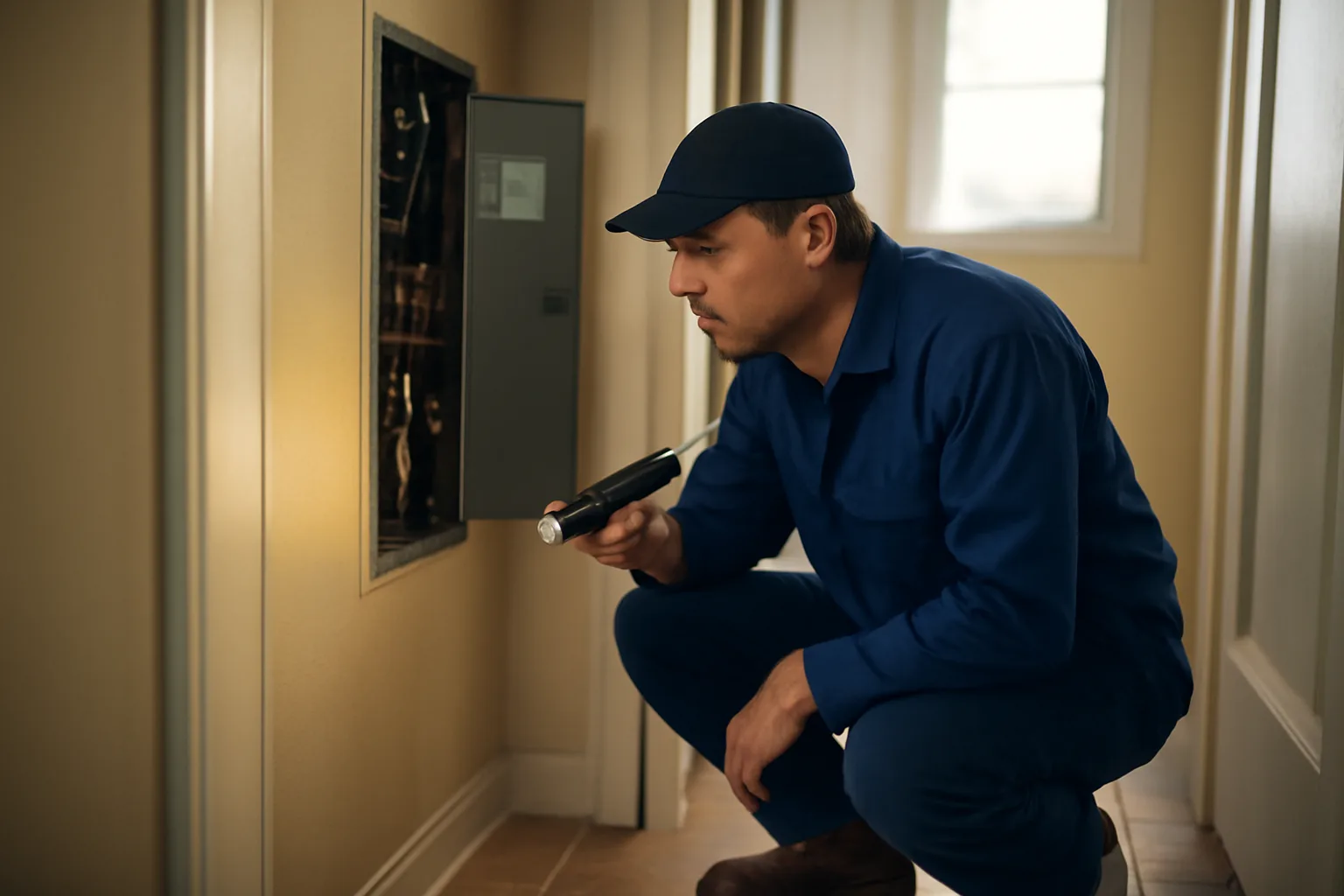
A final rental inspection is the walkthrough your city's housing or building department does before issuing (or renewing) your rental license. It's different from a pre-move-out tenant inspection or a private home inspection you'd get when buying property. The inspector is checking against your local housing code, which usually mirrors parts of the International Property Maintenance Code (IPMC), adopted in some form by hundreds of U.S. jurisdictions [1]. Most inspections cover five broad zones: life safety systems (smoke and carbon monoxide alarms, egress windows, fire extinguishers where required), electrical (panel condition, exposed wiring, GFCI outlets near water), plumbing (active leaks, working fixtures, water heater venting), structural and exterior (foundation cracks, roof condition, peeling exterior paint on pre-1978 homes), and general habitability (working heat, no pest infestation, functioning locks). Some cities also check specific things that surprise first-time landlords: window screens, handrail height on stairs with more than a few steps, extension cord use as permanent wiring, and clearance around the furnace or water heater. The exact list is set by your city's rental housing code, so always pull the actual checklist your city publishes rather than assuming a generic one applies. Many cities post the inspector's actual checklist as a PDF, and reading it before your appointment is the single best prep move you can make.
What can a landlord look at during an inspection?
During a routine or move-in/move-out inspection, a landlord can generally look at the condition of the unit, check that smoke and CO alarms are present and working, look for damage beyond normal wear and tear, and verify no unauthorized occupants or pets are present if that violates the lease. A landlord is not there to search personal belongings, go through drawers, or inspect for reasons unrelated to the property's condition. HUD's Fair Housing guidance and most state landlord-tenant statutes draw the line at 'reasonable purpose' inspections: repairs, safety checks, showing the unit to prospective tenants or buyers, and verifying lease compliance. California's Civil Code Section 1954, for example, lists the specific reasons a landlord may enter: to make necessary repairs, show the unit to prospective tenants or buyers, in an emergency, or when the tenant has abandoned the unit [2]. A city code inspector, by contrast, is checking the property against the housing code, not enforcing your lease. The inspector's scope is set by ordinance, not by whatever you'd personally like to have checked. If you're prepping for a city-mandated license inspection, that inspector typically won't ask tenants to move personal items or open closets full of belongings; they're looking at fixed systems and structural conditions, not housekeeping.
Who is responsible for a rental property walkthrough inspection in California?
In California, the landlord is responsible for arranging and generally attending walkthrough inspections, but tenants have real rights around notice and presence. California Civil Code Section 1950.5 gives tenants the right to request an initial move-out inspection before the final one, so they get a chance to fix issues and avoid deductions from the security deposit [3]. The landlord must give at least 48 hours written notice for that initial inspection, and the tenant can choose to be present or waive that right in writing. For routine entry to make repairs or show the unit, Civil Code Section 1954 requires 'reasonable notice,' which the statute defines as 24 hours in most circumstances, and entry must happen during normal business hours absent emergency or tenant consent [2]. Local rent control cities like Los Angeles, San Francisco, and Oakland can layer on additional inspection or registration requirements on top of state law, so a California landlord juggles both the state deposit statute and whatever the city's rental registration program requires. City-mandated rental inspections (for licensing, not deposit disputes) are usually scheduled directly between the city inspector and the landlord, with the tenant notified separately. Confirm the exact notice period and inspection scheduling process with your city rental licensing office, since it varies by jurisdiction and isn't uniform even within California.
How much notice does a landlord have to give before an inspection?
Notice periods vary by state and by type of entry, but 24 hours is the most common baseline. California requires 24 hours 'reasonable notice' under Civil Code 1954, with move-out inspections requiring at least 48 hours notice under Civil Code 1950.5 [2][3]. Many other states set similar or slightly different windows. Florida law doesn't set a specific number of hours in statute but requires 'reasonable notice,' which courts and practice have generally interpreted as at least 12 to 24 hours except in emergencies [4]. Some cities' rental licensing ordinances add their own notice rules on top of state landlord-tenant law specifically for the city inspection appointment itself, so a landlord may be dealing with two separate notice clocks: one for the lease-based tenant notice, one for the city's scheduling requirement. A practical rule: give tenants written notice (text or email works in most states if the lease allows it) at least 48 hours before any inspection, even if your state only requires 24. It reduces disputes and gives tenants time to secure pets or move items. For the actual city licensing inspection appointment, always confirm the specific notice window with your city rental licensing office, since these differ street to street in some metro areas with overlapping jurisdictions.
What can't a landlord do during an inspection in Ohio?
Ohio landlords cannot enter a rental unit without reasonable notice except in genuine emergencies. Ohio Revised Code Section 5321.04 requires landlords to give 'reasonable notice' of intent to enter and to enter 'only at reasonable times,' and lists the acceptable reasons for entry as inspection, repairs, alterations, supplying necessary services, or showing the unit to prospective tenants, purchasers, mortgagees, or contractors [5]. Ohio courts have generally treated 24 hours as reasonable notice, though the statute itself doesn't specify an exact hour count. What an Ohio landlord cannot do: enter repeatedly without cause in a way that amounts to harassment, use inspection access to intimidate a tenant, enter at odd hours without emergency justification, or search through personal belongings unrelated to a maintenance or safety purpose. ORC 5321.04 also requires landlords to keep the unit in compliance with building and housing codes, and a landlord who violates the entry provisions can face a tenant claim for damages under ORC 5321.16 [5]. Ohio does not have a statewide rental registration or inspection licensing program the way some cities do; instead, individual cities like Cleveland, Columbus, and Cincinnati run their own rental registration and inspection ordinances. If your city requires a license inspection, that inspector operates under municipal code, separate from the landlord's own entry rights under ORC 5321.04.
The room-by-room final inspection checklist
| Exterior | Roof condition, gutters, siding, foundation cracks, exterior paint (chipping/peeling on pre-1978 buildings), address numbers visible, exterior stairs and railings, egress path clear | |
|---|---|---|
| Electrical | Panel labeled and accessible, no double-tapped breakers, GFCI outlets in kitchens/baths, no exposed wiring, working outlets throughout | |
| Plumbing | No active leaks, water heater has pressure relief valve and proper venting, fixtures drain properly, no visible mold around plumbing | |
| Life safety | Smoke alarms in every bedroom and on every level, CO alarm near sleeping areas if fuel-burning appliances are present, fire extinguisher in multi-unit common areas if required | |
| Egress | Bedroom windows meet minimum egress size (varies by code, commonly around 5.7 sq ft opening), windows open without tools, no security bars without quick-release mechanism | |
| Heating | Furnace or heat source functional, proper clearance from combustibles, no space heaters as primary heat source in most codes | |
| General habitability | No pest infestation, doors and locks functional, no trip hazards, working locks on all exterior doors | Smoke alarm placement is one of the most commonly cited violations nationally. The National Fire Protection Association recommends smoke alarms in every bedroom, outside each sleeping area, and on every level of the home, and most local fire and housing codes have adopted this as a minimum standard [6]. If you only do one thing before your inspection, test every alarm and replace batteries (or the whole unit if it's over 10 years old, per NFPA guidance). |
Work through the unit in the same order most inspectors do: exterior first, then systems, then room by room. This order matches how most municipal checklists are organized and it's how you'll actually walk the property. | Area | What's typically checked |
How to prep for the inspection in the 30 days before
Start a month out if you can. Cities in Chicago, Minneapolis, and dozens of other rental-licensing municipalities typically give landlords a scheduling window of a few weeks between application and inspection date, so use that time. Week one: pull your city's actual published inspection checklist (search '[your city] rental inspection checklist'). Walk the unit yourself with that list in hand. Note anything that needs a contractor versus a DIY fix. Week two: schedule any electrical or plumbing repairs that need a licensed contractor. These take longer to book than you'd expect, especially in markets with contractor shortages. Test every smoke and CO alarm; replace batteries and any unit older than the manufacturer's stated lifespan (commonly 10 years for smoke alarms per NFPA) [6]. Week three: handle cosmetic and minor code items yourself: caulking, loose handrails, missing outlet covers, overgrown exterior vegetation blocking address numbers or egress paths. Confirm with your tenant that the unit will be accessible on inspection day and give proper written notice per your state's landlord-tenant law and your city's specific inspection notice requirement. Few days before: do a final self-walkthrough with a phone camera. Photograph anything you've fixed as proof of correction, since some cities let you submit repair documentation to avoid a re-inspection fee if a violation was already addressed. If you're managing this across multiple properties or multiple city ordinances at once, a structured packet that organizes your city's specific checklist, required documents, and notice templates in one place saves real time; that's the exact gap our $79 City Rental License & Inspection Prep Packet is built to fill, with the caveat that you should always confirm final requirements with your own city's rental licensing office since ordinances change.
What happens if you fail the inspection?
Most cities issue a written notice of violation listing each item that failed, with a correction deadline, commonly somewhere between 10 and 60 days depending on severity and your specific city's ordinance. Life-safety violations (no working smoke alarm, blocked egress, exposed live wiring) often get shorter deadlines, sometimes as little as a few days, because they're treated as immediate hazards. You'll typically pay a re-inspection fee to have the inspector come back and verify the fix, and that fee is separate from your original license or inspection fee. Fee amounts vary widely by city (some are in the $50 to $150 range, others higher), so confirm your city's exact re-inspection fee schedule with your rental licensing office rather than assuming a number. If you don't correct the violations by the deadline, most municipal codes allow escalating consequences: daily fines that accrue until the violation is fixed, denial or revocation of the rental license, and in serious or repeated cases, referral to housing court. Some cities publish a public list of unlicensed or non-compliant rental properties, which can affect your reputation with prospective tenants and lenders. If you get a fine or violation notice you think is wrong, most cities have a formal appeal process with its own deadline, often 10 to 30 days from the notice date, so don't sit on it.
What is landlording and what is a landlord, exactly?
A landlord is the owner (or authorized agent of the owner) of real property who rents that property to a tenant in exchange for payment, under a lease or rental agreement. 'Landlording' is the informal term for the day-to-day work of owning and managing rental property: screening tenants, collecting rent, handling maintenance, complying with local housing codes, and managing the legal relationship defined by your state's landlord-tenant statute. Legally, a landlord takes on specific duties that vary by state but generally include maintaining a habitable unit (working plumbing, heat, structural safety), following notice rules before entering the unit, returning security deposits within a legally set timeframe, and complying with fair housing law under the federal Fair Housing Act, which prohibits discrimination based on race, color, national origin, religion, sex, familial status, or disability [7]. Landlording isn't just collecting a check. It's compliance work: tracking lease renewal dates, insurance renewals, inspection cycles, and repair requests, on top of the financial side of owning the asset. Landlords with even a single unit in a city with mandatory rental licensing take on an additional layer: registering the property, paying licensing fees, and passing periodic inspections, on top of standard landlord-tenant obligations.
How do you become a landlord and how do you get started?
Becoming a landlord starts with the property, but the legal and administrative steps matter as much as the purchase. First, confirm the property is zoned and legally permitted for rental use; some cities restrict rentals in certain zones or require a conditional use permit for short-term or multi-unit rentals. Second, check whether your city requires rental registration or licensing before you can legally rent the unit at all. Cities including Chicago, Minneapolis, Sacramento, and hundreds of others require landlords to register the property, pay a fee, and often pass an inspection before or shortly after renting it out. Operating without a required license can mean fines and, in some jurisdictions, an inability to collect rent or evict a tenant through the courts until you're compliant. Third, get landlord-specific insurance (not a standard homeowner's policy) that covers liability and lost rental income. Fourth, set up a compliant lease that follows your state's landlord-tenant statute, including required disclosures like lead paint for pre-1978 housing under federal law [8]. Fifth, screen tenants consistently under the Fair Housing Act's protected classes [7], and set up a system for handling maintenance requests and security deposits within your state's legal timeframe. If your city requires licensing, treat that as step one, not an afterthought. Landlords who skip registration often find out about the requirement only after a neighbor complaint or a tenant dispute triggers a code enforcement visit.
Why do landlords require renters insurance?
Landlords require renters insurance mainly to shift liability risk away from the property owner. A tenant's renters insurance policy typically covers the tenant's personal property and provides liability coverage if the tenant accidentally causes damage (a kitchen fire, an overflowing tub that damages the unit below) or if a guest is injured in the unit. Without renters insurance, a landlord's own property insurance may cover the structure, but the landlord has no straightforward way to recover the tenant's share of damage costs, and the tenant has no coverage for their own belongings, which sometimes leads to disputes or even litigation aimed at the landlord. Requiring renters insurance as a lease condition is legal in most states, though it must be applied consistently across all tenants to avoid fair housing issues. Some cities and some mortgage or umbrella insurance policies effectively push landlords toward requiring it, since it lowers the landlord's own claims exposure. It typically costs a tenant somewhere in the range of $15 to $30 a month depending on coverage and location, a small cost relative to the liability gap it closes.
What rights do tenants have without a lease?
A tenant without a written lease, sometimes called a month-to-month tenant or tenant-at-will, still has real legal rights under state landlord-tenant law. The absence of a written lease doesn't remove tenant protections; it just means the tenancy typically defaults to a month-to-month arrangement governed by statute rather than a contract's specific terms. Tenants without a lease generally retain the right to habitable housing, the right to proper notice before entry (governed by the same state entry statutes discussed above, like Ohio's ORC 5321.04 or California's Civil Code 1954), the right to a legally required notice period before eviction (commonly 30 days for month-to-month tenancies, though this varies by state and by how long the tenant has lived there), and full protection under the Fair Housing Act against discrimination [7]. What a no-lease tenant doesn't have is the specific negotiated terms a written lease would lock in, like a fixed rent amount for a set term. A landlord can generally raise rent or change terms for a month-to-month tenant with proper notice (often 30 days, sometimes longer in rent-controlled cities), whereas a signed lease locks in terms until it expires. Always check your specific state's notice-to-terminate and notice-to-change-terms periods, since they range from 7 to 60 days depending on the jurisdiction and the reason.
Frequently asked questions
What can a landlord look at during an inspection?
A landlord can check the condition of fixed systems and structures (electrical, plumbing, smoke alarms, general habitability) and verify lease compliance like unauthorized pets or occupants. A landlord generally cannot search personal belongings, drawers, or closets for reasons unrelated to the property's condition or safety.
How much notice does a landlord have to give before an inspection?
Most states require 24 hours of notice for routine entry; California requires 24 hours under Civil Code 1954 and 48 hours for move-out inspections under Civil Code 1950.5. Always confirm your specific state's statute and your city's separate rental-license inspection notice rule, since they can differ.
Who is responsible for a rental property walkthrough inspection in California?
The landlord arranges and typically attends the inspection, but California Civil Code 1950.5 gives tenants the right to request an initial move-out walkthrough with 48 hours notice before the final one, so they can fix issues before facing deposit deductions.
What is landlording?
Landlording is the day-to-day work of owning and managing rental property: collecting rent, handling repairs, screening tenants, maintaining habitability, and complying with your state's landlord-tenant law and any local rental registration or licensing ordinance.
What is a landlord?
A landlord is the owner, or an authorized agent of the owner, of real property who rents it to a tenant under a lease or rental agreement, taking on legal duties like maintenance, proper notice before entry, and timely return of security deposits.
What rights do tenants have without a lease?
Tenants without a written lease still have habitability rights, entry-notice rights, Fair Housing Act protection, and a legally required notice period before eviction, usually defaulting to a month-to-month tenancy governed by state statute rather than a signed contract's specific terms.
How do you become a landlord?
Confirm the property's rental zoning, check if your city requires rental registration or licensing, get landlord-specific insurance, draft a lease compliant with your state's landlord-tenant law including required disclosures, and screen tenants consistently under the Fair Housing Act.
Why do landlords require renters insurance?
Renters insurance covers the tenant's belongings and provides liability coverage if the tenant accidentally causes damage or a guest is injured, which shifts risk away from the landlord's own policy and reduces dispute exposure over damage costs.
What can't a landlord do during an inspection in Ohio?
Ohio landlords can't enter without reasonable notice except in emergencies, per Ohio Revised Code 5321.04, and can't use inspection access to harass a tenant or search belongings unrelated to maintenance or safety. Entry must be at reasonable times for a listed lawful purpose.
What's the most common reason rental properties fail a final inspection?
Missing or non-functional smoke alarms are among the most commonly cited violations nationally, followed by minor electrical issues (missing GFCI outlets, exposed wiring) and small code items like missing outlet covers or handrail problems, not major structural failures.
How long do I have to fix violations after a failed rental inspection?
Correction deadlines vary by city and by severity, commonly ranging from a few days for immediate safety hazards up to 60 days for minor items. Check your city's specific violation notice for the exact deadline and any re-inspection fee.
Do I need a licensed contractor to fix inspection violations?
For electrical and plumbing repairs, most cities require licensed contractors, especially for anything involving the panel, wiring, or gas lines. Cosmetic items like caulking, handrail tightening, or outlet covers are usually fine to DIY, but check your city's specific rules on permits.
What's the difference between a code inspection and a lease walkthrough?
A city code inspection checks the property against municipal housing code for licensing purposes, done by a government inspector. A lease walkthrough is a landlord-tenant matter under state law, typically tied to move-in, move-out, or routine maintenance checks.
Can a tenant refuse to let the city inspector in?
In most jurisdictions, tenants can't legally block a properly noticed city rental inspection tied to a license requirement, since the ordinance authorizes it, but the exact process for handling tenant refusal varies. Confirm with your city rental licensing office how they handle tenant access disputes.
Sources
- International Code Council, International Property Maintenance Code: Most local rental housing codes are based on the International Property Maintenance Code
- California Legislature, Civil Code Section 1954: California requires reasonable notice, defined as 24 hours, before landlord entry for repairs or showings
- California Legislature, Civil Code Section 1950.5: California tenants have the right to an initial move-out inspection with 48 hours notice before the final deposit disposition
- Florida Legislature, Florida Statutes Section 83.53: Florida landlord-tenant law requires reasonable notice, generally at least 12 hours, before landlord entry to a rental unit
- Ohio Legislature, Ohio Revised Code Section 5321.04: Ohio requires reasonable notice and reasonable times for landlord entry, limited to specific lawful purposes
- National Fire Protection Association, Smoke Alarms Fact Sheet: Smoke alarms should be placed in every bedroom, outside sleeping areas, and on every level, and replaced roughly every 10 years
- U.S. Department of Housing and Urban Development, Fair Housing Act overview: The Fair Housing Act prohibits discrimination based on race, color, national origin, religion, sex, familial status, or disability
- U.S. EPA, Real Estate Disclosures About Potential Lead Hazards: Federal law requires lead paint disclosures for housing built before 1978