Last updated 2026-07-26
TL;DR
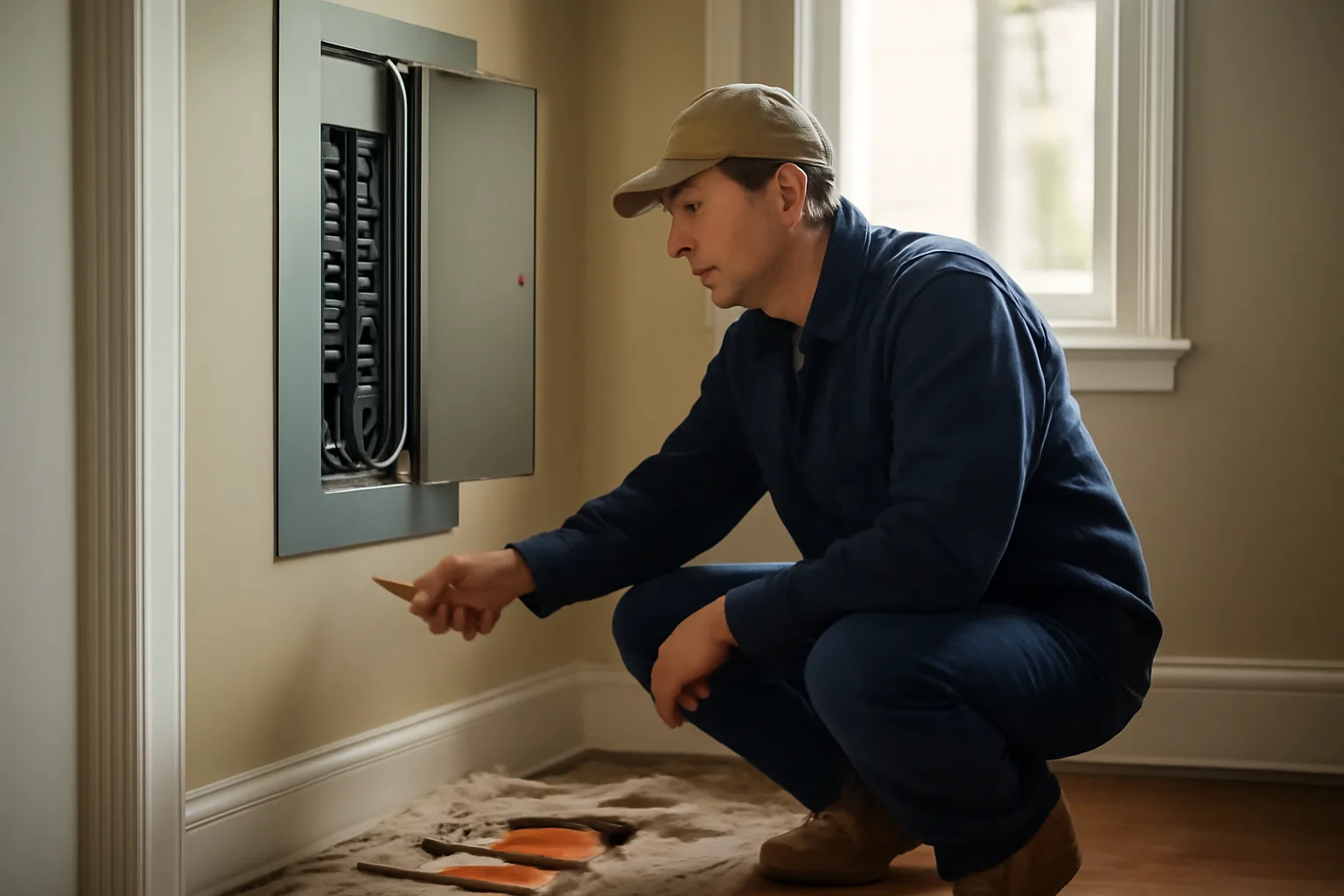
Most states let landlords do minor repairs themselves or hire unlicensed handypeople for small jobs. Licensed contractors become mandatory for electrical, plumbing, gas, HVAC, structural work, and anything over a state's dollar threshold for general contracting (often $500 to $1,000 depending on the state). Rental licensing cities may also require licensed contractor sign-off before passing inspection.
do landlords have to use licensed contractors for repairs?
No, not for everything. Most states let a landlord (or a handyman working for the landlord) do general maintenance and small repairs without a license: patching drywall, replacing a faucet washer, repainting a unit, swapping out a light fixture cover. Once the job crosses into electrical wiring, gas lines, plumbing that involves permits, structural changes, or roofing, most states require a licensed contractor, and many require the work to be permitted and inspected too. The exact line depends entirely on your state's contractor licensing law and, separately, on your city's building code. California requires a license for any home improvement job over $500 in labor and materials combined, per the Contractors State License Board [1]. Below that dollar figure, an unlicensed handyman can legally do the work under California's handyman exemption, as long as they don't advertise as a contractor. Other states set the threshold differently or don't have one at all for certain trades. Electrical and plumbing are almost always separately licensed trades, regardless of dollar amount. You can't have your unlicensed cousin rewire a rental unit's panel in nearly any state, because electrical and plumbing licenses are usually tied to public safety codes enforced by a separate state board, not the general contractor threshold. If you're prepping for a rental license inspection, the inspector may ask for permits and licensed-contractor invoices on specific repairs, especially anything involving smoke detectors' hardwiring, water heaters, or furnace replacement. Keep those invoices. Cities that require rental registration or licensing often cross-reference permit records during renewal.
when is a licensed contractor legally required?
| General contracting dollar threshold (CA) | Licensed contractor required above $500 in labor + materials | California CSLB [1] |
|---|---|---|
| General contracting in Florida | Licensed contractor required for structural, electrical, plumbing, mechanical, roofing work regardless of amount | Fla. Stat. 489 [2] |
| Electrical work | Licensed electrician required in nearly all states, no dollar minimum | State electrical board (varies) |
| Plumbing work | Licensed plumber required in nearly all states, no dollar minimum | State plumbing board (varies) |
| Rental license renewal inspection | May require permit + licensed contractor invoice for specific systems | Confirm with your city rental licensing office |
Three triggers usually force the licensed-contractor requirement: the type of trade, the dollar amount of the job, and whether a permit is legally required for that work. Trade-specific licensing almost always applies to electrical, plumbing, HVAC, and gas work. These trades have their own state licensing boards in most states (separate from the general contractor board), and doing this work without the right license can void your insurance coverage on a claim, more than risk a fine. Dollar-threshold licensing applies to general contracting work like remodeling, framing, and large repair jobs. California's $500 threshold is one of the lower ones in the country [1]. Florida requires a license for any contracting work regardless of dollar value once it touches structural, electrical, plumbing, mechanical, or roofing systems, per Florida Statutes Chapter 489 [2]. Some states, like Texas, don't have a general statewide contractor license at all for residential work outside specific trades (electricians, plumbers, HVAC techs are still licensed), though cities can add their own rules. Permit-triggered licensing is the sneaky one. Even if your state doesn't require a license for a repair under some dollar amount, your city's building department might require a permit for that same repair, and many cities only issue permits to licensed contractors or the property owner doing owner-occupied work. Rental units usually don't qualify for the owner-occupant DIY permit exception, because you don't live there. Here's a rough comparison of common trigger points, though you should confirm your own state's numbers before relying on them: | Trigger | Typical rule | Source |
who is responsible for the rental property walk-through inspection in california?
California doesn't have a single statewide rental inspection law. Cities that run mandatory rental inspection or licensing programs (like Los Angeles's Systematic Code Enforcement Program) assign their own building or housing inspectors to do the walk-through, not a private contractor and not the tenant. Under California's Systematic Code Enforcement Program, the Los Angeles Housing Department inspects units on a rotating cycle and bills owners an annual inspection fee per unit, per the LAHD program page [3]. The landlord (or a designated agent) is responsible for scheduling access, being present or arranging entry, and fixing any violations found within the timeframe the notice specifies, typically 30 days for most items though the notice will state the deadline. Outside of these city programs, routine move-in and move-out walk-throughs are just between landlord and tenant, and California Civil Code 1950.5 requires landlords to give tenants the option to request an initial inspection before move-out specifically to identify repairs that could affect the security deposit [4]. That's a different process from a code-enforcement inspection: it's about deposit deductions, not licensing compliance. If you're not sure whether your California city has a mandatory rental inspection program, confirm with your city rental licensing office, since dozens of California cities (Los Angeles, Oakland, Berkeley, and others) run separate programs with separate rules.
what is landlording, and what does a landlord actually do?
Landlording is the ongoing work of owning and operating rental property: collecting rent, maintaining the unit, handling tenant communication, keeping up with local licensing and inspection rules, and dealing with turnover between tenants. It's a mix of light bookkeeping, light property management, and being the person tenants call when the water heater dies at 11pm. A landlord, in the legal sense, is the owner (or authorized agent of the owner) of real property who leases it to a tenant in exchange for rent. That's the simple definition. In practice, being a landlord also means you're the one legally responsible for habitability, meaning the unit has to meet basic livability standards like working plumbing, heat, and structural safety, a standard that comes from each state's implied warranty of habitability (a body of law that varies state to state but traces back to cases like Javins v. First National Realty Corp., 428 F.2d 1071 (D.C. Cir. 1970), which is widely cited as the case that established the modern habitability doctrine in residential leases [5]). Most individual landlords with 1-10 units aren't running a business in the traditional sense. You're managing a part-time responsibility that has full-time legal exposure if you ignore it. That's the real shape of landlording: low daily time commitment, real liability if repairs, inspections, or licensing lapse.
how do you become a landlord?
You become a landlord the moment you rent out property you own to someone else in exchange for payment. There's no license required at the federal level to be a landlord generally, but plenty of cities require you to register or license the specific rental property before you can legally rent it out. The practical steps: buy or already own the property, check your city and county for rental registration or licensing requirements (search '[your city] rental license' or call your city's housing or code enforcement department directly), get a certificate of occupancy or rental inspection if your jurisdiction requires one, set up a lease that complies with your state's landlord-tenant law, and get landlord insurance (different from a standard homeowner's policy, since most homeowner policies exclude or limit coverage on rented units). Many first-time landlords skip the local licensing step because they don't know their city has one. That's the single most common mistake: assuming a state driver's-license-style landlord credential exists (it mostly doesn't) while missing the actual local rental license requirement that does exist in hundreds of U.S. cities. If your city sends you a notice about registering a rental unit, don't ignore it. Fines for operating an unlicensed rental unit range widely by city, commonly starting in the low hundreds of dollars and escalating for repeat violations, so confirm your specific city's fee schedule with your city rental licensing office before you assume it's a minor issue. If you're just starting out, read up on tenant rights in your state before you write your first lease, since a lease clause that conflicts with state law is usually unenforceable anyway.
what rights do tenants have without a written lease?
Tenants without a written lease still have full legal rights under state landlord-tenant law. No lease doesn't mean no rules; it usually means the tenancy defaults to a month-to-month arrangement governed entirely by state statute rather than a private contract. A tenant without a written lease is generally still entitled to: habitable living conditions (heat, water, working plumbing, structural safety), advance notice before the landlord enters, advance written notice before the landlord can raise rent or end the tenancy (notice periods usually run 30 days for month-to-month tenancies, though some states and cities require more, especially rent-controlled jurisdictions), and protection from retaliatory or discriminatory eviction under the federal Fair Housing Act, 42 U.S.C. 3601 et seq. [6]. What a verbal or no-lease arrangement usually loses is specificity: there's no agreed late fee, no agreed pet policy, no agreed rule about subletting, because none of that got written down. When a dispute happens, courts fall back on state default rules, which are often more tenant-favorable than what a landlord would have written into a lease. This is one of the better arguments for always using a written lease, even a short one, even for a relative or friend renting your unit. For a broader look at what protections apply regardless of lease status, see tenants rights and renters rights.
why do landlords require renters insurance?
Landlords require renters insurance mainly to shift liability and personal-property risk away from themselves. A landlord's own property insurance covers the building structure, not the tenant's belongings, and it typically doesn't cover a tenant's liability if the tenant's negligence causes damage (a kitchen fire, an overflowing tub that damages the unit below). Renters insurance policies commonly include personal liability coverage, often $100,000 or more depending on the policy, which protects the landlord indirectly: if the tenant's actions cause a fire or flood that damages the building, the tenant's liability coverage can pay for it instead of the landlord's insurance taking the full hit (and instead of the landlord having to sue the tenant directly to recover costs). Requiring renters insurance is legal in most states as a lease condition, though a handful of jurisdictions regulate how landlords can enforce it (for instance, some states cap how much a landlord can charge if they provide insurance on the tenant's behalf instead of requiring the tenant to buy their own policy). There's no federal mandate either way; it's a lease term, not a statutory requirement, so it only applies if you actually put it in the lease and your state allows it. The average cost of a renters insurance policy is relatively low nationally, commonly cited in the range of $15 to $30 a month depending on coverage limits and location, which is part of why many landlords find it reasonable to require as a lease condition.
what can a landlord look at during an inspection?
During a routine or code-required inspection, a landlord (or the city inspector) can generally check anything related to habitability, safety, and code compliance: smoke and carbon monoxide detectors, electrical outlets and panels, plumbing fixtures and visible leaks, HVAC function, window and door locks, signs of pest infestation, mold or water damage, and general cleanliness that could indicate a lease violation (like unauthorized pets or occupants). What a landlord generally cannot do during an inspection is search through personal belongings, drawers, closets, or private storage unless there's a specific safety reason (like checking for a gas leak near a stove). Inspections are supposed to be about the condition of the property, not surveillance of the tenant's possessions. For city-run rental licensing inspections specifically, inspectors typically check the same core systems, plus things unique to code compliance: proper egress from bedrooms (a window large enough to serve as a fire exit), functioning locks on all exterior doors, water heater temperature-pressure relief valves, and stair/railing safety. Many cities also require proof of a valid rental license or certificate posted or on file, and some check for working smoke detectors on every level, per state fire code adoption which varies but commonly follows NFPA 72 minimum placement standards referenced in state building codes [7]. Proper notice is required before any inspection in nearly every state. See the notice section below for specifics.
how much notice does a landlord have to give before entering?
Most states require at least 24 hours notice before a landlord enters an occupied rental unit for a non-emergency reason, though the exact number varies. California requires "reasonable notice," which state law presumes to mean 24 hours in writing, per California Civil Code 1954 [8]. Some states specify 24 hours explicitly by statute, others use 48 hours, and a few just say "reasonable" without a number, which effectively defaults to whatever a court later decides was reasonable given the situation. Emergencies are the standard exception everywhere: if there's a fire, a burst pipe actively flooding the unit, a gas leak, or another situation threatening health or safety, a landlord can enter without advance notice. That exception is narrow. "I was in the neighborhood" is not an emergency. City rental licensing inspections often layer an additional notice requirement on top of the state entry-notice law: many cities require the inspection notice to go out by mail 7 to 30 days before the scheduled inspection date, separate from the day-of entry notice a landlord would otherwise give under state law. Since this varies so much by program, confirm your city's specific inspection notice period with your city rental licensing office rather than assuming your state's general 24-hour rule is the only one that applies.
what can't a landlord do in ohio?
Ohio's landlord-tenant law is mostly codified in Ohio Revised Code Chapter 5321. Under that chapter, a landlord in Ohio cannot: shut off utilities to force a tenant out (a "self-help" eviction), change the locks without a court order, remove a tenant's belongings without a court order, retaliate against a tenant for reporting a code violation or joining a tenant union, or enter the unit without reasonable notice except in an emergency. Ohio Revised Code 5321.04 requires landlords to keep the premises in a fit and habitable condition, comply with building and housing codes, keep common areas safe, and maintain all electrical, plumbing, heating, and appliance systems supplied by the landlord [9]. Ohio Revised Code 5321.05 covers tenant obligations, but the habitability duties running the other direction (landlord to tenant) are what most Ohio disputes turn on. Ohio also prohibits retaliatory conduct specifically: Ohio Revised Code 5321.02 bars a landlord from raising rent, decreasing services, or bringing an eviction action against a tenant mainly because the tenant complained to a government agency about a building or health code violation . If a landlord in Ohio does any of these things and a tenant sues, Ohio law allows the tenant to recover actual damages and, in some cases, terminate the rental agreement. This is Ohio-specific; every state's landlord-tenant chapter reads differently, so don't assume Ohio's rules transfer directly to your state.
how do rental licensing inspections interact with the contractor question?
This is where the licensed-contractor question gets real money attached to it. If your city's rental inspector flags a violation, the fix often has to be done, permitted, and signed off by a licensed contractor before the unit passes re-inspection, especially for electrical panels, gas water heaters, furnace replacement, or structural issues like a sagging porch or deck. Cities vary a lot on how strict they are about this. Some will accept an owner's own repair with photo documentation for minor items (a loose handrail, a cracked outlet cover). Others require a permit and licensed-contractor invoice for anything touching a life-safety system, no exceptions, no matter how small the fix looks. Confirm this with your specific city rental licensing office before you do the repair yourself, because redoing a repair a second time (this time with a licensed contractor) after a failed re-inspection costs more in both money and time than just checking first. This is also the point where a lot of landlords get organized with their paperwork, since a rental license renewal often asks for permit records, contractor invoices, and prior inspection results all at once. If you're prepping for that, our $79 City Rental License & Inspection Prep Packet walks through what documentation cities commonly ask for by category (electrical, plumbing, smoke detectors, egress) so you're not digging through a shoebox of receipts the week before your inspection.
what's the honest bottom line for a small landlord?
If you own 1-10 units, you don't need a licensed contractor for basic upkeep: painting, cleaning, minor cosmetic repairs, and small fixes under your state's dollar threshold (where one exists). You do need a licensed contractor, and usually a permit, for anything electrical, gas, or plumbing beyond a simple fixture swap, anything structural, and most HVAC work. The smartest move for a landlord with more than a couple of units is to build a short list of licensed contractors in each trade (electrician, plumber, HVAC) before you need one in an emergency, rather than scrambling during a failed inspection or a mid-winter furnace failure. It's cheaper in the long run than a rushed same-day rate, and it means you already know their license is current when a city inspector asks for the paperwork. None of this is legal advice, and contractor licensing thresholds, rental inspection notice periods, and violation fines are all set locally and change over time. Confirm current numbers with your state contractor licensing board and your city rental licensing office before you rely on any specific figure in this article.
Frequently asked questions
Do landlords have to use licensed contractors for every repair?
No. Minor repairs like patching drywall, painting, or fixing a cabinet hinge usually don't require a licensed contractor in most states. Electrical, plumbing, gas, HVAC, structural work, and any general contracting job above your state's dollar threshold (for example, $500 in California per the CSLB [1]) generally do require one.
Can a landlord do their own electrical or plumbing work?
In most states, no, unless the landlord personally holds the relevant trade license. Electrical and plumbing licensing is usually separate from general contractor licensing and applies regardless of job size or dollar amount, because these trades are tied to state safety codes, not a cost threshold.
How to become a landlord?
Own or acquire rental property, check your city and county for rental registration or licensing requirements, get any required inspection or certificate of occupancy, draft a lease that follows your state's landlord-tenant law, and get landlord insurance. There's no general landlord license at the state level, but many cities require one at the local level.
Who is responsible for the rental property walk-through inspection in California?
City building or housing inspectors handle mandatory code-enforcement inspections under programs like Los Angeles's Systematic Code Enforcement Program [3]. For move-out deposit inspections, California Civil Code 1950.5 gives tenants the right to request an initial walk-through before move-out, separate from any city licensing inspection [4].
What is landlording?
Landlording is the day-to-day and long-term work of owning and renting out property: collecting rent, maintaining habitability, communicating with tenants, and keeping up with local licensing, registration, and inspection requirements. It's part light bookkeeping, part property management, part legal compliance.
What is a landlord, legally speaking?
A landlord is the owner or authorized agent of real property who leases it to a tenant for rent. Legally, a landlord takes on habitability duties under state law, an obligation that traces back to cases like Javins v. First National Realty Corp., 428 F.2d 1071 (D.C. Cir. 1970) [5].
What rights do tenants have without a lease?
Tenants without a written lease still get full protection under state landlord-tenant law: habitability, advance entry notice, advance notice before rent increases or termination (commonly 30 days for month-to-month tenancies), and Fair Housing Act protections against discrimination, 42 U.S.C. 3601 [6]. What's missing is any custom terms that would've been in a written lease.
Why do landlords require renters insurance?
Mainly to shift liability. A landlord's own insurance covers the building, not the tenant's belongings or the tenant's negligence-caused damage. Renters insurance often includes liability coverage of $100,000 or more, which can pay for damage the tenant causes instead of the landlord absorbing the cost or suing the tenant directly.
How much notice does a landlord have to give before entering a unit?
Most states require at least 24 hours notice for non-emergency entry; California presumes 24 hours written notice is reasonable under Civil Code 1954 [8]. Some states use 48 hours or a general "reasonable" standard. Emergencies (fire, active flooding, gas leak) are an exception everywhere.
What can a landlord look at during an inspection?
Inspectors and landlords can check habitability and safety items: smoke detectors, electrical panels and outlets, plumbing, HVAC, window/door locks, and signs of pest or water damage. They generally cannot search personal belongings, drawers, or closets without a specific safety reason.
What can't a landlord do in Ohio?
Under Ohio Revised Code Chapter 5321, an Ohio landlord can't shut off utilities to force a move-out, change locks or remove belongings without a court order, retaliate against a tenant for reporting a code violation (ORC 5321.02 [10]), or enter without reasonable notice except in an emergency.
Does hiring an unlicensed handyman void my landlord insurance?
It can, depending on your policy and the type of work. Some landlord insurance policies exclude coverage for damage caused by work that legally required a licensed contractor but was done by someone unlicensed. Check your policy's contractor and workmanship exclusions directly with your insurer before assuming you're covered.
Do I need a permit even if I'm not required to use a licensed contractor?
Sometimes, yes. A state's contractor licensing dollar threshold and a city's permit requirement are two separate rules. Some cities require permits for electrical, plumbing, or structural work regardless of who does the labor, so confirm with your city's building or permit office before starting the job.
Sources
- California Contractors State License Board, licensing requirements: California requires a licensed contractor for home improvement jobs over $500 in combined labor and materials
- Florida Statutes Chapter 489, Contracting: Florida requires licensed contractors for structural, electrical, plumbing, mechanical, and roofing work regardless of dollar amount
- California Civil Code Section 1950.5: California law gives tenants the right to request an initial move-out inspection to identify deductible repairs
- Javins v. First National Realty Corp., 428 F.2d 1071 (D.C. Cir. 1970): This case is widely cited as establishing the modern implied warranty of habitability in residential leases
- U.S. Code, Fair Housing Act, 42 U.S.C. 3601 et seq.: Federal law protects tenants from housing discrimination regardless of lease status
- NFPA 72, National Fire Alarm and Signaling Code: NFPA 72 sets minimum smoke detector placement standards commonly referenced by state building and fire codes
- California Civil Code Section 1954: California law presumes 24 hours written notice is reasonable before landlord entry into an occupied unit
- Ohio Revised Code Section 5321.04: Ohio landlords must keep premises fit and habitable, comply with housing codes, and maintain electrical, plumbing, heating, and appliance systems
- Ohio Revised Code Section 5321.02: Ohio law prohibits landlords from retaliating against tenants who report code violations to a government agency