Last updated 2026-07-26
TL;DR
It depends on your city. Some cities require a rental license or registration for any rented unit, separate from a general business license. Others require both, or neither, until you own multiple units. There's no federal or universal state answer. You have to confirm with your city rental licensing office (or county, if unincorporated).
do i need a business license for rental property?
There's no single answer, because licensing rules for rental property come from city and county ordinances, not federal or (usually) state law. Some cities require a dedicated rental license or rental registration for every unit you rent out, completely separate from a general business license. Others fold rental activity into their standard business license scheme. Some places require both. Plenty of smaller towns and rural counties require neither, at least for now. The honest starting point is your city clerk's office or the department that handles code enforcement or housing. Search "[your city name] rental registration" or "[your city name] rental license" and you'll usually land on the right page. If nothing turns up, call city hall directly. Ordinances change often enough that a Google result from two years ago can be stale. A rough national pattern: dense older cities with a lot of renter households (think Chicago, Minneapolis, Baltimore, Los Angeles) tend to have mandatory rental licensing or registration programs, often tied to periodic inspections. Smaller or newer suburbs sometimes have nothing beyond a general business license requirement, or nothing at all. County-level rules apply if your rental sits in unincorporated territory, and those differ from whatever the nearest city does. Don't assume owning a single rental exempts you from anything. A lot of landlords with one unit figure licensing is for "real" property management companies. Cities that run licensing programs almost always apply them to a single-family rental home or a duplex just as much as a 40-unit building. Minneapolis, for example, requires a rental license for any dwelling unit rented to someone other than the owner's immediate family, with no unit-count exemption [1].
what's the difference between a rental license, rental registration, and a business license?
These three terms get used loosely and it causes real confusion, so here's how they usually differ in practice. A rental registration is typically the lightest requirement. You tell the city you own a rental, give contact information, sometimes list the number of units, and pay a modest fee. Baltimore's rental license program, despite the name, functions close to a registration list plus lead-paint and inspection compliance tracking [2]. A rental license usually means the city is asserting more control: it can require an inspection before issuance, set conditions for renewal, and revoke the license for code violations or unpaid fines. Chicago doesn't run a citywide rental license program the way Minneapolis or Baltimore does, but many other Illinois municipalities (like Evanston) require a residential rental license tied to inspection [3]. A business license is a general municipal or county requirement to operate any business within city limits, unrelated to housing specifically. Some cities treat renting out property as "doing business" and require the same business license a retail shop or contractor would need. Others explicitly exempt residential rental of a small number of units from the general business license rule. You can owe more than one of these at once. It's common to need a rental registration or license from the city's housing department and a separate business license or business tax certificate from the city's finance department, with two different renewal dates and two different fees. Check both.
how do i find out if my city requires a rental license?
Start with your city's website and search "rental license" or "rental registration." If that turns up nothing, try "business license" plus "rental" or "landlord." Most cities that run a program put the ordinance number, fee schedule, and application form on one page. If the website is unclear or outdated, call. Ask specifically: does the city require a license or registration for a rental unit, is there an inspection tied to it, what's the fee, and how often does it renew. Get the answer in writing if you can (an email confirmation is enough) since verbal answers from a busy front desk aren't always accurate. Check your county too, especially if your property sits outside city limits in an unincorporated area. County health departments sometimes run their own rental inspection or registration programs independent of any city. Finally, check your state's landlord-tenant statute or state housing agency page for any statewide rental registry. Most states don't have one, but a few require registration for specific situations (like properties receiving certain subsidies, or short-term rentals). This is a patchwork by design; Congress and state legislatures have mostly left rental licensing to local government.
what happens if i skip the rental license or registration?
Cities with mandatory licensing programs enforce them with fines, and the fines add up faster than people expect. A common structure is a first notice with a grace period to register, followed by escalating fines if you ignore it, sometimes running into hundreds of dollars per unit per violation, per month, until you comply. Beyond the fine itself, an unlicensed rental can create bigger problems. Some cities and states bar landlords from filing an eviction case, or from collecting rent through the courts, if the unit isn't properly licensed. That's a real risk: you could have a tenant who stops paying, and you can't legally evict until you fix the licensing gap and pay back fees or penalties. If you got a notice, a fine letter, or a violation citation, the fastest fix is usually to apply for the license immediately, pay any fee, and schedule whatever inspection is required, rather than disputing it. Contesting a licensing citation rarely saves money once you factor in the time and the risk of additional fines accruing while you argue. If you're facing a specific city's process and want a structured way to get the paperwork and inspection prep organized, the $79 City Rental License & Inspection Prep Packet walks through what documents and fixes most city programs expect, so you're not guessing at a checklist that varies city to city.
how to become a landlord (what actually has to happen first)
Becoming a landlord is mostly a paperwork and compliance process, not a certification. There's no license or degree required nationally to rent out property you own, but there are steps almost every jurisdiction expects you to complete before you hand over keys. First, confirm the property is legally allowed to be rented as a separate unit. If it's an accessory dwelling unit, a converted basement, or a multi-family conversion, your city may require a certificate of occupancy or a separate permit before you can lease it. Second, check whether your city or county requires rental registration, a rental license, or a business license, as covered above. Do this before advertising the unit, not after you have a tenant. Third, get proper insurance. A standard homeowners policy usually doesn't cover a property you rent to someone else; you need a landlord or dwelling-fire policy, and many mortgage lenders require it as a loan condition. Fourth, learn your state's landlord-tenant law basics: security deposit limits and return deadlines, notice periods for entry and for ending a tenancy, and habitability requirements. HUD's rental help pages are a reasonable starting index for federal fair housing obligations that apply regardless of state [4]. Fifth, set up a lease that matches your state's required disclosures (lead paint disclosure for pre-1978 housing is federally mandated under 42 U.S.C. § 4852d, for instance [5]), and decide how you'll screen tenants, collect rent, and handle maintenance requests. None of that is optional busywork; skipping tenant screening or a written lease is where most first-time landlord disputes start.
what is landlording, and what is a landlord?
A landlord is the person or entity that owns real property and rents it to someone else (the tenant) in exchange for rent, under a lease or rental agreement. "Landlording" is the informal term for the ongoing work of managing that relationship: collecting rent, handling repairs, enforcing lease terms, dealing with turnover, and staying current on the legal obligations that come with renting property. Legally, a landlord's core obligations generally include maintaining the property in habitable condition, providing required notice before entering the unit, handling the security deposit according to state rules, and following fair housing law in how you advertise, screen, and treat tenants. The Fair Housing Act (42 U.S.C. § 3601 et seq.) bars discrimination based on race, color, religion, sex, national origin, familial status, and disability in the rental of housing [6]. Landlording isn't a licensed profession the way real estate brokerage is, so you don't need a real estate license just to rent out your own property. But you do take on legal responsibilities the moment you accept rent from a tenant, whether or not you've done any of the paperwork above.
who is responsible for a rental property walk-through inspection in california?
In California, two different kinds of "walk-through inspection" show up, and they have different responsible parties. The first is the pre-move-out inspection tied to security deposits. Under California Civil Code § 1950.5(f), when a tenancy is ending, the landlord must, if the tenant requests it (or the landlord chooses to offer it), conduct an initial inspection before the tenant moves out, give the tenant an itemized list of deficiencies, and offer a chance to fix them before the final move-out inspection determines deposit deductions [7]. The landlord (or their agent) runs this inspection; it's not a city or government function. The second is a municipal or county rental inspection tied to a local rental licensing or systematic code enforcement program. Cities like Los Angeles run a Systematic Code Enforcement Program (SCEP) that requires periodic inspections of most rental units, funded by a per-unit fee charged to the property owner . In that case, the city's housing or code enforcement department is responsible for scheduling and conducting the inspection, though the landlord has to grant access and pay the associated fee. So the answer depends on which inspection you mean: the landlord runs the deposit-related walk-through required by state law, while a city inspector runs the licensing/code-compliance inspection where a local program exists.
what can a landlord look at during an inspection?
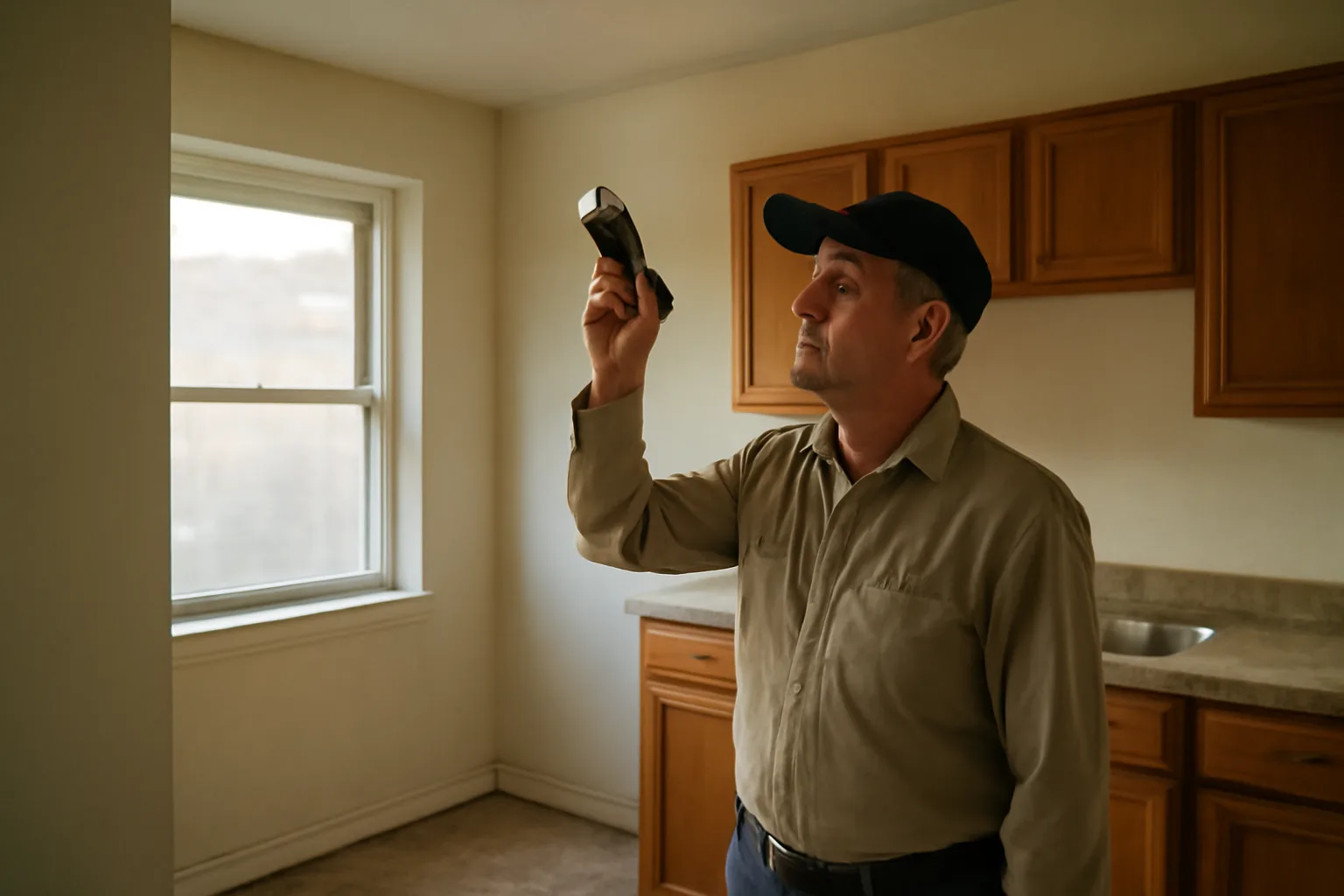
During a routine or move-in/move-out inspection, a landlord (or their agent) can generally document the condition of the unit: walls, floors, ceilings, appliances, fixtures, windows, doors, plumbing, electrical outlets, smoke and carbon monoxide detectors, and any damage beyond normal wear and tear. This is what most security-deposit disputes hinge on, so photos and a written checklist matter more than memory. A landlord conducting a routine inspection during the tenancy (to check for maintenance issues or lease violations) is generally limited to what's reasonably necessary to assess the property's condition and confirm lease compliance, such as checking for unauthorized pets, unauthorized occupants, or safety hazards. Landlords don't have a general right to search personal belongings, open drawers, or go through a tenant's possessions during a routine inspection; that's outside the scope of a habitability or maintenance check. A government code inspector, when a city rental license program requires one, typically looks for code violations: working smoke and CO detectors, adequate heat, no exposed wiring, no mold or structural hazards, functioning plumbing, and compliance with occupancy limits. The specific checklist depends entirely on the city's rental housing code, so confirm with your city rental licensing office what their inspection actually covers before the appointment. In every case, entry requires proper notice (see the next section) except in a genuine emergency.
how much notice does a landlord have to give before entering?
Most states require at least 24 hours' written or verbal notice before a landlord enters an occupied rental unit for a non-emergency reason, but the exact number and the acceptable notice method vary by state, so check your specific state statute. California requires "reasonable notice," which state law defines as presumptively 24 hours, delivered in writing except in specific circumstances (Civil Code § 1954) . Some states require 48 hours. A handful don't set a specific numeric standard in the landlord-tenant statute at all and instead rely on a "reasonable notice" standard interpreted by case law, which is murkier and worth checking with a local tenant or landlord association if you're unsure. Emergencies are the standard exception across almost every state: a burst pipe, fire, gas leak, or other situation threatening health or property lets a landlord enter without advance notice. Routine maintenance, showing the unit to prospective tenants or buyers, and scheduled inspections generally do require the standard notice period, delivered by whatever method your state statute or your lease specifies (many require written notice; some accept text or email if the lease authorizes it). Don't rely on a generic national number. If your lease says something different from your state's default notice period, whichever is more protective of the tenant typically controls, and getting this wrong is a common source of harassment or wrongful-entry complaints.
why do landlords require renters insurance?
Landlords require renters insurance mainly to shift liability and property-loss risk away from themselves and onto the tenant's own coverage. A landlord's insurance policy covers the building and the landlord's own liability; it generally does not cover a tenant's personal belongings or a tenant's liability if the tenant (or their guest) causes an incident, like a kitchen fire or a dog bite. Renters insurance is typically inexpensive, commonly in the range of $15 to $30 per month depending on coverage amount and location, according to national insurance industry data summaries (exact pricing varies by carrier and state, so treat any single number as a rough benchmark, not a quote) . Requiring it as a lease condition is legal in most states and increasingly standard among landlords managing even a handful of units, because it reduces the odds that an uninsured tenant's loss becomes the landlord's uncompensated headache or a lawsuit target. It also protects the landlord indirectly: if a tenant's negligence causes damage (an unattended candle, a bathtub overflow into the unit below), the tenant's liability coverage can pay for it instead of the landlord eating the repair cost or fighting the tenant for reimbursement. Some landlords require proof of a specific coverage minimum, commonly $100,000 in liability coverage, though there's no universal legal standard for that number; it's an owner or property manager choice, often shaped by what their own umbrella or landlord policy expects.
what rights do tenants have without a signed lease?
A tenant without a signed lease still has real legal rights; the absence of a written lease doesn't strip away tenant protections. In most states, an oral or implied rental agreement (where a tenant pays rent and the landlord accepts it) creates a month-to-month tenancy governed by the same state landlord-tenant statute that would apply to a written lease. That means the tenant generally keeps the right to habitable housing, the right to proper notice before the landlord enters, the right to a legally required notice period before the landlord can end the tenancy or raise rent (commonly 30 days for month-to-month tenancies, though some states and cities require more), and the right to the return of any security deposit under the state's deposit rules. What a landlord loses without a written lease is clarity and proof. Terms like who pays for utilities, whether pets are allowed, and what happens at renewal become harder to enforce or dispute without something in writing. If you're renting without a lease right now, converting to a written month-to-month or fixed-term agreement protects both sides and is worth doing even mid-tenancy. A tenant paying rent without any agreement at all, written or verbal (for example, someone who moved in with a prior tenant and stayed after that tenant left) generally still gains tenant status and protection under most state laws once the landlord accepts rent from them, though the specifics depend on your state's definition of "tenancy at sufferance" or "holdover tenant."
what a landlord cannot do in ohio
Ohio's landlord-tenant law, codified mainly at Ohio Revised Code Chapter 5321, sets specific limits on landlord conduct. A landlord in Ohio cannot shut off utilities, change the locks, or remove a tenant's belongings to force them out, a practice generally called "self-help eviction." Ohio law requires landlords to use the formal eviction process (forcible entry and detainer action) through the courts, not lockouts or utility shutoffs, to remove a tenant . Under Ohio Revised Code § 5321.04, a landlord must maintain the premises in a fit and habitable condition, keep common areas safe, maintain electrical, plumbing, and heating systems in good working order, and comply with building, housing, and health codes that materially affect health and safety . A landlord who ignores these duties can face a tenant lawsuit, rent escrow action, or the tenant's right to make repairs and deduct the cost from rent under specific procedures in the statute. Ohio Revised Code § 5321.05 sets tenant obligations too, and § 5321.04 requires landlords give reasonable notice, generally 24 hours, before entering for non-emergency purposes . A landlord also can't retaliate against a tenant for exercising legal rights (like reporting a code violation), and can't discriminate in violation of the Fair Housing Act, which applies regardless of state. If you're renting in Ohio and got a violation or code notice, the compliance obligations run through both this state chapter and whatever local rental licensing ordinance your city has (Cleveland, Columbus, and Cincinnati each run their own separate rental registration or point-of-sale inspection programs, so check your specific city).
how to be a landlord without getting blindsided by local rules
Being a landlord day to day means staying ahead of three separate compliance layers: federal fair housing law, your state's landlord-tenant statute, and your city or county's rental licensing, registration, or business license requirements. Missing any one of the three is what generates fines, stalled evictions, or lawsuits. A practical routine: check your city's rental licensing page annually (ordinances change more often than people expect, and renewal cycles are easy to forget). Keep a simple compliance file per property with your license or registration certificate, insurance declarations page, lead paint disclosure if applicable, and inspection records. Renew before the deadline, not after a fine notice arrives. If you manage the property yourself rather than through a property management company, you're personally the one responsible for knowing local rules, which is the part most new landlords underestimate. A management company typically tracks licensing deadlines as part of its service; a self-managing owner has to build that habit alone. If you're dealing with a specific city's rental license application or inspection prep right now and don't want to piece the checklist together from scratch, the $79 City Rental License & Inspection Prep Packet is built for exactly that: organizing what most city programs ask for so you walk into the inspection or application with the right documents instead of guessing. For broader background on tenant-facing obligations that intersect with licensing compliance, see our guides on tenants rights, tenant rights, and renters rights.
Frequently asked questions
Do I need a business license to rent out a single rental property?
It depends entirely on your city and, if applicable, your county. Some cities require a rental license or registration for any rented unit regardless of count; others fold rentals into a general business license; some require nothing until you hit a unit threshold. Confirm with your specific city rental licensing office, since there's no universal national rule.
How do I become a landlord for the first time?
Confirm the unit is legally rentable (certificate of occupancy if needed), check city/county rental licensing or registration requirements, get landlord insurance, learn your state's landlord-tenant law basics (deposits, notice periods, habitability), and use a written lease with any state-required disclosures, like federal lead-paint disclosure for pre-1978 units.
Who is responsible for a rental property walk-through inspection in California?
For move-out deposit inspections, the landlord (or their agent) is responsible, under California Civil Code § 1950.5(f). For a municipal rental licensing or code enforcement inspection, like Los Angeles's Systematic Code Enforcement Program, a city inspector runs it, and the landlord grants access and pays the associated fee.
What is landlording?
Landlording is the ongoing work of owning and managing rental property: collecting rent, maintaining the unit, handling tenant turnover, complying with landlord-tenant law, and keeping licensing, insurance, and safety requirements current. It's not a licensed profession itself, but it carries real legal obligations once you accept rent from a tenant.
What is a landlord?
A landlord is the owner of real property who rents it to another party (the tenant) under a lease or rental agreement in exchange for rent. Landlords take on legal duties including habitability, proper entry notice, security deposit handling, and fair housing compliance under laws like the Fair Housing Act, 42 U.S.C. § 3601 et seq.
What rights do tenants have without a signed lease?
A tenant paying rent without a written lease generally still gets a month-to-month tenancy under state law, keeping rights to habitability, proper entry notice, a legal notice period before eviction or rent increase, and deposit protections. What's lost is clarity on terms like pets or utilities, which a written lease would otherwise spell out.
Why do landlords require renters insurance?
Landlords require renters insurance because their own policy doesn't cover a tenant's belongings or the tenant's liability for incidents they cause. Renters insurance, often around $15 to $30 a month, shifts that risk to the tenant's carrier instead of leaving the landlord to absorb losses or chase reimbursement after a fire, flood, or injury.
How much notice does a landlord have to give before entering a rental unit?
Most states require at least 24 hours' notice for non-emergency entry; California sets 24 hours as the presumed reasonable standard under Civil Code § 1954. Some states require 48 hours, and a few rely on a general "reasonable notice" standard without a fixed number. Emergencies are generally exempt everywhere.
What can a landlord look at during an inspection?
A landlord can document unit condition: appliances, fixtures, plumbing, electrical, smoke/CO detectors, and damage beyond normal wear. Routine inspections are generally limited to lease compliance and safety, not personal belongings. A government code inspector, where a city rental program requires one, checks for code violations like faulty wiring or missing smoke detectors.
What a landlord cannot do in Ohio?
Under Ohio Revised Code Chapter 5321, a landlord cannot shut off utilities, change locks, or remove belongings to force a tenant out (self-help eviction is illegal); must instead file a formal court eviction. Landlords also can't ignore habitability duties under § 5321.04 or retaliate against a tenant for exercising legal rights.
Do I need both a rental license and a business license?
Sometimes, yes. Many cities require a housing-department rental license or registration and a separate finance-department business license or business tax certificate, each with its own fee and renewal date. Check both with your city; don't assume one covers the other.
What happens if I never register my rental with the city?
You risk escalating fines, often accruing monthly per unit, and in many cities you can lose the right to file an eviction or collect rent through the courts until you register and pay any back fees. If you got a violation notice, applying immediately is almost always cheaper than disputing it.
Does renting out one room in my own home require a rental license?
It depends on your city's ordinance language. Some cities exempt owner-occupied homes with a room rented to a single boarder; others apply the same rental license rule regardless of owner occupancy. Confirm with your city rental licensing office, since this exemption isn't universal.
Sources
- 42 U.S.C. § 4852d: Federal law requires lead paint disclosure for pre-1978 housing
- Fair Housing Act, 42 U.S.C. § 3601 et seq.: Federal law bars housing discrimination based on race, color, religion, sex, national origin, familial status, and disability
- California Civil Code § 1950.5: California requires landlords to offer a pre-move-out inspection with an itemized deficiency list under subdivision (f)
- California Civil Code § 1954: California sets 24 hours as presumptively reasonable notice before landlord entry
- Insurance Information Institute, Renters Insurance facts and statistics: Renters insurance typically costs roughly $15-$30 per month depending on coverage and location
- Ohio Revised Code § 5321.03: Ohio law bars self-help eviction methods like utility shutoff or lockout, requiring formal court eviction
- Ohio Revised Code § 5321.04: Ohio landlords must maintain habitable premises, keep systems in working order, and give reasonable notice before entry