Last updated 2026-07-26
TL;DR
Becoming a landlord means registering your rental where required, passing any city inspection, screening tenants legally, and following state notice and habitability rules. There's no single national license. Requirements come from your city or county, plus your state's landlord-tenant statute. Start by checking your city's rental registration office before you list a unit.
What is landlording, exactly?
Landlording is the ongoing work of owning and managing a rental property: finding tenants, collecting rent, handling repairs, following local housing codes, and dealing with the paperwork that comes with all of it. It's more than owning a building and cashing checks. It's a part-time job with legal deadlines attached. The term covers everything from a single-family home rented to one tenant, to a person who owns a duplex and lives in one unit, to someone with a small portfolio of 5-10 properties. The scale differs, but the core obligations don't: you have to maintain the property, respect tenant rights, and follow whatever registration or licensing rules your city has adopted. Many U.S. cities and counties now require some form of rental registration or licensing before you can legally rent out a unit. The U.S. Department of Housing and Urban Development has documented that local rental registration and inspection programs are common in mid-size and large cities specifically as a code enforcement tool [1]. If your city has one, "landlording" starts before you ever get a tenant: it starts with a form and a fee.
What is a landlord, legally speaking?
A landlord is the person or entity that owns a rental property and grants a tenant the right to occupy it in exchange for rent. Legally, this relationship is defined by a lease or rental agreement, and by state landlord-tenant law that applies whether or not a written lease exists. Being the landlord doesn't require an LLC, though many owners use one for liability protection. It doesn't require a real estate license either; renting your own property is different from acting as an agent for someone else's. What it does require, in a growing number of cities, is a rental license or registration number tied to the specific address. Some states also define "landlord" for statutory purposes to include property managers acting on the owner's behalf. Ohio's landlord-tenant law, for example, applies its duties to the "landlord," defined broadly enough to include an owner's authorized agent [2]. So if you hire a property manager, the legal obligations don't disappear, they just get delegated.
How do you become a landlord, step by step?
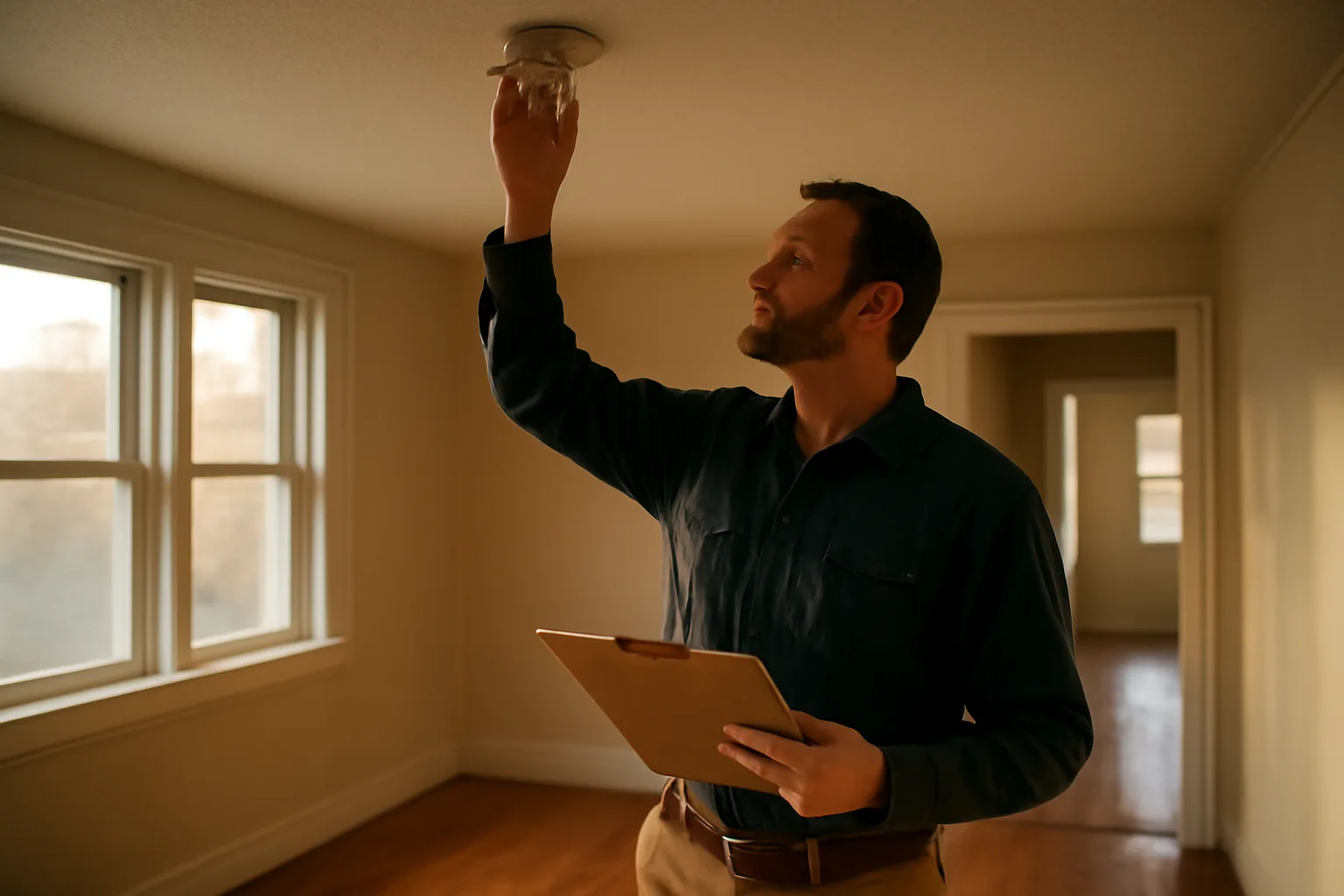
There's no single license that makes you a landlord nationally. It's a combination of ownership, local compliance, and basic business setup. Here's the realistic order most new landlords follow. 1. Confirm you can legally rent the property. Check zoning, HOA rules, and any deed restrictions first. A property zoned single-family-owner-occupied in some jurisdictions can't just become a rental overnight. 2. Register or license the rental with your city, if required. Cities like Minneapolis, Los Angeles, and many others require a rental license or registration before you can advertise or lease a unit. Confirm with your city rental licensing office whether this applies to you, what the fee is, and how often you renew. 3. Get the property inspection-ready. Many licensing programs require a pass on a habitability or safety inspection before the license issues, or on a rolling cycle after. 4. Set up landlord insurance, more than homeowners insurance. A standard homeowner's policy typically excludes coverage once you rent the property out. 5. Write or buy a legally compliant lease for your state, covering rent amount, deposit terms, and maintenance responsibilities. 6. Screen tenants under the Fair Housing Act and any state add-on protections. The Fair Housing Act prohibits discrimination based on race, color, national origin, religion, sex, familial status, and disability [3]. 7. Collect the security deposit within your state's legal cap, if one exists, and store it as required (some states mandate a separate escrow account). If your city requires licensing, steps 2 and 3 are often the ones new landlords underestimate. A packet of the paperwork a city inspector expects to see (smoke detector placement, egress window compliance, water heater strapping, etc.) makes step 3 much less stressful; that's exactly the gap our $79 City Rental License & Inspection Prep Packet is built to close, but you can absolutely assemble the same checklist yourself from your city's code.
Who is responsible for the rental property walk-through inspection in California?
In California, responsibility for a rental walk-through inspection depends on which inspection you mean. For the move-in/move-out condition walk-through tied to the security deposit, California Civil Code Section 1950.5 gives the tenant the right to request an initial inspection before move-out, and the landlord must give at least 48 hours' written notice before conducting it [4]. The landlord (or their agent) performs the inspection; the tenant has the right to be present. For city-mandated rental housing inspections (separate from the deposit walk-through), the city's code enforcement or housing department is the responsible party. Los Angeles, for instance, runs a Systematic Code Enforcement Program (SCEP) inspection cycle for most rental units, conducted by the Los Angeles Housing Department under its rent stabilization ordinance authority [5]. The landlord is responsible for scheduling access and fixing anything cited, but the inspection itself is performed by a city inspector, not the landlord. So in short: the landlord owns the responsibility to make the inspection happen and to fix what's found, but a government inspector (for code compliance) or the landlord/agent (for deposit walk-throughs) is the one physically doing the inspection. Always confirm with your city rental licensing office which type of inspection applies to your property and who schedules it.
What can a landlord look at during an inspection?
During a routine or move-out inspection, a landlord can generally look at the general condition and cleanliness of the unit, whether fixtures and appliances are working, signs of damage beyond normal wear and tear, and safety items like smoke detectors and carbon monoxide detectors. What a landlord can't do is search through a tenant's personal belongings, drawers, or closets under the guise of a maintenance check. Most states require advance written notice before any non-emergency entry, commonly 24 hours, though the exact number varies by state. Ohio's landlord entry statute requires "reasonable notice," which Ohio courts have generally interpreted as at least 24 hours except in emergencies [2]. During a city code inspection, the inspector is looking at a defined checklist: things like functioning smoke and CO detectors, secure handrails, no exposed wiring, working plumbing, adequate heat, and pest-free conditions. The inspector isn't there to judge your tenant's housekeeping or personal items; they're checking the building against the local housing code.
What rights do tenants have without a lease?
Tenants without a written lease still have real legal rights. Once someone pays rent and occupies a unit with the owner's consent, most states treat that as a month-to-month tenancy governed by the state's landlord-tenant statute, even with nothing on paper. That means the tenant still has the right to a habitable unit, protection from illegal lockouts or utility shutoffs, and a legally required notice period before the landlord can end the tenancy. The specific number of days varies by state and often by how long the tenant has lived there. HUD's tenant rights overview notes that state law, not the lease document, is what ultimately governs baseline tenant protections when no agreement exists or the agreement is silent [6]. Without a lease, a landlord also can't just change the rules mid-tenancy (like adding a pet fee) without proper written notice, and can't evict without going through the formal court eviction process required in that state. "No lease" doesn't mean "no rights," and it definitely doesn't mean "no rules for the landlord" either. Curious readers comparing tenant protections across cities might also want our tenants rights and renters rights overviews.
How much notice does a landlord have to give?
| Entry for repairs/inspection (non-emergency) | Often 24 hours | Some states specify 24 hours exactly; others say "reasonable notice" | |
|---|---|---|---|
| Ending a month-to-month tenancy | Commonly 30 days | Can be 60 or 90 days in some states/cities depending on tenancy length or local rent control | |
| Rent increase on month-to-month tenancy | Often 30-60 days | Longer notice sometimes required for larger increases | California's deposit-related pre-move-out inspection notice is a specific example: 48 hours in writing, per Civil Code Section 1950.5(f) [4]. That's a distinct requirement from general entry notice. Because this varies so much by state and even by city (rent-controlled jurisdictions often add their own notice rules on top of state law), the honest answer is: confirm the exact number of days in your specific state's landlord-tenant statute before sending any notice. Don't assume the number from one state applies in another. |
The required notice period depends on what the landlord is doing, and it's set by state law, not by the landlord's preference. There are three common notice situations landlords deal with regularly. | Situation | Typical notice range | Notes |
Why do landlords require renters insurance?
Landlords require renters insurance mainly to shift liability for a tenant's personal belongings and certain accidents away from the landlord's own policy. A landlord's property insurance covers the building structure; it typically doesn't cover a tenant's furniture, electronics, or clothing if there's a fire, burst pipe, or theft. Requiring renters insurance also often includes liability coverage, which protects the tenant (and indirectly the landlord) if the tenant accidentally causes damage, like an overflowing bathtub that floods the unit below. Without that coverage, the landlord's insurer may still pay for the damage but then pursue the tenant for reimbursement, a mess nobody wants to be in the middle of. There's no federal law requiring renters insurance, but many states allow landlords to require it as a lease condition, and some larger apartment operators build it directly into lease terms. It's cheap for what it covers: renters insurance policies commonly run in the range of roughly $15 to $30 per month depending on coverage limits and location, according to general industry cost surveys, though actual pricing depends heavily on the insurer and the state.
What can't a landlord do in Ohio?
Ohio's landlord-tenant law, codified in Ohio Revised Code Chapter 5321, spells out specific things a landlord can't do. A landlord in Ohio can't shut off utilities, change the locks, or remove a tenant's belongings to force them out; this is generally referred to as a "self-help eviction," and Ohio law requires landlords to go through the formal eviction process in court instead [2]. Ohio Revised Code 5321.04 requires landlords to keep the premises fit and habitable, comply with building and housing codes, keep common areas safe, and maintain electrical, plumbing, heating, and appliance systems supplied by the landlord [2]. A landlord who ignores these duties can face a tenant's claim for damages or, in some cases, rent escrow through the local municipal court. Ohio law also limits when and how a landlord can enter an occupied unit. The statute requires the landlord to give reasonable notice and enter only at reasonable times, generally interpreted as at least 24 hours' notice absent an emergency [2]. A landlord also can't retaliate against a tenant for reporting a code violation or joining a tenant organization; Ohio Revised Code 5321.02 specifically prohibits retaliatory conduct like eviction or rent increases in response to a tenant exercising legal rights [2].
Do you need a real estate or business license to be a landlord?
In most places, no, you don't need a real estate license just to rent out your own property. Real estate licenses are for people representing other people's property transactions for a fee, not owners renting units they hold themselves. What you might need instead is a rental license, rental registration, or business license issued by your city or county, which is a completely different thing from a real estate license. These are usually administered by a city's housing, code enforcement, or building department, and they exist to let the city track who owns what rental units and confirm the units meet basic safety standards. Some cities also require a separate business license or occupational tax certificate simply because renting counts as operating a business within city limits, even for a single unit. This is on top of, not instead of, any rental-specific registration. Because city rules vary this much block to block, the only reliable way to know your exact requirement is to confirm with your city rental licensing office directly, ideally before you list the unit for rent.
What happens if you skip rental registration or licensing?
Skipping required rental registration or licensing typically leads to fines, and in some cities it can block you from legally collecting rent or evicting a nonpaying tenant until you come into compliance. Some cities also add daily or monthly penalties that accumulate the longer a rental stays unregistered. HUD's research on local rental licensing programs notes that these ordinances are generally created as code enforcement tools, meaning cities use the license requirement to get owners to fix habitability issues, more than to collect a fee [1]. That's why an unlicensed rental with a code complaint often gets a much bigger problem than just the license fee: it can trigger a full inspection and repair order at the same time. If you've gotten a notice, a fine letter, or a violation letter for an unregistered or unlicensed rental, the fastest path back to compliant is usually: read the notice for the exact code section cited, confirm the current fee and any late penalty with the city office listed on the notice, and get the property inspection-ready before you request the inspection. Landlords managing this on a tight timeline sometimes use a structured checklist like our City Rental License & Inspection Prep Packet to make sure nothing obvious (missing detector, unpermitted work, blocked egress) trips the inspection twice.
Frequently asked questions
How do you become a landlord if you already own a property?
Check your city's rental registration or licensing requirement first, since many mid-size and large U.S. cities require it before you can legally rent. Then confirm zoning allows rental use, get landlord insurance, prepare a compliant lease, and screen tenants under the Fair Housing Act's protected classes.
Who is responsible for a rental walk-through inspection in California?
The landlord (or their agent) conducts the pre-move-out inspection tied to the security deposit under California Civil Code 1950.5, giving the tenant 48 hours' written notice. City-mandated code compliance inspections, like Los Angeles's SCEP program, are conducted by city inspectors instead.
What is landlording?
Landlording is the ongoing management of a rental property, including tenant screening, rent collection, maintenance, code compliance, and following local registration or licensing rules. It's an active responsibility, not passive ownership, and it usually involves both state landlord-tenant law and city-level rules.
What is the legal definition of a landlord?
A landlord is the owner of a rental property (or their authorized agent) who grants a tenant occupancy rights in exchange for rent, governed by state landlord-tenant law and any lease agreement. No real estate license is required, though city rental registration or licensing often is.
What rights do tenants have without a signed lease?
Tenants without a lease still get habitability protections, protection from illegal lockouts, and a state-required notice period before eviction, since paying rent with the owner's consent generally creates a month-to-month tenancy under state law. The exact notice period varies by state.
How much notice does a landlord have to give before entering?
Most states require 24 hours' notice for non-emergency entry, though some states use language like 'reasonable notice' instead of a fixed number. California requires 48 hours specifically for the pre-move-out deposit inspection under Civil Code 1950.5.
What can a landlord look at during an inspection?
A landlord can check general condition, working fixtures and appliances, smoke and CO detectors, and damage beyond normal wear. A landlord cannot search personal belongings, drawers, or closets; that's outside the scope of a maintenance or move-out inspection.
Why do landlords require renters insurance?
Landlords require renters insurance because their own property policy doesn't cover a tenant's personal belongings, and renters insurance liability coverage protects both parties if the tenant accidentally causes damage, like a fire or water leak. It's not federally mandated, but many states allow landlords to require it as a lease term.
What can't a landlord do in Ohio?
Ohio landlords can't shut off utilities, change locks, or remove belongings to force a tenant out (illegal self-help eviction), and they can't retaliate against a tenant for reporting code violations, per Ohio Revised Code 5321.02 and related sections. They must also maintain habitability and give reasonable entry notice.
Do you need a license to be a landlord?
You generally don't need a real estate license to rent your own property, but many cities require a separate rental registration or rental license, and some require a business license too. Requirements vary widely by city, so confirm with your city rental licensing office directly.
What happens if a rental unit isn't registered or licensed?
Consequences vary by city but commonly include fines, accumulating penalties, and in some cases a block on collecting rent or filing eviction until the property is brought into compliance. Some cities treat unlicensed rentals as a trigger for a full code inspection.
Can a landlord raise rent without notice?
No. Most states require written notice before a rent increase on a month-to-month tenancy, commonly 30 to 60 days depending on the state and sometimes the size of the increase. Fixed-term leases generally can't have rent raised mid-term unless the lease specifically allows it.
Sources
- U.S. Department of Housing and Urban Development, Office of Policy Development and Research: Local rental registration and inspection programs are used by cities as a code enforcement tool
- Ohio Revised Code Chapter 5321 (Landlord and Tenant Law): Ohio landlord duties, entry notice rules, retaliation prohibition, and prohibition on self-help eviction
- U.S. Department of Housing and Urban Development, Fair Housing Act overview: Fair Housing Act protected classes for tenant screening
- California Legislative Information, Civil Code Section 1950.5: California security deposit pre-move-out inspection and 48-hour written notice requirement
- Los Angeles Municipal Code, Rent Stabilization Ordinance, Chapter XV, Article 1: Los Angeles conducts rental housing code inspections through its Systematic Code Enforcement Program under the rent stabilization ordinance
- U.S. Department of Housing and Urban Development, Tenant Rights information: Baseline tenant protections come from state law even without a written lease agreement