Last updated 2026-07-26
TL;DR
Becoming a landlord means more than buying a property and finding a tenant. You'll likely need a rental license or registration in many cities, must give proper notice before entering (often 24-48 hours, set by state law), and tenants without a written lease still have real rights under state landlord-tenant statutes.
what is a landlord, exactly, and what is landlording
A landlord is anyone who owns residential property and rents it to another person (a tenant) in exchange for money, usually under a lease or rental agreement. That's the legal core of it. You don't need a company name or an LLC to be a landlord; if you own a property and someone else pays you to live there, you're a landlord under the law, full stop. "Landlording" is the informal term for the actual job: everything you do to manage that relationship and that property over time. It covers finding and screening tenants, collecting rent, handling repairs, following state and local notice rules, keeping the property compliant with local codes, and dealing with move-outs and occasional disputes. Some landlords self-manage one duplex. Others own ten single-family homes and still do it all themselves on weekends. The legal definition doesn't care about scale; the day-to-day workload obviously does. If you're renting out a unit in a city with mandatory rental licensing or registration, you're a landlord in the eyes of that city's housing department the moment you sign a lease, whether or not you've filed anything with them yet. That's usually the first place new landlords get caught off guard: they think of themselves as "just renting out my old condo," and the city thinks of them as an unlicensed rental operator. If you're just starting out, it helps to read a broader overview of landlord responsibilities before you sign your first lease, since the terminology and obligations vary more by city than most first-time landlords expect.
how to become a landlord: the actual steps
There's no single national process, since landlord-tenant law and rental licensing rules are set state by state and often city by city. But the practical steps are pretty consistent across the country. First, check whether your city or county requires a rental license, registration, or permit before you can legally rent out a unit. Many cities with older housing stock or high renter populations run mandatory rental licensing programs, meaning you register the property, pay a fee, and often pass a habitability inspection before you're allowed to collect rent. Skipping this step is one of the most common (and costly) mistakes new landlords make, since fines for renting without a required license can run into hundreds of dollars per violation in some cities, and back-registration plus penalties can add up fast. Confirm the specific requirement, fee, and deadline with your city rental licensing office, because these details change and vary enormously by jurisdiction. Second, learn your state's landlord-tenant statute. Every state has one; it covers security deposit limits and return timelines, notice periods for entry and lease termination, habitability standards, and eviction procedure. You are bound by this law whether you've read it or not, so read it. Third, set up the basics: a lease or rental agreement in writing (even where not legally required, a written lease protects you and the tenant), a system for collecting rent and documenting condition at move-in (photos, a signed checklist), and a plan for handling maintenance requests and repairs. Fourth, get proper insurance. A standard homeowner's policy usually does not cover a property you rent out to someone else; you generally need a landlord (dwelling) policy instead. Fifth, screen tenants consistently and legally, following the Fair Housing Act's protections against discrimination based on race, color, national origin, religion, sex, familial status, and disability [1]. If you're outlining this for the first time, our landlord landlords resource walks through the sequencing of registration versus lease-signing versus insurance, which trips up a lot of first-timers who do things out of order.
how to be a landlord day to day (more than on paper)
Getting licensed and signing a lease is the easy part. Being a landlord day to day means responding to maintenance calls promptly, following your state's notice rules before every entry, tracking lease renewal and rent increase dates, and keeping records of everything: repair requests, communications, deposit deductions, inspection reports. A habit that saves landlords real money and stress: keep a simple folder (physical or digital) per property with the lease, move-in/move-out condition reports, all rent receipts, and copies of any notices sent. When a tenant disputes a deposit deduction or a city inspector shows up, you want to be able to hand over documentation in five minutes, not reconstruct it from memory. Most of the actual legal risk in landlording comes from two places: not following notice and entry rules, and not maintaining the unit to the habitability standard your state or city requires. Both are avoidable with a checklist, not a law degree.
who is responsible for a rental property walk-through inspection in california
In California, the landlord is responsible for offering an initial move-out inspection before a tenant vacates, and the tenant decides whether to attend. California Civil Code Section 1950.5(f) requires that if the landlord intends to withhold any part of the security deposit, they must give the tenant reasonable opportunity to remedy any deficiency and, on request, an initial inspection conducted no earlier than two weeks before the end of the tenancy, with a written itemized statement of proposed deductions given to the tenant at that inspection [2]. The landlord (or their agent) actually walks the property and documents its condition, but the tenant has the right to be present and to fix flagged issues (like scuffed walls or a dirty oven) before move-out to avoid deposit deductions. After the tenant actually moves out, the landlord must again inspect and, within 21 calendar days, return the deposit along with an itemized statement of any deductions, per the same statute [2]. So to be precise: the landlord holds the legal responsibility for conducting and documenting the inspection and returning the deposit correctly, but California law builds in the tenant's right to participate. Landlords who skip the pre-move-out inspection notice requirement, or who fail to itemize deductions within the 21-day window, risk having to return the full deposit regardless of actual damage, and courts have upheld tenant claims in these situations.
what can a landlord look at during an inspection
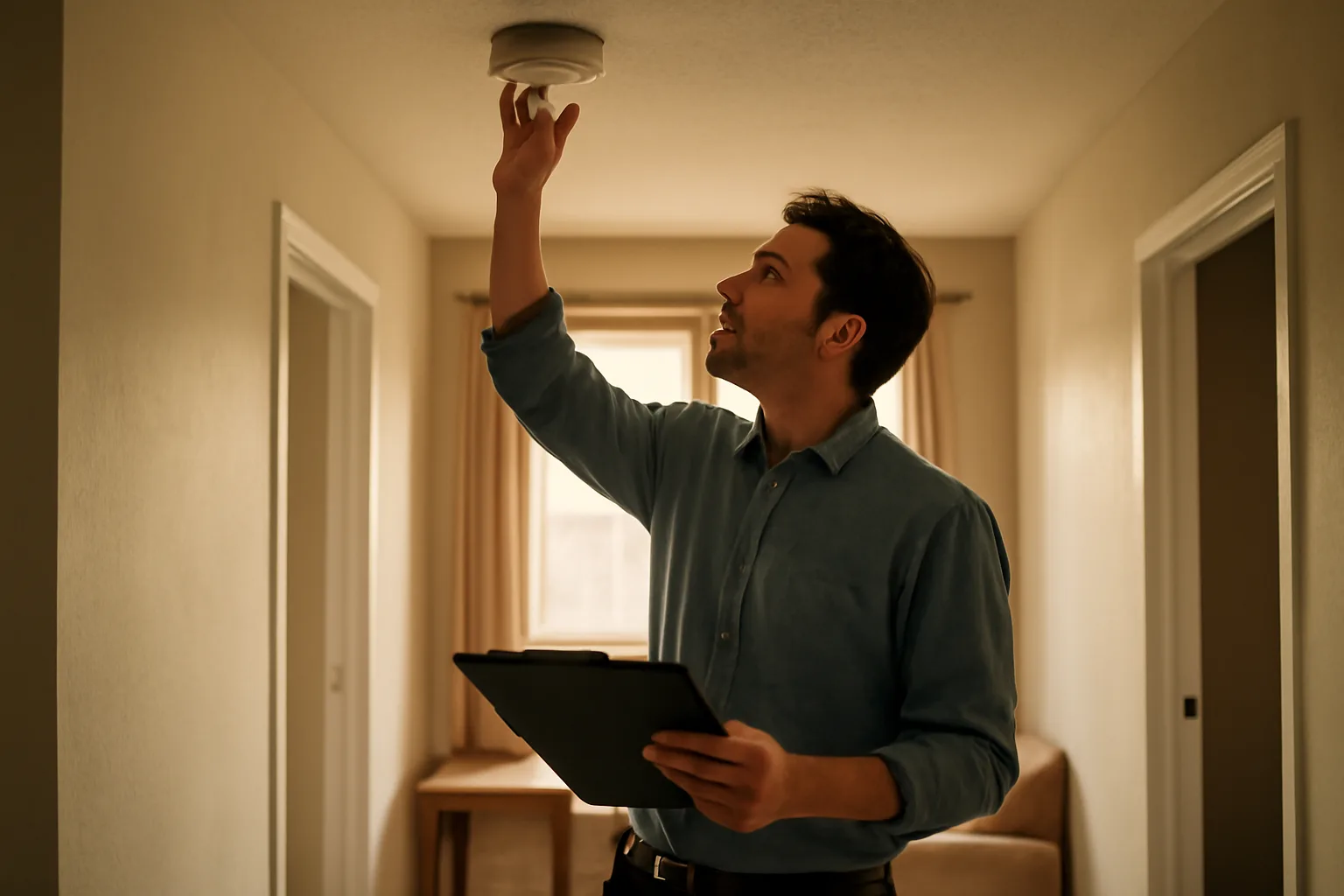
During a routine or move-out inspection, a landlord (or their inspector) can generally check the general condition and cleanliness of the unit, working condition of appliances, plumbing, electrical, heating and cooling systems, smoke and carbon monoxide detectors, signs of pest infestation, and damage beyond normal wear and tear. This applies to both routine maintenance walk-throughs and the pre-move-out inspections required in states like California. What a landlord generally cannot do: search personal belongings, closets, or drawers under the guise of a habitability inspection, use the inspection as a pretext to harass a tenant or retaliate for a complaint, or show up without the notice period required by state law (more on that below). Fair housing law also limits how inspection findings can be used; a landlord can't selectively inspect or penalize tenants based on a protected characteristic [1]. If your city has a mandatory rental inspection program (common in cities that require rental licensing), city inspectors typically check for code compliance items: working smoke/CO detectors, safe electrical panels, no exposed wiring, functioning heat, no active leaks, adequate egress from bedrooms, and pest-free conditions. These inspections are usually scheduled in advance and are separate from a landlord's own routine or move-out walk-through. Confirm your specific city's inspection checklist with your local rental licensing office, since items and pass/fail standards vary block by block, let alone city by city.
how much notice does a landlord have to give before entering
| California | 24 hours (presumed reasonable) | Cal. Civ. Code §1954 [3] | |
|---|---|---|---|
| Check your state | Confirm with your state's landlord-tenant statute or attorney general's consumer guide | Varies | If you manage in a mandatory-licensing city, note that city rental inspectors typically must also give notice before entry, separate from the notice rules that apply to you as the landlord. |
Notice periods before a landlord can enter an occupied rental unit are set by state law and typically range from 24 to 48 hours for non-emergency entry, though the exact number and the situations that require notice at all vary significantly by state. California requires "reasonable notice," which the statute (Civil Code Section 1954) defines as presumptively 24 hours, and the notice generally must state the date, approximate time, and purpose of entry [3]. Many other states use similar 24-hour standards for entries like repairs or showings, but always confirm your specific state's statute, since a growing number of states have written different numbers into law, and some allow no fixed number at all, just "reasonable" notice defined by custom and courts. No advance notice is typically required in genuine emergencies (fire, flooding, gas leak) where entering immediately protects life or property. Outside emergencies, entering without proper notice, or entering too frequently, can expose a landlord to claims of harassment or violation of the tenant's right to quiet enjoyment of the premises, a legal concept present in nearly every state's landlord-tenant law. | State example | Standard entry notice | Statute |
what rights do tenants have without a lease
Tenants without a written lease, sometimes called month-to-month tenants or tenants at will, still have real legal rights under their state's landlord-tenant statute. Not having a signed lease does not mean a tenant has no protections; oral agreements to pay rent in exchange for occupancy generally create a legally recognized tenancy in most states. Without a written lease, a tenant typically still has the right to habitable housing (working plumbing, heat, structural safety), the right to proper notice before the landlord enters, the right to proper notice before the landlord raises rent or ends the tenancy (usually the same notice period as a 30-day or 60-day written notice, depending on how long they've lived there and state law), and protection from illegal lockouts or utility shutoffs used to force them out (nearly every state prohibits "self-help" evictions of this kind). What a tenant without a lease usually does not get is the fixed-term protection a written lease can provide, meaning a landlord can typically end a month-to-month tenancy with proper notice even without cause, in states that don't restrict no-cause terminations. The specific notice period to end a no-lease tenancy varies by state and sometimes by how long the tenant has lived there. For a broader look at what protections exist regardless of paperwork, see tenants rights and renters rights, which break down habitability and notice protections by common tenant scenario.
why do landlords require renters insurance
Landlords require renters insurance mainly to shift liability and property-loss risk away from themselves and onto a policy the tenant controls. A landlord's own insurance (a dwelling or landlord policy) covers the building structure but generally does not cover a tenant's personal belongings or a tenant's liability if they, say, accidentally start a kitchen fire or leave a tub running and it floods the unit below. Requiring renters insurance (commonly with a minimum liability coverage amount, like $100,000, and proof of a named landlord as "interested party" or additional insured) protects the landlord in a few concrete ways: it covers the tenant's own belongings so the tenant isn't tempted to sue the landlord after a loss the landlord didn't cause, it covers tenant liability for accidental damage the tenant causes to the unit or building, and it can cover a tenant's liability if a guest is injured in the unit. There's no federal law requiring renters insurance, and state law on whether a landlord can mandate it varies. Where it's allowed, requiring it is now standard practice among landlords who've been through even one incident where an uninsured tenant caused damage they couldn't pay for. It's a cheap risk-reduction habit; renters insurance premiums are typically modest per year, far less than even one mid-size claim.
what a landlord cannot do in ohio
Ohio's landlord-tenant law is set out in Ohio Revised Code Chapter 5321, and it lays out specific things a landlord cannot do to a tenant. A landlord in Ohio cannot enter the rental unit without giving reasonable notice and choosing a reasonable time, except in emergencies, under ORC 5321.04(A)(8) [4]. A landlord in Ohio also cannot shut off utilities, change the locks, or remove a tenant's belongings to force them out without going through the formal eviction process in court; Ohio law (like nearly every state) prohibits these "self-help" eviction tactics regardless of how much rent is owed. Ohio landlords are also barred from retaliating against a tenant, meaning a landlord cannot raise rent, decrease services, or attempt to evict a tenant specifically because that tenant complained to a health or safety agency, joined a tenants' union, or asserted a legal right, under ORC 5321.02 [5]. Ohio landlords must also maintain the property to meet building, housing, health, and safety code standards, keep common areas safe, and keep all electrical, plumbing, heating, and other facilities in good working order, per the landlord obligations in ORC 5321.04 [4]. Failing to meet these standards, and then trying to evict a tenant for complaining about them, is one of the more common ways Ohio landlords end up on the losing end of a court case. If you're a landlord in Ohio dealing with a licensing notice or inspection deadline in a specific city, note that Ohio cities layer their own rental registration and inspection rules on top of state law, and requirements differ block by block; confirm the current fee and deadline with your city's rental licensing office directly.
how licensing, notice rules, and inspections fit together for new landlords
It helps to think of your legal obligations as three separate layers that stack on top of each other, since new landlords often confuse them. The first layer is state landlord-tenant law: deposit limits, notice periods, habitability, and eviction procedure. This applies everywhere in the state regardless of city. The second layer is city or county rental licensing or registration, which only exists in some jurisdictions. Where it exists, you typically must register the property (sometimes annually), pay a fee, and often pass a habitability inspection before you can legally rent, sometimes even before you can legally advertise the unit for rent. Fees, forms, and inspection checklists are set entirely by each city, so a landlord moving a property from an unregulated county into a licensing city needs to start that process from scratch. The third layer is your own lease terms and practices, layered on top of the first two, as long as they don't conflict with state or local law (a lease clause that tries to waive a tenant's statutory rights is generally unenforceable). Getting organized across all three layers before your first tenant moves in, rather than reacting to a violation notice later, is the difference between a smooth first year and a stressful one. If you're facing a licensing deadline or inspection notice right now and want a structured way to pull your documents and property condition together fast, the $79 one-time City Rental License & Inspection Prep Packet is built around exactly that first-time scramble: what to gather, what inspectors commonly flag, and how to document your property before the inspector does it for you.
common mistakes first-time landlords make with licensing and inspections
The single most common mistake: renting out a unit before checking whether the city requires a license or registration first. Cities that catch this after the fact (often through a tenant complaint or a utility hookup flag) can issue fines, sometimes retroactive to when the rental began, and some require the unit to sit vacant until it passes inspection. The second most common mistake: assuming the state notice period for entry also governs city inspector visits, or vice versa. These are usually two separate notice systems set by two different bodies of law; don't assume they match. The third: not documenting unit condition at move-in with dated photos and a signed checklist. This single habit resolves most deposit disputes before they start and gives you your strongest evidence if a tenant claims a defect was pre-existing. The fourth: treating renters insurance requirements as optional paperwork rather than a real risk transfer tool, then discovering after a flood or fire that the landlord's own policy doesn't cover the tenant's belongings or the tenant's liability.
Frequently asked questions
How do I become a landlord for the first time?
Check whether your city requires rental registration or licensing before you rent the unit out, learn your state's landlord-tenant statute (deposit limits, notice periods, habitability rules), get a landlord (dwelling) insurance policy, put your lease in writing, and screen tenants consistently under Fair Housing Act rules. Confirm any city-specific fee or inspection requirement directly with your local rental licensing office.
What is landlording, as opposed to just owning a rental property?
Landlording is the ongoing work of managing a rented property: collecting rent, handling repairs and notices, screening and communicating with tenants, staying compliant with city and state rules, and managing move-ins and move-outs. Owning a rental property is a one-time transaction; landlording is the recurring job that comes after.
Who is responsible for the move-out walk-through inspection in California?
The landlord is legally responsible for offering and conducting the pre-move-out inspection under California Civil Code Section 1950.5(f), which must happen no earlier than two weeks before the tenant leaves if the tenant requests it. The tenant has the right to attend and to fix flagged issues before actually moving out to avoid deposit deductions.
What rights does a tenant have if there's no written lease?
A tenant without a written lease still has rights to habitable housing, proper notice before entry, proper notice before rent increases or termination, and protection from illegal lockouts, under their state's landlord-tenant statute. An oral agreement to pay rent for occupancy generally still creates a legally recognized tenancy in most states.
Why do landlords require renters insurance if they already have their own policy?
A landlord's own dwelling policy typically covers only the building structure, not the tenant's belongings or the tenant's personal liability. Requiring renters insurance shifts the risk of tenant-caused damage, injury claims, and personal property loss onto a policy the tenant carries, protecting the landlord from lawsuits and uninsured losses.
How much notice does a landlord have to give before entering a rental unit?
It depends on the state. California presumes 24 hours is reasonable notice under Civil Code Section 1954. Many states use a similar 24 to 48 hour standard for non-emergency entry, but the exact number and required contents of the notice vary, so confirm your specific state's statute rather than assuming a national standard.
What can a landlord inspect during a routine or move-out inspection?
A landlord can generally check the overall condition and cleanliness of the unit, appliance function, plumbing and electrical systems, HVAC operation, smoke and carbon monoxide detectors, and signs of pest problems or damage beyond normal wear and tear. Landlords generally cannot search personal belongings or use inspections to harass or retaliate against a tenant.
What is a landlord not allowed to do in Ohio?
Under Ohio Revised Code Chapter 5321, a landlord cannot enter without reasonable notice except in emergencies (ORC 5321.04), cannot shut off utilities or change locks to force a tenant out instead of filing for eviction, and cannot retaliate against a tenant for reporting code violations or asserting legal rights (ORC 5321.02).
Do I need a rental license to rent out my property?
It depends entirely on your city and county; there's no national rental licensing requirement. Many cities, especially those with older rental housing stock, require registration, a fee, and sometimes a habitability inspection before you can legally rent a unit. Confirm the requirement, fee, and deadline directly with your city's rental licensing office.
Can a landlord evict a tenant who doesn't have a lease?
Yes, but the landlord still must follow the proper notice period and go through the formal court eviction process; a landlord cannot simply lock out a tenant or remove belongings because there's no written lease. Month-to-month tenants without a lease are still protected by state landlord-tenant statutes covering notice and eviction procedure.
What's the difference between a landlord and a property manager?
A landlord owns the rental property and holds the legal rights and obligations under the lease. A property manager is hired (often for a percentage of rent) to handle day-to-day landlording tasks like rent collection, maintenance coordination, and tenant communication on the landlord's behalf, but the landlord remains the legally responsible party.
What happens if I skip getting a required rental license?
Consequences vary by city but commonly include fines, back-registration fees, and in some cities an order to stop renting the unit until it's licensed and inspected. Some cities also make it harder to collect rent through the courts if the property wasn't properly licensed. Confirm your city's specific penalty structure with its rental licensing office.
Sources
- U.S. Department of Housing and Urban Development, Fair Housing Act overview: Fair Housing Act protected classes for tenant screening and inspections
- California Legislative Information, Civil Code Section 1950.5: California pre-move-out inspection rights and 21-day deposit return requirement
- California Legislative Information, Civil Code Section 1954: California 24-hour reasonable notice standard for landlord entry
- Ohio Laws and Rules, Ohio Revised Code 5321.04: Ohio landlord obligations including reasonable notice before entry and maintenance duties
- Ohio Laws and Rules, Ohio Revised Code 5321.02: Ohio's prohibition on landlord retaliation against tenants
- 42 U.S.C. 3604, Fair Housing Act discriminatory housing practices: Statutory text of Fair Housing Act protections against discrimination in rental housing