Last updated 2026-07-25
TL;DR
A landlord or city rental inspection typically checks smoke and CO alarms, secure exits, working plumbing and heat, safe electrical panels, no pest infestation, and general structural condition. City inspections follow local housing codes; landlord walk-throughs check lease compliance and property condition. Most take 20 to 60 minutes per unit.
What does a landlord inspection consist of?
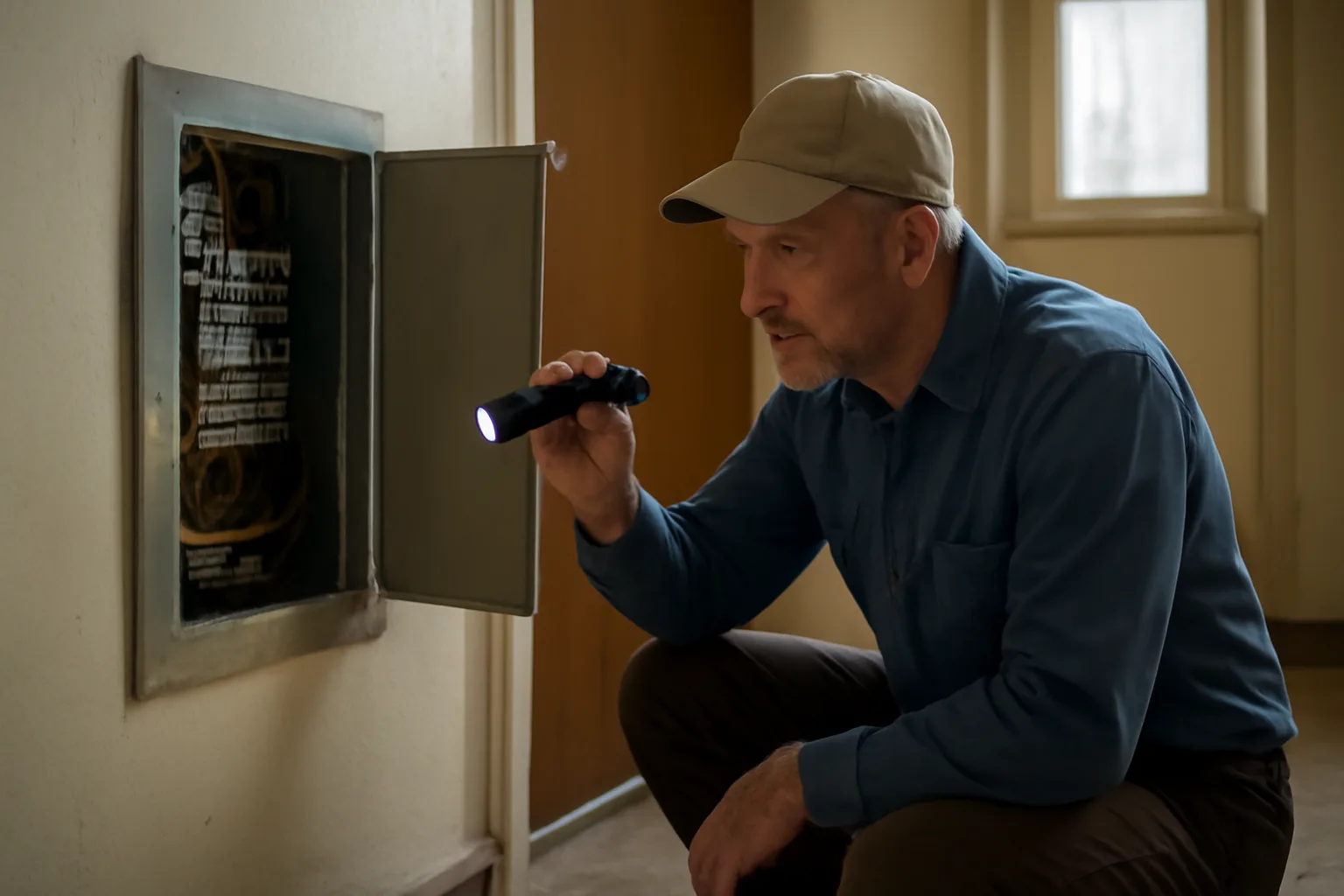
A landlord inspection, whether it's a city rental licensing inspection or a private walk-through your landlord does, generally covers the same core categories: life safety systems, structural condition, plumbing and electrical function, and pest or moisture issues. Inspectors are looking for things that could hurt someone or violate the local housing code, not whether your dishes are put away. At the city level, this usually means a checklist tied to a specific code, like the International Property Maintenance Code (IPMC) that many municipalities adopt with local amendments [1]. A typical rental inspection checklist includes: working smoke alarms in every bedroom and on every level, carbon monoxide alarms near sleeping areas (required in many states when there's fuel-burning equipment or an attached garage), two means of egress from bedrooms (a window that opens, in addition to the door), functioning locks on exterior doors, no exposed wiring, no active leaks, hot water at a minimum temperature, working heat source, handrails on stairs with more than a few steps, and no signs of rodent or insect infestation. A private landlord walk-through (not a city inspection) is different in purpose but overlaps in what gets looked at. Landlords doing a lease-renewal or mid-lease inspection are checking for lease violations (unauthorized pets, unauthorized occupants, smoking where it's banned), damage beyond normal wear and tear, and maintenance issues before they get expensive. Neither type of inspection should involve going through your closets, drawers, or personal belongings unless there's a specific safety reason (like checking a smoke alarm that's mounted inside a closet ceiling). If you're prepping for a city inspection as a landlord, our rental license and inspection prep packet walks through a checklist built around common city inspection categories, so you're not guessing what the inspector will flag.
What can a landlord look at during an inspection?
A landlord conducting a routine inspection can generally look at anything relevant to habitability, safety, and lease compliance, but they can't rifle through personal property or open locked containers without cause. What's fair game: smoke detectors, HVAC vents and filters, under-sink plumbing, window and door locks, signs of pests, visible mold, and the general condition of walls, floors, and fixtures. What's typically off-limits without a specific reason: opening drawers, closets full of personal items, or anything that isn't part of a building system. The line gets fuzzier with state law. Some states, like California, require inspections related to habitability be reasonable in scope and timing and generally prohibit landlords from using an inspection as pretext to harass a tenant [2]. City code inspectors have narrower authority than landlords in one sense: they're checking against a specific code, so they generally won't (and often legally can't) evaluate a tenant's housekeeping or personal items at all. Their job is the building, not the tenant's stuff. A reasonable rule of thumb for landlords: if it's a fixture, a system, or a code-required safety device, you can look at it. If it's inside a drawer, in a closed cabinet not containing plumbing, or clearly personal, leave it alone unless you have a specific, documented reason (like investigating a suspected unauthorized pet or a reported leak coming from a specific area).
How much notice does a landlord have to give before an inspection?
Most states require at least 24 hours of advance written notice before a landlord enters a rental unit for a non-emergency inspection, though the exact number and the acceptable notice format vary by state and sometimes by city ordinance. California's Civil Code Section 1954 requires "reasonable notice," which the statute defines as presumed to be 24 hours in writing, absent circumstances suggesting otherwise [2]. Many other states, including Illinois in some municipal codes and several others, mirror the 24-hour standard, but a few states don't set a specific number at all and only require "reasonable" notice, which leaves room for dispute. City rental inspections for licensing purposes often work differently. Some cities require the same notice as private landlord entry, others give tenants a scheduling window and let the tenant or landlord pick a time, and a few programs allow inspectors to inspect common areas or exteriors without entering units at all. Because this varies so much, confirm the exact notice requirement with your city rental licensing office and check your state's landlord-tenant statute for the entry notice rule that applies to private walk-throughs. Emergency entry (a burst pipe, a gas leak, a fire) doesn't require advance notice under virtually any state law. That's the one universal exception.
What rights do tenants have without a lease?
A tenant without a written lease still has real legal protections. Living in a rental unit and paying rent, even with no signed lease, generally creates what's called a month-to-month tenancy at will under state landlord-tenant law, and that tenant keeps the same basic habitability, privacy, and eviction-process rights as someone with a written lease. That means: the landlord still has to give proper notice before entry (see above), still has to maintain the unit in habitable condition (working plumbing, heat, structural safety), and still has to go through the formal eviction process in court to remove the tenant, rather than just changing the locks or shutting off utilities. Self-help eviction (lockouts, utility shutoffs, removing a tenant's belongings without a court order) is illegal in every U.S. state. Without a written lease, the terms default to state law and to whatever was agreed upon orally, which makes some things harder to prove (rent amount, who pays for what) but doesn't erase basic tenant protections. Notice to end a month-to-month tenancy without a lease is usually the same as ending any month-to-month tenancy, commonly 30 days, though some states or cities require more depending on how long the tenant has lived there or local just-cause eviction rules. If you're a landlord operating without written leases, that's a liability problem separate from inspections. It's worth fixing going forward, even though we're not going to draft lease language here.
What can a landlord not do in Ohio?
Ohio landlords are barred from several specific things under Ohio Revised Code Chapter 5321, the state's Landlords and Tenants law. A landlord in Ohio cannot: enter the rental unit without reasonable notice (Ohio courts and the statute generally treat 24 hours as reasonable, though the statute itself says "reasonable" notice at a "reasonable" time) [3], retaliate against a tenant for reporting a code violation or joining a tenant union, shut off utilities or change locks to force a tenant out instead of filing for eviction (self-help eviction is illegal), or refuse to return a security deposit with an itemized list of deductions within 30 days of the tenant moving out [3]. Ohio Revised Code 5321.04 lays out landlord obligations, including keeping the unit in "a fit and habitable condition," maintaining common areas, keeping electrical, plumbing, and heating in good working order, and providing running water and reasonable amounts of hot water [3]. Ohio landlords also can't discriminate based on the protected classes under the federal Fair Housing Act (race, color, religion, sex, national origin, familial status, disability) as well as any additional classes protected under Ohio's own civil rights law. This is Ohio-specific. Every state has its own version of these rules with different notice periods, deposit return deadlines, and habitability standards, so don't assume Ohio's numbers apply where you operate.
Why do landlords require renters insurance?
Landlords require renters insurance mainly to shift liability and loss risk away from their own property insurance policy. A landlord's insurance policy covers the building itself, not the tenant's belongings, and it often doesn't cover liability claims that originate from the tenant's actions (a grease fire, a bathtub overflow that damages the unit below, a dog bite in the hallway). Renters insurance typically costs between $15 and $30 a month nationally for a basic policy, according to industry data commonly cited by the Insurance Information Institute, though the exact price depends on coverage amount, location, and deductible [4]. That's a small cost for the tenant relative to what it protects: personal property, liability coverage if the tenant causes damage or someone gets hurt in the unit, and loss-of-use coverage if the unit becomes unlivable. For the landlord, requiring renters insurance (where state and local law allows it as a lease condition) reduces the chance of a tenant trying to hold the landlord financially responsible for the tenant's own lost belongings after a fire, flood, or theft, and it adds a layer of liability coverage between a tenant's negligence and the landlord's own policy. Not every state or city treats a renters insurance requirement the same way, and a few local ordinances restrict how landlords can enforce it (for instance, some require the landlord to offer an affordable option if the tenant can't get a private policy). Confirm your city or state's specific rule before making it a hard lease condition.
What is landlording?
Landlording is the ongoing work of owning and managing a rental property: collecting rent, maintaining the unit, following state and local landlord-tenant law, screening tenants, handling repairs, and keeping the property compliant with any local rental licensing or registration requirements. It's part legal compliance, part maintenance management, and part customer service, and it's a lot more administrative than most new landlords expect. Beyond the lease and the rent check, landlording includes things like tracking lease renewal dates, budgeting for capital repairs (a roof, an HVAC system, water heater replacement), keeping habitability standards up to code, and in mandatory rental-licensing cities, registering the property, paying the licensing fee, and passing a periodic inspection. The U.S. Census Bureau's Rental Housing Finance Survey found that a large share of rental properties in the U.S. are owned by individual investors rather than corporations or property management companies, meaning most landlording in this country is done by regular people managing a handful of units on the side, not institutional operators with in-house compliance staff [5]. That's exactly why rental licensing programs trip people up. A landlord with one duplex doesn't have a compliance department reading every city code update. Landlording, done right, means building simple habits (a repair log, a calendar reminder for license renewal, a copy of the current local ordinance) so you're not caught flat-footed by an inspection notice.
What is a landlord?
A landlord is the person or entity that owns a rental property and leases it to a tenant in exchange for rent, taking on legal responsibilities for maintaining the property in habitable condition under state and local law. Under most state statutes, the landlord is defined broadly to include an owner, lessor, or their authorized agent, meaning a property manager acting on the owner's behalf usually counts as "the landlord" for legal purposes too. Being a landlord comes with specific legal duties that vary by state but generally include: maintaining structural safety, keeping essential systems (plumbing, heat, electrical) functional, complying with local building and housing codes, following proper notice procedures for entry and lease termination, and returning security deposits according to state timelines and itemization rules. A landlord is not the same as a property manager, though one person often does both jobs for a small portfolio. The landlord holds the legal ownership and liability; a property manager, if hired separately, acts as an agent but the underlying legal responsibility for the property usually still traces back to the owner.
What is a rental license inspection actually checking, and who does the walk-through in California?
In California, responsibility for a rental property walk-through inspection depends on what kind of inspection it is. For a routine landlord entry or move-out inspection, the landlord (or their designated property manager) conducts the walk-through, governed by California Civil Code Section 1954, which requires reasonable written notice, generally presumed to be 24 hours, and limits entry to specific purposes like repairs, showing the unit, or agreed inspections [2]. For code compliance and rental licensing inspections, it's a different party entirely: a city or county code enforcement officer or building inspector, operating under a local rental inspection ordinance, if the city has one. California doesn't have a single statewide mandatory rental inspection law; instead, individual cities like Los Angeles (Systematic Code Enforcement Program), Oakland, and others run their own rental inspection programs with their own inspectors, fee schedules, and inspection cycles [6]. Some California cities inspect on a complaint basis only; others do periodic proactive inspections tied to a rental registry. That means the honest answer to "who does the walk-through" is: it depends on the city, and there's no universal California answer. If you're a landlord in a California city with a mandatory program (Los Angeles's program is one of the better-documented examples), confirm with your specific city's housing or code enforcement department which office runs inspections and how often they occur, since programs and fees change and a city's own current page is the only reliable source.
How to become a landlord and how to be a landlord (the practical steps)
Becoming a landlord starts with owning (or having legal authority to lease) a residential property, then handling four things before you ever hand over keys: confirming zoning allows rental use, registering the rental with your city or county if required, getting proper landlord insurance (different from a standard homeowner policy), and understanding your state's landlord-tenant law basics around deposits, notice, and habitability. A practical starting checklist: 1. Check local zoning and any HOA restrictions on renting the property. 2. Register or license the rental unit if your city requires it (many cities do; check with your city's rental licensing or code enforcement office). 3. Get a landlord insurance policy, more than a homeowner policy, since standard homeowner coverage often excludes rental use. 4. Learn your state's rules on security deposit limits, deposit return deadlines, and entry notice requirements. 5. Set up a lease, a tenant screening process, and a system for collecting rent and tracking maintenance requests. 6. Budget for ongoing costs: repairs, vacancy periods, property taxes, and any recurring licensing or inspection fees. Being a good landlord day-to-day is mostly about consistency: responding to repair requests promptly (many states set legal deadlines, often 24 to 48 hours for emergency repairs like no heat or no water, longer for non-emergency issues), documenting everything in writing, and staying current on local ordinance changes, since rental licensing rules get updated more often than most landlords expect. For landlords in cities with mandatory licensing, our $79 rental license and inspection prep packet is built specifically to help you get ahead of a registration deadline or inspection notice without hiring a consultant.
How to prepare for an inspection: a practical walkthrough
| Smoke alarms | Present in every bedroom and hallway, working battery or hardwired | Replace battery, test unit, replace unit if over 10 years old | |
|---|---|---|---|
| CO alarms | Present near sleeping areas if gas appliances or attached garage exist | Install a plug-in or hardwired CO alarm | |
| Egress windows | Bedroom windows open and are large enough to exit through | Repair stuck windows, remove security bars without release mechanism | |
| Electrical panel | No exposed wiring, panel accessible, no obvious overloading | Call a licensed electrician for any exposed wiring | |
| Plumbing | No active leaks, hot water reaches minimum temp, no standing water | Fix leaks before inspection, check water heater setting | |
| Pests | No visible rodent droppings, no active infestation | Schedule pest control 2-3 weeks ahead of inspection | |
| Handrails/stairs | Secure handrail on stairs above a certain step count (varies by code) | Reattach or install handrail | |
| Exterior | Peeling paint (especially pre-1978 homes, lead paint rules), broken steps, exposed exit routes | Scrape and repaint, repair steps | Many of these categories trace back to the International Property Maintenance Code, which HUD and many municipalities reference as a baseline, and which specifically requires "every sleeping room" to have at least one operable emergency escape and rescue opening [1]. Give yourself two to three weeks before an inspection date if you can. Pest control treatments, electrical repairs, and even paint jobs all take longer than a weekend, and if you wait until the week before, you're stuck rescheduling with the city, which sometimes carries its own fee (confirm with your city's rental licensing office what a reinspection or reschedule costs in your jurisdiction). |
Preparing for a rental inspection, whether it's a city code inspection or your own pre-lease walk-through, comes down to checking the same handful of failure points that generate the most violations nationally. | Inspection item | What inspectors typically check | Common fix if it fails |
Frequently asked questions
How to become a landlord?
Confirm zoning allows rental use, register or license the unit if your city requires it, get landlord insurance (more than homeowner coverage), learn your state's deposit and notice rules, and set up a lease and tenant screening process. Budget for ongoing costs like repairs, vacancy, and any recurring inspection or licensing fees your city charges.
Who is responsible for the rental property walk-through inspection in California?
It depends on the type. Routine or move-out walk-throughs are done by the landlord or their property manager under Civil Code Section 1954's notice rules. Code compliance or licensing inspections are done by city or county code enforcement, under whatever local rental inspection ordinance that specific California city has adopted, since there's no single statewide program.
What is landlording?
Landlording is the ongoing work of owning and managing rental property: collecting rent, maintaining the unit, following landlord-tenant law, screening tenants, and keeping the property compliant with any local rental registration or inspection requirements. It's more administrative than most people expect, especially in cities with mandatory licensing programs.
What is a landlord?
A landlord is the owner (or authorized agent of the owner) who leases residential property to a tenant for rent, and who holds legal responsibility for keeping the unit habitable, following entry notice rules, and complying with local housing codes and rental licensing requirements where they apply.
What rights do tenants have without a lease?
A tenant with no written lease who pays rent generally becomes a month-to-month tenant under state law, keeping the same core rights as a leased tenant: proper entry notice, habitable conditions, and a formal court eviction process rather than a lockout. Terms default to state law and oral agreement where nothing is written down.
How to be a landlord day-to-day?
Respond to repair requests within the timeline your state requires (often 24 to 48 hours for emergencies), document everything in writing, keep insurance current, track lease and license renewal dates, and stay updated on local ordinance changes, since rental licensing rules and fees get revised more often than most landlords expect.
Why do landlords require renters insurance?
Because a landlord's own property insurance doesn't cover a tenant's belongings or most liability claims caused by the tenant. Renters insurance, typically $15 to $30 a month according to Insurance Information Institute data, shifts that risk to a policy the tenant carries, protecting both the tenant's stuff and the landlord from certain liability disputes.
How much notice does a landlord have to give before entering?
Most states require at least 24 hours of written notice for non-emergency entry, including inspections. California's Civil Code 1954 presumes 24 hours in writing is reasonable. Exact rules vary by state, and some cities layer additional notice requirements on top for licensing inspections, so confirm with your state statute and local rental office.
What can a landlord look at during an inspection?
A landlord can check smoke detectors, plumbing, electrical systems, HVAC, window and door locks, and signs of pests or damage, since these relate to safety and lease compliance. They generally cannot search closed drawers, closets of personal items, or anything unrelated to habitability without a specific, documented reason.
What can a landlord not do in Ohio?
Under Ohio Revised Code Chapter 5321, a landlord cannot enter without reasonable notice, retaliate against a tenant for reporting code violations, use self-help eviction (lockouts, utility shutoffs) instead of court process, or withhold a security deposit without an itemized deduction list within 30 days of move-out.
What happens if a rental inspection fails?
The city typically issues a written notice listing the specific violations and a deadline (often 30 days, though this varies widely) to fix them, after which a reinspection is scheduled. Continued non-compliance can lead to fines, license suspension, or in some cities a formal hearing, so confirm your city's exact reinspection process and fee with its rental licensing office.
How long does a rental inspection take?
Most single-unit rental inspections take 20 to 60 minutes, depending on the size of the unit and how many violations the inspector documents along the way. Multi-unit buildings take longer since inspectors often check common areas, mechanical rooms, and exterior conditions in addition to individual units.
Do landlords have to give notice for a city rental inspection?
Usually yes, and often the notice comes from the city itself rather than the landlord, scheduling a date weeks in advance so the landlord can notify the tenant and make repairs beforehand. The exact notice period is set by each city's rental inspection ordinance, so confirm the number with your local rental licensing office.
Sources
- International Code Council, International Property Maintenance Code (egress requirements): Sleeping rooms are required to have at least one operable emergency escape and rescue opening under the IPMC
- California Legislature, California Civil Code Section 1954: California requires reasonable written notice, presumed to be 24 hours, before landlord entry for inspection or repairs
- Ohio Legislature, Ohio Revised Code Chapter 5321 (Landlords and Tenants): Ohio landlord obligations and prohibitions on entry notice, retaliation, and security deposit handling
- Insurance Information Institute, Renters Insurance Facts and Statistics: Average renters insurance premiums and coverage basics cited industry-wide
- U.S. Census Bureau, Rental Housing Finance Survey: Most U.S. rental properties are owned by individual investors rather than institutional entities
- Los Angeles Municipal Code Section 161.350, Systematic Code Enforcement Program fee and inspection provisions: Los Angeles runs its own rental inspection program (SCEP) rather than relying on a statewide California mandate