Last updated 2026-07-26
TL;DR
A tenant rental checklist means documenting unit condition before move-in, knowing your state's notice rules (often 24 to 48 hours for entry), understanding you keep tenant protections even without a written lease, and clarifying who pays for renters insurance versus liability. Photos and written records at move-in protect your deposit later.
What should be on a tenant rental checklist before move-in?
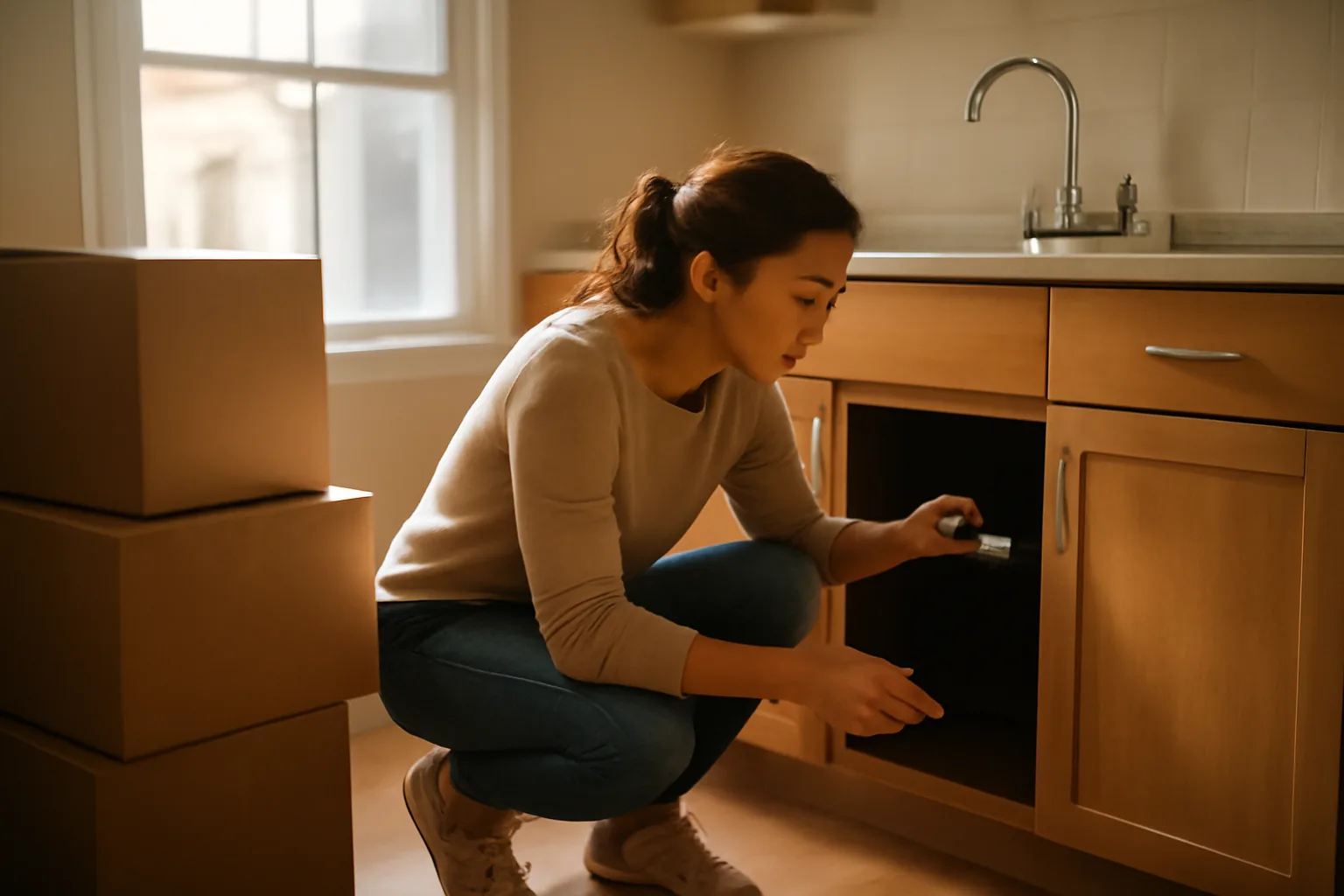
A tenant rental checklist before move-in has three jobs: prove the unit's condition, confirm what you're legally owed, and set expectations with the landlord in writing. Skip any of these and you're arguing from memory later, which almost never goes your way. Start with a move-in inspection form. Many states require landlords to provide one, and some require it specifically to protect your security deposit. California, for example, gives tenants the right to request an initial inspection before move-out so they can fix problems and avoid deductions, under Civil Code Section 1950.5 [1]. Whether or not your state mandates a form, ask for one, fill it out room by room, and get it signed by both parties or emailed with a timestamp. Photograph everything: walls, floors, appliances, faucets, window screens, smoke detectors, and any existing damage no matter how small. Date-stamped photos on your phone are free evidence. Test every outlet, every faucet, the HVAC system, and all locks. Check smoke and carbon monoxide detectors are present and working; many states require them by statute, more than fire code recommendation. Confirm in writing: the rent amount, due date, deposit amount and where it's held, who pays for what utilities, and the exact move-in date. If the landlord mentions anything verbally that isn't in the lease, put it in a follow-up email. "We agreed the landlord will fix the garbage disposal by June 1" sent to yourself and the landlord creates a paper trail that a verbal promise never does. For a broader look at what protections apply once you're in the unit, see tenant rights and renters rights.
Who is responsible for a rental property walk-through inspection in California?
In California, the landlord is responsible for conducting the move-out walk-through if the tenant requests it, but the tenant has to ask for it. Civil Code Section 1950.5(f) gives tenants the right to request an initial inspection before terminating the tenancy, done at least two weeks before the tenant moves out, so the tenant gets a chance to fix any issues the landlord flags before the final deposit accounting [1]. The landlord has to give the tenant reasonable notice of the inspection date and time, and after the inspection, provide an itemized statement of any deductions the landlord plans to make, along with a chance to remedy those issues before move-out [1]. If the tenant doesn't request the initial inspection, the landlord can still do a standard final walk-through after move-out, but the tenant loses the ahead-of-time repair opportunity. After the tenant actually vacates, California law (also Section 1950.5) requires the landlord to return the security deposit, or an itemized list of deductions with receipts, within 21 days [1]. That 21-day clock is one of the most cited numbers in California tenant law, and it's worth writing on your calendar the day you hand back keys. Outside California, most states have similar concepts but different windows. Some require photos or itemized statements only above a certain deduction amount; others don't require an initial walk-through offer at all. Check your specific state's civil code or landlord-tenant statute rather than assuming California's rules travel with you.
What is landlording, and what is a landlord?
A landlord is the person or entity that owns a residential property and rents it to someone else (the tenant) in exchange for periodic payment, usually monthly rent. Landlording is the informal term for the practice of managing that relationship: collecting rent, handling repairs, following notice and entry laws, and staying compliant with local licensing or registration rules. Landlording isn't just collecting a check. It includes habitability duties (keeping the unit livable, per most state warranty-of-habitability statutes), following state and local notice requirements before entry or termination, handling security deposits according to statute, and in many cities, registering or licensing the rental unit itself. Cities with mandatory rental licensing programs often require inspections tied to that license, separate from anything the tenant arranges. If you're a tenant reading a checklist like this because your landlord just went through a rental licensing process, it's worth knowing that many of these programs exist specifically because of tenant complaints in that city, not as arbitrary red tape. A licensing inspection checks things like working smoke detectors, adequate egress, and no major code violations, which overlaps with what you should be checking yourself at move-in. See our related guide on landlord landlords for the broader compliance picture from the property owner's side.
How to become a landlord, and how to be a good one
Becoming a landlord legally usually means: owning or controlling a rental property, registering it with your city or county if required, carrying appropriate insurance, and following your state's landlord-tenant statute for deposits, notices, and habitability. There's no single national license; requirements vary heavily by city and state. Most mandatory rental licensing cities require the owner to register the unit, pay a fee (commonly in the range of $50 to $300 per unit annually, though this varies enormously by city, so confirm with your city rental licensing office), and pass a habitability inspection before renting it out or renewing the license. Some cities also require a local contact person if the owner lives out of state or out of the county. Being a good landlord, separate from being a legally compliant one, comes down to responsiveness and clear communication. Respond to repair requests fast, especially anything touching heat, water, or safety. Put everything in writing. Don't enter without proper notice even if you own the place; almost every state gives tenants a right to quiet enjoyment that limits when and how you can come in. If you're a first-time landlord in a city with a licensing or inspection requirement, a lot of the early stress comes from not knowing what the inspector will actually check or what paperwork the city wants filed first. That's the exact gap our $79 one-time City Rental License & Inspection Prep Packet is built to close: a walkthrough of common inspection items and a document checklist so you're not guessing at your first city inspection. Find it at /rental-packet-builder.
What rights do tenants have without a lease?
Tenants without a written lease still have legal rights. Most states treat an unwritten rental agreement as a month-to-month tenancy, and tenants keep the same core protections: the right to habitability, the right to advance notice before entry, and the right to proper notice before termination or rent increases. A verbal agreement to pay rent in exchange for occupying a unit creates a legally recognized tenancy in nearly every U.S. state, even with nothing signed. The terms (how much rent, when it's due) get harder to prove without paper, which is exactly why written communication (texts, emails) matters even absent a formal lease. Without a lease specifying a term, the tenancy typically defaults to month-to-month under state law, and termination requires the same statutory notice as any month-to-month tenant, commonly 30 days, though some states require more for longer tenancies. The landlord generally can't just change the locks or shut off utilities to force a tenant out; "self-help" evictions are illegal in most states and often carry specific statutory penalties. The habitability standard doesn't disappear because there's no lease either. A landlord still has to provide a livable unit: working plumbing, heat, and structural safety, under the implied warranty of habitability that most states recognize by statute or case law regardless of what's in writing (or not) [2]. If you're renting without a lease and something feels off, that's a good moment to look up tenants rights and tenant and tenant resources specific to your state.
Why do landlords require renters insurance?
Landlords require renters insurance mainly to shift liability risk off themselves and to make sure a tenant can cover damage they cause, since a standard landlord policy doesn't cover a tenant's personal belongings or a tenant's liability for accidents in the unit. If a tenant's negligence causes a fire or a guest gets hurt, renters insurance means the tenant's policy pays, not a lawsuit against the landlord's coverage. A typical renters insurance policy costs relatively little. National average estimates commonly cited by the Insurance Information Institute put renters insurance in the range of a few hundred dollars a year, though the exact number depends heavily on coverage amount, location, and deductible; ask your specific insurer for a quote rather than relying on national averages. Given that low cost relative to the liability coverage it provides, many landlords make it a lease requirement rather than a suggestion. From the landlord's side, requiring proof of renters insurance also protects against situations where a tenant's own possessions are damaged (say, in a pipe burst) and the tenant tries to claim the landlord's policy should cover their laptop or furniture. It almost never does; the landlord's policy covers the building and the landlord's liability, not tenant belongings. Requiring the tenant to insure their own stuff head off that argument before it starts. Some states and cities allow landlords to require renters insurance as a lease condition explicitly; others leave it as a matter of private contract between the parties. Check your lease and your state's landlord-tenant statute if you're unsure whether it's enforceable in your situation.
How much notice does a landlord have to give before entering or ending a tenancy?
| Non-emergency entry | 24 to 48 hours | Varies by state; some states just say "reasonable" | |
|---|---|---|---|
| End month-to-month tenancy (under 1 year) | 30 days | Common default across many states | |
| End month-to-month tenancy (1+ years) | 60 days | California requires this; not universal | |
| Rent increase notice | 30 to 90 days | Depends on size of increase and state/local rent control rules | Always confirm the exact number against your specific state's landlord-tenant statute, since these vary and some cities layer additional local requirements on top of state minimums. |
Notice requirements split into two very different categories: notice before entering the unit, and notice before ending the tenancy. Both vary by state, and neither is universal, so treat any number below as a starting point, not a guarantee for your specific state. For entry, many states require 24 hours advance notice for non-emergency entry, though the exact wording and hours vary. California's Civil Code Section 1954 requires "reasonable notice," which the statute defines as presumptively 24 hours in writing for most non-emergency purposes [3]. Other states set different defaults; some allow 24 hours, others require 48, and a handful don't specify a number in statute at all, just "reasonable notice," which then gets interpreted case by case. For ending a month-to-month tenancy, 30 days notice is the most common default across states, though this can jump to 60 days if the tenant has lived there past a certain length of time (California requires 60 days notice if the tenant has resided there one year or more, per Civil Code Section 1946.1) [4]. Fixed-term leases generally end on their own stated date and don't require notice to terminate, though many states still require notice of intent not to renew. Here's a comparison of common notice categories, using illustrative ranges since exact numbers are state-specific: | Notice type | Typical range | Notes |
What can a landlord look at during an inspection?
During a routine or licensing-related inspection, a landlord (or a city inspector, if it's a licensing inspection) can typically check: smoke and carbon monoxide detectors, electrical outlets and panels, plumbing fixtures, heating systems, window and door locks, evidence of pest infestation, and general structural safety like handrails and stair conditions. What they cannot do is search through personal belongings, closets, or private areas beyond what's needed to check the item in question. For a landlord's own routine inspection (not a city licensing inspection), the scope is generally limited by the same entry-notice laws covering any other entry: reasonable purpose, reasonable notice, and reasonable hours. A landlord checking on a smoke detector doesn't get to open dresser drawers while they're there. City rental licensing inspections tend to have a defined checklist tied to the local housing or building code: working smoke/CO detectors, no exposed wiring, functioning heat source, no water leaks, proper egress from bedrooms (a window large enough to escape through, typically a specific minimum opening size set by the International Residential Code, which many cities adopt locally) [5], and no obvious code violations like unpermitted electrical work. The inspector generally won't assess furniture, cleanliness beyond basic sanitation, or anything the tenant owns. Tenants should ask their landlord in advance what kind of inspection is happening (city license inspection versus routine landlord check) since the scope and your rights around notice can differ. If it's a city inspection, ask whether you're required to be present; in most jurisdictions, you're not, but the landlord typically needs to give you notice that it's happening in your unit.
What can a landlord not do in Ohio?
In Ohio, a landlord cannot enter the rental unit without giving reasonable notice, generally interpreted as 24 hours, except in genuine emergencies, and cannot enter at unreasonable times, retaliate against a tenant for exercising legal rights, or shut off utilities or change locks to force a tenant out without a court order. Ohio Revised Code Section 5321.04 sets out the landlord's obligations, including maintaining the premises in a fit and habitable condition, keeping common areas safe, and maintaining electrical, plumbing, and heating systems in good working order [6]. A landlord who fails on these fronts can be sued for damages or have rent applied toward repairs, under procedures set out in the same chapter. Ohio Revised Code Section 5321.05 lays out tenant obligations in return, like keeping the unit clean and not damaging it, but the landlord side of the bargain (Section 5321.04) is what defines the floor for habitability. Ohio law also prohibits retaliatory conduct: a landlord cannot raise rent, decrease services, or attempt to evict a tenant specifically because the tenant complained to a health or safety agency or joined a tenant organization, under Ohio Revised Code Section 5321.02 [7]. And Ohio, like most states, bars "self-help" evictions; a landlord who wants a tenant out has to go through the eviction (forcible entry and detainer) process in court rather than locking the tenant out or removing belongings directly. If you're in Ohio and experiencing something on this list, your local legal aid office or the Ohio Attorney General's consumer protection resources are a better first stop than trying to interpret statute yourself; these rules interact with local ordinances in ways that vary city to city.
What documents should a tenant keep, and for how long?
Keep a copy of the signed lease, the move-in inspection form and photos, all rent payment receipts or bank statements showing rent paid, any written communication about repairs, and the security deposit itemization at move-out. Keep these for at least the length of the tenancy plus a few years afterward, since most states set a statute of limitations on written contract disputes in the range of 3 to 6 years depending on the state. Rent receipts matter more than people expect. If a landlord later claims late payment or non-payment in an eviction proceeding, a bank statement or receipt is often the single fastest way to end the dispute. If you pay by check, keep the cancelled check image; if you pay cash (not recommended, but common), always get a signed receipt on the spot. Text messages and emails about repair requests matter just as much, particularly the ones showing you reported a problem and the date you reported it. Many state habitability remedies (rent withholding, repair-and-deduct) require the tenant to have given the landlord written notice and a reasonable opportunity to fix the issue first, so the notice itself is part of your legal protection, more than a courtesy. Finally, keep the security deposit itemization and any receipts the landlord provides for repairs deducted from it. If the numbers look inflated or the itemization is late (again, 21 days in California under Civil Code 1950.5 [1], other states vary), that itemization is your primary piece of evidence in a small claims dispute.
FAQ subsection intro placeholder
placeholder
Frequently asked questions
How to become a landlord?
You become a landlord by acquiring a rental property (owning it or having legal authority to sublease it), meeting any city or state licensing/registration requirements, and following your state's landlord-tenant statute on deposits, notices, and habitability. Many cities also require inspections before you can legally rent the unit out, so check local rules before listing it.
Who is responsible for a rental property walk-through inspection in California?
The landlord conducts it, but the tenant has to request the initial pre-move-out inspection under California Civil Code Section 1950.5(f). Requesting it lets tenants fix flagged issues before the final deposit deduction, which is a right tenants lose if they skip the request.
What is landlording?
Landlording is the day-to-day practice of owning and managing rental property: collecting rent, handling repairs, following entry and notice laws, maintaining habitability, and complying with any local rental registration or licensing requirements. It's the informal term landlords use for the job itself, not a legal designation.
What is a landlord?
A landlord is the owner (or authorized agent of the owner) of residential or commercial property who rents that property to a tenant in exchange for periodic payment. The landlord holds specific legal duties toward the tenant, including habitability and proper notice, set by state landlord-tenant statutes.
What rights do tenants have without a lease?
Tenants without a written lease still get habitability protection, notice-before-entry rights, and notice-before-termination rights under state law, usually as a month-to-month tenancy. Verbal rental agreements are legally binding in most states; the lack of paper just makes specific terms harder to prove if disputed.
How to be a landlord, practically speaking?
Register with your city if required, screen tenants consistently and legally, put everything in a written lease, respond fast to repair requests (especially heat, water, and safety issues), give proper notice before entry, and keep the security deposit process compliant with your state's statute and timeline.
Why do landlords require renters insurance?
Because a landlord's own insurance policy doesn't cover a tenant's personal belongings or the tenant's liability if they cause damage or an injury. Requiring renters insurance shifts that risk to the tenant's own (usually inexpensive) policy instead of leaving the landlord exposed to claims for things outside their control.
How much notice does a landlord have to give before entering the unit?
Most states require 24 to 48 hours advance notice for non-emergency entry; California's default under Civil Code Section 1954 is 24 hours in writing. Emergencies (fire, flooding, gas leak) are exceptions where no advance notice is required. Always check your specific state's statute since the exact hours vary.
What can a landlord look at during an inspection?
Smoke and CO detectors, plumbing, electrical systems, heating, window and door locks, pest evidence, and general structural safety. A landlord or inspector generally cannot search personal belongings, closets, or drawers beyond what's necessary to check the specific item being inspected.
What can a landlord not do in Ohio?
Under Ohio Revised Code Sections 5321.02 and 5321.04, a landlord cannot enter without reasonable notice (generally 24 hours) except in emergencies, cannot retaliate against a tenant for reporting code violations, cannot shut off utilities or change locks to force a tenant out, and must maintain the unit in fit and habitable condition.
What should be on a move-in checklist as a tenant?
Document every room with dated photos, test smoke detectors and appliances, note all existing damage on a written move-in form, confirm rent amount and due date in writing, confirm who holds the security deposit, and get any verbal promises from the landlord (like a promised repair) sent back in an email.
How long does a landlord have to return a security deposit?
It depends on the state. California requires an itemized statement and any remaining deposit within 21 days of move-out under Civil Code Section 1950.5. Other states range from 14 to 45 days; check your specific state's statute since there's no single national deadline.
Can a landlord require renters insurance as a lease condition?
In most states, yes, landlords can require proof of renters insurance as a lease condition, similar to requiring a security deposit. It's a matter of contract law in most jurisdictions rather than a separately regulated requirement, so check your specific lease terms and state law.
Sources
- California Legislature, Civil Code Section 1950.5: California security deposit itemization deadline of 21 days and tenant's right to request an initial pre-move-out inspection
- Cornell Law School Legal Information Institute, Implied Warranty of Habitability: Definition and general legal basis of the implied warranty of habitability recognized in most states
- California Legislature, Civil Code Section 1954: California's 24-hour reasonable notice requirement for landlord entry
- California Legislature, Civil Code Section 1946.1: California's 60-day notice requirement to end a tenancy of one year or more
- International Code Council, International Residential Code, Section R310 Emergency Escape and Rescue Openings: Egress window minimum opening requirements commonly adopted by cities for rental inspections
- Ohio Legislature, Ohio Revised Code Section 5321.04: Ohio landlord obligations to maintain habitability, including electrical, plumbing, and heating systems
- Ohio Legislature, Ohio Revised Code Section 5321.02: Ohio's prohibition on retaliatory conduct by landlords against tenants who report code violations