Last updated 2026-07-26
TL;DR
A tenancy inspection is a scheduled walk-through where a landlord checks the unit's condition, safety systems, and lease compliance. Most states require at least 24 to 48 hours advance notice, and inspections must happen at reasonable times for a legitimate purpose, not to harass a tenant. Rules vary a lot by state and by city rental license programs.
What is a tenancy inspection?
A tenancy inspection is any visit a landlord makes to a rented unit to check its physical condition while a tenant lives there. That covers routine walk-throughs, move-in and move-out condition checks, maintenance follow-ups, and the inspections that cities with rental licensing programs require before they'll issue or renew a license. It is not the same thing as an eviction inspection or a code enforcement visit triggered by a complaint, though the same unit can get all three in the same year if a city inspector shows up separately from the landlord. In mandatory rental-licensing cities, the property owner usually has to schedule a city inspector visit as a condition of getting or keeping a rental license, on top of whatever routine inspections the landlord does themselves. Los Angeles's Systematic Code Enforcement Program is a good example: rental units get a mandated inspection roughly every four years by a City inspector, separate from anything the landlord does. For an individual landlord with a handful of units, the practical distinction that matters is this: your own routine inspection is governed by your state's landlord-tenant statute (notice periods, allowed purposes, entry hours). A city license inspection is governed by that city's municipal code and usually comes with its own notice rules, checklist, and fee schedule. Confirm both with your city rental licensing office before you schedule anything.
What is a landlord? What is landlording?
A landlord is the person or entity that owns a rental property and leases it to a tenant in exchange for rent. Landlording is the ongoing work of managing that relationship: collecting rent, maintaining the property, handling repairs, following notice and entry laws, and staying compliant with any local licensing or registration rules. Most state landlord-tenant statutes define the landlord as the owner, lessor, or the owner's designated agent (a property manager, for instance) who has the right to possession subject to the rental agreement. See, for example, California Civil Code section 1954, which governs a landlord's right to enter a dwelling unit. Landlording isn't a licensed profession the way real estate sales is, in most states. But a growing number of cities require the owner (or an agent) to register the rental and get a local rental license before renting it out, which is a separate legal layer on top of ordinary landlord-tenant law. Landlord basics covers what those obligations typically include for a first-time owner.
How do you become a landlord?
Becoming a landlord starts with owning (or having legal authority to lease) a residential property, then following your state's landlord-tenant law and your city's rental registration or licensing rules before you sign a lease. There's no national license requirement to be a landlord in the US; the requirements are set state by state and, for licensing specifically, city by city. In practice the steps look like this. First, confirm the property is zoned and permitted for rental use, since some cities restrict rentals in certain zones or cap the number of units without a permit. Second, check whether your city requires a rental registration or rental license before you can legally rent, and if so, whether that requires a pre-rental inspection. Third, screen tenants under the Fair Housing Act (which bars discrimination based on race, color, national origin, religion, sex, familial status, or disability, per 42 U.S.C. § 3604) and any state or local protected classes added on top. Fourth, get a written lease that matches your state's required disclosures (lead paint disclosure for pre-1978 housing is federally required under 24 CFR Part 35). Fifth, set up a system for security deposit handling, since most states cap the deposit amount and set a strict deadline for returning it. If you're building out a compliance file for your first rental license application, our rental packet builder is a $79 one-time packet meant to help you assemble the paperwork a city inspector or licensing office typically asks for. It's not a substitute for reading your specific city's ordinance, but it saves the scramble of figuring out what to gather from scratch.
How much notice does a landlord have to give before entering or inspecting?
| California | 24 hours presumed reasonable | Civil Code § 1954 | |
|---|---|---|---|
| Florida | At least 12 hours | Fla. Stat. § 83.53 | |
| Texas | Not specified in statute; lease governs | Prop. Code Ch. 92 | |
| Washington | At least 2 days (48 hours) | RCW 59.18.150 | |
| Oregon | At least 24 hours | ORS 90.322 | Washington requires at least two days notice for entry to inspect the premises, under RCW 59.18.150. Oregon requires at least 24 hours under ORS 90.322. If your city's rental license program schedules an inspector visit, that notice requirement is often separate and set by the municipal code, not the state landlord-tenant statute, so don't assume the same number applies to both. |
Most states require 24 hours notice for a landlord to enter for a routine inspection or repair, though a few require less and some require more, and a handful don't set a specific number in statute at all. There is no single national rule; you have to check your own state's law. California requires "reasonable notice in writing," and the statute specifically says 24 hours is presumed reasonable absent evidence otherwise, under Civil Code section 1954. Florida requires at least 12 hours notice under Florida Statutes section 83.53, one of the shorter windows in the country. Texas doesn't set a statutory notice period for routine entry at all in its residential landlord-tenant chapter, which means lease language and local custom carry more weight there; see Texas Property Code Chapter 92. New York doesn't have one blanket statewide statute covering entry notice either, though New York City's rules require "reasonable notice," generally interpreted as at least 24 hours. Here's a comparison across a few commonly cited states: | State | Statutory notice for routine entry | Source |
What can a landlord look at during an inspection?
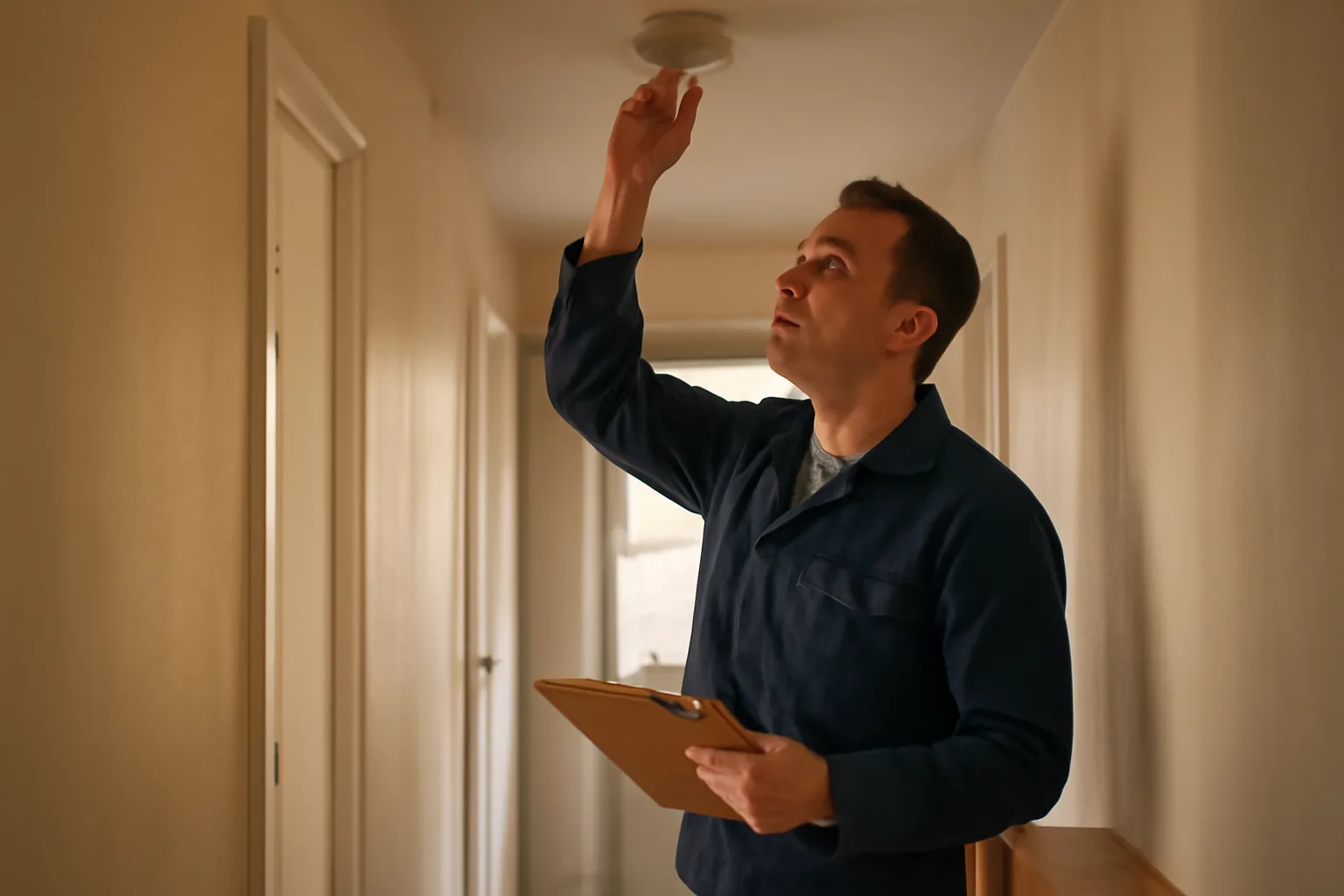
A landlord doing a routine inspection can generally check the physical condition of the unit: smoke and carbon monoxide detectors, plumbing and water damage, HVAC function, electrical outlets and panels, signs of pest activity, structural issues like cracked walls or ceiling stains, and whether the tenant is keeping the unit in a condition consistent with the lease. The purpose has to be legitimate, not a pretext to snoop. Most state statutes list the allowed reasons for entry: to make repairs, to show the unit to prospective tenants or buyers, to verify lease compliance, or in an emergency. California's Civil Code 1954, for example, allows entry "to make necessary or agreed repairs," to show the unit, or when the tenant has abandoned it. A landlord isn't generally allowed to open closed drawers, search personal belongings, or photograph a tenant's possessions beyond what's needed to document a maintenance issue or damage. City rental license inspections tend to focus on a fixed checklist rather than a general look-around: working smoke and CO detectors, secure handrails and stairs, functioning heat, no exposed wiring, no active leaks, proper egress from bedrooms, and sometimes lead paint or radon disclosures depending on the jurisdiction. Ask your city rental licensing office for their specific checklist before the visit; most publish one, and having it in hand before the inspector arrives is the single best way to avoid a failed inspection and a re-inspection fee.
Who is responsible for a rental property walk-through inspection in California?
In California, the landlord is responsible for conducting move-in and move-out condition inspections and for giving the tenant the chance to be present, but the tenant has the right to request an initial move-out inspection before vacating so they can fix issues themselves and avoid deposit deductions. This is set out in California Civil Code section 1950.5. Specifically, subsection (f) of that statute gives the tenant the right to request an inspection to occur "not more than two weeks before the termination of the tenancy," and requires the landlord to give at least 48 hours written notice of the date and time, unless the tenant waives that notice. After that initial inspection, the landlord has to give the tenant an itemized statement of anything that needs fixing or cleaning to avoid a deduction, and the tenant then gets the chance to remedy it before move-out. For routine inspections during the tenancy (not move-out related), the responsibility sits with the landlord or their designated property manager, and normal entry notice rules under Civil Code 1954 apply: 24 hours presumed reasonable, delivered in writing, during normal business hours unless the tenant agrees otherwise. If a property management company handles the unit, they act as the landlord's agent for these purposes, but the underlying legal responsibility to comply with the statute stays with the owner.
What rights do tenants have without a lease?
A tenant without a written lease, sometimes called a month-to-month or oral tenancy, still has the same basic legal protections as a tenant with a written lease: the right to habitable housing, protection from illegal entry, protection from retaliation, and the right to proper notice before the tenancy ends. What they usually don't have is the certainty of a fixed rent amount or term, since either side can typically end a month-to-month tenancy with proper notice. Most states treat an oral or informal rental agreement as a month-to-month tenancy by default once rent has been accepted and possession has begun. That means the landlord still has to follow state law on entry notice, habitability (working plumbing, heat, hot water, structural safety), and security deposit handling, even with nothing in writing. The HUD Tenant Rights, Laws and Protections page is a reasonable starting point for a no-lease tenant trying to figure out their baseline protections, though it directs to state and local law for specifics since HUD doesn't set general landlord-tenant law itself. A no-lease tenant does lose some of the protections a fixed-term lease provides, mainly the guarantee that rent won't be raised or the tenancy ended before a set date. Termination of a month-to-month tenancy generally requires the same notice period as a lease renewal would, commonly 30 days, though some states and rent-controlled cities require longer for tenants who've stayed a long time. Check tenants rights and tenant rights for state-specific breakdowns, and renters rights for the tenant-side view of what an inspection notice should look like.
Why do landlords require renters insurance?
Landlords require renters insurance mainly to shift liability for the tenant's personal property and personal liability claims away from the landlord's own policy. A landlord's property insurance covers the building itself, not a tenant's furniture, electronics, or clothing. It generally doesn't cover a tenant's liability if, say, their dog bites a guest or their unattended candle starts a fire that damages a neighboring unit. Requiring renters insurance as a lease condition is legal in nearly every state; landlords just have to apply the requirement consistently across all tenants to avoid a fair housing discrimination claim. Typical required coverage minimums range from $100,000 to $300,000 in liability coverage, though there's no federal standard and city rules vary; some cities with rental licensing programs don't touch insurance requirements at all, leaving it purely to the lease. The honest case for requiring it: if a fire or water damage event happens and it's the tenant's fault, a landlord without a renters-insurance requirement can end up in a fight over who pays for smoke damage to a shared wall or a downstairs unit, and the tenant with no insurance and no savings simply can't pay. Requiring proof of a policy at move-in and at each renewal is a low-cost way to close that gap. It's a lease term though, not a state or city legal mandate in most jurisdictions, so it only has teeth if you actually put it in writing and enforce it.
What can a landlord not do in Ohio?
In Ohio, a landlord cannot enter the rental unit without reasonable notice except in an emergency, cannot shut off utilities or change the locks to force a tenant out (commonly called self-help eviction), and cannot remove a tenant's belongings without a court-ordered eviction. These protections come from Ohio Revised Code Chapter 5321, the state's landlord-tenant law. Specifically, ORC 5321.04(A)(8) requires the landlord to "not abuse the right of access" and to give the tenant "reasonable notice" of intent to enter, which Ohio courts and practitioners generally treat as 24 hours absent an emergency, though the statute itself doesn't spell out an exact hour count the way California's does. A landlord also cannot retaliate against a tenant for reporting a code violation or exercising a legal right, which ORC 5321.02 addresses directly by barring a landlord from increasing rent, decreasing services, or threatening eviction in response. Ohio landlords also cannot ignore their own maintenance duties under ORC 5321.04, which requires keeping the premises in a fit and habitable condition, maintaining common areas, and keeping electrical, plumbing, heating, and other facilities in good working order. A landlord who fails on habitability and then tries to use an inspection against the tenant (threatening eviction for complaining, for instance) is on the wrong side of the retaliation statute, more than being a bad landlord.
How does a city rental license inspection differ from a routine landlord inspection?
A city rental license inspection is conducted by a municipal code inspector to confirm the unit meets the city's housing and safety code before a license is issued or renewed; a routine landlord inspection is conducted by the owner or manager to check general condition and lease compliance, with no government official involved. They serve different purposes and follow different notice rules. City inspections usually happen on a set cycle (annually, every two years, or every three to four years depending on the city) and often carry a fee, sometimes $50 to $200 or more per unit depending on the jurisdiction; confirm the exact fee and cycle with your city rental licensing office since these vary widely and change often. A failed inspection typically triggers a re-inspection deadline and, in many cities, a re-inspection fee on top of the original license fee. Routine landlord inspections aren't required by most states at all; they're a management choice, done maybe once or twice a year to catch maintenance issues early and document unit condition. Some landlords skip them entirely and only inspect at move-out, which is a mistake: catching a slow leak or an unauthorized pet at month six is a lot cheaper than discovering it at month eleven. If your city requires a pre-rental or periodic license inspection, it's worth doing your own informal walk-through a few weeks ahead of the official one, so you're not learning about a broken smoke detector from the inspector.
What happens if a rental fails a licensing inspection?
If a rental fails a city licensing inspection, the city typically issues a written notice of violation listing each item that failed, along with a deadline (often 30 to 90 days depending on the city and severity) to fix it and request a re-inspection. Serious life-safety issues, like no working smoke detectors or exposed electrical wiring, can trigger a shorter deadline or even an order restricting occupancy until fixed. The consequences of missing the deadline vary by city but commonly include: a re-inspection fee, a hold on the rental license (meaning the unit legally can't be rented until it passes), and in repeat or serious cases, referral to a housing court or municipal court for fines. Fine amounts differ enormously by city; some cap out around a few hundred dollars per violation per day, others go much higher for repeat violations. There's no honest single number to give here since it depends entirely on your city's ordinance; confirm the exact fine schedule with your city rental licensing office. The cheapest way through this is preparation, not appeal. Most failed items on these inspections are predictable: missing or expired smoke/CO detectors, minor code items like handrail height or GFCI outlets near water, and paperwork gaps like an expired lead paint disclosure. Getting ahead of the checklist before the inspector shows up is far less expensive than a failed inspection, a re-inspection fee, and a delayed license. That's the exact problem our $79 rental packet builder is built to help with: assembling the documentation and checklist prep landlords commonly need before a licensing visit, so you're not guessing what the inspector wants to see.
What documentation should a landlord bring to or prepare for an inspection?
For a city license inspection, bring proof of ownership or your management authorization, your current lease or rental agreement, your lead paint disclosure if the building predates 1978, and any prior inspection reports or permits for work done on the unit. Having these ready speeds up the visit and avoids an inspector flagging paperwork gaps as a separate violation. For a routine landlord-conducted inspection, keep a simple written record: date, time notice was given, what was checked, photos of anything notable, and the tenant's presence or absence. This record matters most if a dispute comes up later, whether over a security deposit deduction, a habitability claim, or a fair housing complaint about selective enforcement. A basic inspection documentation checklist looks like this: - Written entry notice with date and time sent, matching your state's required notice period
- Photos or video of each room, dated
- Working smoke and CO detector confirmation
- Any observed maintenance issues, with follow-up date noted
- Tenant signature or acknowledgment if present (not required in most states, but useful) Keep these records for at least the length of the tenancy plus your state's statute of limitations for a security deposit or habitability claim, which commonly runs two to six years depending on the state.
What's the difference between landlording and running a licensed rental business?
Landlording, in the plain sense, just means owning and managing rental property. Running a licensed rental business means doing that in a city that legally requires registration or a license before you can rent, and staying compliant with that city's ongoing inspection and renewal cycle. The line between the two isn't about scale (a one-unit owner can be in a mandatory licensing city just as easily as a ten-unit owner); it's purely about where the property sits. A landlord in a city without licensing requirements answers mainly to state landlord-tenant law: notice periods, habitability, deposit handling, fair housing. A landlord in a mandatory-licensing city answers to all of that plus a municipal code inspection cycle, a license fee, a renewal deadline, and sometimes a cap on how many units one owner can hold without additional permits. The practical difference shows up at tax time and at renewal time. Licensed rental businesses often have to track and renew annually or biennially, keep inspection reports on file, and budget for licensing and re-inspection fees as a real, recurring cost of ownership, not a one-time thing. First-time owners moving into a licensing city for the first time are usually the ones caught off guard by this; if that's you, read landlord landlords and landlord for the broader compliance picture before your first renewal notice arrives.
Frequently asked questions
How much notice does a landlord have to give for a tenancy inspection?
It depends on the state. California presumes 24 hours reasonable (Civil Code § 1954), Florida requires at least 12 hours (Fla. Stat. § 83.53), and Washington requires at least 48 hours (RCW 59.18.150). Texas doesn't set a statutory number, so lease terms control. Always check your specific state statute, since a handful don't set an exact hour count at all.
Can a landlord inspect a rental whenever they want?
No. Nearly every state limits entry to reasonable purposes (repairs, showing the unit, emergencies, lease compliance checks) delivered with proper advance notice at reasonable hours. Entering repeatedly without notice or for no legitimate reason can be treated as harassment or an illegal entry claim under most state landlord-tenant statutes, including Ohio Revised Code § 5321.04.
What can a landlord look at during an inspection?
General condition of the unit: smoke and CO detectors, plumbing, HVAC, electrical, pest signs, and lease compliance. Landlords generally can't search closed drawers or personal belongings beyond what's needed to document damage or a maintenance issue. City license inspections instead follow a fixed safety checklist set by the local housing code.
Who is responsible for a rental walk-through inspection in California?
The landlord is responsible for conducting it, but California Civil Code § 1950.5(f) gives the tenant the right to request an initial move-out inspection up to two weeks before leaving, with at least 48 hours written notice, so they can fix issues themselves before final deposit deductions are calculated.
What rights does a tenant have without a written lease?
A tenant without a lease still gets the same basic protections as one with a lease: habitable housing, protection from illegal entry, protection from retaliation, and required notice before the tenancy ends. Most states treat an unwritten rental arrangement as a month-to-month tenancy once rent is accepted and possession begins.
Why do landlords require renters insurance?
To shift liability for the tenant's belongings and personal liability claims (fire, water damage, dog bites) away from the landlord's own policy. It's a lease term in most states, not a government mandate, so it only applies if it's written into the lease and enforced consistently across all tenants.
What can a landlord not do in Ohio?
Under Ohio Revised Code Chapter 5321, a landlord can't enter without reasonable notice except in an emergency, can't shut off utilities or change locks to force a tenant out, can't remove belongings without a court eviction order, and can't retaliate against a tenant for reporting code violations or exercising legal rights.
What is landlording?
Landlording is the ongoing work of owning and managing rental property: collecting rent, handling repairs, following state entry and notice laws, screening tenants under fair housing law, and complying with any city rental registration or licensing requirements that apply to the property.
How do you become a landlord?
Own or have legal authority over a rental property, confirm it's zoned for rental use, check whether your city requires rental registration or licensing before renting, screen tenants under fair housing law, use a lease that meets your state's disclosure requirements, and follow your state's security deposit rules.
What happens if a rental unit fails a city licensing inspection?
The city issues a written violation notice with a deadline (commonly 30 to 90 days depending on severity and city) to fix the issue and request re-inspection. Missing the deadline can trigger a re-inspection fee, a hold on the rental license, or referral to municipal or housing court for fines. Confirm your city's specific timeline and fee schedule.
Is a landlord required to be present during a city rental inspection?
Most cities require the owner or an authorized agent (like a property manager) to be present or reachable during the scheduled inspection window, since the inspector usually needs access and someone to answer questions about the unit. Confirm the specific requirement with your city rental licensing office before the visit.
Can a tenant refuse a landlord's inspection request?
A tenant generally cannot refuse an inspection that follows proper legal notice and has a legitimate purpose (repairs, lease compliance, showing the unit), though they can challenge unreasonable timing or frequency. Refusing lawful, properly noticed entry can itself become a lease violation in most states.
Sources
- California Legislature, Civil Code § 1954: California presumes 24 hours written notice reasonable for landlord entry
- California Legislature, Civil Code § 1950.5: Tenant right to request an initial move-out inspection with 48 hours notice
- U.S. Department of Justice, Fair Housing Act (42 U.S.C. § 3604): Federal fair housing protected classes for tenant screening
- Florida Legislature, Florida Statutes § 83.53: Florida requires at least 12 hours notice for landlord entry
- Texas Legislature, Property Code Chapter 92: Texas residential landlord-tenant chapter does not set a statutory entry notice period
- Washington State Legislature, RCW 59.18.150: Washington requires at least two days notice for landlord entry to inspect
- Oregon State Legislature, ORS 90.322: Oregon requires at least 24 hours notice for landlord entry
- HUD, Tenant Rights, Laws and Protections: Baseline tenant protections apply regardless of whether a lease is written
- Ohio Legislature, Ohio Revised Code Chapter 5321: Ohio landlord obligations and prohibitions including entry notice, retaliation, and habitability duties