Last updated 2026-07-26
TL;DR
Maple Heights, Ohio requires owners of rental property to register with the city and pass a point-of-sale or rental inspection tied to its housing code. Requirements, fees, and inspection cycles change, so confirm current numbers with the Maple Heights Building or Housing Department before a deadline forces the issue.
Does Maple Heights require landlords to register rental property?
Yes. Maple Heights is one of many Ohio municipalities that requires owners of non-owner-occupied residential property to register with the city and, in most cases, submit to a housing inspection before renting or re-renting a unit. This isn't unique to Maple Heights. Ohio's Revised Code gives municipalities broad home rule authority to adopt housing codes and licensing schemes under Article XVIII, Section 3 of the Ohio Constitution, and cities across Cuyahoga County (Cleveland, Euclid, Garfield Heights, Maple Heights among them) have used that authority to build their own rental registration and inspection ordinances [1]. The exact mechanics, who must register, what the fee is, how often inspections happen, live in the city's own municipal code and administrative rules, not in state law. That means the details can change year to year with a council vote. If you own a duplex or a single-family rental in Maple Heights, don't rely on a blog post (including this one) for the current fee schedule. Call or check the Maple Heights Building Department page for the current ordinance text and fee amount before you budget for it [2]. If you're new to owning rental property in Ohio generally, it helps to understand the landlord-tenant framework first, since city registration rules sit on top of it, not instead of it. Ohio's landlord-tenant law is codified in Ohio Revised Code Chapter 5321, and it governs security deposits, notice periods, and habitability duties regardless of what a specific city's registration ordinance requires [3].
Who has to register a rental property in Maple Heights?
In cities with this kind of ordinance, the obligation generally falls on the property owner, not the tenant, and it applies whether you self-manage or use a property manager. If you own one rental duplex in Maple Heights and live elsewhere, you're the one on the hook for registration, not your tenant and not necessarily your management company (though many owners have a manager handle the paperwork). Common triggers for a registration requirement in Ohio municipalities like this include: owning a one- to four-unit residential building that isn't owner-occupied, renting out a single-family home, or converting an owner-occupied property to a rental after moving out. Some cities exempt owner-occupied duplexes where the owner lives in one unit; others don't. Maple Heights' own ordinance defines this, so confirm with the Maple Heights Building or Housing Department whether your specific property type and unit count triggers the requirement. Out-of-state or out-of-county owners get tripped up on this constantly. If you inherited a Maple Heights property, bought it as a long-distance investment, or converted a former home into a rental after moving, you likely need to register even if you've never dealt with the city before. Waiting until a tenant complaint or a routine code sweep flags you is the expensive way to find out.
What does a rental inspection actually check in Ohio cities like Maple Heights?
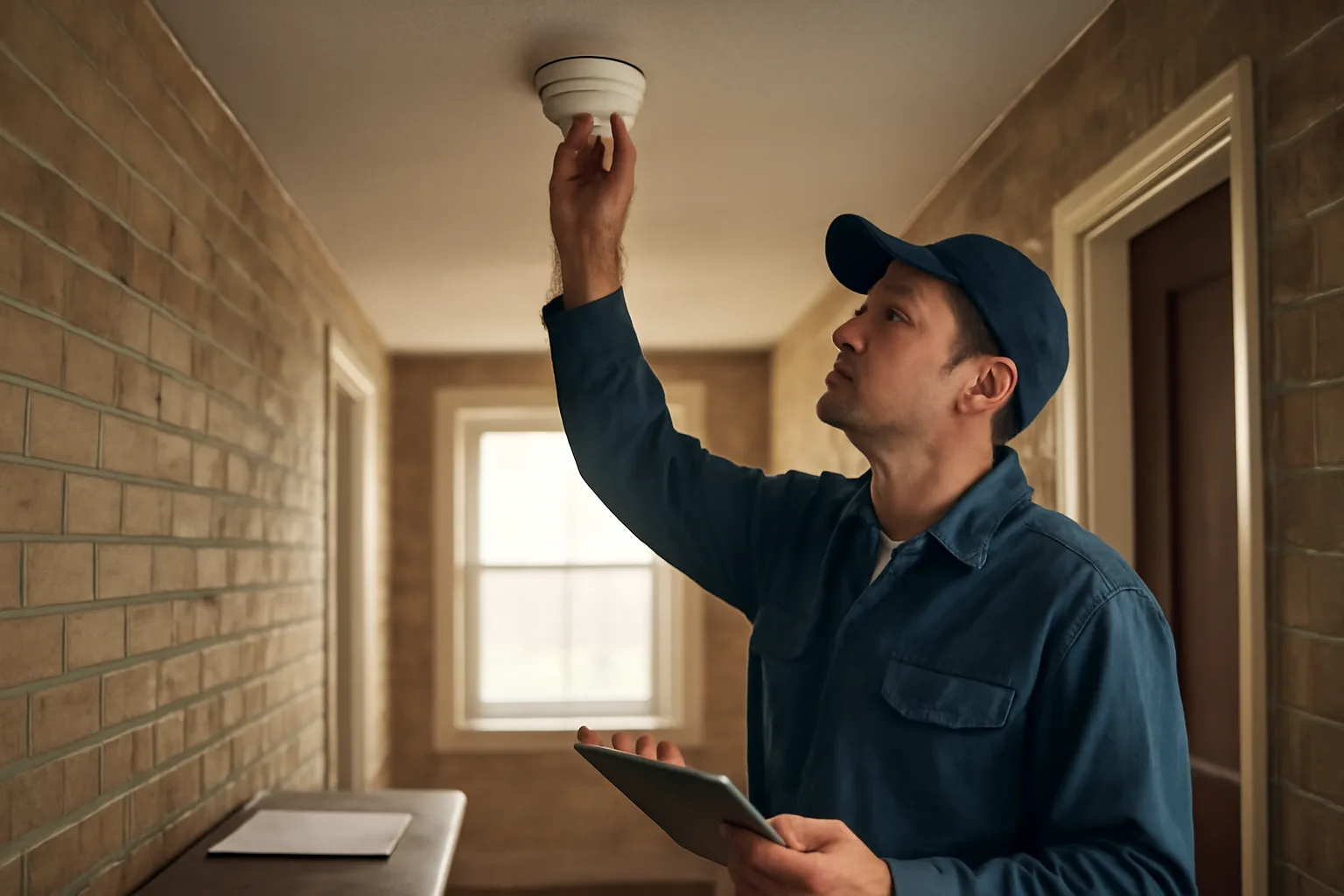
Municipal rental inspections in Ohio generally check basic health and safety systems, not cosmetic condition. Inspectors are typically looking at things like: working smoke detectors and carbon monoxide detectors, secure handrails and guardrails on stairs, electrical outlets and panels free of obvious hazards, functioning plumbing without active leaks, adequate heat source, proper egress (windows and doors that open, no blocked exits), and exterior conditions like peeling paint, broken steps, or unsecured structures. This pattern generally follows model housing codes used across the U.S., many of which trace back to the International Property Maintenance Code (IPMC) framework that cities adopt and modify locally [4]. Ohio's state minimum housing standards under Ohio Administrative Code and local health department rules also inform what a habitability inspection covers, since a rental has to meet basic sanitation and structural safety standards regardless of city-specific licensing [5]. A quick gut check before your Maple Heights inspection: walk the property yourself first. Test every smoke detector, check that every window opens, look at handrails for wobble, and check for any water staining that signals an active leak. Most failed inspections come down to a handful of repeatable issues (dead detector batteries, missing handrail, blocked egress) that cost under $200 to fix and take an afternoon.
What can a landlord look at during an inspection?
During a routine unit walkthrough (as opposed to the exterior/systems check a city inspector does), a landlord can generally look at the condition of walls, floors, appliances, fixtures, smoke detectors, and general cleanliness, but Ohio law requires reasonable notice before entering an occupied unit for a non-emergency inspection. Under Ohio Revised Code 5321.04, a landlord has the right to enter the dwelling to inspect it, make repairs, or show it to prospective tenants or buyers, but only "at reasonable times after reasonable notice to the tenant" except in an emergency [3]. The statute doesn't spell out an exact number of hours, which is a common source of confusion. Many Ohio landlords use 24 hours as a practical standard because it's widely cited as reasonable in case law and lease templates, but the statute itself says "reasonable notice," not a fixed number. What a landlord generally cannot do: enter without notice absent an emergency, use entry as a pretext for harassment, or change locks to keep a tenant out. Ohio Revised Code 5321.15 specifically bars landlords from using self-help measures like lockouts or utility shutoffs to force a tenant out; eviction has to go through the municipal or county court process [6]. For city inspections specifically, most Maple Heights-type ordinances require the inspector to give notice to schedule access, and a tenant generally can't block a legally required city inspection the way they might resist a landlord-initiated walkthrough, though the specifics depend on the ordinance and any lease language.
How much notice does a landlord have to give before entering?
Ohio law requires "reasonable notice," and the statute doesn't define a specific number of hours, which means the safest practice is to put a notice period in writing in your lease and stick to it consistently. Ohio Revised Code 5321.04(A)(8) allows entry "at reasonable times after reasonable notice to the tenant" for inspection, repairs, alterations, or showing the unit, and allows entry without notice only in a genuine emergency [3]. Most Ohio landlord-tenant guidance and standard lease forms use 24 hours as the practical benchmark for "reasonable," though this is a common practice, not a statutory minimum. If your lease specifies a notice period (say, 24 or 48 hours), courts will generally hold you to that number since it becomes the operative standard between you and the tenant. A rental registration inspection ordered by the city is a separate animal from a landlord's own walkthrough. The city will typically notify the property owner directly to schedule access, and the owner is then responsible for coordinating access with the tenant. If a tenant refuses reasonable access for a legally required city inspection, that can put the owner in violation of the ordinance through no direct fault of their own, so building a notice clause and a cooperative-tenant expectation into your lease matters.
What can't a landlord do in Ohio?
Ohio Revised Code Chapter 5321 lays out specific things a landlord cannot do, and violating them can expose you to tenant lawsuits, more than city fines. The core prohibitions include: - No retaliation. ORC 5321.02 bars landlords from raising rent, decreasing services, or threatening eviction because a tenant complained to a government agency about a code violation or exercised a legal right [7].
- No self-help evictions. ORC 5321.15 prohibits lockouts, utility shutoffs, or removing a tenant's belongings to force them out without a court order [6].
- No entry without reasonable notice, outside emergencies, under ORC 5321.04 [3].
- No keeping a security deposit improperly. ORC 5321.16 requires landlords to return the deposit (minus itemized deductions) within 30 days of the tenant vacating, and requires a written, itemized list of deductions if withholding more than $50 or one month's rent .
- No renting a unit that fails to meet basic habitability duties under ORC 5321.04, which requires landlords to keep the premises in a fit and habitable condition, comply with health and safety codes, and keep common areas safe. On top of the state floor, Maple Heights' own housing code adds local requirements (the registration and inspection system covered above), and a landlord who's compliant with state law can still be in violation of city ordinance if they skip registration or let a required inspection lapse.
What rights do tenants have without a lease?
A tenant without a written lease in Ohio still has real legal protections; verbal or month-to-month tenancies aren't a legal gray zone. Ohio Revised Code 5321.01 defines a rental agreement broadly enough to include oral agreements, and the landlord duties under ORC 5321.04 (habitability, repairs, notice before entry) apply regardless of whether there's a signed lease [3]. Without a written lease, a tenancy is generally treated as month-to-month, which under Ohio law typically requires 30 days' written notice from either party to terminate (though local practice and any partial written agreement can affect this). The tenant still has the right to a habitable unit, the right to reasonable notice before the landlord enters, protection from retaliatory eviction, and the right to a proper return of any security deposit paid, with the same 30-day/itemization rules under ORC 5321.16 . What a tenant without a lease does not get is a guarantee of any specific rent amount or term length beyond what's been communicated, which is exactly why written leases matter for both sides. If you're a landlord operating on handshake agreements in a city like Maple Heights that also requires rental registration, you're stacking two separate risks: no enforceable lease terms, and a possible city compliance gap if you haven't registered the unit.
Why do landlords require renters insurance?
Landlords require renters insurance mainly to shift liability for the tenant's personal property and personal injury claims away from the landlord's own policy. A standard landlord (dwelling) insurance policy covers the building structure and the landlord's liability, but it typically does not cover a tenant's furniture, electronics, or clothing if there's a fire, burst pipe, or theft. Renters insurance (HO-4 policies) generally covers the tenant's belongings and adds liability coverage if the tenant's negligence causes damage or injury, like a kitchen fire that spreads to a neighboring unit. Requiring it protects the landlord from being the tenant's only source of financial recourse after a loss, and it reduces the odds a tenant sues the landlord directly claiming the property itself was unsafe. Ohio law doesn't require landlords to require renters insurance; it's a lease clause choice, not a state or city mandate in most jurisdictions, including Maple Heights as far as public rental registration ordinances go. Many landlords require proof of an active policy (commonly $100,000 in liability coverage as a lease condition, though the number varies by landlord) as a condition of signing or renewing a lease. It's a smart risk-management move for landlords with even a single unit, since a single unreimbursed fire or water-damage claim can run into tens of thousands of dollars.
What is landlording, and what is a landlord?
A landlord is the owner (or an authorized agent of the owner) of residential or commercial property who rents that property to a tenant in exchange for rent, under Ohio Revised Code 5321.01's definition of "landlord" as the owner, lessor, or sublessor of the dwelling unit, or the agent of any of those [3]. "Landlording" is the informal industry term for the ongoing job of managing rental property: collecting rent, handling maintenance and repairs, screening tenants, complying with housing codes, dealing with move-outs and deposits, and (in cities like Maple Heights) staying current on local registration and inspection cycles. Landlording isn't a licensed profession in most of Ohio the way real estate brokering is; you don't need a state landlord license to rent out a house you own. What you do need is compliance with ORC Chapter 5321's landlord duties, plus whatever local registration or licensing your specific city requires. That local layer is where a lot of first-time landlords get caught off guard, because it's easy to assume that owning the property is the only requirement, when a city like Maple Heights adds its own registration step on top.
How do you become a landlord, and how do you do it well?
Becoming a landlord in Ohio requires no state license, but it does require you to buy or already own residential property, understand your obligations under ORC Chapter 5321, and comply with whatever local rental registration or licensing ordinance applies where the property sits. There's no exam, no state-issued landlord credential, and no minimum experience requirement. The barrier to entry is genuinely low, which is part of why so many first-time landlords end up learning city rules the hard way, after a notice or a fine. A reasonable sequence for doing it right: 1. Confirm the property's zoning allows rental use and check whether the city (Maple Heights or wherever) requires rental registration before you advertise the unit. 2. Get a lease in writing. Even a simple one-page lease beats a handshake, since it locks in notice periods, rent amount, and deposit terms. 3. Screen tenants consistently and legally (credit, income, rental history, background check where legal) and apply the same standard to every applicant to avoid fair housing exposure. 4. Collect a security deposit and know your state's return rules cold; in Ohio that's the 30-day, itemized-deduction standard under ORC 5321.16 . 5. Budget for maintenance and habitability duties year one, more than mortgage and taxes. ORC 5321.04 puts real repair and safety obligations on you, more than the tenant. 6. Register with the city if required, and get the inspection scheduled before a deadline notice forces it. "Landlording well" mostly comes down to being boring and consistent: same screening standard for everyone, same notice period every time you enter, same response time on maintenance requests, and a habit of over-documenting condition at move-in and move-out.
Who's responsible for a rental property walkthrough inspection, California vs. Ohio
This question comes up a lot because California and Ohio handle move-in/move-out walkthroughs differently, and people searching Ohio rental rules sometimes land on California guidance by mistake. In California, Civil Code Section 1950.5(f) gives tenants the right to request an initial move-out inspection before the final one, specifically so they get a chance to fix any issues before the landlord makes deposit deductions; the landlord (or their agent) conducts that walkthrough and must give the tenant a written, itemized statement of any deficiencies found . Ohio has no direct equivalent statute requiring a pre-move-out inspection with advance notice of deficiencies. Ohio's deposit rules under ORC 5321.16 require an itemized list of deductions only after the tenant has vacated, not a pre-move-out walkthrough opportunity like California's statute provides . That's a meaningful difference: a California tenant has a statutory right to a heads-up walkthrough; an Ohio tenant generally doesn't, unless the landlord chooses to offer one as a courtesy or the lease specifies it. For Maple Heights landlords specifically, the responsible party for a rental walkthrough is the landlord (or a designated property manager), and for the separate city rental inspection tied to registration, it's a municipal inspector from the Maple Heights Building or Housing Department, not the landlord.
What happens if you skip rental registration or fail an inspection in Maple Heights?
Cities with mandatory rental registration ordinances typically enforce them with civil fines, and repeated non-compliance can escalate to court citations or a hold on renting the unit until it's registered and passes inspection. The exact fine schedule and escalation path in Maple Heights is set by the city's own ordinance and can change, so confirm current fine amounts with the Maple Heights Building or Housing Department rather than assuming a number from another city carries over. What's typical across Ohio municipalities with similar programs: an initial notice of violation with a cure period (often 30 days, but this varies), followed by a fine if the property isn't registered or the inspection isn't scheduled, and further escalation (sometimes daily fines, sometimes a court summons) for continued non-compliance. Some cities also flag unregistered rentals during a property sale, which can slow or complicate a closing if back fines or unresolved violations show up in a title search or point-of-sale inspection requirement. The cheapest way to handle this is to register before you get a notice, not after. If you've already gotten a violation letter, call the city, ask what's needed to cure it, and get the inspection scheduled immediately; most municipal housing departments would rather get you compliant than escalate to fines, since fines cost them staff time too.
How do you actually prepare for a Maple Heights rental inspection?
Preparation is mostly a checklist problem: test every smoke and CO detector, confirm every window and door opens and locks, check handrails and stair treads for looseness, look for active leaks under sinks and around the water heater, confirm the furnace or heat source works, and clear any blocked exits or excessive storage that could read as a fire hazard. Outside, check for peeling exterior paint (a common flag, especially on older housing stock), loose or missing gutters, tripping hazards on walkways, and any unpermitted structures like a shed or deck addition that wasn't on file with the city. Inspectors are generally looking for the same core issues across Ohio cities: life safety systems, structural soundness, and basic sanitation, not paint color or decor. This is exactly the kind of pre-inspection prep where a structured checklist saves real money, since a single failed inspection can mean a re-inspection fee plus a delay before you can legally rent the unit. If you'd rather work from a packaged, city-specific prep checklist and document set instead of building one from scratch, the $79 City Rental License & Inspection Prep Packet walks through the common inspection categories and paperwork landlords need to assemble before scheduling, which is useful whether this is your first Maple Heights registration or your fifth city.
Where landlords go next after registering
Once you've registered and scheduled (or passed) your first Maple Heights inspection, the ongoing job is mostly staying current: renewing registration on whatever cycle the city sets, keeping smoke detectors and safety systems maintained between inspections, and keeping your lease terms aligned with Ohio Revised Code Chapter 5321 so you're not exposed on the state-law side even if you're square with the city. If you're managing multiple properties across different Ohio cities, or you're new to Cuyahoga County's patchwork of rental ordinances, it's worth reading up on tenant rights and tenants rights more broadly so you understand the state floor every city ordinance sits on top of. For landlords weighing whether this whole system is worth the hassle versus selling, or comparing how one city's registration burden stacks up against a neighboring one, our comparisons and landlord landlords guides cover the broader landlord decision-making that sits around a single city's paperwork. For a one-time gut check specific to a licensing deadline, packet-based prep tools like our $79 Prep Packet exist for exactly this moment: you've got a notice in hand, a deadline on the calendar, and you want a straightforward checklist instead of guessing at what a city inspector actually checks.
Frequently asked questions
Does Maple Heights, Ohio require a rental license or just registration?
Terminology varies by city; some call it registration, some call it a license, and some require both a registration filing and a passed inspection before issuing a certificate of occupancy or rental permit. Maple Heights' exact terminology and process is set by its own municipal code, so confirm the current requirement and name with the Maple Heights Building or Housing Department before assuming registration alone is enough.
How much does Maple Heights rental registration cost?
Fees vary and change over time, so there's no reliable fixed number to quote here. Confirm the current registration and any inspection fee directly with the Maple Heights Building or Housing Department, since municipal fee schedules are typically set by council ordinance and can be updated annually or with a budget cycle.
How often do rental properties get re-inspected in Maple Heights?
Re-inspection cycles (annual, biennial, or point-of-sale/turnover only) vary by city ordinance. Confirm the current cycle with the Maple Heights Building or Housing Department, since many Ohio cities use different schedules for owner-occupied duplexes versus fully non-owner-occupied rentals.
What is landlording?
Landlording is the ongoing work of owning and managing rental property: collecting rent, handling repairs and habitability duties under state law, screening tenants, managing move-in/move-out and deposits, and complying with any local rental registration or licensing rules. It's not a licensed profession in Ohio, but it carries real legal duties under Ohio Revised Code Chapter 5321.
What is a landlord under Ohio law?
Ohio Revised Code 5321.01 defines a landlord as the owner, lessor, or sublessor of a residential dwelling unit, or that person's authorized agent. This covers individual owner-landlords, LLCs that own rental property, and property management companies acting on an owner's behalf.
What rights do tenants have without a lease in Ohio?
A tenant without a written lease still gets the full protection of Ohio Revised Code Chapter 5321: a habitable unit, reasonable notice before entry, protection from retaliatory eviction, and proper deposit return within 30 days with itemized deductions. The tenancy is typically treated as month-to-month absent other written terms.
Why do landlords require renters insurance?
Renters insurance covers the tenant's personal belongings and adds liability protection if the tenant's negligence causes damage, since a landlord's own dwelling policy usually doesn't cover tenant property. Requiring it reduces the landlord's exposure to being the only source of recovery after a fire, leak, or theft, and it's not an Ohio state or Maple Heights city legal requirement, just common lease practice.
How much notice does a landlord have to give before entering in Ohio?
Ohio Revised Code 5321.04 requires "reasonable notice" before non-emergency entry, without naming an exact number of hours. Most Ohio leases and standard practice use 24 hours as the benchmark for reasonable, and if your lease specifies a notice period, that number generally governs between you and the tenant.
What can a landlord look at during an inspection?
A landlord doing a routine walkthrough can generally check the condition of walls, floors, appliances, fixtures, and safety equipment like smoke detectors, provided they've given reasonable notice under Ohio Revised Code 5321.04. A separate city rental inspection (like Maple Heights') focuses on code-level safety items: detectors, electrical, plumbing, egress, and exterior condition.
What can't a landlord do in Ohio?
Ohio landlords cannot retaliate against a tenant for reporting code violations (ORC 5321.02), cannot use lockouts or utility shutoffs instead of a court eviction (ORC 5321.15), cannot enter without reasonable notice outside emergencies (ORC 5321.04), and cannot withhold a security deposit without an itemized statement of deductions (ORC 5321.16).
Who is responsible for a rental property walkthrough inspection, landlord or tenant?
The landlord or their designated agent is responsible for conducting a move-in/move-out walkthrough. In California, Civil Code 1950.5(f) gives tenants a statutory right to request a pre-move-out inspection; Ohio has no direct equivalent, so an Ohio landlord isn't required to offer a pre-move-out walkthrough unless the lease specifies one.
Can Maple Heights fine me for not registering my rental property?
Cities with mandatory rental registration ordinances typically enforce them with civil fines and can escalate to court citations for continued non-compliance. The specific fine schedule for Maple Heights is set by city ordinance and can change, so confirm current amounts and escalation steps with the Maple Heights Building or Housing Department directly.
Do I need to register a single rental unit, or just multi-unit buildings?
Many Ohio rental registration ordinances apply to any non-owner-occupied residential unit, including a single rented house, more than multi-unit buildings. Whether Maple Heights' ordinance applies to your specific single-unit property depends on the city's current definitions, so confirm directly with the Maple Heights Building or Housing Department.
Sources
- Ohio Revised Code 5321.04, Landlord obligations: Landlord duties including habitability, repairs, and reasonable notice before entry
- International Code Council, International Property Maintenance Code: Model housing code framework many U.S. cities adapt for local rental inspection standards
- Ohio Administrative Code Chapter 4101:8 (Board of Building Standards): State minimum housing and building standards inform local habitability inspections
- Ohio Revised Code 5321.15, Prohibited landlord actions: Landlords cannot use lockouts or utility shutoffs to remove tenants without court process
- Ohio Revised Code 5321.02, Retaliation prohibited: Landlords cannot retaliate against tenants who report code violations or exercise legal rights
- Ohio Revised Code 5321.16, Security deposits: Landlords must return security deposits within 30 days with itemized deductions over $50 or one month's rent
- California Civil Code Section 1950.5: California tenants have a statutory right to request a pre-move-out inspection before final deposit deductions