Last updated 2026-07-26
TL;DR
"Landlord license UK" usually turns up in US searches because people are hunting for basic landlord licensing info and Google mixes jurisdictions. The UK has selective, additional, and mandatory HMO licensing run by local councils under the Housing Act 2004. US cities run separate rental registration and inspection programs with no federal standard. This article covers both systems so you can find the right one for your property.
Is there a single 'landlord license' for the UK?
No. The UK does not have one national landlord license. England and Wales run licensing through local councils under Part 2 and Part 3 of the Housing Act 2004, and the rules differ depending on whether your property is a house in multiple occupation (HMO) and where it sits. Mandatory HMO licensing applies to any HMO occupied by five or more people forming more than one household, regardless of the number of storeys, under regulations that came into force on 1 October 2018 [1]. Before that, mandatory licensing was tied to buildings of three or more storeys; the government removed the storey threshold specifically to catch more shared houses and flat conversions. On top of mandatory HMO licensing, councils can also run 'additional licensing' (covering smaller HMOs in a defined area) and 'selective licensing' (covering any private rented property, HMO or not, in a defined area with problems like poor property conditions, high deprivation, or anti-social behavior) under sections 56 and 80 of the Housing Act 2004 [2]. Scotland has its own separate landlord registration scheme run through local authorities, and Northern Ireland has its own private tenancies registration scheme. None of these is a single UK-wide license, and none of them is the same system as US city rental licensing. If you actually own property in England, Wales, Scotland, or Northern Ireland, go to your local council's website and search '[your council name] landlord licence' rather than a generic UK search. Selective licensing zones can be a single postcode's worth of streets, so a national or even citywide answer won't tell you if your specific address needs a license.
How is US rental licensing different from UK landlord licensing?
US rental licensing is a patchwork of city and sometimes county ordinances, with no federal or even most-states requirement. There's no US equivalent of the Housing Act 2004 setting a national floor. Some states (like Illinois, Wisconsin, and parts of California through local governments) leave licensing entirely to municipalities, so whether you need a license depends entirely on the specific city, not on any state or federal rule. Cities like Chicago, Minneapolis, Milwaukee, Sacramento, and hundreds of others require landlords to register or license rental units, often paired with a periodic inspection. Fees, inspection cycles, and penalties vary city to city. There is no central US database that tells you which cities require licensing; you have to check with the specific city's rental licensing or code enforcement office. The practical overlap with the UK system is conceptual, not legal: both are trying to solve the same problem (substandard rental housing, absentee landlords, overcrowding) with the same tool (make landlords register with government and submit to inspection). If you're a US landlord and searched 'landlord license UK' by accident while trying to figure out your own city's rules, the rest of this article walks through what US rental licensing actually looks like, plus the landlord basics questions that come up around licensing regardless of country.
How do I become a landlord in the first place?
Becoming a landlord in the US legal sense means you own residential property, intend to rent it to someone else, and take on the legal and financial responsibilities that come with that, more than buying a house and finding a tenant on Craigslist. The practical steps: confirm your property is zoned for rental use (some single-family zones restrict rentals or require a conditional use permit), check whether your city or county requires a rental license or registration before you can legally rent the unit, get landlord liability insurance (a standard homeowner's policy usually excludes rental use and can leave you uninsured for a tenant's injury claim or fire loss), and understand your state's landlord-tenant law on security deposits, notice periods, and habitability standards. Many first-time landlords skip the license step because they don't know their city has one until a neighbor complains or a tenant reports a problem to code enforcement. That's usually when the first violation notice shows up, sometimes with a fine already attached. If you've just been notified your city requires a rental license, don't wait: most cities let you apply retroactively, and it's cheaper to get compliant than to fight the fine. Our City Rental License & Inspection Prep Packet is built for exactly that moment: a $79 one-time packet that walks you through what a first-time inspection usually checks and how to get your paperwork together fast.
What is landlording, and what is a landlord, exactly?
A landlord is the legal owner (or an owner's authorized agent) of real property who rents that property to a tenant in exchange for rent, under a lease or rental agreement. 'Landlording' is the informal industry term for the ongoing work of managing that relationship: collecting rent, handling repairs, screening tenants, keeping up with local and state law, and dealing with turnover. Legally, most states define 'landlord' or 'lessor' in their landlord-tenant statutes as the owner or the owner's agent who has a right to possession of the dwelling unit and is renting it out. Some cities use a broader definition for licensing purposes: California's Health and Safety Code and many city rental ordinances define an 'owner' as any person having legal or equitable title, so LLC members, trust beneficiaries, and property managers can all be swept into licensing and inspection requirements even if they don't personally collect the rent check. The distinction matters for enforcement. If your city fines the 'owner' for a licensing violation and you've put the property in an LLC, the LLC is usually still the one on the hook, and in a lot of jurisdictions the individual manager or managing member can be named too if there's evidence of personal involvement.
How do I actually be a landlord day to day?
Being a landlord day to day is mostly administrative, not glamorous. It's rent collection, maintenance requests, lease renewals, move-in and move-out inspections, and paperwork. The unglamorous but essential list: respond to repair requests within the timeframe your state's habitability law requires (many states use a standard of 'reasonable time,' though some set specific deadlines for things like no heat or no water); keep records of every notice you send and every repair you make; know your local rent increase and notice rules if you're in a rent-controlled jurisdiction; and track your city's license renewal date so you're not caught by a lapsed license during a tenant complaint or a routine inspection sweep. One thing new landlords consistently underestimate: how much of 'being a landlord' is regulatory compliance rather than tenant relations. If your city has a rental licensing ordinance, that's not a one-time hoop. Most require annual or biennial renewal, some require a passed inspection before renewal, and almost all charge late fees or issue citations if you miss the renewal window. Treat the renewal date the way you'd treat a mortgage payment date.
Who is responsible for a rental property walk-through inspection in California?
For a move-in or move-out walk-through, California law puts the responsibility on the landlord to conduct or offer an initial move-out inspection if the tenant requests one, under California Civil Code Section 1950.5(f) [3]. The landlord must give the tenant at least 48 hours' written notice of that initial inspection and must give the tenant an itemized statement of proposed deductions at that time so the tenant has a chance to fix problems before move-out. For city-mandated rental licensing inspections (a separate thing from the move-in/move-out walk-through), the responsibility shifts to whoever the city's rental inspection program designates, and that's almost always still the property owner or their authorized agent, since the owner is the one who applied for the license and is legally answerable for code compliance. Cities like Los Angeles run their Systematic Code Enforcement Program (SCEP) inspections through the Housing Department, and the landlord (not the tenant) is responsible for scheduling access, paying the inspection fee, and correcting any violations found [4]. So the short answer: for a lease-related move-in/move-out walk-through in California, the landlord is responsible for offering and conducting it. For a city rental-licensing inspection, the landlord is still responsible for compliance, even though a city inspector, not the landlord, actually performs the inspection.
What can a landlord look at during an inspection?
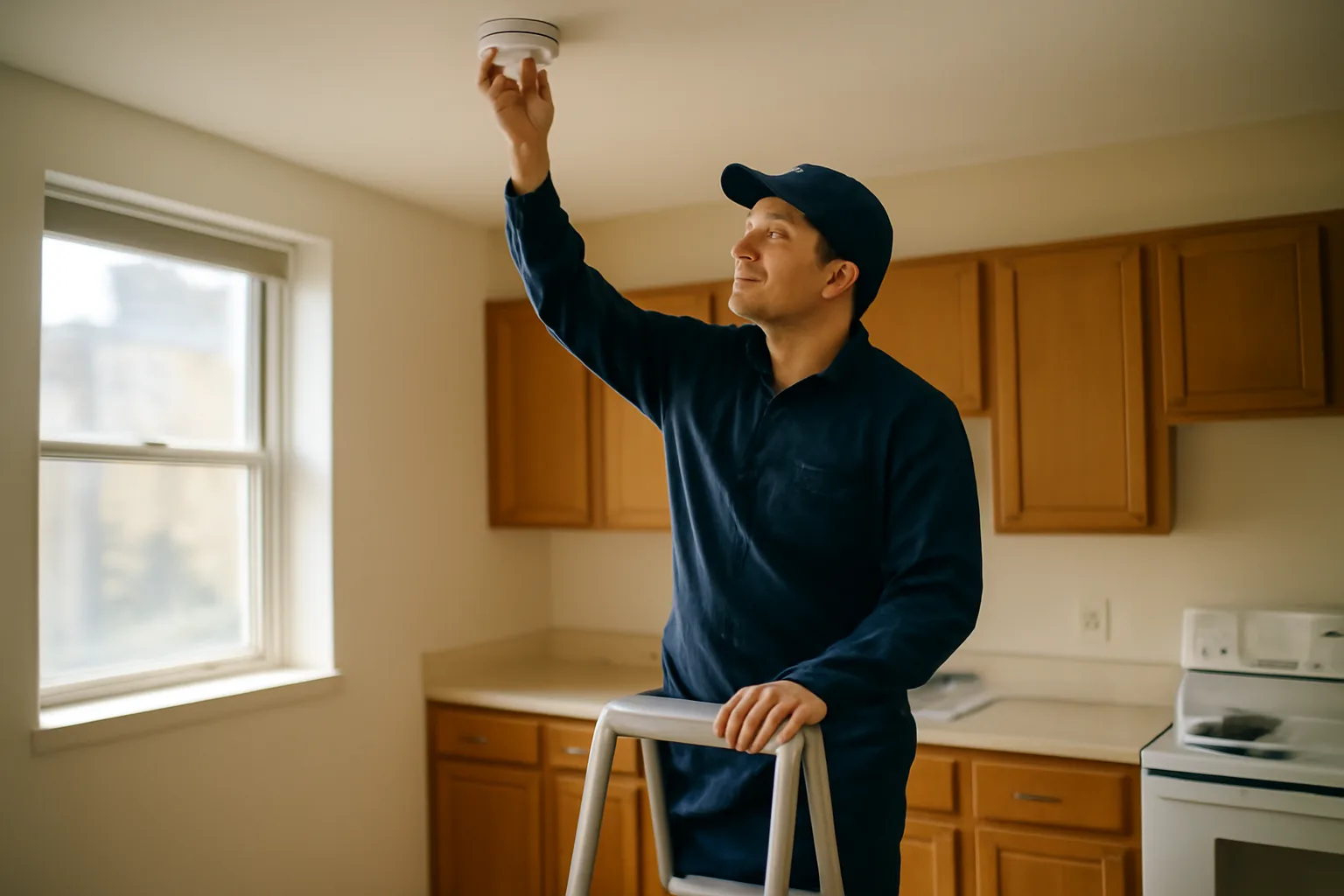
During a rental licensing or code inspection, the inspector is generally checking for health and safety code compliance, not poking through your tenant's belongings or personal papers. Typical items on a rental inspection checklist include working smoke and carbon monoxide detectors, functioning heat, hot water, and plumbing, adequate electrical service and no exposed wiring, no significant mold or water damage, secure locks on exterior doors and windows, proper egress from bedrooms, and no obvious pest infestation. For a landlord conducting their own pre-lease or move-out walk-through (as opposed to a government inspector), you can generally document the condition of the unit itself: walls, floors, appliances, fixtures, cabinets, and any damage beyond normal wear and tear. You typically can't search a tenant's personal belongings, and you need proper notice before entering an occupied unit for anything beyond an emergency, under most state entry-notice statutes. Government inspectors conducting a licensing inspection also generally need either the tenant's consent, the landlord's consent, or a warrant to enter an occupied unit, per Fourth Amendment protections against unreasonable searches as applied to administrative inspections (see Camara v. Municipal Court, 387 U.S. 523 (1967), which held that administrative housing inspections require a warrant absent consent) [5]. In practice, most tenants and landlords consent because refusing just delays the process and can trigger its own violation notice for non-cooperation.
How much notice does a landlord have to give before entering or ending a tenancy?
This depends entirely on your state and the purpose of the notice, and there's no single national number. For routine entry, California requires 24 hours' written notice under Civil Code Section 1954, though the statute allows 'reasonable notice' to be presumed at 24 hours [6]. Other states vary: some set 24 hours, some set 48, and a few don't specify a number at all and just require 'reasonable notice.' For ending a tenancy or raising rent, notice periods scale with tenancy length in many states. California requires 30 days' notice to terminate a month-to-month tenancy under one year, and 60 days if the tenant has lived there a year or more, under Civil Code Section 1946.1 [6]. Other states use flat 30-day rules, some use 60, and lease-based (fixed-term) tenancies typically just end on the lease end date with no additional notice required unless the lease says otherwise. For rental license inspections specifically, the notice period is set by the city ordinance, not state landlord-tenant law, and it's commonly somewhere in the 24-hour to two-week range depending on the city; confirm with your city rental licensing office for the exact number that applies to your inspection type.
What rights do tenants have without a lease?
A tenant without a written lease, sometimes called a tenant-at-will or a month-to-month tenant, still has real legal rights. Verbal agreements to pay rent for the use of a property generally create a tenancy under state law, and the tenant gets the same basic protections as a tenant with a written lease: the right to a habitable unit, protection from illegal lockouts and self-help eviction, and the right to proper notice before the landlord can end the tenancy or raise the rent. What a no-lease tenant typically doesn't get is a guarantee of a fixed rent for a set period. A month-to-month arrangement (which is what a no-lease tenancy legally becomes once rent is accepted) can usually be ended by either party with the state's standard notice period, commonly 30 days, though some states and cities require longer for tenants who've been in place a long time. Without a lease, both landlord and tenant also lose any lease-specific clauses (pet policies, subletting rules, renewal terms), so disputes tend to default to whatever the state's baseline landlord-tenant statute says. The habitability floor doesn't disappear just because there's no paper lease. Every state has some version of an implied warranty of habitability that applies regardless of whether the agreement is written or verbal.
Why do landlords require renters insurance?
Landlords require renters insurance mainly to shift liability and personal property risk off the landlord's own policy and onto the tenant's. A standard landlord (dwelling) insurance policy covers the building structure and the landlord's own liability, but it generally does not cover a tenant's personal belongings, and it may not fully cover liability claims that arise from the tenant's own actions (like the tenant's dog biting a visitor, or the tenant leaving a candle burning). Requiring renters insurance, typically with a modest liability minimum (commonly $100,000, sometimes $300,000) and naming the landlord as an 'interested party' or additional insured, gives the landlord a second layer of protection: if a fire starts in the tenant's unit due to the tenant's negligence, the tenant's insurer, more than the landlord's, is on the hook for damages and any resulting liability claims from other affected units. It's legal in the large majority of states for a landlord to require renters insurance as a lease condition, as long as the requirement is applied uniformly and doesn't function as a pretext for discrimination under the Fair Housing Act. Some cities and states have specific caps on what coverage amount a landlord can require, so check your state's landlord-tenant statute or your city's rental housing office before setting the number in your lease.
What can't a landlord do in Ohio specifically?
Ohio's landlord obligations and prohibitions are set out in Ohio Revised Code Chapter 5321, the Ohio Landlords and Tenants Act. A few specific things Ohio landlords cannot legally do: A landlord cannot shut off utilities, change the locks, or remove a tenant's belongings to force the tenant out, sometimes called 'self-help eviction.' Ohio law requires landlords to go through the formal eviction process in court (a forcible entry and detainer action) rather than taking matters into their own hands [7]. A landlord cannot retaliate against a tenant for exercising a legal right, like reporting a code violation to a building inspector or joining a tenant organization; ORC 5321.02 specifically prohibits a landlord from increasing rent, decreasing services, or bringing an eviction action in retaliation for a tenant complaint made in good faith [8]. A landlord also cannot ignore their own maintenance obligations under ORC 5321.04, which requires landlords to keep the premises in a fit and habitable condition, comply with building and housing codes, and keep common areas safe and sanitary [9]. If a landlord fails to do this after receiving notice, Ohio tenants have statutory remedies, including in some cases the right to deposit rent with the court (an 'escrow' remedy) rather than paying the landlord directly, under ORC 5321.07 .
How does US rental licensing actually work city to city?
| Registration/license fee | Roughly $20 to $300+ per unit, per cycle | |
|---|---|---|
| Renewal cycle | Annual, biennial, or every 3 years | |
| Inspection requirement | Some cities require it every cycle, some only on complaint or turnover | |
| First violation fine | Often starts in the $100 to $500 range, escalates on repeat | |
| Grace period after notice | Commonly 10 to 30 days to cure a violation before a fine | Because these numbers vary this much, the only reliable source is your specific city's rental licensing or code enforcement office page. If you got a notice, a deadline letter, or a fine, the notice itself usually has the ordinance number and a phone number or portal link; start there rather than guessing based on what a neighboring city does. If you want a head start on organizing the paperwork side (proof of ownership, unit info, prior inspection history, insurance certificate) before your city's inspection date, that's what our $79 Rental Packet Builder is designed to help with. It's a one-time prep packet, not a substitute for your city's actual application, but it saves the scramble of hunting down documents the week before an inspector shows up. |
There's no standard model, but most mandatory rental licensing ordinances share a similar structure: register the unit with the city, pay a fee, pass (or schedule) an inspection, and renew on a set cycle, typically annually or every two to three years. Here's a general comparison of how the pieces tend to differ, though every number below should be confirmed against the specific city's current ordinance since these change often: | Element | Typical range across US cities |
What should I do right now if I got a licensing notice or fine?
Read the notice for three things first: the ordinance section cited, the cure deadline, and whether it's a first notice or an escalated fine. Most cities give a cure period before a fine becomes final, and many will waive or reduce a first-time fine if you fix the issue and respond within the window; call the office listed on the notice and ask directly whether a cure period or fine reduction applies to your situation. Second, get your paperwork together: proof of ownership or authorization to act as landlord, your rental license application if you haven't already filed one, your insurance certificate, and any prior inspection reports. If this is your first time dealing with your city's rental licensing program, expect the inspector to check the basics covered above (smoke detectors, heat, plumbing, egress, pest issues) rather than anything unusual. Third, don't ignore it and hope it goes away. Rental license violations tend to compound: a lapsed license plus a missed inspection plus an unresolved code violation can turn a $100 fine into a stop-rent order or a lien on the property in some cities. If you're unsure whether your city even requires a license, search '[your city] rental license' or '[your city] rental registration' directly rather than relying on a general search that might surface unrelated results, including, apparently, UK housing law.
Frequently asked questions
Does the UK have a national landlord license like some US cities do?
No single national license exists. England and Wales use council-run licensing under the Housing Act 2004 (mandatory HMO licensing, additional licensing, and selective licensing), Scotland has its own landlord registration system, and Northern Ireland has a separate private tenancies register. Check your specific local council, not a UK-wide source.
How to become a landlord in the US, in the simplest terms?
Own or have legal authority over residential property, confirm local zoning allows rental use, check whether your city requires rental registration or licensing, get landlord liability insurance, and learn your state's landlord-tenant law on deposits, notice, and habitability before you sign a lease with a tenant.
Who is responsible for a rental property walk-through inspection in California?
For move-in/move-out inspections, the landlord is responsible for offering and conducting the initial inspection if the tenant requests one, with 48 hours' written notice, under California Civil Code Section 1950.5(f). For city-mandated rental license inspections, the landlord remains legally responsible for scheduling and compliance even though a city inspector performs the visit.
What is landlording?
Landlording is the day-to-day work of owning and managing rental property: collecting rent, handling maintenance requests, screening tenants, tracking license renewals, and staying current with state and local landlord-tenant law. It's mostly administrative work, more than owning a building and cashing checks.
What is a landlord, legally?
A landlord is the property owner or the owner's authorized agent who rents residential space to a tenant under a lease or rental agreement. Many city rental licensing ordinances define 'owner' broadly enough to include LLC members, trust beneficiaries, and property managers, more than the person who personally collects rent.
What rights do tenants have without a lease?
A tenant with no written lease (a month-to-month or at-will tenant) still gets a habitable unit, protection from illegal lockouts, and the right to standard notice, commonly 30 days, before the tenancy ends or rent increases. What they lose is a fixed lease term and any lease-specific clauses like pet or sublet policies.
How do I be a good landlord day to day?
Respond to repair requests promptly, document every notice and repair, know your local rent and notice rules, and track your rental license renewal date the same way you track a mortgage payment. Most landlord problems come from missed deadlines and poor recordkeeping, not tenant disputes.
Why do landlords require renters insurance?
Renters insurance shifts liability for a tenant's belongings and tenant-caused damage or injury onto the tenant's own policy instead of the landlord's. It's legal in most states as a uniform lease condition, commonly requiring $100,000 to $300,000 in liability coverage with the landlord named as an interested party.
How much notice does a landlord have to give before entering the unit?
It varies by state. California requires 24 hours' written notice under Civil Code Section 1954. Other states set 24 or 48 hours, and some just require 'reasonable notice' with no fixed number. City rental inspection notice periods are separate and set by local ordinance, commonly 24 hours to two weeks.
What can a landlord look at during an inspection?
Government rental license inspectors check health and safety items: smoke and CO detectors, heat, plumbing, electrical safety, egress, mold, pests, and locks. They generally cannot search a tenant's personal belongings and typically need consent or a warrant to enter an occupied unit under Fourth Amendment protections applied to administrative searches.
What can't a landlord do in Ohio?
Ohio landlords cannot shut off utilities or change locks to force a tenant out (self-help eviction is illegal; landlords must use the court eviction process). They also cannot retaliate against a tenant for a good-faith code complaint under ORC 5321.02, and cannot ignore habitability duties under ORC 5321.04.
Why did my search for 'landlord license UK' bring up US rental licensing pages?
Search engines often mix UK and US results for generic landlord licensing queries because both countries use similar terms (landlord license, rental licensing, HMO) for structurally different systems. If you own US property, search your specific city name plus 'rental license' instead of a general or UK-inclusive term.
Do I need a rental license if I only rent one unit?
Possibly. Many US cities require a rental license for any rented dwelling unit regardless of how many units the landlord owns, including single-family rentals and individual condo units. Licensing isn't limited to large multi-unit landlords; confirm with your specific city's rental licensing office since single-unit exemptions vary widely.
Sources
- UK Government, The Licensing of Houses in Multiple Occupation (Prescribed Description) (England) Order 2018: Mandatory HMO licensing in England applies to HMOs with five or more occupants forming more than one household, with the storey threshold removed effective 1 October 2018
- UK Housing Act 2004, sections 56 and 80: Local councils can designate additional licensing and selective licensing areas under sections 56 and 80 of the Housing Act 2004
- California Legislative Information, Civil Code Section 1950.5: California landlords must offer an initial move-out inspection with 48 hours' written notice if requested by the tenant
- Camara v. Municipal Court, 387 U.S. 523 (1967): Administrative housing inspections generally require either consent or a warrant under the Fourth Amendment
- California Legislative Information, Civil Code Sections 1954 and 1946.1: California requires 24 hours' notice for routine landlord entry and 30 or 60 days' notice to terminate a month-to-month tenancy depending on tenancy length
- Ohio Revised Code Chapter 5321, Landlords and Tenants: Ohio landlords must use the formal court eviction process rather than self-help measures like shutting off utilities or changing locks
- Ohio Revised Code Section 5321.02: Ohio law prohibits landlords from retaliating against tenants who make good-faith complaints about code violations
- Ohio Revised Code Section 5321.04: Ohio landlords must keep rental premises in a fit and habitable condition and comply with applicable building and housing codes
- Ohio Revised Code Section 5321.07: Ohio tenants can, in certain conditions, deposit rent with the court instead of paying the landlord when the landlord fails to fulfill habitability obligations after notice