Last updated 2026-07-25
TL;DR
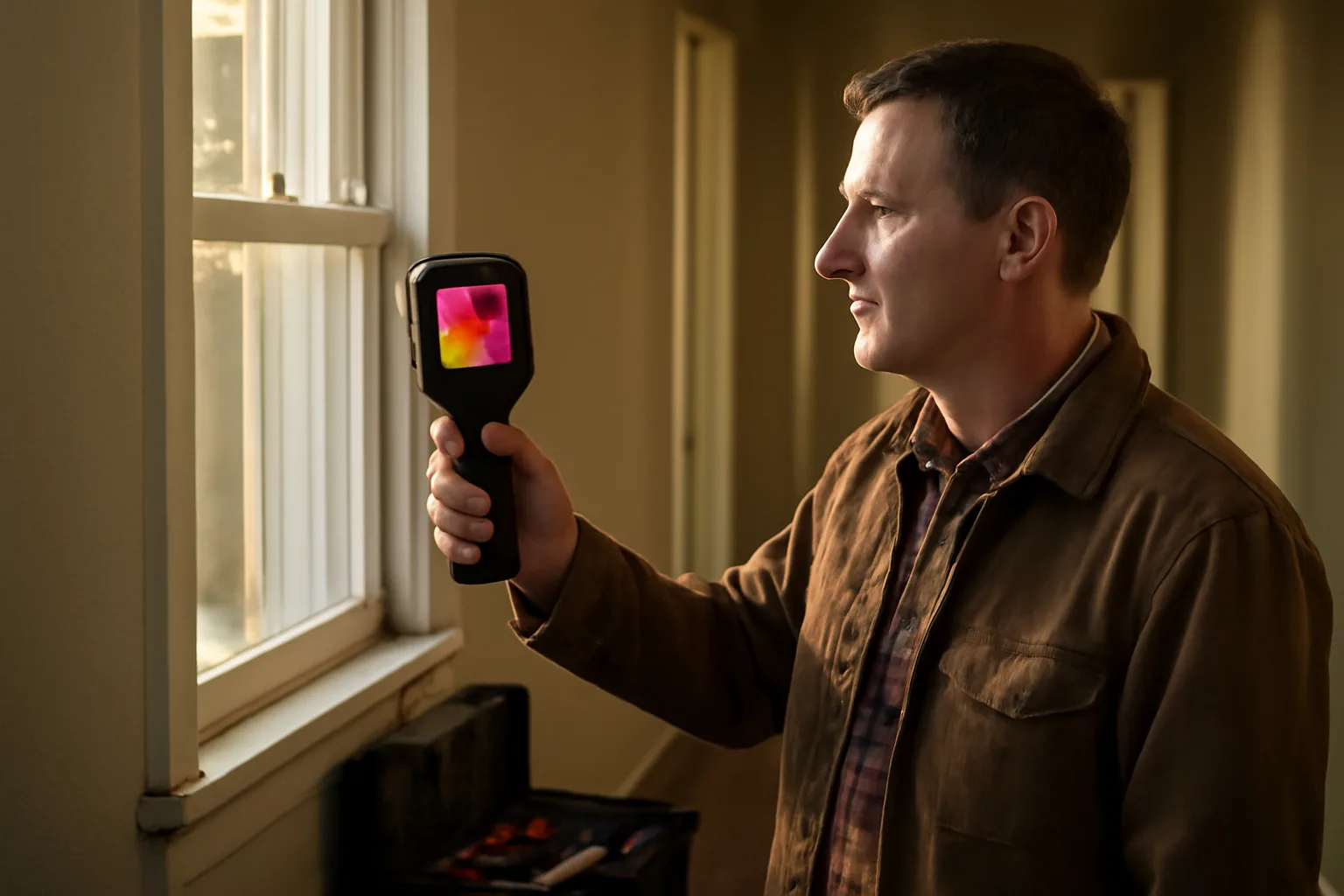
Infrared (thermal) cameras for rental property inspections typically rent for $50-$150 per day or $150-$400 per week from tool rental chains, camera rental houses, and home inspector supply outlets. Most cities don't require thermal imaging for routine rental licensing inspections, so check your city's actual inspection checklist before you spend money on equipment you may not need.
Do I actually need an infrared camera for a rental inspection?
Probably not, and that's worth saying up front before you spend a weekend rental fee on gear you don't need. Most mandatory rental-licensing programs (the kind that require you to register a unit, pay a fee, and pass a city inspector's walkthrough) check for things like working smoke detectors, secure railings, functioning heat, no exposed wiring, and basic sanitation. None of that requires thermal imaging. Infrared cameras earn their keep in a narrower set of situations: hunting for hidden moisture behind walls after a leak, checking insulation gaps before winter, spotting overheating electrical panels, or documenting a dispute over whether a heating system actually reaches every room. Some private home inspectors use thermal imaging as an add-on service, and HUD's own weatherization and healthy-housing guidance references infrared cameras as one tool for detecting moisture intrusion in building envelopes. But a city rental inspector doing a routine annual or biennial compliance check is almost always working off a fixed checklist tied to your local housing code, not scanning your walls for heat signatures. If your city's notice specifically mentions moisture, mold complaints, or an energy audit tied to a weatherization program, that's a different story. Otherwise, save the money and put it toward fixing whatever the notice actually flagged.
Who rents out infrared inspection cameras and what does it cost?
| General tool rental chain | $50-$100 | $150-$300 | Availability varies by branch; call first | |
|---|---|---|---|---|
| Specialty camera/inspection rental house | $75-$150 | $200-$400 | Wider model selection, better for pro-grade needs | |
| Home inspector supply rental | $60-$120 | $175-$350 | May require inspector license or deposit | These ranges are estimates based on typical market pricing for consumer and mid-grade thermal imaging equipment; no single national price list exists, so confirm current rates directly with the rental company before you book. |
You've got three realistic sources: general tool rental chains, specialty camera/AV rental houses, and home inspection supply companies that sometimes rent to non-professionals. Pricing varies a lot by camera resolution and brand, since thermal cameras range from consumer-grade phone attachments to $5,000+ professional units. General tool rental outlets (the kind that also rent pressure washers and floor sanders) sometimes carry basic thermal imaging cameras, usually a mid-range FLIR or Fluke model, running roughly $50 to $100 per day or $150 to $300 per week, though exact rates depend entirely on your local branch and you should call ahead since not every location stocks them. Specialty camera and inspection-equipment rental companies that cater to contractors and home inspectors tend to carry a wider range, from basic handheld units to higher-resolution models, and daily rates there can run $75 to $150 with weekly discounts bringing the per-day cost down. A handful of online rental marketplaces for professional camera and sensor gear also list thermal cameras, with weekly rentals in a similar $150 to $400 band depending on resolution and brand. | Rental source | Typical daily rate | Typical weekly rate | Notes |
Is it cheaper to just hire a home inspector with a thermal camera?
For a one-time check, often yes. A home inspector who already owns a thermal camera and knows how to read it will typically charge a flat fee for a moisture or insulation scan, and that fee usually covers the labor and interpretation, more than equipment time. Renting a camera yourself only makes financial sense if you plan to use it across multiple units or multiple times a year, and if you're confident interpreting the readings yourself. Thermal cameras are notoriously easy to misread if you don't know what you're looking at. A cold spot on a wall can mean missing insulation, a moisture intrusion, an air leak, or just a stud behind drywall. The American Society of Home Inspectors and building science researchers generally treat thermal imaging as a screening tool that points you toward areas needing further investigation (moisture meters, invasive inspection), not a stand-alone diagnostic [1]. If you rent the camera but don't know how to distinguish a thermal bridge from an actual leak, you can end up chasing a problem that isn't there, or missing one that is. If the issue driving your search is a specific tenant complaint (cold room, damp smell, high heating bill), a licensed inspector who does this weekly will usually get you a faster, more reliable answer than a DIY rental.
What can a landlord look at during an inspection?
During a routine rental licensing or code inspection, the inspector (and you, if you're doing your own pre-inspection walkthrough) can generally look at anything related to health, safety, and code compliance: smoke and carbon monoxide detectors, electrical panels and outlets, plumbing fixtures, heating and cooling systems, window and door locks, egress routes, handrails and guardrails, and signs of pest infestation or structural damage. What inspectors typically cannot do, in most jurisdictions, is rummage through personal belongings, closets, or areas unrelated to the inspection's stated purpose. Inspections are generally limited to accessible, common-sense checks tied to the housing code, not a general search of the tenant's possessions. If you're a landlord doing your own periodic walkthrough (separate from a city inspection), your lease and state law govern what you can inspect and how much notice you owe the tenant, covered more below. If your inspection notice mentions specific items like smoke detector placement, GFCI outlets in wet areas, or window egress in bedrooms, that's your city following a fairly standard checklist used by most municipal housing codes, not a novel requirement invented for your property.
Who is responsible for a rental property walk-through inspection in California?
In California, move-in and move-out walk-through inspections are primarily the landlord's responsibility, and state law actually requires landlords to offer an initial move-out inspection before the tenant vacates if the landlord intends to withhold any part of the security deposit. Under California Civil Code Section 1950.5, the landlord must notify the tenant of the right to request an initial inspection, conducted no earlier than two weeks before the end of the tenancy, and give the tenant an itemized statement of any deficiencies noted so the tenant has a chance to fix them before move-out [2]. That statute reads, in part, that the landlord shall give the tenant "reasonable notice of no less than 48 hours" before either the initial or final inspection, unless the tenant waives that notice in writing [2]. So the landlord initiates and conducts the walkthrough, but the tenant has a right to be present and to get advance notice. Separately, in cities with mandatory rental inspection or licensing programs, a city building or code inspector, not the landlord, conducts the compliance inspection tied to the rental license, and that's a different process governed by local housing code rather than Civil Code 1950.5.
How much notice does a landlord have to give before an inspection?
This depends on your state and, for the move-out inspection specifically, California's 48-hour rule under Civil Code 1950.5 [2]. Many other states set their own notice requirements for routine landlord entry to inspect, repair, or show a unit, and the number ranges from 24 to 48 hours in most statutes that address it directly, though some states have no statutory notice requirement at all and instead rely on "reasonable notice" language. For city rental licensing inspections, the notice period is set by the municipality, not state landlord-tenant law, and it's usually spelled out in the inspection scheduling letter you receive. Some cities give a couple weeks' notice with a scheduled window; others allow the inspector to show up within a shorter posted notice period specified in the local housing code. Because this varies by city and by the type of inspection, confirm your specific notice requirement with your city rental licensing office and check your state's landlord-tenant statute for routine entry notice, since these are two separate sets of rules that sometimes overlap but aren't identical.
What can't a landlord do in Ohio?
Ohio landlord-tenant law is codified mainly in Ohio Revised Code Chapter 5321. Among the restrictions: a landlord cannot enter the rental unit except at reasonable times and, except in an emergency, must give reasonable notice before entering to inspect, make repairs, or show the unit [3]. Ohio Revised Code 5321.04 also prohibits a landlord from shutting off utilities, changing locks, or removing a tenant's possessions as a way of forcing the tenant out, sometimes called "self-help eviction," which is illegal in Ohio just as it is in most states [3]. Ohio landlords also can't retaliate against a tenant for exercising legal rights, such as filing a code complaint or joining a tenant organization, under ORC 5321.02 [4]. And a landlord can't ignore the duties laid out in ORC 5321.04, which include keeping the unit in a fit and habitable condition, maintaining common areas, and keeping electrical, plumbing, and heating systems in good working order [3]. Ohio's statute doesn't specify an exact number of hours for entry notice, unlike some states; it uses the phrase "reasonable notice," which courts have generally interpreted as at least 24 hours in similar contexts, though this hasn't been rigidly defined by the statute itself. If you're managing rentals in Ohio and want the specific text, ORC 5321.04 is the section to read directly rather than relying on secondhand summaries.
What rights do tenants have without a lease?
A tenant without a written lease, often called a tenant-at-will or a periodic tenant, still has legal rights. In nearly every state, an oral or implied rental agreement creates a month-to-month tenancy, and the tenant is entitled to the same basic protections as a tenant with a written lease: the right to a habitable unit, protection from illegal lockouts and utility shutoffs, and the right to proper notice before the landlord ends the tenancy. The main practical difference is notice and proof. Without a written lease, the terms (rent amount, due date, who's responsible for what) can be harder to establish if there's a dispute, and courts often look at the parties' pattern of conduct, like how rent has been paid and accepted historically, to figure out what the agreement actually was. State law typically requires a landlord to give 30 days' notice (sometimes more for longer tenancies) to end a month-to-month tenancy without a written lease, though the exact number varies by state and by how long the tenant has lived there. A tenant without a lease is not an unprotected tenant. They still can't be evicted without proper legal process, and the landlord still owes them the state's implied warranty of habitability and any local tenant protections that apply, such as tenant rights ordinances covering notice, retaliation, and habitability that exist independently of whether a lease was ever signed.
Why do landlords require renters insurance?
Landlords require renters insurance mainly to shift liability and property-damage risk off themselves and onto the tenant's own policy. A standard landlord insurance policy covers the building structure and the landlord's own property, but it typically doesn't cover a tenant's personal belongings or protect the tenant from liability if, say, a guest is injured in the unit or the tenant accidentally causes a fire. Requiring renters insurance (commonly requiring $100,000 in liability coverage, sometimes more) means that if a tenant's negligence causes damage, water damage from an overflowing tub, a kitchen fire, a burst waterbed, the tenant's insurer pays out rather than the landlord's policy or the landlord's own pocket. It also protects the tenant: without it, a tenant whose apartment burns has no coverage for their own furniture, electronics, or clothing, since the landlord's policy won't reimburse them. There's no federal law requiring renters insurance, and state law rarely mandates it either; it's a landlord policy choice written into the lease, and its enforceability depends on state contract law and, in some cities, local rental licensing rules that address insurance requirements explicitly. If you require it, spell out the minimum coverage amount and proof-of-insurance timeline clearly in the lease rather than leaving it vague.
How to become a landlord: the basic steps
Becoming a landlord starts well before you buy a property. At minimum, you need to figure out the financing (investment property mortgages typically require larger down payments than owner-occupied loans, often 15-25%), decide on a legal structure (many landlords hold rental property in an LLC to separate personal and business liability), and understand your local rules before you ever list a unit. Once you own or are renting out a unit, the practical steps are: check whether your city or county requires a rental license or registration (a growing number of cities do, and fines for operating unregistered can run into hundreds of dollars per violation, with some cities charging per unit per month of noncompliance), screen tenants consistent with the Fair Housing Act's protected classes [5], draft a lease that matches your state's landlord-tenant statute, and set up a system for collecting rent, tracking maintenance requests, and documenting the unit's condition at move-in. Many first-time landlords underestimate the compliance side: rental registration, lead paint disclosure for pre-1978 housing under federal law , smoke detector requirements, and habitability standards. If your city sends a licensing notice or inspection deadline, that's usually your first real trigger to get organized, and tools like a City Rental License & Inspection Prep Packet exist specifically to help first-time landlords walk through a city's checklist item by item before the inspector shows up, for a flat $79 rather than guessing.
What is landlording and what is a landlord, exactly?
A landlord is the owner (or an authorized agent of the owner) of real property who rents that property to another party, the tenant, in exchange for rent, under a lease or rental agreement. Landlording is the informal term for the ongoing work of managing that relationship: collecting rent, maintaining the property, handling repairs, screening new tenants, and staying compliant with state and local law. Legally, being a landlord comes with duties, more than rights. Most states impose an implied warranty of habitability, meaning the landlord must keep the unit fit to live in (working plumbing, heat, structural safety) regardless of what the lease says, and violating that duty can expose a landlord to rent withholding, repair-and-deduct remedies, or code enforcement action depending on the state. Landlording isn't purely passive income. Between rental licensing compliance, maintenance calls, tenant screening, and the periodic city inspection, a landlord with even a single unit has ongoing legal and practical responsibilities that don't stop once the lease is signed.
What should I actually do before a rental inspection instead of renting a thermal camera?
Start with your city's actual inspection checklist, not a general internet list, since housing codes vary block by block in some counties. Most cities publish or mail a checklist covering smoke and CO detector placement, egress window requirements, handrail height, electrical panel labeling, and plumbing fixture condition. Walk your unit against that specific list first. Common, cheap fixes that resolve a large share of failed inspections: replace expired smoke detectors (most have a 10-year lifespan stamped on the back), add GFCI outlets in bathrooms and kitchens if missing, secure loose handrails, and clear egress paths in bedrooms and basements. None of these need thermal imaging to find; they need a flashlight, a screwdriver, and the checklist in hand. If you genuinely suspect a hidden moisture or insulation problem (a tenant complaint about a cold or damp room, a past leak you're not sure got fully dried out), that's when calling a licensed home inspector who owns thermal equipment, rather than renting a camera yourself, is usually the better move. You get the equipment and the trained interpretation in one visit instead of paying rental fees for a tool you might misread.
Frequently asked questions
Where can I rent an infrared camera for a home or rental inspection?
Check general tool rental chains first (call ahead, not every branch stocks thermal cameras), then specialty camera or inspection-equipment rental houses, and home inspector supply companies that sometimes rent to the public. Expect roughly $50-$150 per day or $150-$400 per week depending on camera resolution and rental source.
Do city rental inspectors use infrared cameras during licensing inspections?
Rarely, for routine licensing inspections. Most municipal rental inspections check code items like smoke detectors, electrical safety, and habitability using a visual checklist, not thermal imaging. Infrared is more common in specialized moisture, energy audit, or insurance-related inspections. Confirm with your city rental licensing office if you're unsure what your specific inspection covers.
How to become a landlord if I've never rented out property before?
Secure financing for the property, decide on a legal structure like an LLC, check whether your city requires rental registration or licensing, screen tenants under Fair Housing Act rules, and draft a lease matching your state's landlord-tenant statute. Then set up systems for rent collection, maintenance, and documenting the unit's condition.
Who is responsible for a rental property walk-through inspection in California?
The landlord is responsible for offering and conducting the move-out walk-through under California Civil Code 1950.5, giving the tenant at least 48 hours' notice and an itemized list of deficiencies before withholding deposit money. City code inspections, separately, are conducted by municipal inspectors under local housing law.
What is landlording?
Landlording is the ongoing work of owning and managing rental property: collecting rent, maintaining the unit, screening tenants, handling repairs, and complying with state and local landlord-tenant law and any rental licensing requirements your city imposes.
What is a landlord?
A landlord is the owner or authorized agent of real property who rents that property to a tenant in exchange for rent under a lease or rental agreement, taking on legal duties like maintaining habitability in most states.
What rights do tenants have without a lease?
Tenants without a written lease generally become month-to-month tenants and keep the same core rights as leased tenants: habitability, protection from illegal lockouts, and a right to proper notice (often 30 days, varying by state) before the landlord ends the tenancy.
How to be a landlord day-to-day, once I already own a rental?
Respond to maintenance requests promptly, keep the unit compliant with your city's rental licensing checklist, document the unit's condition at move-in and move-out, give proper notice before entry, and keep records of rent payments and communications in case of a dispute.
Why do landlords require renters insurance?
Renters insurance shifts liability for tenant negligence (fires, water damage, injuries) and coverage for the tenant's own belongings off the landlord's policy and onto the tenant's insurer, protecting both parties financially in ways the landlord's own building policy doesn't.
How much notice does a landlord have to give before an inspection?
It depends on the state and inspection type. California requires 48 hours' notice for move-out inspections under Civil Code 1950.5. Many states require 24-48 hours for routine entry. City licensing inspections follow whatever notice period the municipality specifies in its inspection letter.
What can a landlord look at during an inspection?
Landlords and city inspectors can generally check safety and code items: smoke/CO detectors, electrical panels, plumbing, heating, egress windows, handrails, and signs of pest or structural problems. They typically can't search personal belongings or areas unrelated to habitability and code compliance.
What can't a landlord do in Ohio?
Under Ohio Revised Code 5321.04, a landlord can't enter without reasonable notice except in emergencies, can't shut off utilities or change locks to force a tenant out (illegal self-help eviction), and can't retaliate against a tenant for exercising legal rights under ORC 5321.02.
Is renting an infrared camera worth it for a single rental unit?
Usually not. For a one-time moisture or insulation check, hiring a home inspector who already owns and knows how to read a thermal camera is typically more cost-effective and reliable than renting the equipment yourself and interpreting the results without training.
Sources
- California Civil Code Section 1950.5: Landlords must offer an initial move-out inspection with at least 48 hours' notice before withholding security deposit funds
- Ohio Revised Code Section 5321.04: Ohio landlords must give reasonable notice before entry, keep units habitable, and cannot shut off utilities or change locks to force a tenant out
- Ohio Revised Code Section 5321.02: Ohio law prohibits landlord retaliation against tenants exercising legal rights
- HUD, Fair Housing Act overview: Tenant screening must comply with Fair Housing Act protected classes
- EPA/HUD, Lead-Based Paint Disclosure Rule: Federal law requires lead paint disclosure for pre-1978 rental housing