Last updated 2026-07-25
TL;DR
A house rental checklist should cover legal setup, unit condition, lease terms, insurance requirements, notice rules for entry, and move-in documentation. Most disputes trace back to skipped steps: no written move-in inspection, unclear notice policy, or missing insurance requirement. Cities with rental licensing add a layer: registration, inspection scheduling, and fee deadlines on top of the basics.
what is landlording, and what does a landlord actually do
Landlording is the ongoing job of owning residential property and renting it to someone else for money. It's more than signing a lease and cashing checks. It includes finding tenants, screening them, keeping the unit habitable, handling repairs, collecting rent, following state and local law, and eventually dealing with move-out or eviction if things go sideways. A landlord, legally, is the person or entity that owns the rental property (or holds a lease and subleases it) and grants another party the right to occupy it in exchange for rent. Most states define "landlord" in their landlord-tenant statutes, often lumped together with "lessor." For example, many state codes define a landlord as the owner, lessor, or sublessor of a dwelling unit. The day-to-day of landlording breaks into a few buckets: legal compliance (leases, licensing, habitability standards), maintenance (repairs, inspections, capital improvements), financial management (rent collection, security deposits, taxes), and people management (tenant screening, communication, conflict resolution). Landlords with 1-10 units usually do all of this themselves, which is why a checklist matters more for you than it does for a property management company with a compliance department. The U.S. Department of Housing and Urban Development's Office of Fair Housing enforces the federal Fair Housing Act, which prohibits discrimination in rental housing based on race, color, national origin, religion, sex, familial status, and disability [1]. Every landlord, regardless of portfolio size, has to follow this law from the first ad you post.
how to become a landlord: the basic steps in order
Becoming a landlord isn't a licensing process by itself in most states (though renting the unit out often is, at the city level). Here's the realistic order of operations. 1. Confirm you can legally rent the property. Check your mortgage for owner-occupancy clauses, check zoning for rental restrictions, and check if your city requires a rental license or registration before you advertise the unit. Many cities with mandatory rental licensing require registration before the first tenant moves in, not after. 2. Get the property up to code. This means working smoke detectors, carbon monoxide detectors where required, functioning heat, safe electrical, no active leaks, and pest-free conditions. If your city does inspections, this is also prep for that visit. 3. Get landlord-specific insurance (a landlord/dwelling policy, not a standard homeowners policy) and decide your renters insurance requirement for tenants. 4. Set your rent price based on comparable local units, decide your security deposit amount within your state's legal cap, and draft or buy a lease that matches your state's landlord-tenant law. 5. Screen tenants consistently: same criteria, same process, for every applicant, to stay compliant with fair housing law [1]. 6. Do a documented move-in walkthrough with photos or video, ideally with the tenant present, and get it signed. 7. Register with your city's rental licensing office if required and calendar the renewal and inspection dates. This is the step new landlords miss most often, and it's the one that generates fines. If you want a structured way to track this across multiple cities or units, the $79 one-time City Rental License & Inspection Prep Packet at /rental-packet-builder is built around exactly this gap: matching your local license and inspection requirements to a documented prep checklist so you're not guessing what an inspector will look at.
the complete house rental checklist before you list the unit
Before you post a listing or hand over keys, run through this list. Treat it as a floor, not a ceiling; your city or state may add requirements on top. Legal and compliance
- Confirm zoning allows rental use
- Register or license the rental with your city if required (confirm with your city rental licensing office for the specific form and fee)
- Confirm lead paint disclosure requirement if the home was built before 1978, per the federal Lead-Based Paint Disclosure Rule under 42 U.S.C. 4852d [2]
- Confirm local requirements for smoke and carbon monoxide detectors
- Pull a copy of your state's landlord-tenant statute or a summary from your state attorney general's office Property condition
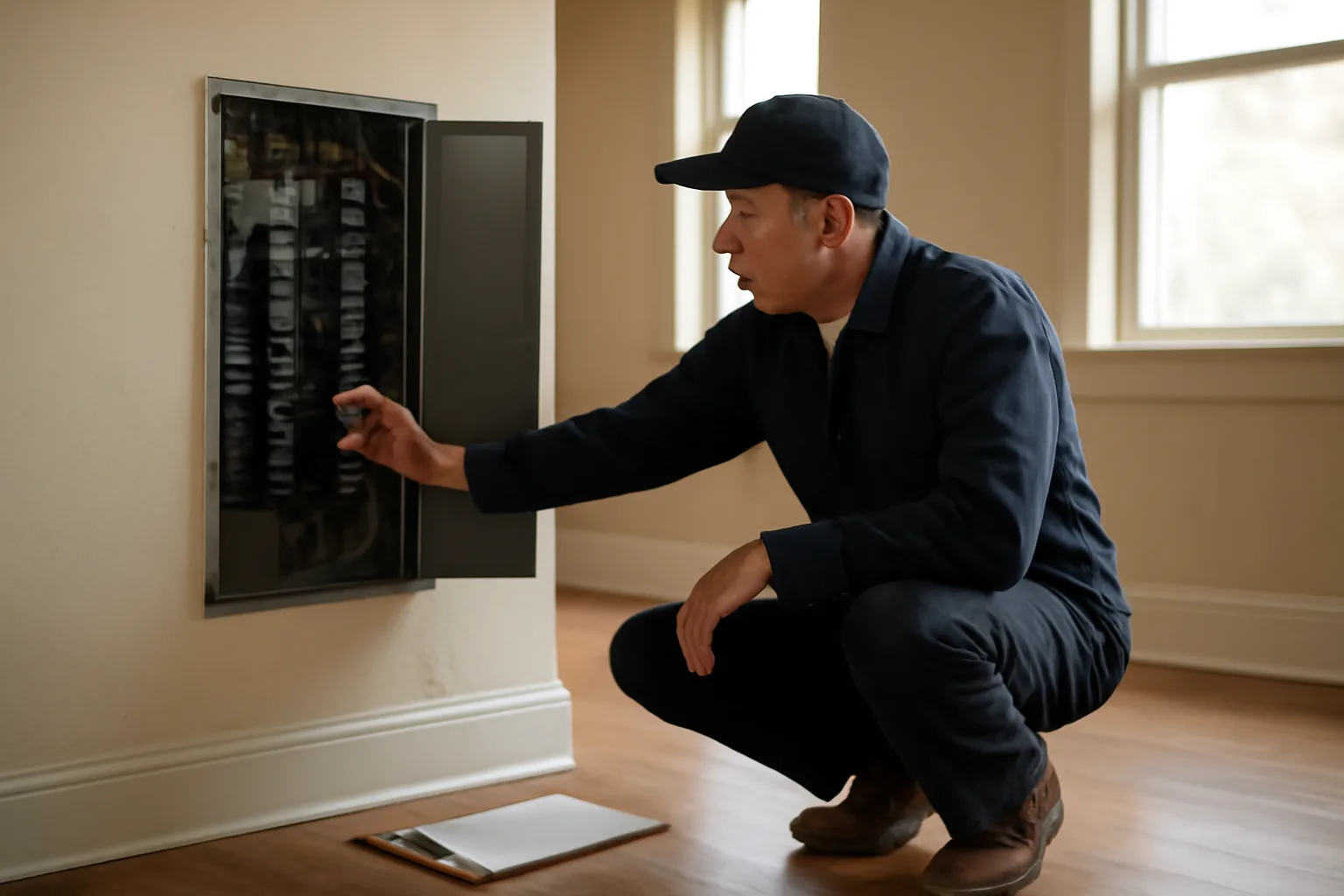
- Working smoke detectors in every required location, tested
- Carbon monoxide detectors if the unit has fuel-burning appliances or an attached garage (required in many states regardless of city rules)
- No active water leaks or visible mold
- Functioning heat system rated to maintain habitable temperature per local code
- Secure locks on all exterior doors and windows
- No exposed wiring or overloaded outlets
- Clear egress from bedrooms (a legal second exit, usually a window meeting minimum size) Financial and paperwork
- Signed lease matching your state's required disclosures
- Security deposit collected within your state's legal maximum and held per your state's deposit rules (some states require a separate account or interest payment)
- Move-in condition report, signed by both parties, with dated photos
- Renters insurance requirement documented in the lease if you're requiring it
- Landlord insurance policy in place and covering the unit as a rental (a standard homeowners policy typically excludes rental use) Ongoing
- Calendar for license renewal date and any recurring inspection
- System for tenant maintenance requests
- Documented process for notice before entry (see below) If you manage property across tenant-rights and multiple jurisdictions, the checklist above needs a city-specific supplement, because inspection checklists and notice periods vary.
who is responsible for the rental property walk-through inspection in california
In California, the move-in and move-out walk-through inspection responsibility sits with the landlord, but the process is shaped by statute, more than custom. California Civil Code Section 1950.5 requires landlords to give tenants the option of an initial inspection before move-out, specifically so the tenant can fix any deficiencies before the final deposit deduction happens. The statute states landlords must, "upon completion of the inspection, provide the tenant with an itemized statement specifying repairs or cleaning that are proposed to be the basis of any deductions" [3]. This pre-move-out inspection has to happen at a reasonable time, and the landlord must give at least 48 hours' written notice before it, unless the tenant waives that notice in writing [3]. This is separate from routine "repair and maintenance" inspections, which fall under California's general entry notice rule: 24 hours' written notice for non-emergency entry, per Civil Code Section 1954 [4]. So in California specifically, you're looking at two different inspection contexts: the pre-move-out inspection (48 hours' notice, tenant can request it or you offer it), and general entry for repairs or inspection (24 hours' notice). The landlord (or their authorized property manager) conducts the inspection either way. Tenants have the right to be present. If you're renting in a city with its own rental inspection ordinance layered on top of state law, like many California cities with proactive rental inspection programs, that inspection is usually conducted by a city inspector, not the landlord, and follows separate notice rules set by that city's ordinance. Confirm with your city rental licensing office for the specific notice period and inspection scope in that case.
what can a landlord look at during an inspection
A landlord can generally inspect anything reasonably necessary to check on the condition of the property, verify repairs, confirm lease compliance, or address a maintenance issue. That's the scope in most states: safety systems, general condition, and evidence of lease violations like unauthorized pets or occupants. What's typically fair game:
- Smoke and carbon monoxide detector function
- Signs of water damage, leaks, or mold
- HVAC and appliance function
- Evidence of pest infestation
- General cleanliness affecting habitability (not personal tidiness preference)
- Structural issues: doors, windows, flooring
- Unauthorized modifications to the unit
- Confirmation of occupancy matching the lease What's usually out of bounds without cause:
- Opening closed drawers, cabinets, or personal storage without a specific reason tied to the inspection purpose
- Searching for evidence unrelated to lease compliance or safety
- Photographing personal belongings unrelated to the inspection
- Entering without proper notice except in a genuine emergency Most state landlord-tenant statutes limit landlord entry to specific purposes: to make repairs, show the unit to prospective tenants or buyers, or in an emergency. Ohio's law, for instance, requires the landlord to give "reasonable notice" and enter "at reasonable times," and limits entry purposes to inspection, repairs, alterations, supplying services, or showing the unit, under Ohio Revised Code Section 5321.04 [5]. If your city runs a mandatory rental inspection program, the inspector's checklist is usually public. Ask your city rental licensing office for the inspection checklist in advance; most publish one, and reviewing it ahead of time is the single best way to avoid a failed inspection and a re-inspection fee.
how much notice does a landlord have to give before entering
Notice requirements vary by state, typically ranging from 24 to 48 hours for non-emergency entry, with no notice required for genuine emergencies. There's no federal standard; this is entirely state law (and sometimes city ordinance on top). A few examples to show the range:
- California: 24 hours' written notice presumed reasonable for routine entry, per Civil Code Section 1954 [4]
- Ohio: "reasonable notice," generally interpreted as at least 24 hours, under Ohio Revised Code Section 5321.04 [5]
- Many states with specific statutory notice periods land in the 24-to-48-hour range The safest practice, regardless of your state's minimum, is to give notice in writing (text message with a read receipt or email works, but written is better than verbal), state a specific time window, and stick to normal daytime hours. If you're inspecting for lease compliance or a city licensing inspection, build in extra buffer because rescheduling an inspector is often harder than rescheduling yourself. Emergencies are the one exception nearly every state carves out: fire, flooding, gas leak, or immediate danger to life or property lets a landlord enter without advance notice. That exception is narrow. "I wanted to check on things" is not an emergency.
what rights do tenants have without a lease
Tenants without a written lease still have legal rights, because in nearly every state, a tenancy exists the moment someone pays rent and occupies a unit with the landlord's consent, whether or not it's written down. This is usually called a periodic tenancy or a tenancy at will, and it's governed by the same state landlord-tenant law that applies to written leases. Without a written lease, tenants typically still have:
- The right to habitable conditions (working plumbing, heat, structural safety), under whatever state's implied warranty of habitability applies
- The right to advance notice before the landlord can enter, same as a written lease
- The right to a formal eviction process rather than a landlord simply changing the locks or removing belongings (self-help eviction is illegal in every state)
- The right to proper notice before the tenancy is terminated, usually tied to the rent payment interval (a month-to-month tenant typically gets 30 days' notice, though some states or cities require more)
- Fair housing protections under the federal Fair Housing Act regardless of lease status [1] What tenants lose without a written lease is certainty and specificity. Without a written document, terms default to state law and, in disputes, to whatever can be proven (rent receipts, texts, witness testimony). This cuts both ways: a landlord without a written lease also loses the ability to enforce specific rules (no pets, no subletting, specific notice periods) that would otherwise be spelled out. A verbal or absent lease is a mutual liability, which is why even a simple month-to-month written agreement beats no lease at all.
why do landlords require renters insurance
Landlords require renters insurance mainly to cover the tenant's personal belongings and liability, since a standard landlord policy only covers the building structure and the landlord's own property, not what the tenant owns inside the unit. If a pipe bursts and ruins a tenant's furniture, the landlord's policy typically won't pay for that; the tenant's renters policy would. The other big reason is liability. If a tenant's dog bites a visitor, or a tenant's guest slips on a wet floor inside the unit, a renters insurance policy's liability coverage can cover the claim instead of it landing on the landlord's policy or the landlord's own pocket. According to the Insurance Information Institute, renters insurance policies typically include personal property coverage, liability coverage, and additional living expenses coverage if the unit becomes uninhabitable [6]. Cost is a small barrier: the average renters insurance policy cost around $17 per month nationally as of 2023, per the National Association of Insurance Commissioners' average premium data [7], though this varies by state and coverage amount. Requiring it in the lease is legal in most states and increasingly standard, especially for landlords with 1-10 units who don't have the reserve capacity a larger operation might have to absorb an uninsured loss.
what a landlord cannot do in ohio
Ohio landlord-tenant law, codified in Ohio Revised Code Chapter 5321, sets specific limits on what a landlord can and can't do. Some of the clearest prohibitions: - A landlord cannot enter the rental unit without "reasonable notice" and outside of "reasonable times," except in an emergency, per Ohio Revised Code Section 5321.04 [5].
- A landlord cannot shut off utilities, change locks, or remove a tenant's belongings to force them out; this is illegal self-help eviction. Ohio requires landlords to use the formal eviction process (forcible entry and detainer action) through the courts, per Ohio Revised Code Section 5321.15, which states a landlord "shall not seize, hold, or otherwise apply any set-off against any personal property of a tenant" and prohibits utility shutoffs or lockouts to force a tenant out .
- A landlord cannot retaliate against a tenant for exercising legal rights, such as reporting a code violation, joining a tenant union, or asserting rights under the lease, per Ohio Revised Code Section 5321.02 .
- A landlord cannot discriminate based on race, color, religion, sex, national origin, disability, or familial status, per the federal Fair Housing Act [1], and Ohio adds its own state-level protections under Ohio Revised Code Chapter 4112.
- A landlord cannot fail to maintain the unit in a habitable condition; Ohio law requires landlords to keep the premises in "a fit and habitable condition" and comply with building, health, and safety codes, per Ohio Revised Code Section 5321.04 [5]. The self-help eviction ban is the one that trips up small landlords most often, especially when a tenant stops paying rent. Changing the locks or shutting off the water feels faster than a court case, but it exposes the landlord to a lawsuit for actual damages, and in some Ohio municipal courts, additional damages under the statute. If you're renting in Ohio, read tenants rights and Chapter 5321 directly before taking any action against a nonpaying tenant.
how to be a landlord: managing the property after move-in
Being a landlord after the lease is signed is mostly about consistency: responding to maintenance requests, keeping documentation, following your own notice rules, and staying ahead of renewal or inspection deadlines. A few habits that separate landlords who avoid disputes from those who end up in small claims court or facing city fines: - Respond to maintenance requests in writing, even if you also call or text, so there's a timestamp.
- Keep a maintenance log per unit: what broke, when, who fixed it, and cost. This helps at tax time and if a habitability dispute ever comes up.
- Never accept partial rent without a written agreement about what it means for the balance and any pending eviction notice; in many states, accepting partial rent can reset or waive an eviction notice.
- Track your city's rental license renewal date and any required periodic inspection separately from your lease renewal date; these are not the same calendar.
- Keep a copy of every notice you send a tenant (entry notice, rent increase notice, non-renewal notice) with the date sent and method. For inspections specifically, whether it's a private walkthrough or a city-mandated rental inspection, the prep work is the same: fix known issues before the inspector arrives, confirm smoke and carbon monoxide detectors work, and have your paperwork (lease, license, prior inspection reports) ready to show if asked. If you're juggling this across a few properties or your first city rental license cycle, a structured packet like the one at /rental-packet-builder can save you from re-inspection fees, which in many cities cost as much as the original inspection fee itself.
house rental checklist by phase: a quick reference
| Before listing | Confirm zoning, register/license with city, get landlord insurance, check lead paint disclosure requirement if pre-1978 | Advertising before confirming local licensing requirement | |
|---|---|---|---|
| Screening | Apply same criteria to every applicant, follow Fair Housing Act rules [1] | Inconsistent screening standards that create fair housing exposure | |
| Move-in | Signed lease, documented walkthrough with photos, deposit collected within state cap, renters insurance requirement in lease | No signed move-in condition report | |
| During tenancy | Respond to maintenance requests in writing, give proper notice before entry (24-48 hours typical) [4][5], track license renewal date | Entering without notice, missing license renewal deadline | |
| Inspection prep | Test smoke/CO detectors, fix known code issues, review your city's published inspection checklist | Assuming a passed inspection five years ago still reflects current code | |
| Move-out | Offer pre-move-out inspection where required (California: 48 hours' notice) [3], itemized deposit deduction statement | No documentation to support deposit deductions, leading to a dispute | This table isn't a substitute for your specific state statute or your city's ordinance text. Use it as a memory aid, then confirm the specifics with your state's landlord-tenant law and your city rental licensing office. |
Here's the checklist compressed into a table you can actually use, organized by phase rather than category. | Phase | Key tasks | Common mistake |
Frequently asked questions
How to become a landlord with no experience?
Start by confirming your property can legally be rented (zoning, mortgage terms, city licensing), then get landlord insurance, a compliant lease, and a documented screening process. Register with your city's rental licensing office if required before advertising. Most first-time landlords benefit from reading their state's landlord-tenant statute directly rather than relying on generic advice, since notice periods and deposit rules vary by state.
Who is responsible for the rental property walk-through inspection in California?
The landlord is responsible for conducting the walk-through inspection in California, including the pre-move-out inspection required under Civil Code Section 1950.5, which must be offered with at least 48 hours' written notice unless the tenant waives it in writing [3]. City-run rental inspection programs, where they exist, use a city inspector instead.
What is landlording?
Landlording is the ongoing work of owning residential property and renting it out: finding and screening tenants, maintaining habitability, collecting rent, following state and local landlord-tenant law, and handling repairs, licensing, and eventual move-out or eviction. It's a legal and operational responsibility, more than a passive income source.
What is a landlord?
A landlord is the owner, lessor, or sublessor of a residential property who grants another party the right to occupy it in exchange for rent, under a lease or rental agreement. State landlord-tenant statutes typically define the term explicitly, and it applies whether the owner self-manages or hires a property manager.
What rights do tenants have without a lease?
Tenants without a written lease still have habitability rights, protection from illegal self-help eviction, the right to advance notice before entry, and fair housing protections under federal law [1]. The tenancy is usually treated as month-to-month under state law, meaning notice-based termination rules still apply even without a signed document.
Why do landlords require renters insurance?
Landlords require renters insurance because a landlord's own policy typically doesn't cover a tenant's personal belongings or personal liability inside the unit. Renters insurance shifts that risk to the tenant's policy, covering things like fire damage to their possessions or a liability claim from a guest's injury, at a national average cost around $17 a month [7].
How much notice does a landlord have to give before entering?
Most states require 24 to 48 hours' written notice before non-emergency entry. California presumes 24 hours reasonable for routine entry [4] and requires 48 hours for a pre-move-out inspection [3]. Ohio requires "reasonable notice" at "reasonable times" [5]. Check your specific state statute, since exact numbers vary.
What can a landlord look at during an inspection?
A landlord can inspect items tied to safety and lease compliance: smoke and carbon monoxide detectors, signs of leaks or mold, appliance function, pest evidence, and whether occupancy matches the lease. Landlords generally shouldn't search closed personal storage or areas unrelated to the stated inspection purpose without specific cause.
What a landlord cannot do in Ohio?
In Ohio, a landlord cannot enter without reasonable notice, cannot shut off utilities or change locks to force a tenant out (illegal self-help eviction under Ohio Revised Code Section 5321.15) [8], cannot retaliate against a tenant for exercising legal rights [9], and cannot discriminate based on protected classes under federal and Ohio law [1].
Do I need a rental license to rent out my house?
It depends entirely on your city. Many municipalities require rental registration, licensing, or periodic inspection before you can legally rent a unit, while others have no such requirement. Confirm with your specific city's rental licensing office, since there's no national database and requirements change often.
What happens if I fail a rental inspection?
Consequences vary by city but typically include a re-inspection requirement, a deadline to fix cited issues, and sometimes a fine for the failed inspection or a re-inspection fee. Repeated failures can sometimes lead to license suspension or revocation. Confirm with your city rental licensing office for the specific timeline and fee schedule.
Can a landlord charge a fee for late rent?
Most states allow late fees if they're specified in the lease and are "reasonable," though what counts as reasonable varies by state and some states cap the amount or percentage. There's no single national rule, so check your state's landlord-tenant statute or your state attorney general's consumer guidance before setting a late fee amount.
Is a verbal lease agreement legally binding?
In most states, a verbal lease can be legally binding for month-to-month tenancies, though some states require leases over a certain length (commonly one year) to be in writing under the statute of frauds. Even where verbal leases are enforceable, they're hard to prove in a dispute, which is why a written agreement is strongly recommended regardless of legal minimums.
Sources
- HUD, Fair Housing Act overview: Federal Fair Housing Act prohibits discrimination in rental housing based on race, color, national origin, religion, sex, familial status, and disability
- EPA, Lead-Based Paint Disclosure Rule: Federal disclosure requirement for lead-based paint in housing built before 1978
- California Legislative Information, Civil Code Section 1950.5: California requires landlords to offer a pre-move-out inspection with itemized deduction statement
- California Legislative Information, Civil Code Section 1954: California presumes 24 hours' written notice reasonable for landlord entry
- Ohio Laws, Revised Code Section 5321.04: Ohio requires reasonable notice and reasonable times for landlord entry, and requires habitable conditions
- Ohio Laws, Revised Code Section 5321.15: Ohio prohibits landlord self-help eviction including utility shutoffs, lockouts, and seizing tenant property
- Ohio Laws, Revised Code Section 5321.02: Ohio prohibits landlord retaliation against tenants exercising legal rights