Last updated 2026-07-25
TL;DR
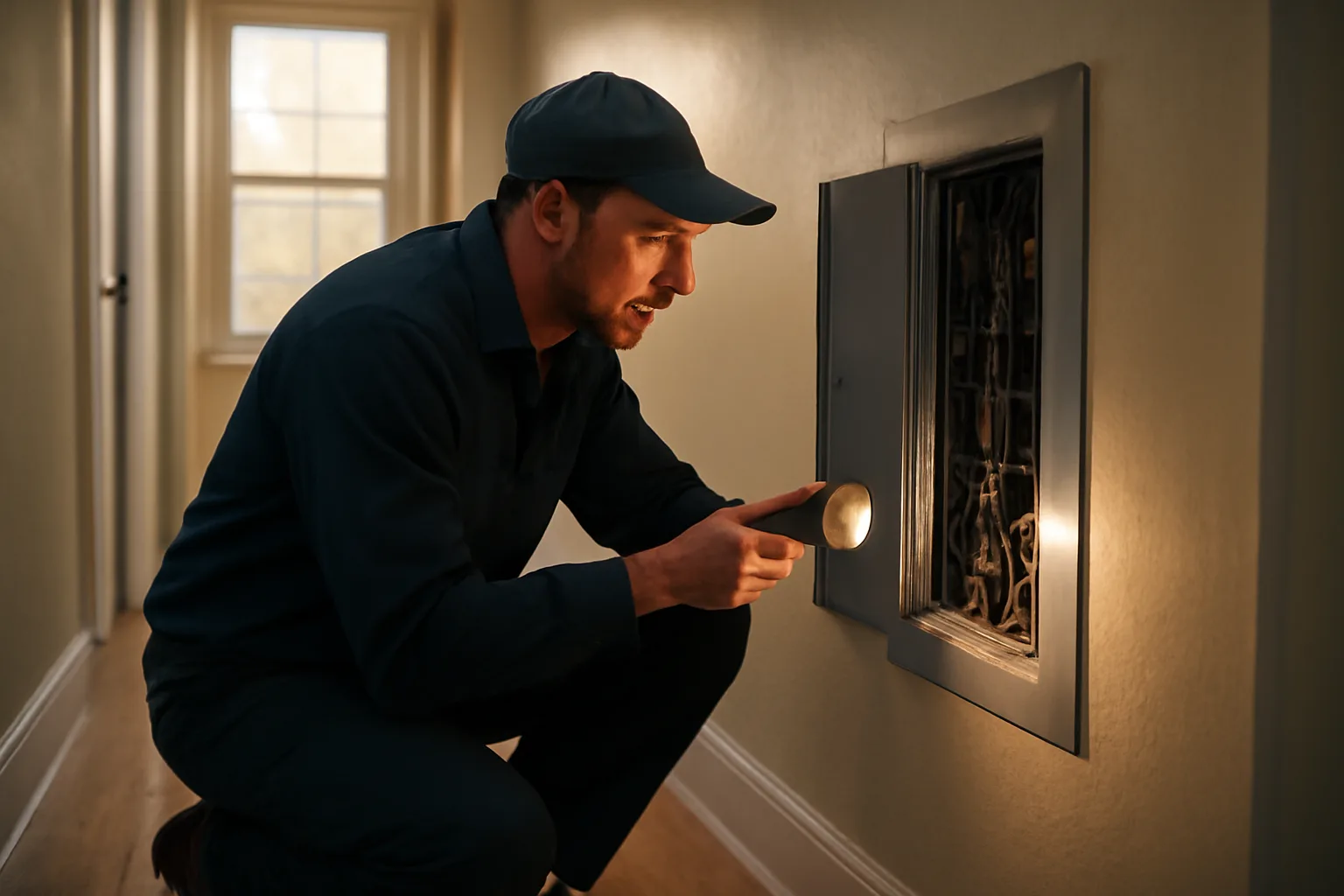
A free house inspection checklist for landlords should cover smoke/CO alarms, egress windows, electrical panels, plumbing leaks, handrails, and pest issues, the items most cities' rental inspectors flag most often. Use it before your city's licensing inspection to catch problems yourself, since re-inspection fees after a failed visit commonly run $50 to $150 per trip (confirm with your city rental licensing office).
what should a free house inspection checklist for landlords include?
| Every bedroom | Working smoke alarm, egress window or door, no lock requiring a key from inside | |
|---|---|---|
| Kitchen | GFCI outlets near sinks, working range, no gas leaks, exhaust venting | |
| Bathroom | GFCI outlets, ventilation fan or window, no active leaks under sink | |
| Basement/utility | CO alarm if fuel-burning appliance present, water heater temp/pressure relief valve, exposed wiring | |
| Exterior | Handrails on steps with 3+ risers, no peeling lead paint (pre-1978 units), address numbers visible, working exterior lighting | |
| Common areas | Fire extinguisher if required, clear egress paths, working locks on exterior doors | If you want a packet built around your specific city's actual inspection form instead of a generic version, that's the whole point of the $79 City Rental License & Inspection Prep Packet, it maps the checklist to what your city's ordinance actually requires rather than a national average. |
A usable checklist has to match what your city's inspector actually looks at, not a generic homebuyer's list. Rental inspection checklists (as opposed to pre-purchase home inspections) focus on life safety and code minimums: smoke alarms, carbon monoxide alarms, egress windows in bedrooms, working electrical outlets, no exposed wiring, functioning heat, hot water, handrails on stairs with three or more risers, and no obvious pest infestation. Most municipal rental inspection programs are built off some version of the International Property Maintenance Code (IPMC), which cities adopt and then modify locally. The IPMC's core structural requirements include things like minimum ceiling heights, working sanitary facilities, and a rule that every habitable room needs a window or approved ventilation [1]. Your city has almost certainly added its own quirks on top of that (some require permits for water heater swaps, some require specific alarm placement within a set number of feet from bedroom doors), so a generic checklist gets you 80% of the way there, not 100%. Here's a baseline structure that lines up with what most housing inspectors check, room by room: | Area | What gets checked |
what can a landlord look at during an inspection?
During a licensing or code compliance inspection, the city's inspector (not you) is generally allowed to check life-safety systems, structural condition, and code compliance items throughout the unit, but the scope depends on your city's ordinance and, in most states, requires either tenant consent or advance notice. When you're doing your own pre-inspection walkthrough as the landlord, you can look at anything related to habitability and lease compliance: smoke and CO alarm function, signs of leaks or mold, HVAC operation, window and door function, and general condition of appliances you own. What you generally cannot do is search the unit for unrelated reasons, go through a tenant's belongings, or use the inspection as cover to harass a tenant. Many states require landlords to give notice before entering an occupied unit for any purpose, inspection included. California Civil Code Section 1954 sets the standard many other states have modeled: a landlord may enter to make repairs, show the unit, or for an inspection, generally with at least 24 hours' written notice, and only during normal business hours absent emergency or tenant consent [2]. If you're renting in California and wondering who's responsible for the pre-tenancy or move-out walkthrough inspection, that's on the landlord (or their designated agent), and California Civil Code Section 1950.5 separately requires landlords to offer an initial move-out inspection before the final one if a security deposit deduction might occur [3]. For city rental licensing inspections specifically, the inspector's scope is set by your local ordinance, so read it. Some cities inspect every unit at renewal; some only require self-certification with random audits. Confirm the exact scope and access rules with your city rental licensing office before the visit.
how much notice does a landlord have to give before an inspection?
There's no single national number. Notice requirements are set state by state (and sometimes city by city on top of that), and they typically run from 24 to 48 hours for routine, non-emergency entry. California requires "reasonable notice," which the statute defines as presumptively 24 hours in writing for most non-emergency entries [2]. Other states set different defaults: some require 48 hours, some don't specify a number at all and just require "reasonable" notice, which courts have historically read as somewhere in the 24-48 hour range depending on the circumstances. A handful of states don't have a statutory notice requirement for landlord entry at all, which pushes the practical standard back to whatever the lease says. For city rental license inspections, the notice rule is often separate from your state's general landlord entry statute. Many cities require the landlord to notify the tenant of the scheduled inspection a set number of days in advance as part of the licensing process itself. That number varies by city (some use 48 hours, some use 7 days), so don't assume your state's general entry statute covers it. Confirm the specific inspection notice window with your city rental licensing office, and always put notice in writing (email works, and creates a timestamp) even where the law doesn't strictly require it.
who is responsible for the rental property walk-through inspection in California?
In California, the landlord is responsible for conducting (or arranging) the walk-through inspection, both at move-in and, if requested, before move-out. This isn't optional paperwork, it's built into state law. California Civil Code Section 1950.5(f) gives the tenant the right to request an initial inspection before the end of the tenancy, specifically so they have a chance to fix any issues before the landlord makes deductions from the security deposit. The landlord must, upon the tenant's request, do that initial inspection "no earlier than two weeks before the termination... of the tenancy" and must give the tenant an itemized statement of anything found that could lead to a deduction, along with a reasonable opportunity to fix it before move-out [3]. At move-in, there's no statute mandating a joint walkthrough form in California the way there is for move-out, but it's the standard, and frankly the smart, practice: photo-document the unit's condition with the tenant present or immediately after they take possession, and have both parties sign off. This is what protects your security deposit deductions later if there's a dispute over damage versus normal wear and tear. If you're not in California, check your own state's security deposit statute, plenty of states (not all) have similar pre-move-out inspection rights.
how do you use this checklist before your city's rental license inspection?
Walk the unit yourself at least two weeks before your scheduled inspection date, not the day before. That gives you time to actually fix what you find instead of scrambling. Start with life safety items since these are the most commonly cited violations and usually the cheapest to fix: test every smoke alarm and CO alarm, replace batteries even if they still "work" (alarms themselves have a shelf life, generally 10 years per manufacturer date stamps), and confirm placement meets code (typically inside and outside each sleeping area, plus one per floor). Next, check every window in a bedroom for egress: does it open fully without tools, and is the opening large enough per your local code. Then walk the electrical: no exposed wiring, no missing outlet covers, GFCI outlets within code-required distance of water sources in kitchens and bathrooms. Check the water heater's temperature/pressure relief valve and discharge pipe. Test every door lock. Look for active leaks under every sink and around every toilet. Check handrail stability on any stairs with three or more steps. Document everything with photos and a dated checklist as you go. If your city requires a self-certification form before the inspection (many do), fill it out based on what you actually verified, not what you assume is fine. Some cities publish their inspection checklist as a public PDF, and if yours does, use that exact document instead of a generic one, since it tells you precisely what the inspector is scoring against. If your city doesn't publish one, or the one they publish is vague, that's the gap a City Rental License & Inspection Prep Packet is built to close: matching your specific city's checklist and typical fail points so you're not guessing.
how much do failed inspections and re-inspection fees typically cost?
Fees vary widely by city and there's no single national figure, but the pattern is consistent: initial rental license/inspection fees tend to run in the range of $25 to $150 per unit per cycle in cities that require them, and re-inspection fees after a failed first visit typically add another $50 to $150 per additional visit (confirm exact numbers with your city rental licensing office, since these are set locally and change). The bigger cost usually isn't the re-inspection fee itself, it's the delay. If your license renewal or new-unit registration is tied to passing inspection, a failed visit can push your ability to legally rent the unit back by weeks, especially in cities with backlogged inspection departments. Some cities also escalate to daily fines for operating without a valid license past a deadline, separate from the inspection fee itself. Those fine structures are set entirely by local ordinance, so there's no responsible way to quote a number here without knowing your specific city; check your municipal code or call the rental licensing office directly. The math almost always favors fixing things before the scheduled visit rather than after. A $15 smoke alarm and a $10 GFCI outlet cost a lot less than a missed rent-collection month while your license is in limbo.
what does it mean to be a landlord, and what is landlording?
A landlord is the owner (or authorized agent of the owner) of a residential or commercial property who leases that property to a tenant in exchange for rent, under a lease or rental agreement that creates a legal landlord-tenant relationship. "Landlording" is the general term for the ongoing work of managing that relationship and the property itself: collecting rent, handling repairs, following habitability law, managing lease renewals and terminations, and staying current with local licensing and safety requirements. It's a legal role, more than a financial one. Once you sign a lease with a tenant, you take on statutory obligations that exist independent of your lease language, things like the implied warranty of habitability that most states recognize, meaning you have to keep the unit livable (working plumbing, heat, structural safety) regardless of what your lease does or doesn't say. You can read more about the baseline rights that come with that relationship in our guide to tenant rights and tenants rights. Landlording well is mostly a compliance job wearing a real-estate hat. The properties that stay profitable long-term are usually the ones where the owner treats licensing renewals, inspection prep, and habitability repairs as recurring calendar items, not surprises.
how do you become a landlord, and how do you actually get started?
Becoming a landlord legally usually means three things happening in sequence: acquiring or converting a property into a rental, registering it with your local jurisdiction if required, and executing a compliant lease with a tenant. There's no license required to simply own rental property in most of the U.S., but a growing number of cities require a rental registration or rental license specifically, separate from your property ownership. Practically, here's the sequence that avoids the most common first-year mistakes: 1. Check whether your city or county requires rental registration or licensing before you advertise the unit. Many mandatory-licensing cities require this before the first tenant moves in, not after. 2. Confirm your property meets baseline habitability and safety code (smoke alarms, egress, electrical) before listing it, since some cities require a passed inspection before issuing the initial license. 3. Get landlord liability insurance (a standard homeowners policy usually doesn't cover a tenant-occupied property; you generally need a landlord/dwelling-fire policy) and understand your state's security deposit limits and handling rules. 4. Screen tenants consistently and in a way that complies with the Fair Housing Act, which prohibits discrimination based on race, color, national origin, religion, sex, familial status, or disability in the sale or rental of housing, per 42 U.S.C. Section 3604 [4]. 5. Use a written lease. Verbal leases are legal in most states but create real disputes later over rent amount, term length, and responsibilities. If you're taking over a multi-unit building or buying your first rental in a city with mandatory licensing, start with the city's rental licensing office, not the county assessor. Licensing rules and property tax records are handled by completely different departments and one doesn't automatically inform the other.
what rights do tenants have without a written lease?
Tenants without a written lease still have real legal rights. In most states, an oral rental agreement or even a tenancy created just by paying rent and being accepted as an occupant creates a month-to-month tenancy with most of the same statutory protections a written lease would carry. That generally includes: the right to habitable housing (working plumbing, heat, structural safety, no serious pest infestations), protection from illegal lockouts and "self-help" evictions (a landlord generally cannot change the locks or remove belongings without going through the formal eviction process in court), the right to notice before the tenancy is terminated (typically matching your state's standard notice period for month-to-month tenancies, often 30 days), and protection under the Fair Housing Act regardless of lease status [4]. What a tenant without a written lease usually loses is certainty: the specific rent amount, whether pets are allowed, who pays which utilities, and the exact term length all become harder to prove in a dispute if it's not in writing. Some states' statute of frauds requires leases longer than one year to be in writing to be enforceable, but a month-to-month oral tenancy typically falls outside that requirement. If you're a landlord operating without written leases, that's a real exposure for you too, more than a tenant protection question. See our overview of renters rights for more on baseline protections that apply regardless of lease format.
why do landlords require renters insurance?
Landlords require renters insurance mainly to shift liability risk away from themselves and to make sure the tenant, not the landlord's policy, covers the tenant's own belongings and certain liability claims. A standard landlord dwelling policy covers the building structure and the landlord's own property; it typically does not cover a tenant's furniture, electronics, or clothing if there's a fire, burst pipe, or theft. Renters insurance also usually includes liability coverage, meaning if the tenant accidentally causes damage (a kitchen fire, an overflowing bathtub that damages the unit below), the tenant's policy is the first line of coverage instead of the landlord's insurer having to pursue the tenant directly, which is slower and less reliable. Many landlords require proof of a minimum liability limit, commonly in the $100,000 to $300,000 range, though there's no federal standard and the number is entirely up to what the landlord specifies in the lease. Requiring it is legal in nearly every state as a lease condition, as long as it's disclosed upfront and applied consistently to all tenants (applying it selectively can create a fair housing problem). Some public housing and Section 8 programs have their own rules about whether renters insurance can be mandated, so if you have voucher tenants, check your local housing authority's guidance before requiring it as a blanket policy.
what can a landlord not do in Ohio?
Ohio's landlord-tenant law is codified primarily in Ohio Revised Code Chapter 5321. Under that chapter, a landlord in Ohio cannot use "self-help" eviction methods: locking a tenant out, shutting off utilities, or removing a tenant's belongings without a court order is prohibited, even if the tenant is behind on rent [5]. Ohio Revised Code Section 5321.04 also lays out specific landlord obligations that function as things a landlord effectively cannot skip: a landlord must comply with building and housing codes affecting health and safety, keep common areas safe and clean, keep all electrical, plumbing, and HVAC systems in good working order, and give reasonable notice (Ohio courts and the statute generally point to 24 hours) before entering the unit except in an emergency [5]. Ohio also prohibits retaliatory conduct: a landlord generally cannot raise rent, decrease services, or attempt to terminate a tenancy specifically because a tenant complained to a housing authority or joined a tenants' union, under Ohio Revised Code Section 5321.02 [6]. And like every state, Ohio landlords are bound by the federal Fair Housing Act's anti-discrimination protections regardless of what the lease says [4]. If you're operating in Ohio and want the specifics on your city's rental licensing on top of state law (Cincinnati, Cleveland, Columbus, and other Ohio cities each run their own separate rental registration or licensing programs), check with that city's rental licensing office directly, since state law and municipal licensing rules stack on top of each other rather than replacing one another.
what happens if a landlord fails a rental inspection?
Consequences depend entirely on your city's ordinance, but the typical sequence is: the inspector issues a written list of violations with a correction deadline (commonly 10 to 30 days, though this varies widely by city), you fix the items and request re-inspection, and if you pass, the license issues or renews. If you don't fix the items by the deadline, most cities allow escalating fines and, eventually, the ability to deny or revoke the rental license entirely, meaning you legally cannot rent the unit until it passes. Some cities publish a formal appeals process if you disagree with a specific citation, usually through a local housing board or hearing officer, with a short filing window (often 10 to 15 days from the citation date). Missing that window generally forfeits your right to contest it. The practical move if you fail: read the violation notice carefully and fix the cheap, obvious items (alarms, outlet covers, missing handrail brackets) same-day if you can, then schedule re-inspection immediately rather than waiting, since re-inspection queues can run several weeks in busy cities. If a violation involves something structural or expensive (foundation, roofing, major electrical), get a licensed contractor's estimate before your re-inspection date so you at least have a documented repair timeline to show the inspector if you can't finish in time.
Frequently asked questions
is there a free rental inspection checklist I can use before my city's licensing inspection?
Yes, but treat any generic free checklist as a starting point, not a guarantee. Check whether your city publishes its actual inspection form (many rental licensing offices post the exact checklist inspectors use), since that will match what you're being scored against far more precisely than a national template.
what is landlording, in plain terms?
Landlording is the ongoing work of owning and managing rental property: collecting rent, handling repairs, following habitability and safety law, managing leases, and keeping up with local licensing and inspection requirements. It's a compliance-heavy role, more than a passive income stream.
what is a landlord legally?
A landlord is the owner or authorized agent who leases residential or commercial property to a tenant under a lease or rental agreement. That relationship triggers statutory duties, such as habitability and fair housing compliance, regardless of what the lease itself says.
how do you become a landlord for the first time?
Acquire or convert a property, check whether your city requires rental registration or licensing before advertising it, confirm the unit passes basic habitability and safety code, get landlord insurance, and use a written lease that complies with the Fair Housing Act (42 U.S.C. Section 3604).
who is responsible for the rental property walk-through inspection in California?
The landlord is responsible for conducting it. California Civil Code Section 1950.5(f) requires the landlord to do an initial move-out inspection if the tenant requests one, generally no earlier than two weeks before the tenancy ends, and to give the tenant a chance to fix noted issues before final deductions.
what rights do tenants have without a lease?
Tenants without a written lease generally still get a month-to-month tenancy with full statutory protections: habitable housing, protection from illegal lockouts, standard notice before termination, and Fair Housing Act coverage. What's lost is proof of specific terms like rent amount or pet policy.
why do landlords require renters insurance?
Mostly to cover the tenant's own belongings and shift liability for tenant-caused damage (kitchen fires, overflows) onto the tenant's policy instead of the landlord's. It's legal to require in nearly every state as long as it's disclosed in the lease and applied to all tenants equally.
how much notice does a landlord have to give before an inspection?
It depends on your state and often your city's specific rental licensing rules, but 24 to 48 hours written notice is the common baseline. California's default is 24 hours under Civil Code Section 1954. Confirm your city's inspection-specific notice rule separately, since it can differ from the general state entry statute.
what can a landlord look at during an inspection?
A city inspector generally checks life-safety and code items: alarms, egress, electrical, plumbing, structural condition. A landlord doing their own walkthrough can check the same plus general lease compliance, but cannot search personal belongings or use the visit as a pretext for harassment.
what can a landlord not do in Ohio?
Under Ohio Revised Code Chapter 5321, a landlord cannot lock out a tenant, shut off utilities, or remove belongings without a court order, cannot skip required health and safety maintenance, cannot enter without reasonable notice absent an emergency, and cannot retaliate against a tenant for complaints under Section 5321.02.
how much does a re-inspection cost if a rental unit fails the first time?
There's no national figure since cities set their own fees, but re-inspection charges commonly fall between $50 and $150 per additional visit in cities that charge them at all. Confirm the exact amount with your city rental licensing office before budgeting for it.
do I need a licensed inspector to do my own pre-inspection walkthrough?
No. A landlord can do their own walkthrough using a checklist matched to their city's actual requirements. Hiring a licensed home inspector is optional and mainly useful if you're unsure about structural or electrical issues you can't evaluate yourself.
Sources
- International Code Council, International Property Maintenance Code: Baseline habitability requirements many city rental inspection ordinances are built from, including window/ventilation and ceiling height minimums
- California Legislative Information, Civil Code Section 1954: California landlord entry notice requirement, generally 24 hours written notice for non-emergency entry
- California Legislative Information, Civil Code Section 1950.5: Landlord's obligation to conduct an initial move-out inspection upon tenant request before final security deposit deductions
- U.S. Code, Fair Housing Act, 42 U.S.C. Section 3604: Federal prohibition on housing discrimination based on race, color, national origin, religion, sex, familial status, or disability
- Ohio Legislature, Ohio Revised Code Section 5321.04: Ohio landlord obligations including code compliance, maintenance of systems, and notice before entry
- Ohio Legislature, Ohio Revised Code Section 5321.02: Ohio's prohibition on landlord retaliation against tenants who report code violations or join tenant organizations