Last updated 2026-07-26
TL;DR
A "home inspection for rental" usually means one of two things: a city's rental licensing inspection (checking code compliance for a permit) or a landlord's own walkthrough of an occupied unit. Notice rules, what can be inspected, and who's responsible depend on your state and city. Most states require 24 to 48 hours' notice for landlord entry; city inspections follow separate local rules.
What does "home inspection for rental" actually mean?
People search this phrase for two very different reasons, so it's worth separating them before anything else. The first is a government rental inspection. Cities and counties that run mandatory rental licensing programs send an inspector to check the unit against a housing or property maintenance code before issuing or renewing a rental license. This is the kind of inspection you get an ordinance notice about, and it's the one tied to fines if you skip it. The second is a landlord's own home inspection, meaning a routine or move-in/move-out walkthrough of an occupied rental. This isn't a government check. It's the landlord (or a property manager) looking over the unit for maintenance issues, lease violations, or damage, and it's governed by your state's landlord-tenant entry notice law, not a building code. Both get called "rental inspections" in everyday conversation, and both show up when someone gets a notice in the mail and starts Googling. This article covers both, plus the landlord basics questions that tend to come up alongside them: what landlording actually is, what tenants without a lease are entitled to, and why renters insurance keeps coming up. If you're dealing with a specific city's licensing inspection right now, your local ordinance and rental licensing office page will have the actual checklist and fee schedule. Confirm current fees and deadlines with your city rental licensing office before you plan around anything you read online, including here.
What is landlording, and what is a landlord?
A landlord is the owner (or an authorized agent of the owner) who rents real property to someone else in exchange for payment, under a lease or rental agreement. Landlording is the ongoing work of managing that relationship and the property: collecting rent, handling repairs, following habitability and safety codes, managing turnover, and dealing with local licensing requirements where they apply. It sounds simple until you're doing it. Landlording is really three overlapping jobs: property maintenance (fixing things, meeting code), financial management (rent collection, budgeting for capital repairs, insurance), and legal compliance (leases, notices, fair housing, eviction procedure if it comes to that). Most new landlords underestimate the third one. Fair housing law alone is federal, state, and sometimes city-level, and getting it wrong (even by accident, in an ad or a screening criterion) can trigger a Fair Housing Act complaint through HUD [1]. Landlords also have implied duties that exist whether or not the lease mentions them. Nearly every state has some version of an implied warranty of habitability, meaning the landlord must keep the unit fit to live in (working plumbing, heat, structural safety) regardless of what the lease says [2]. That duty is separate from, and in addition to, any city rental licensing inspection requirement.
How to become a landlord: the practical steps
Becoming a landlord is mostly a checklist, not a license exam, though a handful of cities do require landlord registration or a business license before you rent out a unit. 1. Decide on the property and run real numbers. Rent minus mortgage, taxes, insurance, maintenance reserve, and vacancy should still leave you positive. A common rough guideline is the 1% rule (monthly rent should be roughly 1% of purchase price) but that's a screening heuristic, not a guarantee of profitability, and it doesn't hold in every market. 2. Check what your city or county requires before you can legally rent the unit. Many mandatory rental-licensing cities require a rental license or registration and a passed inspection before you can lease the property at all, and renting without one can draw fines. This is the step people skip and regret. 3. Get landlord-specific insurance (a standard homeowner's policy usually excludes rental use) and consider an LLC or other liability structure with your attorney or accountant. 4. Write a lease that matches your state's landlord-tenant statute (notice periods, security deposit limits and return deadlines, disclosures like lead paint for pre-1978 housing under federal law [3]). 5. Screen tenants consistently and legally under the Fair Housing Act, applying the same criteria to every applicant [1]. 6. Set up rent collection, a maintenance request system, and a file for every notice, inspection report, and repair receipt. That paper trail matters most during a licensing dispute or an eviction, not day one. If you're in a licensing city, building your renewal file early saves real stress later. A tenant rights overview for your city is worth reading before you finalize a lease, since notice and entry rules vary by state.
Who is responsible for a rental property walk-through inspection in California?
In California, responsibility splits by inspection type. For move-in and move-out condition inspections tied to the security deposit, the landlord is responsible for offering the tenant an initial (pre-move-out) inspection and then doing the final move-out inspection; this comes from California Civil Code section 1950.5, which requires the landlord to notify the tenant of the right to request an initial inspection before the tenancy ends and to provide an itemized statement of deductions afterward [4]. For routine periodic inspections during a tenancy (checking on the unit's condition, not a move-out), the landlord or their agent conducts these, but must give the tenant "reasonable notice," which California law defines as 24 hours in writing, absent an emergency, under Civil Code section 1954 [5]. For government rental inspection programs (cities like Los Angeles run a Systematic Code Enforcement Program, and many other California cities have their own rental inspection ordinances), the city's code enforcement or housing department is responsible for the inspection itself, though the property owner is responsible for scheduling access, fixing violations, and paying the inspection fee. The specific program name, fee, and inspection cycle vary by city, so confirm with your city's rental housing or code enforcement department directly. So the short answer: the landlord is responsible for arranging and conducting deposit-related and routine inspections of their own unit; a city inspector is responsible for the government compliance inspection, but the landlord remains on the hook for correcting anything flagged and for paying any associated fee.
What can a landlord look at during an inspection?
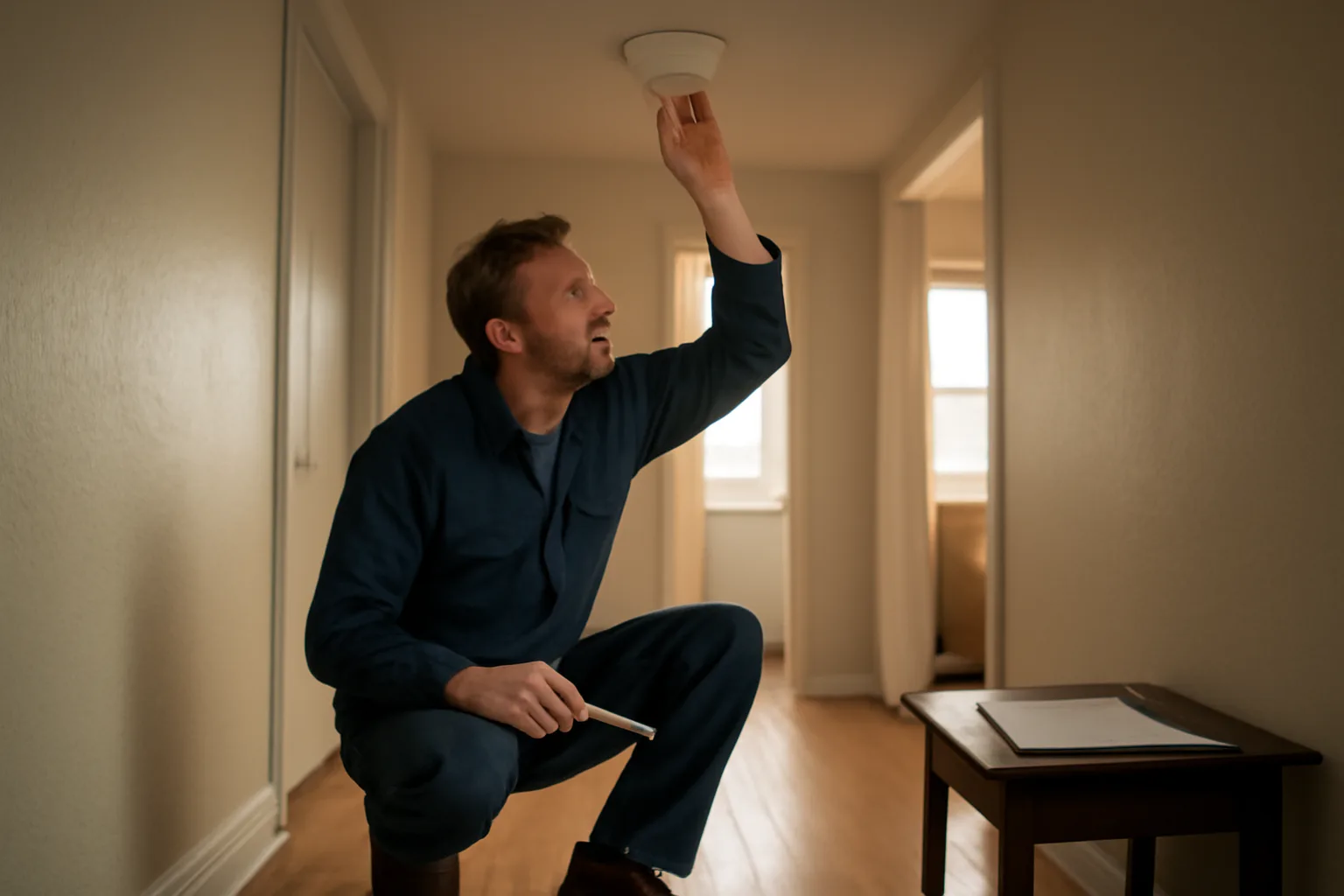
During a landlord's own walkthrough, the general rule nationwide is that the inspection has to relate to a legitimate purpose: checking the condition of the property, making needed repairs, showing the unit to prospective tenants or buyers, or verifying lease compliance. Most state statutes list acceptable purposes explicitly. Oregon's landlord-tenant law, for example, allows entry to inspect the premises, make repairs, supply services, or show the unit, and requires at least 24 hours' notice for non-emergency entry [6]. What that means in practice: a landlord can look at visible condition and safety items in the space they're inspecting. Smoke and carbon monoxide detectors, HVAC filters and vents, plumbing fixtures for leaks, signs of pest activity, mold or moisture, window and door function, electrical outlets and panels if accessible, and general cleanliness or damage beyond normal wear. A landlord generally cannot use an inspection as pretext to search through a tenant's belongings, closets, or personal papers unrelated to the stated purpose. Entry has to be for the reason given in the notice, during reasonable hours, and it can't turn into a general search. If a landlord suspects something like an unauthorized occupant or illegal activity, that's a legal question for an attorney, not something to "confirm" by rifling through drawers during a maintenance check. For a government rental licensing inspection, the inspector is checking the unit against a housing or property maintenance code: working smoke and CO detectors, secure handrails and stair treads, functioning plumbing and heat, no exposed wiring, adequate egress from bedrooms, no significant structural or moisture damage. Many cities publish their actual inspection checklist; some require the landlord to be present or to arrange tenant access, and lockouts due to no-access can trigger a re-inspection fee. That fee, and the checklist itself, differs by city, so pull your specific municipality's rental inspection checklist rather than assuming it matches a neighboring city's.
How much notice does a landlord have to give before entering?
| California | 24 hours (written, reasonable time of day) | Civil Code § 1954 [5] | |
|---|---|---|---|
| Oregon | At least 24 hours | ORS 90.322 [6] | |
| Washington | 1 day (24 hours), 2 days for showings in some cases | RCW 59.18.150 [7] | |
| Florida | 12 hours | Fla. Stat. § 83.53 [8] | |
| Texas | No statewide statutory minimum notice period; lease terms typically govern | Tex. Prop. Code Ch. 92 [9] | A few patterns hold across most states: entry generally must be at a reasonable hour, for a legitimate purpose, and emergencies (fire, flooding, gas leak) don't require advance notice at all. If your lease specifies a longer notice period than your state's statutory minimum, the lease terms typically apply since they're more tenant-favorable. If your state isn't listed here, check your specific landlord-tenant statute or your state attorney general's consumer guide, because notice periods, allowed entry reasons, and penalties for violating them differ enough that guessing is a bad idea. This notice requirement applies to a landlord's own walkthroughs and inspections. Government rental licensing inspections often have separate notice rules set by city ordinance (some give the tenant and landlord written notice weeks in advance; others coordinate scheduling directly with the property owner), so don't assume your state's 24-hour landlord entry rule is the same as your city's inspection notice period. |
There's no single national notice rule; it's set state by state, and a few cities layer on their own requirements. Here's how it breaks down in commonly cited states: | State | Standard notice for non-emergency entry | Statute |
Why do landlords require renters insurance?
Landlords require renters insurance mainly to cover the tenant's personal belongings and personal liability, not the building itself. A standard landlord (dwelling) policy covers the structure and the landlord's own liability, but it doesn't cover a tenant's furniture, electronics, or clothing if there's a fire, burst pipe, or theft, and it doesn't cover the tenant's liability if a guest gets hurt in the unit. Requiring renters insurance shifts that risk off the landlord. If a tenant's negligence causes a fire or a bathtub overflow damages the unit below, a renters insurance policy's liability coverage can pay for the landlord's losses instead of the landlord (or their insurer) having to chase the tenant directly, which is often a dead end if the tenant has no assets. Cost is a modest ask for what it covers: national average renters insurance premiums run roughly $15 to $30 a month depending on coverage limits and location, though this varies by state and insurer, so treat that as a general range rather than a quote. Many landlords require proof of a policy with a minimum liability limit (commonly $100,000) as a lease condition and ask for the landlord to be listed as an "interested party" so they're notified if the policy lapses. Requiring it is legal in essentially every state, since it's a lease term rather than a screening criterion, but it has to be applied consistently to every tenant, same as any other lease requirement, to avoid a fair housing issue [1].
What rights do tenants have without a lease?
A tenant without a written lease still has real legal protections. In most states, an oral or unwritten rental agreement creates a month-to-month tenancy (sometimes called tenancy at will) once the tenant has moved in and is paying rent, and it's governed by the same state landlord-tenant statute that governs written leases, just with the notice periods and terms that apply to month-to-month tenancies specifically. Without a written lease, a tenant still generally has the right to: habitable housing under the implied warranty of habitability [2], protection from illegal lockouts or utility shutoffs (self-help eviction is illegal in most states; the landlord has to go through court), a required notice period before the tenancy can be ended (commonly 30 days for month-to-month, though some states require more depending on how long the tenant has lived there), and protection under the Fair Housing Act against discrimination in how the tenancy is treated or ended [1]. What a tenant without a lease usually does not have is a locked-in rent amount or fixed term. A landlord can typically raise rent or end a month-to-month tenancy by giving the required statutory notice, without needing "cause" in most states (some cities and a few states have just-cause eviction rules that change this). Tenants who aren't sure what applies to them should check their state's tenant rights guide or a tenant rights resource for their specific state, since the notice period, rent increase rules, and eviction process differ meaningfully state to state. A related tenants rights resource and a renters rights overview cover the deposit and habitability side of this in more depth.
What can a landlord not do in Ohio?
Ohio's landlord-tenant law, chapter 5321 of the Ohio Revised Code, spells out a specific set of landlord obligations and prohibited actions. A few of the clearest ones: A landlord cannot enter the rental unit without giving "reasonable notice" and entering only "at reasonable times," except in an emergency; Ohio courts and the statute generally treat 24 hours as reasonable notice, though the statute itself uses the "reasonable" standard rather than a fixed number [10]. A landlord cannot shut off utilities, change the locks, or remove a tenant's belongings to force them out, commonly called a self-help eviction; Ohio requires landlords to go through the court eviction (forcible entry and detainer) process to remove a tenant [10]. A landlord cannot retaliate against a tenant for exercising a legal right, such as complaining to a code enforcement agency about a habitability issue or joining a tenants' union; Ohio Revised Code 5321.02 specifically prohibits retaliatory conduct including raising rent, decreasing services, or threatening eviction because a tenant reported a violation [11]. A landlord cannot fail to maintain the unit in a habitable condition, keep it in compliance with building and housing codes, and keep common areas safe; these are affirmative duties under ORC 5321.04 [10]. A landlord also cannot discriminate against applicants or tenants based on a federally or state-protected class, per the Fair Housing Act and Ohio's own civil rights statute [1]. Ohio's specific security deposit rules (interest requirements, itemized deduction timelines) and any city-level rental registration rules layer on top of this state framework, so a landlord operating in, say, Cleveland or Columbus should check both the state code and the city's own rental registration ordinance.
How does a landlord's walkthrough differ from a city licensing inspection?
| Who conducts it | Landlord or property manager | City or county code inspector | |
|---|---|---|---|
| Legal basis | State landlord-tenant entry law | Local rental licensing ordinance | |
| Notice required | Usually 12 to 48 hours depending on state | Set by city, often weeks' notice for scheduling | |
| What's checked | Condition, damage, lease compliance | Building/housing code compliance | |
| Consequence of skipping | Limited, usually a lease or notice issue | Fines, license denial, inability to legally rent the unit | |
| Frequency | Landlord's choice, within legal limits | Set by ordinance, often annual or biennial | Missing a city licensing inspection is the more serious problem for a landlord's business. Many licensing cities impose escalating fines for renting without a valid license, and some prohibit collecting rent or filing an eviction while the property is unlicensed, though the specific penalty structure is set locally and varies widely. If you've gotten a notice about an inspection deadline or a violation fine, that's almost certainly the city licensing kind, not a routine walkthrough, and it deserves faster attention. Building a renewal file (past inspection reports, repair receipts, smoke detector certifications) ahead of the actual inspection date is the single biggest thing that shortens a licensing inspection and avoids a re-inspection fee. Some landlords put this together themselves city ordinance by city ordinance; others use a prep packet, like RentalPermitPath's $79 one-time City Rental License & Inspection Prep Packet, to walk through what a specific city's checklist actually requires before the inspector shows up. |
These two inspections get confused constantly because they use the same word, but they're run by different people, for different reasons, with different consequences for missing one. | Feature | Landlord's own walkthrough | City rental licensing inspection |
What happens if a rental inspection finds violations?
Most licensing inspection programs give the landlord a written list of violations and a correction period, commonly somewhere between 14 and 60 days depending on the severity of the issue and the city's ordinance, before a re-inspection is scheduled. Serious life-safety issues (no smoke detectors, exposed electrical, no heat in winter) often get a much shorter correction window or immediate order. For a landlord's own walkthrough, there's no formal "violation" process, but a documented issue (mold, unauthorized pet, unreported damage) typically becomes the basis for a written notice to the tenant to cure the issue or, in serious cases, a notice to vacate, following whatever process your state's landlord-tenant statute requires for that specific lease violation. For a city inspection, missing the correction deadline commonly triggers a fine, and continued noncompliance can lead to license suspension or revocation, meaning the landlord legally cannot rent the unit until it passes. Fine amounts and correction timelines are set entirely by local ordinance; some cities publish a fee schedule online, others only in the ordinance text itself, so pull the actual number from your city's rental licensing office rather than assuming a flat rate applies everywhere.
Quick answers: the most common rental inspection questions
A few things worth stating plainly, since they come up in nearly every conversation about rental inspections. A landlord cannot use a routine inspection to evict a tenant on the spot. Any move-out has to follow the state's eviction or notice-to-vacate process regardless of what an inspection reveals. A tenant generally cannot refuse a properly noticed, legitimate-purpose inspection outright, though most states let a tenant negotiate the specific time within a reasonable window. Refusing repeatedly can itself become a lease violation in some states. A city licensing inspection is not optional just because the unit is occupied by a good tenant paying on time. The requirement runs with the property and the license, not the tenant relationship. Insurance requirements, entry notice rules, and inspection checklists are all set at different levels of government (federal, state, city) and don't automatically match each other. Checking your specific city ordinance and state statute, rather than assuming national uniformity, is the difference between passing an inspection smoothly and getting a fine notice you didn't expect.
Frequently asked questions
How to become a landlord for the first time?
Run the numbers on the property, check your city's rental licensing or registration requirement before you rent it out, get landlord insurance, write a lease matching your state's landlord-tenant statute, screen tenants consistently under the Fair Housing Act, and set up a system for rent, maintenance requests, and inspection records from day one.
Who is responsible for a rental property walk-through inspection in California?
The landlord is responsible for offering and conducting the move-in/move-out condition inspection tied to the security deposit under California Civil Code § 1950.5, and for routine periodic inspections with 24 hours' written notice under Civil Code § 1954. A city inspector handles government rental licensing inspections, but the owner pays the fee and fixes any violations.
What is landlording?
Landlording is the ongoing work of owning and managing rental property: collecting rent, maintaining the unit to code, following state landlord-tenant law, screening and communicating with tenants, and handling any local rental licensing or inspection requirements. It's part maintenance, part finance, part legal compliance.
What is a landlord?
A landlord is the property owner, or an authorized agent acting for the owner, who rents real property to a tenant under a lease or rental agreement in exchange for rent. Landlords carry legal duties under state landlord-tenant law regardless of what the lease says, including habitability.
What rights do tenants have without a lease?
A tenant without a written lease usually has a month-to-month tenancy under state law, with the right to habitable housing, protection from illegal lockouts, and a required notice period (commonly 30 days) before the tenancy ends. They typically don't have a locked-in rent amount or a fixed term.
How to be a landlord day to day?
Day-to-day landlording means responding to maintenance requests promptly, keeping the property code-compliant, collecting rent and tracking expenses, documenting inspections and repairs, and following your state's notice rules for entry and any local rental licensing renewal schedule.
Why do landlords require renters insurance?
Renters insurance covers the tenant's belongings and personal liability, which a landlord's own dwelling policy doesn't cover. If a tenant causes a fire or a leak that damages the unit, the tenant's liability coverage can pay the landlord's losses instead of the landlord absorbing the cost or chasing an uninsured tenant directly.
How much notice does a landlord have to give before entering?
It depends on the state. California and Oregon require at least 24 hours' written notice for non-emergency entry (Civil Code § 1954; ORS 90.322). Florida requires 12 hours. Washington requires 1 day. Always check your specific state statute, since some cities add their own rules on top.
What can a landlord look at during an inspection?
A landlord can check visible condition and safety items related to the inspection's stated purpose: smoke and CO detectors, plumbing leaks, HVAC function, pest or mold signs, and general damage. A landlord cannot search personal belongings or use the inspection as pretext for something unrelated to the stated reason for entry.
What can a landlord not do in Ohio?
Under Ohio Revised Code Chapter 5321, a landlord cannot enter without reasonable notice, cannot shut off utilities or change locks to force a tenant out (self-help eviction is illegal), cannot retaliate against a tenant for reporting a code violation, and cannot fail to maintain the unit in habitable, code-compliant condition.
Does a city rental inspection replace my landlord walkthrough?
No. A city rental licensing inspection checks the unit against local building or housing code for licensing purposes. A landlord's own walkthrough checks condition, damage, and lease compliance under state landlord-tenant law. Passing one doesn't substitute for doing the other, and they run on separate schedules.
What happens if my rental fails a city licensing inspection?
Most cities issue a written violation list with a correction deadline, often 14 to 60 days depending on severity, before re-inspecting. Missing the deadline commonly triggers a fine, and continued noncompliance can lead to license suspension, meaning you legally can't rent the unit until it passes. Exact timelines and fines are set locally.
Can a tenant refuse a landlord's inspection?
Generally no, if the notice was proper and the purpose is legitimate (repairs, showing the unit, routine condition check), though most states let the tenant negotiate the exact time within a reasonable window. Repeatedly refusing lawful entry can itself become a lease violation depending on state law.
Sources
- HUD, Fair Housing Act overview and complaint process: Fair Housing Act protections apply to tenant screening, insurance requirements, and treatment during tenancy
- Cornell Legal Information Institute, implied warranty of habitability: Most states impose an implied warranty of habitability on landlords regardless of lease terms
- EPA, Real Estate Disclosures about Potential Lead Hazards: Federal law requires lead paint disclosure for pre-1978 housing
- California Legislature, Civil Code Section 1950.5: California landlords must offer an initial move-out inspection and provide itemized deduction statements
- California Legislature, Civil Code Section 1954: California requires 24 hours' written notice for landlord entry absent an emergency
- Oregon State Legislature, ORS 90.322: Oregon requires at least 24 hours' notice for landlord entry to inspect, repair, or show the unit
- Washington State Legislature, RCW 59.18.150: Washington requires one day's notice for landlord entry in most circumstances
- Florida Legislature, Florida Statutes Section 83.53: Florida requires at least 12 hours' notice for landlord entry
- Texas Legislature, Texas Property Code Chapter 92: Texas landlord-tenant law does not set a statewide statutory minimum entry notice period
- Ohio Legislature, Ohio Revised Code Section 5321.04: Ohio landlords must give reasonable notice and enter at reasonable times, and cannot use self-help eviction
- Ohio Legislature, Ohio Revised Code Section 5321.02: Ohio prohibits landlord retaliation against tenants who report code violations