Last updated 2026-07-26
TL;DR
A healthy homes rental inspection program is a city or county requirement that rental units pass a health-and-safety check, usually covering lead paint hazards, mold, pest infestation, working smoke/CO alarms, heat, and structural issues, before a landlord can rent or renew a license. Rules, fees, and cycles vary by city; always confirm specifics with your local rental licensing office.
what is a healthy homes rental inspection program
A healthy homes rental inspection program is a local government requirement that rental housing meet a set of health and safety standards, verified by an actual inspector walking through the unit, more than a landlord's word. The term shows up most often in cities and counties that have built their rental licensing rules around the federal "healthy homes" framework, which HUD defines around eight principles: keep it dry, clean, pest-free, safe, contaminant-free, ventilated, maintained, and thermally controlled [1]. In practice, this usually means your rental has to pass an inspection that checks for things like peeling lead paint, active mold, rodent or insect infestation, missing or dead smoke and carbon monoxide alarms, broken locks or window guards, blocked exits, and heating systems that can't keep the unit at a minimum temperature. Some programs also check electrical panels, water heater venting, and stair or railing conditions. The program is usually tied to your rental license or registration. Fail the inspection, and you typically get a re-inspection window (often 30 to 60 days, though this varies a lot by city) to fix the violations before the city pulls your license, issues a fine, or refers the case to code enforcement. Pass, and your license gets issued or renewed, often for one to three years depending on the jurisdiction. Confirm your specific cycle and fee schedule with your city rental licensing office, because these details differ block by block, let alone city by city.
how do i become a landlord (and what does landlording actually mean)
Landlording means renting out property you own to a tenant in exchange for regular payment, and taking on the legal responsibilities that come with that, habitability, repairs, security deposit handling, fair housing compliance, and increasingly, rental licensing paperwork. A landlord is simply the person or entity that owns the property and leases it to someone else (the tenant) under a rental agreement. To become a landlord, you generally need four things in place before you ever list a unit: legal ownership or authority to rent the property, a lease or rental agreement that complies with your state's landlord-tenant law, insurance that covers rental use (a standard homeowner's policy usually doesn't cut it), and, in a growing number of cities, a rental license or registration number issued by the local housing or code enforcement department. That last piece surprises a lot of first-time landlords. Cities including Baltimore, Los Angeles, Minneapolis, and dozens of others require landlords to register or license every rental unit before renting it out, and some pair that requirement with a mandatory inspection, which is where healthy homes programs come in [2]. If you're renting out your first unit, start by calling your city or county rental licensing office (search "[your city] rental registration" or "[your city] rental license") before you sign a lease. Skipping that step is the single most common way new landlords end up with a fine notice in month two. If you want a structured walkthrough of what a first rental license application actually looks like paperwork-wise, the landlord basics guide covers the general sequence most cities use.
who is responsible for the rental property walk through inspection in california
In California, responsibility for a rental unit walk-through inspection splits depending on what kind of inspection it is. For move-in and move-out inspections tied to security deposits, California Civil Code Section 1950.5 gives tenants the right to request an initial inspection before move-out, and the landlord (or their agent) conducts that walk-through and gives the tenant an itemized list of deficiencies with a chance to fix them before the final move-out inspection [3]. For healthy homes or rental licensing inspections, it depends entirely on the city or county, because California does not have a single statewide mandatory rental inspection law. Cities like Los Angeles run their own Systematic Code Enforcement Program (SCEP), where a city inspector, not the landlord, conducts the walk-through and checks for code violations under the Los Angeles Municipal Code [4]. Oakland, Sacramento, and other California cities run comparable but separately administered programs. The landlord's job in these programs is to schedule access, be present or send a representative, and fix anything flagged, not to self-certify the unit is compliant. Bottom line: for security deposit walk-throughs, the landlord does the inspecting. For city rental-licensing or healthy homes inspections, a government inspector does it. Confirm which program applies to your unit with your city's housing or code enforcement department, since some California cities have no proactive inspection program at all and only inspect in response to a tenant complaint.
what can a landlord look at during an inspection
| Smoke/CO alarm function and battery status | Required in nearly all states, common cause of fines if dead | |
|---|---|---|
| Visible mold or water staining | Health hazard, often the top complaint driver | |
| Pest evidence (droppings, nests) | Habitability issue in most states | |
| HVAC filter and vent condition | Fire and air quality risk | |
| Window/door lock function | Security and egress code compliance | |
| Visible lead paint chipping (pre-1978 units) | Federal disclosure and remediation trigger [5] | Cities running a formal healthy homes program will have their own checklist, and you can usually request it in advance from the rental licensing office so you know exactly what the inspector will look at before they show up. |
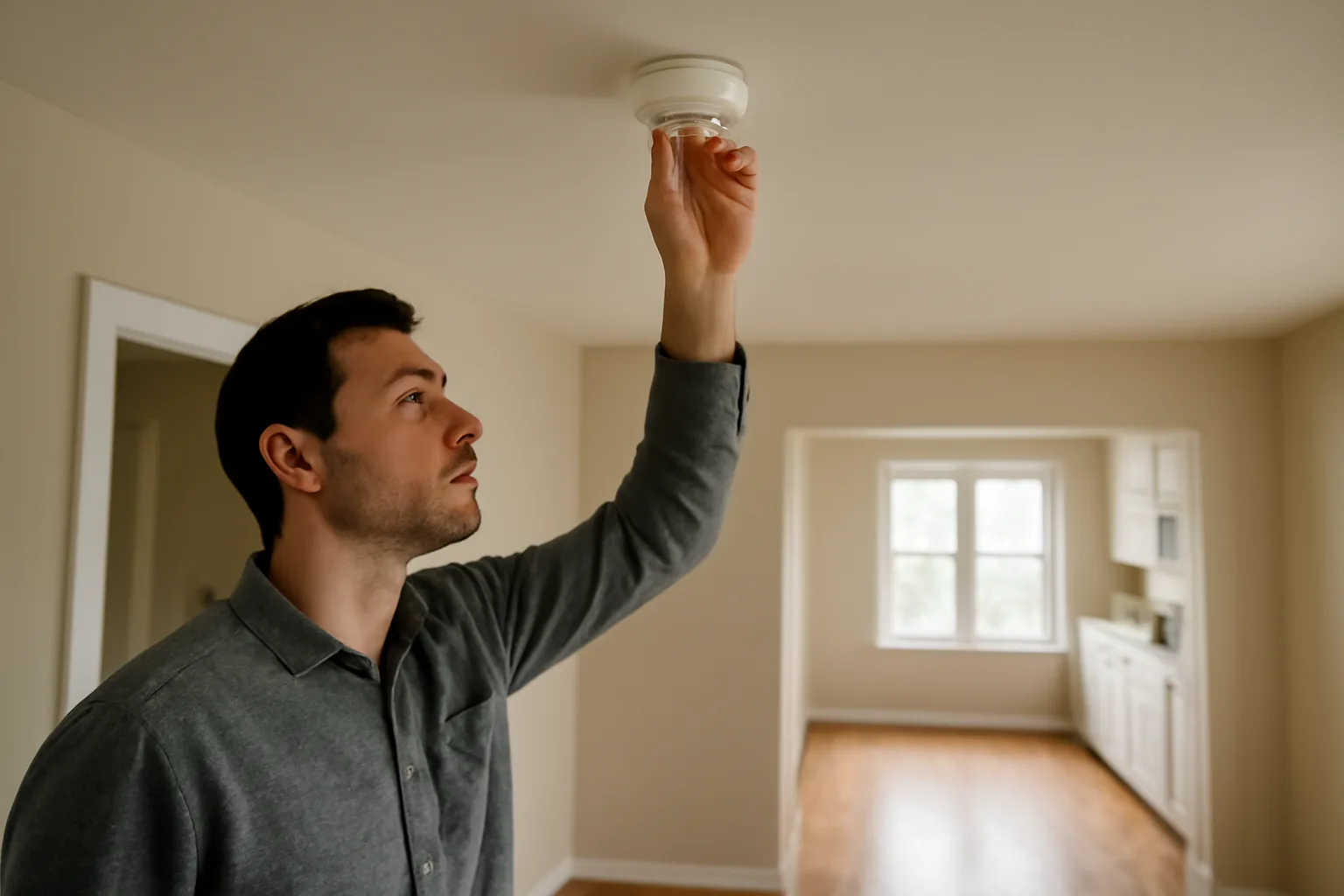
During a routine health and safety inspection, whether it's a city-run healthy homes check or a landlord's own periodic inspection, the person conducting it can generally look at anything related to the condition, safety, and maintenance of the unit. That includes smoke and carbon monoxide alarms, electrical outlets and panels, plumbing under sinks, HVAC and water heater venting, window and door locks, evidence of pests or water damage, and general cleanliness that could indicate a health hazard. What an inspector or landlord typically cannot do is search through a tenant's personal belongings, closets, drawers, or private files under the guise of a habitability inspection. The inspection is about the condition of the property and its systems, not an excuse to go through someone's stuff. Most state laws require reasonable notice before any non-emergency entry, and the inspection has to happen at a reasonable time. For a landlord's own periodic inspections (separate from a city program), a good practice list looks like this: | What's typically checked | Why it matters |
how much notice does a landlord have to give before entering or inspecting
Most states require at least 24 hours' written or verbal notice before a landlord enters a rental unit for a non-emergency inspection, though the exact number and the acceptable form of notice varies significantly by state. California requires "reasonable notice," which the law presumes to be 24 hours for most purposes under Civil Code Section 1954 [6]. Other states set different defaults, some require 24 hours, some 48, and a few don't specify a number at all, just "reasonable notice." For emergencies, most states allow landlords to enter without advance notice at all, examples include a burst pipe, fire, gas leak, or another situation posing immediate danger to life or property. For a city-run healthy homes or licensing inspection, the notice requirement is usually spelled out in the local ordinance rather than state landlord-tenant law, and the city (not the landlord) typically sends the notice directly to the tenant, sometimes with the landlord copied. Notice periods for these government inspections commonly run anywhere from a few days to a few weeks depending on the city's process; some cities schedule by appointment directly with the tenant. Because this varies by both state and city, the safest move is to check your state's landlord-tenant statute for the general notice rule, and separately check your city's rental inspection ordinance for the program-specific notice rule. Assuming one covers the other is a common and avoidable mistake.
what rights do tenants have without a written lease
A tenant without a written lease still has real legal rights, because in every state, an oral or implied rental agreement creates a tenancy, usually a month-to-month tenancy, governed by that state's landlord-tenant statutes. The absence of a written lease does not mean the absence of a legal relationship or the absence of tenant protections. Without a written lease, tenants generally still have the right to a habitable unit (working plumbing, heat, structural safety), the right to advance notice before the landlord enters, the right to proper notice before eviction or rent increase (the specific notice period, often 30 days for month-to-month tenancies, is set by state law), and the right to the return of any security deposit collected, within the timeframe and conditions their state law sets. What tenants without a written lease usually lose is clarity and proof. Disputes over rent amount, who pays for what utility, or how much notice was actually given become harder to resolve without a document to point to. That's exactly why most attorneys and tenant advocacy groups recommend a written lease even for month-to-month or family arrangements, not because oral agreements are unenforceable, but because they're hard to prove. For landlords, renting without a written lease also creates real exposure. If a rental licensing inspector or code enforcement officer asks for lease documentation as part of a healthy homes program file review, and you have nothing in writing, that can complicate your compliance paperwork even if the unit itself is in fine physical condition.
why do landlords require renters insurance
Landlords require renters insurance mainly to shift liability, protect the tenant's own belongings, and reduce disputes after fires, water damage, or theft. A landlord's own property insurance policy covers the building and the landlord's fixtures; it does not cover a tenant's furniture, electronics, or clothing, and it typically does not cover a tenant's personal liability if the tenant accidentally causes damage or an injury to a guest. Requiring renters insurance (commonly with a minimum liability coverage amount, often $100,000, though the required figure varies by landlord and by city) means if a tenant's negligence causes a kitchen fire or a bathtub overflow that damages the unit below, the tenant's policy, not the landlord's, absorbs a chunk of the claim. It also gives tenants a resource to replace their own belongings after a covered loss, which reduces the odds a tenant sues the landlord directly for damages the landlord never actually caused. Some cities and some healthy homes-adjacent housing programs have started requiring proof of renters insurance as part of lease compliance documentation, though this is a landlord or program choice layered on top of, not a universal replacement for, the health and safety inspection itself. It is legal in nearly every state for a landlord to require renters insurance as a lease condition, as long as the requirement is applied consistently and doesn't run afoul of fair housing rules.
what a landlord cannot do in ohio
Ohio's landlord-tenant law, codified mainly in Ohio Revised Code Chapter 5321, sets specific limits on what a landlord cannot do. A landlord cannot shut off utilities, change locks, or remove a tenant's belongings to force them out, this is illegal "self-help eviction," and Ohio law requires landlords to go through the courts (forcible entry and detainer action) to remove a tenant, even one who hasn't paid rent [2]. Ohio landlords also cannot retaliate against a tenant for reporting a health or safety code violation, requesting repairs, or joining a tenant organization. ORC 5321.02 specifically prohibits a landlord from increasing rent, decreasing services, or threatening eviction as retaliation for a tenant's good-faith complaint to a government agency about a building, housing, or health code violation . A landlord in Ohio cannot enter the rental unit without reasonable notice, generally interpreted as 24 hours, except in genuine emergencies. And a landlord cannot ignore their maintenance obligations under ORC 5321.04, which requires landlords to keep the premises in a fit and habitable condition, comply with applicable building and housing codes, and keep common areas safe and clean . For a city like Cleveland or Columbus running a rental registration or point-of-sale inspection program, these state-level tenant protections apply on top of whatever local healthy homes ordinance covers the property. A landlord can't use "the city hasn't inspected yet" as an excuse to delay a genuinely urgent habitability repair; the ORC 5321.04 duty runs independently of the city's inspection schedule.
what happens if a rental fails a healthy homes inspection
If a rental unit fails a healthy homes inspection, the city typically issues a written notice of violation listing every item that didn't pass, along with a compliance deadline. That deadline commonly ranges from 15 to 60 days depending on the severity of the issue and the specific city's ordinance; emergency hazards like no heat in winter or an active gas leak usually get a much shorter window, sometimes 24 to 72 hours. After the deadline, the city schedules a re-inspection. If the unit still fails, consequences typically escalate in this order: a monetary fine (amounts vary widely by city and violation type, some run $50 to $500 per violation per day for continued noncompliance), suspension or revocation of the rental license, a prohibition on collecting rent until compliance is achieved in some jurisdictions, and in serious or repeated cases, referral to a housing court or condemnation proceedings. The practical fix is almost always the same: address the flagged items fast, document the repairs with photos and receipts, and request the re-inspection as soon as you're confident the unit will pass, rather than waiting until the deadline. Cities that run these programs generally want compliance, not fines, so most have a documented process for requesting extensions if you're actively working on a legitimate repair (a permit-dependent structural fix, for example) and can show progress.
how do landlords prepare for a healthy homes inspection ahead of time
The single biggest mistake landlords make with healthy homes inspections is treating the notice letter as the moment to start preparing. By the time that letter arrives, you typically have anywhere from a few days to a few weeks, and if the unit needs real repair work (a pest treatment, mold remediation, an electrical fix requiring a licensed electrician), that's not enough runway. A better approach is a self-inspection using the same checklist categories the city uses, done before you even get a scheduled date. Test every smoke and CO alarm. Check under every sink for slow leaks. Look at ceiling corners and around window frames for mold or staining. Confirm every window opens, closes, and locks. Check that exterior doors have working deadbolts and that egress windows in bedrooms actually meet size and operability requirements. If the property was built before 1978, know your lead paint disclosure obligations under the federal Lead-Based Paint Hazard Reduction Act, since HUD and EPA jointly require disclosure of known lead hazards to tenants at lease signing . This is where a document, not a repair, often trips landlords up: many healthy homes and rental licensing programs also want proof of things like current business licensing, a certificate of occupancy, proof of insurance, or a completed self-inspection checklist submitted alongside your license renewal. If you're juggling that paperwork across a first-time license application, our $79 City Rental License & Inspection Prep Packet is built specifically to organize the document side (checklists, common violation categories, renewal timing) so the inspection day itself is just confirming what you already fixed, not a surprise.
how do healthy homes rental inspection programs typically compare city to city
| Fixed-cycle proactive inspection | Every registered unit inspected every 1-3 years regardless of complaints | Predictable but recurring cost and prep work | |
|---|---|---|---|
| Complaint-driven inspection | Inspector only comes out after a tenant files a complaint | Lower routine cost, but higher risk of surprise, and complaints often trigger multi-item checklists | |
| Point-of-sale / change-of-occupancy | Inspection triggered when the unit sells or gets a new tenant | Timing tied to your leasing calendar, not a fixed date | |
| Self-certification with random audit | Landlord certifies compliance, city audits a percentage of units | Lower friction most years, real consequences if audited and non-compliant | For context on scale, HUD's Healthy Homes and Lead Hazard Control program has issued grants to dozens of state and local agencies since the mid-1990s to fund exactly these kinds of inspection and remediation programs, which is part of why so many municipal healthy homes ordinances borrow HUD's eight-principle framework rather than inventing their own standard from scratch [1]. If your city's program doesn't fit neatly into one of these models, that's normal, plenty of cities blend elements. What matters is finding your specific ordinance number or program name on your city's housing department website and reading the actual checklist, not assuming your neighbor's city's rules apply to yours. |
No two healthy homes rental inspection programs are identical, which is exactly why "confirm with your city" isn't a cop-out, it's the honest answer. Some cities inspect every unit on a fixed cycle regardless of complaints; others only inspect in response to a tenant complaint or when a property changes ownership (point-of-sale inspections). Some charge a flat annual registration fee with the inspection bundled in; others charge separately per unit, per inspection, and per re-inspection if the first one fails. Here's a general comparison of program models you'll encounter, without attaching specific city names or dollar figures, since those change often and always deserve a direct check with the local office: | Program model | How it typically works | What landlords should expect |
Frequently asked questions
How to become a landlord if I've never rented a property before?
Confirm your legal ownership, get landlord-specific insurance (not a standard homeowner policy), check whether your city requires rental registration or licensing, draft a lease compliant with your state's landlord-tenant law, and screen tenants under fair housing rules. Call your city's rental licensing office before listing the unit, since licensing and inspection requirements vary widely and often need to happen before you rent, not after.
Who is responsible for the rental property walk-through inspection in California?
It depends on the inspection type. For move-out deposit inspections, the landlord conducts the walk-through under California Civil Code Section 1950.5. For city rental-licensing or healthy homes inspections, a government inspector conducts it, since California has no single statewide mandatory inspection law and each city runs its own program.
What is landlording, in plain terms?
Landlording is the business of renting out property to tenants and managing everything that comes with it: collecting rent, maintaining habitability, handling repairs, following fair housing and landlord-tenant law, and in many cities, keeping a rental license or registration current with the local housing department.
What is a landlord?
A landlord is the owner (or authorized agent of the owner) of a property who leases it to a tenant under a rental agreement, in exchange for rent. The landlord holds the legal and, in licensed cities, the regulatory responsibility for the unit's condition and compliance.
What rights do tenants have without a lease?
Tenants without a written lease still have habitability rights, notice-before-entry rights, and eviction-notice rights under their state's landlord-tenant law, usually as a month-to-month tenancy. What they lack is written proof of terms, which makes disputes over rent, notice, and responsibilities harder to resolve.
Why do landlords require renters insurance?
Renters insurance shifts liability for tenant-caused damage and injury away from the landlord's own policy, and it gives tenants a way to replace their belongings after a covered loss without suing the landlord. It's legal to require in nearly every state as a standard lease condition.
How much notice does a landlord have to give before entering a unit?
Most states default to 24 hours' notice for non-emergency entry; California presumes 24 hours reasonable under Civil Code Section 1954. Exact requirements vary by state, and city-run inspection programs often set their own separate notice process, so check both your state statute and your local ordinance.
What can a landlord (or inspector) look at during an inspection?
Inspectors and landlords can examine the unit's safety systems: smoke and CO alarms, electrical panels, plumbing, HVAC, locks, and signs of pests, mold, or water damage. They generally cannot search personal belongings, closets, or private papers under the guise of a habitability check.
What can a landlord not do in Ohio?
Ohio landlords cannot shut off utilities or change locks to force a tenant out (illegal self-help eviction), cannot retaliate against tenants who report code violations under ORC 5321.02, and cannot enter without reasonable notice except in emergencies. They must keep units habitable under ORC 5321.04.
What is a healthy homes rental inspection program, specifically?
It's a local government program requiring rental units to pass a health-and-safety inspection covering hazards like lead paint, mold, pests, and non-functioning smoke alarms, usually tied to a rental license. HUD's eight healthy homes principles (dry, clean, pest-free, safe, contaminant-free, ventilated, maintained, thermally controlled) shape many city checklists.
What happens if my rental fails the healthy homes inspection?
You'll get a written notice of violations with a compliance deadline, often 15 to 60 days depending on severity. Emergency hazards get shorter windows. If you miss the re-inspection deadline, cities can fine you, suspend your rental license, or in serious cases refer the property to housing court.
Do I need a healthy homes inspection if I only rent out one unit?
Usually yes, if your city's ordinance covers all rental units regardless of size. Many mandatory rental-licensing cities apply the same inspection requirement to a single-unit landlord as they do to a 200-unit apartment complex. Confirm the unit-count threshold, if any, with your specific city's rental licensing office.
How often do healthy homes rental inspections happen?
It depends entirely on the program model. Some cities inspect every registered unit on a fixed cycle (commonly every 1 to 3 years), others only inspect after a tenant complaint or at change of occupancy. There's no single national standard, so check your city's specific ordinance.
Sources
- California Legislative Information, Civil Code Section 1950.5: California tenants have the right to request an initial move-out inspection before the final deposit deduction
- EPA, Lead-Based Paint Renovation, Repair and Painting and Disclosure Rules: Federal law requires disclosure of known lead-based paint hazards in housing built before 1978
- California Legislative Information, Civil Code Section 1954: California presumes 24 hours to be reasonable notice for landlord entry into a rental unit
- Ohio Legislative Service Commission, Ohio Revised Code Chapter 5321: Ohio law requires landlords to use the courts for eviction rather than self-help measures like lockouts or utility shutoffs
- Ohio Legislative Service Commission, ORC 5321.02: Ohio law prohibits landlord retaliation against tenants who report code violations or join tenant organizations
- Ohio Legislative Service Commission, ORC 5321.04: Ohio landlords must keep rental premises in a fit and habitable condition and comply with applicable housing codes