Last updated 2026-07-26
TL;DR
A free annual rental inspection checklist covers smoke/CO detectors, plumbing leaks, electrical hazards, HVAC filters, exterior drainage, and pest signs. Most states require 24 to 48 hours' written notice before entry. Use this checklist alongside your city's mandatory rental inspection rules, since local licensing programs often set their own required items and schedule.
What is landlording, and why does annual inspection matter?
Landlording just means operating a rental property as a business: collecting rent, maintaining the unit, handling tenant communication, and staying legal on taxes, safety codes, and local licensing. Nobody teaches this in school. Most landlords learn it by doing it, usually after something breaks or a tenant calls the city. An annual inspection is the single cheapest risk-management tool you have. It costs you an hour and maybe a few dollars in batteries and filters. Compare that to a burst pipe that soaks a downstairs unit, or a smoke detector that's been chirping dead for six months and nobody replaced the battery. The U.S. Fire Administration reports that non-functioning or missing smoke alarms are a factor in a large share of home fire deaths, which is exactly why most state and local codes require working detectors in every rental unit [1]. Beyond safety, annual inspections protect you legally. If a tenant later claims you ignored a mold problem or a broken furnace, a dated inspection checklist with photos is your best evidence that you were paying attention. Many cities now require documented inspections as part of mandatory rental licensing, so the habit pays double: it satisfies code and it protects you if a dispute ends up in court or before a housing board. If you're new to this, start by reading up on landlord landlords basics and how licensing programs actually work in practice before you build your own system.
What is a landlord, legally speaking?
A landlord is the person or entity that owns rental real estate and leases it to a tenant in exchange for rent, taking on legal responsibilities for habitability, repairs, and following state and local landlord-tenant law. That sounds simple, but the legal responsibilities are not. Every state has an implied "warranty of habitability," meaning a landlord must keep the unit fit to live in even if the lease doesn't say so explicitly. California's version is codified at Civil Code Section 1941, which requires landlords to keep the premises in a condition fit for occupation, including things like plumbing, heating, and weatherproofing [2]. A landlord is also, in the eyes of most inspection ordinances, the party responsible for scheduling and being present (or authorizing an agent) for the city's inspection. If you own the property but a management company handles day-to-day operations, you're usually still the one whose name is on the rental license and who eats the fine if an inspection turns up an uncorrected violation. Worth knowing: "landlord" and "property manager" are not the same thing legally in most states, and some cities require property managers to register separately or hold their own license. Confirm with your city rental licensing office whether your specific setup (owner-occupied duplex, out-of-state owner, LLC-owned single family) changes who has to sign for inspections.
How to become a landlord (and what nobody tells you about licensing)
Becoming a landlord legally requires more than buying a property and finding a tenant. Most people miss steps that only surface later as fines. Here's the realistic sequence: 1. Buy or convert a property into a rental, and check your local zoning: some cities restrict how many rental units are allowed on a lot, or require a special permit to rent out an accessory unit. 2. Register the property with your city or county if a rental registration or licensing ordinance applies. Many cities require this before you can legally lease the unit; some define it as any change in tenancy triggering re-registration. 3. Get a rental license or certificate of occupancy inspection if your city mandates it. Chicago, for example, requires most residential rental properties to register with the city under the Chicago Residential Landlord and Tenant Ordinance framework, and many suburbs run their own separate rental licensing and inspection programs with their own fee schedules [3]. 4. Screen tenants under fair housing law. The federal Fair Housing Act (42 U.S.C. Section 3601 et seq.) prohibits discrimination based on race, color, national origin, religion, sex, familial status, or disability in any rental transaction [4]. 5. Draft or use a compliant lease, collect a security deposit within your state's legal limit, and follow your state's rules on how and when you must return it. 6. Get landlord (dwelling fire, or "DP-3") insurance, separate from a standard homeowner's policy, since most homeowner policies exclude rented property. 7. Set up your record-keeping: rent ledger, maintenance log, and yes, an annual inspection checklist. Skipping step 2 or 3 is the most common expensive mistake. Cities that require rental registration often charge escalating penalties for unregistered units discovered during a complaint-driven inspection, on top of the registration fee you owed originally. Check with your specific city's rental licensing office for the actual fee schedule and deadlines before you list a unit.
Free annual rental property inspection checklist (room by room)
This is a practical, no-cost checklist you can print or save. It's not a substitute for whatever specific checklist your city's rental inspection program uses, but it covers the items that show up in nearly every jurisdiction's code. Exterior and structure
- Roof: visible damage, missing shingles, sagging
- Gutters and downspouts: clear, draining away from foundation
- Foundation: visible cracks, water pooling against the house
- Siding/paint: peeling paint (lead paint risk in pre-1978 housing, disclosure required under federal law) [5]
- Steps, railings, porches: secure, no rot
- Windows: seals intact, screens present, locks functional Electrical and life safety
- Smoke alarms in every bedroom, outside sleeping areas, and one per floor, tested and battery replaced
- Carbon monoxide detectors if the unit has any fuel-burning appliance or attached garage (required by statute in most states now)
- GFCI outlets in kitchens, bathrooms, and any exterior outlets
- No visible frayed wiring, overloaded outlets, or extension cords used as permanent wiring
- Electrical panel accessible, labeled, no double-tapped breakers Plumbing
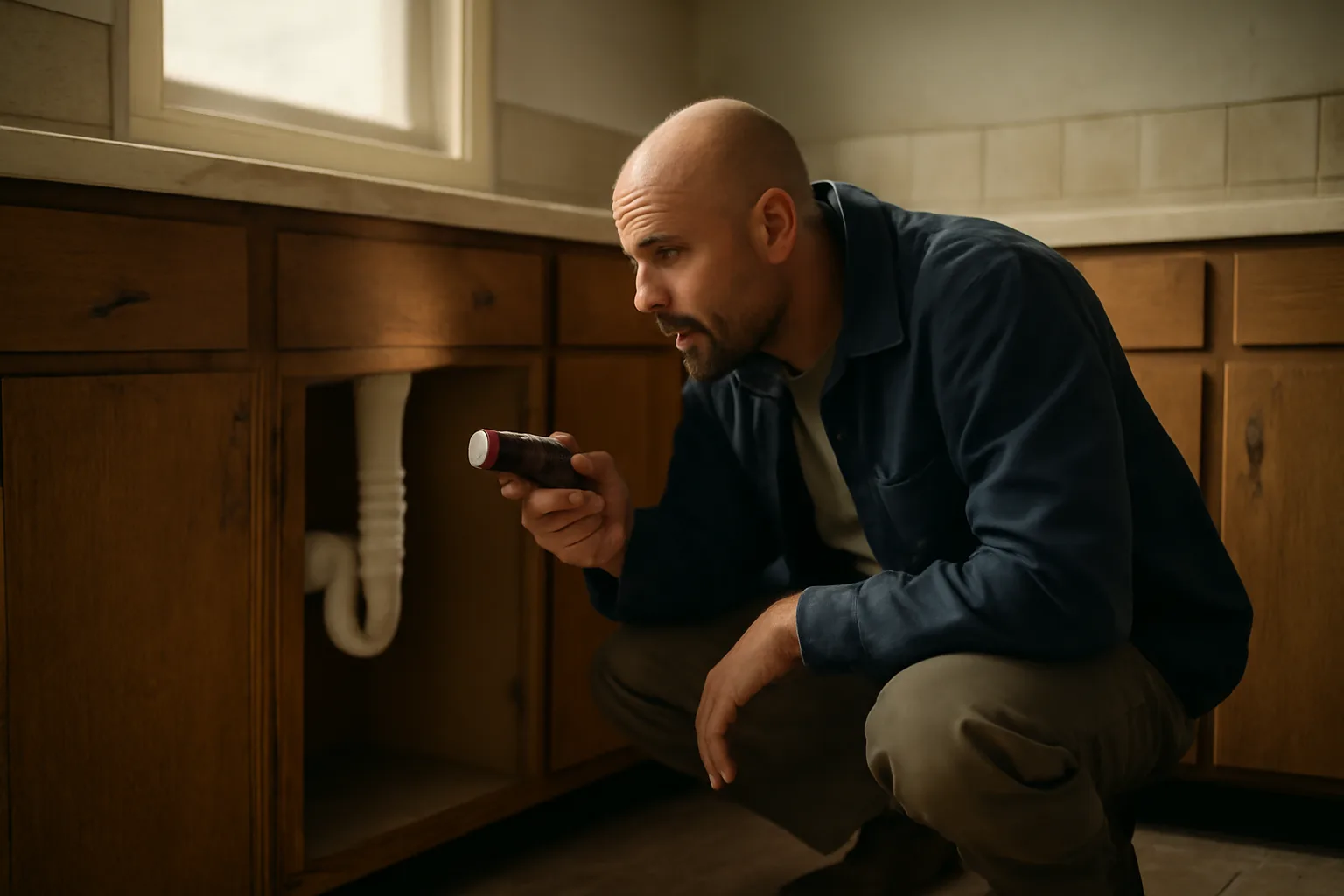
- No active leaks under sinks, around toilets, or at the water heater
- Water heater temperature-pressure relief valve present and functional
- Adequate water pressure and hot water
- No visible mold or water staining on ceilings/walls (a common inspection failure point) HVAC
- Furnace filter changed (do this every 1 to 3 months, more than annually)
- Working thermostat
- No gas smell near furnace or water heater
- Adequate heat source in every habitable room (many state codes require minimum heat, e.g., a minimum temperature during specific months) Doors, locks, egress
- Every bedroom has a functioning window that meets emergency egress size, or a second exit
- Exterior doors have working deadbolts
- No door that requires a key to exit from inside (a life-safety code violation almost everywhere) Pest and general condition
- Signs of rodents, cockroaches, bedbugs
- Flooring: trip hazards, soft spots
- Interior paint/drywall condition Print this, walk the unit with your phone camera, date-stamp the photos, and keep the file. That file is your evidence trail if a tenant disputes a repair timeline or the city follows up on a complaint.
Who is responsible for a rental property walk-through inspection in California?
In California, the landlord is responsible for arranging move-in and move-out walk-through inspections, but the process is actually a shared right written into state law. California Civil Code Section 1950.5(f) gives tenants the right to request an initial (pre-move-out) inspection before the final move-out inspection, specifically so they get a chance to fix any deductible issues themselves before losing part of their deposit [6]. Here's how it actually works: the landlord must notify the tenant of the right to request this initial inspection, generally timed within a couple weeks of the lease ending. If the tenant requests it, the landlord conducts the walk-through, gives the tenant an itemized list of deficiencies, and gives the tenant a reasonable opportunity to fix them before the final inspection and deposit deduction. The landlord still runs a final inspection after move-out to assess actual condition for the deposit itemization required under the same statute. For routine annual maintenance inspections (separate from move-out), landlords still handle scheduling and notice, but must give at least 24 hours' written notice before entering for a non-emergency purpose under Civil Code Section 1954 [7]. Some California cities with local rental inspection or registration programs, such as those with proactive rental inspection ordinances, may run their own city inspector visit on top of your own walk-through; that's a separate visit governed by the local ordinance, not by 1950.5 or 1954. Bottom line: the landlord runs the process, but the tenant has statutory rights to participate, get notice, and get a chance to cure deficiencies before losing deposit money.
How much notice does a landlord have to give before entering or inspecting?
| California | 24 hours (written, with limited exceptions) | Civil Code 1954 [7] | |
|---|---|---|---|
| Florida | 12 hours | Fla. Stat. 83.53 [8] | |
| Texas | No statutory minimum notice period specified in the residential landlord-tenant chapter; lease terms typically govern | Tex. Prop. Code Ch. 92 [9] | |
| Washington | 2 days (48 hours) | RCW 59.18.150 [10] | Emergencies (fire, flooding, gas leak) are a universal exception; no notice is required when there's an immediate threat to life or property. But "I was in the neighborhood" is not an emergency, and showing up unannounced for a routine inspection is one of the most common sources of landlord-tenant friction and, in some states, a violation that gives the tenant grounds for a complaint or even damages. Best practice regardless of your state's legal minimum: give at least 48 hours' written notice (text or email counts in most states if your lease says so), propose a specific time window, and confirm in writing. It costs you nothing and it keeps the relationship functional. For city-mandated licensing inspections, note that the notice requirement is often set separately by the ordinance itself, not by the general landlord-tenant entry statute, so double check both. |
Most states require 24 to 48 hours' written notice before a landlord enters for a non-emergency reason like a routine inspection, though a few states use different windows and some don't set a fixed number at all. There is no single national standard; you have to check your own state's statute. A few concrete examples: | State | Notice required for non-emergency entry | Statute |
What can a landlord look at during an inspection?
A landlord conducting a routine inspection can look at anything related to the condition of the property and its systems: plumbing, electrical, HVAC, structural condition, signs of damage, unauthorized occupants or pets, or lease violations that are visible without searching through personal belongings. What a landlord generally cannot do is rummage through drawers, closets, or personal property, or use the inspection as a pretext to search for anything unrelated to habitability and lease compliance. The legal boundary comes from the same statutes that require notice: California's Civil Code 1954, for instance, limits entry to specific purposes, including "to make necessary or agreed repairs," "to exhibit the dwelling unit," or in cases of emergency or court order, and requires the entry to happen during normal business hours absent tenant agreement otherwise [7]. Inspecting isn't listed as broadly as some landlords assume; it typically falls under the "necessary repairs" or a specific inspection clause many leases include separately. Practically, here's what a reasonable inspection covers:
- Working smoke and CO alarms (you're allowed, and often required by code, to test these)
- Visible plumbing and electrical condition
- Signs of unreported water damage or mold
- Evidence of unauthorized pets or occupants if your lease restricts them
- General cleanliness that could create a pest or fire hazard
- HVAC filter and function What crosses the line: opening a tenant's mail, searching a closet for personal reasons unrelated to a maintenance issue, taking photos of personal belongings unrelated to condition, or entering when the tenant hasn't been given proper notice and hasn't consented. If you're inspecting for a city licensing visit, note that the city inspector's authority is usually narrower still; they're checking code compliance items, not lease compliance, and they typically need the same kind of advance notice or a scheduled appointment through your city's rental licensing office.
What a landlord cannot do in Ohio
Ohio law (Ohio Revised Code Chapter 5321, the Ohio Landlords and Tenants Act) spells out specific things a landlord cannot do, and violating them can expose you to tenant lawsuits, statutory damages, or in some cases criminal penalties for self-help eviction. Under ORC 5321.15, a landlord cannot forcibly remove a tenant, shut off utilities to force a tenant out, or seize a tenant's belongings, even if the tenant is behind on rent; that section makes it explicit that "no landlord shall initiate any act, including the interruption of utility services... for the purpose of terminating the tenant's occupancy" without going through the courts [11]. Self-help eviction is illegal in essentially every state, but Ohio's statute lays it out with unusual clarity. Ohio landlords also cannot retaliate against a tenant for complaining to a health or safety agency or for joining a tenant union, per ORC 5321.02, which prohibits retaliatory conduct including eviction, rent increases, or reduced services in response to a tenant exercising legal rights [12]. On entry specifically, ORC 5321.04 requires landlords to give reasonable notice, generally interpreted as 24 hours, before entering, except in an emergency [13]. Entering without that notice for a non-emergency inspection is itself a violation a tenant can raise. Other things off-limits in Ohio: charging a security deposit with no legal cap concern (Ohio doesn't cap deposit amounts, but it does require the landlord to pay interest on deposits over one month's rent if the tenancy lasts beyond a year, per ORC 5321.16) and failing to return the deposit or an itemized deduction list within 30 days of move-out, which can expose the landlord to double damages under the same section [14].
What rights do tenants have without a lease?
A tenant without a written lease, sometimes called a month-to-month or oral tenancy, still has essentially all the same legal protections as a tenant with a written lease. The absence of a written lease does not waive habitability rights, discrimination protections, or notice requirements; it mainly changes how the tenancy can be ended and how long each party has to notify the other. Most states treat an oral or undocumented tenancy as month-to-month by default, meaning either party can end it with proper notice, typically 30 days, though some states or cities (especially those with just-cause eviction ordinances) require more, or require a specific legal reason to end it at all. A no-lease tenant still keeps:
- The right to a habitable unit under the implied warranty of habitability
- Protection from discrimination under the federal Fair Housing Act [4]
- The right to advance notice before the landlord enters, under whatever your state statute requires
- The right to their security deposit back (if one was collected) under your state's deposit return timeline and itemization rules
- Protection from retaliation for reporting code violations
- Protection from illegal lockouts or utility shutoffs (self-help eviction is illegal almost everywhere, lease or no lease) What changes without a lease: rent amount and due date protections become murkier (verbal agreements are harder to enforce if disputed), and the tenancy can typically be ended with standard notice rather than requiring a lease violation or lease-end date. If you're a landlord operating without written leases, that's a real liability gap, not a convenience; get something in writing even if it's a one-page month-to-month agreement. For more on this, see tenants rights and tenant rights for state-specific breakdowns.
Why do landlords require renters insurance?
Landlords require renters insurance mainly to shift liability risk off themselves and to make sure the tenant, not the landlord's own policy, absorbs the cost of the tenant's personal property loss or the tenant's liability for accidents they cause. A landlord's own dwelling policy typically covers the building structure and the landlord's liability, but it does not cover a tenant's furniture, electronics, or clothing after a fire or burst pipe, and it often doesn't fully cover liability if the tenant's own negligence (say, an unattended candle, or a dog bite) causes the damage or an injury to a third party. Renters insurance closes that gap. According to the Insurance Information Institute, the average cost of a renters insurance policy nationally runs in the range of roughly $15 to $30 a month depending on coverage limits and location, which is cheap enough that most landlords who require it face little tenant pushback . Requiring it also protects the landlord indirectly: if a tenant's negligence causes a fire that damages other units in a multi-unit building, the tenant's liability coverage (usually starting around $100,000 in a standard policy) can cover claims from other tenants or the landlord's own subrogation claim, instead of that liability falling entirely on the landlord's policy and driving up the landlord's premiums. Most landlords who require it write it into the lease as a condition of tenancy, require proof of an active policy with the landlord listed as an "interested party" (not additional insured, which is different), and require the tenant to show renewal proof annually. That's a lease clause question though, and you should have a local attorney review your specific lease language rather than copy generic wording.
How to be a landlord day to day (the maintenance and inspection rhythm that actually works)
Being a landlord long-term comes down to a rhythm, not a checklist you do once. The landlords who avoid fines and lawsuits tend to run the same basic loop every year. A workable annual rhythm:
- Move-in: full walk-through with the tenant present, photos, signed condition report
- Every 3 to 6 months: quick exterior check, drive-by or short visit, check for obvious deferred maintenance
- Annually: full interior inspection using a checklist like the one above, with proper notice given in writing
- Before any city-mandated inspection: your own pre-inspection walk-through 1 to 2 weeks ahead, so you have time to fix anything before the official inspector shows up
- Move-out: final walk-through, itemized deposit deductions within your state's legal timeline The annual inspection is also your best moment to catch small problems before they become code violations. A slow leak under a sink is a $40 fix if you catch it early; it's a mold remediation bill and a possible habitability complaint if you don't. If your city runs a mandatory rental licensing and inspection program (increasingly common; cities from Cincinnati to Minneapolis to dozens of smaller municipalities require it), your annual self-inspection habit does double duty: it keeps you ahead of the official inspection and gives you a documented paper trail if a tenant or the city disputes your maintenance record. This is exactly the gap our $79 one-time City Rental License & Inspection Prep Packet is built to close: it's a self-inspection walkthrough built around common city rental licensing checklist items, so you can catch problems before the official inspector does. It's not a substitute for your city's specific checklist, which you should always confirm directly with your city rental licensing office.
What happens if you fail a rental inspection or skip one entirely?
Consequences for failing or skipping a mandatory rental inspection vary a lot by city, but the pattern is consistent: a failed inspection usually gives you a correction period (commonly 30 days, though some cities give less for urgent life-safety items) to fix cited violations, followed by a re-inspection, and if you don't fix things or don't schedule the re-inspection, fines escalate and can eventually include denial or revocation of your rental license. Skipping a required inspection or registration entirely is usually worse than failing one. Many cities charge a flat penalty for operating an unregistered or uninspected rental, on top of back-fees for the years you should have been registered, and some cities can pursue this even if no tenant ever complained, simply by cross-referencing utility records or property tax filings against the rental registry. Because fee schedules, correction periods, and penalty amounts differ by city (and change over time), there's no honest single number to give you here. Confirm with your specific city's rental licensing office for the current fine schedule, correction period, and re-inspection fee before you assume any number you read online, including this article, is current for your address.
Frequently asked questions
What is landlording?
Landlording is the practice of owning and operating rental property: collecting rent, maintaining habitability, following state and local landlord-tenant law, and handling tenant relationships. It includes both the business side (cash flow, taxes, licensing) and the legal side (habitability, notice requirements, fair housing compliance).
What is a landlord?
A landlord is the owner of rental real estate who leases it to a tenant for rent and takes on legal duties for habitability and repairs. Some states legally distinguish a landlord from a property manager, so check whether your city's rental license needs to be in the owner's name specifically.
Who is responsible for a rental property walk-through inspection in California?
The landlord schedules and conducts the walk-through, but California Civil Code Section 1950.5(f) gives tenants the right to request an initial pre-move-out inspection so they can fix deductible issues before the final inspection and deposit itemization.
How much notice does a landlord have to give before an inspection?
It depends on your state. California requires 24 hours' written notice (Civil Code 1954), Florida requires 12 hours (Fla. Stat. 83.53), and Washington requires 2 days (RCW 59.18.150). Best practice regardless of the legal minimum is 48 hours in writing with a proposed time window.
What can a landlord look at during an inspection?
A landlord can inspect plumbing, electrical, HVAC, smoke and CO detectors, general condition, and visible lease compliance issues like unauthorized pets. A landlord generally cannot search personal belongings, drawers, or closets for reasons unrelated to habitability or the stated purpose of entry.
What a landlord cannot do in Ohio?
Under Ohio Revised Code 5321.15, a landlord cannot force a tenant out by shutting off utilities, changing locks, or removing belongings without a court order. ORC 5321.02 also bans retaliation against tenants who report code violations, and ORC 5321.04 requires reasonable entry notice, generally treated as 24 hours.
What rights do tenants have without a lease?
A tenant without a written lease still has full habitability rights, Fair Housing Act protections, entry notice rights under state law, and deposit return rights if a deposit was collected. The tenancy is usually treated as month-to-month, meaning either side can end it with standard notice, typically 30 days.
Why do landlords require renters insurance?
Renters insurance shifts liability for the tenant's own negligence and property loss away from the landlord's policy. It typically costs $15 to $30 a month according to the Insurance Information Institute, and it usually includes liability coverage starting around $100,000, protecting both the tenant and the landlord from major claims.
How to become a landlord?
Buy or convert a property, check zoning and local rental registration rules, register with the city if required, screen tenants under fair housing law, use a compliant lease, get landlord insurance (not a standard homeowner policy), and set up maintenance and inspection record-keeping from day one.
How often should a landlord inspect a rental property?
Most experienced landlords do a full interior inspection once a year, a quick exterior check every 3 to 6 months, and a documented walk-through at move-in and move-out. Cities with mandatory licensing programs often set their own separate inspection schedule on top of this.
Do I need a professional to do my annual rental inspection?
No. A landlord can do a basic annual self-inspection using a checklist covering smoke detectors, plumbing, electrical, HVAC, and structural items. A licensed inspector is usually only required for your city's official licensing inspection, if your municipality mandates one.
What is the difference between a rental inspection and a move-out walk-through?
An annual rental inspection checks ongoing safety and maintenance condition during an active tenancy. A move-out walk-through documents the unit's condition at lease end specifically to support security deposit deductions, and in states like California it comes with its own separate statutory notice and cure-period rights.
Can a landlord fail a city rental inspection and still rent the unit?
It depends on the city and the violation. Minor items usually come with a correction period, often around 30 days, before re-inspection. Serious life-safety violations can sometimes bar occupancy or licensing until fixed. Confirm the specific consequence and timeline with your city rental licensing office.
Sources
- California Civil Code Section 1941: California's implied warranty of habitability requires landlords to keep premises fit for occupation
- Municipal Code of Chicago, Chapter 5-12 (Residential Landlord and Tenant Ordinance): Chicago's Residential Landlord and Tenant Ordinance governs registration-related landlord and tenant obligations
- 42 U.S.C. Section 3601 et seq., Fair Housing Act: The federal Fair Housing Act prohibits rental discrimination based on race, color, national origin, religion, sex, familial status, or disability
- EPA, Real Estate Disclosure requirements for lead-based paint: Federal law requires disclosure of known lead-based paint hazards for housing built before 1978
- California Civil Code Section 1950.5: Tenants in California have the right to request an initial pre-move-out inspection before final deposit deductions
- California Civil Code Section 1954: California requires 24 hours' written notice before non-emergency landlord entry, limited to specific purposes
- Florida Statutes Section 83.53: Florida requires at least 12 hours' notice before landlord entry to inspect the premises
- Texas Property Code Chapter 92: Texas residential landlord-tenant law does not set a specific statutory entry notice period
- Revised Code of Washington 59.18.150: Washington requires landlords to give at least two days' notice before entering a rental unit
- Ohio Revised Code Section 5321.15: Ohio law prohibits landlords from using self-help methods like utility shutoffs to force a tenant out
- Ohio Revised Code Section 5321.02: Ohio law prohibits landlord retaliation against tenants who report code violations or join tenant organizations
- Ohio Revised Code Section 5321.04: Ohio requires landlords to give reasonable notice before entering a rental unit except in emergencies
- Ohio Revised Code Section 5321.16: Ohio requires landlords to return security deposits or provide an itemized deduction list within 30 days of move-out
- Insurance Information Institute, Renters Insurance facts and statistics: Average renters insurance costs roughly $15 to $30 per month depending on coverage and location