Last updated 2026-07-26
TL;DR
Edison Township, NJ requires landlords to register rental units and pass a health/safety inspection before occupancy, under its Landlord-Tenant Rental Property Ordinance. Confirm current fees, inspection scope, and reinspection timelines with the Edison Township rental licensing or code enforcement office before you list a unit, since municipal fee schedules change and get updated by ordinance amendment.
Does Edison Township require a rental inspection?
Yes. Edison Township, New Jersey requires owners of rental property to register the unit with the township and pass a habitability inspection before a tenant can move in, and again on a periodic basis after that. This is standard practice across a lot of New Jersey municipalities, which lean on the state's Hotel and Multiple Dwelling Law and local property maintenance codes to justify these programs [1]. The exact ordinance number, inspection scope, and fee amounts for Edison specifically change from time to time as the township council amends its code. Rather than guess at a number that might be six months stale by the time you read this, confirm the current fee schedule and inspection checklist with the Edison Township rental licensing or code enforcement office directly. That's not a cop-out; it's the only way to get an accurate number, because municipal rental ordinances get revised more often than landlords expect. What you can count on: if you own a rental unit in Edison and you haven't registered it, you're out of compliance, and that exposes you to fines once the township finds out, usually through a tenant complaint, a utility hookup flag, or a routine sweep.
Who has to register a rental property in Edison Township?
Generally, any owner renting out a dwelling unit, whether it's a single-family home, a duplex, or units in a larger apartment building, has to register with the township. Owner-occupied two-family homes sometimes get partial exemptions in New Jersey towns, but that varies by ordinance, so don't assume yours qualifies without checking. New Jersey's state framework distinguishes between properties covered by the Hotel and Multiple Dwelling Law (generally three or more rental units) and smaller owner-occupied or single-family rentals, which often fall under separate municipal registration rules instead of state hotel/multiple dwelling licensing [1][2]. Edison Township layers its own local registration and inspection requirement on top of whichever state category applies. That means a landlord with a single rental house in Edison still very likely needs to register locally, even though the state Hotel and Multiple Dwelling Law wouldn't otherwise apply to a property that small. If you're renting a room in your own home, a basement apartment, or a small multi-family building, don't assume you're exempt. Call the Edison Township rental licensing or code enforcement office and ask directly. It's a five-minute phone call that can save you a violation notice later.
What does the Edison Township rental inspection actually check?
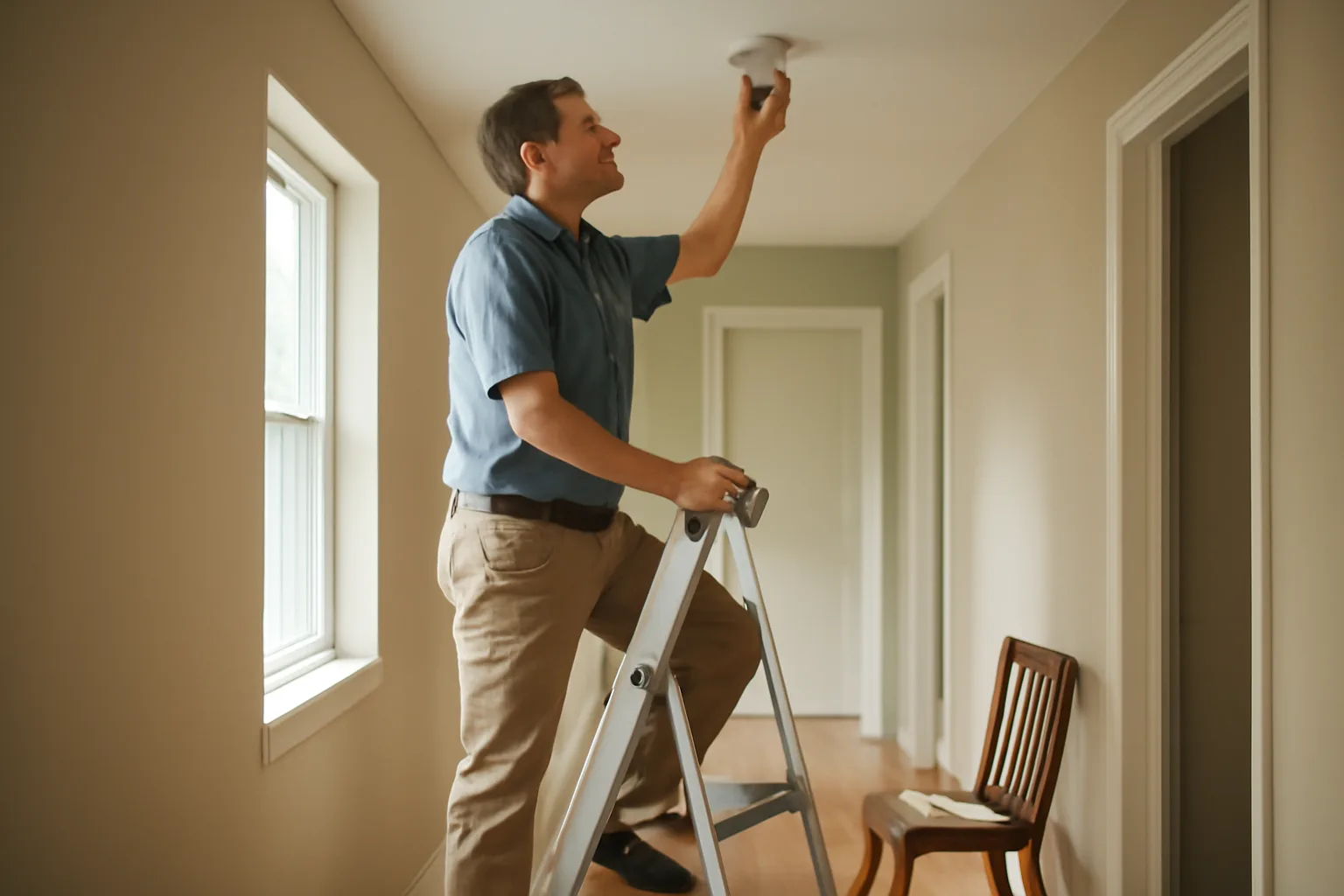
Rental inspections in New Jersey municipalities generally look at basic health and safety conditions rather than cosmetic issues. Expect the inspector to check things like: - Smoke detectors and carbon monoxide detectors, installed and working, per New Jersey's smoke detector requirements [3]
- Working electrical outlets and no exposed wiring
- Functioning heat source adequate for the unit
- Plumbing that works and doesn't leak, with hot water
- Secure locks on exterior doors and windows
- Means of egress (a legal second exit or fire escape where required)
- No structural hazards: rotted stairs, unstable railings, holes in floors or ceilings
- Proper egress window sizes in bedrooms, especially basement bedrooms
- Pest and general sanitation conditions This list is a general sketch of what most New Jersey municipal rental inspections cover, based on common local property maintenance code adoption of the International Property Maintenance Code or a similar state-based model. Edison's specific checklist may add or subtract items. Ask the rental licensing office for the actual inspection checklist before your appointment; most towns will hand it over or post it, and walking in blind is how landlords fail inspections on stuff they could have fixed in ten minutes. If you want a structured way to get your unit ready before the inspector shows up, our $79 rental packet builder walks through a pre-inspection checklist mapped to common municipal requirements, plus the registration paperwork most cities ask for.
What happens if I fail the rental inspection?
You get a list of violations, called a notice of deficiency or a violation notice, and a deadline to fix them. That deadline is usually somewhere in the range of 30 to 90 days depending on the severity, though Edison's specific reinspection window should be confirmed with code enforcement directly since it varies by violation type and municipal ordinance. Minor items (missing smoke detector battery, a loose handrail) often get resolved fast and reinspected quickly, sometimes within days. Structural issues (a failed water heater, no legal second egress from a bedroom) take longer and might require permits, which adds weeks. If you don't fix the violations and don't pass reinspection, the township can deny or revoke your rental registration, which legally means you can't rent that unit until you're compliant. Continuing to rent an unregistered or unlicensed unit is itself often a separate violation carrying its own fine under municipal ordinance enforcement provisions, on top of whatever the underlying property condition fine was.
How much does an Edison Township rental license or inspection cost?
Fees vary and change over time, so the honest answer is: confirm with the Edison Township rental licensing or code enforcement office directly before you budget for it. New Jersey municipalities that run local rental inspection programs typically charge a registration fee per unit, plus sometimes a separate inspection fee, and the totals across comparable towns in the state commonly land somewhere in the range of $50 to a few hundred dollars per unit depending on the town and unit count. Don't use that range as Edison's actual fee. It's a broad-strokes comparison to help you sanity-check whatever number the township quotes you, not a substitute for calling. Beyond the registration fee itself, budget for whatever repairs the inspection turns up. A missing smoke detector costs maybe $15 to $30 to fix yourself. A failed water heater or an egress window retrofit in a basement bedroom can run into the thousands. Get the inspection done early, well before you plan to list the unit, so repair costs don't become a scramble against a move-in date.
How to become a landlord in Edison Township (or anywhere)
Becoming a landlord isn't a license you apply for at the state level in most places; it's a role you step into once you rent out property you own, and then a set of local and state rules that kick in because of that. The practical steps are similar everywhere: 1. Confirm you can legally rent the property (check zoning, HOA rules, and any mortgage or insurance restrictions on rental use). 2. Register the rental unit with your city or township if local law requires it, which Edison does. 3. Pass any required health/safety inspection before occupancy. 4. Get landlord (rental dwelling) insurance, more than a standard homeowner's policy, since most homeowner policies exclude tenant-occupied property damage and liability. 5. Screen tenants consistently and legally (credit, income, rental history, background checks within Fair Housing Act limits). 6. Use a written lease that spells out rent, term, deposit handling, and maintenance responsibilities. 7. Understand your state's security deposit law; New Jersey caps security deposits at one and a half months' rent and requires deposits be held in an interest-bearing account, with specifics under the New Jersey Security Deposit Act [4]. 8. Keep up with annual re-registration or re-inspection requirements where they apply. If you're renting your first unit in a licensing city like Edison, do the registration and inspection steps before you advertise the unit. Landlords who list first and register later often end up scrambling to fix violations while a tenant is already trying to move in.
What is landlording, and what is a landlord, exactly?
A landlord is the owner of real property (or someone with legal authority to act for the owner) who rents that property to another person, the tenant, in exchange for rent. Landlording is the day-to-day work of managing that relationship: collecting rent, maintaining the property, handling repairs, following state and local landlord-tenant law, and dealing with turnover between tenants. It's not passive. Even a single-unit landlord in Edison Township has ongoing legal duties: keeping the unit habitable under New Jersey's implied warranty of habitability, complying with the local rental registration and inspection ordinance, following state security deposit rules, and giving legally sufficient notice before entering the unit or ending a tenancy. People sometimes think landlording is just collecting a check. The actual job is closer to running a small compliance-heavy business: paperwork, deadlines, inspections, and a legal duty to respond to repair requests in a reasonable time.
What can a landlord look at during an inspection?
There are two very different kinds of "landlord inspection" people mean by this question, and they get confused a lot. The first is the municipal rental licensing inspection, like Edison's, done by a township code official before or during a tenancy to confirm the unit meets health and safety code. That inspector checks smoke detectors, electrical, plumbing, heat, egress, and structural condition, as covered above. The second is a landlord's own periodic inspection of a unit they're renting out, usually to check for lease violations, property damage, or maintenance issues. A landlord doing this kind of inspection can generally look at general condition and cleanliness, check smoke detector function, look for unauthorized pets or occupants, check for property damage, and confirm no illegal activity or major lease violations are visible. What a landlord generally cannot do is search through a tenant's personal belongings, go through drawers or closets, or use the inspection as a pretext to harass a tenant or interfere with quiet enjoyment. Both kinds of inspection require notice in most states, and both are bounded: a health/safety inspector looks at code items, and a landlord's own inspection is limited to what's reasonably related to lease compliance and property condition, not a fishing expedition through someone's stuff.
Who is responsible for a rental property walk-through inspection in California?
This question comes up a lot because California law treats move-in and move-out walk-through inspections differently from most states. Under California Civil Code Section 1950.5, a tenant has the right to request an initial move-out inspection before vacating, giving them a chance to fix deficiencies before the landlord makes deductions from the security deposit [5]. The landlord (or the landlord's agent) is responsible for conducting that walk-through if the tenant requests it, and must give the tenant at least 48 hours' written notice of the date and time, unless the tenant waives that notice in writing [5]. The landlord then has to provide the tenant an itemized statement of any needed repairs or cleaning identified during that walk-through, and give the tenant a chance to remedy those issues before move-out to avoid deposit deductions. This is a state-specific rule; it doesn't apply outside California, and even within California it's a separate legal mechanism from any local rental inspection or licensing ordinance a city might also require.
What rights do tenants have without a lease?
A tenant without a written lease still has legal rights. If someone is paying rent and a landlord is accepting it, most states treat that as a month-to-month tenancy at will, governed by state landlord-tenant statute rather than a written contract. Tenants without a lease generally still have the right to a habitable unit (heat, working plumbing, structural safety), the right to notice before the landlord enters (timing varies by state, commonly 24 to 48 hours), the right to advance written notice before the tenancy is terminated (commonly 30 days for month-to-month tenancies, though this varies by state and sometimes by how long the tenant has lived there), and protection from retaliatory or discriminatory eviction under the federal Fair Housing Act [6] and applicable state law. What a no-lease tenant doesn't have is the specific terms a written lease would have spelled out: rent amount protections beyond what notice rules require for changes, specific maintenance responsibilities, or agreed-upon rules about pets, guests, or subletting. Without a lease, state default landlord-tenant law fills in those gaps, and it fills them in less favorably for the tenant on some points and more favorably on others (a tenant on a verbal month-to-month deal can also leave with much shorter commitment than someone locked into a one-year lease).
How much notice does a landlord have to give?
It depends what for, and it depends what state. There isn't one national notice rule; every state sets its own timelines for entry notice, rent increases, and lease termination. For entering an occupied unit for repairs or inspection, many states require 24 hours' advance notice, though the exact number and whether it has to be written varies by state statute. New Jersey doesn't have one single statewide statute spelling out a specific hour count for ordinary entry notice the way California does, so New Jersey landlords should rely on what's written into the lease and on the general legal standard of reasonable notice, and check current guidance from the New Jersey Department of Community Affairs if unsure [7]. For ending a month-to-month tenancy, 30 days' notice is common across many states, though some states or cities require more for longer-tenured tenants. For raising rent on a month-to-month tenant, notice requirements again vary by state and sometimes match the termination notice period. The safe move: check your specific state's landlord-tenant statute (not a generic national article) before giving any notice, because getting the notice period wrong can void the notice entirely and cost you a whole extra rental cycle.
Why do landlords require renters insurance?
Landlords require renters insurance mainly to shift liability and personal property risk off themselves and onto a policy the tenant carries. A landlord's own property/casualty policy generally covers the building itself, not the tenant's belongings, and it may not fully cover a liability claim that originates from the tenant's own actions (an unattended candle fire, a dog bite in the unit, a guest injury caused by the tenant's own negligence). Renters insurance typically covers the tenant's personal property against fire, theft, and certain other losses, and includes liability coverage if the tenant accidentally causes damage or someone is injured in the unit. Requiring it protects the landlord from disputes where a tenant claims the landlord owes them for destroyed belongings after a fire or flood, since the tenant's own coverage is meant to handle that instead. Many landlords build the renters insurance requirement directly into the lease and ask for proof of a policy naming the landlord as an "interested party" so they get notified if the policy lapses. It's a cheap way to reduce a landlord's own liability exposure; renters insurance policies commonly run in the range of $15 to $30 a month depending on coverage and location, a small cost that meaningfully reduces the landlord's downside risk in a fire or major water damage claim.
What can a landlord not do in Ohio?
Ohio's Landlord-Tenant Act, primarily Ohio Revised Code Chapter 5321, spells out specific things a landlord cannot do. A landlord in Ohio cannot shut off utilities to force a tenant out, change the locks without a court order, or remove a tenant's belongings without going through the formal eviction process in court, sometimes called "self-help eviction," which Ohio law does not allow [8]. Ohio law also requires landlords to maintain the premises in a fit and habitable condition, keep common areas safe, and maintain electrical, plumbing, heating, and other systems in good working order [8]. A landlord who fails to do this can face a tenant remedy under the statute, including in some cases the tenant's right to deduct repair costs from rent after giving proper written notice. Ohio landlords also cannot retaliate against a tenant for exercising a legal right, like reporting a code violation or joining a tenant organization; Ohio Revised Code Section 5321.02 specifically prohibits retaliatory conduct including eviction, rent increases, or service reductions taken because a tenant complained to a government agency about a building, housing, health, or safety code violation [9]. And like every state, Ohio landlords are bound by the federal Fair Housing Act's prohibition on discrimination based on race, color, religion, sex, national origin, familial status, or disability [6].
Frequently asked questions
Does Edison Township require every rental unit to be registered?
Generally yes, most rental units in Edison Township need to be registered with the township, though exact exemptions (like certain owner-occupied two-family homes) depend on the current ordinance. Confirm with the Edison Township rental licensing or code enforcement office whether your specific property type is covered before you list it for rent.
How long does the Edison Township rental inspection take to schedule?
Scheduling times vary based on inspector availability and time of year, with spring and summer often busier due to lease turnover season. Call the Edison Township code enforcement or rental licensing office as early as possible, ideally 30 to 60 days before you need the unit rent-ready, to avoid a scheduling bottleneck.
What happens if I rent out a unit in Edison without registering it?
You risk a municipal fine, and continuing to rent an unregistered unit is typically treated as an ongoing violation, not a one-time fine. Some municipalities can also pursue enforcement through municipal court. Confirm current penalty amounts with Edison Township code enforcement, since fine schedules change by ordinance amendment.
How to become a landlord if I've never rented out property before?
Confirm you're legally allowed to rent the property (zoning, HOA, mortgage terms), register with your city if required, pass any local inspection, get landlord insurance, screen tenants under Fair Housing Act rules, and use a written lease. There's no state license required in most places; the requirements come from local ordinance and state landlord-tenant law instead.
What is landlording in simple terms?
Landlording is the ongoing work of owning and renting out property: collecting rent, handling repairs, following state and local law, managing tenant relationships, and keeping the unit habitable. It's more than collecting a check; it comes with legal duties around maintenance, notice, deposits, and compliance with local licensing rules.
Who is responsible for a rental property walk-through inspection in California?
The landlord is responsible for conducting the move-out walk-through if a tenant requests one, under California Civil Code Section 1950.5. The landlord must give at least 48 hours' written notice of the inspection date and time, then provide an itemized list of needed repairs so the tenant can fix issues before move-out.
What rights do tenants have without a lease?
A tenant paying rent without a written lease is usually a month-to-month tenant under state law, with rights to a habitable unit, notice before entry, and advance written notice before termination (commonly 30 days, though this varies by state). They also have Fair Housing Act protections against discrimination and retaliation.
How much notice does a landlord have to give before entering a unit?
It depends on the state; many require 24 hours' notice for non-emergency entry, but there's no single national rule. New Jersey doesn't have one specific statewide statute on the exact hour count, so check the lease terms and reasonable-notice standards, or confirm with the New Jersey Department of Community Affairs.
Why do landlords require renters insurance from tenants?
Renters insurance covers the tenant's personal belongings and liability, things the landlord's own property insurance usually doesn't cover. Requiring it reduces the landlord's exposure if the tenant causes a fire, water damage, or an injury in the unit, since the tenant's policy responds first instead of the landlord's.
What can a landlord look at during an inspection?
A municipal code inspector checks health and safety items: smoke detectors, electrical, plumbing, heat, egress, and structural condition. A landlord's own periodic inspection can check general condition, damage, and lease compliance, but generally cannot include searching a tenant's personal belongings or drawers.
What can a landlord not do in Ohio?
Under Ohio Revised Code Chapter 5321, a landlord cannot shut off utilities, change locks, or remove belongings to force a tenant out without a court order (no self-help eviction), and cannot retaliate against a tenant for reporting a code violation, under Ohio Revised Code Section 5321.02.
What's the difference between rental registration and rental licensing?
Registration usually just means telling the city you own a rental unit and providing owner/contact information; licensing usually requires passing an inspection first. Many towns, likely including Edison, combine both: you register the unit and it must pass inspection before the registration or license is considered active.
Can I be fined in Edison Township even if my tenant caused the code violation?
Often yes. Most municipal rental codes place responsibility on the owner to maintain the property in compliant condition regardless of who caused the issue, though some violations (like tenant-caused damage) may be handled between landlord and tenant separately from the code enforcement fine. Confirm liability specifics with Edison code enforcement for your situation.
Sources
- New Jersey Department of Community Affairs, Hotel and Multiple Dwelling Law overview: New Jersey's Hotel and Multiple Dwelling Law framework governs licensing for certain multi-unit rental properties statewide
- New Jersey Revised Statutes, Title 55, Hotel and Multiple Dwelling Law: State law defines which rental buildings fall under Hotel and Multiple Dwelling Law licensing versus other categories
- New Jersey Uniform Fire Code, smoke detector and carbon monoxide requirements for rental units: New Jersey requires working smoke detectors and carbon monoxide detectors in rental dwellings
- New Jersey Statutes, Security Deposit Act, N.J.S.A. 46:8-19 to 26: New Jersey caps security deposits at one and a half months' rent and requires interest-bearing deposit accounts
- California Civil Code Section 1950.5: California landlords must conduct a move-out walk-through inspection if requested and give 48 hours' written notice
- U.S. Department of Housing and Urban Development, Fair Housing Act overview: The federal Fair Housing Act prohibits discrimination in housing based on race, color, religion, sex, national origin, familial status, and disability
- New Jersey Department of Community Affairs, Landlord-Tenant Information: New Jersey landlord-tenant guidance for entry notice and habitability standards is maintained by the Department of Community Affairs
- Ohio Revised Code Chapter 5321, Landlords and Tenants: Ohio law prohibits self-help eviction and requires landlords to maintain rental units in a fit and habitable condition
- Ohio Revised Code Section 5321.02: Ohio law prohibits landlord retaliation against tenants who report code violations to a government agency