Last updated 2026-07-26
TL;DR
Denver's Residential Rental License program requires most landlords (1+ units, including single-family rentals) to register, pass a Denver Fire Department life-safety inspection or self-certify, and renew every four years. Fines for operating without a license can reach $999 per day per Denver's Municipal Code. Confirm current fees and timelines with Denver's Excise and Licenses office before your deadline.
Does Denver require a rental license and inspection?
Yes. Denver's Residential Rental License program, created by ordinance in 2021 and phased in through 2023, requires almost anyone renting out residential property in the city to hold a license before leasing a unit. This covers single-family homes, duplexes, accessory dwelling units, condos, and larger apartment buildings alike. The city's own program page describes it as mandatory for "owners of residential rental property in Denver" [1]. The program folds in a life-safety check. Instead of a separate city inspector walking through every unit, Denver primarily uses a self-certification checklist covering smoke alarms, carbon monoxide detectors, egress windows, and similar items, with the option (or requirement, depending on property type) of a fire department inspection. Short-term rental licenses are handled through a related but distinct process. If you already hold a Denver short-term rental license or you're renting a unit that's owner-occupied under specific exemptions, check whether you actually need the long-term residential rental license too. The rules distinguish long-term tenancy (30+ days) from short-term rental, and licensing requirements differ. Confirm your exact category with Denver's Excise and Licenses office before assuming you're covered or exempt.
Who needs a Denver rental license, and who's exempt?
Denver's ordinance applies broadly. If you rent out a house, a condo, a basement apartment, or units in a multi-family building for terms of 30 days or longer, you likely need a rental license. This includes landlords who rent out a single room in a home they don't occupy. There are exemptions, and they matter. Owner-occupied properties where the owner lives on site with a limited number of boarders may fall under different rules. Certain licensed care facilities, hotels, and properties already regulated under other city licensing schemes are typically carved out. The specifics of exemption categories change as the city refines the ordinance, so don't guess; confirm with Denver's Excise and Licenses office which category your property falls into. One detail that trips up new landlords: the requirement doesn't wait until you actually have a tenant lined up. If you intend to lease the unit, Denver expects you to get licensed first. Advertising a unit for rent without a valid license can itself trigger a violation in some enforcement approaches, so timing your application before you post a listing is the safer play.
What does the Denver rental inspection actually check?
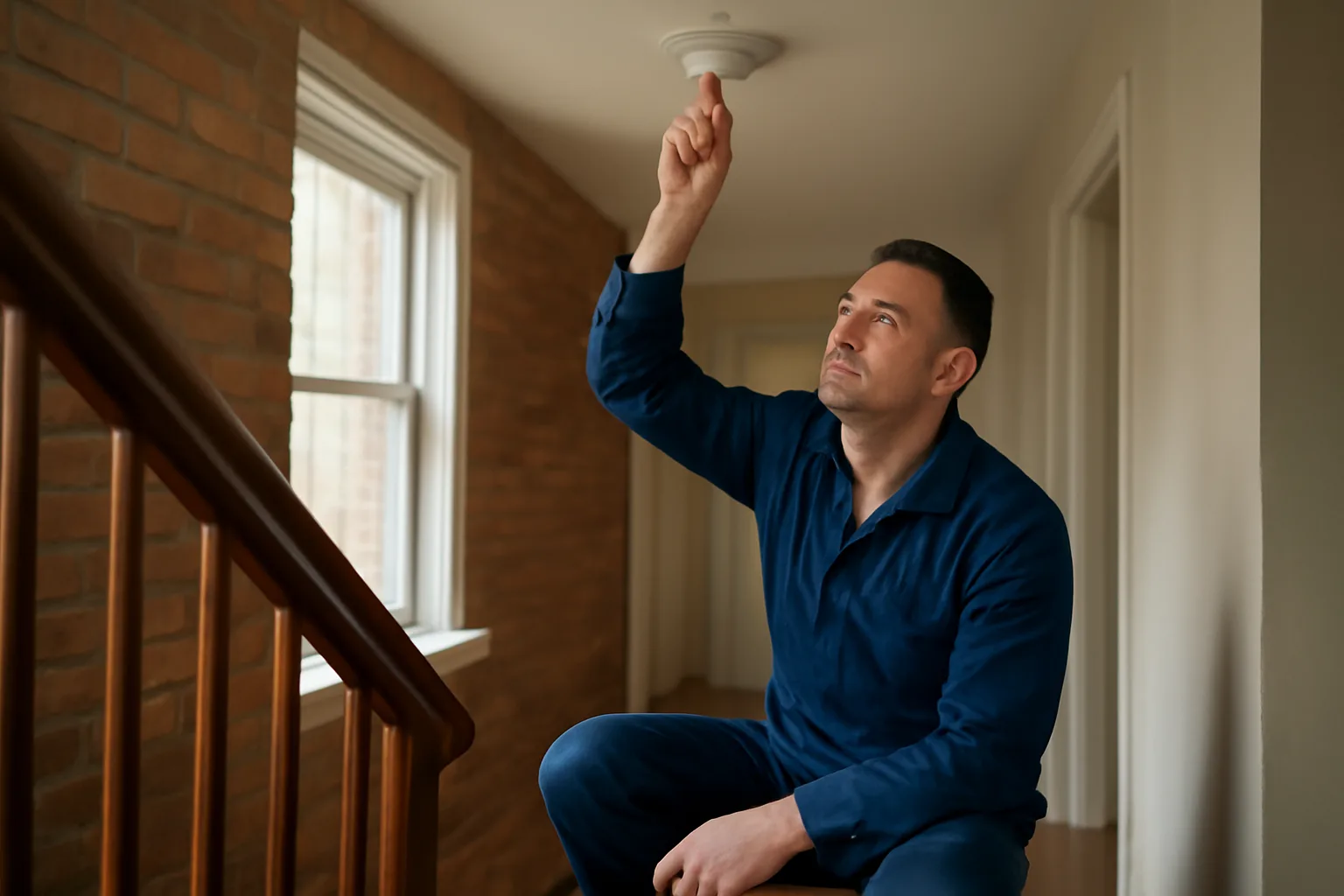
The core of Denver's program is a life-safety self-certification checklist, not a full building code walkthrough. Landlords (or their designated inspector) confirm the presence and working condition of smoke alarms in the right locations, carbon monoxide detectors near sleeping areas and near fuel-burning appliances, secondary means of egress from sleeping rooms, and that electrical, plumbing, and heating systems are functioning without obvious hazards. What can a landlord look at during an inspection? For a property owner doing a pre-license walkthrough of their own unit, that generally means checking egress windows open properly, testing every smoke and CO alarm, confirming handrails and stair conditions are sound, verifying there's no exposed wiring or overloaded circuits, and making sure heating equipment isn't producing carbon monoxide risk. This is a life-safety check, not an inspection of a tenant's belongings or lifestyle. Landlords conducting maintenance inspections during a tenancy are generally limited to checking the condition of the unit and systems, not searching personal property. Denver's checklist approach means many landlords never get a city inspector walking their unit at all; they attest to compliance and keep documentation on file in case of an audit or complaint-driven inspection. That said, complaint-based inspections do happen, and if a tenant reports a hazard, the city can send someone out regardless of your self-certification status.
How much does a Denver rental license cost and how long does it last?
Denver's residential rental licenses are generally structured as a multi-year license, commonly cited around a four-year term, with an initial application fee plus a per-unit component for buildings with more than one unit. Because Denver periodically adjusts these fees, don't rely on any number you read online, including this one, without checking the current fee schedule. Confirm exact costs and the renewal cycle with Denver's Excise and Licenses office or the official rental licensing fee page before budgeting [1]. Budget for more than the license fee itself. Most landlords spend money getting smoke and CO detectors up to code, fixing egress hardware, or addressing minor electrical issues flagged during self-certification. None of that is exotic or expensive compared to a full renovation, but it adds up if you own a few units and haven't touched the alarms in years. If you manage more than one property in Denver or across Colorado cities with similar rental licensing rules, building a simple compliance checklist you reuse for every renewal saves real time. Some landlords use a packet or template system for this exact reason; RentalPermitPath's $79 City Rental License & Inspection Prep Packet is built to walk you through gathering the documentation Denver and other licensing cities typically ask for, though it's not a substitute for checking the city's own current requirements.
What happens if you don't get a Denver rental license?
Operating an unlicensed rental in Denver exposes you to real financial risk. Denver's municipal code allows fines that can reach up to $999 per day per violation for certain licensing and code violations, a figure that reflects Colorado municipalities' general statutory ceiling for municipal ordinance penalties [2]. That's not a one-time fine; each day of continued non-compliance can be treated as a separate violation, which is how landlords who ignore a notice for months end up owing far more than the license fee itself. Beyond fines, an unlicensed rental can create headaches in eviction proceedings. Colorado courts have, in various contexts, looked skeptically at landlords trying to evict tenants from units that are operating outside required licensing, and some cities' ordinances explicitly limit a landlord's ability to pursue eviction while unlicensed. Don't assume you can quietly rent unlicensed and only deal with licensing if a complaint comes in; retroactive compliance after a violation notice often costs more in fees and requires faster turnaround than if you'd applied on your own schedule. If you've received a violation notice, the fastest path is usually to contact Denver's Excise and Licenses office directly, get clarity on what's missing from your application or self-certification, and fix it before your response deadline rather than after.
How do you become a landlord in Denver (or anywhere)?
Becoming a landlord is mostly a stack of compliance steps layered on top of owning property you intend to rent out. At a basic level: you need to own or control the property, confirm local zoning allows rental use, get any required city rental license or registration, understand your state's landlord-tenant law (Colorado's is largely in the Colorado Revised Statutes Title 38, Article 12), carry appropriate insurance, and set up a lease that complies with local and state disclosure requirements. What is landlording, practically? It's running a small business where your product is habitable housing and your customer relationship is governed heavily by statute, more than contract. That means responding to repair requests within legally reasonable timeframes, following specific notice periods before entry or termination, handling security deposits according to state rules (Colorado caps deposit handling and return timelines under C.R.S. § 38-12-103, which generally requires return within one month unless the lease specifies up to 60 days [3]), and keeping records because disputes often come down to who can prove what. What is a landlord, legally? Someone who owns or controls residential property and leases it to a tenant in exchange for rent, taking on statutory obligations around habitability, disclosures, and process that vary by state and city. If you're new to this, read your city's specific ordinance text rather than general landlord advice sites, because Denver's rental licensing requirements are stricter than most Colorado municipalities and stricter than what many national landlord guides assume.
How much notice does a landlord have to give before entering or ending a tenancy?
Notice requirements split into two very different categories: notice to enter a unit, and notice to end a tenancy. Colorado doesn't set a single statewide statutory notice period for routine entry the way some states do; landlords generally rely on lease terms and reasonable notice, often 24 hours as an industry norm, though Denver or specific lease language may set stricter requirements. Always check both your lease and any current Denver tenant protection rules rather than assuming a blanket 24-hour rule applies everywhere. For ending a tenancy, Colorado statute sets specific minimums depending on tenancy length. Under C.R.S. § 13-40-107, notice requirements scale with how long the tenant has occupied the unit: shorter for month-to-month tenancies under one year, longer for longer tenancies, with the statute laying out tiers (for example, tenancies of one year or longer generally require 91 days' notice to terminate a month-to-month tenancy under the current statute) [4]. These numbers get amended periodically by the Colorado legislature, so verify against the current statute text rather than an old blog post, including this one, before sending any termination notice. Denver may also layer on additional tenant protections around notice and just-cause eviction beyond what state law requires, particularly following city ordinance changes in recent years. If you're unsure which notice period applies to your specific tenant and lease type, this is one of the few areas where getting it wrong has real legal consequences, so confirming with a local landlord-tenant attorney or Denver's tenant/landlord resource office is worth the modest cost.
What rights do tenants have without a lease?
A tenant without a written lease isn't a tenant without rights. In most states, including Colorado, an oral or implied tenancy (sometimes called a tenancy at will or month-to-month tenancy by conduct) still carries habitability protections, protection from illegal lockouts and self-help eviction, and a right to proper notice before termination under the same statutory framework that governs written leases, per C.R.S. § 13-40-107 [4]. What that means practically: if you've been accepting rent from someone without ever signing a lease, you likely have a month-to-month tenancy in the eyes of the law, not a license or informal arrangement you can end whenever you want. You still owe that tenant the statutory notice period for termination, you still can't shut off utilities or change locks to force them out, and you're still on the hook for maintaining habitable conditions. Landlords sometimes assume no lease means no protections, hoping it simplifies removing a problem tenant. It doesn't work that way in Colorado or in most states; the absence of a written lease shifts some evidentiary questions (what was the rent amount, what were the terms) but doesn't strip away the tenant's basic statutory protections. If you're dealing with a no-lease situation you want to end, follow the same formal notice process you'd use for a written lease.
Who is responsible for a rental property walkthrough inspection in California, and how does that compare to Denver?
This comes up often because landlords searching Denver's rules also want to know how other states handle move-in/move-out inspections. In California, the responsibility for conducting a move-out inspection sits with the landlord, but the landlord must offer the tenant the chance to be present. Under California Civil Code § 1950.5(f), a landlord must give the tenant an opportunity for an initial inspection before move-out (upon the tenant's request) and provide an itemized statement of any proposed deductions, giving the tenant a chance to fix issues before losing deposit money over them [5]. Denver's licensing self-certification is a different animal. California's Civil Code § 1950.5 governs deposit-related move-in/move-out walkthroughs between a specific landlord and tenant; Denver's rental license inspection is a city compliance requirement about life-safety systems, not a deposit dispute mechanism. Don't confuse the two: even in Denver, your deposit-return obligations run through Colorado's C.R.S. § 38-12-103 [3], not the rental licensing ordinance. If you operate in both states or are just comparing notes, the practical takeaway is that walkthrough responsibility (who has to show up, offer the tenant a chance to be there, document conditions with photos) is a landlord-tenant law question specific to each state, while Denver's rental inspection is a municipal licensing question layered on top.
Why do landlords require renters insurance, and does Denver mandate it?
Most landlords require renters insurance because it shifts liability and financial risk that would otherwise land back on the landlord or the landlord's insurance policy. If a tenant's negligence causes a kitchen fire or a bathtub overflow that damages the unit below, a landlord's own property insurance covers the building, but it typically doesn't cover the tenant's personal belongings, and it may not fully cover liability claims the tenant caused. Requiring renters insurance, commonly with a modest liability minimum like $100,000, pushes that risk onto a policy the tenant pays for. Denver's rental licensing ordinance itself doesn't mandate renters insurance; that's a lease term a landlord chooses to include, not a city requirement tied to the license. Some landlords fold it into their lease as a standard clause, others require proof of an active policy at move-in and periodically after that. This is a business decision, not a legal inspection item, so it won't show up on Denver's rental license checklist. The practical cost for tenants is usually low; national data on renters insurance is thin at the city level, but industry surveys commonly put average premiums somewhere in the range of $15 to $30 per month depending on coverage limits and location, a small enough number that most landlords find tenants comply without much pushback when it's a clear lease requirement from day one.
What can't a landlord do (using Ohio as an example of state limits)?
Landlords everywhere operate under limits that specific state statutes spell out, and Ohio's Landlord-Tenant Act is a useful example because it's commonly searched and fairly explicit. Under Ohio Revised Code § 5321.04, a landlord must comply with building and housing codes materially affecting health and safety, keep common areas safe and clean, maintain electrical, plumbing, heating, and appliance systems, and cannot arbitrarily shut off utilities or change locks to force a tenant out (a self-help eviction) [6]. Ohio Revised Code § 5321.15 specifically bars landlords from using self-help remedies like lockouts, utility shutoffs, or removing a tenant's possessions to force them out without a court order . That statute exists because Ohio, like most states including Colorado, requires landlords to go through the formal eviction process in court rather than taking matters into their own hands, even when the tenant is clearly behind on rent or violating the lease. The general principle transfers to Denver and Colorado landlords too: self-help eviction is illegal in essentially every state. If you're frustrated with a non-paying or rule-breaking tenant, the legal path is always through formal notice and, if needed, the court eviction process under Colorado's own forcible entry and detainer statutes (C.R.S. Title 13, Article 40), not changing the locks or shutting off the water.
How do you get and stay compliant for a Denver rental license renewal?
Denver's rental license isn't a one-time application. It runs on a renewal cycle, commonly discussed as roughly every four years, and letting it lapse puts you back in unlicensed territory with the same fine exposure as a first-time violation. Set a calendar reminder well before your renewal date; Denver's licensing system typically sends notices, but relying solely on a government mailer is a bad plan given how often addresses and contact info drift out of date. Before renewal, walk your own property using the same self-certification checklist you used originally: test every smoke and CO alarm, check egress windows, look at visible electrical and plumbing conditions, and fix anything that's degraded since your last certification. Alarms die, batteries corrode, and window mechanisms seize up over a few years of tenant turnover, so don't assume year-one compliance still holds at year four. Keep a simple compliance file per property: your original license, self-certification checklist, any inspection reports, receipts for smoke/CO detector replacements, and dated photos of egress windows and electrical panels. If a complaint-driven inspection or an audit ever comes up, having that paper trail ready saves you from scrambling and reduces the odds of a violation finding for something you'd already fixed but couldn't prove. For landlords managing this across multiple units or multiple cities, a standardized renewal packet, whether homemade or a tool like RentalPermitPath's $79 prep packet, cuts down the chance of missing a document Denver's office asks for.
How do Denver's rental rules compare to other Colorado cities?
Denver's mandatory rental license program is stricter than most Colorado municipalities. Many smaller Colorado cities have no rental licensing requirement at all, relying instead on complaint-driven code enforcement. A handful of Front Range cities have adopted their own registration or licensing rules in recent years as rental housing conditions became a bigger local political issue, but the specifics (fees, inspection triggers, renewal cycles) differ from Denver's program and from each other. If you own rental property in more than one Colorado city, don't assume Denver's rules apply elsewhere, and don't assume a neighboring city's lighter rules apply in Denver. Each city's ordinance is its own document with its own definitions of covered property types, exemptions, and penalty structure. The only reliable way to know your obligations is to check the specific municipal code or licensing office for each city where you own a unit. For landlords comparing notes across landlord resources and city-specific requirements, treat every number in this space (fees, fines, renewal periods) as a snapshot that can change with the next city council session. Confirm before you budget, and confirm again before your renewal date.
Frequently asked questions
How to become a landlord in Denver?
Own or control a residential property, confirm zoning allows rental use, apply for Denver's Residential Rental License before advertising the unit, complete the life-safety self-certification (smoke alarms, CO detectors, egress), and set up a lease compliant with Colorado's landlord-tenant statutes (C.R.S. Title 38, Article 12). Confirm current fees with Denver's Excise and Licenses office.
Who is responsible for a rental property walkthrough inspection in California?
The landlord is responsible for conducting the move-out inspection but must offer the tenant a chance to be present if requested, and must provide an itemized statement of proposed deposit deductions under California Civil Code § 1950.5(f). This differs from Denver's city licensing inspection, which is a separate life-safety compliance process.
What is landlording?
Landlording is the practice of owning and renting out residential property to tenants, which comes with statutory obligations around habitability, notice periods, deposit handling, and, in cities like Denver, mandatory licensing and self-certification. It's part property management, part compliance work, and part small-business ownership.
What is a landlord?
A landlord is a person or entity that owns or controls residential property and leases it to a tenant in exchange for rent. Legally, a landlord takes on statutory duties, like maintaining habitable conditions and following proper notice and eviction procedures, that vary by state and city ordinance.
What rights do tenants have without a lease?
Tenants without a written lease generally still have a month-to-month tenancy by conduct, protected under the same statutory notice, habitability, and anti-lockout rules as tenants with a written lease. In Colorado, this runs through C.R.S. § 13-40-107 for termination notice and general habitability statutes for maintenance obligations.
How to be a landlord without making costly compliance mistakes?
Read your city's specific rental licensing ordinance before advertising a unit, follow your state's statutory notice periods exactly, document unit conditions at move-in and move-out, and keep a renewal calendar for any license. In Denver specifically, apply for the rental license before you have a tenant lined up.
Why do landlords require renters insurance?
Renters insurance shifts liability for a tenant's personal property damage and certain injury claims off the landlord's own policy and onto a policy the tenant pays for. It's a lease requirement, not a legal mandate in most cities including Denver, but it reduces a landlord's financial exposure at low cost to the tenant.
How much notice does a landlord have to give before ending a tenancy in Colorado?
Under C.R.S. § 13-40-107, Colorado's notice period for ending a month-to-month tenancy scales with how long the tenant has lived there, ranging from shorter periods for new tenancies up to longer periods (commonly cited around 91 days) for tenancies of a year or more. Always check the current statute text before sending notice.
What can a landlord look at during an inspection?
During a Denver rental license self-certification or a routine maintenance check, a landlord can check life-safety and system conditions: smoke and CO alarms, egress windows, electrical panels and wiring, plumbing, and heating equipment. Inspections are limited to unit and system condition, not a tenant's personal belongings.
What can't a landlord do in Ohio?
Under Ohio Revised Code § 5321.15, a landlord cannot use self-help remedies like changing locks, shutting off utilities, or removing a tenant's belongings to force them out without a court order. Landlords must also comply with health and safety codes and maintain essential systems under Ohio Revised Code § 5321.04.
Does Denver require a rental license for a single-family home you rent out?
Yes, Denver's Residential Rental License program generally covers single-family rental homes along with condos, duplexes, and multi-family units, more than large apartment buildings. Confirm your property's specific category and any exemptions with Denver's Excise and Licenses office before assuming you're exempt.
What happens if you rent out a property in Denver without a license?
Operating unlicensed exposes you to fines that can reach up to $999 per day per violation under Denver's municipal penalty structure, plus potential complications enforcing eviction against a tenant in an unlicensed unit. Contact Denver's Excise and Licenses office promptly if you've received a violation notice.
How often does a Denver rental license need to be renewed?
Denver's residential rental license is commonly discussed as running on a multi-year cycle, often cited around four years, though exact terms and fees change periodically. Confirm your specific renewal date and current fee with Denver's Excise and Licenses office rather than relying on a past renewal cycle.
Sources
- Colorado Revised Statutes: Colorado municipalities generally operate under a statutory ceiling for municipal ordinance violation penalties that supports fines up to $999 per day in city code enforcement
- Colorado Revised Statutes § 38-12-103: Colorado landlords must return security deposits within one month unless the lease specifies up to 60 days
- Colorado Revised Statutes § 13-40-107: Colorado sets tiered notice periods for terminating month-to-month tenancies based on tenancy length, including a 91-day notice period for tenancies of a year or more
- California Civil Code § 1950.5: California landlords must offer tenants an initial move-out inspection upon request and provide an itemized statement of proposed deposit deductions
- Ohio Revised Code § 5321.04: Ohio landlords must comply with health and safety codes and maintain electrical, plumbing, heating, and appliance systems
- Ohio Revised Code § 5321.15: Ohio landlords cannot use self-help remedies like lockouts or utility shutoffs to force a tenant out without a court order