Last updated 2026-07-26
TL;DR
Several municipalities named Clinton Township (in Michigan, New Jersey, Ohio, and elsewhere) require rental property registration, licensing, and periodic inspections before a unit can be legally rented. Rules, fees, and inspection checklists vary by state and township, so landlords should confirm exact requirements with their specific Clinton Township's code enforcement or building department before a tenant moves in.
Which Clinton Township requires rental inspections?
Here's the tricky part before we go further: there isn't just one Clinton Township. There's a Clinton Charter Township in Macomb County, Michigan (population around 100,000, one of the larger townships in the state), a Clinton Township in Hunterdon and Essex counties in New Jersey, a Clinton Township in several Ohio counties, and smaller townships with the same name in Pennsylvania, Indiana, and Illinois. Each one sets its own rental registration and inspection rules independently, because township and municipal code enforcement in the U.S. is almost entirely a local function, not a state one. If you landed on this article because you got a notice, fine, or deadline letter, the first thing to check is the return address or the department name on that letter. That tells you which township government actually issued it, and that's the office whose ordinance controls your situation. Google "[your township name] rental registration ordinance" plus your state, or call the code enforcement or building department listed on the letter directly. This article covers the general framework that most Clinton Townships (and most municipalities with mandatory rental licensing generally) use, plus the landlord fundamentals that apply no matter which Clinton Township you're dealing with. Wherever a fee, deadline, or specific form is mentioned, treat it as a placeholder to confirm with your city rental licensing office, not a fixed national number.
How does rental registration and licensing typically work in a township like this?
Most townships with mandatory rental programs require three things in sequence: registration of the property and owner, payment of a license or permit fee, and passage of a habitability inspection before a certificate of occupancy or rental license is issued. Miss any step and you can't legally rent the unit, even if you already have a signed lease and a tenant ready to move in. Registration usually asks for the owner's name and mailing address (even if you live out of state), a local or in-state agent for service if you're an absentee owner, the number of units and bedrooms, and sometimes proof of property insurance. Michigan's Housing Law, for example, gives townships and cities authority to require registration of rental dwellings and to inspect them for compliance with state housing and building codes [1]. Ohio townships typically draw similar authority from their zoning and building code enforcement powers under Ohio Revised Code Chapter 505, which governs township powers generally [2]. License terms are commonly annual or biennial (every two years), and a lot of townships tie the inspection cycle to the license renewal so you don't get inspected every single year automatically. Some newer or high-turnover programs inspect on every tenant turnover instead. You genuinely need to check your specific ordinance for this, because the cost and hassle difference between "inspect once every two years" and "inspect every time a tenant leaves" is significant for anyone running more than a couple of units.
What does a rental inspection actually check?
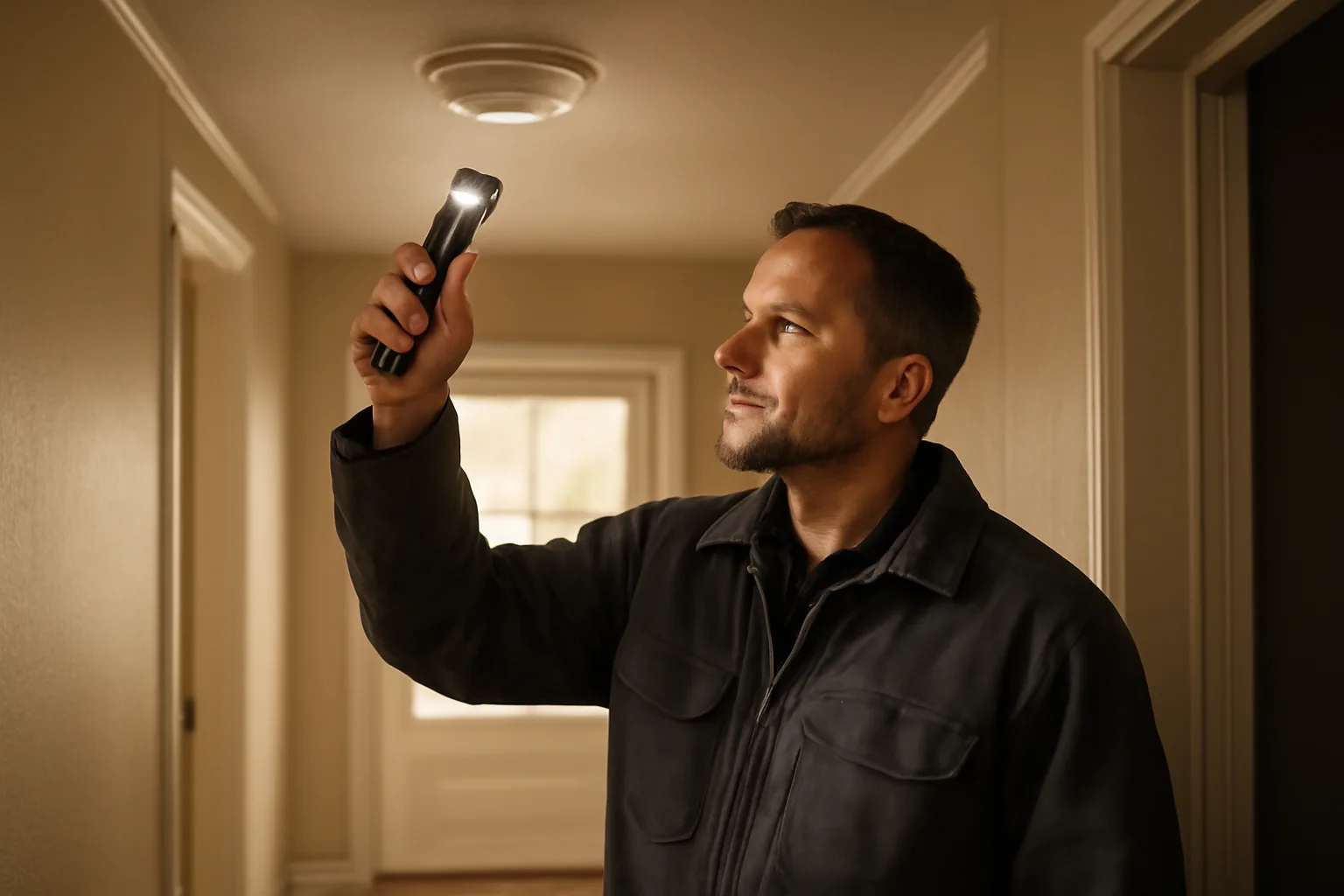
Rental inspections in most jurisdictions follow a property maintenance code, most commonly a version of the International Property Maintenance Code (IPMC), which many states and townships adopt with local amendments. The IPMC covers structural soundness, working smoke and carbon monoxide alarms, functioning plumbing and electrical systems, adequate heat, safe egress (windows and doors that open, no blocked exits), handrails on stairs, and basic sanitation [3]. A typical inspector walks through checking: smoke detectors in every bedroom and on every level, a carbon monoxide detector near sleeping areas (required in many states if there's any fuel-burning appliance or attached garage), GFCI outlets near water sources, no exposed wiring, water heater temperature and pressure relief valve venting properly, no active leaks or mold, window screens and locks, handrails on any stairway with more than a few steps, and clear egress from bedrooms (a legal bedroom generally needs a window that can open for emergency exit, per most adopted building codes). Exterior items get checked too: roof condition, gutters, exterior paint or siding failure, foundation cracks, porch and deck railing stability, and trip hazards on walkways. Landlords sometimes ask what can a landlord look at during an inspection, but during a code compliance inspection, the direction flips: it's the township inspector looking at the landlord's property for code violations, not the landlord inspecting a tenant's unit. Those are two different processes and it's worth keeping them straight.
What fails a rental inspection most often?
Missing or non-functional smoke detectors is the single most common fail nationally. It's cheap to fix (a nine-volt battery or a $15-25 hardwired unit) but landlords with long-term tenants forget to check them between move-ins. Other frequent fails: water heaters without proper temperature/pressure relief valve discharge piping, exposed or amateur electrical work (extension cords used as permanent wiring is a classic violation), missing GFCI outlets in kitchens and bathrooms, broken or missing handrails, peeling paint in pre-1978 housing (which triggers separate federal lead paint disclosure rules under 40 CFR Part 745 [4]), and blocked secondary egress in basement bedrooms. If you got a violation notice rather than a clean pass, most townships give a reinspection window, often 30 days, sometimes shorter for anything flagged as an immediate life-safety hazard like a gas leak or no working smoke detector. Ask the inspector directly at the walkthrough what the reinspection fee is and how much time you have; don't wait for a mailed notice if you can get the answer on the spot.
What does rental licensing typically cost?
Costs vary enormously by state and township size, but here's the honest range based on published municipal fee schedules across mandatory rental-licensing programs nationally: initial registration or license fees commonly run $25 to $150 per unit, renewal fees are often similar or slightly lower, and reinspection fees (charged when you fail the first inspection) typically run $50 to $150 per visit. Some townships charge per building instead of per unit for larger properties, and a few charge a flat annual fee regardless of unit count for small owner-occupied rentals. Late registration penalties can be steep: several municipalities double the base fee or add a flat late fee of $100 or more if you register after a tenant has already moved in. The number you actually need is the one on your specific Clinton Township's current fee schedule, which the building or code enforcement department maintains and updates periodically. Call ahead of any renewal deadline, because these fees do get raised by ordinance amendment and a number you find on an old blog post or forum thread may be a year or two stale.
How much notice does a landlord have to give before an inspection?
This depends on whether the inspection is a government code compliance inspection or a landlord's own routine property check, and the two have different notice rules. For a township's mandatory rental license inspection, the property owner typically schedules the appointment directly with the inspection department, so notice isn't really the issue; you're the one setting the date. For the landlord's own periodic walkthroughs of an occupied unit (checking on condition between tenants or during a lease term), most states require reasonable advance notice to the tenant before entry, commonly 24 hours, sometimes 48. Ohio, for instance, doesn't have one single statewide statute mandating a specific number of hours for landlord entry notice the way some states do, but Ohio Revised Code 5321.04 requires landlords to give "reasonable notice" before entering, and courts have generally treated 24 hours as reasonable absent an emergency [5]. Many states with clearer statutory numbers, like California, require 24 hours' written notice for routine entry under California Civil Code Section 1954 [6]. If you're unsure what your state requires, look up your state's landlord-tenant statute on entry and notice rather than relying on the township ordinance, because those are usually two separate sets of law: the township ordinance governs the government's inspection, and the state statute governs your own entry as a landlord.
Who is responsible for a rental property walkthrough inspection?
This question comes up a lot when people search around this topic, often specifically about California, so it's worth separating clearly. There are actually three different walkthroughs that can happen around a tenancy, and different people are responsible for each. The move-in/move-out condition walkthrough is the landlord's job (or the landlord's property manager). California Civil Code Section 1950.5 requires landlords to offer tenants an initial inspection before move-out, specifically to give the tenant a chance to fix deficiencies before the landlord can deduct for them from the security deposit [7]. The landlord documents the unit's condition, ideally with photos and a signed checklist, at both move-in and move-out. The government code compliance inspection (the kind this article is mostly about) is the responsibility of the township or city's building/code enforcement department, and it's the property owner's job to schedule it and be present or provide access. The tenant doesn't have to be present for this one, though many jurisdictions require the landlord to give the tenant notice that an inspector is coming, since it still counts as an entry into the tenant's home. In California, that notice requirement is again governed by Civil Code 1954, which requires reasonable written notice, generally interpreted as 24 hours, for entry to make necessary repairs or show the unit, and most local rental inspection ordinances layer on top of that same notice standard [6].
What is landlording, and what is a landlord, exactly?
A landlord is the owner of a residential or commercial property who rents it to a tenant in exchange for periodic payment, usually monthly rent, under a lease or rental agreement. "Landlording" is the informal industry term for the ongoing work of owning and managing rental property: collecting rent, maintaining the unit, handling repairs, screening tenants, following state and local landlord-tenant law, and dealing with local licensing and inspection requirements like the ones covered in this article. Being a landlord is legally and financially different from being a homeowner who just lives in their own house. Once you rent out a unit, you take on statutory duties that vary by state but generally include maintaining a habitable unit (working plumbing, heat, and structural safety), following specific notice rules before entering the tenant's space, handling security deposits according to state limits and timelines, and following fair housing law, including the federal Fair Housing Act, which prohibits discrimination based on race, color, religion, sex, national origin, familial status, or disability in renting or leasing housing [8]. A lot of new landlords underestimate how much of "landlording" is compliance work rather than property maintenance. Rental registration, licensing, and inspection ordinances (the whole subject of this article) are one big chunk of that compliance work, and they exist specifically because a meaningful share of rental housing nationally has safety code violations that self-certification alone doesn't catch.
How do you become a landlord, and how do you actually get started?
Becoming a landlord starts with buying or already owning a property you intend to rent, then working through a checklist that's more regulatory than most first-timers expect. Here's the realistic order of operations: 1. Confirm the property is legally zoned and permitted for rental use. Some residential zones restrict rentals or cap the number of unrelated occupants; check with your local zoning office before you list anything. 2. Register the rental with your city or township if mandatory licensing applies (this is the core topic of this whole article), and schedule any required inspection before you advertise the unit. 3. Get landlord-specific insurance (a standard homeowner's policy typically excludes rental use and can leave you uninsured for a claim if the insurer later learns you're renting the property out). 4. Set your lease terms and security deposit amount within your state's legal limits (many states cap deposits at one or two months' rent). 5. Screen tenants consistently and legally, using the same criteria for every applicant to stay compliant with the federal Fair Housing Act [8]. 6. Learn your state's specific landlord-tenant statute on entry notice, repair timelines, and security deposit return deadlines, since these vary widely and getting them wrong is one of the most common ways landlords end up in small claims court. If you're renting your first unit in a city with mandatory licensing, do the registration and inspection steps before you sign a lease, not after. Several townships fine landlords specifically for renting before registering, and that fine is separate from, and in addition to, the base license fee.
Why do landlords require renters insurance?
Landlords require renters insurance mainly to cover the tenant's personal belongings and personal liability, not the building itself. A landlord's own property insurance covers the structure, but it doesn't cover a tenant's furniture, electronics, or clothing if there's a fire, burst pipe, or theft, and it doesn't cover the tenant's personal liability if, say, a dinner guest slips and falls in their unit. Requiring renters insurance shifts that risk off the landlord. If a tenant's negligence causes a fire (an unattended stove, for instance) and the tenant has no insurance, the landlord's insurer may still cover the structure, but a subrogation claim can come back at the tenant, and the tenant with no assets and no insurance is basically judgment-proof, meaning the landlord absorbs the loss anyway through higher future premiums or an uninsured gap. A renters policy with liability coverage protects the landlord's downstream interest even though it's the tenant's policy. Renters insurance is genuinely cheap, commonly $15 to $30 a month for a policy with $100,000 in liability coverage and a modest amount of personal property coverage, based on typical quoted ranges from major insurers. Requiring it in the lease and asking for annual proof of a current policy is a low-cost risk control that most landlord attorneys and property managers recommend as standard practice.
What rights do tenants have without a lease, and what can't a landlord do?
A tenant without a written lease still has legal rights. Most states treat an oral rental agreement, or even just a pattern of the tenant paying rent and the landlord accepting it, as creating a month-to-month tenancy with real legal protections, not a bare license to occupy that the landlord can end whenever they feel like it. Without a written lease, tenant protections typically still include: the right to a habitable unit under the state's implied warranty of habitability, the right to advance written notice before the landlord can terminate the tenancy (commonly 30 days for month-to-month tenancies, though this varies by state and by how long the tenant has lived there), the right to advance notice before landlord entry except in emergencies, protection from retaliatory or discriminatory eviction under fair housing law, and the right to have a security deposit returned within the state's legal timeframe if one was collected. On what a landlord cannot do in Ohio specifically: Ohio Revised Code 5321.04 prohibits landlords from entering a rental unit without reasonable notice and outside reasonable hours, requires landlords to maintain the premises in a fit and habitable condition, keep common areas safe, maintain electrical, plumbing, and heating systems in good working order, and comply with local housing and building codes [5]. Ohio law also prohibits retaliatory conduct, meaning a landlord generally can't raise rent, cut services, or start eviction proceedings specifically because a tenant reported a code violation or exercised a legal right, under Ohio Revised Code 5321.02 . Self-help eviction (changing locks, shutting off utilities, or removing a tenant's belongings without a court order) is illegal in Ohio and in nearly every state; landlords have to go through the formal eviction process in court. If you're operating in a mandatory rental-licensing township on top of these state-level tenant protections, the two rule sets stack: you follow your state's landlord-tenant statute for lease, notice, and habitability issues, and you separately follow your township's registration, licensing, and inspection ordinance for the property itself. Missing either one can create real exposure. If you want a structured way to work through the local paperwork side of that specifically, before an inspection deadline, RentalPermitPath's $79 City Rental License & Inspection Prep Packet walks through the common documentation townships ask for so you're not scrambling the week of your inspection.
What should you do if you got a violation notice or missed a deadline?
First, read the notice for the specific code section cited and the reinspection or correction deadline. Most townships give a defined window, often 30 days, to fix cited issues before a fine escalates or a hearing gets scheduled. Second, call the inspector or the code enforcement office directly rather than mailing anything. Ask three things: what exactly needs to change to pass, whether a reinspection fee applies and how much it is, and whether an extension is available if you need slightly more time for a repair that requires a licensed contractor (electrical and plumbing fixes often do). Third, fix the life-safety items first: smoke and carbon monoxide detectors, exposed wiring, blocked egress, and any active gas or water leak. These are the items most likely to trigger an emergency reinspection or an accelerated fine schedule if left unaddressed, and they're also, not coincidentally, the items most likely to actually hurt someone. Fourth, keep a paper trail: photos of the fix, contractor invoices if applicable, and a copy of everything you send to the township. If a fine gets contested or a hearing gets scheduled, that documentation is what a hearing officer actually looks at.
How do rental inspection rules compare across states and township types?
| Michigan | Housing Law of Michigan, MCL 125.401 et seq. [1] | No single statewide statute; reasonable notice generally expected | Yes, federal requirement applies [4] | |
|---|---|---|---|---|
| Ohio | ORC 5321.04 (landlord duties), ORC 505 (township powers) [5][2] | Reasonable notice per ORC 5321.04 | Yes, federal requirement applies [4] | |
| California | Civil Code 1954 (entry), 1950.5 (deposits) [6][7] | 24 hours written notice | Yes, federal requirement applies [4] | |
| New Jersey | Local township ordinances under home rule authority | Varies by municipality | Yes, federal requirement applies [4] | The federal lead paint disclosure rule applies nationwide to any pre-1978 residential rental, regardless of what state or township you're in, under 40 CFR Part 745 [4]. That one's worth flagging separately because it's easy to miss: it requires landlords to give tenants an EPA-approved lead hazard information pamphlet and a disclosure form before the lease is signed, and it's enforced by the EPA and HUD, completely separate from your local township's rental inspection ordinance. |
Because "Clinton Township" exists in several different states, it's worth seeing how the underlying legal framework differs by state, since that shapes what your specific township can and can't require. | State | Governing framework | Landlord entry notice standard | Lead paint disclosure required (pre-1978 housing) |
Frequently asked questions
Does every Clinton Township require a rental inspection?
Not necessarily. Since Clinton Township exists as a separate local government in Michigan, New Jersey, Ohio, and other states, each one sets its own rules. Some have mandatory rental registration and inspection ordinances, others don't, and requirements change over time. Check with your specific township's building or code enforcement department to confirm current rules before renting a unit.
How much does a rental inspection or license typically cost?
Published municipal fee schedules across mandatory rental-licensing programs generally show initial fees of $25 to $150 per unit and reinspection fees of $50 to $150. Your specific township's current fee schedule is the only reliable number; ask the building or code enforcement office directly since fees change by ordinance amendment.
How to become a landlord?
Confirm your property is zoned for rental use, register it with your city or township if mandatory licensing applies, get landlord-specific insurance, set a lease and deposit within your state's legal limits, screen tenants consistently under fair housing law, and learn your state's landlord-tenant statute on entry notice and repair timelines before you sign a lease.
Who is responsible for a rental property walkthrough inspection in California?
The landlord is responsible for the move-in and move-out condition walkthrough, including the pre-move-out inspection required under California Civil Code Section 1950.5. A city or county's mandatory rental inspection program, if one applies, is handled by that local government's code enforcement department, which is a separate process from the landlord's own walkthrough.
What is landlording?
Landlording is the ongoing work of owning and managing rental property: collecting rent, maintaining the unit, screening tenants, following state landlord-tenant law, and complying with local rental registration, licensing, and inspection ordinances. It's a mix of property maintenance and legal compliance, and the compliance side often surprises first-time landlords with how much it involves.
What is a landlord?
A landlord is the owner of residential or commercial property who rents it to a tenant under a lease or rental agreement in exchange for periodic rent payments. Landlords take on legal duties that vary by state, generally including maintaining a habitable unit, following entry notice rules, handling security deposits properly, and complying with fair housing law.
What rights do tenants have without a written lease?
A tenant without a written lease usually still has a month-to-month tenancy under state law once they've paid rent and the landlord accepted it. Rights typically include habitability protections, advance notice before termination (often 30 days), advance notice before landlord entry, protection from retaliatory eviction, and the right to a security deposit return within the state's legal deadline.
How do I be a landlord the right way from day one?
Register the rental with your city or township before advertising it if mandatory licensing applies, get landlord insurance, set a compliant lease and deposit, screen every applicant with the same criteria, and know your state's notice, repair, and deposit-return rules. Doing registration and inspection steps before signing a lease avoids fines several townships specifically charge for renting before registering.
Why do landlords require renters insurance?
Renters insurance covers the tenant's personal belongings and personal liability, which the landlord's own property insurance doesn't cover. It shifts risk off the landlord, particularly for liability claims from guest injuries or tenant-caused damage, and it's cheap, commonly $15 to $30 a month for a policy with meaningful liability coverage.
How much notice does a landlord have to give before entering a unit?
It depends on the state. California requires 24 hours' written notice under Civil Code Section 1954. Ohio requires "reasonable notice" under Revised Code 5321.04, which courts have generally treated as around 24 hours absent an emergency. Check your specific state's landlord-tenant statute, since the exact number varies.
What can a landlord look at during an inspection?
During a government code compliance inspection, the inspector checks the property, not the tenant's belongings: smoke and CO detectors, electrical and plumbing systems, heating, egress windows, handrails, and general habitability under the local property maintenance code. During a landlord's own condition walkthrough, they document the unit's physical condition, not personal items, with the tenant typically given advance notice.
What can a landlord not do in Ohio?
Under Ohio Revised Code 5321.04, a landlord can't enter without reasonable notice, can't fail to maintain habitability or working electrical, plumbing, and heating systems, and can't ignore applicable housing codes. Ohio Revised Code 5321.02 also bars retaliatory actions against a tenant for reporting a code violation. Self-help eviction, like changing locks without a court order, is illegal statewide.
What happens if I fail a rental inspection?
Most townships issue a violation notice listing cited code sections and a correction deadline, commonly around 30 days. Life-safety issues like missing smoke detectors or exposed wiring often get shorter deadlines. Call code enforcement directly to confirm the reinspection fee and process; fixing safety items first is the priority since they're most likely to trigger accelerated fines.
Sources
- Ohio Legislature, Ohio Revised Code Chapter 505 (Township Officers; Powers): Ohio townships derive zoning and building code enforcement powers from ORC Chapter 505
- International Code Council, International Property Maintenance Code: The IPMC sets standard requirements for smoke alarms, plumbing, electrical, heat, and egress that most local rental inspection ordinances are based on
- U.S. EPA, 40 CFR Part 745 (Lead; Disclosure of Known Lead-Based Paint Hazards): Federal law requires landlords to disclose known lead-based paint hazards for pre-1978 housing regardless of state or local rental ordinance
- Ohio Legislature, Ohio Revised Code 5321.04 (Landlord obligations): Ohio landlords must maintain habitable premises, keep systems in working order, comply with housing codes, and give reasonable notice before entry
- California Legislative Information, California Civil Code Section 1954: California requires 24 hours' written notice before landlord entry for repairs, inspection, or showing the unit
- California Legislative Information, California Civil Code Section 1950.5: California landlords must offer tenants an initial move-out inspection before making security deposit deductions
- U.S. Department of Housing and Urban Development, Fair Housing Act overview: The federal Fair Housing Act prohibits housing discrimination based on race, color, religion, sex, national origin, familial status, or disability
- Ohio Legislature, Ohio Revised Code 5321.02 (Retaliatory conduct prohibited): Ohio law prohibits landlords from retaliating against tenants who report code violations or exercise legal rights