Last updated 2026-07-26
TL;DR
A city rental inspection checks that a rental unit meets local health and safety codes: working smoke and CO alarms, safe electrical and plumbing systems, secure exits, no pest infestations, and no structural hazards. Most cities require advance written notice (often 24 to 48 hours), and failing items usually gets you a re-inspection window, not an automatic fine, if you fix them on time.
What is a city rental inspection and why does it happen?
A city rental inspection is a scheduled or complaint-driven visit by a code enforcement officer, building inspector, or health inspector to confirm a rental unit meets local housing and safety code. Cities that require this usually tie it to a rental registration or licensing program: no valid inspection, no license, no legal right to rent the unit or renew the lease. The legal basis is almost always a city's housing or property maintenance code, often built on a modified version of the International Property Maintenance Code (IPMC), which the International Code Council publishes as a model code that cities adopt and amend locally [1]. Some cities inspect every unit on a cycle (every one, two, or three years). Others inspect only at turnover, when a new tenant moves in, or after a complaint. A few only inspect if a tenant calls in a problem. Why bother? Cities say it's about baseline safety: working smoke alarms, no exposed wiring, functioning heat, no rodent infestations. Critics say it's also a revenue and code-compliance tool, since license and reinspection fees fund the inspection department. Both things can be true. If your city sent you a notice, don't ignore it. Ignoring an inspection notice is usually what turns a routine visit into a violation with a fine attached. If you're setting up a rental business for the first time, a good first stop is understanding landlord basics before you get into city-specific inspection rules, since the inspection requirement is layered on top of general landlord obligations, not a replacement for them.
What can a landlord look at during an inspection, and what does the inspector check?
| Smoke and CO alarms | Present, working, in the right locations (usually every sleeping room, hallway outside sleeping areas, one per floor) | |
|---|---|---|
| Electrical | No exposed wiring, no overloaded outlets, GFCI outlets near water sources, working panel | |
| Plumbing | No active leaks, working hot water, functioning toilets, no cross-connections | |
| Heating | Working permanent heat source (many codes require this before winter) | |
| Exits | Two means of egress from sleeping rooms where required, windows that open, no blocked exits | |
| Structural | No visible foundation or roof failure, stairs and railings secure | |
| Pests | No evidence of rodent or insect infestation | |
| Occupancy | Unit isn't over the legal occupancy limit for its size | On the landlord side, for what a landlord (not the city) can look at during their own routine walkthrough inspection of an occupied unit, most states allow landlords to inspect for habitability and lease compliance, but only with advance notice and only during reasonable hours. A landlord conducting their own inspection can generally check smoke alarm function, look for unauthorized pets or occupants, check for property damage, and confirm no lease violations (illegal subletting, unauthorized alterations). What a landlord cannot do is use the inspection as pretext to search personal belongings, go through drawers, or show up without notice outside an emergency. |
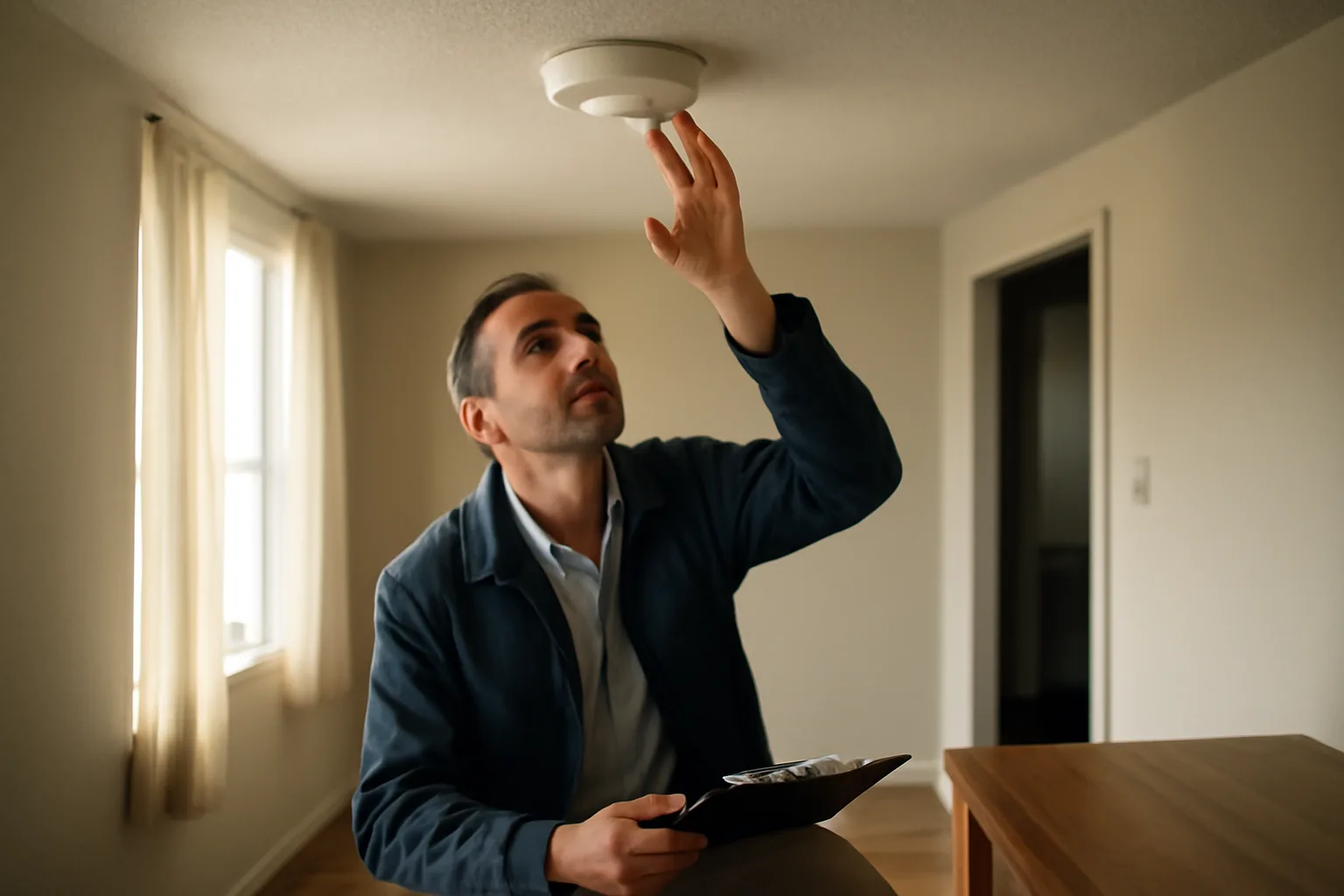
An inspector checks life-safety items first, then general condition, then sometimes lease and occupancy paperwork. The list varies by city, but most property maintenance codes converge on the same core items. Typical inspection checklist: | Category | What gets checked |
Who is responsible for a rental property walkthrough inspection in California?
In California, the landlord is responsible for scheduling and conducting the pre-move-out and move-in walkthrough inspections, and California Civil Code Section 1950.5 specifically gives tenants the right to request an initial inspection before move-out so they get a chance to fix deductible issues themselves. The statute states the landlord must give the tenant 'reasonable notice of no less than 48 hours' for the initial inspection and provide an itemized statement of needed repairs [2]. This is separate from city-level rental inspection programs. Some California cities, including Los Angeles under its Systematic Code Enforcement Program (SCEP), run their own periodic inspection cycle tied to a registration fee, and that inspection is done by a city inspector, not the landlord [3]. So there are two different "walkthroughs" in California: the move-out habitability walkthrough (landlord's job, under Civil Code 1950.5) and the city code inspection (city inspector's job, under local ordinance). Confirm which one your notice is about before you assume you know the rules that apply.
How much notice does a landlord have to give before an inspection?
Notice periods vary by state and by the type of entry, but 24 hours is the most common baseline for routine landlord entry, while city rental inspections often specify their own notice window in the local ordinance, separate from state entry law. California's general entry notice statute (Civil Code 1954) presumes 24 hours' written notice is reasonable for landlord entry to make repairs or show the unit, though the statute doesn't set an absolute floor for every situation [4]. Many other states set 24 hours as the standard notice for non-emergency entry, though some state laws are silent on an exact number and just require "reasonable notice." City rental inspection notice is a different animal. Some cities mail a notice 2 to 4 weeks ahead with a scheduled date and offer a reschedule window. Others require only 24 to 48 hours once an appointment is set. If a tenant refuses entry for a scheduled city inspection, most ordinances let the city pursue an administrative warrant, which is a separate legal process from a landlord's own entry rights. Confirm the exact notice requirement with your city rental licensing office, since ordinance language differs even between neighboring cities in the same state.
What happens if my unit fails a city rental inspection?
A failed inspection almost never means an instant fine. Most cities issue a written notice of violation listing each failed item, with a re-inspection deadline, commonly 10 to 30 days depending on severity. Life-safety items (no smoke alarms, no heat, active gas leak) usually get the shortest deadlines, sometimes immediate correction required. Cosmetic or minor maintenance items get longer windows. If you fix everything and pass re-inspection, you're done, though some cities charge a re-inspection fee (confirm the exact amount with your city rental licensing office, since these fees range widely, from no charge for a first re-inspection up to $100 to $300 for repeat failures in some jurisdictions). If you don't fix items by the deadline, the city can issue a formal violation, refer the case to a hearing officer or municipal court, and in the worst cases, condemn the unit or bar you from renting it until compliance. Repeated or willful violations can also trigger higher fines under the city's property maintenance code enforcement schedule. The single biggest mistake landlords make here isn't failing the inspection. It's missing the re-inspection deadline because they didn't calendar it. Fix what you can immediately, document everything with photos and receipts, and if you need more time, call the inspection office before the deadline, not after.
How do I become a landlord, and what does landlording actually involve?
Becoming a landlord legally means more than buying a property and finding a tenant. Landlording, as a term, describes the ongoing operational work of owning and managing rental property: screening tenants, collecting rent, handling repairs, following state landlord-tenant law, and in licensed cities, keeping your rental registration and inspection status current. The practical steps to become a landlord, in most U.S. cities: confirm your property is zoned for rental use, check whether your city requires a rental license or registration (many cities with populations over 50,000 do, though plenty of small towns do too), get any required inspection scheduled and passed, get landlord liability insurance (a standard homeowners policy usually excludes rental use), and understand your state's security deposit, notice, and eviction rules before you sign a lease. What is a landlord, technically? A landlord is the owner (or an owner's authorized agent) who leases real property to a tenant in exchange for rent, taking on the legal duties of habitability and quiet enjoyment that come with that relationship under state law. What is landlording? It's the day-to-day practice of fulfilling that role: more than collecting rent, and maintaining the property, responding to repair requests within a reasonable time, and following the specific procedural rules (notice periods, deposit handling, entry rules) your state and city impose. If you're new to this, read up on what a landlord is responsible for before you sign your first lease, and look at landlord landlords resources for the operational side.
Why do landlords require renters insurance?
Landlords require renters insurance mainly to shift liability and personal property risk away from themselves. A landlord's own property insurance covers the building and the landlord's fixtures. It does not cover a tenant's furniture, electronics, or clothing if there's a fire, burst pipe, or theft, and it generally doesn't cover a tenant's liability if they cause an injury or accidental damage inside the unit. Requiring renters insurance (often $100,000 to $300,000 in liability coverage, a common lease requirement) reduces the odds that a tenant with no coverage sues the landlord after a loss the tenant actually caused, or that the landlord ends up eating an uninsured repair bill. It also tends to reduce disputes over who pays for what after a covered event like a kitchen fire or a burst washing machine hose. There's no federal law requiring landlords to mandate renters insurance, and requirements come from the lease itself, not a statute, in most states. Some cities and some subsidized housing programs have their own rules about what a lease can require. If you're drafting a renters insurance clause, that's a lease-drafting question, not an inspection question, and you'd want that reviewed by someone licensed in your state rather than copied from a template.
What rights do tenants have without a lease?
A tenant without a written lease still has legal protections. Most states treat an undocumented rental arrangement, once rent has been paid and accepted, as a month-to-month tenancy at will, governed by the state's landlord-tenant statute rather than by contract terms that were never written down. That generally means the tenant still has the right to habitable housing (working plumbing, heat, structural safety), the right to advance notice before the landlord enters (the same 24-hour-type standard that applies with a lease in most states), the right to a legally required notice period before the tenancy is ended (commonly 30 days for month-to-month, though this varies by state and by how long the tenant has lived there), and the right to the return of any security deposit under the state's deposit statute, with interest or itemization requirements where the state law requires it. What a tenant does not automatically get without a lease is a fixed term. A month-to-month tenancy without a lease can typically be ended by either party with proper notice, without cause, in most states (though a growing number of cities have added just-cause eviction rules on top of state law, meaning even a no-lease tenant can't be removed for just any reason). If you're a tenant trying to figure out where you stand, check tenants rights and tenant rights resources, and pull your specific state's landlord-tenant statute before assuming the general answer above applies to your case.
What can a landlord not do in Ohio?
Ohio's landlord-tenant law is set out in Ohio Revised Code Chapter 5321. Under ORC 5321.04, a landlord in Ohio cannot let the unit become unsafe or unfit to live in, must keep common areas in safe condition, must maintain electrical, plumbing, heating, and appliances the landlord supplies, and must comply with local building and housing codes that materially affect health and safety [5]. A landlord in Ohio also cannot enter the rental unit without giving "reasonable notice" and entering at a "reasonable time," under ORC 5321.04(A)(8), except in an emergency. Ohio courts and most practitioner guidance treat 24 hours as a reasonable notice benchmark, though the statute itself doesn't name an exact hour count. Ohio law (ORC 5321.02) also bars a landlord from retaliating against a tenant, meaning a landlord cannot raise rent, decrease services, or start eviction proceedings specifically because a tenant complained to a housing authority, joined a tenants' union, or asserted a legal right under the chapter [6]. A landlord also cannot shut off utilities, change the locks, or remove a tenant's belongings to force them out, self-help eviction of this kind is illegal in Ohio and in the large majority of states; eviction has to go through the courts.
How do I prep for a scheduled city rental inspection?
Start with the notice letter. It usually names the code sections or checklist items the inspector will use, and sometimes a copy of the actual checklist. Walk the unit yourself first, ideally a few days before the scheduled date so you have time to fix what you find. Common items that fail inspections and are cheap to fix before the inspector arrives: dead batteries or missing smoke/CO alarms (check every unit, more than common areas), GFCI outlets that don't trip-test correctly near sinks and in bathrooms, window screens missing or torn, handrails that wiggle, exterior doors that don't latch and lock properly, and visible mold or moisture staining that suggests an unresolved leak. Bring your paperwork too, if the city asks for it: proof of current rental registration or license, prior inspection reports, and receipts for any repairs made after a prior violation. If you manage more than one unit or you're dealing with your first license application in a new city, a packaged prep checklist saves you from missing an item that seems minor but is an automatic fail in that city's code (missing egress window locks and missing handrail returns are two common ones). That's the kind of prep work the $79 City Rental License & Inspection Prep Packet is built around: a checklist built from common city inspection standards so you walk in with a fixed list instead of guessing.
How do city rental licensing and registration programs actually work?
Rental licensing and rental registration aren't always the same thing, and cities use both terms loosely. Registration usually just means you tell the city you have a rental unit, pay a fee, and provide contact information, often without a mandatory inspection attached. Licensing usually means the city requires an inspection and a pass before it issues (or renews) a license, and renting without one can carry a fine or bar you from collecting rent through the courts in an eviction case. Cities set their own fee schedules, inspection cycles, and penalties, and these change often enough that a national list goes stale fast. Confirm your city's current registration or license fee, inspection cycle length, and renewal deadline directly with your city rental licensing office (sometimes housed in the building department, sometimes in a separate code enforcement or health department office) before you budget for the year. A few patterns hold across most licensing cities: the license is usually tied to the unit, not the owner, so you need one per address (or per unit in a multifamily building); licenses commonly expire annually or every two years; and a lapsed license, in many cities, blocks you from filing an eviction case until you're back in compliance. That last point catches a lot of landlords off guard, since it means a paperwork problem can stall a legitimate eviction for months.
Frequently asked questions
How do I become a landlord in a city that requires rental licensing?
Buy or already own the property, confirm it's zoned for rental use, register or apply for a rental license with your city (check your city rental licensing office for the application and fee), schedule and pass any required inspection, get landlord liability insurance, and learn your state's security deposit and notice laws before signing a lease.
Who is responsible for a rental property walkthrough inspection in California?
For move-out inspections, the landlord is responsible under California Civil Code 1950.5, which requires at least 48 hours' notice for the tenant-requested pre-move-out walkthrough. City code inspections (like L.A.'s Systematic Code Enforcement Program) are done separately by a city inspector under local ordinance.
What is landlording?
Landlording is the ongoing work of owning and managing rental property: screening tenants, collecting rent, handling repairs, following state landlord-tenant law and security deposit rules, and, in licensed cities, keeping rental registration and inspection status current. It's the operational side of being a landlord, more than the legal title.
What is a landlord?
A landlord is the owner, or an owner's authorized agent, who leases real property to a tenant for rent. State law generally makes the landlord responsible for habitability (safe, livable conditions) and the tenant's right to quiet enjoyment of the unit during the lease term.
What rights do tenants have without a lease?
A tenant paying rent without a written lease usually has a month-to-month tenancy under state law, with rights to habitable housing, advance notice before landlord entry, a legally required notice period before the tenancy ends, and return of any security deposit under state deposit rules, even though no lease was signed.
How do I be a good landlord day to day?
Respond to repair requests promptly, give proper notice before entering, keep the unit compliant with your city's housing code so inspections and licensing stay current, follow your state's security deposit and eviction procedures exactly, and document communication with tenants in writing.
Why do landlords require renters insurance?
Landlords require renters insurance to protect against a tenant's uninsured liability (like an accidental fire) and to avoid disputes over who pays when a tenant's belongings are damaged. A landlord's own insurance covers the building, not the tenant's possessions or the tenant's liability to others.
How much notice does a landlord have to give before entering or inspecting?
Most states treat 24 hours' written notice as reasonable for routine landlord entry, though exact rules vary by state and some states only require 'reasonable notice' without a set number. City rental inspection notice periods are set separately in the local ordinance and can be shorter or longer.
What can a landlord look at during an inspection?
A landlord's own habitability inspection can check smoke alarm function, general property condition, evidence of lease violations (unauthorized pets, occupants, or subletting), and needed repairs. It cannot be used as a pretext to search personal belongings or enter without proper notice outside an emergency.
What can a landlord not do in Ohio?
Under Ohio Revised Code 5321.04 and 5321.02, an Ohio landlord cannot let the unit become unsafe, cannot enter without reasonable notice except in an emergency, cannot retaliate against a tenant for complaints or legal claims, and cannot use self-help measures like shutting off utilities or changing locks to force a tenant out.
What items commonly fail a city rental inspection?
Missing or dead smoke and CO alarm batteries, non-functioning GFCI outlets near water sources, torn or missing window screens, loose handrails, exterior doors that don't latch, and visible mold or moisture from an unresolved leak are among the most common failed items across city property maintenance codes.
Does a lapsed rental license affect my ability to evict a tenant?
In many licensing cities, yes. A lapsed or never-obtained rental license can bar a landlord from filing or winning an eviction case in local court until the license is brought current, separate from whatever the lease or state eviction law says. Confirm this with your city rental licensing office before filing.
Is a city rental inspection the same as a move-out walkthrough?
No. A city rental inspection is a code compliance check by a government inspector, tied to a rental license or registration program. A move-out walkthrough is a separate process, usually required by state law (like California Civil Code 1950.5), done by the landlord to assess damage before returning a security deposit.
Sources
- International Code Council, International Property Maintenance Code: Model property maintenance code many cities adopt and amend for rental housing standards
- California Legislative Information, Civil Code Section 1950.5: Landlord must give at least 48 hours notice for tenant-requested pre-move-out inspection and provide itemized statement of repairs
- Los Angeles Municipal Code Section 162.00, Systematic Code Enforcement Program: Los Angeles runs a periodic city rental inspection cycle tied to a registration fee, separate from landlord move-out walkthroughs
- California Legislative Information, Civil Code Section 1954: 24 hours written notice is presumed reasonable for landlord entry to make repairs or show a unit in California
- Ohio Laws and Rules, Revised Code Section 5321.04: Ohio landlord duties including maintaining fit and habitable premises, compliance with housing codes, and reasonable notice before entry
- Ohio Laws and Rules, Revised Code Section 5321.02: Ohio law prohibits landlord retaliation against tenants who complain or assert rights under the landlord-tenant chapter