Last updated 2026-07-26
TL;DR
Sacramento doesn't run a citywide mandatory inspection-every-unit program like some cities. Instead, its Rental Housing Inspection Program targets properties through complaints, code enforcement referrals, and a proactive inspection track for certain multi-unit buildings. Owners get a notice, a scheduled inspection date, and a list of items inspectors check: smoke alarms, egress, plumbing, electrical, and general habitability under the state Health and Safety Code.[1]
Does the city of Sacramento require rental inspections?
Yes, but not in the blanket "every landlord gets inspected every year" sense that some California cities use. Sacramento runs a Rental Housing Inspection Program through its Community Development Department, and it works off a mix of complaint-driven inspections, code enforcement referrals, and proactive inspections for certain buildings, particularly older multi-family properties.[1] If you own a single-family rental or a duplex, you may never get a Sacramento inspection notice unless a tenant files a complaint or the property gets flagged during some other city process (a sale, a permit application, a neighbor complaint about exterior conditions). If you own a larger multi-unit building, especially one built before certain years, you're more likely to land in a proactive inspection cycle. Confirm the current program scope and your building's status with the City of Sacramento Community Development Department directly, since inspection triggers and cycles get updated periodically and the details for your specific property type matter more than the general rule.[1]
What triggers a rental inspection in Sacramento?
Three main paths lead to an inspection notice: a tenant complaint, a referral from another city department (building permits, fire, code enforcement), or inclusion in a proactive inspection sweep for multi-family housing. Tenant complaints are the most common trigger for small landlords with one to ten units. A complaint doesn't have to be dramatic to start the process. Broken heat, a leaking roof, a nonworking smoke alarm, pest infestation, or exposed wiring are all common complaint categories that can prompt a code enforcement visit under the California Health and Safety Code's substandard housing provisions.[2] Once a complaint comes in, the city typically sends a notice of inspection with a scheduled date and, in many cases, a list of the specific conditions reported. You'll want to read that notice carefully, because it usually tells you exactly what the inspector plans to check and gives you a window to fix obvious issues before the visit.
What can a landlord look at during an inspection?
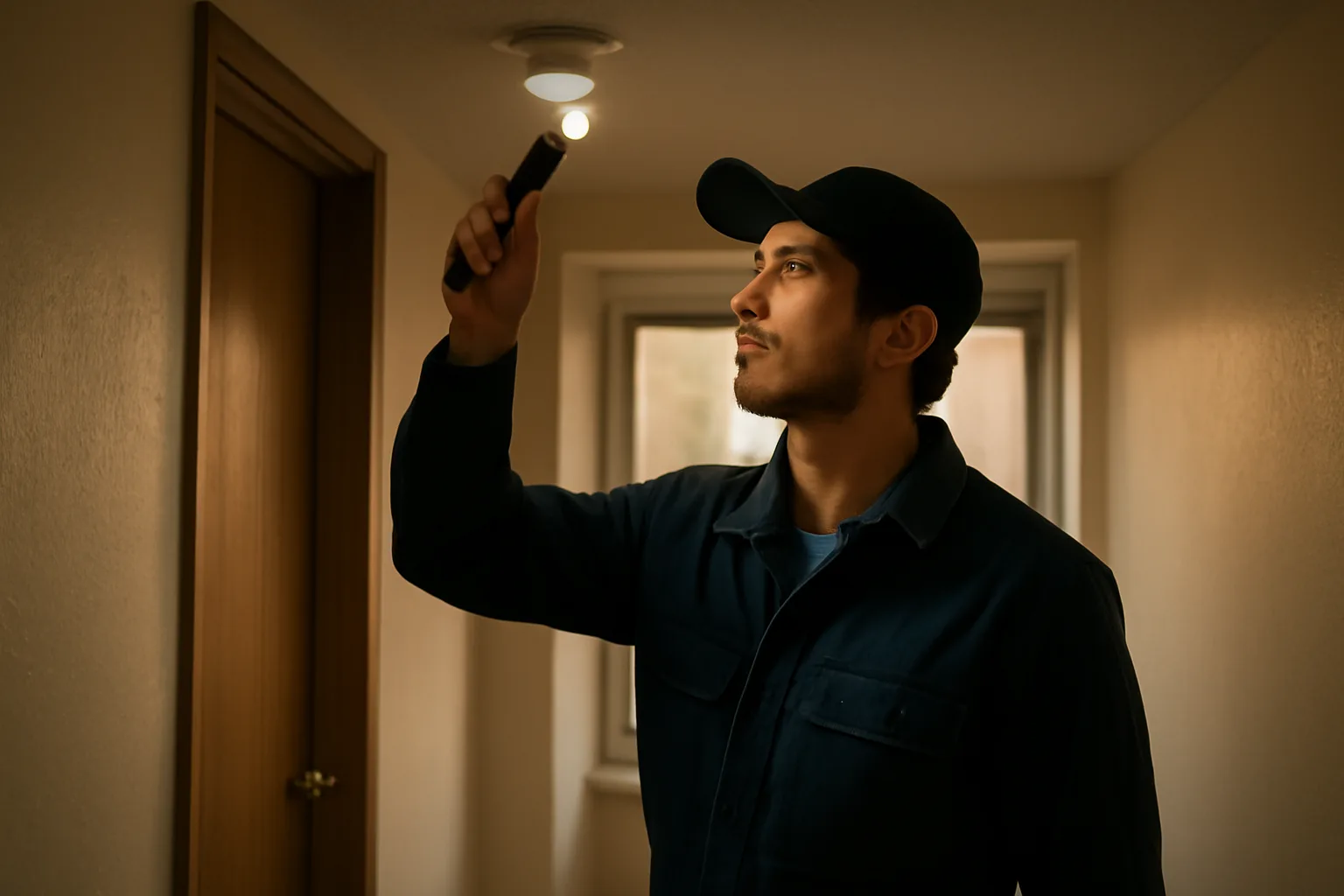
During a Sacramento rental inspection, the inspector is checking for compliance with state and local housing codes, primarily the substandard conditions defined in California Health and Safety Code Section 17920.3. That section lists things like inadequate sanitation, structural hazards, faulty weather protection, and hazardous electrical wiring as conditions that make a building substandard.[2] Practically, inspectors walk through checking smoke alarms and carbon monoxide detectors (required under California law in all rental units, per Health and Safety Code Sections 13113.7 and 17926), working plumbing fixtures, functioning heat, safe electrical outlets and panels, secure railings and stairs, adequate egress from bedrooms, and the general condition of walls, ceilings, and floors.[3][4] As the landlord, you (or your property manager) can walk the unit alongside the inspector in most cases. You're allowed to ask what specific code section an item is being cited under, and you're allowed to request a reasonable amount of time to make repairs before a re-inspection, which is standard practice in most California code enforcement processes. A quick list of what typically gets checked: - Smoke alarms in every bedroom and hallway, tested and working
- Carbon monoxide alarms where the unit has gas appliances or an attached garage
- Working plumbing with no active leaks, adequate hot water
- Electrical panels and outlets free of exposed wiring, GFCI where required
- Heating system that functions and meets minimum standards
- Windows and doors that open, close, and lock properly
- Egress paths clear and functional, especially from bedrooms
- No accumulation of trash, debris, or vermin conditions If you want a structured way to walk your own unit before the city does, a rental packet builder style prep checklist can help you catch the obvious stuff first. Our $79 City Rental License & Inspection Prep Packet is built around exactly this kind of walkthrough, organized by the categories inspectors actually cite most often.
Who is responsible for the rental property walk-through inspection in California?
Under California law, the landlord is generally responsible for maintaining habitability, and that includes cooperating with any lawful inspection by a local code enforcement agency. California Civil Code Section 1954 sets out when a landlord may enter a rental unit, including for inspections tied to a health or safety concern, and generally requires "reasonable notice," which the statute defines as 24 hours in the absence of an agreement otherwise.[5] The tenant doesn't have to be present for a routine code enforcement inspection scheduled with proper notice, but many landlords prefer to be there, or to have their property manager present, so they can respond to questions on the spot and understand exactly what's being cited. If you're managing the property yourself, you're the one who receives the inspection notice, walks the inspector through, and receives any notice of violation. If you use a property management company, make sure your management agreement clearly states who handles inspection scheduling and who's on the hook for follow-up repairs. That's a paperwork gap that trips up a surprising number of small landlords.
How much notice does a landlord have to give before an inspection?
California Civil Code Section 1954 requires landlords to give tenants "reasonable notice in writing," and the statute specifies that 24 hours is presumed reasonable unless the situation calls for something different (like an emergency, which requires no notice at all).[5] This notice requirement applies both ways in a sense: when the city schedules a code enforcement inspection, the landlord typically needs to give the tenant the required 24-hour written notice before entering the unit with the inspector, unless the tenant already agreed to a specific time. A quote directly from the statute: California Civil Code Section 1954 states landlords may enter a dwelling to make repairs and inspections, and "the landlord shall give the tenant reasonable notice in writing of his or her intent to enter... twenty-four hours shall be presumed to be reasonable notice in absence of evidence to the contrary."[5] Don't skip this step even when the city is the one requesting entry. If your tenant later disputes the process, having your own 24-hour notice on record protects you.
What happens if a Sacramento inspection finds violations?
If the inspector finds code violations, you'll typically get a written notice listing each violation, the specific code section, and a deadline to correct it. Timelines vary by severity: an exposed wiring hazard might get a short correction window, while a cosmetic issue might get 30 days or more. Most California code enforcement programs, including Sacramento's, follow a general pattern: notice of violation, correction period, re-inspection, and then escalation (administrative citation, fines, or in serious cases referral for further legal action) if the violation isn't fixed. Fee schedules for re-inspections and administrative citations vary and change, so confirm current amounts with the City of Sacramento Community Development Department directly rather than relying on a number that may be outdated. The smart move is treating the correction deadline like a hard deadline, because it usually is. Code enforcement agencies generally don't budge much on habitability and safety items, and letting a smoke alarm or electrical citation slide can turn a $79 fix into a much bigger headache with fines stacking on top.
What is landlording, and what does the job actually involve?
Landlording is the ongoing work of owning and operating a rental property: screening tenants, collecting rent, maintaining the unit, handling repairs, following state and local housing law, and managing the relationship with whoever lives there. It's part business, part maintenance, part legal compliance. For a one-to-ten-unit owner, landlording usually means wearing every hat yourself: bookkeeper, handyman, HR department for tenant relations, and compliance officer for whatever your city and state require. The habitability and inspection side of the job (the part this article focuses on) is just one slice, but it's the slice that generates fines and legal exposure fastest if it's ignored. A lot of new landlords underestimate how much of the job is paperwork and code knowledge rather than hands-on maintenance. Knowing what your state's habitability code requires (California's is largely built around Civil Code Section 1941.1 and Health and Safety Code Section 17920.3) matters as much as knowing how to fix a leaky faucet.[6][2]
What is a landlord, legally speaking?
A landlord is the owner (or the owner's authorized agent) of a residential property who rents that property to a tenant in exchange for payment, and who takes on the legal duties that come with that relationship: maintaining habitable conditions, respecting the tenant's right to quiet enjoyment, following notice and entry rules, and handling security deposits according to state law. In California, the landlord's core habitability duty is spelled out in Civil Code Section 1941.1, which lists conditions a rental unit must meet to be considered habitable, including effective waterproofing, working plumbing and gas facilities, safe electrical wiring, and working heating.[6] Being a landlord also means you're the party a city rental inspection program is going to hold responsible if the unit doesn't meet code, regardless of whether a property manager is technically doing the day-to-day work. Ownership carries the legal responsibility even when management is delegated.
How do you become a landlord, and how do you actually do it well?
Becoming a landlord starts with buying (or inheriting) a residential property and deciding to rent it out, but doing it well requires a handful of concrete steps most first-timers skip. Check your city's rental registration or licensing requirements first, before you ever list the unit, because many cities require registration before you can legally rent. Here's a realistic starting checklist: - Confirm zoning allows rental use and check for any local rental license or registration requirement
- Get the unit inspected yourself (or hire an inspector) before listing it, catching habitability issues early
- Set up separate finances for the rental (many landlords use a dedicated bank account and bookkeeping system)
- Screen tenants consistently and legally, applying the same criteria to every applicant to avoid fair housing issues
- Use a written lease that covers rent, deposit, entry notice, and maintenance responsibilities
- Understand your state's security deposit limits and return timelines
- Get landlord (more than homeowner's) insurance, since a standard homeowner's policy typically excludes rental activity The biggest mistake new landlords make is treating it like a side hustle they can figure out as they go. Habitability law, notice requirements, and inspection compliance are not areas where "I'll learn from the first fine" is a good strategy. Learn the local rules before your first tenant moves in, not after your first inspection notice arrives.
Why do landlords require renters insurance?
Landlords require renters insurance mainly to cover the tenant's personal property and liability, not the building itself. A landlord's own insurance policy typically covers the structure and the landlord's liability, but it generally does not cover a tenant's furniture, electronics, or clothing if there's a fire, burst pipe, or theft. Requiring renters insurance also shifts a chunk of liability risk. If a tenant's negligence causes damage (an overflowing tub, a kitchen fire) or if a guest gets injured in the unit, the tenant's renters insurance liability coverage can be the first line of financial protection instead of the landlord's policy absorbing the claim. Many landlords build a renters insurance requirement directly into the lease, often requiring a minimum liability coverage amount and proof of an active policy before move-in and at each renewal. It's a relatively low-cost way (renters insurance often runs in the range of a few hundred dollars a year depending on coverage and location) to reduce a landlord's own claims exposure.
What rights do tenants have without a written lease?
A tenant without a written lease still has real legal rights in California; the absence of a written lease doesn't strip away habitability protections, notice requirements, or eviction procedures. Without a written lease specifying a term, the tenancy is generally treated as a month-to-month periodic tenancy under California law. That tenant still has the right to a habitable unit under Civil Code Section 1941.1, the right to the same 24-hour entry notice under Civil Code Section 1954, and the right to proper legal notice before any eviction, typically a 30-day or 60-day notice depending on how long they've lived there and local rules.[5][6] A verbal or implied agreement (paying rent, being accepted by the landlord) is generally enough to create a legally recognized tenancy in California, even without a signed document. Landlords sometimes assume no lease means no rights; that's not how California law treats it, and reading tenant rights and tenants rights resources before assuming otherwise is a good idea.
What can't a landlord do (and how does this compare across states, like Ohio)?
Since some readers ask specifically about Ohio rules even while researching Sacramento, this section covers the general categories of things landlords generally cannot do almost anywhere, including both California and Ohio: they can't shut off utilities to force a tenant out, can't change the locks without proper legal process (a "self-help eviction"), can't enter without proper notice except in emergencies, can't retaliate against a tenant for filing a habitability complaint, and can't discriminate based on protected classes under fair housing law. Ohio's landlord-tenant law is built around Ohio Revised Code Chapter 5321, which sets out landlord obligations (maintaining fit and habitable premises) and tenant obligations, along with specific rules against retaliatory conduct and self-help evictions. California's equivalent protections come from a mix of Civil Code Sections 1940 through 1954 and the state's just cause eviction and habitability statutes. The specific notice periods, deposit limits, and inspection triggers differ by state, so if you own property in more than one state (or are comparing a Sacramento situation to an Ohio one), don't assume the rules transfer directly. Check the actual statute in each state.
How does Sacramento's approach compare to other California cities with mandatory inspection programs?
| Sacramento | Complaint-driven plus proactive sweeps for some multi-family | Complaint, referral, or inclusion in a proactive cycle | |
|---|---|---|---|
| Los Angeles | Mandatory periodic (SCEP) | Scheduled cycle for nearly all rental units citywide | |
| Oakland | Rent Adjustment Program plus habitability inspection on complaint | Complaint-driven for most units | If you own rentals in more than one California city, don't assume the rules are the same. A landlord used to Sacramento's complaint-driven model can get caught off guard by a mandatory cycle inspection notice in a city like Los Angeles. |
Sacramento's complaint-and-proactive-referral model is less aggressive than cities with true mandatory periodic inspection programs. Los Angeles, for example, runs its Systematic Code Enforcement Program (SCEP) under the Rent Escrow Account Program framework, which requires periodic inspections of most rental units citywide on a regular cycle, funded by an annual per-unit fee. Here's a rough comparison of program style (confirm current specifics with each city directly, since fees and cycles change): | City | Program style | Inspection trigger |
How should a small landlord prepare for a Sacramento rental inspection?
Start by walking the unit yourself using the same categories an inspector checks: smoke and carbon monoxide alarms, plumbing, electrical, heating, egress, and general condition. Fix anything obvious before the scheduled date rather than hoping the inspector doesn't notice. Keep a simple file for each unit: proof of smoke alarm installation and testing dates, any recent repair invoices, your entry notice records, and a copy of your lease. If a violation notice does arrive, respond within the stated correction window and keep written records of every repair you make in response. This is the exact gap our $79 City Rental License & Inspection Prep Packet is built to close: a structured, city-specific checklist so you're not guessing what an inspector will look at first. It's a one-time cost that's a lot cheaper than a stacked fine for a missed smoke alarm or an expired correction deadline. Learn more at /rental-packet-builder.
Frequently asked questions
Does the City of Sacramento require every rental unit to be inspected?
No. Sacramento's Rental Housing Inspection Program is primarily complaint-driven, with proactive inspections targeting certain multi-family properties rather than every single-family rental or duplex citywide. Confirm your building's specific status with the City of Sacramento Community Development Department, since program scope can change.
How much notice does a landlord have to give before entering a rental unit in California?
California Civil Code Section 1954 presumes 24 hours' written notice is reasonable for most non-emergency entries, including inspections and repairs. Emergencies require no notice. Always give notice in writing and keep a copy for your records in case of a later dispute.
What can a landlord look at during a rental inspection?
Inspectors typically check smoke and carbon monoxide alarms, plumbing and hot water, electrical wiring and panels, heating systems, window and door function, egress paths, and general structural condition, all measured against California Health and Safety Code Section 17920.3's substandard housing definitions.
Who is responsible for the rental property walk-through inspection in California?
The landlord (or their designated property manager) is responsible for cooperating with the walk-through, receiving the inspection notice, and addressing any cited violations. Tenants generally don't have to be present, but landlords must still give proper entry notice under Civil Code Section 1954.
What is landlording?
Landlording is the full scope of work involved in owning and operating a rental property: tenant screening, rent collection, maintenance, repairs, and compliance with state and local housing law. For small owners it usually means handling every one of those roles personally.
What is a landlord?
A landlord is the owner or authorized agent of a residential property who rents it to a tenant and takes on legal duties like maintaining habitability, respecting entry notice rules, and following eviction procedures, largely defined under California Civil Code Sections 1940 through 1954.
What rights do tenants have without a written lease?
Tenants without a written lease still have full habitability rights, entry notice protections, and eviction procedure protections under California law. Without a specified term, the tenancy is typically treated as month-to-month, and the landlord must still follow proper notice for entry and termination.
How do you become a landlord?
You become a landlord by acquiring rental property and renting it to a tenant, but doing it responsibly means checking local rental registration or licensing rules first, inspecting the unit yourself, using a written lease, and getting landlord insurance before your first tenant moves in.
How do you be a good landlord day to day?
Respond to maintenance requests quickly, give proper notice before entry, keep the unit compliant with habitability code, screen tenants consistently and fairly, and keep clear records of repairs, notices, and communications. Most landlord disputes trace back to poor documentation or delayed repairs.
Why do landlords require renters insurance?
Renters insurance covers the tenant's personal belongings and adds a layer of liability coverage the landlord's own policy usually doesn't provide for the tenant's possessions or negligence-related incidents. Requiring it shifts some financial risk away from the landlord's own insurance claims history.
What can't a landlord do in Ohio?
Under Ohio Revised Code Chapter 5321, a landlord cannot shut off utilities to force a move-out, cannot change locks without legal process, cannot enter without proper notice except in emergencies, and cannot retaliate against a tenant for reporting code violations or exercising legal rights.
What happens if my Sacramento rental fails an inspection?
You'll typically receive a written notice listing each violation, the code section it falls under, and a correction deadline. Missing the deadline can lead to re-inspection fees or administrative citations. Confirm current fee amounts with the City of Sacramento Community Development Department, since schedules change.
Can I be present during a Sacramento rental inspection?
Yes, and most landlords choose to be present or have their property manager attend. Being there lets you ask which code section an item falls under and discuss a reasonable repair timeline directly with the inspector rather than working entirely from a written notice afterward.
Sources
- California Health and Safety Code Section 17920.3: Definition of substandard housing conditions used in code enforcement inspections
- California Health and Safety Code Section 13113.7: Smoke detector requirements for California rental units
- California Health and Safety Code Section 17926: Carbon monoxide detector requirements for dwelling units
- California Civil Code Section 1954: 24-hour reasonable notice requirement before landlord entry
- California Civil Code Section 1941.1: Conditions required for a rental unit to be considered habitable
- Ohio Revised Code Chapter 5321: Ohio landlord obligations and prohibitions including retaliation and self-help eviction