Last updated 2026-07-26
TL;DR
Sacramento inspects rental units under its Rental Housing Inspection Program (administered through the city's Community Development Department) on a cyclical or complaint-driven basis, checking for health and safety code violations. Landlords get advance notice, must allow entry under California Civil Code 1954, and face re-inspection fees or citations if problems aren't fixed by the deadline. Confirm current fees and cycle dates with the City of Sacramento rental housing program office directly.
What is the City of Sacramento rental housing inspection program?
Sacramento runs a proactive rental housing inspection program aimed at catching substandard conditions before they turn into tenant complaints or code enforcement cases. The program falls under the city's building and code enforcement structure, which draws its authority from the California Health and Safety Code sections governing substandard housing conditions, including Section 17920.3, the state's core definition of what makes a building substandard [1]. Unlike cities that inspect every unit every year, Sacramento (like most California cities with rental inspection programs) tends to use a mix of scheduled cycles for certain zones or property types and complaint-triggered inspections for everything else. If you own a duplex, a fourplex, or a small apartment building in Sacramento, don't assume you're exempt just because you have fewer units than a large complex. Program scope, current fees, and cycle length change over time, so the right move is to confirm directly with the City of Sacramento's rental housing inspection or code enforcement office before you plan around any number you saw online. The city's general municipal code enforcement powers, including the ability to inspect for public nuisance and unsafe building conditions, come from Sacramento City Code Title 8 (Building Regulations) and Title 15 (Nuisances), which authorize code inspectors to act on unsafe or substandard conditions [2]. If you're new to owning rental property in California cities with these programs, it helps to also read up on tenant rights so you understand what tenants can expect from you regardless of whether an inspection is scheduled.
Who is responsible for a rental property walkthrough inspection in California?
In California, the landlord is legally responsible for making sure the rental unit meets habitability standards, and that responsibility doesn't go away just because a city inspector hasn't shown up yet. California Civil Code Section 1941.1 lists the specific conditions a landlord must maintain, including effective waterproofing, working plumbing, hot and cold running water, functional heating, and electrical systems in good repair [3]. When a city inspection happens, the inspector (a code enforcement officer or building inspector employed by the city) walks the unit checking against these habitability baselines plus any local code requirements layered on top, like smoke detector placement or water heater strapping. The landlord doesn't have to be present for every inspection, but you're the one who gets cited if something fails, not the tenant, and not a property manager unless liability was contractually shifted (which itself doesn't remove the owner's underlying legal duty). Tenants have a role too: they're supposed to keep the unit in reasonably clean and sanitary condition per Civil Code 1941.2, and they can't unreasonably deny entry once proper notice is given. But the burden of proof and the fix-it obligation for structural, mechanical, and safety issues sits with the owner. If you manage the property yourself, get familiar with landlord landlords responsibilities before your first inspection notice arrives, not after.
How much notice does a landlord have to give before an inspection?
California Civil Code Section 1954 requires landlords to give tenants "reasonable notice in writing," and the statute specifies that 24 hours is presumed to be reasonable notice in the absence of evidence to the contrary [4]. This rule applies to landlord-initiated entry for repairs, showings, and inspections, which is the same standard that generally governs city-scheduled rental inspections when the landlord is coordinating access with the tenant. The exact text of Civil Code 1954 states entry is allowed "to make necessary or agreed repairs" or to show the unit, among other listed purposes, and requires notice be given during normal business hours unless the tenant consents otherwise [4]. If the city inspector is coming on a specific date, you as the landlord typically need to pass that notice to your tenant yourself, in writing, at least 24 hours ahead, unless your city's rental program has its own separate notice requirement (some do, and it can run longer, like 48 or 72 hours for scheduled cyclical inspections). Confirm the specific notice window with the City of Sacramento rental housing office because municipal programs sometimes layer stricter notice rules on top of the state minimum. If a tenant refuses entry after proper notice, that's a lease violation on their end, but you generally can't force your way in. Cities usually have a process for inspectors to seek a warrant if access is repeatedly denied, since forced entry without one raises real legal problems.
What can a landlord look at during an inspection?
During a rental housing inspection, whether it's a city code inspector or a landlord doing a routine walkthrough, the check generally covers safety systems, structural condition, and basic habitability items rather than the tenant's personal belongings or living habits. Typical inspection checklist items include: - Smoke alarms and carbon monoxide detectors, checked for presence, placement, and function (California Health and Safety Code Section 13113.7 requires smoke detectors in every dwelling unit used for sleeping purposes) [5]
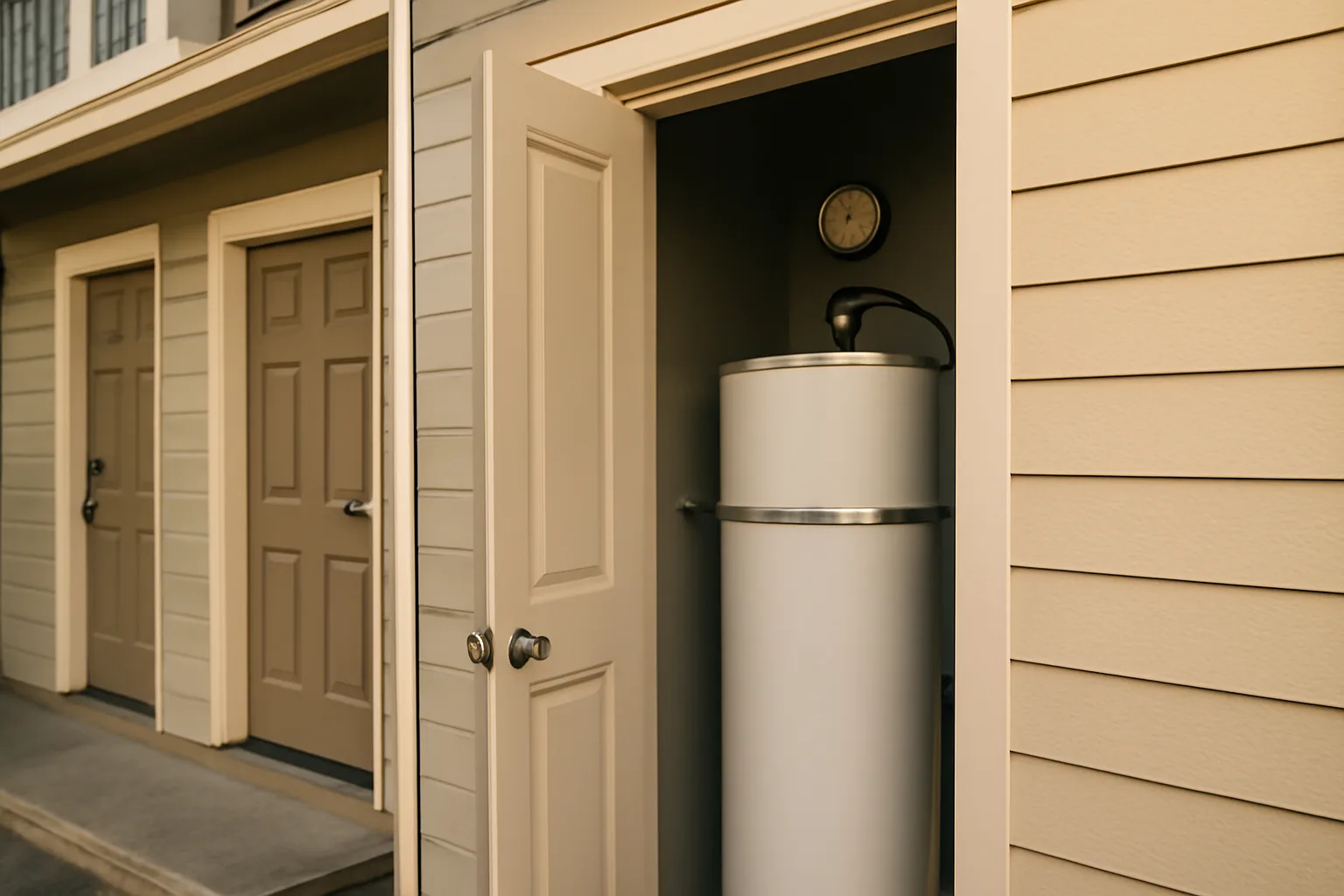
- Water heater strapping (Health and Safety Code Section 19211 requires water heaters be braced, anchored, or strapped to resist falling during an earthquake) [6]
- Working plumbing, hot and cold water, and no active leaks
- Heating system function
- Electrical outlets, switches, and panel condition, checking for exposed wiring or overloaded circuits
- Window and door locks, and emergency egress from bedrooms
- Evidence of mold, pest infestation, or structural decay
- General cleanliness affecting habitability (not a tenant's housekeeping style, but conditions that could cause health hazards) What an inspector generally cannot do is search through personal property, closets, or drawers unrelated to a code violation, or use the inspection as a pretext to investigate unrelated matters like immigration status or unrelated legal issues. The scope is the unit's physical condition and code compliance, not the tenant's life.
What happens if my Sacramento rental property fails inspection?
If a unit fails, the city typically issues a notice of violation listing each cited item and a deadline (often 30 days, though it varies by severity and by city) to correct the problem. Some violations, especially anything posing an immediate safety risk like exposed wiring or a gas leak, can trigger a much shorter compliance window or even an order to vacate in extreme cases. Miss the deadline and you're usually looking at a re-inspection fee, which cities charge to cover the cost of sending an inspector back out. Continued non-compliance can escalate into administrative citations, daily fines, or in persistent cases, referral to city attorney or code enforcement hearing processes. California cities vary widely on exact dollar figures here, and Sacramento's current fee schedule should be confirmed directly with the city's rental housing program or code enforcement division rather than assumed from a number you saw somewhere else online. The smart move if you get a violation notice is to fix what you can immediately, document everything with photos and dated receipts, and request re-inspection in writing once corrections are made. Don't ignore the notice hoping it goes away. Code enforcement records often become public and can complicate refinancing, selling, or even future permit applications on the property.
What is landlording, and what is a landlord?
A landlord is the owner (or an authorized agent of the owner) of a residential or commercial property who leases that property to a tenant in exchange for rent. Landlording is the broader activity of managing that relationship: collecting rent, maintaining habitability, handling repairs, managing tenant turnover, and complying with local, state, and federal housing law. It sounds simple until you're actually doing it. Being a landlord in California specifically means operating inside one of the most tenant-protective legal environments in the country, layering state statutes like the Tenant Protection Act (Civil Code Section 1946.2, which caps most annual rent increases and requires just cause for termination in many tenancies) [7] on top of whatever your specific city requires, like Sacramento's rental inspection and, depending on current city rules, its tenant protections around eviction notice periods. If you're brand new to this, understand landlording is part maintenance manager, part bookkeeper, part legal compliance officer. Most small landlords with 1 to 10 units handle it themselves at first and eventually decide whether to hire a property manager, which typically costs somewhere in the range of 8 to 12 percent of monthly rent depending on market and service level, though this figure isn't governed by any single national statute and varies by local management company.
How do you become a landlord, and how do you actually do it well?
Becoming a landlord starts with acquiring rental property, whether through purchase, inheritance, or converting a home you already own, and then legally establishing yourself as a residential lessor under your state's landlord-tenant law. In California, that means understanding your obligations under the Civil Code habitability sections (1941 and 1941.1) [3], your notice requirements under Section 1954 [4], and any local ordinance layered on top, like Sacramento's rental housing inspection program or local rent control provisions. Practically, here's the sequence most first-time landlords go through: 1. Confirm the property is legally permitted for rental use (check zoning and any required rental business license or registration with your city) 2. Screen tenants consistently and legally, following Fair Housing Act protections against discrimination based on protected classes 3. Draft a lease that spells out rent, term, deposit terms, and maintenance responsibilities 4. Set up a system for collecting rent, tracking maintenance requests, and documenting repairs 5. Understand your notice and entry rules (Civil Code 1954) before you ever need to use them 6. Register with your city's rental licensing or inspection program if one applies, which in Sacramento may mean the rental housing inspection program depending on your property type and location Doing it well mostly comes down to communication and paperwork. Landlords who keep dated records of every repair request and response, and who never enter without proper notice, save themselves enormous headaches later, whether that's a tenant dispute or a city compliance question.
What rights do tenants have without a lease?
A tenant without a written lease, sometimes called a month-to-month tenant or a tenant-at-will, still has essentially all the same habitability and notice protections as a tenant with a signed lease. California law doesn't strip tenant protections just because nothing's in writing. Under California Civil Code Section 1946, a month-to-month tenancy (which is what you generally have absent a written lease specifying a term) requires written notice to terminate, and the required notice period is typically 30 days if the tenant has lived there less than a year, or 60 days if a year or more [8]. The habitability guarantees in Civil Code 1941.1 apply regardless of lease status [3]. Entry notice rules under Civil Code 1954 apply the same way [4]. And under the Tenant Protection Act (Civil Code 1946.2), just-cause eviction protections generally kick in once a tenant has occupied a unit for 12 months, again independent of whether there's a written lease [7]. What a tenant without a lease doesn't have is a fixed term guarantee, meaning the tenancy can generally be ended (with proper notice and, where applicable, proper cause) more easily than a fixed-term lease that hasn't expired yet. But day-to-day rights around habitability, privacy, and notice are the same. For a deeper look at these baseline protections, see tenants rights and renters rights.
Why do landlords require renters insurance?
Landlords require renters insurance mainly to shift liability for the tenant's personal property and personal injury claims away from the landlord's own policy. A landlord's property insurance covers the building and the owner's fixtures; it typically does not cover a tenant's furniture, electronics, or clothing if there's a fire, burst pipe, or theft. Without renters insurance, a tenant who loses everything in a covered event often has no way to recoup that loss except suing the landlord, even when the landlord isn't at fault. Renters insurance also usually includes liability coverage, which matters if a tenant's guest gets injured in the unit, or if the tenant accidentally causes damage (a kitchen fire, an overflowing tub that damages the unit below). That liability coverage can be the difference between a contained insurance claim and a landlord facing a lawsuit directly. Costs are generally low: renters insurance policies commonly run in the range of $15 to $30 a month depending on coverage limits, location, and deductible, though actual pricing depends on the insurer and the tenant's specific situation. Many landlords require proof of an active policy (often with a minimum liability limit and sometimes naming the landlord as an "interested party") as a lease condition, which is generally enforceable in California as long as it's applied consistently and doesn't function as a pretext for discrimination.
What can't a landlord do (and how does this compare across states, like Ohio)?
| Entry notice | 24 hours presumed reasonable (Civ. Code 1954) [4] | Reasonable notice, commonly cited as 24 hours in practice, per landlord-tenant guidance | |
|---|---|---|---|
| Self-help eviction (lockouts, utility shutoffs) | Prohibited | Explicitly prohibited (ORC 5321.15) [10] | |
| Habitability duty | Civ. Code 1941.1 [3] | ORC 5321.04 [9] | |
| Month-to-month termination notice | 30 or 60 days depending on tenancy length (Civ. Code 1946) [8] | Varies; generally requires written notice matching rental period | The common thread across every state: no landlord, anywhere, can retaliate against a tenant for reporting a code violation, can discriminate based on a protected class under the Fair Housing Act, or can force entry without proper legal process. Those three lines don't move regardless of which state you're in. |
Landlord restrictions vary meaningfully by state, and it's worth understanding your own state's rules rather than assuming California law applies elsewhere. In Ohio, landlord-tenant law is governed primarily by Ohio Revised Code Chapter 5321, which lays out specific landlord obligations and prohibitions. Under Ohio Revised Code Section 5321.04, a landlord must comply with building and housing codes affecting health and safety, keep common areas safe, maintain electrical, plumbing, and heating systems in good working order, and provide running water and reasonable heat [9]. Ohio Revised Code Section 5321.15 specifically prohibits landlords from using self-help eviction tactics, meaning a landlord cannot lock a tenant out, remove a tenant's belongings, or shut off utilities like water, electricity, or gas to force a tenant out, even if the tenant is behind on rent [10]. The only lawful way to remove a tenant in Ohio (as in California and nearly every state) is through the court eviction process. Here's a quick comparison of a few core landlord restrictions across California and Ohio: | Requirement | California | Ohio |
How do you prepare for a Sacramento rental inspection without wasting money?
Preparation is mostly about fixing the predictable stuff before an inspector ever shows up, not spending money on things nobody's going to check. The highest-value, lowest-cost items to handle first: working smoke and carbon monoxide detectors in every required location, a properly strapped water heater, no active leaks under sinks or around toilets, GFCI outlets in kitchens and bathrooms where required, and clear, unobstructed egress from every bedroom window. What's usually a waste of money before an inspection: cosmetic upgrades like fresh paint or new flooring, unless the existing surface has an actual health or safety problem (peeling lead paint in a pre-1978 unit is different from paint that's just faded). Inspectors are checking code compliance, not curb appeal. If you own multiple units or you're managing this for the first time, walking through everything yourself with a written checklist a week or two before the scheduled date catches most problems while you still have time to fix them without paying a rush contractor rate. This is exactly the kind of prep our $79 one-time City Rental License & Inspection Prep Packet is built around: a checklist mapped to common city rental inspection requirements so you're not guessing what an inspector will flag. Check it out at /rental-packet-builder if you want a structured starting point rather than building your own list from scratch. Whatever you do, don't skip documenting your prep work with dated photos. If a dispute comes up later about whether a condition existed before or after a tenant moved in, that kind of record is worth more than any single repair.
What should you do after passing or failing your inspection?
If you pass, keep the passing report or certificate somewhere permanent. Cities sometimes ask for proof of your last passing inspection when you sell the property, refinance, or apply for a new rental permit on a different unit, and digging up a five-year-old document is a lot harder than filing it correctly the first time. If you fail, request the full written list of violations (don't rely on verbal notes from the inspector), fix each item, and keep receipts or contractor invoices as proof of correction. Then formally request re-inspection through whatever process your city specifies, generally in writing, rather than assuming the inspector will just take your word that things are fixed. One mistake landlords make repeatedly: fixing 90 percent of the list and assuming that's good enough. It isn't. Partial compliance still counts as failing in most municipal inspection programs, and it usually means paying another re-inspection fee for something you could've closed out the first time. Handle every line item, even the ones that feel minor, before you request the follow-up visit.
Frequently asked questions
How do I become a landlord in California?
You become a landlord by legally acquiring rental property and taking on the obligations set out in California Civil Code sections 1941, 1941.1, and 1954, covering habitability and entry notice. Depending on your city, you may also need to register with a rental licensing or inspection program, screen tenants under Fair Housing rules, and draft a compliant lease before renting the unit out.
Who is responsible for a rental property walkthrough inspection in California?
The landlord bears legal responsibility for habitability under California Civil Code Section 1941.1, meaning any conditions flagged during a walkthrough inspection are the owner's obligation to fix, not the tenant's. Tenants must allow reasonable access after proper notice under Civil Code 1954 and must keep the unit reasonably clean, but the maintenance and compliance burden sits with the landlord.
What is landlording?
Landlording is the ongoing work of owning and managing rental property: collecting rent, maintaining habitability, handling repairs, screening and managing tenants, and complying with state and local landlord-tenant law. It covers everything from day-to-day maintenance requests to navigating rent increase limits and eviction notice rules.
What is a landlord?
A landlord is the legal owner, or an authorized agent of the owner, who rents residential or commercial property to a tenant in exchange for rent. Landlords carry legal duties around habitability, privacy, and lease enforcement that vary by state but generally include maintaining safe, livable conditions.
What rights do tenants have without a lease?
Tenants without a written lease still get full habitability protection under California Civil Code 1941.1, the same 24-hour entry notice rule under Civil Code 1954, and the same termination notice periods (30 or 60 days) under Civil Code 1946. The main difference is they lack a fixed-term guarantee, so the tenancy can generally end sooner with proper notice.
Why do landlords require renters insurance?
Landlords require renters insurance because their own building policy generally doesn't cover a tenant's personal belongings or liability for guest injuries and accidental damage. Requiring a policy, commonly costing $15 to $30 a month, shifts that financial risk off the landlord and reduces the chance of a direct lawsuit over an uninsured loss.
How much notice does a landlord have to give before entering a rental unit?
California Civil Code Section 1954 presumes 24 hours' written notice is reasonable for landlord entry to make repairs, show the unit, or conduct an inspection, absent evidence otherwise. Some cities layer additional notice requirements on top for scheduled rental inspection programs, so check with your local rental housing office for any longer required window.
What can a landlord look at during an inspection?
Inspectors check safety systems (smoke and CO detectors, water heater strapping), plumbing and electrical condition, heating function, window egress, and signs of mold or pest problems. They generally cannot search personal belongings or use the visit to investigate matters unrelated to the unit's physical condition and code compliance.
What can't a landlord do in Ohio?
Under Ohio Revised Code Section 5321.15, a landlord cannot use self-help eviction methods like changing locks, removing a tenant's belongings, or shutting off utilities to force a tenant out. Removal requires the court eviction process. Ohio Revised Code 5321.04 also requires landlords to maintain safe, code-compliant, and habitable conditions.
What happens if my Sacramento rental fails inspection?
A failed inspection typically results in a written notice of violation with a correction deadline, often around 30 days depending on severity. Missing that deadline commonly triggers a re-inspection fee and can escalate to administrative citations. Confirm exact deadlines and fees with the City of Sacramento rental housing inspection office.
Does Sacramento inspect every rental unit every year?
Most California cities with rental inspection programs, likely including Sacramento, use a mix of cyclical scheduling for certain zones or property types and complaint-driven inspections for the rest, rather than inspecting every single unit annually. Confirm your property's specific inspection cycle and any applicable exemptions directly with the city's rental housing program office.
Can a tenant refuse to let the inspector in?
A tenant can refuse entry, but doing so after the landlord gave proper notice under Civil Code 1954 is generally a lease violation. Cities typically have a legal process, sometimes involving a warrant, to gain access if entry is repeatedly denied for a required code inspection.
Do I need a rental license to rent out a single unit in Sacramento?
Requirements depend on your property type, location, and current city ordinance, and they change over time. Rather than assuming based on a general rule, confirm directly with the City of Sacramento's rental housing inspection or code enforcement office whether your specific unit needs registration or a license.
Sources
- California Health and Safety Code: Definition of substandard housing conditions in California
- Sacramento City Code, Title 8 and Title 15: City authority for building regulation and nuisance/code enforcement inspections
- California Civil Code Section 1941.1: Landlord habitability requirements including waterproofing, plumbing, heating, electrical
- California Civil Code Section 1954: 24-hour written notice presumed reasonable for landlord entry
- California Health and Safety Code Section 13113.7: Smoke detector requirement in dwelling units used for sleeping
- California Health and Safety Code Section 19211: Water heater strapping/bracing requirement for earthquake safety
- California Civil Code Section 1946.2: Tenant Protection Act just-cause eviction and rent cap provisions
- California Civil Code Section 1946: 30 or 60 day notice requirement to terminate month-to-month tenancy
- Ohio Revised Code Section 5321.04: Ohio landlord obligations to maintain safe, code-compliant premises
- Ohio Revised Code Section 5321.15: Prohibition on landlord self-help eviction tactics in Ohio