Last updated 2026-07-26
TL;DR
The City of Los Angeles inspects registered rental units under its Systematic Code Enforcement Program (SCEP), roughly every four years. Owners get a notice by mail with an inspection date, and LAHD generally requires posted tenant notice at least 24 to 48 hours ahead under state entry law. Fees run in the hundreds per unit and unpaid fees plus violations can escalate fast.
What does a City of Los Angeles rental inspection notice mean?
If you got a letter from the Los Angeles Housing Department (LAHD) with a scheduled inspection date, your property is enrolled in the Systematic Code Enforcement Program, usually called SCEP. This is the city's routine inspection cycle for registered rental units, and it runs on a rolling schedule so most properties get inspected roughly every four years, though LAHD's own materials describe cycles that can be longer depending on staffing and building history [1]. The notice itself typically names a date range or specific date, the property address, and instructions for the owner to make units accessible. It is not automatically a violation notice. It is a scheduling notice. What happens next, and whether you get a violation, depends on what the inspector finds and whether you gave your tenants proper access notice. Los Angeles Municipal Code Chapter XVI (the Rent Escrow Account Program, or REAP, is a separate but related enforcement tool) sits behind SCEP, and the underlying registration requirement comes from the Rental Housing Habitability Program under LAMC Section 161.353 and related sections administered by LAHD [2]. If your unit is subject to the city's Rent Stabilization Ordinance, it almost certainly needs to be registered and is subject to SCEP inspection. One thing owners miss: SCEP inspections cover the building's common areas as well as individual units. Inspectors look at exteriors, roofs, stairways, and shared systems, more than what's inside a tenant's apartment. A single unit passing doesn't mean the whole property clears.
How often does LA inspect rental units, and what triggers a notice?
LAHD's Systematic Code Enforcement Program inspects registered units on a cycle, and the city has described this as approximately every four years for most properties, with more frequent inspections triggered by tenant complaints, prior violations, or a property's history [1]. A notice can also come from a 311 complaint filed by a tenant, neighbor, or even a passerby who reports a visible hazard. Here's the honest range: some owners report going five or six years between inspections because of staffing constraints at LAHD, while others with a complaint history get looked at annually. There's no public dataset that lets you predict your exact interval, so don't assume a long gap means you're off the hook. Confirm your specific cycle status with your city rental licensing office. Properties that are brand new to the rental registry, or that changed ownership recently, often get an initial inspection sooner than the standard cycle to establish a baseline. If you just bought a small multifamily property in LA, budget for an inspection notice within the first year or two, not four.
How much notice does a landlord have to give before an inspection?
California law requires landlords to give tenants "reasonable notice in writing" before entering a unit, and state law defines 24 hours as presumptively reasonable under Civil Code Section 1954 [3]. LAHD inspections for SCEP typically follow this same baseline: owners are expected to post or deliver written notice to tenants at least 24 hours before the scheduled inspection, though many property managers give 48 hours or more as a courtesy and to reduce no-shows. The statute's actual language: entry is permitted "after reasonable notice to the tenant in writing," and "twenty-four hours shall be presumed to be reasonable notice in the absence of evidence to the contrary" (Civil Code §1954(d)(1)) [3]. That presumption cuts both ways. If a tenant can show 24 hours wasn't actually enough (say, they work nights and never saw the notice), a shorter window could get challenged. For SCEP specifically, LAHD sends the owner the inspection date well in advance, often several weeks, precisely so the owner has time to notify every tenant properly and coordinate access. If you're managing this yourself, don't wait until the week before. Get notices posted or delivered the moment you know the date, and keep a dated copy or photo of the posted notice as proof. If a tenant refuses access despite proper notice, that's a separate problem with its own remedies, and it is not something to solve by entering without notice or by threatening the tenant. LAHD can also work with the owner on rescheduling in that situation. Confirm the specific process with your city rental licensing office since it can vary by case.
What can a landlord look at during an inspection?
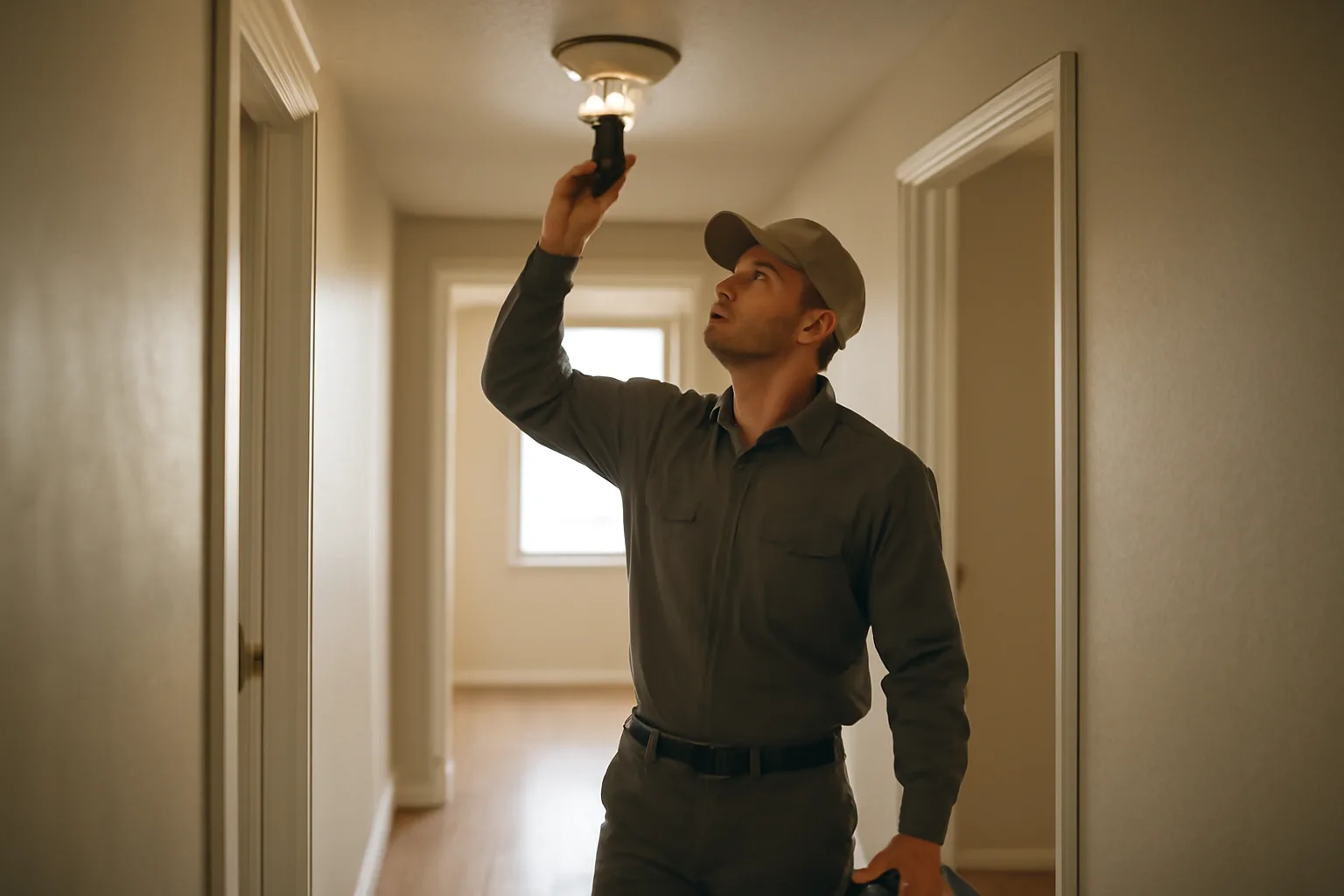
A rental inspection, whether it's LAHD's SCEP inspector or a private habitability inspection, generally covers health and safety systems, not a tenant's belongings or lifestyle. Expect the inspector to check smoke and carbon monoxide detectors, electrical outlets and panels, plumbing fixtures and water heater, heating systems, window and door locks, and signs of mold, pest infestation, or structural damage. Inspectors are not there to judge cleanliness preferences, inventory personal property, or open closets and drawers looking for what's inside. Their job is code compliance: does the unit meet the habitability standards under California Civil Code Section 1941.1, which lists things like weatherproofing, working plumbing and gas facilities, a working toilet and bath, natural light or ventilation, and smoke detectors [4]. LAHD inspectors use a checklist tied to LAMC habitability standards, and the same general categories apply. Common areas get their own scrutiny: exterior lighting, handrails, fire extinguisher tags, laundry room wiring, and roof condition. If your property has a garage or storage area used by tenants, that can get checked too. One practical note: an inspector who sees an obvious, unrelated hazard (exposed wiring, a blocked fire exit, a broken smoke detector) can and will write it up even if it wasn't the specific reason for the visit. Walk your own units before the scheduled date. A tenant rights walkthrough with your own checklist catches most of what an inspector will catch, and it's a lot cheaper to fix before the visit than after a violation notice.
Who is responsible for a rental property walkthrough inspection in California?
In California, the landlord is legally responsible for making sure a rental unit is habitable, and that responsibility includes reasonable inspections and repairs, more than responding after a tenant complains. Civil Code Section 1941 puts the duty on the landlord (referred to in the statute as the lessor) to keep the premises fit for human habitation for the term of the lease [4]. When a city like Los Angeles runs a mandatory inspection program, the owner is the one who receives the notice, coordinates tenant access, and is on the hook for any violations found, regardless of whether a property manager or agent handles day-to-day operations. If you use a property management company, confirm in writing who is responsible for scheduling the walkthrough and responding to the notice. Don't assume it happens automatically. Tenants have a right to request repairs and, in some cases, to use remedies like repair-and-deduct under Civil Code Section 1942 if the landlord doesn't act within a reasonable time after notice of a defect [5]. That's a separate track from the city's SCEP inspection, but the two often intersect: a tenant complaint about a leaking pipe can trigger both a habitability claim and a 311 report that lands you an inspection notice.
What happens if my property fails inspection or I get a violation?
If LAHD finds violations during a SCEP inspection, you'll get a written notice listing each item, along with a compliance deadline, which is often 30 days but can be shorter for serious hazards like exposed wiring or no working smoke detectors. Fees for reinspections, and civil penalties for unresolved violations, are set by the city and can add up fast if you let deadlines slide. The city's Rent Escrow Account Program (REAP) is the escalation path for properties with serious, unresolved habitability violations. Once a property is placed into REAP, tenants may pay reduced rent into an escrow account instead of paying the landlord directly, and the owner loses access to that rent until the violations are fixed and the property is released from REAP [6]. This is a real financial hit, more than a paperwork problem, and it can also affect your ability to raise rents or evict for certain reasons while in REAP. Budget-wise: exact reinspection fees, penalty amounts, and REAP administrative fees are set and updated by LAHD, so confirm current numbers with your city rental licensing office rather than relying on a number you saw somewhere online. What's consistent across most California mandatory-inspection cities is that the first violation notice is cheaper to fix than the second, and a lot cheaper than REAP. If you disagree with a violation finding, LAHD has an appeal process. Don't skip it if you think the finding is wrong, but also don't rely on an appeal as a stalling tactic. Missed compliance deadlines during an active appeal can still trigger penalties in some cases.
What is landlording, and what is a landlord actually responsible for?
Landlording is the day-to-day work of owning and operating a rental property: collecting rent, maintaining the unit, handling tenant communication, staying current on local ordinances, and responding to repair requests and inspections. It's part legal compliance, part maintenance management, part customer service, and small landlords often underestimate how much of it is paperwork and deadlines rather than hands-on fixing. A landlord, in the legal sense, is the person or entity that owns the property and rents it out under a lease or rental agreement, taking on specific duties defined by state and local law, including the habitability duty under Civil Code Section 1941 [4] and, in cities like Los Angeles, registration and inspection compliance under the municipal code [2]. If you're new to this, the learning curve isn't really about fixing toilets. It's about knowing which notices matter, which deadlines are hard deadlines, and which local ordinances apply to your specific unit count and building type. A four-unit building in LA has different registration obligations than a single-family rental, and mixing those up is one of the most common mistakes new owners make. Resources like landlord landlords basics guides can help you get oriented before your first inspection notice shows up.
How do I become a landlord, and how do I actually do it well?
Becoming a landlord legally requires owning rental property (or having authority to rent it out, as with a sublease arrangement) and then complying with your city and state's registration, licensing, and habitability requirements before you accept a tenant. There's no license exam to become a landlord in most of the US, but mandatory-registration cities like Los Angeles require you to register the property with the city, often within a set window after purchase or after the unit becomes a rental. Practically, doing it well means a few habits: screen tenants consistently using the same criteria for every applicant (this matters for fair housing compliance, more than risk management), document the unit's condition at move-in, keep a maintenance log, and know your local rent stabilization rules if the city has them. Los Angeles has one of the more complex sets of rent stabilization rules in the state, layered under the LAMC. Most new landlords underestimate the paperwork side: registration renewals, inspection notices, business tax registration if the city requires it, and insurance requirements. If you're managing this without a property manager, block time on your calendar for city notices the same way you'd block time for rent collection. Missing an inspection notice deadline is one of the most avoidable ways small landlords rack up fines.
Why do landlords require renters insurance, and does it matter for inspections?
Landlords often require renters insurance because it covers the tenant's personal property and liability, protecting the tenant from losses the landlord's own property insurance won't cover, and protecting the landlord from certain liability claims tied to the tenant's negligence (like a kitchen fire the tenant caused). Requiring it is legal in California and common in leases in cities with high rental density like Los Angeles. Renters insurance doesn't directly affect a SCEP inspection outcome. LAHD inspectors aren't checking insurance certificates. But it matters in the surrounding picture: if a habitability violation leads to tenant property damage (a burst pipe, a mold issue), having renters insurance in place reduces the odds that dispute turns into a lawsuit naming the landlord for the tenant's personal losses. Some landlords also require it because it reduces the tenant's incentive to exaggerate damage claims after an inspection-triggered repair. It's a reasonable lease term, but check that your lease's insurance requirement doesn't conflict with any local rent stabilization rules about what counts as an allowable lease condition.
What rights do tenants have without a lease, and how does that affect inspections?
A tenant without a written lease, often called a month-to-month tenant or a tenant-at-will, still has the same basic protections under California law as a tenant with a signed lease: the right to a habitable unit, the right to reasonable notice before entry, and protection from retaliatory or discriminatory treatment. The absence of a written lease does not strip away statutory rights. Under Civil Code Section 1946, a month-to-month tenancy in California generally requires 30 days' written notice to terminate if the tenant has lived there less than a year, or 60 days if a year or more, with some California cities and the state's Tenant Protection Act adding just-cause requirements on top of that . That's separate from inspection notice, which follows the 24-hour entry rule under Section 1954 regardless of lease status [3]. For inspection purposes, a landlord still owes a no-lease tenant the same 24-hour written notice before entering for a SCEP visit or any other non-emergency purpose. The city doesn't care whether there's a written lease on file; it cares whether the unit is registered and whether the tenant got proper notice. See tenants rights and renters rights for more on what protections apply regardless of lease status.
What can't a landlord do (and how does this compare to Ohio)?
| Entry notice | 24 hours presumed reasonable (Civ. Code §1954) [3] | Landlord must act reasonably; check ORC 5321 for current guidance |
|---|---|---|
| Month-to-month termination | 30 days (under 1 yr tenancy) / 60 days (1+ yr) (Civ. Code §1946) | Set by lease terms and 30-day statutory notice in many cases; confirm current ORC provisions |
| Self-help eviction (lockouts, utility shutoff) | Illegal | Illegal (ORC 5321.04) |
| Habitability duty | Civ. Code §1941, §1941.1 [4] | ORC 5321.04 |
Los Angeles landlords, like landlords everywhere in California, cannot enter a unit without proper notice except in a genuine emergency, cannot retaliate against a tenant for reporting a habitability issue to LAHD, and cannot shut off utilities or lock a tenant out as a way to force them out (this is illegal self-help eviction under California law). These aren't LA-specific rules; they come from state statute and apply across California. Ohio law draws similar lines but with different specifics. Under Ohio Revised Code Section 5321.04, landlords must maintain the premises in a fit and habitable condition and cannot use self-help eviction methods like changing locks or shutting off utilities to remove a tenant . Ohio's entry notice standard is generally referenced as 24 hours in practice guidance, though Ohio's statute (ORC 5321.05, tenant obligations, and 5321.04 landlord obligations) doesn't spell out a specific hour count as explicitly as California's Civil Code does; check current Ohio Revised Code language directly since courts and local practice can shape the applied standard. The common thread across both states: a landlord cannot retaliate against a tenant for exercising a legal right (like reporting to code enforcement or requesting repairs), and cannot skip required notice before entering, regardless of what the lease says. A lease clause that tries to waive these protections generally isn't enforceable. Here's a quick comparison of a few core landlord/tenant rules: | Rule | California (LA applies state law) | Ohio |
How should I prepare my units before an LA inspection notice deadline?
Start with a room-by-room walkthrough using the same categories LAHD inspectors use: working smoke and CO detectors in every required location, no exposed wiring, functioning heat, no active leaks, secure window and door locks, and clear egress paths. Do this at least two to three weeks before your scheduled date so you have time to fix anything you find, more than note it. Check common areas separately from units. Exterior lighting, handrail stability, posted fire extinguisher inspection tags, and clear stairwells are common sources of violations that have nothing to do with the individual apartments. If your property has more than a couple of units, walk the whole building, more than the ones you think are riskiest. Post or deliver your 24-hour (or longer) tenant notices as soon as you have the inspection date confirmed, and keep proof. Photograph posted notices with a timestamp, or use a delivery method that gives you a paper trail. If you want a structured way to organize this across multiple units and track what LAHD or your city typically checks, our $79 one-time City Rental License & Inspection Prep Packet walks through the standard categories city by city so you're not guessing what an inspector will flag. It's not legal advice and it doesn't guarantee an outcome, it's a prep tool to make the walkthrough faster and more organized. Finally, don't ignore the paperwork side. Confirm your registration status, any past violation history, and current fee balances with LAHD before the inspection date. An open fee balance can complicate your standing even if the physical unit passes with no issues.
What should I do if I get a violation notice after inspection?
Read the notice carefully for the specific code section cited, the compliance deadline, and whether it requires a reinspection fee. Don't assume all violations carry the same urgency. Life-safety issues (no smoke detector, gas leak, exposed wiring) typically carry shorter deadlines than cosmetic or minor items. Fix what you can immediately and document it with photos and dated receipts. If a repair requires a permit or licensed contractor (electrical or plumbing work usually does), start that process right away since permitted work can take longer than the compliance window and LAHD may consider an extension request if you can show the work is scheduled and in progress. If you think a violation finding is wrong, use LAHD's appeal process rather than just missing the deadline. Confirm the specific appeal window and process with your city rental licensing office since procedures can be updated. Don't let violations sit. Properties that accumulate unresolved violations are the ones that end up in REAP, and getting out of REAP is a much longer and more expensive process than fixing the original items would have been [6].
Frequently asked questions
How much notice does a landlord have to give before an inspection in Los Angeles?
California Civil Code Section 1954 presumes 24 hours' written notice is reasonable before a landlord or city inspector enters a rental unit for a non-emergency purpose. Many LA property managers give 48 hours or more as a practical buffer. Keep dated proof of the notice, whether posted at the unit or delivered directly to the tenant.
What is the Systematic Code Enforcement Program (SCEP) in Los Angeles?
SCEP is the Los Angeles Housing Department's routine rental inspection program for registered rental units, generally cycling through properties roughly every four years, with more frequent visits triggered by tenant complaints or violation history. It covers unit interiors and building common areas for habitability and safety code compliance.
What can a landlord look at during a rental inspection?
Inspectors, whether city or private, check health and safety items: smoke and CO detectors, electrical and plumbing systems, heating, window and door locks, and signs of mold or pest infestation, per habitability standards under California Civil Code Section 1941.1. They are not there to inspect personal belongings or judge housekeeping.
Who is responsible for a rental property walkthrough inspection in California?
The landlord (called the lessor under California Civil Code Section 1941) holds the legal duty to keep the unit habitable, which includes coordinating and responding to inspections. If you use a property manager, confirm in writing who handles scheduling and follow-up on any city inspection notice.
What happens if my LA rental property fails a SCEP inspection?
You'll get a written notice listing each violation and a compliance deadline, often 30 days for standard items and shorter for urgent hazards. Unresolved violations can lead to reinspection fees, civil penalties, and eventually placement in the Rent Escrow Account Program (REAP), where tenants may pay reduced rent into escrow instead of to you.
What is landlording?
Landlording is the ongoing work of operating a rental property: collecting rent, maintaining habitability, handling tenant communication, and staying compliant with local registration and inspection rules. It's less about hands-on repairs and more about managing deadlines, notices, and legal obligations consistently across every unit you own.
How do I become a landlord in a city with mandatory rental registration?
You need to own or control the rental unit, then register it with your city's housing or rental licensing office, often within a set window after the property becomes a rental. From there you're subject to that city's inspection cycle, fee schedule, and any rent stabilization rules. Confirm your specific city's registration deadline with its rental licensing office.
Why do landlords require renters insurance?
Renters insurance covers the tenant's personal property and liability, which the landlord's own insurance typically doesn't cover. Requiring it reduces disputes after damage or theft and can lower the landlord's exposure if a tenant's negligence causes a loss. It doesn't affect city inspection outcomes directly.
What rights do tenants have without a signed lease?
A month-to-month tenant without a written lease still has the right to a habitable unit, 24 hours' notice before non-emergency entry under California Civil Code Section 1954, and protection from retaliation or illegal lockouts. Lack of a written lease does not remove these statutory protections.
What can't a landlord do in Ohio?
Ohio landlords cannot use self-help eviction methods like changing locks or shutting off utilities to force a tenant out, and must maintain the unit in a fit and habitable condition under Ohio Revised Code Section 5321.04. Retaliation against a tenant for reporting code violations is also prohibited under Ohio law.
Does a rental inspection notice mean I already have a violation?
No. A SCEP notice from LAHD is a scheduling notice for a routine or complaint-triggered inspection, not a violation finding. Violations, if any, come after the inspector visits and documents specific code issues, each with its own compliance deadline.
How often are Los Angeles rental units inspected?
Most registered rental units in Los Angeles are inspected roughly every four years under the Systematic Code Enforcement Program, though the interval can be shorter if there's a complaint or violation history, or longer depending on LAHD staffing. Confirm your property's specific cycle status directly with LAHD.
What is a landlord legally required to fix before an inspection?
At minimum, a landlord should fix anything that violates California's habitability standards under Civil Code Section 1941.1: working smoke detectors, functioning plumbing and heating, weatherproofing, and secure locks. Fixing these before the scheduled inspection date is far cheaper than paying reinspection fees or penalties after a violation notice.
Sources
- Los Angeles Municipal Code, Rental Housing Habitability Program provisions: Rental registration and inspection authority for LAHD comes from LAMC Chapter XVI provisions
- California Civil Code Section 1954: 24 hours' written notice is presumed reasonable before a landlord enters a rental unit for non-emergency purposes
- California Civil Code Sections 1941 and 1941.1: California habitability standards require weatherproofing, working plumbing and gas, heating, and smoke detectors
- California Civil Code Section 1942: Tenants may use repair-and-deduct remedies if landlord fails to address habitability defects within a reasonable time
- California Civil Code Section 1946: Month-to-month tenancy termination generally requires 30 or 60 days written notice depending on tenancy length
- Ohio Revised Code Section 5321.04: Ohio landlords must maintain fit and habitable premises and cannot use self-help eviction methods like lockouts or utility shutoffs