Last updated 2026-07-26
TL;DR
Des Moines requires most rental properties to hold a valid Rental Housing Permit and pass a City inspection on a rotating cycle (commonly every one to three years depending on compliance history). Landlords should confirm current fees, cycle length, and inspection checklist items directly with the Des Moines Permit and Development Center, since these details change over time.
Does the City of Des Moines require rental inspections?
Yes. Des Moines regulates rental housing through its rental housing code, which requires owners of rental dwelling units to register the property, hold a valid rental permit, and allow the City to inspect the unit on a recurring basis. This isn't unusual. Des Moines is one of many Iowa cities that layer a local rental licensing and inspection program on top of the state's baseline landlord-tenant law, the Iowa Uniform Residential Landlord and Tenant Act [1]. The City's rental program exists mainly to catch health and safety problems before they become emergencies: bad wiring, missing smoke detectors, blocked exits, pest infestations, structural issues. Inspectors aren't grading your decorating choices. They're checking whether the unit is safe to live in and whether it meets the minimum standards in the City's housing code. If you own a single rental house, a duplex, or a small multi-unit building in Des Moines, you almost certainly fall under this program unless you qualify for a narrow exemption (owner-occupied duplexes are sometimes treated differently; confirm with your city rental licensing office). Skipping registration because you have "only one unit" is a common and expensive mistake.
How does the Des Moines rental permit and inspection process work?
The general sequence looks like this in most Iowa rental-licensing cities, Des Moines included: you register the property with the City, pay a permit fee, get scheduled for an initial inspection, and then fall onto a recurring inspection cycle once you pass. Step 1: Register the rental property. You'll typically need the property address, unit count, owner contact information, and sometimes a local property manager or agent if you don't live in the metro area. Step 2: Pay the permit fee. Fees are usually charged per unit or per building and are billed on a schedule set by City ordinance. Exact current fee amounts and whether they're annual, biennial, or tied to the inspection cycle should be confirmed with your city rental licensing office, since municipal fee schedules change through budget cycles and council votes. Step 3: Schedule and pass the initial inspection. A city inspector walks the unit (and often common areas, exterior, mechanical systems) against a housing code checklist. Step 4: Fix any violations found, usually within a City-set correction window, then get a reinspection if needed. Step 5: Get placed on a recurring inspection cycle. Properties with clean histories often move to a longer interval between inspections; properties with repeat violations get inspected more often. The exact interval structure (annual vs. every two or three years) is a program detail you should verify with the City rather than assume, because these intervals get adjusted by ordinance amendment. If you're building your file from scratch, our City Rental License & Inspection Prep Packet walks through the documents and checklist items most cities ask for before the inspector shows up, which saves a failed first inspection and a reinspection fee.
What can a landlord look at during a rental inspection?
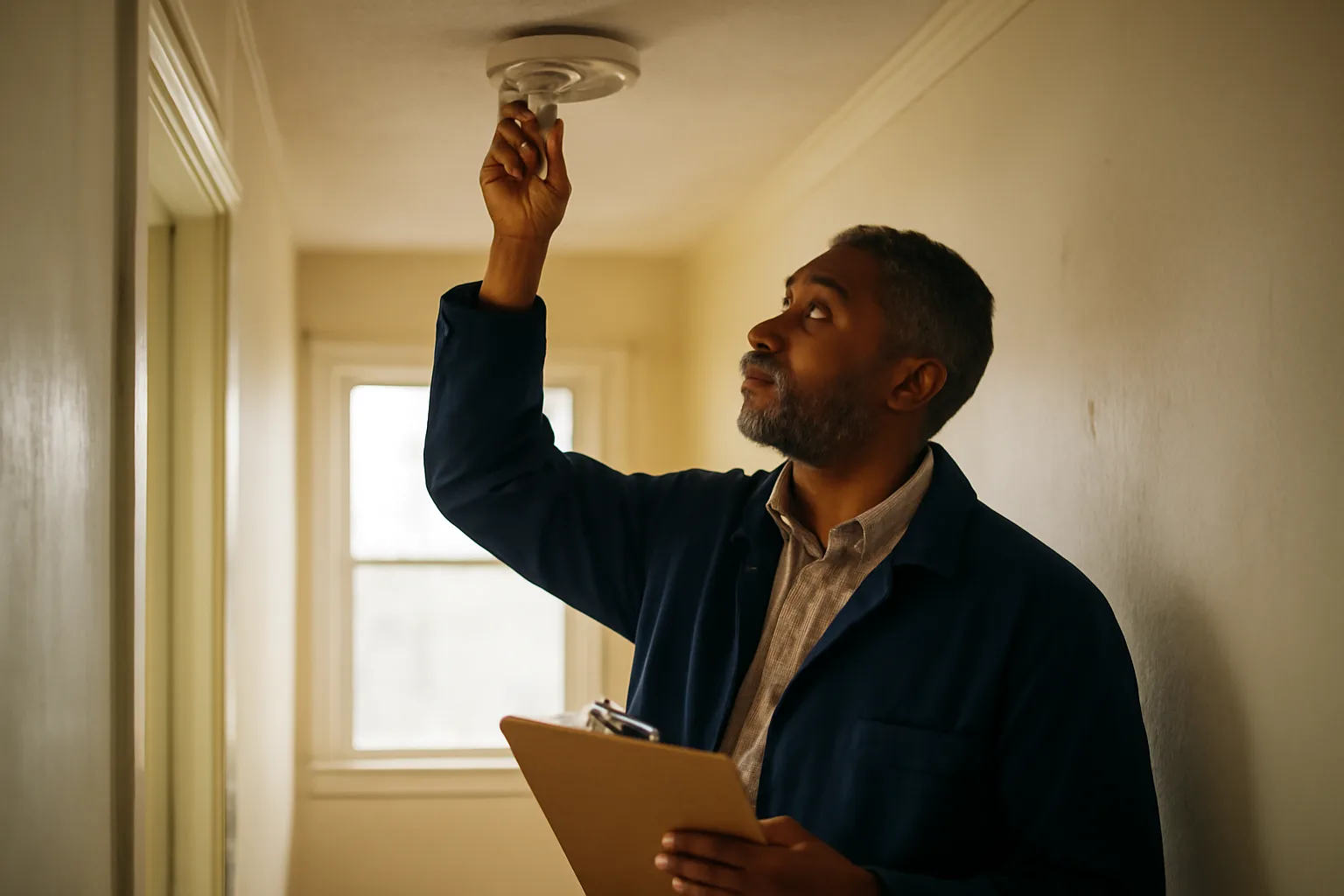
A rental inspector is generally checking three broad categories: life safety systems, structural/mechanical condition, and basic habitability. This mirrors what most municipal housing codes, and the model codes many of them borrow from (like the International Property Maintenance Code), treat as minimum standards [2]. Common inspection checklist items include: - Working smoke alarms in required locations, and carbon monoxide alarms where fuel-burning appliances or attached garages are present
- Secure, weather-tight windows and doors, with locks that function
- Adequate egress from bedrooms (a second way out in case of fire)
- Electrical system condition: no exposed wiring, no overloaded panels, functioning outlets, GFCI where required near water sources
- Plumbing: no active leaks, functioning water heater with a proper temperature/pressure relief valve, adequate hot water
- Heating system in safe working condition, since most cold-climate cities require a functioning primary heat source
- Structural condition: foundation, stairs, railings, porches free of rot or collapse hazards
- Pest evidence: signs of rodents or insect infestation
- General cleanliness and clutter that could block egress or create fire load Inspectors typically walk every room of the unit, check the exterior and any common areas, and look at mechanical rooms or basements. They don't typically inspect personal belongings or judge furnishings. If you want the state-law backdrop on what landlords must maintain regardless of city program, Iowa Code Chapter 562A sets baseline habitability duties that apply on top of any city checklist [1].
What happens if a Des Moines rental property fails inspection or has no permit?
Failing an inspection isn't the end of the world, but ignoring the notice is where landlords get hurt. Cities generally give you a written notice of violation with a correction deadline, often somewhere between 10 and 30 days depending on the severity of the issue, though the specific timeline for Des Moines should be confirmed with the Permit and Development Center since it varies by violation type. If you don't correct violations by the deadline, most municipal codes allow escalating consequences: reinspection fees, municipal infraction citations, daily fines that accumulate, and in serious or repeated cases, denial or revocation of the rental permit. A revoked or denied permit can mean the City treats the unit as illegal to rent, which creates real problems if you're mid-lease with a tenant already in place. Operating without a required rental permit at all is its own violation, separate from any condition-based violation, and cities often charge back-permit fees plus penalties once they discover an unregistered rental (commonly triggered by a tenant complaint, a nuisance call, or a neighbor tip). If you inherited a property, bought a rental with existing tenants, or just never registered because nobody told you it was required, don't wait for a notice to show up. Call the City and get ahead of it; voluntary compliance is almost always cheaper than getting caught.
How do you become a landlord in a city with rental licensing?
Becoming a landlord is a mix of legal setup, financial planning, and administrative compliance, and in a licensing city like Des Moines, the administrative part isn't optional. At a minimum, you'll want to: confirm the property is zoned for rental use, register with the city rental program before you advertise the unit, screen tenants consistently and legally (fair housing law applies regardless of city size), draft a lease that complies with Iowa Code Chapter 562A, set up a system for collecting rent and documenting repairs, and budget for the recurring costs of permits, inspections, and maintenance. A lot of new landlords underestimate the administrative load. Between the rental permit, the inspection cycle, security deposit handling rules, and notice requirements, a single unit can eat several hours a month even before you count maintenance calls. If you're weighing whether self-managing makes sense, our guide on what is landlording breaks down the day-to-day responsibilities beyond just collecting rent.
What is landlording and what does a landlord actually do?
"Landlording" is the ongoing work of owning and operating rental property: more than collecting rent, and maintaining the unit, complying with local and state law, handling tenant communication, and managing the financial side of the investment. A landlord, legally, is the party who owns (or controls, in the case of a master lessee subletting) real property and grants a tenant the right to occupy it under a lease in exchange for rent. That basic definition holds across states, but the obligations layered on top of it vary enormously by state statute and by city ordinance. Day to day, landlording usually includes: responding to maintenance requests within a reasonable time (many states set specific deadlines for essential services like heat or water), keeping the unit compliant with local housing code (which is exactly what rental inspection programs check), handling move-in and move-out documentation, managing security deposits according to state limits and return deadlines, and staying current on any city permit or registration renewal. It's a part-time job even for one unit, and a lot of first-time landlords are surprised by how much of it is paperwork and deadlines rather than repairs.
Who is responsible for a rental property walkthrough inspection?
This depends heavily on the state and the type of inspection. There are two very different things people mean by "rental inspection walkthrough," and mixing them up causes confusion. The first is a government housing-code inspection, like the Des Moines rental permit inspection described above. That's conducted by a city or county code enforcement inspector, and it exists to verify the property meets health and safety minimums. The second is a move-in/move-out condition walkthrough between landlord and tenant, which documents the unit's condition for security deposit purposes. In California specifically, state law gives tenants a right to an initial move-out inspection before the final move-out, so they can fix issues themselves and avoid deposit deductions; the landlord (or their agent) conducts that walkthrough and must give the tenant reasonable notice, generally at least 48 hours, and a written itemized statement of anticipated deductions [3]. This is different from a city rental licensing inspection, which is a government function, not a landlord-tenant one. So: for the government compliance inspection, the responsibility sits with the city or county inspector. For the condition walkthrough tied to move-out and deposits, responsibility sits with the landlord (or their property manager), and in states like California there are specific notice and documentation rules attached to it.
How much notice does a landlord have to give before entering a rental?
Notice requirements vary by state, but most states set a minimum notice period for landlord entry, commonly 24 hours, with exceptions for emergencies. Iowa's landlord-tenant law, for instance, generally requires reasonable notice, and Iowa courts and practice guidance treat 24 hours as the customary reasonable period for non-emergency entry, though the statute itself uses a reasonableness standard rather than a fixed number [1]. City rental inspections are a separate category. When the City needs to inspect for permit compliance, the inspection is typically scheduled in advance with the property owner, who then coordinates access with the tenant. Most rental housing codes require the tenant to allow reasonable access for a code-mandated inspection, but the owner is usually the one responsible for arranging the appointment and notifying the tenant, often with the same 24 to 48 hour notice window used for any other non-emergency entry. If a tenant refuses access for a scheduled city inspection, that becomes a landlord-tenant issue you may need to resolve directly, since the City generally holds the property owner responsible for permit compliance regardless of tenant cooperation.
What rights do tenants have without a written lease?
A tenant without a written lease still has legal rights. In most states, an oral rental agreement or a month-to-month arrangement created by paying and accepting rent still creates a legally recognized tenancy, and the tenant is protected by the state's landlord-tenant statute regardless of whether anything was signed. Under Iowa Code Chapter 562A, which governs residential tenancies broadly, tenants without a written lease are still entitled to a habitable unit, protection from illegal lockouts or utility shutoffs, proper notice before termination (commonly 30 days for month-to-month tenancies under Iowa law), and return of any security deposit within the statutory deadline after move-out [1]. The absence of a written lease mainly creates evidence problems (what were the exact terms?) rather than removing the tenant's underlying legal protections. For landlords, this cuts against the common myth that "no lease means no rights." It's actually the opposite: without a written lease spelling out specific terms, courts tend to fall back on default statutory rules, which are often more tenant-favorable than a landlord would choose to write themselves. If you're renting month to month, get something in writing, even a short one-page agreement, to avoid ambiguity later.
Why do landlords require renters insurance?
Landlords require renters insurance mainly to shift liability and property-damage risk away from the landlord's own policy and onto the tenant's coverage. A standard landlord (dwelling) insurance policy covers the building structure, but it generally does not cover a tenant's personal belongings, and it may not adequately cover liability claims that originate from the tenant's actions inside the unit (a tenant's dog bites a guest, a tenant's candle starts a kitchen fire). Requiring renters insurance, typically with a minimum liability coverage amount specified in the lease (commonly $100,000, though this varies), gives the landlord a layer of protection: if the tenant causes damage or a liability claim arises from something happening in the unit, the tenant's policy is the first line of financial response rather than the landlord's. It's also cheap for tenants. Renters insurance policies commonly run in the range of a modest monthly premium (national averages have historically clustered in the range of roughly $15 to $30/month depending on coverage and location, though you should treat any specific figure as an estimate rather than a guarantee since rates shift with the insurance market), which makes it an easy lease requirement to justify to a prospective tenant. Whether requiring it is enforceable, and how the lease should word the requirement, depends on state law; this isn't something to draft yourself without checking your state's rules on lease terms and insurance mandates.
What can a landlord not do in Ohio?
Ohio's landlord-tenant law, primarily Ohio Revised Code Chapter 5321, sets out specific things a landlord cannot do, and violations can expose the landlord to tenant lawsuits and statutory damages. Under Ohio law, a landlord generally cannot: shut off utilities to force a tenant out (a "self-help" eviction), change the locks without a court order to remove a tenant, remove a tenant's belongings without a court order, retaliate against a tenant for exercising a legal right such as reporting a code violation, or enter the rental unit without reasonable notice except in an emergency. Ohio Revised Code 5321.04 specifically requires landlords to keep the premises in a fit and habitable condition and to comply with the state's building and housing codes [4]. Ohio Revised Code 5321.05 similarly outlines tenant obligations, and courts have consistently held that landlords who attempt self-help evictions (changing locks, shutting off power) rather than going through the court eviction process expose themselves to statutory damages and attorney fee awards under Ohio Revised Code 5321.16, which governs security deposit and wrongful-removal remedies [5]. If you're operating in Ohio, this is one of the clearest bright lines in landlord-tenant law: use the courts, not lockouts or utility shutoffs, no matter how frustrated you are with a nonpaying tenant.
Des Moines rental inspection vs. other Iowa cities: what's different?
| Permit required | Almost all mid-size and large Iowa cities require some form of rental registration or permit | |
|---|---|---|
| Inspection cycle | Ranges from annual to every 2-3 years depending on compliance history and city ordinance | |
| Fee structure | Per-unit or per-building; often billed annually or biennially | |
| Reinspection fee | Common if the first inspection fails; amount varies by city | |
| Exemptions | Owner-occupied duplexes or short-term rentals sometimes handled differently | If you own rentals in more than one Iowa city, don't assume Des Moines rules travel with you. Confirm each city's specific ordinance separately, since council votes and code amendments happen on different timelines city by city. |
Rental licensing programs aren't uniform even within Iowa. Cedar Rapids, Iowa City, Davenport, and Des Moines each run their own rental permit and inspection programs, with different fee schedules, inspection cycle lengths, and enforcement approaches. What's true in one city is often wrong in the next. The table below is a general comparison framework, not a set of confirmed current fees; treat every number as something to verify directly with each city's rental licensing office before relying on it. | Feature | What to check for each city |
How do you prepare for a Des Moines rental inspection?
The fastest way to fail an inspection is to treat it like a surprise instead of a scheduled event you can prep for. A basic pre-inspection walkthrough, done by you a week or two ahead, catches most of what an inspector will flag. Walk the unit and test every smoke alarm and CO alarm; replace batteries and check expiration dates (most smoke alarms have a 10-year service life stamped on the unit). Check every window and door for function, including locks and screens. Run water at every fixture and look under sinks for active leaks. Check the water heater's temperature and pressure relief valve and make sure nothing is blocking access to the mechanical room. Look at exterior stairs, railings, and porches for rot or looseness. Clear egress paths in every bedroom (window that opens, no furniture blocking a door). Check GFCI outlets near kitchens and bathrooms by pressing the test button. None of this is exotic. It's the same list an inspector is working from, because most municipal codes borrow heavily from the same model housing codes [2]. If you'd rather work from a structured checklist and document folder instead of assembling one from scratch, our $79 City Rental License & Inspection Prep Packet is built around exactly this kind of pre-inspection prep, plus the paperwork cities commonly ask for during registration. For general landlord responsibilities beyond the inspection itself, see our guides on tenants rights and renters rights, since a habitable, compliant unit is the foundation both the City and your tenant are checking for, just from different angles.
Frequently asked questions
Does every rental unit in Des Moines need a permit?
Most do. Des Moines' rental housing program generally covers single-family rentals, duplexes, and multi-unit buildings, with some possible exceptions for owner-occupied duplexes. Confirm your specific property's status with the Des Moines Permit and Development Center, since exemption criteria are set by ordinance and can change.
How often does Des Moines inspect rental properties?
Inspection cycles in Iowa rental-licensing cities commonly run from annual to every two or three years, often based on the property's compliance history. Des Moines' exact current cycle length should be confirmed with the City's rental housing program office rather than assumed, since these intervals get adjusted through ordinance changes.
What happens if I rent out a unit in Des Moines without a permit?
Operating without a required rental permit is typically its own violation, separate from any condition-based issue found during inspection. Cities commonly charge back-fees and penalties once an unregistered rental is discovered, often through a tenant complaint or neighbor report. Register before you advertise the unit to avoid this.
How to become a landlord if I've never rented out property before?
Start by confirming the property is zoned for rental use, registering with your city's rental licensing program if one exists, learning your state's landlord-tenant statute, and setting up systems for tenant screening, lease documentation, rent collection, and maintenance requests. In licensing cities, register and pass inspection before you advertise the unit.
Who is responsible for a rental property walkthrough inspection in California?
For move-out condition walkthroughs, California law gives tenants the right to request an initial inspection before vacating; the landlord or their agent conducts it and must give reasonable notice, generally at least 48 hours, plus an itemized statement of anticipated deductions. Government code-compliance inspections are separately conducted by city or county inspectors.
What can a landlord look at during a rental inspection?
A code-compliance inspector checks life-safety systems (smoke and CO alarms, egress, electrical, heating), structural condition (stairs, railings, foundation), and basic habitability (plumbing leaks, water heater safety, pest evidence). Inspectors generally don't evaluate furnishings or personal belongings; the checklist is about safety, not decor.
What is landlording, in plain terms?
Landlording is the ongoing work of owning and operating rental property, more than collecting rent. It includes maintaining the unit, complying with state and city housing law, managing tenant communication and screening, and handling the financial and administrative side of the rental, including any city permit or inspection requirements.
What rights do tenants have without a signed lease?
A tenant without a written lease is still protected by state landlord-tenant law. In Iowa, that means rights to a habitable unit, protection from illegal lockouts, proper notice before termination, and timely security deposit return, all under Iowa Code Chapter 562A, regardless of whether anything was put in writing.
Why do landlords require renters insurance from tenants?
Renters insurance shifts liability and personal-property risk onto the tenant's policy instead of the landlord's. A landlord's dwelling policy typically doesn't cover a tenant's belongings or certain liability claims arising from the tenant's actions, so requiring renters insurance closes that gap at a low cost to the tenant.
How much notice does a landlord have to give before entering a rental unit?
Most states require reasonable advance notice for non-emergency entry, commonly interpreted as 24 hours, though the exact standard depends on state statute. Iowa's law uses a reasonableness standard rather than a fixed number, but 24 hours is the customary practice. Emergencies don't require advance notice.
What can't a landlord do in Ohio?
Under Ohio Revised Code Chapter 5321, a landlord cannot shut off utilities or change locks to force a tenant out, remove belongings without a court order, retaliate against a tenant for reporting code violations, or enter without reasonable notice except in emergencies. Landlords must use the court eviction process, not self-help.
What should I do if I get a rental inspection violation notice from the City?
Read the correction deadline carefully and don't ignore it. Contact the City's rental housing office if you need clarification or a short extension, fix the cited items, and request the reinspection before the deadline. Ignoring a notice typically leads to fines, reinspection fees, or permit action, which cost far more than the fix itself.
Sources
- Iowa Legislature, Iowa Code Chapter 562A (Uniform Residential Landlord and Tenant Law): Iowa's statutory landlord-tenant obligations, including habitability, notice, and security deposit rules
- International Code Council, International Property Maintenance Code overview: Model housing code minimum standards that many municipal rental inspection checklists are based on
- California Civil Code Section 1950.5: California tenant right to a pre-move-out inspection and landlord notice/itemization requirements
- Ohio Revised Code Section 5321.04: Ohio landlord obligations to maintain habitable premises and comply with housing codes
- Ohio Revised Code Section 5321.16: Ohio security deposit and wrongful-removal remedies, including damages available when a landlord uses self-help eviction
- Iowa Code Section 562A.29: Iowa's statutory notice period for termination of month-to-month tenancies