Last updated 2026-07-26
TL;DR
Dearborn, Michigan requires landlords to register rental property and pass a city inspection to get a Certificate of Compliance before renting it out. Inspections check smoke and CO detectors, electrical and plumbing systems, egress windows, and general safety items. Confirm current fees and inspection scheduling with the City of Dearborn's rental office directly, since these change.
Does the City of Dearborn require a rental inspection?
Yes. Dearborn is one of many Michigan cities that requires rental property owners to register their units and pass a habitability inspection before renting them out, under authority granted by the state's housing law framework. Michigan's Housing Law (the state statute that lets cities regulate rental housing for safety) allows municipalities to adopt ordinances requiring registration, licensing, and periodic inspection of rental dwellings [1]. Dearborn's local ordinance sets up its own Certificate of Compliance system administered through the city's Department of Economic and Community Development / Building and Safety Engineering division (confirm the exact department name with the city, since city departments get reorganized more often than you'd think). If you own a single-family rental, a duplex, or a small multi-unit building in Dearborn, you almost certainly fall under this requirement. There is no reliable exemption for 'just one unit' or 'renting to family' in most Michigan rental-inspection ordinances, though some cities carve out owner-occupied duplexes. Don't assume you're exempt. Call and ask. If you're comparing how this works across different cities, it helps to look at a city guide that walks through general rental licensing patterns, because Dearborn's structure (registration plus inspection plus a compliance certificate with an expiration date) is a common model used across Michigan and the Midwest generally.
How do I register a rental property in Dearborn?
You'll need to file a rental registration application with the city, pay an application fee, and schedule an inspection. Confirm the exact fee schedule and application form with Dearborn's rental licensing office, since fee amounts and the specific portal (online vs. in-person vs. mail) change from year to year and this article won't guess at a dollar figure that might be stale by the time you read it. Generally, the sequence looks like this: submit your ownership and property information, pay the registration fee, get an inspection date assigned, pass (or fix and re-pass) the inspection, then receive your Certificate of Compliance. Certificates typically run on a multi-year cycle in Michigan cities, commonly one to three years depending on the ordinance, after which you re-register and re-inspect. If you just bought a property in Dearborn that already has tenants in place, don't assume the previous owner's certificate transfers to you. Ownership changes usually trigger a new registration requirement. This is the kind of detail that trips up new landlords who bought a rental as their first investment property and didn't realize the compliance clock resets.
What can a landlord look at during an inspection?
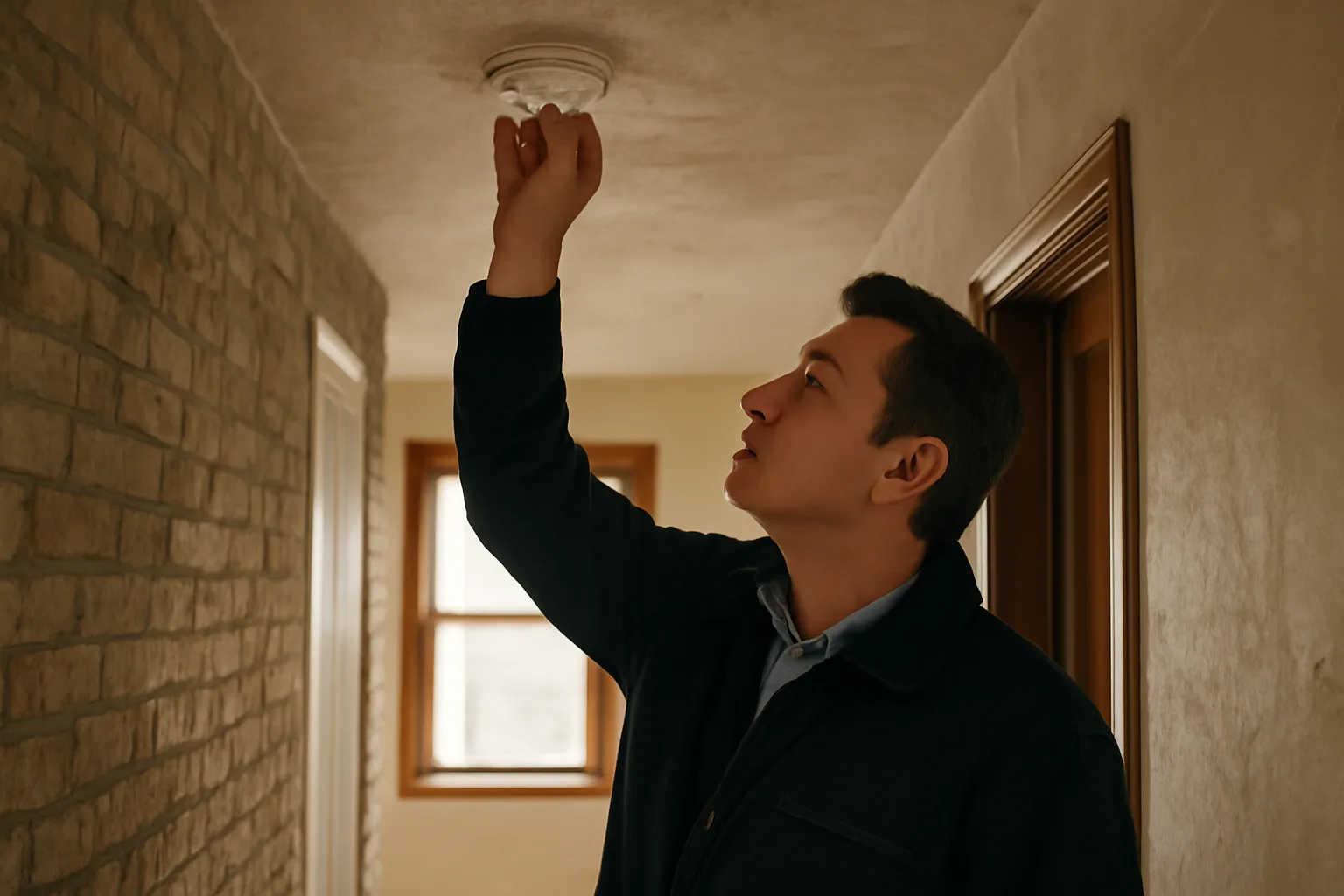
A rental inspector in a Michigan city like Dearborn is typically checking for compliance with adopted maintenance codes, most often a local adaptation of the International Property Maintenance Code (IPMC). Michigan's own building code framework is set by the Stille-DeRossett-Hale Single State Construction Code Act, and cities layer their property maintenance and rental ordinances on top of that [2]. Expect the inspector to check: - Smoke detectors and carbon monoxide detectors, correct placement and working batteries or hardwiring
- Electrical panels, exposed wiring, outlet condition, and GFCI protection near water sources
- Plumbing for leaks, water heater venting, and proper water pressure
- Furnace and heating system condition and combustion venting
- Egress windows in bedrooms (a legal means of escape in case of fire)
- Structural issues: foundation cracks, roof leaks, ceiling damage
- Exterior conditions: peeling paint (especially lead paint risk in pre-1978 housing), broken steps, unsafe railings, pest evidence
- General sanitation and clutter that blocks exits This list mirrors what most property maintenance inspections nationally look for, whether it's Dearborn, another Michigan city, or a city in an entirely different state. The federal lead-based paint disclosure rule also applies separately from any city inspection: any rental built before 1978 requires a signed lead paint disclosure form at lease signing under the Residential Lead-Based Paint Hazard Reduction Act [3]. A city inspector isn't there to test for lead, but landlords of older Dearborn housing stock (a lot of it, given the city's age) should already have that disclosure paperwork done regardless of the inspection outcome.
What happens if I fail the rental inspection?
You get a list of violations and a deadline to fix them, then a re-inspection. This is standard across nearly every municipal rental inspection program, and Dearborn's process is not unusual in this respect: fail, fix, re-inspect, and pay a re-inspection fee if one applies. The real risk isn't failing once. Almost every property gets flagged for something on a first inspection, even well-maintained ones, because inspectors are trained to note everything from a loose stair rail to a missing CO detector in a specific room. The real risk is not fixing items by the reinspection deadline and accumulating fines, or renting the unit anyway without a valid certificate. Renting without a valid Certificate of Compliance in a city that requires one can expose a landlord to civil fines, and in more aggressive enforcement cities, it can also come up in eviction court as a defense (some states let tenants argue that an unlicensed rental voids the landlord's ability to collect rent or evict). Michigan courts have addressed this kind of issue in the context of local housing ordinances, so it's not a hypothetical. Confirm with Dearborn's rental office and, if it ever gets to a court dispute, with a local attorney, what the specific local consequence looks like, because ordinance language and case law vary.
How much does a Dearborn rental inspection cost?
Confirm the current fee with Dearborn's rental licensing office, since these numbers get adjusted through city council action and this article isn't going to guess at a number that could be six months stale. As a general reference point, Michigan cities with rental inspection ordinances commonly charge registration fees somewhere in the range of $50 to $150 per unit, plus a separate re-inspection fee if the first inspection fails, though exact figures vary widely city to city and unit-count matters (a landlord with a 4-unit building often pays per door, not a flat property fee). Budget for the cost of the fee itself, plus whatever repairs come up. Most landlords who get surprised by a rental inspection bill aren't surprised by the registration fee. They're surprised by the $600 electrician visit to add GFCI outlets, or the $1,200 it takes to replace a furnace vent that failed a combustion safety check. Set aside a repair buffer before you schedule, not after. If you manage several units across Dearborn or nearby Wayne County cities, a simple cost tracking sheet per property (registration fee, inspection fee, repair costs, re-inspection fee) pays for itself the first time you're doing your Schedule E taxes and need to remember what you actually spent.
How to become a landlord in a city like Dearborn
Becoming a landlord in a rental-licensing city means more than buying a property and finding a tenant. You need to register the unit with the city, pass the required inspection, understand your state's landlord-tenant law, and get your lease, security deposit handling, and insurance requirements in order before you ever collect a first month's rent. Here's a practical order of operations for a new Dearborn landlord: 1. Confirm zoning allows rental use for your property type (single-family rentals are usually fine; some multi-family conversions need separate approval) 2. Register the property with the city's rental licensing office 3. Schedule and pass your Certificate of Compliance inspection 4. Set up a Michigan-compliant lease and security deposit process (Michigan caps security deposits at 1.5 times monthly rent under the Landlord and Tenant Relationships Act, and requires deposits to be held in a regulated financial institution with specific notice to the tenant about where it's held) [4] 5. Decide your renters insurance policy (see below) 6. Screen tenants under Fair Housing Act rules, since discrimination based on race, color, religion, sex, national origin, familial status, or disability is illegal in tenant screening nationwide [5] If you're setting this up for the first time, a broader landlord basics resource is worth reading alongside city-specific rules, because the city inspection is only one piece of a much longer compliance checklist.
What is landlording and what exactly does a landlord do?
Landlording is the ongoing work of owning and managing rental property: collecting rent, maintaining the unit, handling repairs, following state and local law, and managing the tenant relationship from move-in to move-out. A landlord, legally, is the party who holds title (or a leasehold interest they're subletting under, in some structures) and leases the right to occupy a unit to a tenant in exchange for rent. It's a mix of light property management and a fair amount of legal compliance work that a lot of new landlords underestimate. In a city like Dearborn with mandatory registration, landlording also means keeping your Certificate of Compliance current, tracking its expiration date, and re-inspecting on schedule, on top of the normal work of fixing a leaking faucet or replacing a lockset between tenants. Some landlords self-manage everything. Others hire a property manager to handle day-to-day tenant contact while the owner handles the bigger decisions (rent pricing, capital repairs, refinancing). Either way, the compliance obligations (inspections, fair housing law, security deposit rules) sit with the owner of record, not with whoever happens to be answering maintenance calls.
What rights do tenants have without a lease?
A tenant without a written lease still has legal rights. In most states, an unwritten or expired lease creates a month-to-month tenancy under the same basic terms as before, and the tenant keeps protections like the right to habitable housing, protection from illegal lockouts, and required notice before eviction. Michigan's Truth in Renting Act and general landlord-tenant common law both apply whether or not a lease is in writing; a verbal agreement to rent, once rent is accepted, generally creates a legally recognized tenancy [6]. What a tenant loses without a written lease is certainty: no written record of the rent amount, no documented rules about pets, guests, or subletting, and no paper trail if a dispute goes to court. That ambiguity usually hurts the landlord more than the tenant in a dispute, since courts often interpret unclear terms against whoever drafted them (or in a verbal agreement, whoever is trying to prove what was said). If you've got a Dearborn rental with no written lease in place right now, that's worth fixing before your next inspection cycle regardless of what the city inspector checks, because lease documentation is where a lot of separate legal exposure lives. For more on what tenants can expect generally, see this tenant rights overview.
Who is responsible for a rental property walk-through inspection in California (and does that apply in Dearborn)?
This is a common search because California has specific statutory rules about move-in and move-out walk-through inspections that don't exist in every state. Under California Civil Code Section 1950.5, a landlord must, upon request, do an initial move-out inspection before the tenant vacates, give the tenant an itemized list of anticipated deductions, and allow the tenant an opportunity to fix issues before the final deposit accounting . That responsibility sits with the landlord, not the tenant, and it's triggered by tenant request in most cases. Michigan doesn't have an identical statute, but it does require landlords to provide tenants a written inventory checklist at move-in (within a reasonable time) documenting existing damage, under the security deposit provisions of the Landlord and Tenant Relationships Act referenced above [4]. So while the specific mechanics differ from California's rule, the underlying idea (document the unit's condition at move-in so deposit disputes don't turn into he-said-she-said) is nearly universal, and it's separate from, and unrelated to, the city's own Certificate of Compliance inspection. A city rental inspector is checking code compliance for the city. A move-in/move-out walkthrough is a private matter between landlord and tenant about the deposit.
Why do landlords require renters insurance?
Landlords require renters insurance mainly to shift liability risk and protect against a tenant's uninsured losses turning into a landlord's legal problem. A landlord's own property insurance covers the building and the landlord's fixtures. It typically does not cover a tenant's personal belongings, and it often doesn't fully protect the landlord if a tenant's negligence (a candle fire, an overflowing tub) causes damage or injures a third party. Renters insurance (often costing somewhere in the range of $15 to $30 a month nationally, though this varies a lot by market and coverage level) gives the tenant liability coverage and personal property coverage, and it gives the landlord a buffer: if a tenant's guest gets hurt or a tenant's cooking fire damages a neighboring unit, the tenant's renters insurance is often the first line of financial responsibility instead of the landlord's policy or the landlord's own pocket. Many landlords now write a renters insurance requirement directly into the lease and ask for proof of a policy naming the landlord as an 'interested party' so they get notified if the tenant lets the policy lapse. This isn't a Dearborn-specific requirement or a city inspection item; it's a private contract term a landlord chooses to include, and it's worth doing regardless of whether your city mandates a rental inspection.
How much notice does a landlord have to give before an inspection or entry?
Notice requirements before a landlord enters an occupied unit vary significantly by state, and there's no single federal rule. Michigan doesn't have a single statewide statute setting a specific notice period for routine landlord entry the way some states do (California, for example, generally requires 24 hours' written notice for non-emergency entry under Civil Code Section 1954) . Most Michigan leases specify a reasonable notice period, commonly 24 to 48 hours, as a matter of lease drafting and common practice, and courts generally expect landlords to give reasonable advance notice and enter at reasonable times, except in genuine emergencies. For a city rental compliance inspection specifically, Dearborn's rental office typically schedules an appointment window directly with the property owner (and, depending on occupancy, the tenant needs notice too if the unit is occupied during the scheduled visit). Confirm with the city what advance notice they give landlords for scheduling, and separately, make sure your lease spells out your own entry notice terms so a tenant isn't caught off guard on inspection day. If you're not sure what your state or city expects here, err on the side of more notice, not less. Giving 48 hours instead of the bare legal minimum costs you nothing and avoids the kind of tenant complaint that can escalate into a harassment claim in a bad-faith dispute.
What a landlord cannot do (and specific rules landlords in Ohio should know)
There's a common list of things landlords generally cannot do almost anywhere in the U.S., and then there are state-specific rules worth knowing if you own property in Ohio specifically (a border state to Michigan, and one plenty of Dearborn-area readers also invest in). Generally, a landlord cannot: - Discriminate in tenant selection based on race, color, religion, sex, national origin, familial status, or disability under the federal Fair Housing Act [5]
- Lock a tenant out, shut off utilities, or remove belongings without going through formal eviction (a 'self-help eviction'), which is illegal in nearly every state including Ohio and Michigan
- Enter without proper notice except in a genuine emergency
- Retaliate against a tenant for filing a habitability complaint or contacting a code enforcement office
- Fail to return a security deposit or itemized deduction list within the state-required timeframe Ohio's landlord-tenant law specifically prohibits self-help evictions and requires landlords to maintain the premises in a fit and habitable condition under Ohio Revised Code Section 5321.04, which lists specific landlord obligations including keeping common areas safe, maintaining electrical, plumbing, and HVAC systems in good working order, and complying with local housing codes . Ohio also caps security deposit interest requirements and sets a 30-day return window with itemized deductions under Ohio Revised Code Section 5321.16 . If you own property in both Michigan and Ohio, don't assume the rules are the same across the state line; they're similar in spirit but different in specific deadlines and dollar thresholds. For a broader look at what tenants can expect from a landlord regardless of state, see this tenants rights resource and this renters rights overview.
How can I get ready for my Dearborn rental inspection without wasting money on unnecessary repairs?
Walk the property yourself first using the actual code checklist, not a generic 'is it clean' walkthrough. Most failed inspections come down to a short, predictable list: missing or expired smoke detectors, no CO detector near sleeping areas, a GFCI outlet missing near a sink, a blocked egress window, or an obviously unsafe stair railing. Fixing those five things before the inspector ever shows up eliminates a huge share of first-time failures. Don't over-fix. Landlords sometimes panic and hire a contractor to redo an entire electrical panel when the actual issue was one missing outlet cover. Get the specific ordinance checklist from Dearborn's rental office (many cities publish theirs, though names and formats vary) and work from that, not from a generic internet list, since some cities have quirks (specific window opening dimensions for egress, specific handrail height requirements) that a general checklist won't catch. This is genuinely where a structured prep packet earns its cost instead of just being a nice-to-have. Our $79 one-time City Rental License & Inspection Prep Packet walks through the common inspection items city by city and helps you build a pre-inspection checklist so you're not paying for a re-inspection fee because of a $12 CO detector you forgot to install. It's not a substitute for confirming Dearborn's exact current checklist and fee schedule directly with the city, but it saves the guesswork on the parts that are common across most Michigan rental inspection programs.
Where do I confirm Dearborn's exact current rules, fees, and deadlines?
Contact Dearborn's rental licensing or Building and Safety Engineering office directly. City fee schedules, inspection cycle lengths, and application procedures change through routine city council action, sometimes annually, and any specific dollar figure or deadline printed in an article today could be outdated by the time you read it next year. What you should ask when you call: the current per-unit or per-property registration fee, how long a Certificate of Compliance is valid before you need to re-register, what the re-inspection fee is if you fail the first time, whether they offer online scheduling, and whether there's a grace period before late fees or fines kick in if you miss a renewal deadline. Write down the name of the person you spoke with and the date of the call. If a fee dispute or violation notice comes up later, having a record of when you confirmed the requirements (and what you were told) is a genuinely useful paper trail, the same logic that applies to any interaction with a city permitting office.
Frequently asked questions
Does Dearborn, Michigan require a rental license for every rental property?
Dearborn requires rental property owners to register and pass an inspection to get a Certificate of Compliance before renting a unit, under Michigan's Housing Law framework that lets cities regulate rental housing safety. Confirm with Dearborn's rental office whether any specific property type or owner-occupancy situation is exempt, since exemptions vary by ordinance.
How often do I need to re-inspect my Dearborn rental property?
Certificate of Compliance renewal cycles in Michigan cities commonly run one to three years, but Dearborn's specific cycle length should be confirmed directly with the city's rental licensing office, since this is set by local ordinance and can change.
What happens if I rent out a unit in Dearborn without a valid inspection certificate?
You risk civil fines from the city, and in some Michigan cities, an unlicensed rental can also come up as an issue in eviction proceedings or rent disputes. Confirm the specific enforcement consequences with Dearborn's rental office and, if a dispute arises, with a Michigan landlord-tenant attorney.
How to become a landlord if I've never owned rental property before?
Buy or convert a property, confirm local zoning allows rental use, register with your city's rental licensing office if one exists, pass any required inspection, set up a compliant lease and security deposit process under your state's law, and screen tenants under Fair Housing Act rules that prohibit discrimination based on race, color, religion, sex, national origin, familial status, or disability.
Who is responsible for a rental property walk-through inspection in California?
Under California Civil Code Section 1950.5, the landlord is responsible for offering a pre-move-out inspection if the tenant requests one, providing an itemized list of expected deductions, and giving the tenant a chance to fix issues before the final deposit accounting. This is separate from any city-mandated safety inspection.
What is landlording, in plain terms?
Landlording is the day-to-day and long-term work of owning rental property: collecting rent, maintaining the unit, following state and local landlord-tenant law, keeping any required city registration or inspection certificate current, and managing the relationship with tenants from move-in through move-out.
What rights does a tenant have if there's no written lease?
A tenant without a written lease still has legal rights, typically as a month-to-month tenant under the same terms previously agreed to, including protection from illegal lockouts and a right to required notice before eviction. What's missing without a written lease is a clear record of terms, which tends to create disputes rather than remove tenant protections.
Why do landlords require tenants to carry renters insurance?
Renters insurance covers a tenant's personal belongings and gives the tenant liability coverage, which protects the landlord too: if a tenant's negligence causes a fire or an injury, the tenant's policy is often the first line of financial responsibility instead of the landlord's own insurance or personal funds.
How much notice does a landlord have to give before entering a rental unit?
There's no single federal standard. Some states set a specific number (California generally requires 24 hours' written notice for non-emergency entry). Michigan doesn't set one uniform statutory number, so most leases specify 24 to 48 hours as standard practice; check your specific lease language and your state's law.
What can a landlord look at during a city rental inspection?
A city rental inspector typically checks smoke and CO detectors, electrical panels and outlets, plumbing and water heater venting, furnace and heating safety, egress windows in bedrooms, structural condition, and exterior maintenance issues like peeling paint or unsafe steps, based on the local property maintenance code.
What can a landlord not do under Ohio law?
Ohio landlords cannot perform self-help evictions (locking out a tenant or shutting off utilities without a court order), and under Ohio Revised Code Section 5321.04, they must keep the unit in a fit and habitable condition, maintain electrical, plumbing, and HVAC systems, and comply with local housing codes. Security deposits must be returned within 30 days with an itemized list of deductions under Ohio Revised Code Section 5321.16.
Does a Dearborn rental inspection check for lead paint separately?
A city Certificate of Compliance inspection generally does not test for lead paint. Separately, federal law under the Residential Lead-Based Paint Hazard Reduction Act requires a signed lead paint disclosure for any rental unit built before 1978, regardless of what the city inspection covers.
Sources
- U.S. EPA, Residential Lead-Based Paint Hazard Reduction Act disclosure requirements: Landlords must disclose known lead-based paint hazards for housing built before 1978
- U.S. Department of Housing and Urban Development, Fair Housing Act overview: Federal law prohibits housing discrimination based on race, color, religion, sex, national origin, familial status, or disability
- California Legislative Information, Civil Code Section 1950.5: California landlords must offer a pre-move-out inspection upon tenant request and provide an itemized deduction list
- California Legislative Information, Civil Code Section 1954: California generally requires 24 hours' written notice before landlord entry for non-emergency purposes
- Ohio Legislature, Ohio Revised Code Section 5321.04: Ohio law requires landlords to maintain habitable premises, keep systems in working order, and comply with local housing codes, and prohibits self-help evictions
- Ohio Legislature, Ohio Revised Code Section 5321.16: Ohio requires landlords to return security deposits within 30 days with an itemized list of deductions