Last updated 2026-07-26
TL;DR
Rental registration and licensing rules are set city by city in California, and requirements change often. Before you rent out a unit in Concord, confirm current rules with the city's rental licensing, code enforcement, or business license office; don't assume the rules from a neighboring city apply. This article explains what to check, what inspections usually involve, and general landlord obligations that apply regardless of city program.
Does the city of Concord require rental property registration?
Whether Concord requires you to register a rental unit depends on the current municipal code and any recent council action, and these programs get added, expanded, or repealed with some regularity across California cities. Rather than guess, confirm with your city rental licensing office (this is typically handled by Code Enforcement, Community Development, or the Business License division depending on how the city has structured it). Many California cities near Concord, including several in Contra Costa County, have adopted some form of rental inspection or registration ordinance in the last decade, often tied to habitability complaints or proactive code enforcement goals. Some programs cover all rentals; others only apply to units built before a certain year, or to buildings with a minimum number of units. A single-family home rented out by an individual landlord is sometimes exempt even in cities that regulate multifamily buildings, so the unit count and property type matter just as much as the city name. If you already received a notice, a fee invoice, or a violation letter referencing a Concord rental program, that document is your best source. It should list a specific municipal code chapter, a registration deadline, and a contact department. If you're renting out a unit for the first time and haven't received anything, call the city directly before you list the property. A five-minute phone call is cheaper than a fine you didn't know was coming. For general background on how landlord-tenant law works in California statewide (separate from any local licensing program), see tenant rights and renters rights.
How do I check current Concord rental registration rules myself?
Start with the city's municipal code search tool, which most California cities host through a third-party codifier like Municode or American Legal Publishing. Search terms like "rental," "residential rental inspection," or "business license" inside the housing or business regulations title. City ordinances are public law, so the current version is always posted somewhere, even if the interface isn't intuitive. Next, call or email the department that would logically administer this: Code Enforcement, Community and Economic Development, or Finance/Business License. Ask three specific questions: is there a mandatory rental registration or inspection program, what is the current fee schedule, and what is the renewal cycle. Get the answer in writing if you can, since fee schedules change annually in a lot of cities and phone reps sometimes quote outdated numbers. Finally, check whether your property type is covered. Many ordinances distinguish between single-family rentals, duplexes/triplexes, and larger apartment buildings, and some exempt owner-occupied properties with one rented unit (like a single accessory dwelling unit). Don't assume a program covers you just because it exists; read the applicability section of the code itself. Contra Costa County itself doesn't run a countywide mandatory rental licensing program as of this writing, so any requirement affecting a Concord property would come from the city ordinance specifically, not the county. Confirm this distinction with your city rental licensing office, since county and city rules are often confused.
What does a typical rental inspection check for in California cities?
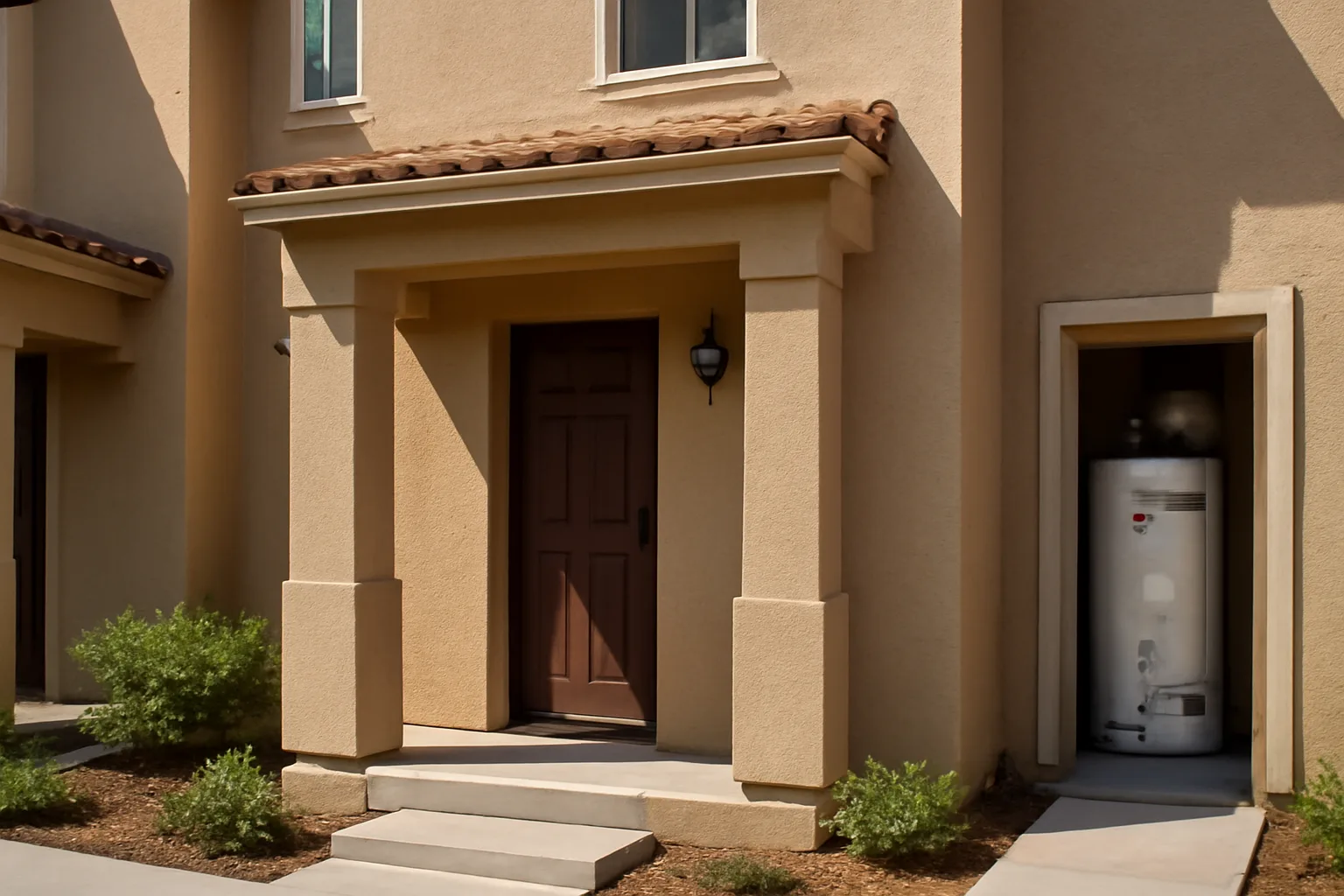
Most municipal rental inspection programs in California are built around basic habitability and life-safety items, not cosmetic condition. Inspectors commonly check smoke alarms and carbon monoxide detectors, working plumbing and hot water, safe electrical wiring, secure locks on doors and windows, adequate heating, and the absence of active leaks, mold, or pest infestation. Many programs also confirm there are two working exits from sleeping rooms and that water heaters are properly strapped for earthquake safety, a California-specific requirement under Health and Safety Code section 19211 [1]. Inspectors are generally not grading paint color, furniture, or landscaping. They're checking whether the unit meets the state's basic habitability standard, which is defined in California Civil Code section 1941.1. That statute lists the specific conditions that make a dwelling legally habitable, including effective waterproofing, gas facilities in good working order, and a bathroom with a toilet, wash basin, and bathtub or shower in good working order [2]. If your Concord property has a city-mandated inspection requirement, expect the inspector to walk every room, test outlets near water sources (GFCI protection), check smoke and CO alarm placement and function, and look at the exterior for trip hazards, broken stairs, or exposed wiring. Bring your own checklist based on Civil Code 1941.1 before the inspector arrives; fixing an obvious problem yourself is almost always cheaper than a re-inspection fee. A $79 one-time City Rental License & Inspection Prep Packet, built specifically to walk landlords through what inspectors typically check before a scheduled visit, can save you a callback fee that often costs more than the packet itself. See /rental-packet-builder if you want a structured pre-inspection checklist rather than assembling one from scratch.
Who is responsible for a rental property walk-through inspection in California?
In California, the landlord is legally responsible for ensuring the rental unit meets habitability standards, and that responsibility doesn't shift to the tenant even if the tenant caused some of the wear. Under Civil Code 1941, the landlord must maintain the premises in a condition fit for human occupation, and that duty exists whether or not the city has a formal inspection program [2]. When a city runs a mandatory rental inspection program, the walk-through is usually conducted by a city code enforcement officer or a designated third-party inspector, and the landlord (or an authorized property manager) is required to be present, or at least to schedule access and be reachable. Tenants generally cannot refuse a properly noticed inspection tied to a government safety program, though they retain privacy rights around notice and timing. For day-to-day maintenance requests outside of a formal city inspection, the tenant is responsible for reporting problems, and the landlord is responsible for fixing habitability-related issues within a reasonable time after notice, generally interpreted as somewhere in the range of a few days for urgent issues (no heat, no water) to about 30 days for less urgent repairs, though no single statute sets one universal number for every repair type. Reasonable timing depends on severity. If you self-manage without a property manager, you are the responsible party for both the scheduled city inspection and ongoing habitability maintenance. That responsibility does not transfer to a handyman, a management company you hire later, or the tenant, even by informal agreement.
How much notice does a landlord have to give before entering a rental unit?
California law requires landlords to give tenants "reasonable notice" before entering a rental unit for non-emergency purposes, and Civil Code section 1954 defines 24 hours as presumptively reasonable notice in most circumstances [3]. The notice must state the date, approximate time, and purpose of entry, and entry must happen during normal business hours unless the tenant agrees otherwise. The statute allows entry without that standard notice period only in specific situations: genuine emergencies, when the tenant has moved out, or when the tenant gives permission at the time of entry. A scheduled city rental inspection generally still requires the landlord to coordinate access with the tenant using the same reasonable notice standard, since the city ordinance doesn't override the tenant's statutory privacy right; it just adds another party (the inspector) who needs access alongside the landlord. If your Concord rental has a scheduled compliance inspection, send the tenant written notice of the date and time as soon as you know it, even if the city itself also notifies the tenant directly. Overlapping notice from both the landlord and the city avoids the awkward situation where a tenant refuses entry because they never got proper notice from you specifically. Some cities' rental inspection ordinances specify their own notice period for the inspection itself (sometimes longer than 24 hours, to allow scheduling flexibility), so check the specific ordinance language once you've confirmed Concord's rules apply to your property.
What can a landlord look at during an inspection, and what's off-limits?
During a routine or move-related walk-through, a landlord can inspect the general condition of the unit: walls, floors, appliances, plumbing, fixtures, smoke and CO alarms, and signs of damage beyond normal wear and tear. A landlord can also document the condition with photos or video, which is standard practice for move-in and move-out comparisons. A landlord generally cannot use an inspection as a pretext to search through personal belongings, open drawers or closets without cause, or harass a tenant with excessive or repeated inspections that go beyond legitimate purposes (repairs, showing the unit to prospective tenants or buyers, or complying with a city inspection program). California courts and tenant advocacy guidance treat pretextual or overly frequent entry as a violation of the tenant's right to quiet enjoyment. For a government-mandated rental inspection tied to a city licensing program, the scope is typically limited to the safety and habitability items the ordinance covers (smoke alarms, plumbing, electrical, structural issues, pest evidence). Inspectors aren't there to evaluate how you decorate or whether dishes are in the sink, and a well-run inspection should feel procedural, not adversarial. Document everything either way. If you're self-managing multiple units, keep a simple log of every entry: date, time, purpose, and whether written notice was given. That log becomes useful if a tenant dispute or fine appeal ever needs a paper trail.
What rights do tenants have if there's no written lease?
A tenant without a written lease still has full legal protections under California law; verbal or informal rental agreements create a legally recognized tenancy, typically treated as month-to-month unless there's clear evidence of a different term. The habitability protections under Civil Code 1941 and 1941.1 apply regardless of whether there's a signed lease [2], and the notice requirements for entry under Civil Code 1954 apply the same way [3]. Without a written lease, a tenant is generally entitled to the same notice-to-vacate protections as any month-to-month tenant: typically 30 days' notice if they've lived there under a year, or 60 days if a year or more, under Civil Code 1946.1, though local just-cause eviction ordinances (which some Bay Area cities have) can add further protections or requirements beyond the state minimum. Rent amount, due date, and any house rules discussed verbally at move-in are enforceable if you can show evidence of the agreement, though disputes are obviously harder to resolve without anything in writing. This is exactly why most experienced landlords use a written lease even for month-to-month tenancies, not because a verbal agreement is invalid, but because proving its terms later is a headache. For a broader look at what tenants can expect legally, see tenants rights and tenant and tenant disputes over unwritten agreements.
Why do landlords require renters insurance?
Landlords require renters insurance mainly to shift liability for the tenant's personal belongings and personal liability away from the landlord's own policy. A landlord's property insurance covers the building and the landlord's own fixtures and appliances; it does not cover a tenant's furniture, electronics, or clothing if there's a fire, burst pipe, or theft. Without renters insurance, a tenant who loses everything in a covered event may look to the landlord (or a lawsuit) to recover losses, even where the landlord isn't legally at fault. Renters insurance also typically includes liability coverage, which matters if a tenant's guest is injured in the unit or if the tenant accidentally causes damage (a kitchen fire, an overflowing bathtub that damages the unit below). That liability coverage protects the tenant financially and reduces the odds the landlord's own liability policy gets pulled into a claim. The Insurance Information Institute notes that renters insurance is generally inexpensive relative to the coverage it provides, though a landlord requiring it should specify a reasonable minimum liability coverage amount in the lease rather than leaving it vague [4]. Many landlords require proof of an active policy at move-in and annually at renewal, since lapses are common and hard to catch otherwise. Requiring renters insurance is legal in California and most states as a lease condition, as long as it's applied consistently to all tenants and doesn't function as a disguised way to discriminate against applicants.
What is landlording, and what does a landlord actually do?
Landlording is the practice of owning residential or commercial property and renting it to tenants in exchange for rent, along with the ongoing responsibilities that come with that arrangement: maintaining the property, complying with habitability and safety laws, handling tenant communication, collecting rent, and managing turnover between tenants. It's part business, part legal compliance, part hands-on maintenance, and the mix shifts depending on how many units you own and whether you self-manage or hire a property manager. A landlord, formally, is the party who owns or controls a rental property and grants a tenant the right to occupy it under a lease or rental agreement, in exchange for rent. That's the legal definition; functionally, a landlord in a small operation (1 to 10 units) is often doing everything from screening applicants to fixing a leaking faucet at 9pm, unless they've hired outside help. Day to day, landlording usually means: setting and collecting rent, responding to maintenance requests within a reasonable time, keeping the unit compliant with local and state habitability codes, handling lease renewals or terminations, and staying current on the specific city or county rules that apply to your rental (including any mandatory registration, licensing, or inspection program, which is where this article started). For small landlords, the biggest operational gap is usually not knowing which local rules apply, since state law is consistent but city ordinances vary block by block in some metro areas. See landlord and landlord landlords for more on the day-to-day role.
How do you become a landlord, and what are the basic steps?
Becoming a landlord starts with acquiring a property you intend to rent out, whether that's a home you already own and are converting to a rental, or a property purchased specifically as an investment. From there, the core steps are: confirm any local business license or rental registration requirement (this is the step many first-time landlords miss), get proper landlord insurance (different from a standard homeowner's policy), understand state and local habitability and eviction law, and set up a system for collecting rent, screening tenants, and handling maintenance requests. Before listing the unit, check whether your city requires a rental business license, a certificate of occupancy for rental use, or a rental registration/inspection program, since these vary enormously by city and are easy to miss if you've never rented property before. This is exactly the kind of check discussed earlier for Concord specifically: confirm with your city rental licensing office before you advertise the unit. Screening tenants legally (credit check, background check, income verification) while complying with fair housing law is the next major step; the U.S. Department of Housing and Urban Development enforces the federal Fair Housing Act, which prohibits discrimination based on race, color, national origin, religion, sex, familial status, or disability in any housing-related decision [5]. Once a tenant is in place, ongoing landlording is about maintenance response time, rent collection consistency, and staying current on any changes to local ordinances, which is where a lot of small landlords get caught off guard years into owning a property, not at the start.
What can't a landlord do, and how does this vary by state (using Ohio as an example)?
Landlord restrictions vary by state, but most states share a common core: a landlord cannot discriminate based on a federally protected class, cannot retaliate against a tenant for exercising a legal right (like requesting repairs or reporting a code violation), cannot enter without proper notice except in emergencies, and cannot shut off utilities or change locks to force a tenant out without going through the formal eviction process. In Ohio specifically, landlord-tenant law is governed largely by Ohio Revised Code Chapter 5321. Under ORC 5321.15, a landlord cannot recover possession of a rental unit through "self-help" measures, meaning a landlord cannot lock a tenant out, remove the tenant's belongings, or shut off utilities to force a tenant to leave; the landlord must use the court eviction process instead [6]. Ohio law also requires landlords to maintain the property in a fit and habitable condition and to comply with building, housing, and health codes under ORC 5321.04 [7]. Ohio also restricts what a landlord can withhold from a security deposit; under ORC 5321.16, a landlord must return the deposit (minus itemized deductions for damage beyond normal wear and tear or unpaid rent) within 30 days of the tenant vacating, and must provide an itemized list of any deductions [8]. Failing to comply can expose the landlord to damages under the statute. These restrictions are state-specific, so if your rental is in California rather than Ohio, look to the Civil Code sections cited earlier in this article (1941, 1941.1, 1954, 1946.1) instead, since Ohio's statute numbers don't apply outside Ohio.
What happens if I skip Concord's rental registration or licensing requirement?
If Concord (or any city with a mandatory rental program) determines your unit is out of compliance, the typical consequences include a written notice of violation, a compliance deadline, and escalating fines if you don't register or schedule the required inspection by that deadline. Many California cities structure these as administrative citations, which can run from roughly $100 to several hundred dollars per violation per day in cities that have adopted aggressive escalation schedules, though the specific amount is set locally and varies significantly city to city. Some cities also tie rental registration compliance to your ability to evict a tenant for nonpayment or to use certain legal remedies, meaning an unregistered rental can create complications well beyond the fine itself. This is one more reason to confirm your specific obligations early rather than after you've already received a notice. If you've already received a notice or citation referencing a Concord ordinance, don't ignore it hoping it goes away; call the department listed on the notice and ask about a compliance timeline or an appeal process if you believe the citation was issued in error. Cities generally have a process to correct violations within a set window before penalties escalate further. If you want a structured way to prepare for a scheduled inspection or registration deadline, without guessing at what's required, the $79 City Rental License & Inspection Prep Packet at /rental-packet-builder walks through common city requirements step by step. It's not a substitute for calling your specific city office, but it's built to make that call, and the inspection itself, less stressful.
Frequently asked questions
Does the city of Concord require landlords to register rental units?
It depends on current city ordinance, which changes over time. Confirm directly with Concord's Code Enforcement or Business License office before renting out a property, since requirements can differ by unit count, property type, and building age, and a program that didn't exist a few years ago may exist now.
What is landlording?
Landlording is the practice of owning rental property and managing the responsibilities that come with renting it out: collecting rent, maintaining habitability, following state and local law, and handling tenant relationships. It combines legal compliance, basic property maintenance, and ongoing tenant communication, and the workload scales with how many units you own.
What is a landlord, legally speaking?
A landlord is the person or entity that owns or controls a rental property and grants a tenant the right to occupy it under a lease or rental agreement in exchange for rent. Legally, the landlord holds specific duties (habitability, proper notice before entry, non-discrimination) defined by state statute and, in some cities, local ordinance.
How do I become a landlord for the first time?
Acquire or convert a property to rental use, confirm any city rental registration or business license requirement, get landlord insurance, learn your state's habitability and eviction laws, and set up a legal, fair tenant screening process. Most first-time landlords miss the local licensing step, which varies significantly by city.
Who is responsible for a rental property walk-through inspection in California?
The landlord is legally responsible for ensuring the unit meets habitability standards under California Civil Code 1941 and 1941.1, whether or not a city inspection program exists. If a city runs a mandatory inspection program, a code enforcement officer or designated inspector conducts the walk-through, and the landlord must schedule access.
What rights does a tenant have without a written lease?
A tenant without a written lease still has full legal protections, including habitability rights under Civil Code 1941/1941.1 and standard notice-to-vacate protections (typically 30 or 60 days depending on tenancy length) under Civil Code 1946.1. The tenancy is usually treated as month-to-month absent other evidence.
Why do landlords require renters insurance?
Landlords require renters insurance to shift liability for a tenant's personal belongings away from the landlord's policy and to cover tenant liability for accidents (like a kitchen fire) that could otherwise expose the landlord. It's inexpensive relative to the coverage and is a standard, legal lease condition in most states.
How much notice does a landlord have to give before entering a rental unit in California?
California Civil Code section 1954 treats 24 hours' written notice as reasonable for non-emergency entry, and the notice must state the date, approximate time, and purpose. Emergencies, tenant consent at the time, or a tenant having already moved out are exceptions to the standard notice requirement.
What can a landlord look at during a rental inspection?
A landlord or inspector can generally check general condition, appliances, plumbing, electrical, smoke and CO alarms, and signs of damage beyond normal wear. A landlord cannot search personal belongings or use an inspection as a pretext for harassment; inspections tied to city licensing programs are usually limited to safety and habitability items.
What can't a landlord do in Ohio?
Under Ohio Revised Code 5321.15, a landlord cannot use self-help eviction methods like changing locks, removing belongings, or shutting off utilities to force a tenant out; a court eviction process is required. Ohio landlords must also maintain habitable conditions under ORC 5321.04 and follow strict security deposit return rules under ORC 5321.16.
How much are rental registration fines if I miss a deadline?
Fine amounts and escalation schedules are set by each city and vary widely, sometimes from roughly $100 to several hundred dollars per violation, increasing if unresolved. Confirm the specific fee schedule with your city rental licensing office, since figures posted for one California city rarely match another's exactly.
Is Concord's rental inspection program the same as Contra Costa County's rules?
No. Contra Costa County does not run a countywide mandatory rental licensing program as of this writing; any registration or inspection requirement affecting a Concord property comes from the city's own municipal code, not the county. Confirm which jurisdiction's rules actually apply to your specific address.
Can a tenant refuse a city-mandated rental inspection?
Generally, tenants cannot refuse a properly noticed inspection connected to a government rental safety program, though they retain rights around notice and reasonable timing under state law. Landlords should still provide their own written notice to the tenant even when the city also sends a separate notice, to avoid access disputes.
Sources
- California Health and Safety Code: California requires water heaters to be braced, anchored, or strapped to resist falling during an earthquake
- California Civil Code Section 1941.1: Defines the specific conditions required for a dwelling to be considered legally habitable in California
- California Civil Code Section 1954: 24 hours is presumed reasonable notice for landlord entry into a rental unit for non-emergency purposes
- HUD, Fair Housing Act Overview: Federal Fair Housing Act prohibits housing discrimination based on race, color, national origin, religion, sex, familial status, or disability
- Ohio Revised Code Section 5321.15: Ohio landlords cannot use self-help measures like lockouts or utility shutoffs to remove a tenant; must use court eviction process
- Ohio Revised Code Section 5321.04: Ohio landlords must maintain rental premises in a fit and habitable condition and comply with applicable housing codes
- Ohio Revised Code Section 5321.16: Ohio landlords must return security deposits within 30 days of the tenant vacating, with an itemized list of deductions
- California Civil Code Section 1946.1: Sets 30-day or 60-day notice-to-vacate requirements for month-to-month tenancies depending on tenancy length
- California Civil Code Section 1941: Establishes the landlord's duty to maintain rental premises fit for human occupation