Last updated 2026-07-26
TL;DR
Cleveland's Certificate of Rental Registration is required for every residential rental unit in the city under the Cleveland Codified Ordinances Chapter 365. It's separate from a business license, must be renewed periodically, and usually involves a point-of-sale or point-of-rental inspection. Confirm current fees and renewal timing with the Cleveland Department of Building and Housing before you rent or re-rent a unit.
What is Cleveland's Certificate of Rental Registration?
The Certificate of Rental Registration is a city requirement that any owner of residential rental property in Cleveland register that property with the Department of Building and Housing before renting it out. It's not optional and it's not the same thing as a landlord business license in some other Ohio cities, though the concepts overlap. The point of the program is simple: the city wants a current, accurate record of who owns every rental unit, where that owner can be reached, and whether the unit has passed a basic habitability check. Cleveland's rental registration authority sits in the Codified Ordinances of the City of Cleveland, Chapter 365, which covers residential rental property. [1] The ordinance requires registration for units rented for residential occupancy, and it ties registration to inspection requirements that the Department of Building and Housing enforces. If you own a duplex, a single-family rental, or a small multi-unit building anywhere in Cleveland, this program almost certainly applies to you. The city doesn't carve out an exception just because you self-manage or only have one unit. Confirm the exact scope and any owner-occupied exemptions with the Department of Building and Housing, because ordinance language and administrative practice can shift and you don't want to guess wrong on this one. One thing that trips up new landlords: registration is tied to the unit and the current ownership, not to you personally as a serial landlord. If you buy a second rental property in Cleveland, that property needs its own certificate. Owning one already doesn't cover the next one.
Who has to get a certificate of rental registration in Cleveland?
Any person or entity that owns residential rental property in the City of Cleveland and rents it to a tenant generally needs to register that unit and obtain a Certificate of Rental Registration. This includes single-family homes, duplexes, and units inside larger apartment buildings. [1] Out-of-state owners and LLCs are not exempt. If you live in another state or hold title through an LLC, you still need to register, and the city typically wants a local contact or statutory agent on file, since Ohio law requires a registered agent for LLCs anyway under Ohio Revised Code Chapter 1706. [2] Cleveland's own registration paperwork usually asks for a local managing agent if the owner doesn't live in Cuyahoga County, though you should confirm the exact local-agent threshold with the Department of Building and Housing since these thresholds do get adjusted. Property managers who register on behalf of an owner need to make sure the certificate reflects accurate ownership information. If the certificate lists an old owner after a sale, that's a compliance gap the new owner inherits, sometimes discovered only when a tenant complaint triggers an inspection.
How much does the Cleveland rental registration certificate cost?
Cleveland charges a fee for rental registration and renewal, and that fee has changed over time as the city has adjusted its housing programs. Because fee schedules get revised through legislation and administrative rule, the safest move is to confirm the current fee with the Department of Building and Housing or its published fee schedule before you budget for registration. [1] Don't assume the fee you paid three years ago is still accurate. Cities that run inspection-based rental programs tend to revisit fees when they add staff or expand inspection requirements, and Cleveland has been actively working on strengthening its rental inspection program in recent years as part of broader lead-safe and housing-quality efforts. Budget for more than just the registration fee itself. If your unit fails an initial inspection, you'll likely pay for a reinspection, and any repairs needed to pass will cost money on top of the registration fee. Landlords who treat the certificate fee as the whole cost of compliance are usually surprised later.
Does Cleveland require a rental inspection to get the certificate?
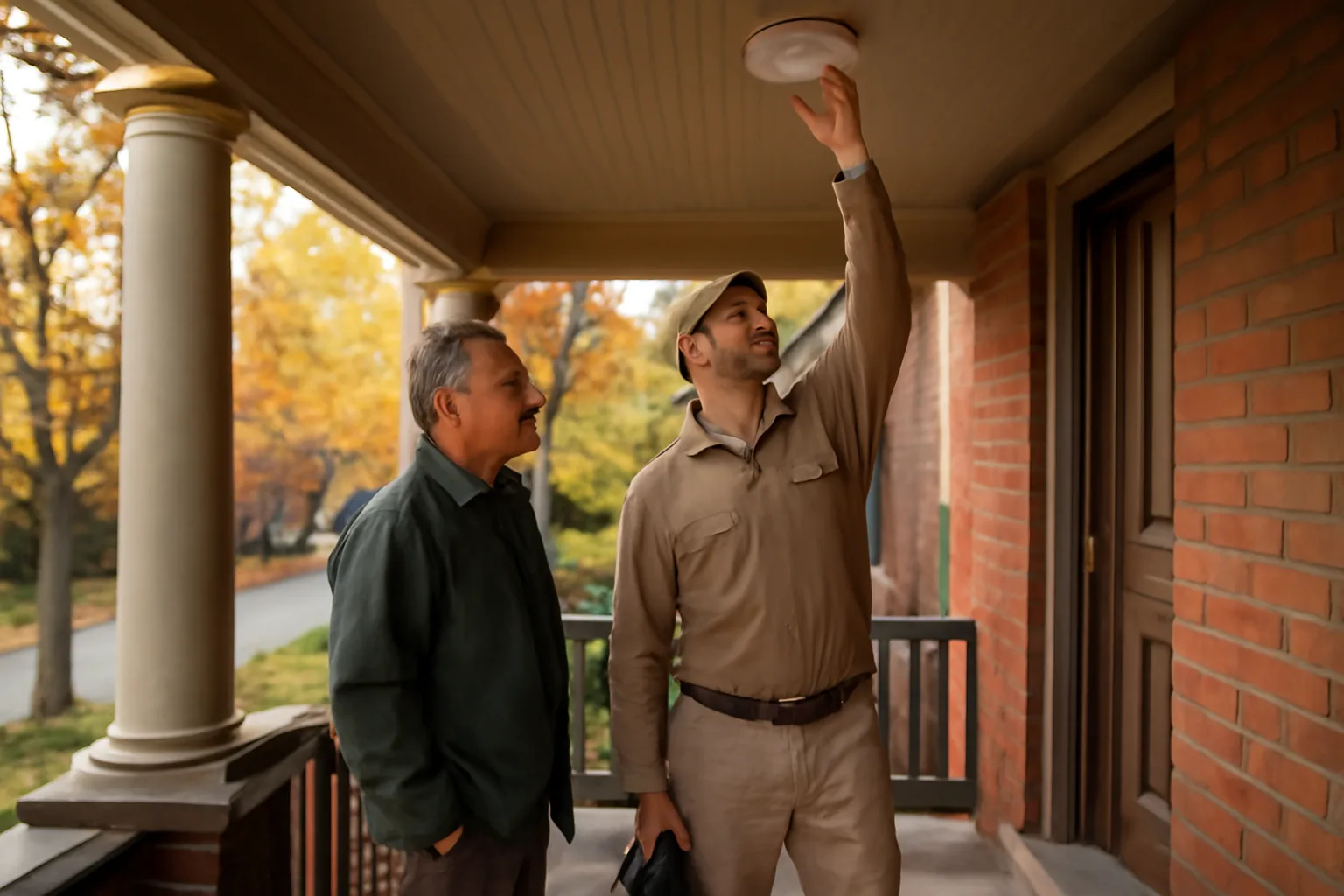
Yes. Cleveland's rental program is inspection-based, meaning the city (or a city-approved inspector, depending on current program rules) checks the unit against Cleveland's housing and property maintenance code before or shortly after registration. [1] This is standard practice across Ohio cities that run mandatory rental licensing programs; it's not unique to Cleveland. What does an inspector actually look at? Generally, inspections in these programs check smoke and carbon monoxide detectors, electrical hazards, plumbing function, structural safety items like handrails and stair conditions, window and door operability, and signs of pest infestation or water damage. Many Ohio municipalities with lead-safe housing rules, including Cleveland, have added lead-safe certification requirements for pre-1978 rental units under the city's lead-safe ordinance program. If your building was built before 1978, expect the lead-safe piece to be a separate but connected requirement, not something folded quietly into the general habitability inspection. This mirrors questions landlords ask everywhere, more than Ohio: what can a landlord look at during an inspection generally comes down to the physical condition and safety systems of the unit itself, not the tenant's personal belongings beyond what's needed to access those systems. A rental inspector isn't there to judge how you keep house; they're checking code compliance items like the ones listed above. Tenants typically get advance notice of a scheduled city inspection, and you as the owner need to coordinate access, since refusal to allow entry can itself become a violation or delay your certificate. If you own in more than one Ohio city, don't assume inspection standards are identical. Cincinnati, Columbus, Toledo, and Cleveland all run separate rental inspection programs with their own schedules and fee levels, and treating them as interchangeable is a common and costly mistake.
How often do you have to renew the Cleveland rental certificate?
Cleveland's rental registration is not a one-time filing. It requires periodic renewal, and the renewal cycle has historically been tied to a multi-year term under Chapter 365, with reinspection typically required at renewal. [1] Renewal timing and any changes to the cycle length should be confirmed directly with the Department of Building and Housing, since these programs get amended. Miss a renewal deadline and you're more than risking a late fee. An unregistered or lapsed rental unit is a code violation in its own right, and Cleveland can pursue that separately from any physical condition issue in the unit. That means a landlord who let a certificate lapse could face a violation notice even if the unit itself is in perfect shape. Set yourself a calendar reminder well before the renewal window opens, not the week it's due. Reinspections sometimes reveal a repair need you didn't expect (a water heater that's aged out, a smoke detector that's stopped chirping and just died silently), and you want lead time to fix it rather than scrambling against a deadline.
What happens if you rent a unit without registering it in Cleveland?
Operating a rental unit in Cleveland without a valid Certificate of Rental Registration is a violation of Chapter 365 of the Codified Ordinances, and the city can issue citations and fines against the owner. [1] Beyond the direct fine, an unregistered rental can complicate your position in an eviction proceeding or a dispute over rent, since Ohio courts and municipal housing courts have at times looked unfavorably on landlords operating outside local licensing rules when disputes reach litigation. Cleveland Housing Court, a division of Cleveland Municipal Court, handles a meaningful share of the city's building and housing code enforcement matters, including rental registration violations. [3] That's a real court with real docket numbers, more than an administrative slap on the wrist. If you get a violation notice, treat it with the same seriousness you'd treat any other municipal court filing. The fastest fix if you're already renting unregistered is not to wait for a notice. Get the registration application filed and the inspection scheduled now. Cities are generally more lenient with an owner who's actively correcting course than one who only responds after a citation lands.
How does Cleveland's rental registration relate to Ohio landlord-tenant law?
Rental registration is a local, city-level requirement. It sits alongside, not instead of, Ohio's statewide landlord-tenant law, which is Ohio Revised Code Chapter 5321. [4] Registering a unit with Cleveland doesn't change your obligations under state law, and following state law doesn't excuse you from the city's registration and inspection rules. Ohio Revised Code 5321.04 lays out a landlord's basic obligations, including keeping the premises in a fit and habitable condition, maintaining all electrical, plumbing, and heating fixtures in good working order, and keeping common areas safe. [4] These are the same kinds of conditions a Cleveland rental inspector checks for, which is part of why the two systems (state statute, city ordinance) tend to reinforce each other in practice. One question landlords often ask alongside registration: what can a landlord not do in Ohio? Ohio Revised Code 5321.15 restricts a landlord's ability to use self-help remedies like shutting off utilities, changing locks, or removing a tenant's belongings to force them out; landlords must use the eviction process through court instead. [5] A landlord who tries to skip the courts and lock a tenant out directly is exposing themselves to liability regardless of whether their rental certificate is current. If you're new to this and wondering how to become a landlord in a city like Cleveland the right way, the sequence generally runs: confirm zoning allows rental use, register the property, pass inspection, get your certificate, then sign a lease that complies with Ohio Revised Code 5321. Skipping the middle steps to get to "signing a lease" faster is exactly how landlords end up with violation notices six months in.
What is landlording and what does being a landlord actually involve?
Landlording is the ongoing work of owning and managing a residential rental property: screening tenants, collecting rent, handling repairs, staying current on code compliance like Cleveland's rental registration, and managing the legal relationship with tenants under state law. It's part paperwork, part maintenance coordination, part conflict resolution. A landlord, in the legal sense, is the owner (or an owner's authorized agent) who leases residential property to a tenant in exchange for rent, taking on statutory duties like the habitability obligations in Ohio Revised Code 5321.04. [4] That legal definition matters because it's what triggers your registration duty in Cleveland and your maintenance duties under state law, regardless of whether you think of yourself as a professional landlord or an accidental one who inherited a duplex. Many first-time landlords underestimate the recurring compliance calendar: rental registration renewal, lead-safe certification if applicable, annual or periodic inspections, and staying on top of any local ordinance updates. This is exactly the kind of paperwork trail our $79 rental packet builder is built to organize, pulling together the registration, inspection prep, and renewal tracking into one packet instead of scattered emails and PDFs.
What rights do tenants have without a signed lease?
A tenant without a signed lease in Ohio generally still has tenant rights under Ohio Revised Code Chapter 5321, because those statutory protections attach to the landlord-tenant relationship itself, not to a written document. [4] If someone is paying rent and occupying a unit with the owner's knowledge, Ohio law typically treats that as a periodic tenancy (commonly month-to-month if rent is paid monthly), and the landlord still owes statutory habitability duties. Without a written lease, a landlord who wants to end the tenancy generally has to give proper notice and go through Ohio's eviction (forcible entry and detainer) process rather than just changing the locks. Ohio Revised Code 5321.15 explicitly bars landlords from using self-help evictions like lockouts or utility shutoffs, lease or no lease. [5] Tenants without a lease still owe rent and still have to comply with reasonable, lawful rules, but the absence of a written lease tends to work against a landlord in a dispute, since there's no signed document spelling out things like notice periods, pet policies, or fees. If you're a landlord in this situation, get a written lease in place going forward rather than relying on a verbal or implied arrangement. For a broader look at what tenants can expect, see tenants rights and renters rights.
How much notice does a landlord have to give before entering or ending a tenancy?
Ohio Revised Code 5321.04(A)(8) requires a landlord to give tenants reasonable notice before entering the rental unit, and Ohio courts and the statute generally treat 24 hours as the benchmark for reasonable notice for routine entry (like a repair visit or a scheduled inspection), except in emergencies. [4] Cleveland's own scheduled rental inspections typically come with advance notice as well, so tenants know an inspector is coming. For ending a periodic tenancy, Ohio doesn't set one single blanket number for every situation; notice periods depend on the type of tenancy and any lease terms, and month-to-month arrangements commonly require 30 days' notice, though you should confirm the specific application to your situation since it can vary by tenancy type and local practice. For entry specifically, though, the 24-hour standard is the number landlords most often need day to day, and it's worth writing directly into your lease so there's no ambiguity with tenants. Emergencies are the carve-out. If there's a fire, a burst pipe, or a gas leak, a landlord (or the fire department, or a utility) doesn't need to wait 24 hours to get in and fix it.
Why do landlords require renters insurance?
Landlords require renters insurance mainly to shift liability and property-loss risk away from themselves and onto the tenant's own policy. A landlord's own property insurance typically covers the building structure, but it generally does not cover a tenant's personal belongings or a tenant's liability if, say, their negligence causes a fire or a guest gets hurt in their unit. Renters insurance is inexpensive relative to the protection it offers; national data compiled by the Insurance Information Institute has repeatedly shown median renters insurance premiums in the range of roughly $15 to $20 a month depending on coverage level and location, though your local market may run higher or lower. Requiring it as a lease condition is legal in Ohio and common practice, but it has to be applied consistently across tenants to avoid fair housing issues. For a landlord, requiring renters insurance is a low-cost way to reduce the odds of an expensive, uninsured dispute over damaged belongings or an injury claim. It's one of the cheapest risk-management moves available, and it costs the landlord nothing directly since the tenant pays the premium.
How to become a landlord in Cleveland, step by step
Becoming a landlord in Cleveland (or reasonably anywhere in Ohio) follows a fairly predictable sequence, and skipping steps is how people end up with fines or a bad tenant relationship. 1. Confirm the property's zoning allows rental use and check for any homeowner association or deed restrictions. 2. Register the property with the City of Cleveland Department of Building and Housing under Chapter 365 and obtain your Certificate of Rental Registration. [1] 3. Schedule and pass the required rental inspection, including lead-safe certification if the unit predates 1978. 4. Set your rent and screening criteria, applying them consistently to comply with fair housing law. 5. Draft a lease that complies with Ohio Revised Code Chapter 5321, covering notice, habitability, and security deposit handling. [4] 6. Require renters insurance as a lease condition if you choose to. 7. Track your renewal date for the rental certificate so you're not caught by a lapsed registration later. That's the honest, unglamorous version. Nobody's first rental property goes perfectly, and the landlords who do best are the ones who treat the registration and inspection steps as non-negotiable rather than paperwork to get to eventually. Related reading: landlord and landlord landlords cover the day-to-day responsibilities once you're past registration.
Who is responsible for rental walk-through inspections, and does that differ by state?
In Cleveland, the Department of Building and Housing (or its designated inspectors) is responsible for the city's rental registration inspection, checking the unit against Cleveland's housing code before issuing or renewing a Certificate of Rental Registration. [1] That's a government-run compliance inspection, separate from any private move-in or move-out walk-through a landlord and tenant do together to document unit condition. California works differently and this is a common point of confusion for people researching rental inspections generally. California doesn't have one statewide mandatory rental inspection program the way Ohio cities like Cleveland, Columbus, and Cincinnati run city-level ones; instead, individual California cities (Los Angeles's Systematic Code Enforcement Program is a well-known example) run their own local inspection or proactive rental inspection programs. Responsibility for a walk-through inspection in California therefore depends entirely on which city's program applies and whether it's a government inspection or a private move-in/move-out walk-through between landlord and tenant. If you own property in California, check with that specific city's housing or code enforcement department rather than assuming a Cleveland-style rule applies uniformly. For the private move-in/move-out walk-through (not a city inspection), responsibility is a matter of lease terms and state security deposit law, and it's typically the landlord who documents the unit's condition, often with the tenant present, to protect both parties on the eventual deposit return.
Frequently asked questions
What is a Certificate of Rental Registration in Cleveland?
It's the document Cleveland's Department of Building and Housing issues to confirm a residential rental unit has been registered under Chapter 365 of the city's Codified Ordinances and, generally, that it has passed a required inspection. It has to be renewed periodically. Renting without one is a code violation that can result in citations.
Is the Cleveland rental registration the same as a business license?
No. Rental registration is specific to residential rental property under Chapter 365 and ties to inspection requirements. A separate business license or tax registration may also apply depending on how you operate (as an individual owner versus an LLC or management company); confirm both requirements with the relevant city offices.
What is landlording?
Landlording is the ongoing work of owning and managing rental property: screening tenants, maintaining the unit, complying with state landlord-tenant law like Ohio Revised Code Chapter 5321, and keeping local requirements like Cleveland's rental registration current. It's a legal role with real statutory duties, more than collecting rent.
What is a landlord, legally speaking?
A landlord is the owner (or an owner's authorized agent) who rents residential property to a tenant in exchange for rent. Ohio Revised Code 5321.04 assigns landlords specific duties, including keeping the unit fit and habitable and maintaining electrical, plumbing, and heating systems in good working order.
What rights do tenants have without a lease in Ohio?
Tenants without a written lease still generally have statutory rights under Ohio Revised Code Chapter 5321, including habitability protections and protection from illegal self-help evictions under Ohio Revised Code 5321.15. Occupancy with the owner's knowledge and payment of rent typically creates a periodic tenancy even without paperwork.
How to be a landlord the right way in a city like Cleveland?
Confirm zoning allows rental use, register the property with the city and pass its rental inspection, use a lease that complies with Ohio Revised Code Chapter 5321, apply screening criteria consistently, and track your registration renewal date. Treat registration and inspection as required steps, not optional paperwork.
Why do landlords require renters insurance?
Landlords require it because their own property insurance usually doesn't cover a tenant's belongings or a tenant's liability for accidents. Renters insurance shifts that risk to the tenant's policy at low cost, commonly in the range of $15 to $20 a month according to Insurance Information Institute data, though costs vary by market.
How much notice does a landlord have to give before entering a unit in Ohio?
Ohio Revised Code 5321.04(A)(8) requires reasonable notice before entry, and 24 hours is the commonly cited standard for routine, non-emergency entry like repairs or inspections. Emergencies (fire, flooding, gas leaks) don't require advance notice.
What can a landlord look at during a rental inspection?
A rental compliance inspection generally checks safety and code items: smoke and carbon monoxide detectors, electrical wiring and outlets, plumbing function, structural safety features like railings, window and door operability, and pest or moisture damage. It is not a review of a tenant's personal belongings beyond what's needed to access those systems.
What can a landlord not do in Ohio?
Ohio Revised Code 5321.15 bars landlords from self-help evictions: no changing locks, shutting off utilities, or removing a tenant's belongings to force them out. Landlords must use the court eviction process instead. Landlords also can't discriminate under fair housing law or ignore statutory habitability duties under Revised Code 5321.04.
Who is responsible for the rental walk-through inspection in California?
It depends on the type of inspection. City-run proactive rental inspection programs (like Los Angeles's Systematic Code Enforcement Program) are run by that city's housing or code enforcement department. Private move-in/move-out condition walk-throughs are typically the landlord's responsibility under lease terms and state deposit law.
Do I need to renew Cleveland's rental registration certificate every year?
Cleveland's rental registration renews on a set cycle under Chapter 365, historically a multi-year term rather than annual, but exact renewal timing has been subject to change. Confirm the current renewal cycle and any reinspection requirement directly with the Department of Building and Housing before assuming your last renewal date still applies.
What happens if I rent out a unit in Cleveland without registering it?
You're in violation of Chapter 365 and can face citations, fines, and potential Cleveland Housing Court proceedings. An unregistered rental can also weaken your position in an eviction case. The fix is to register and schedule inspection immediately rather than waiting for enforcement to catch up to you.
Sources
- City of Cleveland Codified Ordinances, Chapter 365, Residential Rental Property: Cleveland requires registration and inspection of residential rental property under Chapter 365
- Ohio Revised Code Chapter 1706, Ohio Revised Limited Liability Company Act: Ohio LLCs must maintain a registered agent
- Ohio Revised Code 5321.04, Landlord obligations: Ohio landlords must keep premises fit and habitable, maintain systems in good repair, and give reasonable notice before entry
- Ohio Revised Code 5321.15, Prohibition against certain acts by landlord: Ohio landlords are barred from self-help evictions such as lockouts and utility shutoffs
- Insurance Information Institute, Facts + Statistics: Renters insurance: Median renters insurance premiums are commonly in the range of roughly $15 to $20 a month