Last updated 2026-07-26
TL;DR
A car rental vehicle inspection form documents a car's condition at pickup and return, separate from anything a residential landlord does. If you landed here researching rental property inspections instead, landlords generally must give 24 to 48 hours notice, document only visible conditions (not personal belongings), and follow state-specific entry rules that vary widely.
what is a car rental vehicle inspection form and why does it matter
A car rental vehicle inspection form is a checklist the rental car company (or the renter, on their own) fills out at pickup and drop-off to record the vehicle's condition: existing scratches, dents, tire wear, fluid levels, mileage, and fuel level. Its purpose is to create a paper trail so nobody gets blamed for damage they didn't cause. Most major rental companies use some version of this, and consumer protection guidance from state attorneys general offices and the Federal Trade Commission recommends renters photograph the vehicle and note any existing damage before driving off, since verbal assurances from a counter agent don't hold up in a damage dispute later [1]. If you searched this term but are actually trying to understand rental property walk-through inspections (the kind a landlord does before or after a tenant moves in), you're in the right place, just a different topic. The rest of this article covers that side: what landlords can inspect, how much notice is required, and what tenants are entitled to. Both types of inspection forms exist for the same basic reason: protecting whoever owns the asset from being unfairly blamed for pre-existing conditions.
what is landlording, and what is a landlord
A landlord is a person or entity that owns residential or commercial property and rents it to a tenant in exchange for regular payment, usually under a lease or rental agreement. Landlording is the day-to-day and long-term work of managing that relationship: collecting rent, handling repairs, following local safety codes, managing move-in and move-out inspections, and staying compliant with state and municipal landlord-tenant law. Landlording isn't just collecting a check. In cities with mandatory rental registration or licensing (and there are hundreds across the U.S.), it also means registering the unit with the city, passing periodic safety inspections, and keeping records that prove you did both. Miss a registration deadline or an inspection and many cities will fine you, sometimes on a per-day or per-unit basis, and some will refuse to accept rent payments in court until the property is compliant. If you manage even one unit, you're already a landlord in the legal sense, whether or not you think of yourself that way.
how to become a landlord
Becoming a landlord has a few concrete steps, and skipping any of them tends to cause problems later. 1. Confirm you can legally rent the property. Check your mortgage terms (some prohibit renting without lender approval), your local zoning code, and whether your city or county requires a rental license or registration before you can legally lease a unit. Many cities, including large ones like Los Angeles and smaller ones with mandatory rental registries, require this before you collect a single rent payment. 2. Get the property inspection-ready. This usually means working smoke and carbon monoxide detectors, safe electrical and plumbing systems, secure locks, and no obvious code violations (peeling lead paint, blocked exits, missing handrails). Federal law under the Lead-Based Paint Disclosure rule requires landlords of housing built before 1978 to disclose known lead hazards to tenants before they sign a lease [2]. 3. Set up landlord insurance, more than a standard homeowners policy. Landlord (dwelling) policies cover loss of rental income and liability exposure that standard homeowners insurance excludes. 4. Write a compliant lease. State law governs what you can and can't include (security deposit limits, notice periods, habitability language), so a generic template downloaded online may not hold up. 5. Screen tenants consistently and legally. The Fair Housing Act prohibits discrimination based on race, color, national origin, religion, sex, familial status, or disability in any rental decision [3]. 6. Register or license the property with your city if required, and schedule any mandatory initial inspection before your first tenant moves in. If your city requires a rental license, get that piece sorted early. Cities can and do fine landlords who rent out units before registering them, sometimes before the landlord even realizes registration was required.
how to be a landlord day to day
Being a landlord long-term is mostly about consistency: responding to repair requests quickly, keeping records of every notice and inspection, and following the same process for every tenant so you don't create a discrimination claim by accident. A few habits that keep landlords out of trouble: put every notice in writing, even ones your state allows verbally. Keep receipts and photos from every inspection and repair. Track your renewal dates for city licenses and inspections; a $79 online prep packet or a spreadsheet with reminders costs a lot less than a missed-inspection fine, which in some cities runs $100 to $500 or more per violation. Read your local ordinance yourself at least once a year, since many cities update rental registration fees and inspection cycles without much public notice. Good landlording also means knowing what you're not allowed to do. That varies a lot by state, which is why a landlord in Ohio and a landlord in California follow genuinely different rules for the same situation, covered in the sections below.
who is responsible for rental property walk-through inspections in California
In California, the landlord is generally responsible for conducting move-in and move-out inspections, and state law gives tenants a specific right tied to the move-out one. Under California Civil Code Section 1950.5, a landlord who intends to deduct from a security deposit must, upon the tenant's request, conduct an initial inspection before the tenant moves out and give the tenant an itemized list of what needs fixing or cleaning, along with the chance to fix it themselves before the final deduction is made [4]. The statute is specific: the landlord must give at least 48 hours' written notice of the date and time of the initial inspection, unless the tenant waives that notice [4]. The tenant has the right to be present. After the initial walk-through, the landlord gives an itemized statement of proposed deductions; the tenant then has an opportunity to remedy those issues before move-out to avoid the deduction. A second, final inspection happens after the tenant vacates, and the landlord has 21 days from move-out to return the deposit (or the remaining balance) along with an itemized statement of deductions [4]. So to answer directly: the landlord initiates and conducts the walk-through, but only at the tenant's request for the pre-move-out version, and the tenant has a right to be present and to fix flagged issues themselves. This is a stronger tenant protection than most states offer; many states don't require a pre-move-out walk-through at all.
what can a landlord look at during an inspection
| Smoke/CO detectors | Test function, check battery or hardwire status, note install date if known | |
|---|---|---|
| Plumbing | Leaks under sinks, water pressure, toilet function, visible mold | |
| Electrical | Working outlets, GFCI function in kitchens/baths, exposed wiring | |
| Windows and doors | Locks function, screens intact, no cracked glass | |
| Walls, floors, ceilings | Damage beyond normal wear, water stains, signs of pests | |
| Appliances | Function test for stove, fridge, dishwasher if provided | |
| Exterior (if applicable) | Railings secure, exterior lighting works, no trip hazards | For rental-license inspections specifically, cities typically send their own inspector using a city-specific checklist tied to the local housing or property maintenance code, which is a separate process from your own landlord walk-through. Confirm with your city rental licensing office exactly which items their inspection covers, since checklist scope varies by city and by whether the inspection is for initial licensing, renewal, or a complaint response. |
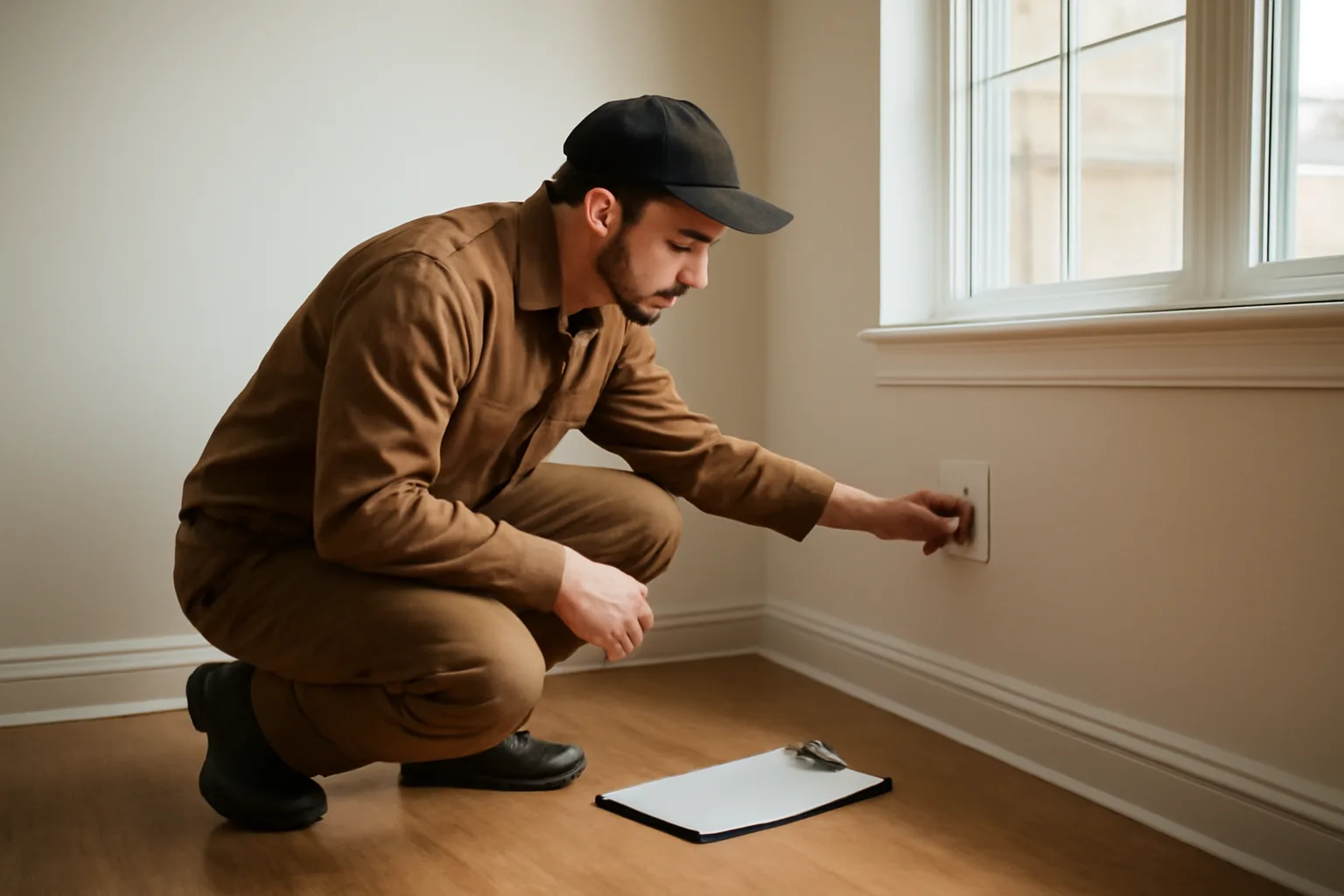
During a routine or move-in/move-out inspection, a landlord can generally document and photograph: the condition of walls, floors, and ceilings; appliances and fixtures; plumbing and electrical function; smoke and carbon monoxide detector operation; signs of pest infestation; and general cleanliness and wear. What a landlord generally cannot do is search through a tenant's personal belongings, open closed drawers or containers unrelated to the inspection's purpose, or use the inspection as a pretext to harass a tenant or retaliate for a complaint. Fair housing guidance and most state landlord-tenant statutes limit inspections to what's reasonably necessary to check the condition of the property, not a general search [3]. If a maintenance issue requires opening a specific space (a leak behind a cabinet, for example), that's within scope; going through a tenant's dresser is not. A workable inspection checklist covers: | Area | What to check |
what a landlord cannot do in Ohio
Ohio's landlord-tenant law is set out in Ohio Revised Code Chapter 5321. Under ORC 5321.04, a landlord cannot enter the rental unit without giving reasonable notice and without entering at a reasonable time, except in an emergency [5]. Ohio law doesn't specify an exact number of hours for 'reasonable notice,' which is a common source of dispute; many Ohio landlords and courts treat 24 hours as a reasonable baseline, but the statute itself leaves it more open than states like California that specify 48 hours for certain inspections. Ohio landlords also cannot: shut off a tenant's utilities to force them out, change the locks without a court order (a practice sometimes called a 'lockout,' which is illegal self-help eviction under Ohio law), remove a tenant's belongings without a court process, or retaliate against a tenant for exercising a legal right, such as filing a code complaint or requesting repairs. ORC 5321.02 specifically prohibits retaliatory conduct, including raising rent, decreasing services, or threatening eviction because a tenant complained to a government agency about a building, housing, or health code violation [6]. Ohio landlords are also required under ORC 5321.04 to keep the premises in a fit and habitable condition, comply with building and housing codes, and keep common areas safe [5]. A landlord who ignores these obligations can face a tenant's claim for damages or, in some cases, a rent escrow situation where the tenant pays rent to the court instead of the landlord until repairs are made.
what rights do tenants have without a lease
Tenants without a written lease still have legal rights, they're just governed by state law defaults instead of a signed document. A tenant paying rent on a month-to-month basis without a written lease is generally still protected by the same habitability standards, protection from illegal lockouts, and the same notice requirements for eviction or rent increases that apply to tenants with a written lease, though the specific notice period often depends on how rent is paid (weekly, monthly) and state statute. Without a lease, the relationship usually defaults to a month-to-month tenancy under state common law and statute. That means the landlord generally must give written notice to end the tenancy or raise rent, typically 30 days in many states for a month-to-month arrangement, though some states and cities (especially those with rent stabilization) require longer notice for rent increases above a certain percentage. A tenant without a lease still can't be evicted without proper legal process; 'no lease' does not mean 'no rights.' It just means the terms default to whatever your state's landlord-tenant statute says instead of what a private contract says.
how much notice does a landlord have to give
Notice requirements vary by state and by the type of notice (entry for inspection or repair, rent increase, lease termination). There is no single national number, so 'confirm with your state's landlord-tenant statute' is the honest answer, but here's the general range. For entry to inspect or repair: many states require 24 hours' notice as a common default (for example, several states specify this explicitly in statute), while California requires "reasonable notice," presumed to be 24 hours, for general entry, but 48 hours specifically for the move-out deposit inspection described above [4]. Ohio's statute requires "reasonable notice" without a fixed number of hours [5]. For ending a month-to-month tenancy: many states require 30 days' written notice, though this can be longer (60 or 90 days in some jurisdictions, especially for longer tenancies or in cities with just-cause eviction ordinances) or shorter (as little as 7 to 14 days in a few states for shorter tenancies). For rent increases: notice periods often mirror termination notice periods in the same state, but some cities with rent stabilization ordinances impose stricter rules and percentage caps on top of the notice requirement. Because this varies so much, the only safe move is to check your specific state statute and your city ordinance (if one exists) before sending any notice. Getting the number wrong can make an otherwise valid notice legally defective and force you to restart the process.
why do landlords require renters insurance
Landlords require renters insurance mainly to shift liability and personal property risk away from the landlord's own policy. A landlord's dwelling insurance policy typically covers the physical structure and the landlord's liability, but it generally does not cover a tenant's personal belongings if there's a fire, burst pipe, or theft, and it may not fully cover liability if a guest of the tenant is injured due to the tenant's own negligence (a dog left off leash, a cluttered walkway inside the unit). Requiring renters insurance, usually with a modest liability minimum ($100,000 is common) and naming the landlord as an "interested party" or "additional interest" on the policy, means the tenant's own policy responds first for many claims involving their unit or belongings. It also tends to reduce disputes after a loss, since the tenant has their own claims process instead of pressuring the landlord to cover the gap. Many landlords build this requirement directly into the lease and ask for proof of a policy before handing over keys, though whether you can legally require it (and how) depends on your state and local law, so check before adding it as a lease condition.
how city rental licensing inspections differ from a landlord's own walk-through
A city rental license inspection and a landlord's own move-in/move-out walk-through are two different processes, and mixing them up is a common and costly mistake for new landlords. A landlord's own walk-through (the kind covered above for California and generally elsewhere) documents the unit's condition for security deposit and habitability purposes between the landlord and the tenant. A city rental license inspection is a compliance check done by a government inspector against your local housing or property maintenance code, usually required before you can legally rent a unit and again periodically (every 1 to 3 years is common in cities with mandatory licensing, though it varies). City inspections typically check things like working smoke and CO detectors, adequate egress from bedrooms, no exposed wiring, functioning heat, and no illegal occupancy (like an unpermitted basement unit). Fail one, and many cities give you a reinspection window (often 30 days) to fix cited items before a fine kicks in. Fines for operating without a required rental license, or for failing to correct violations by the deadline, commonly range from roughly $100 to $1,000+ per violation depending on the city and whether it's a first offense or repeated noncompliance; confirm the actual fee schedule with your city rental licensing office since these numbers change and vary widely. If you're staring down a notice for an upcoming city inspection or dealing with a violation letter, getting organized before the inspector shows up matters more than almost anything else you can do. RentalPermitPath's rental packet builder is a $79 one-time packet built to help landlords assemble the documentation and checklist prep most cities expect, though you should still confirm your specific city's requirements directly, since program details differ everywhere.
what happens if you fail a rental inspection or miss a licensing deadline
Most cities with mandatory rental licensing give you a chance to fix problems before hitting you with real penalties, but the timeline and severity vary a lot by jurisdiction. Typical sequence: you get an initial notice or fail an inspection, the city issues a list of violations with a correction deadline (commonly 30 days, sometimes 60 for more serious structural items), you fix the items and request a reinspection, and if you pass, you're compliant until the next renewal cycle. If you miss the correction deadline, many cities escalate to a fine, and some will refuse to renew your rental license or will bar you from collecting rent through legal channels until you're compliant. If you're facing a fine already, don't assume it's fixed. Some cities allow a fine waiver or reduction if you show good-faith progress or if it's a first violation; that policy is entirely city-specific, so ask your local rental licensing office directly whether an appeal or reduction process exists before you pay.
Frequently asked questions
How to become a landlord for the first time?
Confirm you're legally allowed to rent the property (check zoning, mortgage terms, and any local rental registration requirement), make the unit safety-compliant (detectors, no code violations), get landlord insurance, write a state-compliant lease, screen tenants consistently under Fair Housing Act rules, and register with your city if required before your first tenant moves in.
Who is responsible for a rental property walk-through inspection in California?
The landlord conducts the inspection, but under California Civil Code Section 1950.5, the pre-move-out walk-through only happens at the tenant's request, with at least 48 hours' written notice, and the tenant has the right to be present and to fix flagged issues before any security deposit deduction.
What is landlording?
Landlording is the ongoing work of owning and managing rental property: collecting rent, handling repairs, following state landlord-tenant law, registering with the city if required, and passing periodic safety inspections. It's more than collecting rent checks, especially in cities with mandatory rental licensing.
What is a landlord, legally speaking?
A landlord is a person or entity that owns residential or commercial property and leases it to a tenant under a rental agreement, taking on legal obligations like habitability, proper notice before entry, and compliance with local housing codes and any rental licensing requirements.
What rights do tenants have without a signed lease?
Tenants without a lease still have habitability rights, protection from illegal lockouts, and notice requirements under state law, usually defaulting to a month-to-month tenancy. No lease doesn't mean no rights; it means the terms follow your state's statute instead of a private agreement.
How to be a landlord without getting fined by the city?
Track your city's rental registration and inspection deadlines, keep documentation of every repair and notice, read your local ordinance annually since fees and cycles change, and address violation notices before the correction deadline, which is commonly 30 days in many cities.
Why do landlords require renters insurance?
Renters insurance shifts liability for a tenant's belongings and certain injury claims away from the landlord's own dwelling policy, which typically doesn't cover tenant property. Landlords commonly require $100,000 in liability coverage and ask to be named as an interested party on the policy.
How much notice does a landlord have to give before entering?
It depends on the state. Many states default to 24 hours for general entry; California requires 48 hours specifically for a pre-move-out deposit inspection; Ohio's statute (ORC 5321.04) just requires 'reasonable notice' without a fixed number of hours. Check your specific state statute.
What can a landlord look at during an inspection?
A landlord can inspect and photograph visible conditions: walls, floors, appliances, plumbing, electrical, smoke/CO detectors, and signs of pests or damage. A landlord generally cannot search personal belongings or use an inspection as a pretext for harassment or retaliation.
What a landlord cannot do in Ohio?
Under Ohio Revised Code Chapter 5321, a landlord cannot enter without reasonable notice, shut off utilities to force a tenant out, change locks without a court order, remove belongings without legal process, or retaliate against a tenant for filing a code complaint or requesting repairs.
Is a car rental vehicle inspection form the same as a landlord walk-through form?
No. A car rental vehicle inspection form documents a vehicle's condition at pickup and return for a rental car company. A landlord walk-through inspection documents a rental unit's condition for a residential or commercial lease. They share a purpose (avoiding disputed damage claims) but are entirely separate documents and processes.
How often do cities require rental license inspections?
It varies widely. Some cities require an inspection before the first tenant moves in and then every 1 to 3 years for renewal; others inspect only on complaint or tenant turnover. Confirm the exact cycle and fee with your specific city rental licensing office, since this differs by jurisdiction and changes over time.
Sources
- Federal Trade Commission, Consumer Advice: Renters should document existing vehicle damage before driving off since verbal counter assurances aren't reliable in disputes
- U.S. EPA, Real Estate Disclosures About Potential Lead Hazards: Landlords of pre-1978 housing must disclose known lead hazards before a lease is signed
- U.S. Department of Housing and Urban Development, Fair Housing Act: The Fair Housing Act prohibits rental discrimination based on race, color, national origin, religion, sex, familial status, or disability
- California Legislative Information, Civil Code Section 1950.5: California landlords must give 48 hours written notice for a pre-move-out inspection and return deposits within 21 days with itemized deductions
- Ohio Laws, Revised Code Section 5321.04: Ohio landlords must give reasonable notice and enter at reasonable times except in emergencies, and must keep premises fit and habitable
- Ohio Laws, Revised Code Section 5321.02: Ohio law prohibits landlords from retaliating against tenants who file code complaints with a government agency