Last updated 2026-07-26
TL;DR
Becoming a landlord means registering with your city if required, screening tenants legally, giving proper notice before entry (often 24-48 hours), and passing any mandatory rental inspection. Requirements vary by city and state, so check your local rental licensing office before you list a unit.
what is a landlord and what is landlording, exactly?
A landlord is the owner (or an owner's authorized agent) who rents real property to someone else in exchange for regular payment, usually under a lease or rental agreement. "Landlording" is the everyday term for the whole job: finding tenants, collecting rent, maintaining the property, handling repairs, and following the state and local laws that govern the landlord-tenant relationship. It sounds simple until you actually do it. You're running a small business with a legal contract at the center of it, and most of the headaches (fair housing complaints, code violations, unpaid rent) come from skipping steps early on rather than from bad luck. Legally, a landlord has two overlapping sets of duties: contract duties from the lease itself, and statutory duties that exist whether the lease mentions them or not. Habitability requirements are the clearest example. Every state imposes some version of an implied warranty of habitability, meaning the unit has to be fit to live in (working plumbing, heat, structural safety) regardless of what the lease says [1]. If you're weighing whether to self-manage or hire a property manager, know that some cities require even non-resident owners to register a local contact person for the rental license, so "license" and "landlord" responsibilities often travel together. See our landlord overview for how that plays out city by city.
how to become a landlord: the actual steps
Becoming a landlord is a five-part process: get the property ready, check local licensing rules, screen tenants lawfully, sign a compliant lease, and set up ongoing maintenance and recordkeeping. Skipping the licensing step is the most common (and most expensive) mistake first-time landlords make. 1. Confirm the property is legal to rent. Some jurisdictions require a certificate of occupancy or a rental registration before you can legally collect rent at all. Doing this after you already have a tenant in place is much harder and sometimes triggers back-fees. 2. Register or license with your city, if required. A growing number of cities mandate rental registration, licensing, or a pre-rental inspection for any unit rented to a non-owner. Requirements, fees, and inspection cycles differ by city, so confirm the specifics (fee amount, renewal period, inspection triggers) with your city rental licensing office before listing the unit. 3. Screen tenants under the Fair Housing Act. Federal law bars discrimination based on race, color, national origin, religion, sex, familial status, or disability in any housing decision, including screening criteria and advertising [2]. State and local laws often add protected classes like source of income or sexual orientation. 4. Use a written lease that matches your state's required disclosures. Depending on the state, that can include lead paint disclosures for pre-1978 housing (required nationally under 40 CFR Part 745 [3]), mold disclosures, or bedbug history disclosures. 5. Set up a maintenance and inspection routine. Habitability laws don't stop after move-in. You need a system for handling repair requests, documenting the unit's condition, and staying on top of any recurring inspection or license renewal your city requires. If you want a structured way to gather what your specific city needs (license application, inspection checklist, required postings) our $79 City Rental License & Inspection Prep Packet is built around exactly this first-time-landlord checklist, though you can absolutely assemble the same documents yourself for free through your city's website.
what is a landlord responsible for during a rental property walk-through inspection in california?
In California, the landlord (or their designated agent) is responsible for conducting the move-in and move-out inspection process, and state law gives tenants specific rights around it. Under California Civil Code Section 1950.5, a landlord who intends to withhold any part of a security deposit for repairs must, upon the tenant's request, do an initial inspection before the tenant moves out and give the tenant an itemized list of deficiencies with a chance to fix them first [4]. The statute is specific: the landlord must give the tenant "reasonable notice of no less than 48 hours" before that initial move-out inspection unless the tenant waives the notice in writing, and the tenant has the right to be present [4]. After the actual move-out, the landlord has 21 days to return the deposit along with an itemized statement of any deductions [4]. Many cities inside California layer on their own rental inspection programs on top of this (proactive rental inspection programs, or RRIP ordinances, are common in California cities with older housing stock). Those inspections are usually about code compliance (smoke detectors, egress windows, electrical safety) rather than tenant belongings, and the city inspector, not the landlord, makes the compliance call. Confirm your specific city's proactive inspection triggers and fees with its rental housing or code enforcement office, since these vary widely between, say, Los Angeles, Oakland, and smaller California cities.
what can a landlord look at during an inspection?
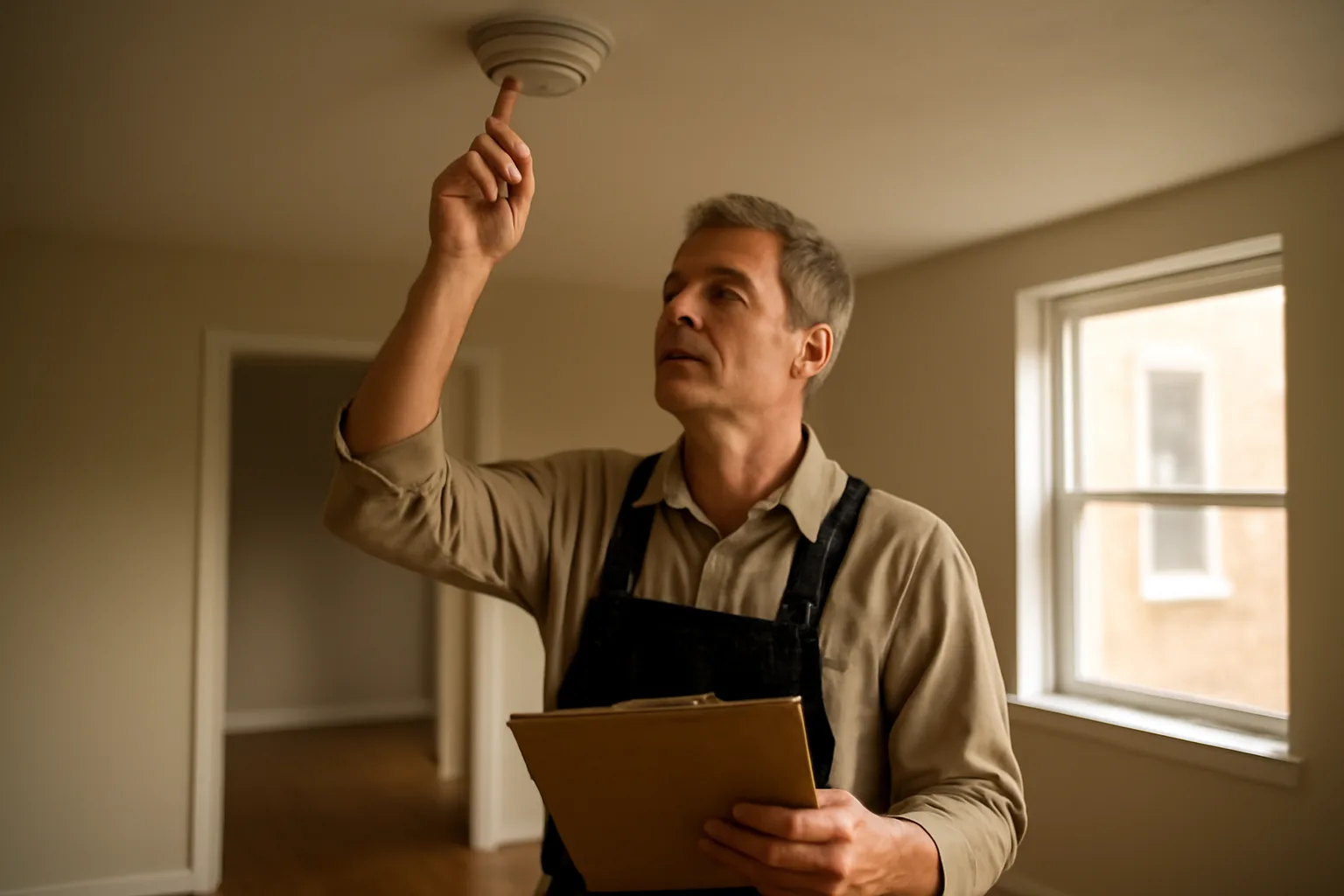
During a routine or move-out inspection, a landlord (or city inspector) can generally look at anything related to the unit's condition and code compliance: walls, floors, ceilings, plumbing fixtures, electrical outlets, smoke and carbon monoxide detectors, appliances included in the lease, windows, doors, and signs of pest infestation or water damage. What they cannot do is treat the inspection as a search of the tenant's personal belongings, closets, or private papers beyond what's needed to check the property's physical condition. City-mandated rental inspections (the kind tied to a license renewal) typically use a written checklist focused on health and safety code items, not tenant housekeeping. Common items include working smoke alarms in every sleeping room, secure handrails on stairs, no exposed wiring, functioning heat, and no active leaks. Some cities also check for unpermitted units or illegal room conversions. Regardless of which kind of inspection it is, the landlord still has to give proper advance notice (see the notice section below), can't show up unannounced outside of a genuine emergency, and can't use the inspection as pretext to harass a tenant into moving out. If a tenant refuses entry entirely, most leases and state laws require the landlord to get a court order rather than force entry.
how much notice does a landlord have to give before entering?
Most states require 24 to 48 hours of advance written or verbal notice before a landlord enters an occupied unit for a non-emergency reason, but the exact number and delivery method vary by state, so check your specific state's statute. California requires "reasonable notice," and Civil Code 1954 states that 24 hours is presumed reasonable in the absence of contrary evidence [5]. For the specific move-out inspection under Section 1950.5, the notice floor is 48 hours [4]. Other states set their own numbers by statute: many require at least 24 hours, some allow same-day notice for repairs already scheduled, and a handful don't set a specific number at all and instead just require "reasonable" notice, leaving it to case law and lease language. Because this genuinely differs state to state and city to city, don't rely on a national average. Pull your own state's landlord-tenant statute or your city's rental housing rules before you schedule an inspection. Emergencies are the standard exception everywhere: fire, flooding, a gas leak, or another situation threatening health or safety lets a landlord enter without advance notice. Outside of emergencies, entering without proper notice can expose a landlord to a claim for violation of the tenant's right to quiet enjoyment, and in some states, statutory damages.
why do landlords require renters insurance?
Landlords require renters insurance mainly to shift liability and property-damage risk away from themselves and their own insurance policy. A landlord's own property insurance covers the building's structure, but it typically does not cover a tenant's personal belongings, and it may not fully cover liability if the tenant (or the tenant's guest, or the tenant's dog) causes an injury or a fire that damages the unit. Requiring renters insurance is legal in most states as a lease condition, as long as it's applied consistently to all tenants (applying it selectively can create a fair housing problem). Typical renters insurance policies run in the range of roughly $15 to $30 a month depending on coverage amount, location, and deductible, though your reader's actual cost will vary by state and insurer, so treat that as a rough planning range rather than a quote. Beyond liability protection, renters insurance policies almost always include personal liability coverage that protects the landlord indirectly: if the tenant's negligence causes damage to a neighboring unit or an injury to a guest, the tenant's policy (not the landlord's) is often the first line of financial responsibility. That's the practical reason so many landlords, especially small landlords who can't absorb an uninsured loss, make it a lease requirement.
what rights do tenants have without a lease?
A tenant without a written lease still has real legal rights. Most states treat an unwritten rental arrangement as a month-to-month tenancy at will, and the tenant keeps the same basic protections as any tenant: the right to a habitable unit, the right to advance notice before entry, and the right to proper legal notice before eviction. Without a written lease, either party can typically end the tenancy by giving the notice period required for a month-to-month tenancy in that state, commonly 30 days, though some states require more depending on how long the tenant has lived there. A landlord still cannot change the locks, shut off utilities, or remove a tenant's belongings to force them out. Every state that recognizes self-help eviction as illegal requires a landlord go through the formal court eviction process regardless of whether there was ever a signed lease [6]. Habitability, fair housing protections, and the right to a return of any security deposit within the state's required timeframe all still apply. What a no-lease tenant loses out on is certainty: without written terms, disputes over rent amount, who pays for what repair, or move-out notice length often come down to state default rules or, worse, conflicting verbal accounts. For a broader look at what's guaranteed regardless of paperwork, see our tenants rights and tenant rights explainers.
what can a landlord not do in ohio?
Ohio law (Ohio Revised Code Chapter 5321, the Ohio Landlords and Tenants Act) spells out specific things a landlord cannot do. A landlord cannot enter the rental unit except at reasonable times and, in most cases, after giving "reasonable notice," which Ohio courts and the statute generally treat as 24 hours absent an emergency [5]. Ohio landlords also cannot use self-help eviction: locking out a tenant, shutting off utilities, or removing belongings without a court order is prohibited under the same chapter, and a tenant can sue for damages if a landlord does this [5]. A landlord cannot retaliate against a tenant for exercising a legal right, such as reporting a code violation to a health department or joining a tenants' union; Ohio Revised Code 5321.02 specifically bars retaliatory eviction or rent increases for those reasons . Ohio landlords also can't ignore their statutory maintenance duties. ORC 5321.04 requires landlords to keep the premises fit and habitable, comply with building and housing codes affecting health and safety, and keep common areas safe and clean . Beyond Ohio specifically, most states share a version of these same three prohibitions (no illegal entry, no self-help eviction, no retaliation), so if you're checking a different state, look for the equivalent chapter in that state's landlord-tenant code.
how does rental licensing differ from a standard lease requirement?
A rental license (sometimes called a rental registration or certificate of compliance) is a city-level requirement that exists separately from your lease and separately from state landlord-tenant law. It's the city saying: before you rent this unit to anyone, you have to tell us it exists, and in many cities, pass an inspection or pay a registration fee first. This is a different legal layer than the lease itself. Your lease governs the relationship between you and your specific tenant (rent amount, term, house rules). The rental license governs your relationship with the city (is this unit registered, has it passed inspection, are you current on the fee). You can have a perfectly legal lease and still be in violation of your city's rental licensing ordinance if you never registered the unit, and vice versa. Cities that run these programs usually tie renewal to a fixed cycle (annual or every two to three years is common) and many trigger a fresh inspection at tenant turnover or license renewal. Fines for operating an unlicensed rental vary enormously by city, from a modest late fee to a daily accruing penalty, so confirm your specific city's fee schedule and enforcement approach with its rental licensing or code enforcement office rather than assuming a number from another city applies to you.
Frequently asked questions
How to become a landlord for the first time?
Confirm the property is legal to rent (certificate of occupancy, any required city registration), check whether your city mandates a rental license or inspection, screen tenants under the Fair Housing Act, use a lease with your state's required disclosures, and set up a system for maintenance requests and license renewals going forward.
Who is responsible for a rental property walk-through inspection in California?
The landlord or their agent conducts the walk-through. Under California Civil Code 1950.5, if the landlord wants to withhold deposit money for repairs, the tenant can request an initial move-out inspection with at least 48 hours notice and a chance to fix problems before moving out.
What is landlording?
Landlording is the everyday term for the job of owning and managing rental property: finding tenants, collecting rent, handling repairs, meeting habitability requirements, and complying with state landlord-tenant law and any city rental licensing rules.
What is a landlord, legally speaking?
A landlord is the property owner, or their authorized agent, who rents real property to a tenant under a lease or rental agreement, and who takes on statutory duties (habitability, proper notice, non-discrimination) alongside whatever the lease itself says.
What rights do tenants have without a signed lease?
A tenant without a written lease is usually treated as a month-to-month tenant at will and keeps the core protections: habitability, advance notice before entry, protection from illegal lockouts, and the right to a formal court eviction process rather than self-help eviction.
How do I become a landlord if I only own one rental unit?
The steps are the same regardless of portfolio size: check if your city requires rental registration or licensing for even a single unit, screen tenants legally, use a compliant lease, and keep up with any inspection or renewal cycle your city sets.
Why do landlords require renters insurance?
Because a landlord's own building insurance usually doesn't cover a tenant's belongings or fully cover liability from a tenant-caused fire or injury. Renters insurance shifts that risk (and typically costs roughly $15 to $30 a month) onto the tenant's own policy.
How much notice does a landlord have to give before entering the unit?
Most states require 24 to 48 hours notice for non-emergency entry. California presumes 24 hours reasonable for routine entry under Civil Code 1954, and requires at least 48 hours for the specific move-out inspection under Civil Code 1950.5. Check your own state's statute for the exact number.
What can a landlord look at during an inspection?
A landlord or city inspector can check the physical condition and code compliance of the unit: smoke detectors, plumbing, electrical, structural safety, appliances covered by the lease, and signs of damage or pests. They cannot search a tenant's personal belongings or use the inspection to harass the tenant.
What can a landlord not do in Ohio?
Under Ohio Revised Code Chapter 5321, a landlord cannot enter without reasonable notice (generally 24 hours), cannot use self-help eviction like lockouts or utility shutoffs, cannot retaliate against a tenant for reporting code violations, and must keep the unit habitable and code-compliant.
Do all cities require a rental license?
No. Rental licensing is set city by city, not nationally, and requirements range from no registration at all to mandatory licensing with a recurring inspection. Confirm directly with your specific city's rental licensing or code enforcement office rather than assuming based on a neighboring city.
What happens if I rent out a unit without the required city license?
Consequences vary by city and can include fines, an order to stop renting the unit until it's licensed, back fees, or complications collecting rent in an eviction case in cities where courts require proof of a valid license. Confirm the specific penalty structure with your city's rental licensing office.
Can a landlord require a security deposit and renters insurance at the same time?
Yes, in most states a landlord can require both, as long as the security deposit amount stays within any state-imposed cap and the renters insurance requirement is applied to every tenant consistently rather than selectively.
Sources
- HUD, Fair Housing Act Overview: Federal fair housing protected classes for tenant screening and advertising
- EPA, 40 CFR Part 745 (Lead Disclosure Rule): Federal lead paint disclosure requirement for pre-1978 housing
- California Civil Code Section 1950.5: California security deposit and move-out inspection notice requirements
- California Civil Code Section 1954: 24 hours presumed reasonable notice for landlord entry in California
- Ohio Revised Code Section 5321.04: Ohio landlord entry notice requirements and prohibition on self-help remedies
- Ohio Revised Code Section 5321.02: Ohio prohibits retaliatory eviction or rent increases against tenants