Last updated 2026-07-26
TL;DR
Landlording means managing a rental as a business: screening tenants, handling repairs, following notice laws, and passing local inspections. Notice periods for entry usually run 24-48 hours depending on state law. Tenants without a lease still have rights under state landlord-tenant statutes. Inspections generally cover safety systems, not personal belongings.
What is landlording, exactly?
Landlording is the ongoing job of owning and operating rental property for income. It's more than collecting rent once a month. It covers screening applicants, writing or renewing leases, maintaining the unit, handling repair requests, following state and local safety codes, and dealing with the paperwork side: security deposit accounting, notices, and (in many cities) rental license renewals. The U.S. Census Bureau's Rental Housing Finance Survey found that individual investors, not corporations, own the majority of rental properties in the country, and most of those owners hold fewer than 10 units [1]. That's the reader this article is for: someone who owns a duplex or a handful of single-family rentals, not a REIT running a portfolio through a property management arm. Landlording sits at the intersection of running a small business and complying with housing law. You're a service provider (habitable housing) and a landlord under state statute at the same time. Miss either half and you end up with vacancy, fines, or both. Most new landlords underestimate the compliance side. A lease is a contract, but state landlord-tenant law overrides or fills gaps in that contract whether you wrote it in or not. That's why the notice period, entry rules, and deposit handling below apply even if your lease is silent on them.
What is a landlord under the law?
A landlord is the party who owns or controls residential property and rents it to a tenant in exchange for payment, taking on legal duties to keep the unit habitable and to follow state procedures for entry, deposits, and eviction. Most state statutes define "landlord" broadly enough to include property managers acting on an owner's behalf, more than the titleholder. For example, California's Civil Code defines the landlord-tenant relationship duties under its habitability statute, which requires landlords to maintain premises fit for human occupation, including working plumbing, heat, and weatherproofing [2]. Ohio's landlord-tenant law (Ohio Revised Code Chapter 5321) similarly defines a "landlord" as the owner, lessor, or sublessor of residential premises, or an agent authorized to act on that person's behalf [3]. The legal definition matters because it fixes who is on the hook. If you hire a property manager, you (the owner) generally remain the legal landlord for licensing and liability purposes in most cities, even though the manager handles day-to-day operations. Check your city's rental registration rules directly, since some cities require the license to be held in the owner's name regardless of who manages the unit (confirm with your city rental licensing office).
How do you become a landlord? A realistic checklist
Becoming a landlord is mostly administrative, not mysterious, but skipping steps is how people end up with fines. Here's the order that avoids the most common mistakes: 1. Confirm zoning allows rental use. Some municipalities restrict short-term or even long-term rentals in certain zones. 2. Register or license the rental with your city or county, if required. Many cities with rental registries require this before you advertise the unit, not after you find a tenant. 3. Get landlord insurance (not a standard homeowner's policy) and confirm your lender allows the property to be rented if there's a mortgage. 4. Set rent and a security deposit within your state's legal limits. Several states cap deposits at one or two months' rent. 5. Screen tenants consistently, following the Fair Housing Act's protections against discrimination based on race, color, national origin, religion, sex, familial status, or disability [4]. 6. Draft a lease that matches your state's required disclosures (lead paint disclosure for pre-1978 housing is federally mandated under 42 U.S.C. § 4852d). 7. Schedule any required pre-occupancy inspection if your city mandates one before a certificate of occupancy or rental license is issued. A lot of first-time landlords do steps 5 and 6 first and steps 2 and 3 last. Reverse it. Cities that catch unregistered rentals through a tenant complaint or a utility flag routinely issue retroactive fines, and those tend to be steeper than the original registration fee would have been (confirm your city's penalty schedule with its rental licensing office).
Who is responsible for the rental property walkthrough inspection in California?
In California, the landlord is responsible for offering an initial move-out inspection, but the tenant chooses whether to attend it. California Civil Code Section 1950.5(f) requires the landlord to notify the tenant in writing of the right to request an initial inspection before the tenant moves out, giving the tenant a chance to fix issues before the final deposit deduction happens [5]. Here's how the process actually works: the landlord must notify the tenant of this right within a reasonable time before the end of tenancy. If the tenant requests the inspection, the landlord conducts it no earlier than two weeks before the end of the lease, then gives the tenant an itemized statement of what needs fixing or cleaning to avoid deposit deductions. The tenant then has the chance to make those repairs before move-out. For day-to-day inspections during a tenancy (not move-out), California Civil Code Section 1954 governs landlord entry, requiring "reasonable notice," which the statute defines as 24 hours in most circumstances, and limits entry to specific purposes: repairs, showing the unit to prospective tenants or buyers, or in an emergency [6]. So the short answer: the landlord initiates and conducts the walkthrough, but it's tenant-triggered for the move-out version and the tenant has real input in both timing and outcome.
What can a landlord look at during an inspection?
| Landlord routine inspection | Landlord or property manager | Lease compliance, minor maintenance issues, pet/occupant verification | |
|---|---|---|---|
| Move-out walkthrough (CA) | Landlord, tenant may attend | Damage beyond normal wear, cleaning needed to avoid deposit deduction | |
| City rental license inspection | Municipal code inspector | Smoke/CO detectors, egress, electrical, heating, structural safety | |
| Health department inspection | County/city health inspector | Pest infestation, mold, water damage, sanitation | If you're prepping for a city license inspection specifically, having your documentation organized before the inspector arrives (permits, prior inspection reports, proof of smoke detector installation) tends to shorten the visit and reduce the chance of a re-inspection fee. |
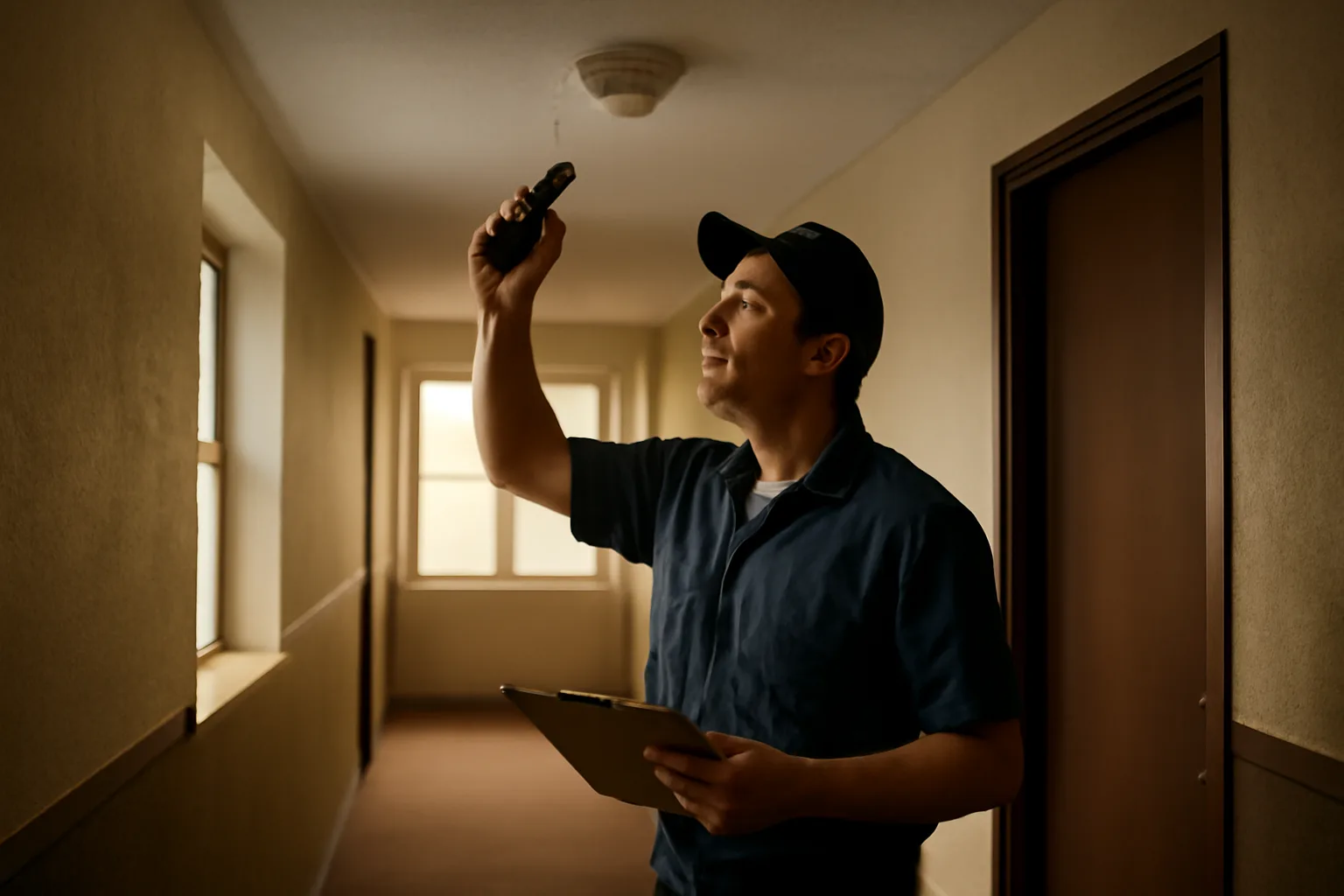
A landlord's lawful inspection covers habitability and lease-compliance items: smoke and carbon monoxide detectors, HVAC and plumbing function, signs of pest infestation, unauthorized occupants or pets, unsafe modifications, and general condition of walls, floors, and fixtures. It does not extend to searching personal belongings, opening closed drawers or containers, or inspecting for reasons unrelated to the lease or safety code. Most state statutes tie the purpose of entry to specific categories: making repairs, showing the unit for sale or re-rent, and verifying compliance with the lease (this is where a landlord might check for an unauthorized pet or subletter). Entry "just to look around" without one of these stated purposes is generally not defensible under state entry statutes. City rental inspection programs are a different animal from a landlord's own walkthrough. When a city inspector comes for a rental license renewal, they're typically checking code items: working smoke detectors, secure handrails, functioning heat source, no exposed wiring, proper egress from bedrooms, and no obvious structural hazards. These inspectors generally are not evaluating cleanliness or décor, only safety and code compliance (confirm your city's specific inspection checklist with its rental licensing office, since items vary by jurisdiction). Here's a comparison of who typically checks what: | Inspection type | Who conducts it | What it typically covers |
How much notice does a landlord have to give before entering?
Most states require 24 to 48 hours of advance notice before a landlord enters an occupied unit for non-emergency reasons, though the exact number and the accepted delivery method (written notice, posted notice, verbal notice) vary by state. There is no single national standard, so the number you need depends entirely on where the property sits. California requires "reasonable notice," which the statute presumes to be 24 hours absent circumstances indicating otherwise [6]. Some states set 48 hours as the floor. A few states don't specify an exact number of hours in statute at all, just "reasonable notice," which leaves room for dispute if it ever goes to court. Emergencies are the standard exception nationwide: a burst pipe, a gas leak, a fire, or another situation threatening life or property lets a landlord enter without advance notice. Beyond emergencies, notice requirements typically apply even if the landlord owns the building and even if the tenant is behind on rent. Being behind on rent doesn't suspend the tenant's right to notice before entry; it triggers a separate legal process for eviction. Because the number and format differ by state (and sometimes by city on top of that), the safest move is pulling your specific state's landlord-tenant statute rather than relying on a rule of thumb from a different state's law or from a general blog post, including this one.
What rights do tenants have without a lease?
A tenant without a written lease, often called a month-to-month tenant or a tenant-at-will, still has the full protection of state landlord-tenant law: the right to habitable housing, the right to advance notice before entry, the right to proper notice before eviction, and (in states or cities with rent control) the same rent protections a written-lease tenant would have. What changes without a written lease is mainly the terms that a lease would have spelled out: exact rent due date, exact notice period for ending the tenancy, and any specific rules (no smoking, pet policy, etc.). Absent a written lease, state law fills in the default terms, and those defaults are usually month-to-month with a 30-day notice to terminate on either side, though some states allow shorter or require longer depending on how long the tenant has lived there. A verbal agreement to pay rent and occupy a unit is enough to create a legal tenancy in every U.S. state. The tenant doesn't lose habitability rights, doesn't lose protection from illegal lockouts or utility shutoffs, and doesn't lose the right to a formal eviction process just because nothing is in writing. Landlords sometimes assume an unwritten arrangement means they can end it whenever they want with no notice; that assumption is wrong in every state that has landlord-tenant statutes on the books, which is all of them. If you're a landlord operating without written leases (common with family arrangements or long-term tenants who never got a written renewal), it's worth converting to a written lease going forward, if only so both sides have one clear document instead of relying on memory of a verbal deal from years ago.
What can't a landlord do in Ohio?
Under Ohio Revised Code Chapter 5321, a landlord cannot enter a tenant's unit without reasonable notice, cannot shut off utilities to force a tenant out, cannot seize a tenant's belongings without a court order, and cannot retaliate against a tenant for reporting code violations or exercising legal rights [3]. Ohio's statute (ORC 5321.04) requires landlords to keep the premises in a fit and habitable condition, comply with building and housing codes materially affecting health and safety, keep common areas safe, and maintain all electrical, plumbing, and heating systems in good working order [3]. A landlord who fails these duties can be sued by the tenant for damages, and in some cases the tenant can deposit rent with the court (called rent escrow) rather than pay the landlord directly until repairs are made, under ORC 5321.07 [7]. Ohio law (ORC 5321.03) also bars landlords from what's often called "self-help eviction": no lockouts, no utility shutoffs, no removing the tenant's possessions to force them out, even if the tenant is behind on rent [8]. The landlord must go through the formal eviction process (called a forcible entry and detainer action in Ohio) through the courts. A landlord who violates this can be liable to the tenant for actual damages plus reasonable attorney fees. Ohio also restricts retaliatory conduct: ORC 5321.02 prohibits a landlord from raising rent, decreasing services, or threatening eviction because a tenant complained to a government agency about a code violation or joined a tenant union [9]. If you're a landlord in Ohio dealing with a tenant complaint, document your reasoning for any lease-ending decision independent of the complaint timing, since the burden can shift to the landlord to show the action wasn't retaliatory.
Why do landlords require renters insurance?
Landlords require renters insurance mainly to shift liability risk away from the landlord's own policy: if a tenant's negligence causes a fire, a flood from an overflowing tub, or a dog bite injury to a guest, renters insurance covers the tenant's liability and the tenant's own belongings, instead of the claim landing entirely on the landlord's property insurance. A standard landlord (dwelling) insurance policy covers the physical structure, not the tenant's personal property and generally not the tenant's personal liability for incidents inside the unit. Without renters insurance, a tenant whose negligence causes damage may have no way to pay for it, leaving the landlord to absorb the loss or fight it out through a security deposit that's nowhere close to covering major damage. Many landlords now require proof of renters insurance as a lease condition, similar to requiring proof of the tenant's own auto insurance before allowing a car in a reserved spot. This is legal in nearly all states as a lease term, though it can't be enforced in a way that violates fair housing law (for example, requiring it only of certain protected groups). Typical renters insurance policies cost relatively little; the Insurance Information Institute has published data showing average premiums are commonly in the range of roughly $15 to $30 per month depending on coverage amount and location, though this varies by state and carrier, so treat it as a general range rather than a quote [10]. Requiring it is one of the cheapest risk-reduction moves a small landlord can make, and it's worth writing into every renewal lease going forward even if your existing leases don't have the clause yet.
How rental licensing inspections fit into all of this
Everything above covers landlord-tenant law generally, but if your property sits in a city with mandatory rental licensing, there's a second, separate layer: municipal rental registration and inspection. These programs exist independent of your lease and independent of state landlord-tenant statute. A city can require an inspection and a license fee even if your lease and your relationship with your tenant are both fine. City programs vary enormously. Some require registration only (a form and a fee, no physical inspection). Others require a full walkthrough by a code inspector before a license is issued or renewed, checking smoke detectors, egress windows, electrical panels, and structural items. Fees, inspection frequency, and penalty schedules for missed deadlines are all set locally, so there's no national number to quote here; you need your specific city's ordinance (confirm exact fees and inspection intervals with your city rental licensing office). What's consistent across most of these programs: missing the registration deadline or an inspection notice tends to trigger an escalating fine, and letting a violation notice sit unaddressed is usually the expensive mistake, not the inspection itself. If you got a notice, the clock is usually already running. If you're staring down a first inspection notice or a licensing renewal and don't know what the inspector will actually check, RentalPermitPath's rental packet builder puts together a one-time, $79 prep packet built around your specific city's requirements, covering the documentation and common checklist items inspectors look for, so you're not guessing the week before the walkthrough.
What should a landlord actually do before an inspection?
Walk the unit yourself first, ideally with the same checklist a code inspector would use: test every smoke detector and carbon monoxide detector, confirm every bedroom has a legal egress window or door, check that handrails on any stairs with more than a few steps are secure, and confirm the water heater has a working temperature/pressure relief valve with a discharge pipe. Pull your paperwork together before the inspector arrives, not during the visit. That means prior inspection reports if this is a renewal, permits for any electrical or plumbing work done since the last inspection, and your current rental license or registration certificate. Inspectors move faster and are generally more lenient on minor items when the paperwork is organized and the obvious safety items are already fixed. Fix the cheap, obvious stuff before the inspection date rather than during it: dead smoke detector batteries, a missing GFCI outlet cover in the bathroom, a loose handrail. These are the items that generate a large share of failed first inspections and are also the cheapest to fix, often under $50 total in parts. If your city allows a self-certification checklist or pre-inspection walkthrough option, use it. Several cities let landlords submit a signed checklist confirming smoke detectors and basic safety items are in place, which can sometimes reduce inspection frequency or fees over time (confirm whether your city offers this with its rental licensing office).
What happens if you get a violation notice or miss a deadline?
Respond to a rental violation notice before the compliance date on the letter, not after. Most cities give a specific window (commonly 10 to 30 days, but this varies widely by city) to either fix the issue, request an extension, or schedule a re-inspection, and missing that window is usually what triggers the fine escalation, not the original violation itself. Read the notice for three things: what specifically was flagged, the deadline to respond or fix it, and whether a re-inspection fee applies if you need a second visit. Cities that charge re-inspection fees often charge more for the second visit than the first inspection cost, so getting it right the first time (or the first re-inspection) matters financially. If you disagree with a violation, most municipal codes have an appeal or hearing process, usually through the local building or housing department, with its own separate deadline that's often shorter than you'd expect (sometimes as little as 10 to 15 days from the notice date). Missing the appeal deadline usually forecloses that option even if your underlying argument was solid. Don't ignore a notice hoping it goes away. Unaddressed rental violations in cities with licensing programs tend to compound: an unresolved violation can block license renewal, which can then trigger a separate unlicensed-rental fine on top of the original violation, so what started as one issue becomes two.
Frequently asked questions
How do you become a landlord?
Confirm zoning allows rental use, register with your city if required, get landlord insurance, set a compliant deposit and rent, screen tenants under Fair Housing Act rules, and use a lease with required state disclosures like lead paint notice for pre-1978 units. Register and license before advertising, not after finding a tenant.
Who is responsible for the rental property walkthrough inspection in California?
The landlord conducts it, but under California Civil Code Section 1950.5(f), the tenant must be notified in writing of the right to request an initial move-out inspection before the lease ends, so the tenant can fix issues before final deposit deductions are calculated.
What is landlording?
Landlording is operating rental property as an ongoing business: screening tenants, maintaining the unit, following state entry and notice laws, handling deposits correctly, and complying with any local rental registration or inspection program. It's both a business function and a legal role under state landlord-tenant statutes.
What is a landlord?
A landlord is the owner, lessor, or authorized agent who rents residential property to a tenant and takes on legal duties like maintaining habitability, following entry notice rules, and handling deposits under state law. Most states, including Ohio under ORC 5321.01, define the term broadly to include authorized property managers.
What rights do tenants have without a lease?
The same core protections as a written-lease tenant: habitable housing, advance notice before entry, formal eviction procedures instead of lockouts, and (where applicable) rent control protections. A verbal rent agreement creates a legal tenancy, usually defaulting to month-to-month terms under state law.
How can you be a good landlord?
Respond to repair requests quickly, give proper notice before every entry, keep deposit handling transparent and documented, follow Fair Housing Act screening rules consistently for every applicant, and stay current on your city's rental licensing and inspection requirements so small issues don't become fines.
Why do landlords require renters insurance?
It shifts liability for tenant-caused damage (fire, water overflow, injury to guests) away from the landlord's own policy and onto the tenant's coverage, since a landlord's dwelling policy usually doesn't cover the tenant's belongings or personal liability. Typical premiums run roughly $15 to $30 a month per Insurance Information Institute data.
How much notice does a landlord have to give before entering?
Most states require 24 to 48 hours of notice for non-emergency entry, though the exact hours and delivery method vary by state statute. California presumes 24 hours is reasonable under Civil Code Section 1954. Emergencies (fire, gas leak, burst pipe) are the universal exception.
What can a landlord look at during an inspection?
Habitability and lease-compliance items: smoke/CO detectors, plumbing, HVAC, signs of pest infestation, unauthorized occupants or pets, and unsafe modifications. Landlords cannot search personal belongings or closed containers, and city code inspectors focus specifically on safety items like egress, electrical, and heating, not cleanliness.
What can't a landlord do in Ohio?
Under ORC Chapter 5321, an Ohio landlord can't enter without reasonable notice, can't shut off utilities or change locks to force a tenant out, can't seize belongings without a court order, and can't retaliate against a tenant for reporting code violations or joining a tenant union.
Can a landlord charge for a re-inspection?
Many cities do charge a re-inspection fee if a rental fails its first licensing inspection, and that fee is often higher than the original inspection cost. The exact amount is set locally, so confirm the specific fee with your city rental licensing office before the follow-up visit.
What happens if a landlord misses a rental license renewal deadline?
Most cities apply escalating fines the longer a rental stays unlicensed, and some also flag the property for a mandatory inspection before the license can be reinstated. Requirements and fine amounts differ by city, so check your city's specific renewal deadline and penalty schedule directly.
Does a landlord have to give notice before an emergency repair?
No. Every state's landlord-tenant statute treats a genuine emergency, such as a gas leak, fire, flooding, or another immediate threat to life or property, as an exception to standard entry notice requirements, allowing the landlord or a repair contractor to enter without advance notice.
Sources
- U.S. Census Bureau, Rental Housing Finance Survey: Individual investors own the majority of U.S. rental properties, and most own fewer than 10 units
- California Civil Code Section 1941.1 (habitability standards): California landlords must maintain rental premises fit for human occupation
- Ohio Revised Code Section 5321.04 (landlord obligations): Ohio landlords must keep premises in fit and habitable condition and maintain electrical, plumbing, and heating systems
- U.S. Department of Justice, Fair Housing Act overview: Federal Fair Housing Act protected classes for tenant screening
- California Civil Code Section 1950.5: California landlords must notify tenants in writing of the right to an initial move-out inspection
- California Civil Code Section 1954: California requires reasonable notice, presumed to be 24 hours, before landlord entry
- Ohio Revised Code Section 5321.07 (rent escrow / tenant remedies): Ohio tenants can deposit rent with the court instead of paying the landlord if repairs aren't made
- Ohio Revised Code Section 5321.03 (unlawful removal or exclusion of tenant): Ohio landlords cannot lock out tenants, shut off utilities, or remove belongings to force eviction without court process
- Ohio Revised Code Section 5321.02 (retaliatory conduct prohibited): Ohio law bars landlords from retaliating against tenants who report code violations or join tenant unions
- Insurance Information Institute, Renters Insurance facts and statistics: Typical renters insurance premiums fall in the roughly $15 to $30 per month range depending on coverage and location
- 42 U.S.C. § 4852d, Lead-Based Paint Disclosure: Federal law requires lead paint disclosure for pre-1978 rental housing