Last updated 2026-07-26
TL;DR
Becoming a landlord means registering or licensing your rental (often required before you can legally rent), following state landlord-tenant law, and passing any city inspection tied to that license. Tenants without a lease still have rights under state law. Requirements on notice, inspections, and insurance vary by state and city, so always confirm specifics with your local rental licensing office.
What is a landlord, and what is landlording?
A landlord is the legal owner (or an authorized agent of the owner) of a residential property who rents that property to someone else, called a tenant, in exchange for money. That's the whole definition. It doesn't matter if you own one duplex unit or forty apartments; the moment you collect rent from someone living in your property, you're a landlord under the law. "Landlording" is the informal industry term for the actual job: everything you do to manage that relationship and that property over time. It covers finding and screening tenants, writing and enforcing a lease, collecting rent, handling repairs, complying with local licensing and inspection rules, and dealing with move-outs, security deposits, and occasional evictions. Landlording is part paperwork, part maintenance, part people management. Most new landlords underestimate the paperwork part, and that's exactly where cities catch people: unregistered rentals, missed inspection windows, and expired licenses are some of the most common violations in mandatory rental-licensing municipalities. If you're renting out a room, a unit, or a whole house, and more than one unrelated tenant lives there, you may also cross into HMO (house in multiple occupation, sometimes called a rooming house or single-room-occupancy rental in U.S. code) territory, which usually triggers its own licensing category with tighter fire-safety and occupancy rules than a standard single-family rental.
How to become a landlord (the actual steps)
Becoming a landlord isn't just buying a property and putting up a listing. In any city with mandatory rental licensing, there's a sequence, and skipping steps is how people end up with fines before they've collected their first month's rent. 1. Buy or already own residential property you intend to rent out. 2. Check your city's rental registration or licensing requirement before you advertise the unit. Many cities require the license to be issued, or at least applied for, before you can legally lease. Search "[your city name] rental license" plus ".gov" to find the actual office; program names vary (rental registration, certificate of occupancy for rentals, landlord license, HMO license). 3. Apply and pay the fee. Fees typically run somewhere between $30 and a few hundred dollars per unit per year depending on the city and unit count; confirm the exact figure with your city rental licensing office since it changes by ordinance and by building size. 4. Schedule and pass the required inspection, if your city requires one before or after licensing. 5. Screen tenants using consistent, written criteria (income, rental history, background check) applied the same way to every applicant, to stay compliant with the Fair Housing Act, which prohibits discrimination based on race, color, national origin, religion, sex, familial status, and disability [1]. 6. Use a written lease. Oral leases are legal in most states but create disputes almost immediately over rent amount, deposit terms, and move-out dates. 7. Collect a deposit within your state's legal limit and hold it according to state rules (some states require a separate account and interest payment). 8. Set up rent collection, a maintenance response process, and a system for renewing your license and passing re-inspection on schedule, because most cities require this annually or biennially. If you're managing this on your own for the first time, our Rental Packet Builder walks you through gathering the documents a typical city licensing office asks for, which cuts a lot of the guesswork out of step 2 and step 4.
Who is responsible for the rental property walkthrough inspection in California?
In California, the landlord is responsible for arranging and complying with a rental property walkthrough inspection, whether it's a city rental inspection program, a habitability-related move-in/move-out inspection, or a code enforcement inspection triggered by a complaint. California Civil Code Section 1950.5 specifically gives tenants the right to request an initial inspection before move-out, so the landlord can identify repairs the tenant could make to avoid deposit deductions; the landlord must give the tenant at least 48 hours' written notice before that inspection unless the tenant waives it [2]. Separately, cities and counties across California increasingly run proactive rental inspection programs (sometimes called RRP, or Rental Housing Inspection Program) that require landlords to register units and permit periodic inspections for code compliance, habitability, and in some cases HMO-style occupancy limits. These are locally run, not statewide, so the responsible party for scheduling is always the property owner or their designated property manager, and the specific inspection cycle (often every 3 to 5 years) and fee is set by that city's housing or building department. Always confirm the exact program name, fee, and cycle with your city rental licensing office, because Los Angeles, Oakland, and Sacramento (for example) each run their own separate systems. During any of these inspections, the tenant does not have to personally attend, but the landlord is required to give proper notice before entering. California Civil Code Section 1954 requires "reasonable notice," which the statute defines as 24 hours in writing for entry to make necessary repairs or show the unit, absent an emergency [3].
What rights do tenants have without a lease?
A tenant without a written lease still has real legal rights. Most states treat an unwritten rental arrangement as a month-to-month tenancy-at-will, governed by the same state landlord-tenant statutes that apply to written leases. The absence of paper doesn't strip away habitability protections, notice requirements, or deposit rules. Specifically, tenants without a lease generally keep: - The right to a habitable unit (working plumbing, heat, structural safety), often called the "implied warranty of habitability," recognized in nearly every state either by statute or case law.
- The right to proper notice before the landlord can terminate the tenancy or raise rent, usually tied to the payment period (commonly 30 days for month-to-month tenancies).
- The right to written notice before the landlord enters the unit, in the states that require it.
- The right to the return of any security deposit collected, on the same timeline and rules as a written lease, since deposit statutes apply regardless of lease format.
- Protection from illegal lockouts, utility shutoffs, or "self-help" evictions. Landlords cannot legally remove a tenant without going through the court eviction process, lease or no lease. What a tenant without a lease loses is the specificity: no fixed rent amount in writing, no fixed term, no agreed-upon rules on pets, subletting, or specific fees. That ambiguity almost always favors the tenant in a dispute, because courts default to state statute and to whatever the landlord can prove was actually agreed to, verbally or through a pattern of accepted rent payments.
Why do landlords require renters insurance?
Landlords require renters insurance mainly to shift liability and personal property risk away from themselves. A landlord's own property insurance covers the building structure, not the tenant's belongings, and it typically doesn't cover a tenant's liability if that tenant accidentally causes a fire, a flood from an overflowing tub, or an injury to a guest inside the unit. Renters insurance policies are inexpensive, commonly in the range of $15 to $30 a month according to industry rate surveys, and they cover the tenant's personal property plus liability protection that can reimburse the landlord (through the tenant's insurer) if the tenant is at fault for damage. Requiring it as a lease condition is legal in every state; it's simply a lease term, not a licensing requirement, though some cities with HMO or high-occupancy rental licenses are starting to reference insurance in fire-safety guidance for shared housing. From a landlord's side, requiring renters insurance reduces the odds you'll be stuck absorbing a loss that was really the tenant's fault, and it reduces friction in the claims process because the tenant's insurer, not you, handles the tenant's losses directly.
How much notice does a landlord have to give?
| Entry for repairs/inspection | 12 to 48 hours written | Florida: 12 hours [4]; California: 24 hours [3] | |
|---|---|---|---|
| End month-to-month tenancy | 30 to 60 days | Varies by state and tenancy length | |
| Rent increase (large %) | 30 to 90 days | California AB 1482 requires 90 days for increases over the statutory cap [5] | |
| Nonrenewal in just-cause cities | Often 60 to 120 days | Varies; confirm with local rental licensing office | Because these numbers genuinely differ city to city and change with new ordinances, treat any number here as a starting point and confirm the current requirement with your state statute or your city rental licensing office before sending a notice. |
Notice requirements split into two very different categories: notice to enter the unit, and notice to end a tenancy or raise rent. Both vary by state, and this is one area where you cannot assume your city or state matches your last one. Entry notice: Most states require 24 to 48 hours of written notice before a landlord enters an occupied unit for repairs, inspections, or showings, except in emergencies. California requires 24 hours for most entries [3]. Some states, like Florida, specify 12 hours' notice for repair-related entry under Florida Statutes Section 83.53 [4]. End of tenancy or rent increase notice: For month-to-month tenancies, 30 days' written notice is the most common standard across states, though some jurisdictions require 60 or even 90 days, especially for rent increases above a certain percentage or for tenants who've lived in the unit longer than a year. Some cities with strong tenant-protection ordinances (parts of California under the Tenant Protection Act, for instance) require 90 days' notice for rent increases over a set threshold [5]. For fixed-term leases, no notice is generally required to end the tenancy at the natural lease expiration date unless your state or local ordinance requires a notice-of-nonrenewal (a growing trend in cities with just-cause eviction laws). | Notice type | Typical range | Example |
What can a landlord look at during an inspection?
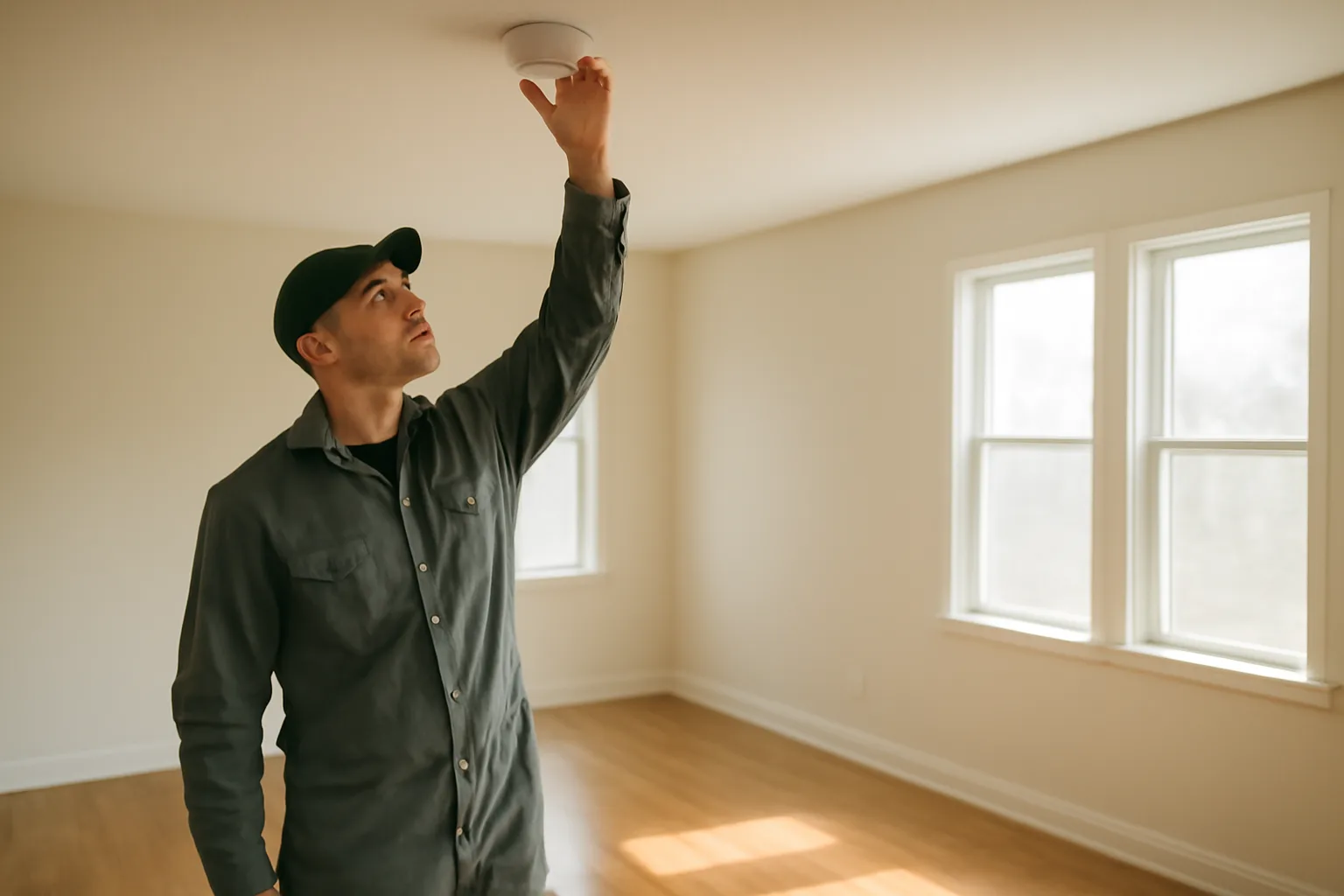
During a licensing or code-compliance inspection, an inspector (and by extension, the landlord conducting a pre-inspection walkthrough) is generally looking at life-safety and habitability items, not personal belongings. Typical items on a rental inspection checklist include: - Working smoke detectors and carbon monoxide detectors, properly placed per code
- Functioning heat, hot water, and plumbing with no active leaks
- Safe electrical systems: no exposed wiring, overloaded outlets, or missing GFCI protection near water sources
- Structural safety: stable stairs, railings, secure windows and doors, no significant water damage or mold
- Proper occupancy limits for the unit's size and bedroom count (this is where HMO rules get strict, since overcrowding is one of the top violations cities cite)
- Pest control and sanitation conditions
- Secondary means of egress (a second way out) for basement or upper-floor units, which is a common trip-up in HMO conversions What an inspector is not there to do is evaluate your décor, your tenant's cleanliness beyond safety concerns, or personal property unrelated to code. Inspectors also generally cannot search areas unrelated to the inspection's stated purpose without separate legal authority (a warrant, in disputed cases), and landlords conducting their own walkthroughs should stick to the same lane: document conditions relevant to habitability and lease compliance, not go through personal items. If you're prepping for a first-time city rental inspection, building your own pre-inspection checklist against your specific city's published standard is the single highest-leverage thing you can do; missing one required item (a detector in the wrong spot, a missing egress window in a basement bedroom) is the most common reason first-time inspections fail.
What a landlord cannot do in Ohio
Ohio's landlord-tenant law, codified mainly in Ohio Revised Code Chapter 5321, sets specific boundaries. A landlord in Ohio cannot: - Shut off utilities, change the locks, or remove the tenant's belongings to force them out. Ohio law requires landlords to use the formal eviction process through the courts; "self-help" evictions are illegal under Ohio Revised Code Section 5321.15, which states a landlord "shall not initiate any act, including, but not limited to, interruption of utility services... to recover possession" outside of court process [6]. - Enter the unit without reasonable notice. Ohio Revised Code Section 5321.04 requires landlords to give reasonable notice of intent to enter and to enter only at reasonable times, generally interpreted as 24 hours' notice in practice, except for emergencies [7]. - Retaliate against a tenant for exercising legal rights, such as reporting a code violation or joining a tenant organization. Ohio Revised Code Section 5321.02 prohibits retaliatory conduct including eviction, rent increases, or service reductions taken because a tenant complained to a government agency [8]. - Fail to maintain the unit in a habitable, safe condition. Landlords must comply with building and housing codes and keep all common areas safe under Ohio Revised Code Section 5321.04. - Discriminate against applicants or tenants on the basis of race, color, religion, sex, national origin, familial status, or disability, which is prohibited both by the federal Fair Housing Act [1] and Ohio's own civil rights statutes. These restrictions aren't unique to Ohio; most states have close equivalents. But Ohio's statute language is specific and worth reading directly if you're operating there, since local municipal rental codes (Columbus, Cleveland, Cincinnati all run their own registration and inspection programs) layer additional requirements on top of the state floor.
What is an HMO, and how is HMO licensing different from standard rental licensing?
An HMO (house in multiple occupation) is a rental property where three or more unrelated tenants share common facilities like a kitchen or bathroom, each typically renting a room rather than a whole unit. In U.S. code language, this often falls under "rooming house," "lodging house," or "single-room occupancy" categories, and building and fire codes usually define the exact threshold (commonly three or more unrelated occupants, though some cities use four or five). HMO licensing tends to be stricter than standard single-family or duplex rental licensing because occupant density raises fire and life-safety risk. Cities commonly require, in addition to standard rental license items: - Fire-rated separation between rooms or additional smoke and heat detection
- A second means of egress for sleeping rooms, especially in basements
- Minimum room size per occupant (commonly measured in square feet per person, set by the local housing code)
- More frequent inspections, sometimes annual instead of the standard multi-year cycle
- A separate license category and fee, often higher than the standard rental license fee If you're converting a single-family home into a room-by-room rental, or you already have unrelated tenants sharing common space, check whether your city's definition of HMO applies to you before you rent out additional rooms. Getting classified as an unlicensed HMO after the fact is one of the more expensive violations a small landlord can rack up, since some cities apply per-room or per-day fines on top of the standard licensing fee.
How do rental licensing and HMO licensing fees typically compare?
Fees vary enormously by city and by unit type, and no single number applies nationwide. That said, a rough shape emerges across published city fee schedules: standard single-unit rental registration fees commonly land in the $30 to $150 per unit per year range, while HMO or rooming-house licenses run higher, often $100 to $500 per year, reflecting the added inspection frequency and life-safety review. Because these fees change by ordinance nearly every budget cycle in some cities, and because unit count, building age, and inspection history all affect what you'll actually pay, treat any number you find online (including here) as a planning estimate, and confirm the current fee directly with your city rental licensing office before budgeting. What's consistent everywhere is that unlicensed operation costs more than licensing does. Cities that catch an unregistered rental typically issue a violation notice with a compliance deadline, and failure to comply within that window escalates to daily fines in many municipal codes, sometimes reaching hundreds of dollars per day for continued noncompliance. Getting licensed before you rent, not after a complaint or inspection triggers enforcement, is the cheaper path in essentially every city we've reviewed.
How do I prepare for my first rental license inspection?
Preparation is mostly about matching your unit to your specific city's published checklist before the inspector shows up, since generic advice only gets you partway there. Start by pulling your city's actual rental inspection checklist (most housing departments publish one as a PDF); then walk your unit room by room against it. Common first-inspection failures we see referenced across city code enforcement reports include missing or expired smoke detectors, blocked secondary egress in basement bedrooms, exposed wiring or missing GFCI outlets near sinks, and mismatched occupancy (more bedrooms in use than the certificate of occupancy allows). Fix what you can before the scheduled date; most cities allow you to request a re-inspection if you fail on correctable items, but that adds weeks and sometimes a re-inspection fee. If you want a structured way to gather the paperwork a typical licensing office asks for (proof of ownership, unit floor plan, prior inspection history, insurance documentation) before you even schedule the inspection, our $79 Rental Packet Builder packet is built specifically for that first-time prep process, so you're not guessing what to bring to your city office.
Frequently asked questions
How to become a landlord in a city that requires rental licensing?
Buy or own the property, then check your city's rental licensing or registration requirement before advertising it, since many cities require the license before you can legally rent. Apply, pay the fee, pass any required inspection, screen tenants fairly, and use a written lease. Confirm your specific city's process and fee with its rental licensing office.
Who is responsible for the rental property walkthrough inspection in California?
The property owner or their designated manager is responsible for scheduling and complying with any rental walkthrough inspection, whether it's a move-out inspection under Civil Code 1950.5 or a city rental inspection program. California requires 48 hours' notice for a pre-move-out inspection request and 24 hours for routine entry under Civil Code 1954.
What is landlording exactly?
Landlording is the day-to-day work of owning and renting out residential property: screening tenants, writing leases, collecting rent, handling repairs, complying with local licensing and inspection rules, and managing move-ins and move-outs. It's a mix of legal compliance, maintenance, and people management, more than property ownership.
What is a landlord under the law?
A landlord is the legal owner of residential property, or an authorized agent acting for that owner, who rents the property to a tenant in exchange for money. Ownership size doesn't matter; one rented room can make you a landlord under most state landlord-tenant statutes.
What rights do tenants have without a written lease?
Tenants without a lease still get habitability protections, proper notice before eviction or rent increases, protection from illegal lockouts, and return of any security deposit, all governed by state law regardless of paperwork. What they lose is a fixed, provable rent amount and specific lease terms, which can create disputes over what was actually agreed to.
How do I be a good landlord day to day?
Respond to repair requests quickly, keep your rental license and inspection status current, apply screening criteria consistently to avoid Fair Housing Act violations, give proper notice before entering, and put everything material in writing. Most landlord-tenant disputes trace back to poor documentation, not bad intentions.
Why do landlords require renters insurance?
Landlords require it because their own property insurance covers the building, not the tenant's belongings or the tenant's liability for accidents like fires or floods. Renters insurance, typically $15 to $30 a month, shifts that risk to the tenant's insurer instead of the landlord absorbing an uninsured loss.
How much notice does a landlord have to give before entering?
Most states require 24 to 48 hours' written notice before non-emergency entry. California requires 24 hours under Civil Code 1954; Florida requires 12 hours under Florida Statutes 83.53. Always confirm your specific state's statute, since the exact hours and required format (written vs. verbal) differ.
What can a landlord look at during an inspection?
Inspectors and landlords conducting walkthroughs focus on life-safety and habitability items: smoke and CO detectors, working plumbing and heat, safe electrical systems, structural integrity, proper occupancy limits, and secondary egress. Personal belongings and unrelated areas are generally outside the scope of a code-compliance inspection.
What a landlord cannot do in Ohio?
Under Ohio Revised Code Chapter 5321, a landlord cannot use self-help eviction tactics like shutting off utilities or changing locks, cannot enter without reasonable notice, cannot retaliate against a tenant for reporting code violations, and cannot discriminate based on protected classes under the Fair Housing Act.
What counts as an HMO and does it need a separate license?
An HMO (house in multiple occupation) generally means three or more unrelated tenants sharing common facilities like a kitchen or bathroom. Most cities require a separate, stricter license category for HMOs than for standard rentals, with added fire-safety and occupancy rules. Check your city's specific occupant threshold, since it varies.
How often do rental licenses need to be renewed?
Renewal cycles vary by city; standard rental licenses commonly renew annually or every two to three years, while HMO licenses often require annual renewal and inspection due to higher occupant density. Confirm the exact cycle and any re-inspection requirement with your city's rental licensing office.
What happens if I rent out a unit without a required license?
Cities that catch an unlicensed rental typically issue a violation notice with a compliance deadline. Missing that deadline commonly escalates to daily fines under municipal code, in some cities reaching into the hundreds of dollars per day, making it more expensive than getting licensed proactively would have been.
Sources
- U.S. Department of Housing and Urban Development, Fair Housing Act overview: Federal Fair Housing Act protected classes for tenant screening
- California Legislative Information, Civil Code Section 1950.5: California tenant's right to a pre-move-out inspection with 48 hours' notice
- California Legislative Information, Civil Code Section 1954: California requires 24 hours' written notice before landlord entry
- Online Sunshine (Florida Legislature), Florida Statutes Section 83.53: Florida requires 12 hours' notice before entry for repairs
- California Legislative Information, Civil Code Section 1947.12 (AB 1482): California requires 90 days' notice for rent increases above the statutory cap under the Tenant Protection Act
- Ohio Legislature, Ohio Revised Code Section 5321.15: Ohio prohibits self-help evictions including utility shutoffs to remove tenants
- Ohio Legislature, Ohio Revised Code Section 5321.04: Ohio requires reasonable notice and reasonable time for landlord entry, and requires landlords to maintain habitable conditions
- Ohio Legislature, Ohio Revised Code Section 5321.02: Ohio prohibits retaliatory conduct against tenants who report code violations or join tenant organizations