Last updated 2026-07-26
TL;DR
In California, landlords generally cannot refuse tenants who pay with Section 8 vouchers; source of income is a protected category under the Fair Employment and Housing Act (Gov. Code § 12955). Landlords must pass a HUD Housing Quality Standards or, since 2023, a UPCS-V inspection, sign a HAP contract with the local PHA, and still comply with any city rental license or registration rules on top of the federal program.
Can a California landlord refuse Section 8 tenants?
No, more than because the applicant has a housing voucher. California's Fair Employment and Housing Act (FEHA) makes "source of income" a protected category in housing, and the statute specifically defines source of income to include federal, state, or local housing subsidies, which covers Section 8 Housing Choice Vouchers. Government Code § 12955(o) states landlords cannot discriminate based on source of income, and § 12955(p) defines source of income broadly enough to sweep in voucher payments [1]. This is different from federal law. HUD's Housing Choice Voucher program does not, by itself, require private landlords nationwide to accept vouchers; that decision is left to states and cities unless the property already has federal subsidies attached. California closed that gap in 2019 with SB 329, then tightened it further with SB 222 in 2020, which added specific enforcement teeth and clarified that landlords can't use a voucher as a reason to reject an applicant, cannot charge voucher holders higher rent or fees, and can't refuse to consider a voucher holder's application on the grounds that the unit doesn't currently meet program inspection standards, as long as the landlord could reasonably bring it into compliance [1]. You can still run normal screening: credit history, prior landlord references, income-to-rent ratios calculated on the tenant's portion of rent (not the full contract rent), and criminal background checks within the limits of state and local law. What you cannot do is post "No Section 8" in an ad or tell an applicant over the phone that you don't take vouchers. The California Department of Fair Employment and Housing (now the Civil Rights Department) has pursued source-of-income cases, and local fair housing groups actively test rental ads for exactly this kind of language. A few very small landlords get a narrow exemption from FEHA's general housing discrimination rules (the "Mrs. Murphy" type exemption covers owner-occupied buildings with a limited number of units), but the source-of-income protection under SB 329/222 was written to apply broadly, and most landlords with even a handful of rental units are covered. If you're unsure whether your specific building qualifies for any exemption, that's a question for a local fair housing agency or an attorney, not a guess.
What is landlording and what does a landlord actually do?
Landlording is the business of owning residential property and renting it to tenants in exchange for rent, along with everything that comes with that: screening applicants, maintaining the unit, handling repairs, collecting rent, following notice and eviction procedures, and staying current on state and local law. A landlord is the person or entity (individual, LLC, trust, property manager acting as agent) that holds the legal right to rent out a unit and collect payment for it. In a Section 8 arrangement specifically, landlording adds a layer: you're now dealing with two parties on the payment side, the tenant (who pays their portion of rent, calculated as roughly 30% of adjusted household income under HUD rules) and the public housing authority (PHA), which pays the rest directly to you under a Housing Assistance Payment (HAP) contract [2]. The PHA sends its share. You don't collect the subsidized portion from the tenant. Day to day, that means keeping two people happy instead of one, tracking a HAP contract renewal date, keeping the unit at HUD's habitability standard year-round (more than at move-in), and responding to PHA inspection notices on their timeline, not yours. Landlords who treat Section 8 like a normal tenancy with an extra step tend to do fine. Landlords who ignore the PHA paperwork side tend to get rent payments suspended until they fix it.
How do you become a Section 8 landlord in California?
You don't need a special license to rent to a voucher holder, but you do need to go through the local PHA's process before rent payments start. The rough sequence looks like this in most California PHAs: 1. A voucher holder applies to rent your unit and gives you a Request for Tenancy Approval (RFTA) form along with your proposed lease terms. 2. You submit the RFTA, along with the lease and owner information, to the local PHA (examples: Housing Authority of the City of Los Angeles, Housing Authority of the County of Santa Clara, San Francisco Housing Authority; each city or county typically runs its own). 3. The PHA schedules a Housing Quality Standards (HQS) inspection, or, for PHAs that have transitioned, a National Standards for the Physical Inspection of Real Estate (NSPIRE) inspection, before it will approve the tenancy [3]. 4. If the unit passes, the PHA calculates the contract rent (comparing it to market rents and payment standards) and sends you a HAP contract to sign. 5. Rent payments begin, split between the PHA's HAP payment and the tenant's portion. You'll also need to register with the PHA as a landlord/owner (W-9, direct deposit setup for HAP payments) and, separately, comply with whatever your city requires for rental licensing. Section 8 approval and city rental licensing are two completely different systems that don't automatically talk to each other. Cities such as Los Angeles, Oakland, and Berkeley run their own rental registration or inspection programs on top of anything HUD or the PHA requires. If your city has one, check the landlord landlords hub for city-specific requirements, because passing an HQS inspection does not exempt you from a local rental inspection ordinance.
Who is responsible for the rental property walk-through inspection in California?
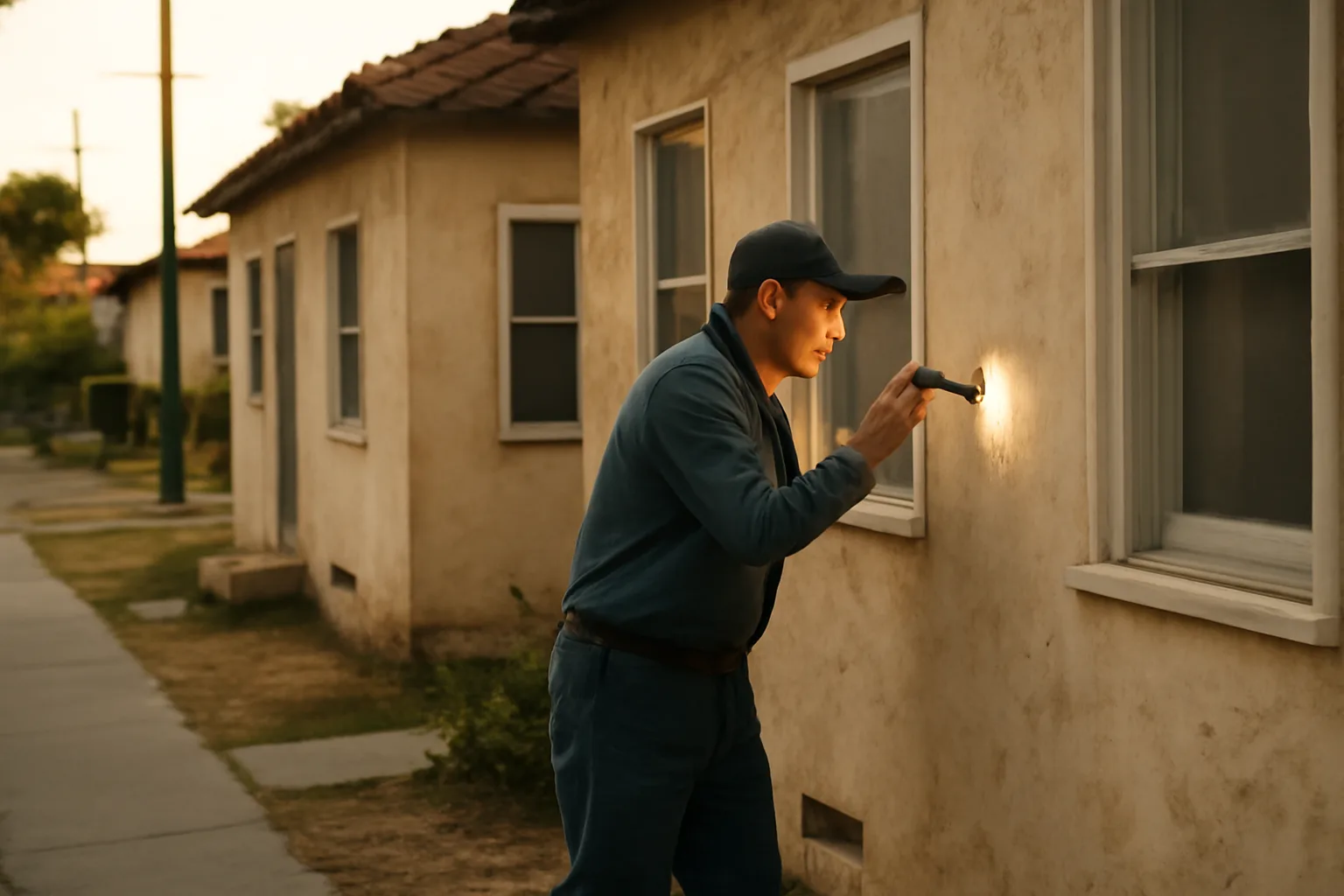
For Section 8 units, the PHA (or its contracted inspector) is responsible for scheduling and conducting the HQS/UPCS-V inspection, generally at move-in, at each annual recertification, and sometimes on complaint. The landlord is responsible for having the unit ready and making sure identified deficiencies get fixed within the deadline the PHA sets (commonly 24 hours for a life-threatening deficiency, up to 30 days for others, though timelines vary by PHA policy) [3]. For a routine move-in or move-out walk-through that isn't tied to Section 8 or a city inspection program, California law doesn't assign this to a specific government official. It's a private matter between landlord and tenant. Best practice, and something many California courts and tenant groups point to, is a written move-in/move-out inspection checklist signed by both parties, because California Civil Code § 1950.5 requires landlords to give tenants an itemized statement of deductions from a security deposit, and a documented walk-through is your best evidence if a deposit dispute ends up in small claims court [4]. If your city has its own proactive rental inspection program (San Jose, Los Angeles, and Sacramento each have versions of this), a city inspector, not the landlord and not HUD, conducts that inspection, usually on a rotating cycle tied to the property's rental license or registration number. That's a separate inspection from the HQS one, with its own checklist and its own violation/fine process. Landlords in dual-program cities sometimes have to prep for two different inspectors checking overlapping but not identical items.
What can a landlord look at during an inspection?
During a Section 8 HQS inspection, the inspector (not the landlord) checks specific habitability items set by HUD: working smoke alarms, functioning heat, hot and cold running water, secure windows and doors, no exposed wiring, adequate ventilation, no major structural hazards, and working plumbing and electrical systems [3]. HUD's HQS standards under 24 CFR § 982.401 spell out the exact categories, covering things like sanitary facilities, food preparation and refuse disposal, space and security, and thermal environment. When a landlord conducts their own move-in or periodic walk-through of the unit (separate from any government inspection), California landlords can document the general condition of the unit: walls, floors, fixtures, appliances, cleanliness, and any existing damage, using a written checklist both parties sign and date. Landlords should not use a routine walk-through as a pretext to search personal belongings or go through areas unrelated to the condition of the premises, and any entry has to comply with California Civil Code § 1954, which requires reasonable notice (see below) and limits entry to specific purposes: repairs, showing the unit to prospective tenants or buyers, or an agreed inspection [5]. A quick side note on jurisdiction: landlords sometimes search "what a landlord cannot do in Ohio" alongside California-specific questions because they're comparing states or managing property in more than one place. Ohio's landlord-tenant law (Ohio Revised Code Chapter 5321) sets its own entry-notice standard, generally requiring "reasonable notice" that Ohio courts have often interpreted as 24 hours in practice, and it has different security deposit and habitability rules than California's Civil Code framework . Don't assume rules from one state carry over to the other. If you own property in both, treat them as two separate compliance systems.
How much notice does a landlord have to give before entering?
In California, the default is 24 hours' written notice, and that notice must state the date, approximate time, and purpose of entry, under Civil Code § 1954(d)(1) [5]. The law lists the acceptable purposes for entry: emergency, tenant consent, repairs or improvements, showing the unit to prospective tenants, contractors, or buyers, an agreed inspection near the end of tenancy to give the tenant a chance to fix issues before move-out, or when the tenant has abandoned/surrendered the unit. The statute treats 24 hours as "reasonable notice" in most circumstances, though courts have looked at longer or shorter periods depending on the facts. No advance notice is required in a genuine emergency (fire, flooding, a gas leak) or when the tenant agrees to immediate entry. This notice rule applies to a private landlord doing a routine walk-through and to a landlord coordinating access for a PHA or city inspector alike; the government inspector doesn't get to skip your state notice obligations just because they're doing a program inspection. You, as the landlord, are still on the hook to give the tenant proper notice before letting an HQS inspector or city rental inspector into the unit.
What rights do tenants have without a lease in California?
A tenant without a written lease in California still has real legal protections; the absence of a signed lease does not mean the absence of a tenancy. If a tenant has been paying rent and living in the unit with the landlord's knowledge, California law treats that as a periodic tenancy, most commonly month-to-month, governed by the same core protections as a written lease [6]. That means the tenant still has the right to: a habitable unit under the implied warranty of habitability (Civil Code § 1941.1, covering things like working plumbing, weatherproofing, and heating); protection from retaliatory eviction; the same 24-hour entry notice rule under Civil Code § 1954; proper notice before termination (generally 30 days if the tenant has lived there under a year, 60 days if a year or more, under Civil Code § 1946.1); and, in many California cities and under the statewide Tenant Protection Act (Civil Code § 1946.2), just-cause eviction protection and, in some cases, relocation assistance, once the tenant has been in the unit 12 months [7]. A Section 8 tenant without a written lease is in a shakier spot for a different reason: the HAP contract structure assumes a written lease exists between landlord and tenant, and PHAs generally require one before they'll issue payments. If you're renting to a voucher holder, skip the informal handshake tenancy. You need a signed lease on file with the PHA regardless of what state law otherwise permits for unwritten tenancies.
Why do landlords require renters insurance?
Landlords ask for renters insurance mainly to shift liability for the tenant's personal property and personal liability away from the landlord's own policy. A landlord's dwelling policy typically covers the building and the landlord's own liability; it generally does not cover a tenant's furniture, electronics, or clothing if there's a fire, burst pipe, or theft, and it may not cover a tenant's liability if the tenant's dog bites a visitor or the tenant accidentally floods a downstairs unit. Requiring renters insurance (often in the $12 to $30 per month range depending on coverage, location, and provider, though landlords should get current quotes rather than rely on a fixed number) reduces the odds that a tenant's loss turns into a landlord's lawsuit or a landlord's out-of-pocket payout for someone else's belongings. It's a standard, legal lease requirement in California as long as it's applied consistently to all tenants, and it does not conflict with Section 8 rules; PHAs don't prohibit a renters insurance requirement, though the tenant's portion of rent calculation is separate from and doesn't include insurance costs. One caution: you can't require renters insurance as a workaround to reject or discourage voucher holders, and you can't set a higher insurance bar for voucher tenants than for others. Applied evenly, it's a reasonable and common lease term.
How is a Section 8 lease different from a regular lease?
A Section 8 tenancy runs on two linked but separate documents: the lease between landlord and tenant, and the HAP contract between landlord and the PHA. The lease has to include specific language the PHA requires (often a HUD Tenancy Addendum, form HUD-52641-A, which overrides conflicting lease terms on things like PHA inspection rights and termination procedures) [8]. If your regular lease and the HUD addendum conflict, the addendum controls. Rent itself is split: the tenant pays their calculated share (again, roughly 30% of adjusted monthly income, though PHAs use specific formulas and payment standards that vary by area and unit size), and the PHA pays the balance directly to the landlord via HAP payment [2]. You can't collect more from the tenant than the PHA-approved contract allows, and you can't ask a voucher holder to pay a higher security deposit than you charge non-voucher tenants for a comparable unit; SB 222 specifically bars using source of income as a reason to set different deposit or fee terms [1]. Termination is also different. Standard California just-cause and notice rules under Civil Code §§ 1946.1 and 1946.2 still apply, but the PHA also has its own rules about what happens to the HAP contract and voucher when a tenancy ends, including notifying the PHA and following specific procedures if you're terminating for lease violations rather than just choosing not to renew. This is one area worth a conversation with the local PHA or an attorney before you act, because getting termination wrong can jeopardize both the eviction and the HAP payments already made.
Does having a city rental license affect your Section 8 approval, or vice versa?
They're separate systems, and neither one substitutes for the other. Passing a city's rental inspection or holding a valid rental license does not mean you'll automatically pass an HQS or UPCS-V inspection, and passing HQS doesn't exempt you from your city's rental license, registration, or proactive inspection program if one applies to your address. Many California cities with proactive rental inspection or licensing programs, San Jose's Rental Rights and Referrals Program, Los Angeles's Systematic Code Enforcement Program (SCEP), and Oakland's Rent Adjustment Program registration among them, run their own fee schedules, inspection cycles, and violation/fine processes, entirely independent of HUD. Fees, inspection intervals, and penalty amounts vary by city and change over time, so confirm current numbers with your city rental licensing office rather than relying on a number you saw somewhere else. If you're managing a Section 8 unit inside one of these cities, plan for two inspection calendars and two sets of paperwork. This is exactly the kind of overlap where a lot of small landlords lose track of a deadline, get a violation notice for an expired registration they didn't realize had lapsed, and end up scrambling. If you want a structured way to pull together what your specific city requires alongside your existing Section 8 paperwork, the $79 City Rental License & Inspection Prep Packet walks through the document checklist so you're not guessing at inspection day.
What are the most common Section 8 inspection failures in California?
HUD tracks physical condition standards nationally, and while there's no single published California-only failure list, PHA guidance and HUD's own HQS/UPCS-V checklists point to a consistent set of repeat offenders: inoperable or missing smoke detectors, blocked or inaccessible emergency exits, broken or painted-shut windows in bedrooms (an egress issue), exposed electrical wiring or missing outlet covers, peeling paint in units built before 1978 (a lead-based paint concern under federal rules), non-functioning heating systems, and plumbing leaks or lack of hot water [3]. The pre-1978 paint issue deserves its own mention because it trips up landlords who don't expect it. HUD and EPA lead-based paint rules require disclosure and, in many cases, remediation of deteriorated paint in older units before a Section 8 tenancy can be approved, layered on top of California's own Proposition 65 and disclosure requirements. If you own an older building, budget time and money for this specifically. It's one of the most common reasons an otherwise fine unit fails its first inspection. Most failures are fixable within the PHA's cure period, and a second inspection is standard practice. The bigger risk isn't the failed inspection itself, it's losing HAP payments for the weeks or months the unit sits vacant while repairs and re-inspection happen. Get ahead of the obvious items (working smoke alarms, secure windows, no exposed wiring) before the inspector's first visit, not after.
Frequently asked questions
How to become a landlord in California?
There's no state license required to become a landlord in California generally. You need to legally own or control the rental property, comply with local business license and rental registration rules if your city has them, screen tenants consistently under fair housing law, and set up a lease that complies with Civil Code provisions on notice, deposits, and habitability. Check with your city's rental licensing office for local registration requirements.
Who is responsible for the rental property walk-through inspection in California?
For Section 8 units, the local public housing authority or its contracted inspector runs the HQS/UPCS-V inspection. For routine move-in/move-out walk-throughs outside a government program, it's a private matter between landlord and tenant, documented with a signed checklist. If your city runs a proactive rental inspection program, a city inspector handles that inspection separately.
What is landlording?
Landlording is the ongoing work of owning and renting out residential property: screening tenants, maintaining habitability, collecting rent, following notice and eviction laws, and, for Section 8 units, managing a HAP contract and PHA inspections alongside the normal landlord-tenant relationship.
What is a landlord?
A landlord is the person, LLC, trust, or entity that legally owns or controls a rental unit and rents it to a tenant in exchange for payment. In a Section 8 arrangement, the landlord signs both a lease with the tenant and a Housing Assistance Payment contract with the local public housing authority.
What rights do tenants have without a lease in California?
A tenant paying rent without a written lease still has a legal month-to-month tenancy under California law, with the same habitability rights (Civil Code § 1941.1), the same 24-hour entry notice rule (§ 1954), and the same termination notice requirements (§ 1946.1) as a tenant with a written lease. Section 8 PHAs generally require a written lease before issuing HAP payments, though.
How to be a landlord who accepts Section 8 successfully?
Sign up with your local PHA, get the RFTA and lease approved before move-in, pass the HQS or UPCS-V inspection, keep smoke alarms, heat, and plumbing in working order year-round, respond fast to PHA inspection notices, and keep a separate calendar for any city rental license or registration deadlines that apply to the property.
Why do landlords require renters insurance?
Landlords require renters insurance to protect against liability and property loss that isn't covered by the landlord's own dwelling policy, such as a tenant's personal belongings after a fire or a tenant's liability if someone is injured in the unit. It's a standard, legal lease term in California as long as it applies equally to all applicants, including Section 8 voucher holders.
How much notice does a landlord have to give before entering the unit in California?
California law requires 24 hours' written notice stating the date, approximate time, and purpose of entry, under Civil Code § 1954. Exceptions exist for emergencies and situations where the tenant consents to immediate entry. This notice rule applies even when the entry is for a Section 8 or city rental inspection.
What can a landlord look at during an inspection?
During a government HQS or UPCS-V inspection, the inspector checks specific habitability items: smoke alarms, heating, plumbing, electrical safety, window egress, and structural condition. During a private walk-through, landlords can document the general condition of the unit using a signed checklist, but entry must follow the state's notice and purpose rules and shouldn't be used to search personal belongings.
Can a California landlord refuse to rent to a Section 8 tenant?
No, not solely because the applicant has a housing voucher. Government Code § 12955 makes source of income, including housing subsidies like Section 8, a protected category, and SB 329 and SB 222 specifically prohibit refusing applicants, charging them more, or discouraging voucher holders based on their payment source.
What a landlord cannot do in Ohio versus California?
Ohio's landlord-tenant law (Ohio Revised Code Chapter 5321) sets its own notice, deposit, and habitability rules, generally interpreted to require reasonable notice (often 24 hours in practice) before entry, but its statutory framework differs from California's Civil Code. If you own property in both states, treat their entry, deposit, and eviction rules as two separate systems rather than assuming one state's rule applies in the other.
Does a Section 8 landlord need a separate city rental license in California?
Often yes. City rental licensing, registration, or inspection programs (where they exist, such as in Los Angeles, Oakland, or San Jose) are separate from the federal Section 8 program and HUD inspections. Passing an HQS inspection doesn't exempt a property from local licensing requirements; confirm current rules with your city's rental licensing office.
How much does renters insurance typically cost for a tenant?
Renters insurance commonly runs somewhere in the range of $12 to $30 a month depending on coverage limits, location, and provider, though landlords requiring it should have tenants get a current quote rather than rely on a fixed estimate, since rates shift by market and insurer.
Sources
- California Legislative Information, Government Code § 12955: Source of income, including housing subsidies like Section 8, is a protected category under FEHA and landlords cannot refuse or charge more based on it
- HUD, Housing Choice Vouchers Fact Sheet: Tenant pays a portion of rent based on income and the PHA pays the remainder directly to the landlord under a HAP contract
- HUD, Housing Quality Standards, 24 CFR § 982.401: HQS inspection categories cover sanitary facilities, space and security, thermal environment, and other habitability items landlords must maintain
- California Legislative Information, Civil Code § 1950.5: Landlords must give tenants an itemized statement of security deposit deductions
- California Legislative Information, Civil Code § 1954: Landlords must give 24 hours' written notice stating date, time, and purpose before entering a rental unit
- California Legislative Information, Civil Code § 1946.1: Notice periods of 30 or 60 days apply to terminating a month-to-month tenancy depending on tenure
- California Legislative Information, Civil Code § 1946.2: The Tenant Protection Act requires just cause for termination and in some cases relocation assistance after 12 months of tenancy
- Ohio Legislature, Ohio Revised Code Chapter 5321: Ohio's landlord-tenant law sets its own entry notice and habitability standards distinct from California's Civil Code