Last updated 2026-07-26
TL;DR
There is no such thing as a "California motor vehicle rental license" for residential landlords. That phrase describes licensing for car rental companies (regulated under California Civil Code sections on rental car companies and DMV rules), which has nothing to do with renting out houses or apartments. If you're a landlord, your real obligations come from local rental registration/inspection ordinances plus statewide landlord-tenant law like the Tenant Protection Act.
Is there really a "California motor vehicle vs rental license" for landlords?
No. If you searched "california motor vehicle rental license" hoping to find out what license you need to rent out a house or apartment in California, you're in the wrong lane. That term, when it shows up in California law, refers to car rental companies and how they're licensed and regulated to rent vehicles to the public, not to residential landlords renting units to tenants. The confusion is understandable. Google mixes up "rental license" searches across totally different industries, and California's DMV and Civil Code do use "rental car company" language that sounds adjacent to "rental license." California Civil Code Section 1936 governs rental car companies specifically, covering things like optional insurance disclosures and damage waivers offered at the counter [1]. That statute has zero application to someone renting out a duplex in Sacramento or a condo in San Diego. If you're a residential landlord, the licensing questions you actually need answered are: does your city require rental registration, does it require a rental license, and does it require a periodic inspection. Those are local questions, not DMV questions. California itself does not have a statewide residential rental license or landlord license requirement. Some cities do. So the honest answer to "what license do I need to rent my house in California" is: check your specific city, because the state doesn't run one program that covers everyone.
Does California require a statewide rental license for landlords?
No, California does not issue a statewide rental license, registration number, or landlord permit. Licensing and registration requirements for residential rentals in California are set city by city, not by the state. Cities like Los Angeles run a Rent Registry through the Los Angeles Housing Department that requires most rental units built before October 1, 1978 (units covered by the Rent Stabilization Ordinance) to be registered annually [2]. Oakland has its own Rent Adjustment Program registration requirement for covered units [3]. Other cities have proactive rental inspection programs tied to business licenses or municipal codes, and some have neither. This patchwork means two landlords with identical single-family rentals, one in a city with a rental registry and one in a city without any program, have completely different paperwork obligations even though they're both operating under the same state landlord-tenant law. Before you assume a state requirement exists, confirm with your city rental licensing office whether your address falls inside a registration, license, or inspection zone. See our city guides for how these programs typically work city to city.
How to become a landlord in California
Becoming a landlord in California is mostly a business and compliance process, not a licensing exam. There's no state "landlord license" you sit for. Here's the realistic checklist. First, decide how you'll hold the property (personal name, LLC, etc.) and get your finances in order: mortgage or ownership paperwork, a separate bank account for rental income, and basic bookkeeping. Second, check your city's rental registration, business license, and inspection rules, since many mid-size and large California cities require at least one of these even for a single unit. Third, learn the state rules you can't opt out of: security deposit limits, the statewide rent cap and just-cause eviction rules under the Tenant Protection Act of 2019 (Civil Code Section 1946.2, applying to most units built more than 15 years ago) [4], and habitability requirements under Civil Code Section 1941.1 [5]. Fourth, get landlord-specific insurance (a standard homeowner's policy usually excludes rental use), and decide your policy on requiring renters insurance from tenants. Fifth, build your lease, screening process, and move-in inspection paperwork before you list the unit, not after you have an application in hand. Getting these steps done up front is cheaper than scrambling to fix a lease or registration gap after a tenant complaint or an inspection notice shows up. If your city already sent you a notice, our landlord guide walks through typical next steps.
What is a landlord and what is landlording, exactly?
A landlord is the person or entity that owns a rental property and rents it to someone else (a tenant) in exchange for rent, under a lease or rental agreement. Legally, a landlord holds the property title or a controlling lease interest and takes on the legal duties that come with it: keeping the unit habitable, following eviction procedure, handling deposits correctly, and following fair housing law. "Landlording" is the informal term for the ongoing work of managing that relationship and property: collecting rent, screening tenants, handling repairs, giving notices, doing inspections, and staying current on the laws in your city and state. It's part legal compliance, part maintenance, part customer service. Landlording is not a licensed profession in California the way real estate brokering is; you don't need a real estate license to rent out your own property. You do need to follow the same substantive rules (habitability, deposit handling, notice periods) whether you own one duplex or fifty units.
Who is responsible for a rental property walk-through inspection in California?
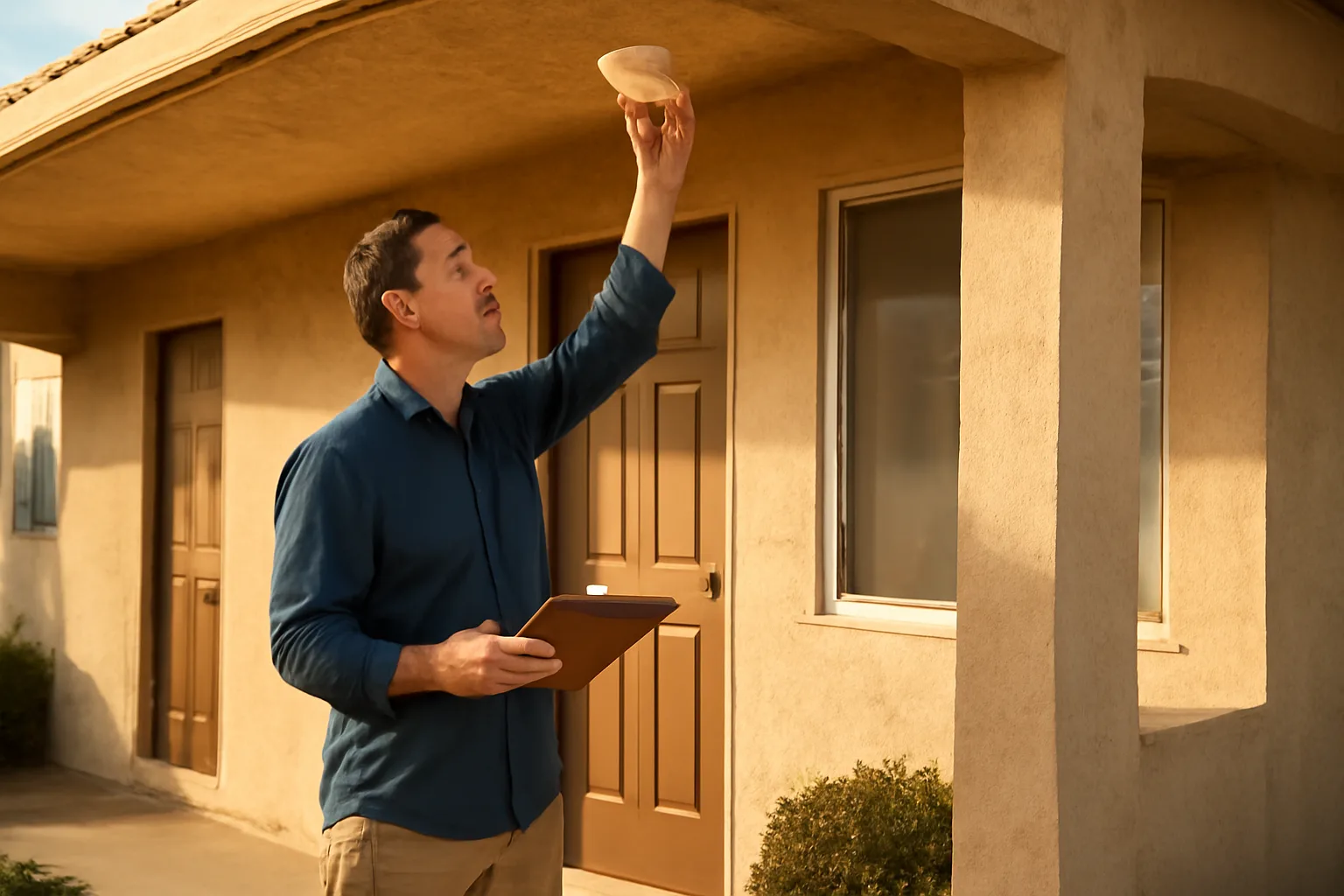
The landlord is generally responsible for arranging and documenting move-in and move-out walk-through inspections, and California law gives tenants a specific right tied to move-out: the pre-move-out inspection. Under Civil Code Section 1950.5(f), a tenant has the right to request an initial inspection before they move out, done no earlier than two weeks before the end of the tenancy [6]. The landlord must give at least 48 hours' written notice before that inspection (unless the tenant waives it), and after the inspection, the landlord must give the tenant an itemized statement of anything that needs fixing or cleaning to avoid deductions from the security deposit, along with a chance to fix those things themselves before move-out [6]. This inspection right exists specifically to reduce deposit disputes; it's baked into the deposit-return statute, not a separate inspection law. Separately, if your city runs a proactive rental inspection program (checking for code violations, habitability issues, smoke detectors, etc.), the landlord is the one who has to schedule the inspection, let the inspector in (or coordinate access with the tenant), and fix whatever violations get written up. Tenants don't have to conduct these; they just have to allow reasonable access. California Civil Code Section 1954 requires landlords to give reasonable written notice, typically at least 24 hours, before entering for inspections in most circumstances [7].
What can a landlord look at during an inspection?
During a routine or move-out inspection, a landlord can generally check the physical condition of the unit: walls, floors, ceilings, appliances, plumbing and electrical fixtures, windows, doors, smoke and carbon monoxide detectors, and evidence of pest issues or unauthorized alterations. The purpose has to be legitimate, tied to the reasons California law allows entry. Civil Code Section 1954 lists the lawful reasons a landlord can enter a rental unit: to make necessary or agreed repairs, to show the unit to prospective tenants or buyers, in an emergency, when the tenant has abandoned the property, or under a court order [7]. A general inspection to check habitability or lease compliance typically falls under a landlord's right to inspect the premises, but the notice and reasonable-hours rules still apply. What a landlord should not do during an inspection is search personal belongings, go through drawers, closets, or personal papers unrelated to the condition of the unit, or use the visit as a pretext to harass the tenant or retaliate for a complaint. Inspections are about the property's condition, not the tenant's possessions or lifestyle. If a city inspector is doing a code-compliance inspection, they're checking for things like working smoke detectors, safe electrical panels, no illegal room conversions, adequate heat, and no serious mold or pest infestation, generally the same categories covered by the implied warranty of habitability under Civil Code Section 1941.1 [5].
How much notice does a landlord have to give before entering or inspecting?
In California, the general rule is at least 24 hours' written notice before entering a rental unit, per Civil Code Section 1954, and entry has to happen during normal business hours unless the tenant agrees otherwise [7]. The notice should state the date, approximate time, and purpose of entry. For the pre-move-out inspection specifically, Civil Code Section 1950.5(f) requires at least 48 hours' written notice of the date and time of that inspection [6]. This is longer than the general entry notice because it's tied to the deposit-return process and gives the tenant a meaningful chance to prepare or be present. Emergencies are the exception: if there's a genuine emergency (a burst pipe, a gas leak, fire risk), a landlord can enter without advance notice. Outside of emergencies, showing up unannounced, even for a "quick look," is not allowed under California law, and doing it repeatedly can expose a landlord to a claim for violation of the tenant's right to quiet enjoyment.
What rights do tenants have without a lease in California?
A tenant without a written lease in California still has real legal protections; "no lease" does not mean "no rights." If rent is paid and accepted on a periodic basis (monthly, for example), California law treats that as a month-to-month tenancy, and the tenant gets the same core protections as someone with a written lease: the right to a habitable unit under Civil Code Section 1941.1 [5], the right to proper notice before entry under Section 1954 [7], and the right to proper notice before eviction. For termination, a landlord generally has to give at least 30 days' written notice to end a month-to-month tenancy if the tenant has lived there less than a year, or 60 days' notice if the tenant has lived there a year or more, under Civil Code Section 1946.1 [8]. If the unit is covered by the statewide Tenant Protection Act (most buildings older than 15 years, with some exemptions for single-family homes and certain owner-occupied duplexes), the landlord also needs a "just cause" reason to terminate, more than notice, once the tenant has occupied the unit for 12 months or more [4]. A tenant without a lease also keeps the right to a rent increase notice (generally 30 days for increases up to 10% in a 12-month period, 90 days for larger increases) and the right to have their security deposit returned or accounted for within 21 days of move-out under Section 1950.5 [6]. No written lease just means the terms default to month-to-month and to whatever the statute fills in; it doesn't strip away the state's baseline tenant protections.
Why do landlords require renters insurance?
Landlords require renters insurance mainly to shift liability and personal property risk away from themselves and their own policy. A landlord's insurance covers the building structure and the landlord's own liability; it typically does not cover a tenant's personal belongings (furniture, electronics, clothing) if there's a fire, burst pipe, theft, or other loss. Requiring renters insurance (commonly requiring liability coverage of $100,000 or more, though the number is a lease term, not a state-mandated figure) protects the landlord in a few concrete ways. If a tenant accidentally causes a kitchen fire or a bathtub overflow that damages a neighboring unit, the tenant's liability coverage can pay for that damage instead of the landlord's policy taking the hit (and the landlord's premiums rising as a result). It also reduces the odds a tenant sues the landlord for their own lost belongings after a covered loss, since the tenant has their own payout source. California does not require landlords to mandate renters insurance; this is a lease-term decision, not a legal requirement, so a landlord who wants it has to write it into the lease and enforce it consistently for all tenants (to avoid fair housing problems from applying it selectively). Many landlords require proof of an active policy at move-in and annually after that.
What can't a landlord do in Ohio? (and why this doesn't affect California landlords)
This question shows up a lot in searches, but it's an Ohio landlord-tenant law question, not a California one, so the short answer is: Ohio's rules don't apply to California rentals at all, and vice versa. Ohio's landlord obligations and restrictions come from Ohio Revised Code Chapter 5321, the Ohio Landlords and Tenants Act, which covers things like the landlord's duty to maintain habitable premises, rules on entry notice (Ohio generally expects reasonable notice, commonly treated as 24 hours in practice), and restrictions on retaliatory conduct and self-help eviction [9]. If you're a California landlord and this question came up because you manage properties in both states, or because a search engine mixed the results together, the practical point is that you can't apply Ohio's statute numbers or notice periods to a California property. California's equivalent protections live in Civil Code Sections 1941.1 (habitability), 1954 (entry notice), 1946.1 and 1946.2 (termination notice and just cause), and 1950.5 (security deposits) [4][5][6][7][8]. If you own property in both states, treat them as two separate compliance checklists; the notice periods, deposit rules, and eviction procedures are not interchangeable.
What state and local rules should California landlords track alongside licensing?
Even where a city has no rental license or registration program at all, California landlords still operate under a set of statewide rules that function like a baseline license, in the sense that skipping them creates real liability. Here's the core list: habitability duties under Civil Code Section 1941.1 [5], security deposit limits and return timelines under Section 1950.5 (deposits generally capped at the equivalent of two months' rent for unfurnished units, and the landlord has 21 days after move-out to return the deposit or provide an itemized statement) [6], entry notice rules under Section 1954 [7], termination notice rules under Section 1946.1 [8], and the statewide rent cap and just-cause protections under the Tenant Protection Act, Civil Code Section 1946.2 [4]. On top of that state layer, check with your specific city (see tenants rights and renters rights for how local rules interact with state law) for anything local: rental registration numbers, business license requirements, proactive inspection programs, or local rent control ordinances that go further than the state cap. Cities like Los Angeles, Oakland, San Francisco, and Berkeley each run their own registration and, in some cases, rent board systems layered on top of state law [2][3].
How do I find out if my city requires a rental license or inspection?
Search your city name plus "rental registration" or "rental inspection program" and look for a .gov result, or call your city's housing department or code enforcement office directly. Don't rely on general web results or landlord forums for the current fee or deadline; municipal fee schedules change, sometimes annually, and outdated numbers cause real problems if you budget or plan around them. When you call, ask specifically: is there a rental registration or license requirement for my property type (single-family, duplex, multifamily)? Is there a periodic inspection cycle, and what triggers it (tenant complaint, routine schedule, change of occupancy)? What's the current fee, and is it annual or one-time? What's the penalty for missing a deadline? Getting these answers before you list a unit, not after you get a notice, saves money. Some California cities' late fees or non-compliance penalties stack up fast: a missed inspection deadline can trigger a re-inspection fee, then a citation, then in some cases a hold on the certificate of occupancy needed to legally re-rent the unit. Confirm with your city rental licensing office for the exact current fee schedule and deadlines that apply to your specific address, since these are set locally and do vary by city and sometimes by unit count.
What happens if I ignore a city rental license or inspection notice?
Ignoring a rental registration, license, or inspection notice in a California city that requires one typically escalates in a predictable pattern: a warning or notice of non-compliance, a fine or civil penalty if you miss the deadline, and in more serious or repeated cases, restrictions on your ability to collect rent or evict a tenant until you're in compliance. Some cities also link licensing status to code enforcement priority, meaning an unlicensed rental gets inspected sooner, not later, once it's flagged. And a few jurisdictions have used lack of a valid rental license as a defense a tenant can raise in an unlawful detainer (eviction) case, arguing the landlord can't enforce a lease on a property that isn't legally licensed to rent. The cheapest path is almost always to register or get inspected on the first notice rather than waiting. If you're behind on paperwork right now because a notice just landed, focus on three things this week: confirm the exact requirement and fee with your city office, gather the documents they'll ask for (proof of ownership, unit count, sometimes a habitability self-certification), and schedule any required inspection as soon as a slot opens, since inspector calendars in busier cities can run weeks out. If you want a structured way to organize what a city typically asks for before you call, our $79 City Rental License & Inspection Prep Packet walks through the common document list and inspection prep steps landlords in licensing cities are usually asked for.
Frequently asked questions
Does California have a statewide landlord license?
No. California has no state-issued landlord license or rental license. Licensing, registration, and inspection requirements for residential rentals are set at the city level, so requirements vary widely: some cities require nothing, others require annual registration or periodic inspections. Confirm with your specific city's housing or code enforcement office.
What is the California motor vehicle rental license actually about?
It refers to licensing and regulation of car rental companies, governed in part by Civil Code Section 1936, which covers rental car company disclosures like damage waivers [1]. It has no connection to residential rental property or landlord licensing.
How to become a landlord in California without a real estate license?
You don't need a real estate license to rent out your own property in California. You need clean ownership paperwork, landlord insurance, compliance with your city's rental registration or inspection rules if any apply, and a lease that follows state law on deposits, notice, and habitability.
Who does the walk-through inspection, the landlord or the tenant?
The landlord arranges and conducts (or hires someone to conduct) move-in and move-out walk-through inspections. Tenants have the right to request a pre-move-out inspection under Civil Code Section 1950.5(f), with at least 48 hours' notice, so they can fix issues before the final deposit accounting [6].
What can a landlord look at during a rental inspection?
A landlord can check the physical condition of the unit: appliances, plumbing, electrical, smoke detectors, structural issues, and signs of pest problems or unauthorized alterations. A landlord cannot search personal belongings or use an inspection as pretext to harass or retaliate against a tenant.
How much notice does a California landlord have to give before entering?
Generally 24 hours' written notice for routine entry under Civil Code Section 1954, during normal business hours [7]. For the specific pre-move-out inspection, the notice requirement is at least 48 hours under Section 1950.5(f) [6]. Emergencies are an exception to notice requirements.
What rights does a tenant have in California without a signed lease?
A tenant paying rent regularly without a written lease is a month-to-month tenant under California law, with the same core protections: habitability rights, entry notice rules, 30 or 60-day termination notice depending on tenancy length, and just-cause eviction protection if the unit is covered by the Tenant Protection Act [4].
Why do landlords require renters insurance if state law doesn't mandate it?
Renters insurance shifts liability and property-loss risk to the tenant's own policy. If a tenant causes accidental damage (fire, water leak) that affects other units or the tenant's own belongings, their insurance pays instead of the landlord's, protecting the landlord's premiums and reducing dispute risk.
What is landlording as opposed to just owning a rental?
Landlording is the ongoing work of managing a rental: collecting rent, screening tenants, doing repairs and inspections, giving legally required notices, and staying current on state and local law. Owning a rental is passive; landlording is the active management side of that ownership.
What can't a landlord do in Ohio, and does that apply in California?
Ohio's landlord restrictions come from Ohio Revised Code Chapter 5321, covering habitability duties, entry notice, and bans on retaliation and self-help eviction [9]. These rules apply only in Ohio. California landlords follow separate statutes: Civil Code Sections 1941.1, 1954, 1946.1, 1946.2, and 1950.5.
Do I need a business license to rent out one house in California?
It depends entirely on your city. Some California cities require a business license or rental registration even for a single rental unit; others don't. There's no statewide rule either way, so confirm with your city's business license or housing department before you list the unit.
What happens if I miss my city's rental inspection deadline?
Typically a warning first, then a fine or civil penalty, and in more serious or repeated cases a hold on rent collection or eviction rights until the property comes into compliance. Exact penalty amounts and escalation steps vary by city; confirm with your local rental licensing office.
Sources
- California Legislative Information, Civil Code Section 1936: Civil Code Section 1936 governs rental car company disclosures and damage waivers, unrelated to residential rental licensing
- Los Angeles Housing Department, Rent Registry: Los Angeles requires annual registration for most units covered by the Rent Stabilization Ordinance
- City of Oakland, Rent Adjustment Program: Oakland requires registration for units covered by its Rent Adjustment Program
- California Legislative Information, Civil Code Section 1946.2: The Tenant Protection Act requires just cause for eviction after 12 months of tenancy in covered units
- California Legislative Information, Civil Code Section 1941.1: Civil Code Section 1941.1 defines the habitability standards a landlord must maintain
- California Legislative Information, Civil Code Section 1950.5: Tenants can request a pre-move-out inspection with 48 hours notice and landlords must return deposits or itemize deductions within 21 days
- California Legislative Information, Civil Code Section 1954: Landlords must give at least 24 hours written notice before entering a rental unit for repairs, inspection, or showing
- California Legislative Information, Civil Code Section 1946.1: Landlords must give 30 or 60 days notice to terminate a month-to-month tenancy depending on length of occupancy
- Ohio Laws and Rules, Revised Code Chapter 5321: Ohio's Landlords and Tenants Act governs habitability, entry notice, and prohibitions on retaliation for Ohio rentals