Last updated 2026-07-26
TL;DR
There's no federal law requiring landlords to repaint on a set schedule. Painting is legally required when peeling or flaking paint creates a habitability problem, a lead paint hazard (pre-1978 units under 24 CFR 35), or a lease/local code violation. Otherwise, most landlords repaint every 3-5 years between tenants as maintenance, not obligation.
Is there a law that says landlords have to repaint between tenants?
No. There's no federal statute and, in the large majority of states, no state statute that requires a landlord to repaint a rental unit on any fixed schedule. What you're bound by instead is the implied warranty of habitability, which most states recognize either by statute or court decision. That warranty requires the unit to be safe and livable, not freshly painted. Peeling, cracking, or flaking paint can trigger a legal obligation if it creates a hazard, like exposing bare wood that lets moisture in, or (in older buildings) exposing lead paint. Cosmetic wear alone, like a slightly dingy wall or scuff marks from the last tenant, usually isn't a code violation anywhere. Some cities do set their own standards through housing codes tied to rental licensing or inspection programs. If your city requires periodic rental inspections, check the property maintenance code your city has adopted, since many municipalities use a version of the International Property Maintenance Code, which at Section 305 requires interior surfaces to be maintained in "good, clean and sanitary condition" and free of "holes, breaks, and loose or rotting materials" [1]. That standard can require repainting damaged surfaces even though it doesn't set a repaint interval. Bottom line: no calendar-based law exists. The obligation shows up when paint condition crosses into a safety or code problem, not before.
When does peeling or old paint become a legal problem?
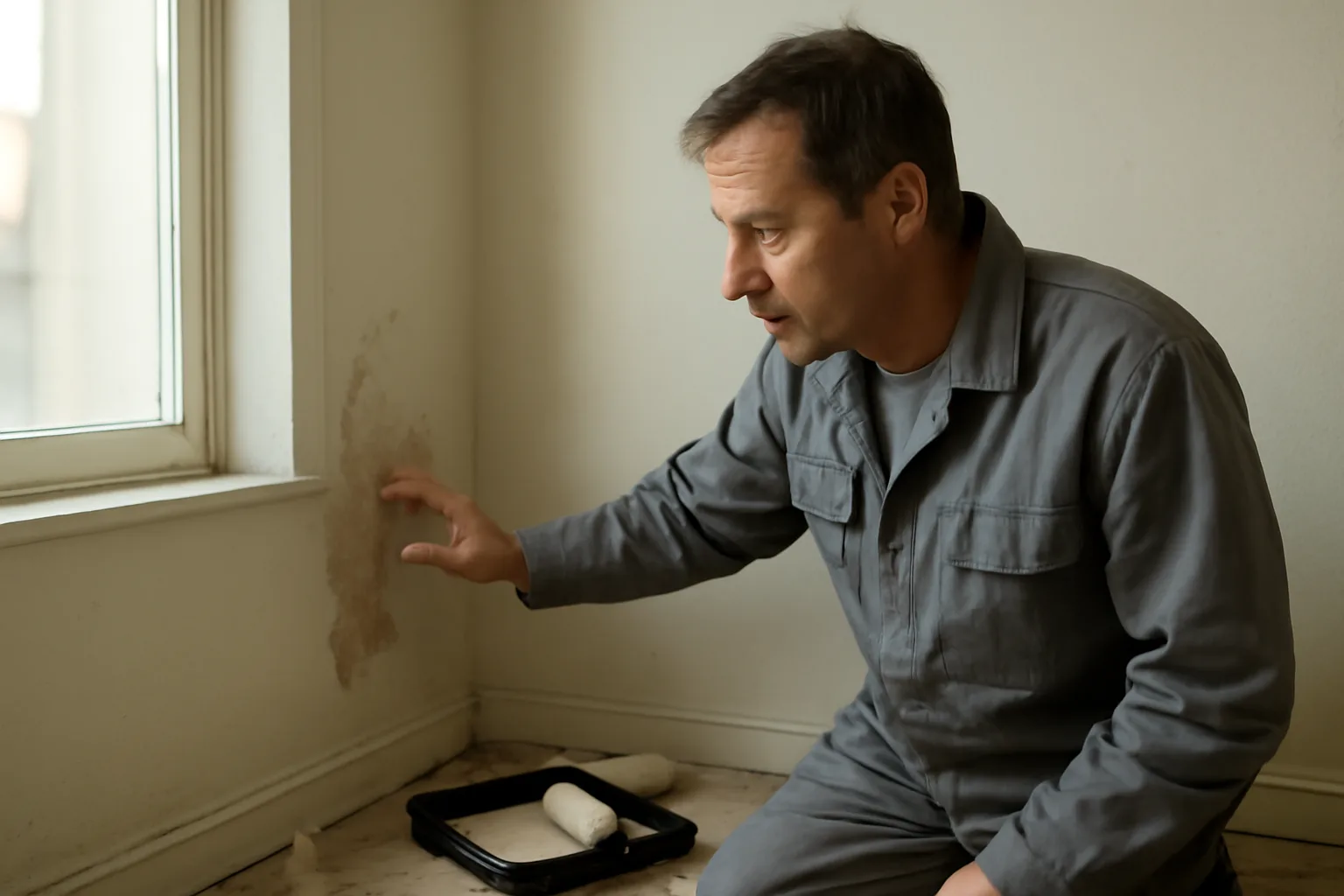
Peeling paint becomes a legal issue in three situations: it creates a lead hazard, it lets in water or pests through exposed wood, or a local housing code inspector cites it as a maintenance violation. Any one of these can force repainting outside your normal turnover schedule. The biggest trigger is lead paint. If your property was built before 1978, federal rules under 24 CFR Part 35 require disclosure of known lead-based paint hazards to tenants at lease signing, and HUD-assisted housing has additional maintenance and reevaluation requirements for lead paint hazards [2]. The EPA's Renovation, Repair and Painting (RRP) Rule (40 CFR Part 745, Subpart E) also requires that contractors and, in many cases, landlords doing renovation, repair, or painting work that disturbs more than 6 square feet of interior painted surface in pre-1978 housing be lead-safe certified and follow containment practices [3]. That means a large repaint job in an old building isn't just paint and labor, it might legally require lead-safe work practices. Second, if paint failure exposes bare wood or drywall to moisture, that's a habitability and maintenance issue under almost every state's warranty of habitability standard, separate from any paint-specific rule. Third, in cities with mandatory rental licensing or inspection programs, an inspector citing peeling or damaged paint as a code violation creates a repaint deadline you didn't choose. That's usually spelled out in the notice of violation with a cure period, commonly 30 days but confirm with your city rental licensing office since these timelines vary widely by jurisdiction.
What can a landlord look at during an inspection?
A landlord (or a city inspector, if you're in a jurisdiction with mandatory rental inspections) can generally look at anything related to health, safety, and code compliance: smoke and CO detectors, electrical panels, plumbing fixtures, HVAC condition, window and door function, paint condition, signs of pests or mold, and structural issues like flooring or ceiling damage. What they typically cannot do is search personal belongings, open closed drawers or containers, or treat the inspection as a general search of the tenant's things. For landlord-initiated inspections (not city code inspections), the visit is usually limited to reasonable purposes: checking for damage, verifying smoke detector function, confirming no unauthorized occupants or pets, and general habitability upkeep. Most states require landlords to give advance notice before entering an occupied unit for a routine inspection, most commonly 24 hours, though some states specify 48 hours or don't set an exact number and instead require "reasonable notice." California, for example, requires "reasonable notice in writing," with 24 hours presumed reasonable absent contrary evidence, under California Civil Code Section 1954 [4]. For city rental inspection programs, inspectors are typically checking against a specific property maintenance code checklist covering the exterior, interior common areas, and each unit's health and safety systems. If you're prepping for one of these, our tenant rights guide and our rental packet resources cover what documentation cities commonly ask for alongside the physical walkthrough.
Who is responsible for a rental property walk-through inspection in California?
In California, the landlord is generally responsible for conducting or arranging the move-in and move-out inspections, but the tenant has a legal right to participate. California Civil Code Section 1950.5 requires that, before deducting from a security deposit for repairs or cleaning, a landlord must (if the tenant requests it) do an initial inspection before the tenant moves out, give the tenant an itemized statement of anticipated deductions, and give the tenant the opportunity to fix the issues themselves before move-out [5]. That means the landlord schedules and performs the inspection, but the process is built around giving the tenant a chance to see what's being flagged, including any paint or wall damage, before final deposit deductions happen. This is separate from any city rental inspection program; some California cities (San Francisco, Los Angeles, and others) run their own mandatory rental inspection or registration programs on top of state deposit law, so check with your specific city's rental housing department for those requirements. For multi-unit buildings in California cities with proactive rental inspection programs, the property owner is typically the one who has to register the property, schedule the inspection with the city, and be present or have a representative present.
How much notice does a landlord have to give before entering to paint or inspect?
Most states require some form of advance notice before a landlord enters an occupied unit for non-emergency purposes like inspections, repairs, or painting, and 24 hours is the most common standard, though it isn't universal. California sets a presumption of 24 hours reasonable notice under Civil Code Section 1954 [4]. Florida requires "reasonable notice," and Florida Statute 83.53 specifies that 12 hours' notice is presumed reasonable for the purpose of repair [6]. Other states, like Texas, don't set a specific statutory notice period for entry at all, leaving it to lease terms and general reasonableness. For emergencies (a burst pipe, fire, gas leak), no notice is required in any state; landlords can enter immediately to address the hazard. For planned work like a repaint, treat it like any other non-emergency entry: give written notice with a specific date and window of time, and follow whatever period your state or lease requires. If you're painting a unit for a code violation cure, the city's notice of violation may specify its own separate access requirements or deadlines distinct from your state's tenant-entry notice law. Read both. They aren't the same thing and a city compliance deadline doesn't override the tenant's statutory notice rights for entry.
What a landlord cannot do in Ohio (and how it relates to paint and maintenance)
Ohio law spells out specific landlord obligations and prohibitions under Ohio Revised Code Section 5321.04, which requires landlords to keep the premises in a "fit and habitable condition" and to comply with applicable building, housing, and health codes that materially affect health and safety [7]. What Ohio landlords cannot do includes shutting off utilities to force a tenant out, changing the locks without a court order (self-help eviction is illegal under Ohio law), or retaliating against a tenant who reports a code violation, which is addressed under Ohio Revised Code Section 5321.02's protections against retaliatory conduct [8]. On maintenance specifically, Ohio's habitability statute doesn't name paint condition directly, but peeling paint that violates a local housing code, or that creates a lead hazard in a pre-1978 unit, falls under the landlord's duty to comply with codes affecting health and safety. Several Ohio cities, including Cleveland and Cincinnati, run their own rental registration and inspection programs with property maintenance codes that do address paint and wall surface condition; confirm the specific standard with your city rental licensing office since it isn't uniform statewide. If you're an Ohio landlord dealing with a repaint cited during a city inspection, the fix generally has to happen within whatever cure period the violation notice states, separate from and in addition to the state law backdrop above.
What is landlording, and what is a landlord?
A landlord is the owner (or the owner's authorized agent) of real property who leases that property to another person, the tenant, in exchange for rent. Landlording is the ongoing work of managing that relationship and the property itself: collecting rent, handling repairs, following state and local landlord-tenant law, managing lease renewals and terminations, and keeping the property compliant with any applicable rental licensing or inspection requirements. It's a mix of legal compliance and physical property management. The legal side includes following your state's landlord-tenant statute (every state has one, often modeled loosely on the Uniform Residential Landlord and Tenant Act, though adoption and specifics vary widely by state), giving proper notice for entry and lease changes, and handling security deposits correctly. The physical side includes maintenance, repairs, and yes, sometimes painting, when it crosses from cosmetic into a code or habitability issue. For a first-time landlord, the workload surprises people. It's more than deposit checks and rent collection. It's code compliance, insurance, tax reporting, and increasingly, in a growing number of cities, mandatory rental registration or licensing paperwork with its own inspection cycle.
How do you become a landlord, and how do you actually run the job well?
Becoming a landlord legally just requires owning rental property and leasing it out, but doing it well (and legally) takes more setup than most first-timers expect. Here's the realistic checklist: 1. Check your local rental licensing rules first. A growing number of cities require landlords to register or license a rental property, sometimes before you can legally rent it out at all. This step gets skipped constantly and it's the one that generates fines. 2. Get proper landlord insurance (a standard homeowner's policy usually doesn't cover a rental; you need a landlord/dwelling policy). 3. Learn your state's security deposit law: caps on the amount, timelines for return (commonly 14 to 60 days depending on the state), and required itemization. 4. Write or get a lease that complies with your state's landlord-tenant statute, covering entry notice, habitability, and termination terms. 5. Set up separate finances and record-keeping for the property; this matters for taxes and for any city audit of your rental license. 6. Know your local habitability and maintenance code, since this is what determines things like the paint question above. If your city requires a rental license or a pre-occupancy inspection, that step usually needs to happen before or shortly after you get your first tenant, not as an afterthought. For landlords navigating that first city inspection cycle, our $79 City Rental License & Inspection Prep Packet walks through the common documentation and pre-inspection checklist items cities ask for, though the exact requirements always vary by city, so confirm specifics with your local rental licensing office.
Why do landlords require renters insurance?
Landlords require renters insurance mainly to cover the tenant's personal property and liability, not the building itself. A landlord's own insurance policy covers the structure and the landlord's liability, but it generally does not cover a tenant's belongings if there's a fire, burst pipe, or theft, and it doesn't cover the tenant's personal liability if a guest gets hurt in their unit or the tenant accidentally causes damage. Requiring renters insurance shifts that risk away from the landlord. If a tenant's negligence causes a fire or water damage, a renters insurance policy's liability coverage can reimburse the landlord for damage the tenant caused, instead of the landlord absorbing it or fighting the tenant directly for reimbursement. It's a genuinely useful requirement, and it's inexpensive for tenants; national average costs for renters insurance run in the range of roughly $15 to $20 per month depending on coverage and location, according to industry rate surveys (these are carrier-reported averages, not a government figure, so treat them as a ballpark). Many leases now make renters insurance mandatory as a lease condition. That's legal in most states as long as it's disclosed as a lease term, though a few states or cities have specific rules about how it can be enforced or bundled, so check your state's landlord-tenant statute if you're adding this requirement for the first time.
What rights do tenants have without a signed lease?
A tenant without a signed lease still has legal rights, most importantly the right to habitability, the right to proper notice before eviction, and the right to proper notice before entry, all under state landlord-tenant law regardless of whether a written lease exists. If a tenant is paying rent and the landlord is accepting it, most states treat this as a month-to-month tenancy at will, governed by the state's default statutory terms. Without a written lease, the terms default to whatever the state's landlord-tenant statute provides: typically a 30-day notice to terminate a month-to-month tenancy (some states specify different periods), the state's standard security deposit rules if a deposit was collected, and the same habitability and repair obligations that apply to any tenancy. Verbal agreements can still be legally binding for terms like rent amount, though they're much harder to prove in a dispute. What a tenant without a lease does NOT get is protection from month-to-month rent increases or termination with proper notice; that flexibility (for both sides) is exactly what a lease's fixed term would otherwise lock in. For more on tenant protections generally, see our tenants rights and renters rights guides.
Painting requirements by trigger: a quick comparison
| Normal wear between tenants, no damage | No | Landlord/tenant custom, not law | |
|---|---|---|---|
| Peeling paint exposing bare wood, causing moisture intrusion | Yes | State habitability/warranty law | |
| Lead paint hazard in pre-1978 unit | Yes, hazard must be addressed; disclosure always required | 24 CFR Part 35 [2]; EPA RRP Rule, 40 CFR 745 Subpart E [3] | |
| City inspector cites peeling/damaged paint as code violation | Yes, within cure period on notice | Local property maintenance code (often based on IPMC Section 305) [1] | |
| Tenant simply dislikes the wall color | No | Not a legal issue; landlord discretion | The pattern: cosmetic preference never creates a legal obligation. Safety, hazard, and code citations do. |
Here's a simple way to think about when a repaint is legally required versus just recommended maintenance. | Situation | Legally required to repaint? | Governing rule |
Frequently asked questions
Do landlords have to repaint every year, or every certain number of years?
No federal or state law sets a fixed repaint schedule. Most landlords repaint every 3 to 5 years or between tenants as routine maintenance, but that's a business practice, not a legal requirement. The legal trigger is paint condition (peeling, hazard, code violation), not a calendar.
Can a tenant force a landlord to repaint for cosmetic reasons?
Generally no. A tenant can request a repaint, but a landlord isn't legally obligated to repaint for color preference or minor cosmetic wear. If paint is peeling, cracking, or exposing bare surfaces and creating a habitability issue, that's different and may be enforceable under the state's warranty of habitability.
What is landlording?
Landlording is the work of owning and managing rental property: collecting rent, handling repairs and maintenance, following state and local landlord-tenant law, managing leases, and complying with any rental licensing or inspection rules your city has in place.
What is a landlord?
A landlord is the owner, or the owner's authorized agent, who leases real property to a tenant in exchange for rent, taking on legal responsibilities for habitability, repairs, and compliance with landlord-tenant law in the process.
How to become a landlord?
Legally, you just need to own property and lease it out. Practically, first check your city's rental licensing or registration rules, get landlord insurance, learn your state's security deposit and entry-notice laws, and use a lease that complies with your state's landlord-tenant statute.
Who is responsible for a rental property walk-through inspection in California?
The landlord schedules and conducts the inspection, but California Civil Code Section 1950.5 gives the tenant the right to request an initial move-out inspection and get an itemized list of anticipated deposit deductions before they move out, so they can fix issues themselves first.
What rights do tenants have without a lease?
Tenants without a written lease still have habitability rights, entry-notice rights, and eviction-notice rights under their state's default landlord-tenant statute. Paying rent that the landlord accepts typically creates a month-to-month tenancy governed by state law, even with nothing in writing.
Why do landlords require renters insurance?
Renters insurance covers the tenant's belongings and personal liability, which the landlord's own property insurance doesn't cover. Requiring it protects the landlord from disputes over tenant-caused damage or injury claims, and it typically costs the tenant only around $15 to $20 a month.
How much notice does a landlord have to give before entering a unit?
It depends on the state. California presumes 24 hours is reasonable notice under Civil Code Section 1954. Florida presumes 12 hours reasonable for repairs under Florida Statute 83.53. Some states don't set an exact number and just require 'reasonable notice.' Check your specific state's statute.
What can a landlord look at during an inspection?
A landlord or code inspector can generally check smoke detectors, plumbing, electrical, HVAC, windows, paint condition, and signs of pests, mold, or structural damage. They typically cannot search personal belongings, closed drawers, or containers during a standard habitability or code inspection.
What a landlord cannot do in Ohio?
Under Ohio law, a landlord cannot shut off utilities to force a tenant out, change locks without a court order, or retaliate against a tenant for reporting a code violation. Ohio Revised Code Section 5321.04 requires landlords to maintain habitable conditions and comply with health and safety codes.
Is peeling paint always a code violation?
Not always. Peeling paint becomes a violation when it creates a hazard, like exposed bare wood, moisture intrusion, or a lead paint risk in a pre-1978 building, or when your city's adopted property maintenance code specifically flags it during an inspection. Purely cosmetic peeling in a newer building often isn't cited.
Does painting a rental unit require lead-safe certification?
If the building was built before 1978 and the paint job disturbs more than 6 square feet of interior painted surface, the EPA's Renovation, Repair and Painting Rule (40 CFR Part 745, Subpart E) generally requires lead-safe work practices and certified renovators, unless a lead-based paint inspection ruled it out.
Sources
- International Code Council, International Property Maintenance Code: Interior surfaces must be maintained in good, clean, and sanitary condition under Section 305 of the IPMC, a code many cities adopt for rental housing standards
- HUD, 24 CFR Part 35 (Lead-Based Paint Poisoning Prevention): Federal rules require disclosure of known lead-based paint hazards in pre-1978 housing and set maintenance/reevaluation requirements for HUD-assisted housing
- EPA, Renovation, Repair and Painting Rule, 40 CFR Part 745 Subpart E: Lead-safe work practices and certification are required for renovation/painting disturbing more than 6 square feet of interior painted surface in pre-1978 housing
- California Legislature, California Civil Code Section 1954: California requires reasonable written notice before landlord entry, with 24 hours presumed reasonable
- California Legislature, California Civil Code Section 1950.5: California landlords must offer an initial move-out inspection and itemized deduction list to tenants who request one, before withholding from a security deposit
- Florida Legislature, Florida Statute 83.53: Florida presumes 12 hours' notice is reasonable for landlord entry for the purpose of repair
- Ohio Legislature, Ohio Revised Code Section 5321.04: Ohio landlords must keep rental premises in a fit and habitable condition and comply with applicable health and safety codes
- Ohio Legislature, Ohio Revised Code Section 5321.02: Ohio law prohibits landlords from retaliating against tenants who report code violations or exercise legal rights