Last updated 2026-07-26
TL;DR
A landlord must repair anything that affects habitability: working heat, plumbing, hot water, electrical systems, weatherproofing, and freedom from pests and mold. This comes from the implied warranty of habitability, recognized in nearly every state, plus local housing codes. Cosmetic issues (scuffed paint, worn carpet) generally aren't required repairs unless a lease or local code says otherwise.
What is a landlord legally required to repair?
The short answer: anything that makes the unit unsafe, unsanitary, or unlivable. This duty comes from the "implied warranty of habitability," a legal doctrine that most state courts and legislatures recognize even when a lease says nothing about repairs. California's version is written into statute: Civil Code Section 1941.1 lists the specific conditions a rental must meet, including effective waterproofing, plumbing that conforms to code, hot and cold running water connected to a sewage system, heating that conforms to code, electrical lighting and wiring in good working order, clean common areas, and adequate trash receptacles [1]. Most states follow a similar pattern even without identical statutory language. The basics repeat everywhere: working heat during cold months, safe electrical wiring, functioning plumbing, no active leaks that cause mold or structural damage, and a building that's structurally sound (no collapsing porches, broken stairs, or unsecured entry doors). What's NOT usually required: cosmetic wear like faded paint, worn (but safe) carpet, minor nail holes, or outdated fixtures that still work. A leaky faucet is a repair issue. A dated kitchen countertop is not, unless your local code says otherwise or your lease promises an upgrade. City rental licensing programs often go further than state minimums. A city's rental inspection checklist might require smoke detectors in specific locations, GFCI outlets near water sources, or window locks on ground-floor units, on top of whatever your state's habitability law demands. Always confirm with your city rental licensing office before assuming your state law is the whole picture.
What is the legal standard for habitability, and where does it come from?
The implied warranty of habitability means a landlord promises, whether it's written down or not, that the unit meets basic standards of safety and livability for the length of the tenancy. This is different from an express warranty in a lease. It exists automatically in most jurisdictions, layered on top of whatever the lease actually says. Courts developed this doctrine starting in the late 1960s, moving away from the old "buyer beware" model of landlord-tenant law where a lease was treated like any other property transaction. The shift recognized that most tenants can't inspect wiring or plumbing before signing a lease the way a home buyer might with an inspector. HUD's guidance for public housing and Section 8 programs reflects a similar standard: units must meet Housing Quality Standards covering sanitary facilities, food preparation areas, space and security, thermal environment, illumination, sound insulation, and structural safety [2]. Even landlords who never touch a subsidized unit tend to get evaluated against a similar baseline by local code inspectors. When a landlord fails this duty, remedies vary by state: some allow "repair and deduct," where the tenant pays for the fix and subtracts it from rent. Others allow rent withholding into escrow, or in serious cases, lease termination. This is exactly the kind of dispute that also draws a city code inspector's attention, and unresolved conditions are one of the fastest ways to trigger a rental license violation or fine on top of tenant remedies.
What can a landlord look at during an inspection?
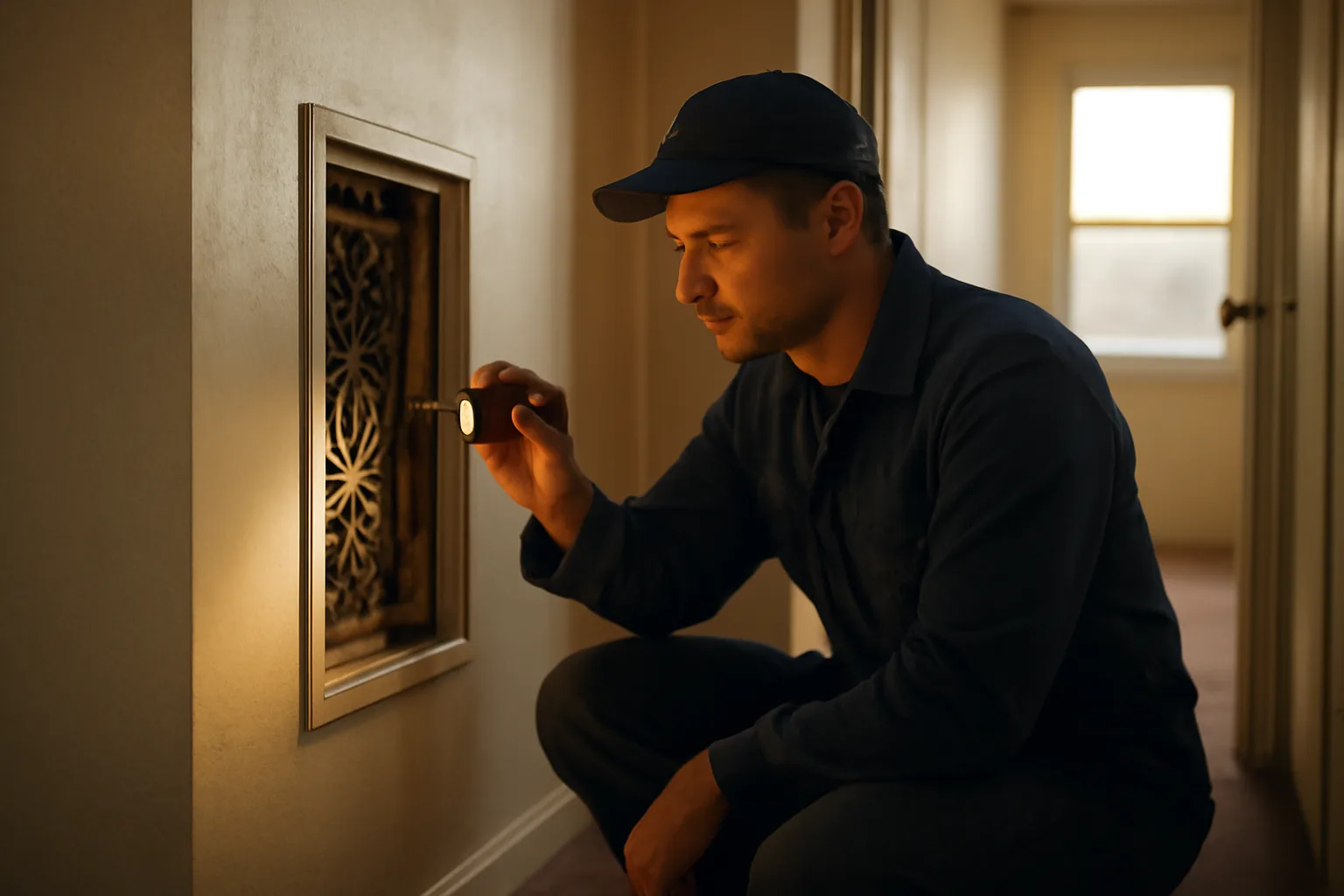
During a routine city rental inspection, the inspector is checking specific, code-based items, not doing a general walkthrough of your decorating choices. Typical items on a rental inspection checklist: smoke and carbon monoxide detectors (working, correctly placed), electrical panels and outlets, plumbing fixtures and water heater condition, egress windows in bedrooms, handrails and stair conditions, exterior paint and siding condition, pest evidence, and HVAC function. Inspectors generally do not have authority to go through personal belongings, open closets or drawers without cause, or inspect areas unrelated to health and safety code items. Most cities require advance notice before entry, often 24 to 48 hours, though this varies and you should confirm your city's specific notice requirement. For landlord-conducted walkthroughs (as opposed to city inspections), California law puts a specific duty on the landlord before move-out. Under Civil Code Section 1950.5, a landlord must give the tenant the option of an initial inspection before the final move-out inspection, done "at a time mutually agreed to," so the tenant has a chance to fix any issues that could otherwise be deducted from the security deposit [3]. This initial walkthrough responsibility falls on the landlord (or the landlord's agent), not the tenant, and not the city. If you're prepping for a licensing inspection specifically, walk your own unit first using your city's published checklist. This is exactly the gap our $79 City Rental License & Inspection Prep Packet is built to close: matching your city's specific inspection points before an inspector finds them for you.
Who is responsible for a rental property walkthrough inspection in California?
In California, the landlord (or their designated agent) is responsible for offering and conducting the pre-move-out inspection under Civil Code Section 1950.5(f). The tenant can decline this initial inspection, but the landlord must still offer it in writing, either in the lease or as a separate notice, and must give the tenant at least 48 hours' written notice of the date and time if the tenant wants it [3]. After the initial inspection, the landlord must give the tenant an itemized statement of the repairs or cleaning needed to avoid deposit deductions, along with a copy of the relevant code sections if requested. The tenant then has the opportunity to fix things themselves before the final inspection at move-out. This is separate from a city's rental licensing inspection, which is conducted by a government code enforcement officer, not the landlord. Some California cities (Los Angeles, Oakland, Berkeley among others) layer their own rent-registration or licensing inspection programs on top of this state-level deposit process. Confirm with your specific city's rental housing department which inspection type applies to your situation, since the responsible party and notice period differ.
How much notice does a landlord have to give before entering or inspecting?
This varies by state, and there's no single national rule. California requires "reasonable notice," which state law defines as 24 hours in most circumstances under Civil Code Section 1954 [4]. Other states set different defaults: some require 24 hours, some 48 hours, and a few don't specify a number at all, just "reasonable" notice determined by the circumstances. Emergency entry is the universal exception. If there's a fire, flood, gas leak, or similar hazard, landlords in essentially every state can enter without advance notice. For city rental license inspections specifically, the notice period is set by the municipal code or the inspection program, not by general landlord-tenant law. Some cities notify the landlord, who then must notify the tenant. Others send notice directly to the unit. Because this detail changes city to city and even program to program within the same city, confirm with your city rental licensing office exactly how much notice you'll get and who's responsible for informing the tenant. As a practical matter, giving more notice than the legal minimum is rarely a mistake. Tenants who get a week's notice for a licensing inspection are far less likely to be defensive or unprepared than tenants who get a 24-hour notice taped to the door.
What is landlording, and what does the job actually involve?
Landlording is the ongoing work of owning and managing a rental property: collecting rent, maintaining the unit, handling repairs, screening and communicating with tenants, and staying compliant with state and local law. It's part maintenance job, part bookkeeping, part legal compliance, and part customer service, whether you own one duplex or a ten-unit portfolio. The repair and maintenance side is the part most new landlords underestimate. Beyond emergency fixes, a landlord's ongoing duties typically include: keeping smoke and CO detectors functional (many states require this be checked at each tenant turnover), maintaining common areas in multi-unit buildings, keeping the building weatherproof, and responding to repair requests within a reasonable timeframe (often defined by state law as anywhere from 24 hours for no-heat emergencies to 30 days for non-urgent items). Landlording also means keeping up with your city's registration or licensing requirements if you're in a jurisdiction that has one. Many cities with rental licensing programs require annual or biennial renewal, a fee, and in some cases a passed inspection before the license is renewed. Missing a renewal deadline is one of the more common (and avoidable) ways landlords end up with a fine notice they didn't see coming.
What is a landlord, exactly, and where does the responsibility to repair come from?
A landlord is the owner (or authorized manager) of a property who rents it to a tenant in exchange for payment, under a lease or rental agreement. That basic relationship, owner renting to occupant, is what triggers the legal duties discussed throughout this article, regardless of whether the landlord owns one unit or fifty. The repair obligation attaches to the landlord because the landlord, not the tenant, holds legal control over the structure: the roof, the plumbing lines, the electrical system, the foundation. Tenants generally can't legally alter these systems even if they wanted to, so the law puts the maintenance burden on the party who can. This is true whether the landlord is an individual with a single rental house or a property management company running a large portfolio. Small landlords sometimes assume city licensing rules only apply to big operators. That's usually wrong: most municipal rental registration and licensing ordinances apply starting at one unit, with no minimum portfolio size exemption. Confirm your specific city's threshold, since a few programs do exempt owner-occupied duplexes or very small buildings.
How to become a landlord (and what compliance steps come first)
Becoming a landlord starts before you ever list a unit. The practical steps: buy or already own a property suitable for rental, check your local zoning to confirm rental use is allowed, register the property with your city if a rental registration or licensing program exists, get a rental license or certificate of occupancy if your city requires one, and set up a lease that complies with your state's landlord-tenant statute. Many first-time landlords skip the registration step because they don't know it exists until a neighbor complaint or a routine sweep brings a city inspector to the door. Cities with mandatory rental licensing (examples include many mid-size cities across the Midwest and Northeast, plus large cities like Los Angeles under its Rent Stabilization Ordinance registration requirement) can issue fines for operating without a valid license, sometimes retroactive to when the unit was first rented out. Before your first tenant moves in, walk the unit against your city's published inspection checklist (if one exists) rather than waiting for the city to do it for you. This catches missing smoke detectors, non-code stair rails, or expired water heater components while they're cheap fixes, not violation notices. A few states require landlord-specific registration for tax purposes too, separate from any city rental license. Confirm both your city's rental licensing office and your state department of revenue's requirements before your first lease signing.
How to be a landlord day to day: what ongoing repair duties look like
Being a landlord day to day means responding to maintenance requests, budgeting for wear and tear, and keeping records. The legal duty to repair isn't a one-time move-in obligation, it continues for the entire tenancy. A reasonable response-time framework, based on common state statutes and industry practice: emergency issues (no heat in winter, no water, active gas leak, sewage backup) same day or within 24 hours; urgent but non-emergency issues (broken appliance, minor leak, pest issue) within a few days to a week; routine or cosmetic requests within 30 days or the next reasonable opportunity. Document every repair request and every completed fix. This matters for two separate reasons: it protects you in a habitability dispute with a tenant, and it builds the maintenance history a city inspector may ask to see during a licensing renewal. Budget-wise, a widely cited industry rule of thumb (from property management and real estate investment sources, not government data) suggests setting aside roughly 1% of a property's value per year for maintenance and repairs, though actual costs vary heavily by building age and system condition. Older buildings with original plumbing or knob-and-tube wiring will run well above that.
What rights do tenants have without a lease?
Tenants without a written lease, sometimes called month-to-month or at-will tenants, still have the same basic habitability rights as tenants with a signed lease. The implied warranty of habitability doesn't depend on paperwork; it attaches to the tenancy itself. A landlord can't skip repair obligations just because there's no written agreement. What does change without a written lease is notice and termination. Month-to-month tenancies typically require 30 days' written notice to end (sometimes 60 days if the tenant has lived there a year or more, depending on the state). Rent increases for no-lease tenants usually also require the same notice period as termination. Tenants without a lease are still protected by state security deposit laws, anti-discrimination law under the federal Fair Housing Act, and any local just-cause eviction ordinance that applies in their city. A landlord who thinks "no lease" means "no rules" is setting up a bad legal position. For landlords, a verbal or no-lease arrangement is still a real tenancy in the eyes of the law. It just makes disputes harder to resolve cleanly since there's no written document to point to. Getting something in writing, even a short month-to-month agreement, protects both sides.
Why do landlords require renters insurance?
Landlords require renters insurance mainly to shift liability and property-damage risk away from themselves. A landlord's own property insurance covers the building's structure, but it typically does not cover a tenant's personal belongings, and it may not fully cover liability if a tenant's negligence (an unattended candle, an overflowing bathtub) causes damage. Renters insurance policies (commonly costing between roughly $15 and $30 a month depending on coverage and location, though this varies by market and isn't a government-set figure) usually include personal property coverage and liability coverage, meaning if the tenant accidentally causes a fire or a flood that damages a neighboring unit, the tenant's policy responds first instead of the landlord's. Requiring renters insurance is legal in nearly every state as a lease condition, as long as it's applied consistently across all tenants (to avoid fair housing discrimination claims). Some states and cities do cap what a landlord can charge if the landlord offers a master policy that tenants pay into instead of buying their own. For landlords managing multiple small units, requiring proof of renters insurance at lease signing and at each renewal is a low-cost way to reduce exposure to disputes over who pays for smoke damage, water damage from a tenant's fish tank, or a dog bite that happens inside the unit.
What can a landlord not do in Ohio specifically?
Ohio's landlord-tenant law (Ohio Revised Code Chapter 5321) spells out both landlord duties and prohibited actions. Ohio Revised Code Section 5321.04 requires landlords to comply with building and housing codes affecting health and safety, keep common areas safe and sanitary, maintain electrical, plumbing, and heating systems in good working order, and supply running water and reasonable hot water [5]. Ohio law also directly prohibits certain landlord actions. Under Ohio Revised Code Section 5321.02, a landlord cannot retaliate against a tenant for complaining to a government agency about code violations, joining a tenant union, or asserting rights under the landlord-tenant statute, by raising rent, decreasing services, or threatening eviction because of that complaint [6]. Retaliation claims give the tenant a defense in an eviction action and can expose the landlord to damages. Ohio also prohibits "self-help" evictions. A landlord cannot change the locks, shut off utilities, or remove a tenant's belongings to force them out, even if rent is unpaid. Ohio Revised Code Section 5321.15 makes this explicit: a landlord cannot recover possession by locking out the tenant, or by causing the interruption of any utility service, except through a proper court eviction proceeding . These Ohio-specific rules mirror what most states prohibit, but the statute numbers and exact remedies are state-specific. If you're landlording in Ohio, Chapter 5321 is the section worth reading in full, not summaries of it.
How does a repair obligation interact with a city rental license or inspection violation?
A failed habitability repair and a failed rental license inspection are two different legal tracks that often overlap on the same broken item. A tenant can sue or withhold rent over a habitability violation under state law. Separately, a city code inspector can issue a citation, a fine, or even suspend a rental license over the exact same broken furnace or missing smoke detector. This dual exposure is exactly why unresolved maintenance issues are so costly for small landlords. A $150 repair delayed for months can turn into a rent-withholding dispute with the tenant and a city fine on the same visit. City rental licensing fine ranges vary enormously: some cities cap first-offense fines in the low hundreds of dollars, others escalate quickly for repeat or unaddressed violations, and a few can suspend the rental license entirely until the property passes reinspection. Because fine schedules and escalation rules are set locally, confirm the specific fine structure with your city rental licensing office rather than assuming it matches a neighboring city. For landlords managing this across multiple units or juggling first-time compliance, having your city's specific checklist mapped out before the inspector arrives is the difference between a clean pass and a reinspection fee. That's the exact gap the $79 City Rental License & Inspection Prep Packet is built to close, matching your city's actual checklist instead of a generic national one.
Frequently asked questions
What is a landlord required to fix immediately versus within 30 days?
Emergencies like no heat in freezing weather, no running water, gas leaks, or sewage backup generally require same-day or 24-hour response under most state habitability standards. Non-emergency repairs like a broken appliance or a slow leak typically get 3 to 30 days depending on your state's specific statute. Confirm your state's exact timeline since it varies.
Is a landlord required to fix mold?
Yes, in most states, active mold caused by a structural issue (leak, poor ventilation, plumbing failure) falls under the habitability duty and must be remediated. Some states, like California, have specific mold disclosure and remediation guidance beyond the general habitability rule. Cosmetic mildew from tenant behavior (not opening windows, poor cleaning) is a grayer area and often not the landlord's sole responsibility.
Does a landlord have to fix a broken air conditioner?
It depends on your state and lease. Heat is almost universally required under habitability law; air conditioning is not always treated the same way. Some hot-climate states and specific cities do require functioning AC as a habitability item. Check your state statute and your lease language, since AC repair obligations vary more than heating obligations.
How to become a landlord if I've never rented out a property before?
Confirm your property is zoned for rental use, check whether your city requires rental registration or licensing, set up a compliant lease under your state's landlord-tenant law, and walk the unit against your city's inspection checklist before listing it. Many first-time landlords get caught by a licensing requirement they didn't know existed until a fine notice arrives.
Who is responsible for a rental property walkthrough inspection in California?
The landlord is responsible for offering an initial pre-move-out inspection under California Civil Code Section 1950.5(f), giving the tenant at least 48 hours' written notice if they want it. This is separate from any city rental licensing inspection, which is run by a government code enforcement officer, not the landlord.
What is landlording as a general concept?
Landlording is the full ongoing job of owning and operating rental property: maintenance and repair, rent collection, tenant communication, legal compliance with state landlord-tenant law, and, in many cities, meeting local rental registration or licensing requirements. It's a continuous responsibility, not a one-time transaction at lease signing.
What rights do tenants have without a signed lease?
Tenants without a written lease still get full habitability protections and standard notice rights (usually 30 days for month-to-month termination or rent increase). They're also protected under the federal Fair Housing Act and any local just-cause eviction ordinance. Lack of a lease doesn't reduce a tenant's legal protections, it just makes disputes harder to document.
Why do landlords require renters insurance from tenants?
Renters insurance shifts liability for tenant-caused damage (fire, water damage, injuries) and personal property loss away from the landlord's own policy. It's legal to require in nearly every state as long as it's applied consistently to all tenants, and typically costs tenants $15 to $30 a month depending on coverage and location.
How much notice does a landlord have to give before entering the unit?
Most states require 24 to 48 hours' notice for non-emergency entry; California sets 24 hours as the default reasonable notice under Civil Code Section 1954. Emergencies (fire, flood, gas leak) allow immediate entry without notice everywhere. City rental license inspections may have their own separate notice rule, so confirm with your local rental licensing office.
What can a landlord look at during a city rental inspection?
Inspectors typically check smoke and CO detectors, electrical panels and outlets, plumbing and water heater condition, egress windows, stair and handrail safety, exterior condition, and pest evidence, items tied to local housing code. They generally can't search personal belongings or closets without specific cause unrelated to safety code.
What can a landlord not do in Ohio?
Under Ohio Revised Code Section 5321.15, a landlord cannot lock out a tenant or shut off utilities to force them out; eviction must go through court. Ohio Revised Code Section 5321.02 also bars retaliation against tenants who file code complaints or assert legal rights, by raising rent, cutting services, or threatening eviction.
Is a landlord required to repair cosmetic damage like scuffed walls?
Generally no. Habitability law covers safety and function (heat, plumbing, electrical, structure), not appearance. Faded paint, worn carpet, or minor cosmetic wear from normal use typically aren't required repairs unless your lease specifically promises it or your local code addresses it directly.
Sources
- California Legislative Information, Civil Code Section 1941.1: Statutory list of conditions required for a rental unit to be tenantable in California
- California Legislative Information, Civil Code Section 1950.5: Landlord's duty to offer an initial pre-move-out inspection with 48 hours' written notice
- California Legislative Information, Civil Code Section 1954: 24-hour reasonable notice requirement for landlord entry into a rental unit in California
- Ohio Laws, Revised Code Section 5321.04: Ohio landlord obligations to maintain code compliance, plumbing, heating, and hot water
- Ohio Laws, Revised Code Section 5321.02: Ohio's prohibition on landlord retaliation against tenants who assert legal rights
- Ohio Laws, Revised Code Section 5321.15: Ohio's prohibition on self-help evictions including lockouts and utility shutoffs