Last updated 2026-07-25
TL;DR
Landlords generally must give 24 to 48 hours notice before entering for an inspection, can check safety systems and property condition but not search personal belongings, and can't enter without notice except in true emergencies. Rules vary by state; always confirm specifics with your local housing office before you schedule a walk-through or require renters insurance.
What is landlording, and what is a landlord exactly?
A landlord is the person or entity that owns residential property and rents it to someone else (the tenant) in exchange for money, usually under a lease or rental agreement. Landlording is the day-to-day work of running that arrangement: collecting rent, keeping the unit habitable, handling repairs, managing turnover, and staying on the right side of state and local law. It sounds simple until you're doing it. Landlording is part property management, part bookkeeping, part conflict resolution, and part compliance work. In cities with mandatory rental registration or licensing (and there are hundreds of them now, from Los Angeles to Minneapolis to Rockford, Illinois), it also means keeping a license current, passing periodic inspections, and paying registration fees on time. The legal definition matters too. Most state landlord-tenant statutes define a landlord as anyone who owns, operates, or has a legal right to possession of a dwelling unit that's rented out. That's a broad definition on purpose, it catches owner-operators, property management companies, and even a family renting out a basement apartment. If you take rent money for housing, you're a landlord in the eyes of the law, whether or not you think of yourself that way. For a broader look at how landlord obligations shift depending on where you own property, see landlord landlords.
How do you become a landlord?
Becoming a landlord starts with owning (or having legal authority over) a residential property you intend to rent out, then meeting whatever registration, licensing, or permitting rules your city and state require before you can legally collect rent. Here's the realistic path, in order: 1. Buy or already own the property. Many people become landlords by accident, they inherit a house, get a job transfer and decide to rent instead of sell, or buy a duplex and rent one unit while living in the other. 2. Check your state's landlord-tenant law. Every state has one. It covers security deposit limits, notice periods, habitability standards, and eviction procedure. The National Conference of State Legislatures keeps a state-by-state landlord-tenant statute index that's a solid starting point [1]. 3. Check whether your city requires rental registration or a rental license. This is separate from state law and is where a lot of new landlords get caught off guard. Cities like Minneapolis, Los Angeles, and Baltimore require a rental license or registration before you can legally rent, often with an inspection attached. 4. Get the property inspection-ready. Working smoke and carbon monoxide detectors, no exposed wiring, functioning heat, no active leaks. Most city rental inspections check basic health and safety items, not cosmetic condition. 5. Screen tenants legally. Follow the Fair Housing Act (42 U.S.C. § 3601 et seq.) [2], which bars discrimination based on race, color, national origin, religion, sex, familial status, or disability. 6. Get a lease in writing, collect a deposit within your state's legal cap, and set up a system for rent collection, maintenance requests, and recordkeeping. None of this needs to cost much upfront beyond the property itself. What trips people up is step 3. A landlord in a licensing city who skips registration can face fines that run into the hundreds or thousands of dollars depending on the jurisdiction, on top of being told to stop renting until they get compliant.
Who is responsible for the rental property walk-through inspection in California?
In California, the landlord is responsible for conducting a move-out walk-through inspection if the tenant requests one, and state law requires the landlord to give the tenant at least 48 hours written notice before that inspection happens. This comes from California Civil Code § 1950.5(f), which says a landlord must notify the tenant of their right to an initial inspection before the tenant moves out, so the tenant has a chance to fix any deficiencies before losing part of their security deposit [3]. The process works like this: the landlord (or their agent) does a pre-move-out inspection, gives the tenant an itemized list of what needs fixing or cleaning to avoid deposit deductions, and then does a final inspection after move-out to assess actual damage. Both inspections require the landlord to give reasonable notice, and California law treats 48 hours as reasonable for most entry purposes under Civil Code § 1954 [4]. This is separate from routine mid-tenancy inspections, which many California landlords do periodically to check on maintenance issues, smoke detector function, or lease compliance. Those also require 24-hour notice under most local interpretations of Section 1954's 'reasonable notice' standard, though the statute doesn't set a hard number for non-move-out entries; 24 hours is the commonly cited practical standard cities and courts point to.
What can a landlord look at during an inspection?
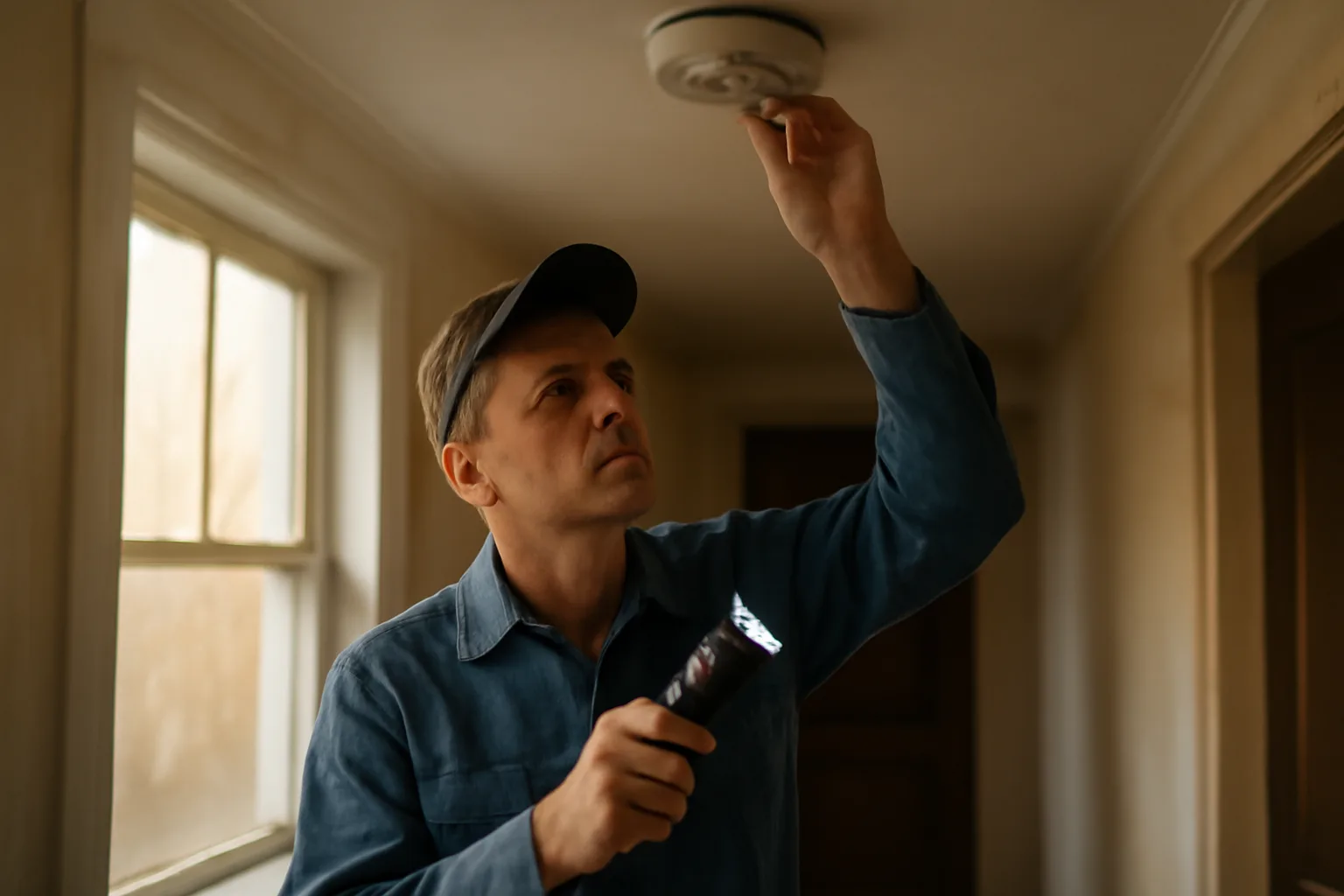
A landlord can generally check things directly tied to the property's condition and safety: smoke and carbon monoxide detectors, plumbing for leaks, HVAC function, signs of pest infestation, structural damage, and whether the unit is being used in a way that violates the lease (unauthorized occupants, unpermitted pets, illegal subletting). A landlord cannot use an inspection as a pretext to search through a tenant's personal belongings, closets, drawers, or private papers unless there's a specific and reasonable justification tied to a maintenance or safety issue (like checking for a leak source under a sink). Most state statutes frame landlord entry rights around 'inspecting the premises' for maintenance, repair, or showing the unit to prospective tenants or buyers, not general poking around. City rental inspection programs, separate from a landlord's own walk-through, are usually narrower still. A city inspector checking for rental license compliance typically looks at: working smoke and CO detectors, secure handrails and stairs, functioning heat, no exposed electrical wiring, proper egress from bedrooms, and no obvious code violations like mold or structural hazards. They are not there to judge cleanliness, decor, or clutter unless it creates a genuine safety hazard (blocked exits, hoarding conditions that block egress, that kind of thing). If you're prepping for a city inspection specifically, the checklist is usually published by the city's housing or code enforcement office and it's worth pulling directly rather than guessing. Confirm the exact checklist with your city rental licensing office before the inspection date, since items vary meaningfully between programs.
How much notice does a landlord have to give before entering?
Most states require landlords to give 24 to 48 hours advance notice before entering an occupied rental unit for a non-emergency reason, though the exact number and whether it has to be in writing varies by state. There's no single national standard; this is state law territory. | State | Typical notice required | Statute | |---|---|---| | California | 24 hours (reasonable notice presumed) | Civil Code § 1954 [4] | | Texas | No statutory minimum, but lease terms and 'reasonable notice' standard apply | Tex. Prop. Code Ch. 92 | | Florida | 12 hours | Fla. Stat. § 83.53 [5] | | Washington | 2 days (48 hours) | RCW 59.18.150 [6] | | Illinois | No statewide statute; check local ordinance | Confirm with city rental licensing office | A few things trip landlords up here. First, notice usually needs to state a reasonable time of day, more than 'sometime this week.' Second, most states allow landlords to enter without notice for genuine emergencies (fire, flooding, gas leak) but not for routine matters just because it's convenient. Third, some cities layer on their own notice rules on top of state law for licensed rental inspections specifically, so a state's 24-hour default doesn't always match what your city's inspection program requires for a scheduled compliance visit. If your lease says something different from your state's statutory minimum, the lease can't legally require less notice than the state floor, but it can require more. When in doubt, give more notice than the legal minimum. It costs you nothing and it keeps the relationship functional.
What rights do tenants have without a lease?
A tenant without a written lease, sometimes called a tenant-at-will or a month-to-month tenant by default, still has the same basic legal protections as any other tenant: the right to habitable housing, protection from illegal eviction, the right to advance notice before the landlord enters, and the right to get their security deposit back under their state's rules. What changes without a written lease is mostly about term length and proof. A verbal agreement to rent typically creates a month-to-month tenancy under most state law, meaning either party can end it with proper notice (commonly 30 days, though this varies by state and by how long the tenant has lived there). The tenant doesn't lose habitability rights, the landlord's implied warranty of habitability applies regardless of whether there's paper involved. The practical problem with no lease is evidentiary. If a dispute happens over rent amount, pet policy, or who pays for what repair, there's nothing in writing to point to. Courts generally default to state statutory rules when no written terms exist, which usually favors the tenant on ambiguous points since the landlord is the one who failed to put terms in writing. For tenants navigating this situation, tenant rights and tenants rights cover state-specific protections in more depth. For landlords, the lesson is straightforward: always use a written lease, even a simple one-page agreement, because verbal-only tenancies create real legal exposure for both sides.
Why do landlords require renters insurance?
Landlords require renters insurance mainly to shift liability. A landlord's own property insurance covers the building and their own belongings and equipment, but it typically doesn't cover a tenant's personal property or protect the landlord if a tenant's negligence causes damage or injury to someone else. Renters insurance (often costing $15 to $30 a month according to industry data commonly cited by state insurance departments) usually includes personal liability coverage, meaning if the tenant's dog bites a neighbor, or their unattended candle starts a fire, the tenant's policy, not the landlord's, is the first line of financial responsibility. There's also a practical reason: it protects the landlord's ability to collect. If a tenant causes damage beyond the security deposit and has no insurance and no assets, the landlord eats the loss or spends money on a judgment that's hard to collect. Requiring renters insurance is legal in most states as a lease condition, and some states have codified landlords' ability to mandate it explicitly [7]. A landlord can typically require proof of an active policy at move-in and periodically during the tenancy, and can require the landlord be listed as an 'interested party' on the policy so they're notified if it lapses. It's a reasonable ask, and most tenants who've shopped around find it cheap enough that it's not a real friction point in leasing.
What can't a landlord do in Ohio?
Under Ohio's Landlord and Tenant Act (Ohio Revised Code Chapter 5321), a landlord cannot shut off utilities, change locks, or remove a tenant's belongings to force them out, this is illegal 'self-help eviction' and Ohio law requires landlords to go through the formal court eviction process instead [8]. Specifically, Ohio Rev. Code § 5321.15 states a landlord cannot recover possession of the premises by taking specified illegal actions, and violating this exposes the landlord to the tenant recovering actual damages plus reasonable attorney fees [8]. That covers a lot of ground: no changing the locks without a court order, no shutting off water, gas, or electricity to pressure a tenant out, no removing doors or windows, no seizing a tenant's property to hold as unpaid-rent collateral. Ohio landlords also can't retaliate against a tenant for exercising a legal right, like reporting a code violation or joining a tenant union. Ohio Rev. Code § 5321.02 specifically prohibits retaliatory conduct including raising rent, decreasing services, or threatening eviction within a certain period after the tenant's protected action [9]. Ohio also requires landlords to maintain the property in a fit and habitable condition under § 5321.04, meaning things like working plumbing, heat, and structural safety aren't optional add-ons, they're baked into state law regardless of what the lease says [10]. And a landlord can't enter without giving 'reasonable notice' (Ohio courts generally treat 24 hours as reasonable, though the statute itself doesn't give a fixed number) except in genuine emergencies. If you're a landlord in Ohio dealing with a tenant dispute, this is exactly the kind of situation where a quick read of ORC 5321 saves you from a much more expensive mistake.
What does a landlord actually need to do to stay compliant, city by city?
This is where a lot of the theory above turns into paperwork. State landlord-tenant law sets the floor (notice periods, habitability, deposit limits), but your city's rental registration or licensing program is a separate, often more demanding layer, and it's the one that generates the fines people actually get hit with. A typical mandatory-licensing city program includes: an annual or biennial registration fee (commonly ranging from confirm with your city rental licensing office, since fees run anywhere from under $50 to several hundred dollars depending on unit count and city), a scheduled or complaint-triggered inspection, and a renewal cycle that resets the clock. Miss a renewal and many cities issue a violation notice with an escalating fine schedule, sometimes doubling or tripling if unresolved within a set window. This is the exact moment most landlords wish they'd had a checklist ready before the inspector showed up. Building out a city-specific compliance file (registration confirmation, smoke detector certification, lead paint disclosure if applicable, prior inspection reports) ahead of time turns a stressful surprise visit into a five-minute formality. That's the gap our $79 one-time City Rental License & Inspection Prep Packet is built to close, it walks you through what to gather before your city's inspector or license renewal notice shows up, organized by the categories cities actually check.
What should a first-time landlord do before the first tenant moves in?
Before you hand over keys, confirm four things: your city doesn't require a rental license or registration you haven't gotten yet, your state's security deposit and notice rules are reflected correctly in your lease, your smoke and CO detectors are installed and tested, and you have a plan for handling maintenance requests in writing (email or a simple portal, more than texts you'll lose track of). A lot of first-time landlords skip the license check because they assume it only applies to big property management companies. It doesn't. Cities like Los Angeles (Rent Stabilization Ordinance registration), Minneapolis (rental license required for nearly all rental property), and dozens of smaller cities require registration even for a single-unit landlord renting out a spare house. Skipping it doesn't just risk a fine, in some cities it can bar you from legally collecting rent or filing an eviction until you're registered. Get your lease reviewed against your specific state's statute, not a generic template pulled off the internet. Deposit caps (some states cap at one or two months' rent), notice periods, and required disclosures (lead paint for pre-1978 housing, under the federal Residential Lead-Based Paint Hazard Reduction Act, 42 U.S.C. § 4852d [11]) vary enough that a one-size template creates real legal risk. For a broader overview of the landlord role and how the day-to-day differs from what people expect going in, landlord is a good next read, along with tenant and tenant if you're weighing co-tenant or roommate situations on the lease.
Frequently asked questions
How to become a landlord with no experience?
Start by learning your state's landlord-tenant statute and your city's rental registration or licensing requirement, since both apply regardless of experience. Buy or convert a property, get it inspection-ready (smoke detectors, no safety hazards), use a written lease matched to your state's rules, and screen tenants under the federal Fair Housing Act, 42 U.S.C. § 3601 [2]. Many landlords learn on their first property.
What is landlording as a side income?
Landlording as side income means renting out one or a few units while keeping a primary job, handling maintenance, rent collection, and compliance yourself or through a part-time manager. It's real work, not passive money: expect ongoing costs for repairs, registration or license fees where required, and time spent on tenant communication and periodic inspections.
Who is responsible for the move-out walk-through inspection in California?
The landlord is responsible for scheduling and conducting the move-out walk-through if the tenant requests one, and must give at least 48 hours written notice under California Civil Code § 1950.5(f). The landlord provides an itemized list of deficiencies so the tenant can fix them before losing part of the security deposit [3].
What can a landlord look at during a routine inspection?
A landlord can check smoke and CO detectors, plumbing, HVAC, pest signs, structural condition, and lease compliance issues like unauthorized occupants. A landlord generally cannot search personal belongings, closets, or private papers without a specific safety reason tied to the inspection's purpose.
How much notice does a landlord have to give before entering the unit?
Most states require 24 to 48 hours notice for non-emergency entry. Florida requires 12 hours (Fla. Stat. § 83.53) [5], Washington requires 2 days (RCW 59.18.150) [6], and California treats 24 hours as reasonable under Civil Code § 1954 [4]. Confirm your specific state's rule since there's no federal standard.
What rights does a tenant have without a signed lease?
A tenant without a written lease still has full habitability rights, protection from illegal eviction, and entry notice rights under state law, typically as a month-to-month tenant. What's missing is written proof of specific terms like rent amount or pet rules, which makes disputes harder to resolve and generally favors the tenant on ambiguous points.
Why do landlords require renters insurance from tenants?
Renters insurance shifts liability for a tenant's personal property loss and for damage or injury the tenant causes to others onto the tenant's policy instead of the landlord's. It typically costs $15 to $30 a month and most states allow landlords to require it as a lease condition.
What can't a landlord do in Ohio specifically?
Under Ohio Rev. Code § 5321.15, a landlord cannot change locks, shut off utilities, or remove belongings to force a tenant out, this must go through formal court eviction [8]. Ohio also bars retaliation against tenants under § 5321.02 [9] and requires habitable conditions under § 5321.04 [10].
What is the difference between a landlord and a property manager?
A landlord owns the property or holds legal right to rent it out; a property manager is hired (often for a percentage of monthly rent) to handle day-to-day operations like rent collection, maintenance coordination, and tenant communication on the landlord's behalf. Many small landlords self-manage to avoid that fee.
Does every city require a rental license or registration?
No. Mandatory rental licensing and registration is a city-by-city or county-by-county decision, not a federal or usually even a statewide requirement. Cities like Minneapolis and Los Angeles require it broadly; many smaller cities and rural areas don't. Confirm with your specific city rental licensing office before assuming either way.
What happens if a landlord skips a required rental inspection?
Consequences vary by city but commonly include an initial violation notice, a fine that can escalate if unresolved, and in some jurisdictions a bar on legally collecting rent or filing eviction until the property is compliant. Confirm your specific city's penalty schedule with its rental licensing office.
Can a landlord require a specific renters insurance coverage amount?
Yes, in most states a landlord can require both that a tenant carry renters insurance and set a minimum liability coverage amount as a lease condition, as long as it's disclosed in the lease. Some states have specific statutory language addressing landlords' ability to require it [7].
Sources
- National Conference of State Legislatures, Landlord-Tenant Statutes: Every state has its own landlord-tenant statute governing deposits, notice, and eviction
- U.S. Department of Justice, Fair Housing Act text: Federal Fair Housing Act bars discrimination in tenant screening based on protected classes
- California Legislative Information, Civil Code § 1950.5: Landlord must give 48 hours notice before pre-move-out inspection and provide itemized deficiency list
- California Legislative Information, Civil Code § 1954: 24 hours is presumed reasonable notice for landlord entry in California
- Online Sunshine (Florida Legislature), Statute § 83.53: Florida requires 12 hours notice before landlord entry
- Washington State Legislature, RCW 59.18.150: Washington requires landlords give two days notice before entry
- Oklahoma State Courts Network, Title 41 landlord-tenant provisions: State law addresses landlords' ability to require renters insurance as a lease condition
- Ohio Legislature, Ohio Rev. Code § 5321.15: Ohio bars landlords from self-help eviction methods like lockouts and utility shutoffs
- Ohio Legislature, Ohio Rev. Code § 5321.02: Ohio prohibits landlord retaliation against tenants for exercising legal rights
- Ohio Legislature, Ohio Rev. Code § 5321.04: Ohio requires landlords maintain fit and habitable premises regardless of lease terms
- U.S. EPA, Residential Lead-Based Paint Hazard Reduction Act disclosure rule: Federal law requires lead paint disclosure for housing built before 1978